核能

Search documents
Britain and US to sign nuclear power pact during Trump's visit
Reuters· 2025-09-15 00:05
Core Points - The British government announced a deal with the United States to collaborate on enhancing nuclear power during President Donald Trump's state visit this week [1] Group 1 - The agreement aims to secure investment in nuclear power, indicating a strategic partnership between the two nations in the energy sector [1]



上海:真金白银破解基础研究“不敢投”难题
Ke Ji Ri Bao· 2025-09-14 23:38
Core Insights - Shanghai has made significant reforms and innovations in basic research, with funding for basic research expected to reach approximately 11% of total R&D expenditure in 2024, surpassing the national average of 6.91% but still below the international benchmark of 15% [1] Group 1: Policy Measures - The newly introduced measures aim to enhance corporate basic research capabilities and original innovation, focusing on key and future industries in Shanghai [1] - The "Explorer Program" was established in 2021 to bridge the gap between industry needs and basic scientific research, expanding from 2 to 22 participating companies across various sectors [2] - Financial incentives are provided for companies investing in basic research, with one-time subsidies ranging from 200 million to 1 billion yuan based on their annual investment levels [3][4] Group 2: Collaborative Initiatives - The measures support the use of large scientific instruments and major technological infrastructures, offering up to 1 million yuan in subsidies for related expenses [4] - A collaborative funding model is promoted, where the government and enterprises co-invest in research centers, focusing on key scientific and technological issues [5] - The establishment of public welfare foundations for basic research is encouraged, with matching support from the government for projects funded by these foundations [6] Group 3: Industry Engagement - Companies are increasingly encouraged to support basic research, with examples like Shanghai Titan Technology's establishment of a non-public fund to support frontier scientific projects [7] - The Shanghai State-owned Assets Supervision and Administration Commission is facilitating partnerships between state-owned, private, and foreign enterprises to enhance basic research funding [7]
助力核电“粮仓”持续充盈
Ren Min Wang· 2025-09-13 03:45
Core Insights - The article highlights significant breakthroughs in uranium mining and resource development in China during the 14th Five-Year Plan period, including the discovery of two large uranium mines and the establishment of five major uranium mining bases [1][3] - The "Guo Uranium No. 1" demonstration project in Ordos, Inner Mongolia, has successfully produced its first barrel of uranium, marking a new phase in the development of uranium resources that emphasizes green, safe, and efficient practices [1][3] Industry Overview - Natural uranium is a strategic resource and energy mineral, essential for nuclear power, with uranium mining being a critical foundation for the nuclear industry [3] - The focus of uranium resource exploration in China has shifted from southern hard rock to northern sandstone, leading to the discovery of several large uranium deposits, particularly in the Ordos Basin, which is now the richest uranium resource base in the country [3][4] Technological Advancements - The "Guo Uranium No. 1" project has developed a complete set of uranium extraction technologies, transforming previously dormant uranium resources into valuable assets and achieving significant progress in domestic uranium resource development [4][6] - Traditional uranium extraction methods have been replaced by in-situ leaching techniques, which involve injecting chemical agents into the ground to dissolve uranium, significantly improving safety and efficiency [4][5] Research and Development - Chinese researchers have made systematic and original achievements in in-situ leaching theory, key technologies, and equipment materials, addressing global challenges in complex uranium mining [6][7] - Innovations include the use of carbon dioxide and oxygen for uranium leaching, which enhances safety and environmental sustainability, and the development of a "digital well construction" process that improves drilling precision and reduces construction time [6][7] Future Outlook - China's demand for natural uranium is expected to triple in the next 15 years, necessitating the development and promotion of advanced domestic uranium extraction technologies [8] - The "Guo Uranium No. 1" project is set to expand its advanced technologies to other uranium resource areas in China and potentially internationally, contributing to global uranium mining efforts [8]

自主研发的“国铀一号”成套采铀技术让“呆矿”变“宝藏” 助力核电“粮仓”持续充盈(瞰前沿)
Ren Min Ri Bao· 2025-09-12 21:57
Core Insights - The Chinese government has made significant breakthroughs in uranium mining during the 14th Five-Year Plan, discovering two large uranium mines and establishing a solid resource base for uranium security [1][2] - The "Guo Uranium No. 1" demonstration project in Ordos, Inner Mongolia, has successfully produced its first barrel of uranium, marking a new phase in the green, safe, and efficient development of uranium resources in China [1][2] Industry Overview - Natural uranium is a strategic resource and energy mineral, essential for nuclear power, which is considered the "granary" of nuclear energy [2] - The focus of uranium exploration in China has shifted from southern hard rock to northern sandstone, with the Ordos Basin identified as the richest uranium resource area [2][3] Technological Advancements - The "Guo Uranium No. 1" project has developed a complete set of indigenous uranium extraction technologies, transforming previously dormant uranium resources into valuable assets [2][5] - Traditional uranium extraction methods are inefficient and unsafe, particularly for loose, water-saturated sandstone deposits. The new in-situ leaching method involves injecting chemical agents underground to dissolve uranium, which is then brought to the surface [3][5] Challenges in Uranium Mining - The complexity of the geological and hydrological conditions in the Ordos Basin poses significant challenges for uranium extraction [2][3] - Issues such as the dilution of chemical agents and the difficulty in accurately targeting uranium deposits complicate the extraction process [3][4] Innovations in Extraction Techniques - The development of environmentally friendly leaching methods using carbon dioxide and oxygen has improved the safety and efficiency of uranium extraction [5][6] - The introduction of digital well construction technology has enhanced drilling precision, significantly reducing construction time from four years to one year [6] - New techniques for uranium concentration have increased production capacity from hundreds of tons to thousands of tons [6][7] Strategic Importance - China's nuclear power capacity is the largest in the world, and domestic uranium demand is expected to triple in the next 15 years, necessitating the development of advanced extraction technologies [7][8] - The "Guo Uranium No. 1" project is set to expand its technology to other uranium-rich regions in China, contributing to a significant increase in domestic uranium production [7][8]
受权发布|中华人民共和国原子能法
Xin Hua She· 2025-09-12 15:31
Core Points - The law aims to ensure the research, development, and peaceful use of atomic energy, promote technological advancement and industrial upgrading, and enhance national security and public welfare [3][4][5] Group 1: General Principles - The law applies to atomic energy research, development, and utilization activities within the territory of the People's Republic of China and other sea areas under its jurisdiction [3] - Activities related to atomic energy must adhere to the leadership of the Communist Party of China and follow a comprehensive national security perspective [4] - The development of atomic energy technology and industry should focus on innovation-driven strategies and sustainable development [5] Group 2: Management and Supervision - The State Council's nuclear industry and energy departments are responsible for managing and supervising atomic energy activities [6] - Local governments are required to support atomic energy activities and fulfill their management and supervision responsibilities according to laws and regulations [6] Group 3: Scientific Research and Technology Development - The state will strengthen scientific research and technology development in the atomic energy field, encouraging independent research and enhancing intellectual property protection [10][11] - The establishment of innovation bases and platforms in the atomic energy sector is encouraged to promote the sharing of research facilities and resources [10] Group 4: Nuclear Fuel Cycle - A complete nuclear fuel cycle system will be established, including exploration, mining, refining, and waste management [13][14] - The State Council's nuclear industry department will organize the development of long-term plans for the nuclear fuel cycle [13] Group 5: Utilization - The state will actively promote the safe and orderly development of nuclear power and encourage the application of advanced nuclear reactors [17][18] - Nuclear reactors will be utilized for various applications, including power generation, heating, desalination, and hydrogen production [18] Group 6: Safety Supervision and Management - Safety is a primary concern in atomic energy activities, with strict adherence to safety regulations and responsibilities [21] - The establishment of a nuclear security system is mandated to protect against theft, sabotage, and nuclear terrorism [22] Group 7: Import and Export - The state will strengthen the management of imports and exports in the atomic energy sector, ensuring compliance with international obligations [27][28] - Strict controls will be placed on the export of sensitive nuclear materials and technologies [28] Group 8: Legal Responsibilities - Violations of the law will result in penalties, including fines and disciplinary actions against responsible personnel [30][31] - A compensation system for nuclear damage will be established to address damages caused by nuclear accidents [32]
减少对美依赖 加拿大宣布首批重点基建项目
Xin Hua She· 2025-09-12 07:46
Core Points - Canadian Prime Minister Carney announced the launch of five key infrastructure projects to address the impact of U.S. trade policies [1] - The total investment for these projects exceeds 60 billion CAD (approximately 43 billion USD) [1] - The projects include LNG plant expansion in British Columbia, small modular reactor construction in Ontario, Montreal port container terminal expansion, and two critical mineral development projects in Saskatchewan and British Columbia [1] - A future development project includes a high-speed rail line from Toronto to Quebec City [1] - Carney's government established a key project office in August to streamline regulatory assessments and financing support, aiming to reduce project approval times to within two years [1] - The initiative is a response to the economic impact of the Trump administration's trade policies, with Canada's GDP contracting by 1.6% year-on-year in Q2, marking the first decline in seven quarters [1] - The unemployment rate in August reached 7.1%, the highest level since 2016 outside of the pandemic [1] - Since taking office in March, Carney has emphasized the need for significant infrastructure investment and productivity improvements to revitalize the economy and reduce dependence on the U.S. [1]
BofA Raises BWX Technologies (BWXT)’s Price Target
Yahoo Finance· 2025-09-12 07:42
Group 1 - BWX Technologies, Inc. (NYSE:BWXT) is recognized as one of the 10 Best Space Exploration Stocks to Buy Now, with a maintained Buy rating from BofA and an increased price target from $155 to $220 [1][2] - The company is described as "uniquely positioned to support deployment of military and space nuclear power," indicating strong demand for its naval nuclear power units [1] - BWX Technologies operates in two business segments: government operations, which primarily focuses on the U.S. Naval Nuclear Propulsion Program, and commercial operations, which designs and manufactures various nuclear components [3] Group 2 - The Government Operations segment accounts for the majority of BWX Technologies' revenue, highlighting its significant role in the nuclear component manufacturing sector [3] - The Commercial Operations segment includes the design and manufacturing of commercial nuclear steam generators, heat exchangers, and other auxiliary equipment, indicating a diverse product offering [3]

全球核能巨头的一纸危言,猛然敲醒整个西方
Hu Xiu· 2025-09-12 05:36
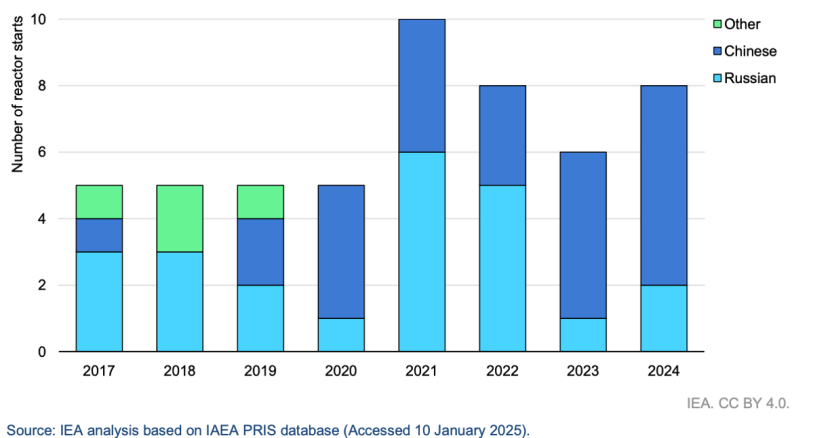
Group 1 - The strategic significance of nuclear energy is highlighted as Western countries aim to reclaim their position in the nuclear sector amidst energy security, low-carbon transition, and geopolitical competition [1][3] - The current global nuclear power capacity expansion is primarily led by China and Russia, while the West is attempting to revive its nuclear energy initiatives [5][6] - The challenges faced by the West include structural investment shortages in the U.S. and policy coordination issues in Europe, hindering their nuclear revival efforts [4][8] Group 2 - Small Modular Reactors (SMRs) have emerged as a focal point in the global technology race, attracting investments from major tech companies like Google, Microsoft, and Amazon [2][31] - The significance of SMRs extends beyond technological advancements, as they aim to disrupt the traditional nuclear energy monopoly [2][31] Group 3 - The evolution of nuclear energy dynamics has transcended industrial boundaries, becoming a critical element in the strategic competition among major powers [3][9] - The global consensus on nuclear energy development is driven by the need for energy security and the increasing electricity demand due to digitalization and green transitions [7][8] Group 4 - The International Energy Agency predicts that by 2025, global nuclear power generation will reach a record high, with 10 out of 12 new reactors being built in Asia, predominantly by Russia and China [5][12] - China's nuclear power capacity is expected to surpass France's, becoming the second-largest globally, while Russia maintains a stronghold in the export market [5][14] Group 5 - The U.S. has recognized the risks of ceding the nuclear market and is pressuring institutions to reassess their financing positions on nuclear energy [19][61] - The upcoming 2026 review of the Treaty on the Non-Proliferation of Nuclear Weapons (NPT) will serve as a critical test for the West's commitment to nuclear energy cooperation [7][19] Group 6 - The European nuclear energy landscape is characterized by a lack of cohesive policy and financing mechanisms, which hampers the revival of nuclear projects [40][41] - France's nuclear strategy faces significant challenges due to past indecision and a decline in industrial capabilities, impacting its ability to lead in nuclear energy [46][48] Group 7 - The U.S. nuclear revival strategy is focused on four pillars: optimizing existing nuclear plant efficiency, restarting decommissioned reactors, enhancing industrial collaboration with Canada, and exporting nuclear technology to Europe [63][65] - The political landscape in the U.S. is shifting, with bipartisan support for nuclear energy, but the effectiveness of new policies under the Trump administration remains uncertain [53][54] Group 8 - The relationship between tech giants and the nuclear industry is evolving, with significant investments aimed at revitalizing nuclear power as a response to increasing electricity demands driven by digital industries [72][75] - Despite the apparent growth in collaboration, the actual implementation of nuclear projects remains fraught with uncertainty and challenges [73][74]
中国聚变能源有限公司已在上海闵行区成立公司总部和研发中心
Xin Lang Cai Jing· 2025-09-11 04:36
Group 1 - The core viewpoint of the article highlights the establishment of a headquarters and R&D center by China Fusion Energy Co. in Shanghai, which signifies a significant step towards the engineering and commercialization of fusion energy [1] Group 2 - The event took place on September 11, marking the 10th anniversary of China National Nuclear Power's listing and emphasizing the collaborative exchange within the nuclear energy industry [1] - Zhang Long, the deputy director of the Fusion Science Institute at the Southwest Institute of Physics, provided insights into the advancements in fusion energy [1]
T-Mobile US, Inc. (TMUS) Is Key To New iPhone Deals, Says Jim Cramer
Insider Monkey· 2025-09-10 17:29
Core Insights - Artificial intelligence (AI) is identified as the greatest investment opportunity of the current era, with a strong emphasis on the urgency to invest in AI technologies now [1][13] - The energy demands of AI technologies are highlighted, with data centers consuming as much energy as small cities, leading to concerns about power grid strain and rising electricity prices [2][3] Investment Opportunity - A specific company is presented as a significant investment opportunity, possessing critical energy infrastructure assets that are essential for supporting the anticipated surge in energy demand from AI data centers [3][6] - This company is characterized as a "toll booth" operator in the AI energy boom, benefiting from the increasing need for energy as AI technologies expand [4][5] Market Position - The company is noted for its ownership of nuclear energy infrastructure, positioning it strategically within America's energy strategy [7] - It is capable of executing large-scale engineering, procurement, and construction projects across various energy sectors, including oil, gas, and renewables [7][8] Financial Health - The company is described as being completely debt-free and holding a significant cash reserve, amounting to nearly one-third of its market capitalization [8][10] - It is trading at a low valuation of less than 7 times earnings, which is considered attractive given its involvement in both AI and energy sectors [10][11] Growth Potential - The company also holds a substantial equity stake in another AI-related venture, providing investors with indirect exposure to multiple growth opportunities in the AI space [9][10] - The overall narrative suggests that investing in this company could yield significant returns, with projections of over 100% potential upside within 12 to 24 months [15][19]