种业

Search documents
全国政协委员建言献策——为农业农村现代化贡献智慧力量
Ren Min Ri Bao· 2025-11-27 01:53
Core Viewpoint - The modernization of agriculture and rural areas is crucial for the overall progress of China's modernization, with a focus on addressing the "three rural issues" as a priority for the Communist Party [1][2]. Group 1: Agricultural Development Strategies - The 2025 Central Document No. 1 emphasizes the need for localized development of new agricultural productivity and the implementation of seed industry revitalization actions [2]. - There is a call for a unified national seed industry data sharing platform to enhance collaboration among research, enterprises, and policies [2]. - Recommendations include establishing a mechanism for the protection of research results and ensuring a positive environment for innovation [2]. Group 2: Macro Control and Stability - Suggestions include strengthening macroeconomic control to maintain stability in the production and market of essential agricultural products [3]. - The establishment of a comprehensive coordination body for straw utilization is proposed to enhance collaboration across various governmental departments [3]. - Legislative efforts are recommended to ensure rural water supply is included in urban water supply regulations [3]. Group 3: Technological Innovation in Agriculture - The need for accelerated agricultural technological innovation is highlighted, with a focus on integrating artificial intelligence into agricultural practices [4]. - Recommendations include building a comprehensive innovation system for agricultural AI and enhancing talent development in this field [4]. - There is a call for strategic adjustments and collaborations among national laboratories, research institutions, and leading enterprises in agriculture [4][5]. Group 4: Rural Revitalization and Employment - The transformation of labor mobility patterns indicates a shift towards local employment, which is seen as an opportunity for rural revitalization and common prosperity [6]. - A high-quality employment support system for rural labor is proposed, focusing on local job creation and industry development [6]. - The development of rural industries and innovative business models is encouraged to enhance farmers' income and ensure food supply [6]. Group 5: Brand Development and Environmental Quality - The establishment of a top-tier brand cultivation system for regional agricultural products is suggested to enhance market recognition [7]. - Recommendations include promoting the use of biological fertilizers and pesticides to improve agricultural practices and environmental quality [7].
山东公布首批农作物种质资源共享目录
Da Zhong Ri Bao· 2025-11-27 01:09
Core Viewpoint - The provincial agricultural and rural department has released the first batch of crop germplasm resource sharing directory, consisting of 24 entries across 5 crop types, highlighting the importance of germplasm resources for agricultural innovation and food security [1] Group 1: Germplasm Resource Details - The directory includes 5 entries of wild soybean, 6 entries of rice, 5 entries of adzuki bean, 3 entries of mung bean, and 5 entries of millet [1] - Each resource entry contains key information such as germplasm name, type, main characteristics, preservation unit, contact person, and contact information [1] Group 2: Strategic Importance - Germplasm resources are considered strategic for original innovation in seed technology, ensuring seed source safety, and national food security [1] - The province has actively conducted surveys and collections of crop germplasm resources, resulting in a rich preservation of various agricultural germplasm [1] Group 3: Future Regulations - The ultimate goal of germplasm resource protection is to promote shared utilization, drive breeding innovation, and support the development of the seed industry [1] - To standardize the sharing of crop germplasm resources and ensure seed source safety, the provincial agricultural and rural department and the provincial science and technology department have formulated the "Shandong Province Crop Germplasm Resource Sharing and Utilization Measures," which will take effect on February 1, 2025 [1]
看,这些“新工厂”拔地而起(活力中国调研行)
Ren Min Ri Bao· 2025-11-26 22:48
Core Insights - Hainan is transitioning from a real estate-dependent economy to a modern industrial system, emphasizing high-quality development and innovation [1] - The establishment of the Hainan Free Trade Port is a significant opportunity for various industries, leading to structural economic changes and growth in key sectors [2][3][4] Group 1: Economic Transformation - Hainan's industrial added value increased by 11.4% year-on-year in the first half of the year, with tourism, modern services, high-tech industries, and tropical agriculture contributing 68.6% to the province's GDP [1] - The shift from real estate reliance to a diversified economy is marked by the emergence of new industries and production capabilities [1] Group 2: Digital Culture Industry - A former abandoned villa area in Lingshui has been transformed into a renowned digital culture industry park, focusing on film, gaming, and creative design [2] - The establishment of specialized funds and a clear industrial design has facilitated the growth of the digital culture sector, with revenues from park enterprises expected to exceed 1 billion yuan by year-end [2] Group 3: Mining Industry Internationalization - Hainan Mining Co. is undergoing internationalization by developing lithium resources, supported by the Free Trade Port policies, which allow for zero tariffs on imported raw materials [3] - The company has invested over 1 billion yuan in a lithium hydroxide plant, targeting high-end battery manufacturers in Japan and South Korea [3] Group 4: Seed Industry Development - Hainan is enhancing its seed industry through technological innovation and policy support, with significant participation from top domestic seed companies [4] - The province has successfully exported seeds to Brazil, with notable market shares in hybrid rice and corn, indicating a growing international presence [4][5] Group 5: Comprehensive Services in Seed Industry - Companies in Hainan are providing full-chain services from genetic resource creation to plant variety rights promotion, catering to both domestic and international markets [5] - Over 800 batches of plant genetic resources have been efficiently introduced, promoting the transformation and value release of breeding innovations [5]
海南打造高水平开放型经济新高地 看,这些“新工厂”拔地而起(活力中国调研行)
Ren Min Ri Bao· 2025-11-26 22:24
Core Viewpoint - Hainan is transitioning from a real estate-dependent economy to a modern industrial system, leveraging free trade port policies to achieve structural economic transformation and high-quality development [1] Group 1: Economic Transformation - Hainan's industrial added value increased by 11.4% year-on-year in the first half of the year, with tourism, modern services, high-tech industries, and tropical agriculture contributing 68.6% to the province's GDP [1] - The province aims to eliminate its reliance on real estate and has made historic breakthroughs in economic structure transformation [1] Group 2: Digital Culture Industry - A former villa area in Lingshui, which had over 2,100 unfinished villas, has been transformed into a well-known digital cultural industry park, capitalizing on the opportunities presented by the free trade port [2] - Lingshui has established a data industry task force focusing on film, gaming, and creative design, and has set up various funds to support these sectors [2] - By July 2023, the revenue of companies in the park had doubled compared to the previous year, with expectations to exceed 1 billion yuan by year-end [2] Group 3: Mining Industry - Hainan Mining Co., Ltd. is undergoing internationalization, shifting focus to lithium resources due to the advantages of free trade port policies [3] - A new lithium hydroxide plant with an investment of over 1 billion yuan has been established, benefiting from zero tariffs on imported raw materials [3] - The company aims to supply high-end battery manufacturers in Japan and South Korea, enhancing its market competitiveness through favorable tax policies [3] Group 4: Seed Industry - Hainan is advancing its "South Breeding Silicon Valley" initiative, attracting major domestic seed companies and fostering innovation through collaboration with research institutions [4] - The province has successfully exported seeds developed through local technology to Brazil, enhancing its role in global food security [4] - The "Challenge and Lead" project has attracted numerous research teams to accelerate the development of new seed varieties and intellectual property rights [4][5]
全国政协委员建言献策——为农业农村现代化贡献智慧力量(议政)
Ren Min Ri Bao· 2025-11-26 22:18
Core Viewpoint - The modernization of agriculture and rural areas is crucial for achieving China's overall modernization, with a focus on addressing the "three rural issues" as a priority for the Communist Party [1][2]. Group 1: Agricultural Development Strategies - The 2025 Central Document No. 1 emphasizes the need for localized development of new agricultural productivity and the implementation of seed industry revitalization actions [2]. - There is a call for a unified national seed industry data sharing platform to enhance collaboration among research, enterprises, and policies [2]. - Recommendations include establishing a comprehensive mechanism for the utilization of agricultural waste and improving the coordination of various agricultural policies [3]. Group 2: Technological Innovation in Agriculture - The importance of accelerating agricultural technological innovation is highlighted, with a focus on integrating artificial intelligence into agricultural practices [4]. - Suggestions include building a comprehensive innovation system for agricultural AI and enhancing the talent pool for agricultural innovation [4]. - There is a need for increased investment in agricultural technology, with specific metrics proposed for improvement [5]. Group 3: Rural Revitalization and Employment - The transformation of labor mobility patterns in rural areas is noted, with a significant number of migrant workers seeking employment closer to home [6]. - Recommendations include creating a support system for high-quality employment in rural areas, focusing on industry support and capacity building [6]. - The development of rural industries and innovative business models is essential for increasing farmers' income and ensuring food supply [6]. Group 4: Brand Development and Environmental Quality - The establishment of regional agricultural product brands is encouraged to enhance market recognition and support industry upgrades [7]. - There is a focus on improving rural ecological quality and living environments as a reflection of rural revitalization efforts [7].
150万亩永久基本农田落图落地,北京粮食生产连续5年较快增长
Xin Jing Bao· 2025-11-26 11:53
Core Insights - Beijing has implemented the strictest farmland protection system, restoring the cultivated land area to 1.97 million acres and completing the mapping of 1.5 million acres of permanent basic farmland [1][2] - The city has made significant advancements in agricultural technology, achieving a 75% contribution rate from agricultural technology progress and leading the nation in comprehensive technological strength [2][3] - The development of rural industries has been prioritized, with a focus on enhancing the production of local specialties and creating new rural business models [6][4] Group 1: Agricultural Development - The area of high-standard farmland built has reached 840,000 acres, with a focus on modern facility agriculture and the establishment of demonstration zones [2] - The self-sufficiency rates for key agricultural products such as vegetables, eggs, and milk have steadily increased [2] - Beijing has developed a robust seed industry, with 214.4 million preserved germplasm resources, ranking first in the country [3] Group 2: Rural Infrastructure and Services - Over 95% of administrative villages have completed village planning, and rural infrastructure improvements have been largely completed [4] - The city has introduced over 200 new urban entrepreneurial entities to develop rural new business formats, enhancing the local economy [4] - The income of rural residents has consistently grown faster than that of urban residents, with a projected increase of 9,730 yuan per capita by 2024 [7] Group 3: Policy and Governance - Beijing has implemented various policies to support rural collective economic development and improve governance in rural areas [8] - The city has made progress in land reform, with 23,87 plots of land entering the open market for transactions since 2021 [8] - The government aims to continue promoting urban-rural integration and modern agricultural development in the next five years [9]
神农种业:11月26日召开董事会会议
Mei Ri Jing Ji Xin Wen· 2025-11-26 09:37
Group 1 - The core point of the article is that Shennong Agricultural Industry (SZ 300189) held its 27th meeting of the 7th Board of Directors on November 26, 2025, to discuss the nomination of candidates for the 8th Board of Directors [1] - For the first half of 2025, the company's revenue composition was 96.72% from agriculture and 3.28% from other businesses [1] - As of the report date, Shennong Agricultural Industry has a market capitalization of 6.1 billion yuan [1]

甘肃敦煌:“九色鹿”信用码赋能 “飞天帮办”优环境
Zhong Guo Xin Wen Wang· 2025-11-26 06:08
中新网兰州11月26日电 (王牧雨 刘潇)甘肃酒泉市敦煌市市长朱建军26日表示,敦煌在全国城市信用监 测排名中跃升至西部第1、全国第6,敦煌不仅是古丝绸之路上的"第一枢纽",未来更将持续优化营商环 境,打造近悦远来的发展热土。 甘肃敦煌:"九色鹿"信用码赋能 "飞天帮办"优环境 走进敦煌夜市,每家商户门前都贴着一个独特的"九色鹿"信用标识。这是敦煌创新推出的信用可视化体 系,消费者扫码即可了解商户信用状况。据朱建军介绍,敦煌正全力推进"丝绸之路文化型信用城市"建 设,将敦煌文化元素融入信用体系建设,打造了夜市信用示范街区,推行"一码知信用",让商户信用评 价体系更加透明直观。 编辑:郭晋嘉 广告等商务合作,请点击这里 本文为转载内容,授权事宜请联系原著作权人 中新经纬版权所有,未经书面授权,任何单位及个人不得转载、摘编或以其它方式使用。 关注中新经纬微信公众号(微信搜索"中新经纬"或"jwview"),看更多精彩财经资讯。 与此同时,敦煌建成甘肃首个AI赋能政务服务平台,实现24小时智能咨询与政策解读,工作效率提升 20%以上。组建的"飞天帮办"团队,融入敦煌壁画元素打造政务服务空间,让企业办事过程成为一场文 ...


“十四五”以来,山东完成6次省属企业战略性重组 国有资本布局进一步优化
Qi Lu Wan Bao· 2025-11-26 05:30
Core Viewpoint - Shandong Province is actively restructuring and optimizing its state-owned enterprises (SOEs) during the 14th Five-Year Plan period, focusing on key industries and avoiding homogeneous competition to enhance the efficiency and effectiveness of state capital [3][4]. Group 1: Strategic Restructuring - Shandong has completed six strategic restructurings among provincial enterprises since the beginning of the 14th Five-Year Plan, including two in 2021, one in 2022, and three planned for 2025 [3]. - The restructuring aims to consolidate businesses with similar operations to avoid redundancy and enhance scale and synergy effects [3][4]. Group 2: Industry Concentration and Efficiency - The merger of Shandong Guohui and Shandong Development has led to significant improvements in asset scale and resource allocation efficiency, with total assets reaching 249.66 billion yuan, operating income of 23.31 billion yuan, and total profit of 2.54 billion yuan, reflecting year-on-year growth of 14.78%, 10.57%, and 6.34% respectively [4]. - The integration of upstream and downstream enterprises, such as the merger of Luliang Group and Shandong Seed Industry, aims to enhance industry concentration and address the issues of small and weak enterprises [4]. Group 3: Sustainable Development and Management - The restructuring process includes improving the management system of provincial enterprises through equity mergers and transfers, which promotes industrial clustering and transformation [5]. - The integration of Shandong Talent into Shandong Guotou has facilitated effective collaboration in talent recruitment and development, contributing to the province's "Talent Prosperity" strategy [5].
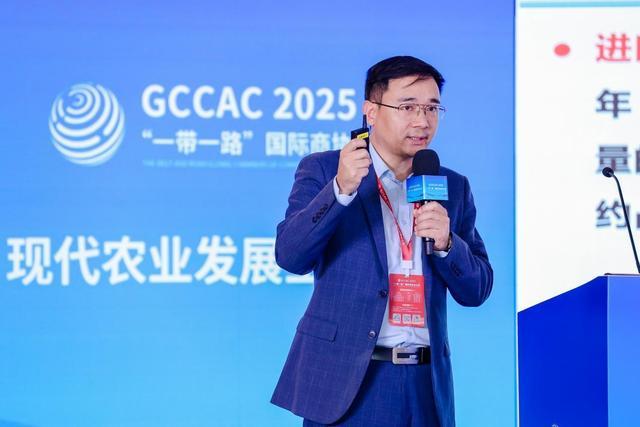
王友华:生物育种推动种业创新发展
Huan Qiu Wang Zi Xun· 2025-11-26 02:56
Core Insights - The article discusses the development and internationalization of China's biotechnology breeding technology, emphasizing its role in agricultural innovation and global food security [1][3]. Group 1: Biotechnology Breeding Technology - Biotechnology breeding technology encompasses transgenic, gene editing, and synthetic biology, playing a crucial role in agricultural innovation by reducing labor costs and expanding arable land through drought and salt-resistant varieties [3]. - China's biotechnology breeding has established a mature support system from technology to industry, with companies like Syngenta, Longping High-Tech, and Dabeinong demonstrating global layout capabilities, laying the foundation for technology export [3]. Group 2: Global Application and Future Outlook - The application of biotechnology breeding technology is closely related to the agricultural strategies and models of different countries, allowing for precise adaptation to agricultural needs [3]. - The future of biotechnology breeding in China is promising, with advancements in research and development, industrialization processes, management systems, and international competitiveness, positioning the industry to enhance global food security and promote agricultural green transformation [3].