
集成电路

Search documents
北京君正:截至1月20日的股东户数为105492户
Zheng Quan Ri Bao Wang· 2026-01-22 12:13
Group 1 - The company Beijing Junzheng (300223) reported that as of January 20, the number of shareholders reached 105,492 [1]

粤芯半导体四期启动,广州开发区强化全产业链布局
Di Yi Cai Jing· 2026-01-22 12:06
北京大学信息工程学院院长杨玉超在接受采访时表示,粤芯四期项目的建设有望提升区域芯片制造能力 和产业链完整性。北京大学深圳研究生院将推动与粤芯在产教融合、人才培养、校企联合实验室等多元 化合作内容,目标是构建产学研深度融合的创新合作模式。 据招股书,粤芯是广东省自主培养且首家进入量产的12英寸晶圆制造企业,为广东省实现了12英寸芯片 制造从0到1的突破,对粤港澳大湾区集成电路的产业发展、产业升级、科技创新和产业安全都具有重要 的意义。粤芯目前拥有两座12英寸晶圆厂,分别为第一工厂(粤芯一、二期)和第二工厂(粤芯三 期),规划产能合计为8万片/月。未来,公司还将新增建设一条规划产能为4万片/月的12英寸集成电路 数模混合特色工艺生产线,即第三工厂(粤芯四期)。粤芯四期建成后,公司规划产能合计将达到12万 片/月。 广州将加快华星光电t8、粤芯四期等重大项目建设。 1月22日,粤芯半导体技术股份有限公司(下称"粤芯")四期项目启动。资料显示,该项目总投资约252 亿元,规划建设月产能4万片的12英寸数模混合特色工艺生产线,围绕"感、传、算、存、控、显"六大 方向,构建具备国际先进水平的数模混合、光电融合等特色工艺平 ...
盈方微:预计2025年全年净亏损6900万元—9700万元
2 1 Shi Ji Jing Ji Bao Dao· 2026-01-22 11:37
南财智讯1月22日电,盈方微发布年度业绩预告,预计2025年全年归属于上市公司股东的净利润为-9700 万元—-6900万元;预计2025年全年归属于上市公司股东的扣除非经常性损益的净利润为-9776万元 —-6976万元;公司2025年度归属于上市公司股东的净利润为负值,主要原因系受市场影响,分销业务 部分产品销售价格下降、新产品线目前处于开拓状态,毛利较低,从而导致整体毛利率下滑;公司实施 上市公司股权激励计划确认股份支付费用、大股东资助款及对外融资确认财务利息费用、公司计提商誉 减值准备等原因所致。 ...

拓荆科技(688072.SH):股东国家集成电路基金已减持297.76万股公司股份
Ge Long Hui A P P· 2026-01-22 11:26
格隆汇1月22日丨拓荆科技(688072.SH)公布,公司股东国家集成电路基金于2026年1月13日至2026年1月 22日期间通过大宗交易方式减持公司股份297.7639万股,其所持有的公司股份比例由17.92%减少至 16.86%,权益变动触及1%刻度。 ...

晚间公告|1月22日这些公告有看头
Di Yi Cai Jing· 2026-01-22 10:33
Investment Announcements - Chongda Technology's subsidiary, Punowei, plans to invest 1 billion yuan in a functional IC packaging substrate project to enhance competitiveness in the high-end integrated circuit substrate sector, with construction expected to start in September 2026 and completion by September 2028 [2] - Hualing Steel's subsidiary, Hunan Hualing Lianyuan Steel, intends to invest approximately 44.99 million yuan in a major overhaul of a coking plant to address aging issues and improve production capacity while complying with environmental regulations [4] - Licheng Group's subsidiary has received a project notification for aluminum alloy wheels from a well-known international automotive manufacturer, with an estimated sales amount of about 1.37 billion yuan over the project's lifecycle [23] Financial Performance - *ST Rock reported significant stock price volatility and faces financial delisting risks, with a projected revenue of 34.76 million yuan and a net loss of 112 million yuan for the first three quarters of 2025 [3] - Zhengping Co. announced a net loss of 484 million yuan for 2024, with a revenue of 1.362 billion yuan, and faces multiple risks including insufficient mining capacity [5] - Lijun Co. expects a net profit of 48 million to 66 million yuan for 2025, a decrease of 45.05% to 60.03% year-on-year due to increased competition and rising costs [7] - Fangzheng Technology anticipates a net profit of 430 million to 510 million yuan for 2025, representing a year-on-year increase of 67.06% to 98.14% driven by AI and high-value business orders [8] - Xingqi Eye Medicine expects a net profit of 662 million to 749 million yuan for 2025, reflecting a growth of 95.82% to 121.56% due to enhanced market expansion and product optimization [9] - Shennan Electric A forecasts a net profit of 150 million to 180 million yuan for 2025, a substantial increase of 584.66% to 721.59% attributed to asset disposals and improved energy services [10] - Yunmei Energy anticipates a net loss of 410 million to 470 million yuan for 2025, with a reduction in losses compared to the previous year due to market conditions [11] - Yaxin Security expects a net loss of 380 million to 500 million yuan for 2025, a shift from a profit of 9.59 million yuan in the previous year, primarily due to operational pressures [12] - Beidouxing Tong forecasts a net loss of 230 million to 290 million yuan for 2025, with a focus on core business areas despite ongoing losses [13] - Liard expects a net profit of 300 million to 380 million yuan for 2025, marking a turnaround from a loss of 889 million yuan in the previous year, driven by strategic transformation [14] - Changying Precision anticipates a net profit of 545 million to 635 million yuan for 2025, a decline of 17.70% to 29.36% year-on-year due to the absence of non-recurring gains [15][16] - Yiling Pharmaceutical expects a net profit of 1.2 billion to 1.3 billion yuan for 2025, recovering from a loss of 725 million yuan in the previous year through improved management and cost control [17] Share Buybacks and Stock Movements - Xidun Pharmaceutical plans to repurchase shares worth 25 million to 50 million yuan at a price not exceeding 42 yuan per share [19] - Zhongwei Company reported that its largest shareholder reduced its stake by 1% through block trading, completing the planned reduction [21] Major Contracts - *ST Songfa's subsidiary signed contracts for the construction of two VLCC super-large oil tankers, with a contract value of approximately 200 million to 300 million USD, expected to positively impact the company's performance [25]


思瑞浦:预计2025年归母净利润1.65亿元到1.84亿元
Xin Lang Cai Jing· 2026-01-22 10:30
思瑞浦1月22日公告,经财务部门初步测算,预计2025年年度实现营业收入213,000万元至215,000万元, 较上年同期相比,将增加91,046万元至93,046万元,同比增长74.66%至76.30%。预计2025年年度实现归 属于上市公司所有者的净利润为16,500万元到18,400万元,较上年同期相比,将增加36,222万元至38,122 万元,实现扭亏为盈。 ...

“十五五”四维融合密码:科技创新如何链接产业、人才与市场?
Xin Lang Cai Jing· 2026-01-22 10:08
Core Viewpoint - The core objective during the "14th Five-Year Plan" period is to significantly enhance the level of technological self-reliance and strength, with the integration of the innovation chain, industry chain, capital chain, and talent chain being a key pathway to achieve this goal [2][16]. Group 1: Challenges in Four-Dimensional Integration - The integration of the innovation chain, industry chain, capital chain, and talent chain faces multiple real-world obstacles, particularly in the disconnect between supply and demand [3][17]. - Only 10%-30% of China's cutting-edge scientific achievements are applied in actual production, with only 20% of those forming scalable industries, leading to an overall technology transfer rate of around 30%, significantly lower than the 60%-70% seen in developed countries [3][17]. - The traditional talent evaluation system focuses on academic metrics, which misaligns with the core needs of enterprises for technology transfer capabilities and market application effectiveness [3][17]. Group 2: Regional Talent Distribution and Funding Issues - There is an uneven distribution of high-end innovative talent, heavily concentrated in first-tier cities and developed eastern regions, which restricts balanced regional innovation development [4][18]. - The long-term stability of funding for basic research is lacking, causing potential research directions to stagnate due to funding interruptions [4][19]. - Structural biases in funding allocation lead to resources flowing into low-level repetitive construction areas rather than critical sectors like integrated circuits and high-end instruments [5][19]. Group 3: Policy Recommendations and Strategic Initiatives - The "14th Five-Year Plan" proposes targeted measures to enhance the integration of the innovation chain and industry chain, optimize the talent chain, and empower the capital chain [6][20]. - The establishment of regional technology innovation centers and high-tech industrial zones is emphasized to accelerate the practical implementation of these strategies [6][20]. - Collaborative innovation mechanisms across regions are being developed to break down barriers related to talent, technology, and funding [7][21]. Group 4: Talent Development and Educational Reforms - The optimization of the talent chain is crucial for deepening the collaboration between industry, academia, and research, with a focus on aligning talent development with innovation needs and industry directions [8][22]. - Reforms in talent evaluation are aimed at breaking the traditional focus on publications and project levels, facilitating better integration between research institutions and industry [8][22]. - Various local initiatives are emerging to enhance collaborative talent cultivation, such as the joint development of educational resources and training bases among enterprises and educational institutions [9][23]. Group 5: Financial Support and Innovation Cycle - Precise financial investment is identified as a key engine for technological breakthroughs and industrial upgrades, with a focus on directing funds towards basic research and original innovation [12][26]. - Policies are being implemented to alleviate financing difficulties for technology innovation enterprises, such as increasing loan limits and compensation ratios for small and medium-sized enterprises [13][27]. - The establishment of a diversified funding input structure is essential to ensure that innovation funds are accurately matched with industry pain points and talent development needs [12][27].

去年GDP增长5.1%左右,无锡明确今年抢抓人工智能机遇
2 1 Shi Ji Jing Ji Bao Dao· 2026-01-22 09:32
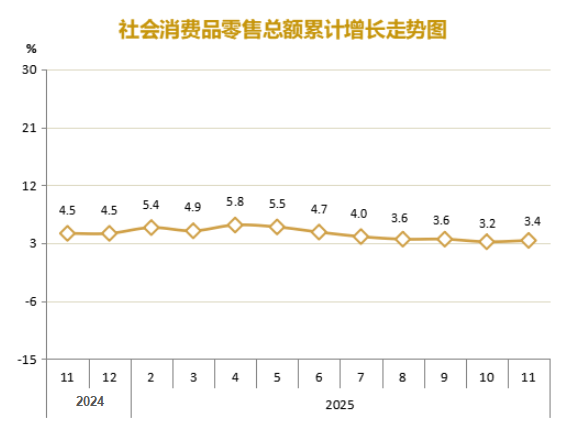
Group 1: Economic Performance - In 2025, Wuxi achieved a GDP of approximately 1.68 trillion yuan, growing by about 5.1%, surpassing the national average growth rate of 5.0% [1] - The total retail sales of consumer goods in Wuxi exceeded 440 billion yuan in 2025, but the growth rate declined from around 5% in the first half to approximately 3.5% in the second half [2] - Wuxi's total import and export value reached 829.28 billion yuan in 2025, marking a year-on-year increase of 7.6% [1] Group 2: 2026 Economic Goals - For 2026, Wuxi set a GDP growth target of 5% and a retail sales growth target of around 4% [4] - Key initiatives for 2026 include enhancing domestic demand, stabilizing major consumer sectors such as automobiles and home appliances, and expanding new business formats like duty-free economies [4] Group 3: Industrial Development - Over the past five years, Wuxi has developed five national advanced manufacturing clusters, with eight clusters generating over 200 billion yuan in revenue [5] - Wuxi aims to capitalize on artificial intelligence opportunities by collaborating with leading companies and deploying projects related to AI data centers and quantum chips [5][6] - The city plans to increase the revenue of the productive service industry by 7% and aims for the scale of future industries to reach 145 billion yuan [6] Group 4: Long-term Economic Vision - Wuxi's GDP is projected to exceed 2 trillion yuan in the next five years, with a target of achieving a per capita GDP of over $30,000 by 2024 [7] - The city aims for strategic emerging industries to account for over 46% of the industrial output of designated large-scale enterprises [7] - By the end of 2025, Wuxi is expected to have 127 listed companies, primarily in sectors such as power equipment, machinery, and automotive [7]
富满微1月22日现1笔大宗交易 总成交金额207.46万元 溢价率为-7.55%
Xin Lang Cai Jing· 2026-01-22 09:31
Group 1 - The stock of Fuman Micro (富满微) increased by 15.19%, closing at 44.35 yuan on January 22 [1] - A block trade occurred with a total volume of 50,600 shares and a transaction amount of 2.0746 million yuan, with a transaction price of 41.00 yuan, reflecting a premium rate of -7.55% [1] - Over the past three months, the stock has recorded one block trade with a total transaction amount of 2.0746 million yuan [1] Group 2 - In the last five trading days, the stock has risen by 27.04%, with a total net inflow of 284 million yuan from main funds [1]

“一张清单推开新大门”:广州南沙多举措助力港澳专才逐梦
Zhong Guo Xin Wen Wang· 2026-01-22 06:29
Core Insights - The article highlights the initiatives taken by Nansha District in Guangzhou to create a conducive environment for Hong Kong and Macau professionals, aiming to transform regulatory alignment into tangible support for talent development [1] Group 1: Policy Initiatives - Nansha District has released the "Guangzhou Nansha District Overseas Professional Qualification Recognition List 2.0" and the "Guangzhou Nansha District High-Precision and Shortage Overseas Professional Qualification Recognition List 2.0" to encourage overseas professionals to work and start businesses in Nansha [1] - Eligible overseas professionals can receive a talent reward of up to 1 million yuan, which is seen as a significant step towards building an internationally competitive talent ecosystem [1] Group 2: Professional Development Opportunities - The upgraded recognition list focuses on key industries such as artificial intelligence, biomedicine, integrated circuits, and advanced manufacturing, providing clear application processes and support pathways for professionals [2] - The implementation of the "post-practice registration" policy is one of the most innovative arrangements, aimed at reducing operational costs for Hong Kong and Macau enterprises while facilitating professional practice [2] Group 3: Operational Efficiency - The "Guangzhou Nansha District Implementation Measures for Hong Kong and Macau Professional Institutions and Professionals" allows recognized professionals from Hong Kong and Macau to provide services in various fields, streamlining the administrative process [3] - Nansha has published a recognition list covering 248 overseas professional qualifications, including 112 from Hong Kong and Macau, enhancing the attractiveness of Nansha for professionals from these regions [3]