Internet
Search documents
Google CEO calls for national AI regulation to compete with China more effectively
Fox Business· 2025-12-01 02:06
Core Viewpoint - Google CEO Sundar Pichai emphasized the need for the U.S. to balance AI regulation to avoid falling behind China, highlighting the potential confusion from over 1,000 AI-related bills in state legislatures [1][2]. Regulation and Competition - Pichai questioned how U.S. companies can cope with varied regulations while competing with rapidly advancing countries like China, advocating for a national-level approach to balance innovation and regulation [2][4]. - He stressed the importance of creating international frameworks to prevent the weaponization of AI technologies [4]. Benefits and Risks of AI - Pichai acknowledged the significant benefits of AI, such as advancements in drug development and cancer treatments, while also warning about the potential misuse of these technologies by malicious actors [4][5]. - He noted that technology has a dual nature, and society must learn to harness it for the greater good [5]. Defensive Use of AI - Google is actively using AI defensively to combat criminal activities, with tools like SynthID designed to identify AI-generated content [7][8]. - Pichai mentioned a recent court ruling in favor of Google against a phishing operation that affected over a million individuals globally [7]. Future of AI and Technology - Pichai discussed innovative projects like "Suncatcher," aimed at building solar-powered AI data centers in space, predicting that such initiatives will become standard in the next decade [8]. - He compared current concerns about AI to past criticisms of Google, expressing confidence that society will adapt and that creativity will flourish in the future [11].
百度-开放日要点:迈向价值释放之路
2025-12-01 01:29
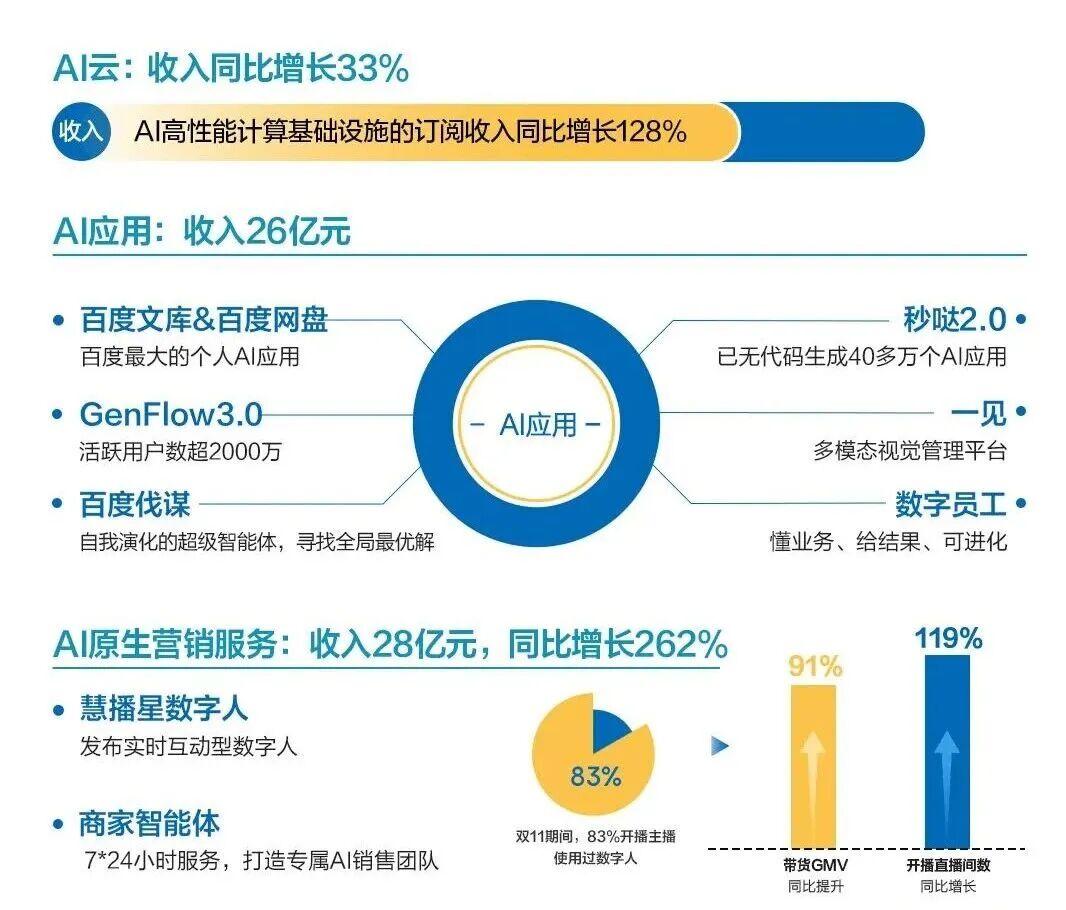
Summary of Baidu, Inc. Corporate Day 2025 Conference Call Company Overview - **Company**: Baidu, Inc. - **Industry**: Internet Services in China - **Market Cap**: US$40.6 billion as of November 26, 2025 - **Current Stock Price**: US$117.88 - **12-Month Rating**: Buy with a price target of US$155 Key Points and Arguments Value Unlocking Strategies - Baidu management presented multiple strategies aimed at unlocking company value, including: 1. Enhancing disclosure transparency by potentially adding new disclosures related to business margins and product metrics in future reports [2] 2. Improving shareholder returns with considerations for higher certainty in buybacks and/or dividends [2] 3. Enhancing operational efficiency through disciplined resource allocation across core business lines [2] 4. Unlocking value for core and high-potential businesses, specifically Apollo Go and Kunlun Chips [2] AI Transformation in Core Ads - AI-generated content has penetrated approximately 70% of mobile search result pages, replacing traditional ad formats with multimodal direct answers and agent-based interactions [3] - Despite a decline in core ad revenue, Baidu is testing new monetization models, such as: - Embedding product recommendations within AI-generated answers, where advertisers pay per click [3] - Content-marketing integrations, including AI-generated product videos paired with listings [3] - Digital human technology is not yet generating direct revenue, but future options may include charging technical support fees or taking commissions on transactions [3] Cloud Business Growth - Subscription revenue from the GPU cloud business is expected to maintain rapid growth, although overall cloud revenue growth may face challenges due to a high base in Q4 2025 and Q1 2026 [4] - Management expressed confidence in the self-developed Kunlun Chip, which currently contributes immaterial revenue but is expected to ramp up and boost cloud segment revenue [4] Financial Projections - Revenue projections for Baidu are as follows (in million RMB): - 2025E: 129,068 - 2026E: 135,196 - 2027E: 144,202 [9] - EPS projections (in RMB): - 2025E: 53.95 - 2026E: 48.65 - 2027E: 57.41 [7] Valuation and Price Target - The price target of US$155 is based on a sum-of-the-parts (SOTP) valuation methodology, assuming: - 5x PE for core ads - 3x PS for cloud - US$11/share for Apollo Go [5] Risks Identified - Key risks for Baidu include: 1. Evolving competitive landscape 2. Execution of new business strategies 3. Integration of invested companies 4. Rising costs of traffic acquisition and content promotion 5. Maintenance and upgrading of IT systems 6. Intellectual property rights infringement 7. International market expansion challenges 8. Key management departures 9. Regulatory risks [13] Market Outlook - The forecast stock return is estimated at 31.5%, with no expected dividend yield [10] - The market return assumption is 10.8%, leading to a forecast excess return of 20.7% [10] Additional Insights - Baidu's management is focused on improving operational efficiency and shareholder returns, indicating a proactive approach to addressing investor concerns and market challenges [2][4] - The ongoing transformation towards AI and cloud services positions Baidu favorably for future growth, despite current revenue challenges in core advertising [3][4]
解读中国互联网:头部 AI 应用追踪 -尖端 AI 模型竞争持续,新 AI 聊天机器人上线-Navigating China Internet_ Top AI_apps tracker_ Continued contest in State-of-the-Art AI models & new AI chatbot launches
2025-12-01 00:49
Summary of Key Points from the Conference Call Industry Overview - The conference call focuses on the **China Internet** industry, particularly developments in **AI** and **chatbot applications**. Core Insights and Arguments 1. **AI Model Developments**: - US AI models have regained top positions in rankings, with Google releasing **Gemini 3 Pro** and **Nano Banana Pro**, showcasing superior capabilities compared to existing models despite concerns about diminishing returns in AI scaling laws [1][8][29]. - Chinese AI models are expected to catch up within 3-6 months after US releases, indicating a competitive landscape [1][8]. 2. **Consumer AI Applications**: - **Alibaba** launched the **Qwen App**, achieving **10 million downloads** in the first week, aiming to be a productivity assistant that supports shopping and local services [1][9]. - **Ant Group's LingGuang App** reached **2 million downloads** in 6 days, focusing on AI coding capabilities [1][11]. - **Tencent** integrated AI assistant **Yuanbao** into **WeChat Pay**, enhancing operational efficiency for SMEs [1][11]. 3. **AI Infrastructure Demand**: - There is a growing demand for AI inference, with Chinese data centers expected to see a demand upcycle starting in **2026**. **Alibaba** noted that new AI demand is outpacing infrastructure capacity, leading to an optimistic capex outlook [1][12]. - **Bytedance's Volcano Engine** serves a significant portion of top brands and institutions, indicating strong market penetration [1][12]. 4. **Capex Trends**: - **Alibaba's** capex increased by **80% year-over-year** to **Rmb 32 billion**, while **Tencent's** capex declined due to chip availability issues [1][8]. - Alibaba's positive capex outlook is attributed to its AI infrastructure capabilities, contrasting with Tencent's more cautious approach [1][8]. 5. **AI Model Releases**: - **Xiaomi** introduced the **MiMo-Embodied model**, integrating autonomous driving and embodied AI capabilities [1][12]. - **Tencent** released **HunyuanVideo 1.5**, a video generation model with competitive performance metrics [1][12]. 6. **Market Dynamics**: - The Chinese AI market is characterized by a mix of open-source models and competitive pricing, with **80% of AI startups** utilizing open-source models from China [1][12]. - The gap in multi-modal capabilities between Chinese and global players is narrowing, with Chinese models differentiating through cost and speed [1][12]. Additional Important Insights - **Valuation Comparisons**: Tencent and Alibaba are trading at lower valuations compared to global peers, suggesting potential upside for investors [1][8]. - **Engagement Trends**: Domestic AI applications have seen a **15% month-over-month increase** in engagement, driven by platforms like **Doubao** and **DeepSeek** [1][17]. - **E-commerce and Local Services**: E-commerce engagement grew by **11% year-over-year**, with platforms like **JD** and **Taobao** showing strong performance [1][16]. - **Regulatory Environment**: Cross-border e-commerce faces increasing regulatory pressure, particularly affecting platforms like **Temu** [1][16]. This summary encapsulates the key developments and insights from the conference call, highlighting the competitive landscape and growth potential within the China Internet and AI sectors.
中国 2025 下半年 CIO 调研 —— 乐观情绪回升-China 2H25 CIO Survey – Renewed Optimism
2025-12-01 00:49
Key Takeaways from the China 2H25 CIO Survey – Renewed Optimism Industry Overview - **Industry**: Technology in Asia Pacific, specifically focusing on China - **Survey Focus**: CIOs' IT spending expectations and trends for 2025 and 2026 Core Insights - **Optimism in IT Spending**: CIOs have raised their 2025 IT budget growth forecast by 160 basis points to 7.4%, with expectations for 2026 indicating a robust growth of 12.6% YoY, surpassing the average growth of 11.7% from 2020-2025 [7][39] - **AI and Cloud Migration**: Significant optimism is driven by advancements in Generative AI (GenAI) and cloud migration, with 62% of CIOs expecting a substantial impact from AI in 2026 [7][50] - **Budget Allocation**: 57% of CIOs plan to allocate an average of 3.8% of their IT budgets to physical AI investments, projected to increase to 7.8% over the next three years [7][52] Sector-Specific Insights - **Software and IT Services**: The sector shows the highest growth expectations, with 9.9% for 2025 and 13.1% for 2026. The industry view has been upgraded to In-Line from Cautious due to normalization of budgets and potential steady growth recovery [25][39] - **Semiconductors**: Structural growth is anticipated from AI, with a preference for foundry, OSAT, and memory sectors over chip design. Localization trends are expected to benefit companies like SMIC and Naura [25][26] - **Hardware**: Expectations for spending are less optimistic, particularly for PCs, while AI-related hardware is expected to see growth due to increased demand for AI workloads [30][68] - **Internet Sector**: Favorable outlook for Alibaba and Tencent due to potential AI upside, with public cloud spending expected to stabilize and regain momentum in 2026 [31][69] Investment Implications - **Preferred Stocks**: Companies such as Beisen (software), TSMC (semiconductors), and various hardware manufacturers are highlighted as preferred investments due to their strong positioning in AI and cloud trends [34][70] - **Cautious Outlook on Traditional Tech**: Traditional tech sectors, particularly the PC supply chain, are viewed with caution due to margin pressures from rising memory prices and less defensive nature [25][68] Additional Observations - **CIO Confidence**: The up-to-down ratio for budget revisions improved to 3.2x, indicating increased confidence among CIOs regarding IT spending [39][49] - **Long-term Growth Factors**: 47% of CIOs expect IT spending to grow as a share of revenue over the next three years, with business expansion cited as the primary reason for increasing IT budgets [15][42] - **AI Prioritization**: AI/ML remains the top priority for CIOs, despite a slight decrease in immediate spending expectations, with a focus on customer-facing applications for revenue growth [61][62] This summary encapsulates the key findings and implications from the China 2H25 CIO Survey, reflecting a renewed optimism in technology investments driven by AI and cloud migration trends.
GMO’s Top Holdings: Inside Jeremy Grantham’s High-Conviction Mega-Cap Portfolio
Acquirersmultiple· 2025-11-30 22:42
The latest 13F from Grantham, Mayo, Van Otterloo & Co. (GMO) offers a clear window into how Jeremy Grantham is positioning capital in a market he believes is both richly valued and increasingly narrow. Despite his well-known warnings about bubbles and froth, GMO’s actual equity book remains highly rational — concentrated in dominant franchises with durable cash flows, strong balance sheets, and long-term secular tailwinds.Below is a breakdown of the most important top holdings and what they signal about GMO ...
The Smartest Technology Stock to Buy With $1,000 Right Now
Yahoo Finance· 2025-11-30 16:00
Group 1 - Investing in technology companies can yield strong long-term returns, with a focus on disruptive and innovative businesses [1] - Alphabet is highlighted as a top choice for tech-stock investors, being a leader in artificial intelligence and recently launching the Gemini 3 Pro large language model [3][4] - Alphabet's Google Search segment accounted for 55% of overall Q3 revenue, benefiting from a significant network effect that enhances its market position [4] Group 2 - The company's valuation is considered reasonable, with a price-to-earnings ratio of 31.5, despite a 69% stock increase in 2025 [5] - Alphabet generated $24.5 billion in free cash flow last quarter and holds $98.5 billion in cash and marketable securities, indicating strong financial health [5] - The Motley Fool Stock Advisor analyst team has identified 10 stocks they believe are better investment options than Alphabet at this time [6][7]
Weekend Round-Up: TSMC Trade Secrets Lawsuit, Google Deepmind Scientist's Market Slam, Baidu Layoffs, Amazon's Court Victory And More
Benzinga· 2025-11-30 12:01
Group 1: TSMC and Intel - Taiwan prosecutors raided the home of former TSMC vice president Wei-Jen Lo over allegations of leaking trade secrets to Intel Corp, with computers and storage devices seized as evidence [2] Group 2: AI Hardware Market - A Google DeepMind researcher criticized the market's perception of AI hardware demand following a significant drop in Nvidia and AMD stocks, which fell after reports indicated that Meta might utilize Google's AI chips [3] Group 3: Baidu Layoffs - Baidu has initiated layoffs across multiple business units after a disappointing Q3 report, with potential job cuts reaching up to 40% in some teams, although the exact number of layoffs remains unspecified [4] Group 4: Amazon Legal Victory - Amazon won a legal battle against New York's new labor law, which would have allowed state intervention in private-sector union disputes, with a federal judge blocking the law's enforcement while Amazon's challenge is ongoing [5] Group 5: Meta Investigation - U.S. Senators Richard Blumenthal and Josh Hawley have called for an investigation into Meta Platforms over allegations that the company profits from fraudulent advertisements, with estimates suggesting potential earnings of $16 billion annually from such ads [6]
2 Quantum Computing Stocks That Caught Warren Buffett's Attention -- Should They Catch Yours?
The Motley Fool· 2025-11-29 17:29
Core Insights - Berkshire Hathaway, led by Warren Buffett, has made significant investments in Alphabet and Amazon, indicating a strategic focus on companies with strong growth potential in the AI and quantum computing sectors [1][4][12] Group 1: Berkshire Hathaway's Investment Strategy - Buffett's investment approach emphasizes value and long-term potential, avoiding overvalued stocks and focusing on durable businesses [10][11] - The recent 13F filing revealed a $4.3 billion investment in Alphabet, marking it as the only new stock added to the portfolio in the third quarter [3][4] Group 2: Alphabet's Position and Developments - Alphabet is enhancing its core products through AI, notably in search and cloud computing, with features resembling ChatGPT [5] - The company is developing its own quantum AI stack, including a custom chip called Willow and an open-source quantum software suite named Cirq [6] Group 3: Amazon's AI and Quantum Computing Initiatives - Amazon utilizes AI to refine its e-commerce recommendation algorithms and has invested in the startup Anthropic to bolster its AWS offerings [7][8] - The company has created its own quantum computing chip, Ocelot, and launched a quantum AI platform called Amazon Bracket [9] Group 4: Market Valuation and Future Prospects - Both Alphabet and Amazon are experiencing valuation compression, suggesting that the market may not fully recognize their long-term growth potential in the AI era [14] - The resilience and cash-generating capabilities of Alphabet and Amazon, along with their global brand recognition, make them attractive long-term investment opportunities [15]
AI行情大涨后,谷歌联合创始人捐出77亿元股票
2 1 Shi Ji Jing Ji Bao Dao· 2025-11-29 13:33
Core Insights - Sergey Brin, co-founder of Google, donated over $1.1 billion worth of Alphabet stock, primarily to a nonprofit he established [2] - The donation involved more than 3.5 million shares, with approximately $1 billion directed to his nonprofit organization, Catalyst4, which focuses on research for central nervous system diseases and climate change solutions [2] - Brin's wealth has significantly increased this year, driven by a surge in Alphabet's stock price, which reached a historical high of $323 per share [2] Financial Impact - Brin holds about 6% of Alphabet's shares, and his net worth has increased by $97.3 billion this year [2] - The rise in Alphabet's stock price is attributed to advancements in artificial intelligence [2]
谷歌联合创始人布林捐赠价值11亿美元股票
Ge Long Hui A P P· 2025-11-29 12:21
格隆汇11月29日|谷歌联合创始人谢尔盖·布林近日捐出了价值逾11亿美元(相当于77亿元)的Alphabet 公司股票,其中大部分流向了他本人创立的一家非营利机构。 根据11月28日提交的监管文件披露,这 笔捐赠涉及超过350万股股票,但文件并未说明受赠方的具体名字。布林家族办公室的一位发言人表 示,其中约10亿美元的股票将捐给他在2021年创立的非营利组织Catalyst4。该机构的宗旨是同时支持中 枢神经系统疾病研究以及气候变化解决方案。 发言人还表示,布林将向其家族基金会捐赠约9000万美 元,并向"迈克尔·J·福克斯基金会"捐赠4500万美元,后者专注于帕金森病研究。 ...