
信托

Search documents
中粮资本:接受开源证券等投资者调研
Mei Ri Jing Ji Xin Wen· 2025-11-07 09:24
每经AI快讯,中粮资本(SZ 002423,收盘价:12.38元)发布公告称,2025年11月6日,中粮资本接受 开源证券等投资者调研,公司投资者关系总监赵雨新参与接待,并回答了投资者提出的问题。 2025年1至6月份,中粮资本的营业收入构成为:保险占比72.02%,信托占比15.3%,期货占比12.23%, 其他占比0.46%。 截至发稿,中粮资本市值为285亿元。 每经头条(nbdtoutiao)——"十五五"新风口!专访五年规划深度参与者董煜:锚定4大新兴产业和6大 未来产业 (记者 张明双) ...

中粮资本(002423) - 2025年11月6日投资者关系活动记录表
2025-11-07 09:06
Group 1: Financial Performance - In the first three quarters of 2025, COFCO Capital achieved total operating revenue of 7.168 billion CNY and net profit attributable to shareholders of 1.025 billion CNY [1] - The company has fully implemented the new insurance contract accounting standards (IFRS 17) since January 1, 2025, leading to adjustments in the previous year's comparative data [1] - The net profit attributable to shareholders in Q3 2025 showed a year-on-year decline due to reduced contributions from investment business profits [1] Group 2: Business Focus of Zhongying Life - Zhongying Life emphasizes a "growth culture and accountable management" approach, focusing on customer needs and core regions [2] - The company targets four core demands: health, retirement, wealth, and inheritance, providing tailored and branded product service solutions [2] - A multi-channel marketing model is established, focusing on individual insurance, agency, and bank insurance channels to enhance competitive advantages [2] Group 3: Characteristics of COFCO Trust - COFCO Trust has completed the transformation of its asset management business, leveraging the flexibility of its trust license [3] - The main revenue source is standardized fixed income products, with securities service trusts benefiting from partnerships with bank wealth management subsidiaries [3] - The company utilizes its group’s industrial background to provide services in inclusive finance and ensures sustainable development through quality underlying assets [3]
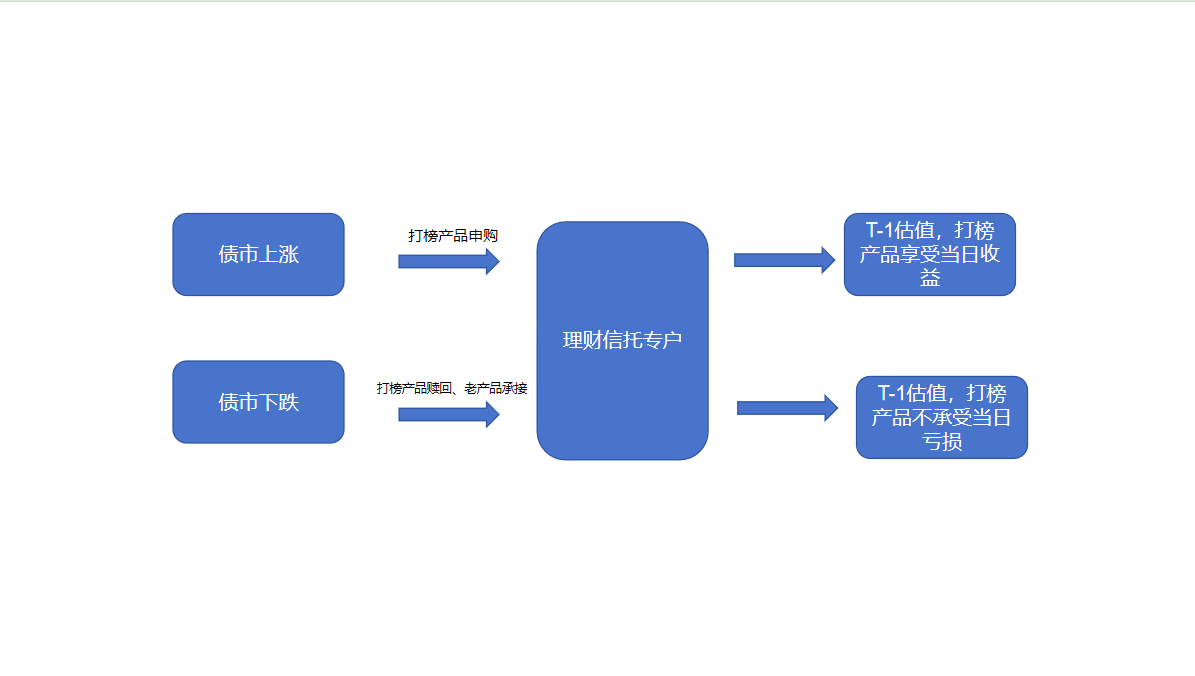
理财估值腾挪术迭代 “开卷考”锁定收益打榜
2 1 Shi Ji Jing Ji Bao Dao· 2025-11-06 12:17
Core Viewpoint - The article discusses the emergence of new valuation techniques in the wealth management industry, particularly the use of T-1 valuation methods, which allow companies to manipulate reported returns on investment products, leading to unfair treatment of investors and misleading performance metrics [1][2][10]. Group 1: Industry Practices - Wealth management companies are increasingly using T-1 valuation methods to shift returns between products, creating high-yield "showcase" products while older products suffer from lower returns [1][6][9]. - This practice results in unfair treatment of clients, where some investors see their returns diminished as their funds are redirected to support the performance of newer, smaller products [2][19]. - The industry is experiencing a trend of excessive product launches, with many small-scale products being introduced, leading to a dilution of focus on investment research and management [16][17]. Group 2: Regulatory Environment - Financial regulators have taken steps to curb previous practices that circumvented asset management regulations, prompting companies to seek new methods like T-1 valuation to maintain competitive returns [10][14]. - The regulatory landscape has become stricter, with some companies already prohibiting the use of T-1 valuation, while others continue to exploit it for higher reported yields [14][15]. Group 3: Market Impact - The reliance on T-1 valuation has led to a significant disparity in returns, with many products yielding only 1.7% annualized returns, which is not reflective of market conditions [19]. - This manipulation of returns contributes to a more short-term investment behavior among clients, undermining the potential for long-term value investing in the capital markets [19][20]. - The industry faces calls for regulatory action to ensure fair practices and transparency, as the current environment fosters potential investor deception [21].

多个信托风险项目曝光
Shang Hai Zheng Quan Bao· 2025-11-06 12:12
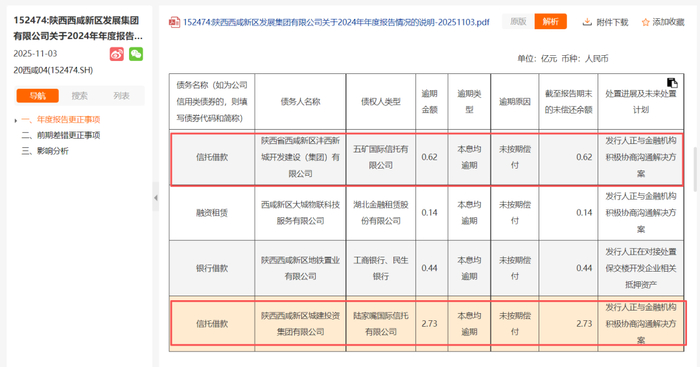
Core Viewpoint - The trust industry is currently undergoing risk resolution, with several companies, including Xixian Group, disclosing overdue trust loans, indicating ongoing challenges in managing non-standard projects due to rapid past expansion [1][2][10]. Company Summary - Xixian Group, established in September 2011 with a registered capital of 30 billion RMB, has two subsidiaries that reported overdue trust loans totaling 0.62 billion RMB and 2.73 billion RMB [2]. - The overdue loans are linked to Xixian Group's subsidiaries, with one loan from Shaanxi Xixian New Area Fengxi New City Development and Construction Group Co., Ltd. to Wukuang Trust, and another from Shaanxi Xixian New Area Urban Construction Investment Group Co., Ltd. to Lujiazui Trust [1][2]. Industry Summary - The trust industry is experiencing a shift as the most concentrated phase of risk exposure has passed, but the resolution of existing risks remains a gradual process [1][10]. - In the first ten months of this year, the number of defaults in government financing trust products was 9, with a total default scale of 1.602 billion RMB, compared to 40 defaults and 6.924 billion RMB in the same period last year [10]. - Trust companies are exploring market-oriented risk resolution methods, such as introducing strategic investors and seeking third-party institutions to acquire investor rights, to achieve risk isolation and smooth exit from projects [10].
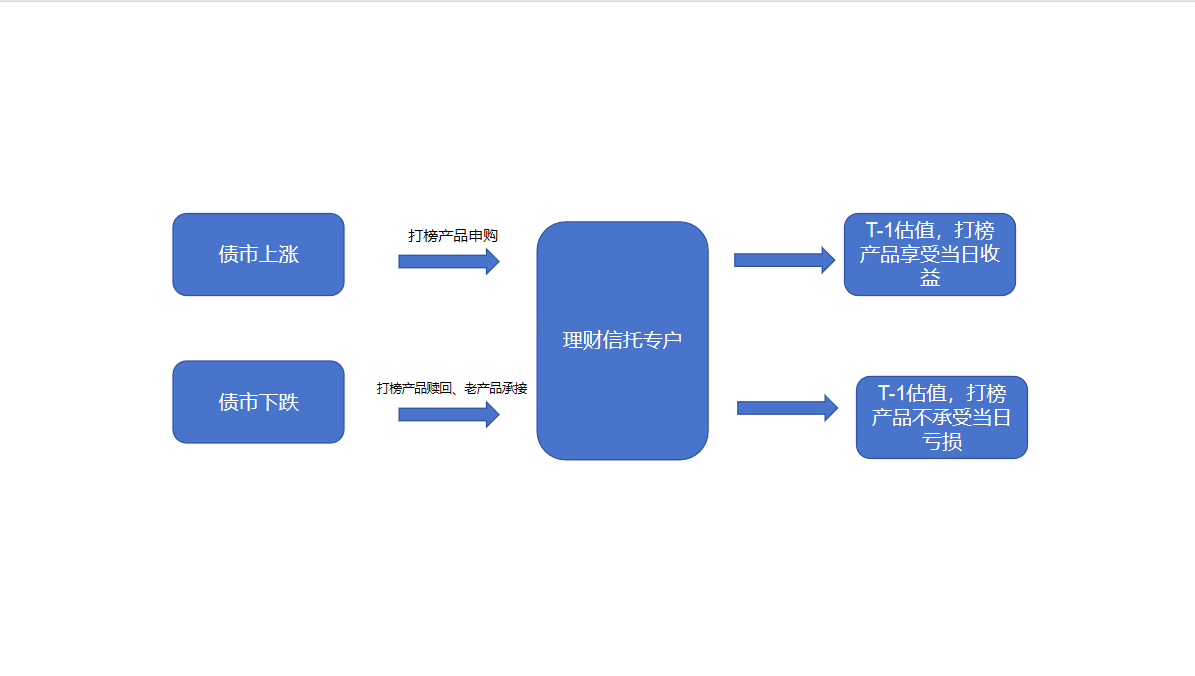
理财估值腾挪术迭代,“开卷考”锁定收益打榜
2 1 Shi Ji Jing Ji Bao Dao· 2025-11-06 11:46
Core Viewpoint - The article highlights the existence of "financial assassins" in the banking wealth management sector, where investors are misled by high advertised returns but receive much lower actual returns due to manipulative practices by wealth management companies [1][14]. Group 1: Industry Practices - Wealth management companies are engaging in unfair competition by using T-1 valuation methods to shift returns between products, leading to discrepancies in actual returns received by investors [1][6]. - The practice of "sheltering" products allows companies to inflate the returns of newly launched products while older products bear the losses, creating an illusion of high performance [5][12]. - Regulatory measures have been implemented to curb previous practices like self-built valuation models, but companies continue to seek loopholes to maintain high returns [7][14]. Group 2: Investor Impact - Investors are often left with returns significantly lower than expected, with some reporting annualized returns as low as 1%-2% despite seeing advertised rates above 5% [1][14]. - The reliance on T-1 valuation creates a situation where investors in older products are unfairly treated, as their returns are used to support the performance of newer products [14][15]. - The high expectations set by advertised returns lead to a cycle of short-term investment behavior, undermining the potential for long-term value investment [15]. Group 3: Market Dynamics - The shift towards T-1 valuation methods has been driven by a combination of regulatory scrutiny and the need for wealth management firms to maintain competitive scales in a challenging market environment [7][8]. - The increasing reliance on trust products and the growing share of outsourced investments indicate a significant change in asset allocation strategies within the wealth management industry [8][9]. - The competitive landscape is becoming more challenging, with larger firms facing pressure to deliver returns while adhering to stricter compliance requirements [10][12].
截至10月累计备案2582单,慈善信托规模逼近百亿元
Hua Xia Shi Bao· 2025-11-06 09:56
Core Viewpoint - China's charitable trust sector has transitioned from a policy exploration phase to a new stage of scaled development, with a total of 2,582 registered charitable trusts and a scale of 9.877 billion yuan as of mid-October 2025, nearing the 10 billion yuan mark [2] Policy Framework - The institutional framework for charitable trusts in China has evolved through a progressive structure of "legal foundation - policy clarification - detailed regulations," starting with the 2001 Trust Law and culminating in the 2023 classification of trust company businesses [3] - Continuous policy support is expected to guide the development direction and institutional boundaries for charitable trusts, with specific mandates for involvement in key areas such as rural revitalization and education [3] Industry Growth - The charitable trust sector is experiencing steady growth, with the number of registered trusts increasing by 306 and the scale rising by 1.314 billion yuan from the end of 2024 to September 2025, indicating a likely breach of the 10 billion yuan threshold by year-end [5] - Shanghai Trust has successfully raised 200 million yuan for over 150 charitable projects, benefiting more than 14,000 individuals across 24 provincial-level regions, focusing on education, healthcare, and rural revitalization [6] Operational Models - Shanghai Trust has established a dedicated charitable trust department to enhance business professionalism and sustainability, creating a collaborative network with various stakeholders to ensure transparency and traceability of projects [7] Challenges and Solutions - The charitable trust sector faces challenges related to public perception, professional capacity, and ecological collaboration, with misconceptions about its purpose and insufficient strategic alignment with national goals [8] - Recommendations for high-quality development include enhancing public education on charitable trusts, improving industry professional capabilities, and fostering multi-party collaboration to create a sustainable development framework [9][10]

119家金融机构已披露助贷合作方名单 中互金:存在四大问题
Xin Jing Bao· 2025-11-06 04:50
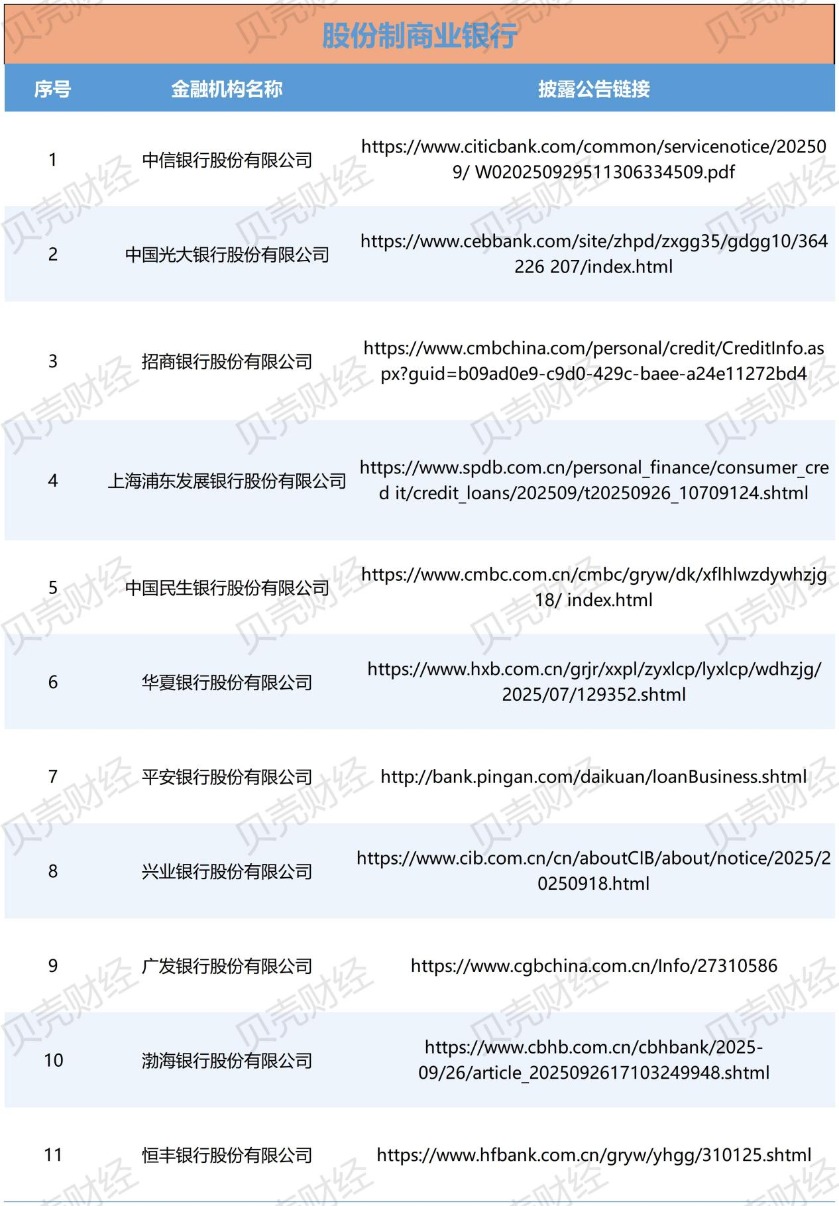
Core Points - The China Internet Finance Association (CIFA) released an announcement summarizing the disclosure status of 119 domestic financial institutions' internet lending business cooperation partners as of October 31 [1] - CIFA identified four major issues regarding the non-compliance and inaccuracies in the disclosure of lending partners by financial institutions [1] Group 1: Overview of Financial Institutions - The 119 financial institutions include 11 national joint-stock banks, 39 city commercial banks, 5 rural commercial banks, 16 private banks, 10 foreign banks, 30 consumer finance companies, 7 trust companies, and 1 direct bank [1] Group 2: Issues Identified by CIFA - The first issue is that the disclosure locations for lending partner lists are often obscure and lack search functionality, making them difficult to find [22] - The second issue is that the disclosure titles are merely "Announcement" and do not follow a chronological order or indicate the update time [22] - The third issue involves financial institutions updating the disclosure lists by directly overwriting the original announcement content [23] - The fourth issue is that the names of disclosed cooperation partners are not standardized, often only showing the group name or indicating that the partner has been renamed or deregistered [23] Group 3: Recommendations by CIFA - CIFA proposed three recommendations to improve the disclosure of lending business cooperation partners, emphasizing that financial institutions should disclose information in a manner that is easy for consumers to access [23]
筑牢乡村“硬基底” 激活振兴“软实力”
Jin Rong Shi Bao· 2025-11-06 03:16
Core Viewpoint - The news highlights the role of charitable trusts in promoting rural revitalization in China, emphasizing their unique advantages in mobilizing social capital and addressing rural needs through targeted financial support [1][3]. Group 1: Charitable Trusts and Rural Revitalization - Charitable trusts are bridging the gap between social goodwill and rural needs, facilitating a shift from short-term aid to long-term empowerment in rural areas [1][3]. - The establishment of charitable trusts has led to significant financial contributions, with a trust in Tianjin raising 5.7093 million yuan to support local infrastructure and industries [2][4]. - Charitable trusts are involved in various projects, including infrastructure development, ecological improvement, and public service enhancement, thereby improving living conditions in rural areas [3][4]. Group 2: Financial Contributions and Project Outcomes - In 2024, the trust industry supported 289 rural revitalization projects with a total investment of 4.304 billion yuan, focusing on industry, culture, and ecology [4]. - Specific projects include the establishment of trusts aimed at ecological restoration and agricultural development, which have collectively raised 7.82 million yuan [3][4]. Group 3: Education and Talent Development - Charitable trusts are also focusing on education and talent development, providing scholarships and training for rural students and local officials, thereby enhancing human capital in rural areas [5][6]. - Shanghai Trust's "Caring for the Yangtze River Delta" project has allocated approximately 10 million yuan to support impoverished students in rural areas over five years [5][6]. Group 4: Operational Transparency and Management - The operational model of charitable trusts emphasizes transparency, independent asset management, and flexible governance, which are critical for maintaining public trust in charitable activities [6][7]. - Xiamen International Trust has implemented a collaborative model with local charities to ensure effective management and monitoring of trust funds, enhancing accountability [7].
信托业高质量发展:破局与前行
Jin Rong Shi Bao· 2025-11-06 02:06
Core Viewpoint - The trust industry is focusing on high-quality development during the "14th Five-Year Plan" period, leveraging its institutional advantages to support sectors like advanced manufacturing and technology innovation [2][3]. Group 1: Trust Industry Practices - The trust industry is utilizing its unique advantages such as bankruptcy isolation and direct property registration to support advanced manufacturing and technology innovation [2]. - Three main paths have been established: 1. Equity investment and fund operation, with trust companies setting up private equity and venture capital funds targeting high-end manufacturing and strategic emerging industries [2]. 2. Empowering industrial chains through asset securitization, enhancing liquidity for manufacturing and technology enterprises [2]. 3. Exploring intellectual property trusts to manage and operate patents and trademarks as trust assets, addressing the challenges faced by asset-light tech companies [2]. Group 2: Supporting Key Technologies - Trust companies are innovating in supporting critical technology breakthroughs through: 1. Establishing special trust plans targeting specific "bottleneck" technologies, attracting long-term capital for cutting-edge research [3]. 2. Creating a collaborative model involving scientists, entrepreneurs, and financiers to clarify rights and obligations in technology development [3]. 3. Providing initial R&D loans with the option to convert to equity or profit-sharing upon project success, and exploring partnerships with government risk compensation funds [3]. Group 3: Rural Revitalization - The trust industry is leveraging charitable trusts to support rural revitalization, developing unique service models such as: 1. "Industry empowerment + charitable trust" model to support local agricultural branding and rural tourism infrastructure [4]. 2. "Rural revitalization + talent cultivation" model to fund youth entrepreneurship and vocational training [4]. 3. "Cultural preservation + ecological trust" model for protecting cultural heritage and environmental management in villages [4]. Group 4: Consumer Finance - Trust companies are advised to reposition themselves in consumer finance, focusing on: 1. New consumption areas like green, digital, and health-related services, creating flexible financial products [5]. 2. Collaborating with major dealers in traditional large-scale consumption sectors to provide flexible financing solutions [5]. 3. Addressing the needs of underserved consumer groups, such as migrant workers and graduates, with small, convenient credit support [5]. 4. Developing financial products tailored for rural markets to stimulate consumption [5]. Group 5: Wealth Management and Social Services - The trust industry is seeing significant growth in family trusts and insurance trusts, with total scales exceeding several hundred billion [7]. - Innovative models like prepaid fund management trusts are emerging to enhance social governance, reflecting the trust's social service capabilities [7]. - Future opportunities include: 1. Deeply customized family trusts offering comprehensive solutions for wealth transfer and family governance [8]. 2. Making family and insurance trusts more accessible to middle-class families [8]. 3. Safeguarding consumer rights through independent management of prepaid funds in various sectors [8]. 4. Establishing trusts for vulnerable groups to ensure long-term support for their needs [8].
定位私募、严管非标 资产管理信托管理办法公开征求意见
2 1 Shi Ji Jing Ji Bao Dao· 2025-11-05 23:07
Core Viewpoint - The recent release of the "Asset Management Trust Management Measures (Draft for Comments)" by the National Financial Supervision Administration aims to enhance regulation and risk prevention in the trust industry, marking a significant shift towards quality development and true asset management functions [1][2]. Regulatory Framework - The new measures consist of five chapters and eighty-five articles, clearly defining asset management trusts as private asset management products based on trust law relationships [1]. - The principles of "seller responsibility, buyer self-responsibility" are emphasized, prohibiting channel business, fund pool operations, and rigid repayment [1][2]. - The measures align with previous regulations, such as the "Asset Management New Regulations," to eliminate rigid repayment, multi-layered nesting, and introduce independent custody mechanisms [3]. Investor Standards and Sales Management - The measures significantly upgrade the standards for qualified investors, raising the investment threshold for individual investors and introducing requirements for institutional investors [2][3]. - Sales management is more stringent, with clear regulations on sales methods, documents, and institutions, and a prohibition on any form of capital preservation promises [3][4]. Investment Management Requirements - The measures outline strict management of trust assets, requiring clear legal relationships and adherence to specified investment ranges [4]. - Different asset categories must be managed distinctly, and investment cooperation institutions must meet specific qualifications [4]. Business Model Transformation - The new regulations signify a shift from a financing-driven model to an investment-driven model, requiring trust companies to focus on professional investment management capabilities [5][6]. - Revenue models will transition from fixed expected returns to net value fluctuations, compelling trust companies to enhance their investment research capabilities [5][6]. Industry Dynamics - The introduction of these measures is expected to lead to increased competition, with leading institutions leveraging research and resource advantages to capture market share [6]. - Smaller institutions may need to focus on niche areas or face consolidation or market exit, leading to higher industry concentration [6].