
物业管理

Search documents
业主以“合同到期”为由拒交费败诉,法院:业主实际接受了服务
Xin Jing Bao· 2025-12-02 14:19
Core Viewpoint - The Beijing Second Intermediate People's Court, in collaboration with the Municipal Housing and Urban-Rural Development Committee, has reported on the handling of property-related disputes and management in the property industry, highlighting a case where homeowners were required to pay property fees despite the expiration of their contract with the property management company [1][2] Group 1: Court Rulings and Legal Framework - In a case involving a homeowner who refused to pay four years of property fees, the court ruled in favor of the property management company, stating that the homeowner must pay for services received even after the contract expired [1] - The court referenced Article 948 of the Civil Code, which stipulates that if a property service provider continues to offer services after the contract expires and the homeowner has not hired a new provider, the original contract remains valid on an indefinite basis [1] - The court's decision emphasized that homeowners cannot refuse to pay property fees by claiming the absence of a contract, as per Article 944 of the Civil Code, which mandates payment for services rendered [2]
物业未经法定程序擅自上调物业费,法院判业主以“老价格”交费
Xin Jing Bao· 2025-12-02 14:16
新京报讯(记者张静姝)近日,北京市第二中级人民法院联合市住建委召开新闻通报会,通报近年来物业 类纠纷案件的审理情况和物业行业管理情况,并联合发布物业类典型纠纷与协同治理案例。在一起案例 中,物业公司调整服务费没有经过法定程序,法院最终判决业主按照调整前的价格补缴拖欠的物业费。 法官解析,《北京市物业管理条例》规定,物业服务收费实行市场调节价并适时调整。调整物业服务价 格属于全体业主共同决定事项,应经专有部分面积占比三分之二以上的业主且人数占比三分之二以上的 业主参与表决,并经参与表决专有部分面积过半数的业主且参与表决人数过半数的业主同意后方可调 整。物业服务人未经法定程序擅自调整物业服务收费标准的,法院不予支持。 李某为A小区业主,甲物业公司为该小区提供物业服务。甲物业公司起诉李某,要求其支付2022年1月1 日至2023年12月31日欠缴的物业费,双方对于收费标准产生分歧。甲物业公司主张按照上调后2.8元每 平方米每月的新物业收费标准交纳物业费。李某认为甲物业公司在上调物业费事项上未经业主共同决 定,擅自上调价格,要求仍按照2.3元每平方米每月的原收费标准支付本案涉及期间的物业服务费。 法院裁判认为,物业费 ...
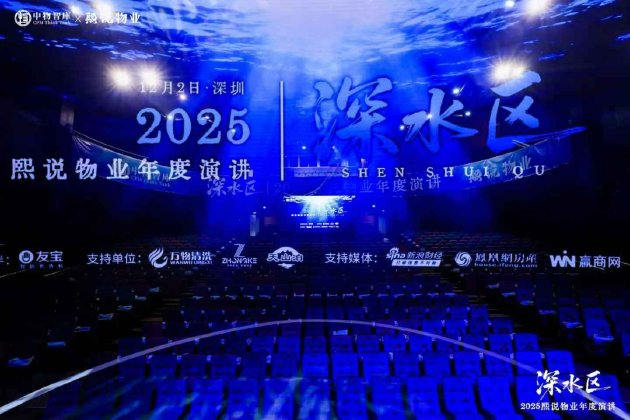
2025熙说物业年度演讲:深水区(演讲全文)
Xin Lang Cai Jing· 2025-12-02 12:22
Core Viewpoint - The 2025 Xi Shuo Property Annual Speech held in Shenzhen focuses on the theme "Deep Water Zone," addressing the challenges and transformations in the property management industry, emphasizing the need for reform and innovation to navigate current difficulties [1][4][7]. Group 1: Historical Context - The property management industry has evolved over 40 years, with total revenue reaching 16.9 trillion yuan and over 60 listed property companies, highlighting its growth and the challenges of maintaining rationality amidst rapid expansion [5]. - The theme "Deep Water Zone" symbolizes the industry's current state, where deeper issues and challenges require more advanced skills and strategies to navigate [9][10]. - Historical issues in the industry include outdated regulations, misalignment of interests among stakeholders, and a lack of effective management mechanisms, which have created systemic challenges [11][12]. Group 2: Current Challenges - The industry faces significant conflicts, including dissatisfaction with service quality, operational difficulties for property companies, and price competition leading to a decline in service standards [11][12]. - The "retreat wave" phenomenon indicates that property companies are exiting unprofitable projects, often due to owners' unwillingness to pay adequate fees, leading to service disruptions and community dissatisfaction [22][23]. - The lack of a strong "client" presence in property management, where owners do not actively participate in governance, exacerbates existing issues and hinders effective decision-making [34][36]. Group 3: Future Directions - The future of the property management industry lies in embracing new technologies and opportunities, such as facility management, asset management, and AI, to address emerging challenges [12]. - The industry must shift from a focus on short-term gains to a long-term service-oriented approach, emphasizing the importance of professional management and community engagement [57][60]. - The need for a comprehensive service model that integrates functionality, emotional value, and social responsibility is crucial for enhancing service quality and community satisfaction [79][81].

新大正:累计回购59.73万股公司股份
Ge Long Hui· 2025-12-02 10:11
Group 1 - The company, Xin Dazheng (002968.SZ), has repurchased a total of 597,300 shares, which represents 0.26% of its total share capital [1] - The highest transaction price during the buyback was 13.08 CNY per share, while the lowest was 11.90 CNY per share [1] - The total amount spent on the buyback was 7.2815 million CNY, excluding transaction fees [1]

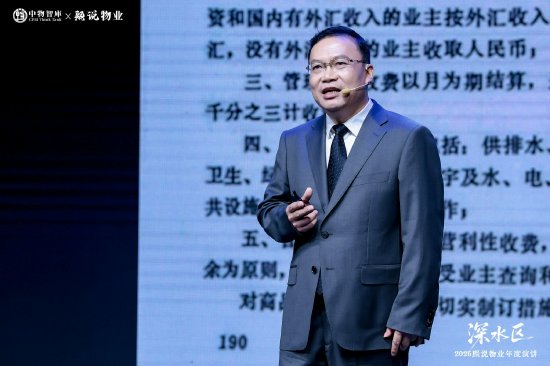
物业行业如何做?深圳物协秘书长张红喜立:市场化是根,各方力量须踩着市场节拍发力
Xin Lang Cai Jing· 2025-12-02 09:03
专题:2025熙说物业年度演讲:深水区 2025熙说物业年度演讲于12月2日在深圳举行,主题为:深水区。深圳物协秘书长张红喜出席并演讲。 谈及当今时代下物业行业如何做,张红喜表示,这是个现实而又紧迫的话题。 他指出,先立第一面旗:市场化是根,松不得。张红喜表示,最近几年,党政机关越来越深扎物业领 域。"这是好事,但我恳请所有力量都踩着市场的节拍发力。"他举例到,例如住建部今年中颁发的199 号文,它对行业的发展作用堪比1994年的建设部33号令。但是更尊重市场逻辑,既激活市场机制,又校 准了党政引导的坐标。 在他看来,这套机制和新修订的《居委会组织法》,有关居委会拥有"协助指导和监督社区公共事务的 新角色地位",他认为,这并不是各方无端插手干预,这其实是帮业主、甲方站稳脚跟,让市场的齿轮 运转的更加瓷实。 第二面旗,专业化与数字化,这是双轮驱动。张红喜强调,作为专业人士,必须拥有比业主、客户更多 的专业知识、素养和能力。"尤其在当前,应该就大家关注的市场价格机制、物业服务量清单和成本定 额测算,以及更清晰、具体、详尽的物业服务合同样本,提出我们最专业的解决方案。" 第三面旗,中国特色物业社区综合发展道路。张红 ...
A股,两大板块持续爆发!002792,002632,四连板!
Zheng Quan Shi Bao· 2025-12-02 08:02
Market Overview - A-shares experienced slight adjustments with the Shanghai Composite Index fiercely contesting around 3900 points, while over 4000 stocks declined and trading volume showed a shrinking trend [1] Consumer Electronics Sector - The consumer electronics sector continued to strengthen, with the sector index rising for six consecutive days. Notable stocks such as Tongyu Communication and Daoming Optics reached their daily limit for the fourth consecutive day [2] - Recent favorable policies include a joint implementation plan by six departments aiming to create three trillion-level consumption fields and ten hundred-billion-level consumption hotspots by 2027, with a focus on consumer electronics and smart wearable products [2] - Major companies are launching significant new products, including a new drone brand by Yingshi Innovation and AI glasses by Li Auto, Google, Alibaba, and Huawei, indicating strong industry momentum [3] - Institutional interest in consumer electronics stocks has surged, with companies like Luxshare Precision receiving attention from nearly 500 institutions in the past month, driven by recent policy boosts and product launches [3] Real Estate Sector - The real estate sector showed signs of strength, particularly in property management, which has seen a seven-day consecutive rise. Stocks like Suhao Huihong and Hengyin Technology reached their daily limit, with Suhao Huihong hitting a two-year high [4] - Recent policy optimizations in various cities, such as Chongqing and Hangzhou, aim to stimulate reasonable housing demand by easing housing fund withdrawal conditions and promoting the purchase of existing homes for affordable housing [4] - Despite ongoing downward trends in real estate sales, leading companies are expected to benefit from new inventory and increased market concentration, suggesting a potential for structural trading opportunities in the sector [4]


杨熙谈物业行业进入“深水区”本质:表象之下矛盾的集中爆发
Xin Lang Cai Jing· 2025-12-02 07:49
Core Viewpoint - The property industry has reached a "deep water zone" moment, characterized by unresolved historical issues, current conflicts, and future transformation opportunities [3][6]. Historical Dimension - The deep water zone represents institutional reefs, with historical problems that are difficult to resolve, such as outdated regulations, lack of property fee adjustment mechanisms, and misalignment of interests among owners, property management, and government [3][6]. Current Reality - The deep water zone is marked by acute conflicts, including discrepancies between property fees and services, and supply-demand mismatches between owners and property management. Issues include stagnant service skills, declining service quality, and intense low-price competition leading to a "bad money drives out good" scenario [3][6]. Future Perspective - The deep water zone signifies a direction for transformation, incorporating new technologies and opportunities such as facility management (FM), asset management (IM), artificial intelligence (AI), low-carbon energy solutions, and integration of property services with elder care [3][6]. Conclusion - The essence of the deep water zone is the concentrated explosion of underlying contradictions, indicating that reliance on past practices is no longer viable. The industry must adapt to new challenges and rethink its strategies beyond temporary fixes [3][6].
新修订的《山西省物业管理条例》将于2026年1月1日起施行
蓝色柳林财税室· 2025-12-02 07:13
Core Viewpoint - The revised Property Management Regulations of Shanxi Province emphasize strengthening party leadership in the property industry, enhancing owner autonomy, and establishing a joint meeting system for property management, effective from January 1, 2026 [3][4]. Group 1: Strengthening Governance - The regulations clarify the roles of various departments and organizations in property management, aiming to create a comprehensive regulatory system [4]. - A joint meeting system for property management is mandated, with county-level governments required to incorporate property management into community governance [3][4]. Group 2: Enhancing Owner Autonomy - The regulations provide detailed provisions for the establishment and operation of owners' committees, enhancing the operational feasibility and ensuring owners' primary role in property management [4]. - A property management committee system is introduced for newly delivered residential areas that do not yet meet the conditions for establishing an owners' committee [4]. Group 3: Standardizing Property Services - The regulations specify the content and filing requirements for property service contracts, and standardize service fees, with government-guided pricing for preliminary property services and affordable housing [5]. - Property service providers are required to publicly disclose information about service fees and management practices, ensuring transparency and accountability [5][6]. Group 4: Legal Responsibilities and Penalties - The regulations impose stricter penalties for violations such as failure to fulfill warranty obligations and unauthorized alterations to property facilities, ensuring clear enforcement responsibilities [6]. - Specific penalties are established for various infractions, ensuring that enforcement agencies are clearly defined and that the regulations can be effectively implemented [6].
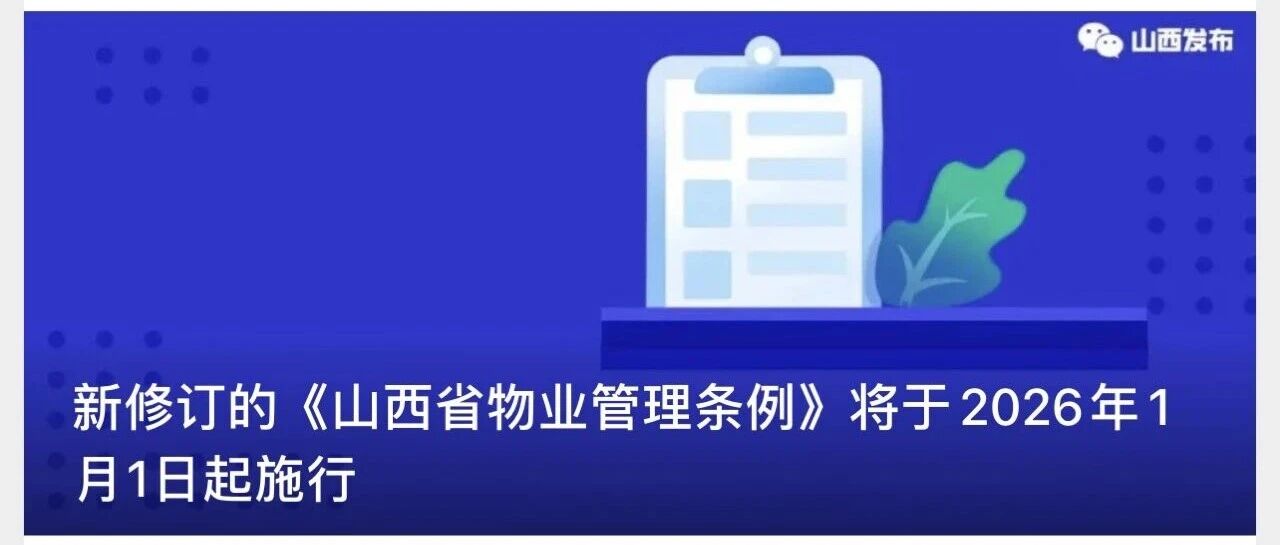
中物智库创始人杨熙:物业要脱离地产基因、补全服务业基因,方能穿越深水区
Xin Lang Cai Jing· 2025-12-02 07:10
专题:2025熙说物业年度演讲:深水区 2025熙说物业年度演讲于12月2日在深圳举行,主题为:深水区。中物智库创始人杨熙在演讲中谈到, 物业原本就不是从服务业诞生的,而是从房地产的尾部工序长出来的。 他提到,作为交付闭环的一部分,物业从出生起就不是为服务价值而生的,它是为销售价值而存在的。 在国民经济行业分类中,物业一直从属于房地产的门类,更深的束缚来自于基因与文化。房地产的主线 文化是快、节点、听命令,物业的本质要求是慢、耐心连情绪。一个是硬逻辑,一个是软逻辑;一个是 销售导向,一个是关系治理导向;一个讲绝对服从,一个讲感知与协商。 杨熙表示,在房地产的黄金时代,物业公司得益于地产的助推快速发展,过得也还算不错。但在过去四 年里,一些房地产企业陆续的爆雷,开发商资金紧张,占用透支物业的现金流,项目停摆交付有问题, 迅速传导影响物业。"在项目的现场,所有的不满,所有的委屈,所有的落差,都要找到一个出口。于 是物业在现实中被迫成为了背锅的担当,情绪的吸收层,以及社会压力的缓冲器。" 因此,杨熙强调,脱离地产基因,并非是否定地产,而是要补全服务业的基因。"用服务的逻辑重塑组 织,用长期主义加关系代理,取代短期的 ...
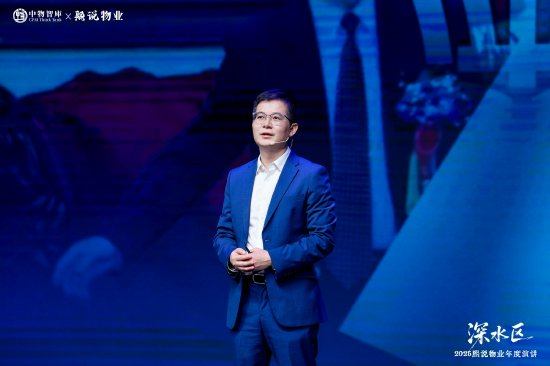
中物智库创始人杨熙:房企陆续爆雷,物业成了背锅担当
Xin Lang Cai Jing· 2025-12-02 07:10
专题:2025熙说物业年度演讲:深水区 2025熙说物业年度演讲于12月2日在深圳举行,主题为:深水区。中物智库创始人杨熙在演讲中谈到, 物业原本就不是从服务业诞生的,而是从房地产的尾部工序长出来的。 因此,杨熙强调,脱离地产基因,并非是否定地产,而是要补全服务业的基因。"用服务的逻辑重塑组 织,用长期主义加关系代理,取代短期的KPI加销售思维,才可能在存量时代建立可持续的经营模 型。" 他提到,作为交付闭环的一部分,物业从出生起就不是为服务价值而生的,它是为销售价值而存在的。 在国民经济行业分类中,物业一直从属于房地产的门类,更深的束缚来自于基因与文化。房地产的主线 文化是快、节点、听命令,物业的本质要求是慢、耐心连情绪。一个是硬逻辑,一个是软逻辑;一个是 销售导向,一个是关系治理导向;一个讲绝对服从,一个讲感知与协商。 杨熙表示,在房地产的黄金时代,物业公司得益于地产的助推快速发展,过得也还算不错。但在过去四 年里,一些房地产企业陆续的爆雷,开发商资金紧张,占用透支物业的现金流,项目停摆交付有问题, 迅速传导影响物业。"在项目的现场,所有的不满,所有的委屈,所有的落差,都要找到一个出口。于 是物业在现实中 ...