酒店业

Search documents
万豪酒店的“一次性”拖鞋,会是谁的“下一次”?
Xin Jing Bao· 2025-09-23 06:26
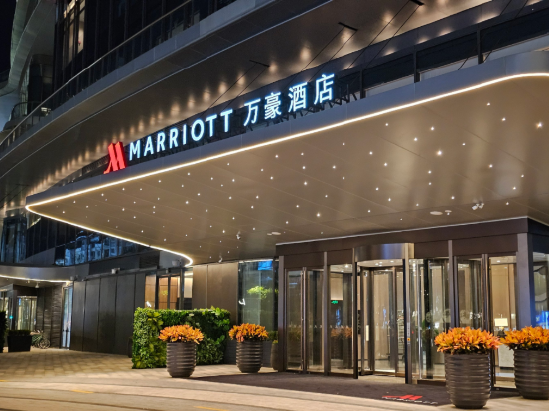
Core Viewpoint - The controversy surrounding the reuse of disposable slippers at the Marriott Hotel in Changzhou, Jiangsu, raises questions about consumer rights, hygiene standards, and the transparency of hotel practices regarding disposable items [1][2][3] Group 1: Hotel Practices and Consumer Rights - The Changzhou Marriott Hotel admitted to reusing disposable slippers for environmental reasons, which has sparked public debate about the appropriateness of this practice [1] - Industry insiders noted that while some budget hotels may use thin disposable slippers, many high-end hotels do recycle and reuse slippers after cleaning, typically up to three times [1] - The local health supervision authority stated that if slippers are labeled as disposable, their reuse is strictly prohibited, highlighting the need for clearer definitions of what constitutes disposable items [2] Group 2: Cost and Transparency Issues - The cost of disposable slippers is as low as 0.3 yuan, while the cleaning and quality control for reusable slippers incurs additional expenses, raising doubts about the hotel's commitment to providing a clean product for each guest [2] - There is a call for greater transparency in hotel practices, allowing consumers to make informed choices regarding the services they pay for, particularly concerning hygiene and safety [2] - The erosion of consumer trust due to unclean slippers can damage a brand's reputation, undermining the perceived value of the premium services offered by hotels [2][3]

建银国际:内地国庆黄金周将推动短期零售销售增长
智通财经网· 2025-09-23 02:38
Core Viewpoint - The report from Jianyin International highlights that the upcoming National Day Golden Week in China will significantly boost short-term consumption, particularly benefiting sectors such as tourism, dining, beverages, outdoor sports, and gold-related businesses [1] Group 1: Impact on Sectors - The Golden Week is expected to drive retail sales growth, with a notable increase during the overlapping period of the Mid-Autumn Festival and National Day in 2025, from October 1 to 8 [1] - Key sectors poised to benefit from the consumption surge include tourism, hospitality, retail, dining, jewelry, ready-to-drink beverages, and outdoor sports, driven by rising demand for services, cultural experiences, and leisure activities [1] Group 2: Policy Support - Recent national service consumption boosting policies and regional initiatives are anticipated to extend the consumption growth during the holiday period, creating short-term investment opportunities in the market [1]



酒店品牌与业主,为何总在“新婚之夜”分手?
Hu Xiu· 2025-09-23 02:13
Core Viewpoint - The recent termination of the partnership between Dusit Hotels and Hangzhou Jing Shan Dusit Thani Hot Spring Hotel highlights a growing trend in the hotel industry where partnerships are abruptly ended before or shortly after opening, raising questions about the underlying reasons for such occurrences [1][5][11]. Group 1: Termination of Partnership - Dusit Hotels announced the termination of its management cooperation with Hangzhou Jing Shan Dusit Thani Hot Spring Hotel, effective September 6, 2025, just a month after the hotel opened in August 2023 [1][2]. - The hotel, which took five years to develop, was positioned as the second Dusit Thani location in China, but the partnership ended without a clear explanation [1][4]. - The hotel is currently listed as "closed" on travel platforms, with a reopening date set for January 1, 2026, indicating operational issues [1]. Group 2: Industry Trends - The phenomenon of "premature separations" in the hotel industry is not isolated to Dusit, with other high-end hotels also experiencing similar issues, such as the Huizhou Shuangyue Bay Dusit Thani project, which was rebranded before opening [3][5]. - In 2024, a significant number of mid-range and upscale hotels, totaling 1,572, underwent brand changes across 253 cities, indicating a broader trend of instability in hotel branding [6][7]. Group 3: Reasons for Brand Changes - Common reasons for these abrupt changes include financial difficulties faced by hotel owners, leading to an inability to pay management fees, as seen in the case of Hangzhou Jing Shan Dusit Thani [7][9]. - Discrepancies in operational philosophies between owners and management companies can also lead to conflicts, resulting in brand changes [9][10]. - Some owners may attempt to leverage brand recognition to enhance property value, only to sever ties with management once their goals are achieved, reflecting a lack of commitment to long-term partnerships [10][11]. Group 4: Long-term Implications - The hotel industry is evolving towards a more professional and refined operational model, where simply attaching a brand is insufficient for success [11][14]. - Successful hotel projects are characterized by long-term collaboration and trust between owners and management, emphasizing the importance of professional expertise in achieving sustainable growth [11][14].
常州万豪酒店回应循环使用拖鞋:具体情况正在调查
Zhong Guo Xin Wen Wang· 2025-09-22 23:41
Core Viewpoint - The incident involving the reuse of slippers at the Changzhou Marriott Hotel has raised concerns about hygiene practices, prompting an investigation by local health authorities [1] Group 1: Incident Details - A social media post on September 20 highlighted that the slippers provided by the Changzhou Marriott Hotel were worn and had hair inside, leading to allegations of repeated use [1] - The hotel management admitted on September 21 that, for environmental reasons, the slippers are cleaned and reused 2-3 times [1] - The Changzhou Health Supervision Bureau has initiated an investigation to determine whether the slippers are intended for single use [1] Group 2: Company Response - The Changzhou Marriott Hotel stated that they are currently investigating the situation and will issue an official statement once the findings are available [1] - Inquiries made to other Marriott hotels in Beijing and Shanghai confirmed that they provide single-use slippers and do not reuse them [1] - Staff at other locations indicated that if guests have concerns, they can request a check of the slippers before their stay [1] Group 3: Company Background - Marriott International is a global hotel management company with over 30 brands, including Ritz-Carlton and St. Regis [1] - The Changzhou Marriott Hotel features 263 panoramic guest rooms equipped with advanced facilities [1]
国际连锁酒店品牌排行揭晓,锦江旗下丽芮、凯里亚德、康铂如何突围?
Sou Hu Cai Jing· 2025-09-22 19:48
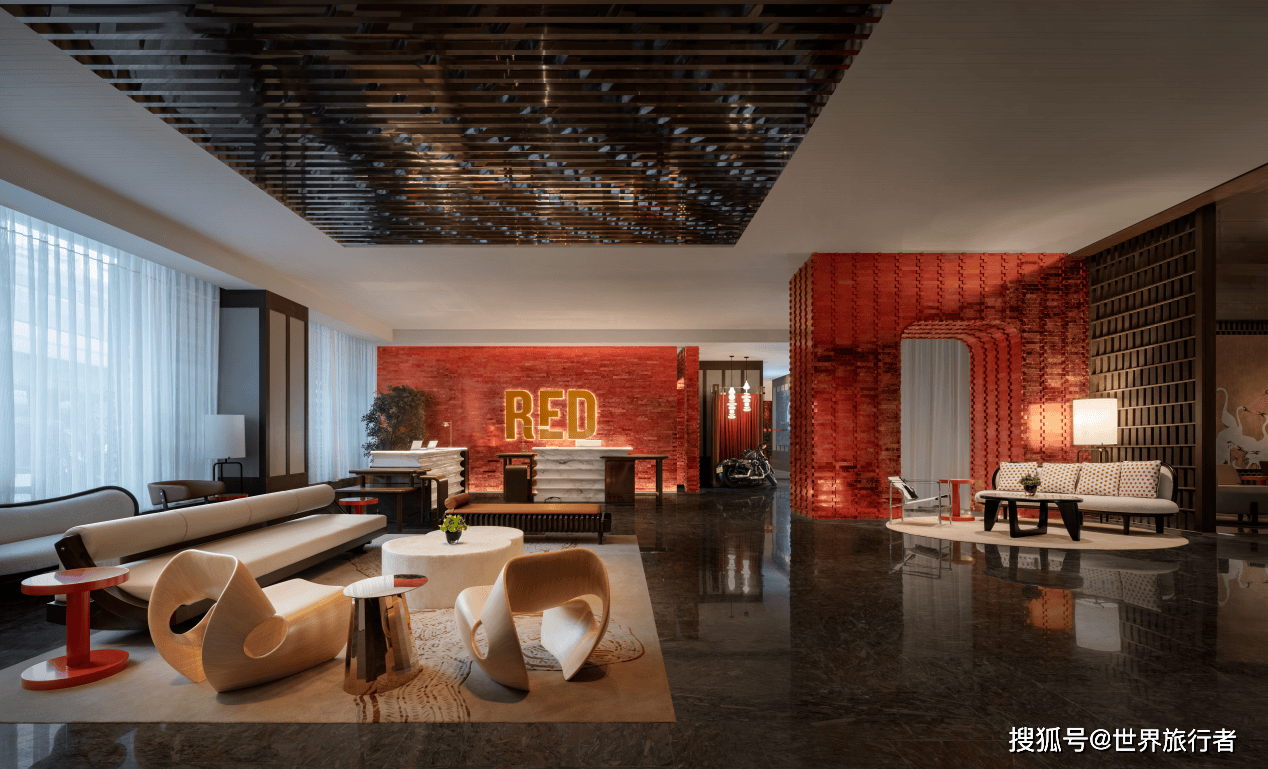
Core Insights - The global hotel industry is witnessing significant changes, with Jin Jiang International Group ranking second globally and first in China according to the 2024 "Top 205 Global Hotel Groups" list by HOTELS magazine [1] - Jin Jiang Hotels (China) is leveraging a refined brand matrix to cater to diverse market needs and investment preferences, focusing on three key brands: Radisson RED, Kyriad, and Campanile [1] Radisson RED - Radisson RED targets the high-end lifestyle segment, appealing to Gen Z and emerging middle-class consumers who seek emotional value, design, and immersive cultural experiences [2][3] - The brand emphasizes a unique positioning as a lifestyle destination, integrating local culture into modern design, with each hotel reflecting its locality [3] - The product concept "Room + X" enhances the traditional lodging experience by offering a multifaceted space that includes social, artistic, dining, and fitness elements [5] - Investment potential is strong, with a room cost of 180,000 to 200,000 RMB and an average room rate of 800 to 1,000 RMB in prime locations, with a payback period of 4 to 5 years [5] Kyriad - Kyriad is positioned as an international mid-range business hotel brand, focusing on local market needs while maintaining international standards [6][7] - The brand has rapidly expanded in China, with over 560 locations expected by the end of 2024, indicating strong market acceptance [7] - The V3.0 product version offers five core experiences: sleep quality, health, intelligence, environmental sustainability, and exploration, enhancing guest engagement [9][10][11][12] - The investment model is characterized by stability and efficiency, with a total cost of 95,000 to 100,000 RMB per room and a payback period of approximately 3.4 years [13] Campanile - Campanile, also from the Louvre Hotels Group, targets the mid-range market with a focus on flexibility, style, and operational efficiency [17][18] - The brand is designed as a "city living room," appealing to young business travelers who value quality and cost-effectiveness [18] - The product design is adaptable, offering various investment models to suit different property conditions, enhancing operational viability [24] - The investment cost is approximately 85,000 RMB per room, with a payback period of around 3 years, making it attractive for investors seeking quick returns [24] Conclusion - Jin Jiang Hotels (China) has established a comprehensive brand pyramid with Radisson RED for high-end markets, Kyriad for mid-range business travelers, and Campanile for flexible mid-range solutions [25] - Each brand benefits from Jin Jiang International Group's robust platform, including a vast membership base, supply chain management, operational expertise, and financial support, making them viable options for hotel investors [26]


五星级酒店的“金字招牌”,被一双拖鞋砸了?
凤凰网财经· 2025-09-22 13:45
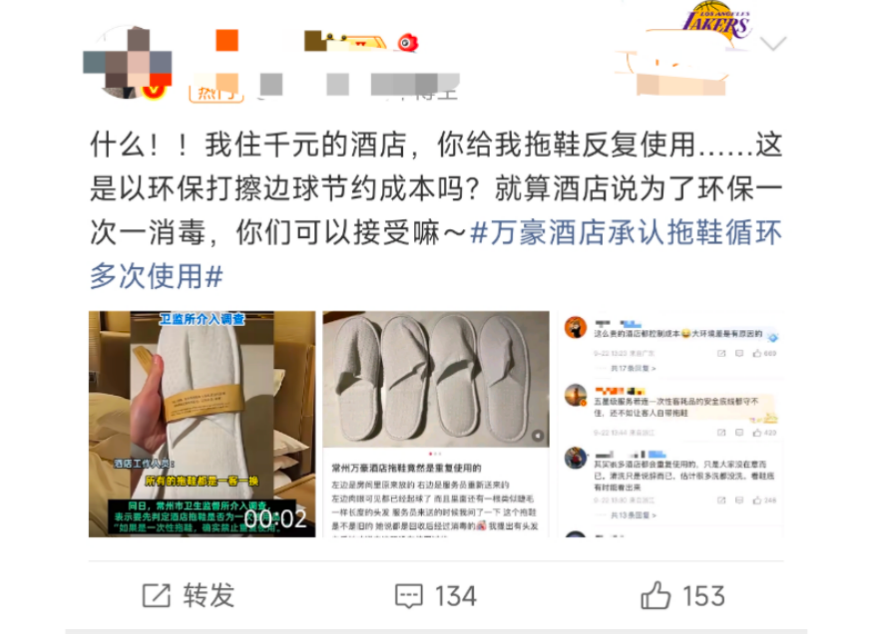
Core Viewpoint - The recent incident involving a Marriott hotel in Changzhou, Jiangsu, where a guest found unsanitary slippers, has sparked widespread public concern and debate about hygiene standards in high-end hotels, raising questions about consumer trust in the hospitality industry [2][5][11]. Group 1: Incident Details - A guest at a Marriott hotel discovered that the provided slippers were worn and had hair on them, leading to suspicions of their reuse [2][5]. - The hotel staff admitted that slippers are cleaned and reused 2-3 times for environmental reasons, which contradicts the expectation of single-use items in high-end accommodations [5][11]. - The local health supervision department has initiated an investigation to determine if the hotel's practices comply with hygiene regulations [5][11]. Group 2: Public Reaction - Online reactions to the incident are divided; some view it as an industry norm, while others criticize the hotel for prioritizing cost savings over hygiene [6][11]. - There is a call for transparency regarding the cleaning and reuse of items like slippers, with some consumers stating that if proper disinfection is ensured and communicated, they might accept reused items [6][11]. Group 3: Marriott's Business Context - Marriott International, which has a significant presence in China, is facing challenges in its operations, particularly in the Greater China region, where key performance indicators like RevPAR and ADR have shown declines [9][12][16]. - The company reported a global revenue increase of 5% in Q2 2025, but the performance in the Greater China market remains weak, with RevPAR down by 0.5% and ADR down by 0.9% [12][16]. - Amidst these challenges, Marriott is also planning to lay off 833 employees, indicating ongoing operational difficulties [17].

五星级酒店的“金字招牌”,被一双拖鞋砸了?
Feng Huang Wang Cai Jing· 2025-09-22 12:52
Core Viewpoint - A recent incident involving a Marriott hotel in Changzhou, Jiangsu, has raised concerns about hygiene standards in high-end hotels, as a guest discovered used slippers with hair and pilling, leading to public outrage and an investigation by local health authorities [1][3][4]. Group 1: Incident Details - The hotel charges an average room rate exceeding 700 RMB per day, yet the slippers provided were found to be unsanitary, prompting the guest to question their cleanliness [3]. - The hotel staff claimed that slippers are cleaned and reused, which was not clearly communicated to guests, violating hygiene regulations that require proper cleaning and disinfection of reusable items [3][11]. - Following the incident, the hotel admitted that slippers are reused 2-3 times for environmental reasons, which has sparked a debate about the balance between cost-saving and hygiene [4][11]. Group 2: Public Reaction - Online discussions revealed a divide among netizens, with some viewing the incident as an industry norm while others criticized the hotel for prioritizing cost over cleanliness [4]. - Complaints against Marriott have been accumulating, with over 1,000 grievances reported on consumer platforms, highlighting issues such as hygiene standards and customer service [8]. Group 3: Company Background and Performance - Marriott International, a leading hotel group with 1.667 million rooms, has faced challenges in the Chinese market, which is its second-largest market globally [10][11]. - In Q2 2025, Marriott's global hotel revenue grew by 5% to $6.74 billion, but its performance in Greater China showed a decline, with RevPAR down 0.5% and ADR down 0.9% [12][14]. - The company is also planning to lay off 833 employees in early 2025, indicating ongoing operational challenges [14].
国家公园法将施行;五年来高排放车辆淘汰近两千万辆丨碳中和周报
2 1 Shi Ji Jing Ji Bao Dao· 2025-09-22 12:24
Group 1: National Park Law Implementation - The first National Park Law in China will take effect on January 1, 2026, aiming to protect representative natural ecosystems and promote sustainable use of natural resources [2] - The law establishes a legal framework for a national park system, emphasizing strict protection and integrated management of natural resources [2] - It encourages public participation in conservation efforts and aims to foster awareness of ecological protection among the public [2] Group 2: High-Emission Vehicle Elimination - The Ministry of Ecology and Environment announced that nearly 20 million high-emission vehicles will be eliminated during the 14th Five-Year Plan period [3][4] - Significant reductions in PM2.5 concentrations are targeted, with expected decreases of 18%, 10%, and 20% in key regions by 2024 compared to 2020 levels [3] - The campaign includes comprehensive measures such as coal management and pollution source tracking, achieving notable progress in water and soil protection [4] Group 3: Carbon Market Development - As of September 18, 2025, China's carbon market has seen a cumulative transaction volume of 714 million tons and a total transaction value of approximately 49.96 billion yuan [5][6] - The establishment of a regulatory framework for carbon trading is underway, supporting China's climate change initiatives [5] - The carbon market is recognized as a key mechanism for achieving carbon peak and carbon neutrality goals [6] Group 4: Climate Change and Industry Restructuring - The year 2024 is projected to be the first year to exceed the 1.5°C temperature threshold set by the Paris Agreement, indicating a concerning trend in global warming [7][8] - Experts emphasize the need for intensified emission reduction efforts to meet climate targets and ensure sustainable development [7][8] Group 5: Renewable Energy Consumption in Inner Mongolia - Inner Mongolia has issued a notification to optimize the mechanism for renewable energy consumption, focusing on both mandatory and voluntary consumption [9] - The initiative aims to enhance green electricity consumption and promote the integration of renewable energy with industry [9] Group 6: Low-Carbon Initiatives and Events - The "Low-Carbon China Tour" and Climate Action Week series of events were launched to showcase China's efforts in energy transition and public engagement [10][11] - The events highlight the role of enterprises like Southern Power Grid in promoting green development and their participation in international climate discussions [10][11] Group 7: Clean Energy Expo in Shandong - The 2025 Shandong Clean Energy Industry Expo was held to facilitate innovation and collaboration in the clean energy sector [13][14] - The event aims to strengthen partnerships between enterprises and research institutions to support the region's energy transition [13][14] Group 8: Sustainable Strategy by Yinyu Water Zhongtian - Yinyu Water Zhongtian has set a net-zero target for 2040 and aims to achieve various sustainability goals by 2030 [15][16] - The strategy includes low-carbon construction, climate risk adaptation, and waste management initiatives to promote a circular economy [15][16]
重塑酒店消费图景,“国货联号”喊出本土崛起最强音
Sou Hu Cai Jing· 2025-09-22 11:50
Core Insights - The rise of domestic brands in China's consumer market is a significant trend, with local brands achieving remarkable success and market penetration [2][3][4] - The hospitality industry is undergoing a transformation, challenging the long-standing dominance of international hotel brands and redefining high-end standards [6][7][9] Domestic Brand Success - Anker's power banks and other local brands have shown impressive growth, with Anker achieving a 66.96% revenue increase in Europe and Suida River Coffee topping sales charts on Tmall [2] - During the "618" shopping festival, 70% of the top 100 brands on JD.com were domestic, with a 270% year-on-year increase in searches for products featuring intangible cultural heritage [2] Hospitality Industry Transformation - The traditional perception of high-end hotels being synonymous with international brands is fading, as local hotel groups like Jin Jiang, Huazhu, and Shoulv expand rapidly [6][10] - The average room rates and occupancy rates of five-star hotels in China have shown a downward trend, contrasting with the growth of local hotel brands [6] Local Hotel Brand Innovations - Local hotel brands are innovating by integrating cultural experiences into their offerings, challenging the conventional high-end hotel model [9][10][26] - Jin Jiang's new "National Goods Alliance" concept aims to create a brand cluster that emphasizes Chinese culture and digital operations, positioning itself against international hotel brands [9][10] Market Positioning and Strategy - Jin Jiang Group holds a significant market share, with 60.48% of the top 10 hotel groups in China, indicating a shift from scale expansion to value output [10][25] - The "National Goods Alliance" reflects a collective effort to enhance cultural confidence and redefine quality in the hospitality sector [10][29] Consumer Preferences and Feedback - Consumer feedback on platforms like Ctrip and Meituan highlights the appeal of local hotel brands, emphasizing cultural atmosphere, attentive service, and high cost-performance ratios [30][34] - The "National Goods Alliance" is gaining recognition not only among domestic travelers but also among international visitors, enhancing its brand image globally [30][34] Future Outlook - The "National Goods Alliance" aims to transition from a local benchmark to a global brand by focusing on product innovation, service quality, and cultural output [39] - The collaboration with Malaysian hotel management groups signifies a strategic move to explore international markets while maintaining quality and cultural relevance [35][36]

万豪回应“拖鞋循环使用”:无统一标准,卫监所介入
Xin Lang Cai Jing· 2025-09-22 10:35
Core Viewpoint - The recent controversy surrounding the reuse of disposable slippers at the Changzhou Marriott Hotel raises significant hygiene concerns, prompting investigations by health authorities and highlighting potential management issues within the hotel chain [2][3][5]. Financial Performance - In the second quarter of 2025, Marriott International reported total revenue of approximately $6.744 billion, a year-on-year increase of 4.73%, while net profit was about $763 million, reflecting a decrease of 1.17% compared to the previous year [2][8]. - The average daily rate (ADR) for hotels in the Greater China region was $110.29, a decline of 0.9% year-on-year, contrasting with a global ADR of $188.25, which increased by 1.9% [9][10]. - The revenue per available room (RevPAR) in the Greater China region experienced a year-on-year decline of 0.5%, indicating performance pressures in this market [2][11]. Operational Standards - The Changzhou Marriott Hotel, which opened in 2015 and has 263 rooms, is classified as a five-diamond luxury hotel, yet it has received negative reviews regarding cleanliness and service quality [6][8]. - The hotel staff claimed that slippers are not single-use but are cleaned and disinfected after each guest, although this practice has been questioned due to reported hygiene issues [5][8]. Market Context - The overall occupancy rate for Marriott's global hotels was 72.2%, a decrease of 0.3 percentage points year-on-year, reflecting broader challenges in the hospitality sector [8][11]. - The performance of Marriott in the Greater China region appears to be under pressure, with declining RevPAR and ADR figures, which may be indicative of a need for cost reduction and efficiency improvements [11].