
光伏

Search documents
欧盟焦虑爆发,中国工业被盯上?关税威胁下,中方已看准反击方向
Sou Hu Cai Jing· 2026-02-15 03:40
Core Viewpoint - The European Union (EU) is experiencing industrial anxiety, primarily driven by competition from China, leading to calls for a 30% tariff on Chinese goods, particularly from France [1][3]. Group 1: EU's Industrial Concerns - France has raised alarms about the pressure European industries face from Chinese manufacturing, claiming it poses a life-or-death crisis for Europe [1]. - The EU's manufacturing sector is declining, with structural issues such as high energy costs and slow approval processes exacerbating the situation [1][5]. - China's manufacturing output accounts for nearly one-third of global production, while the EU's share is only 15%, intensifying competition within the EU [3]. Group 2: Internal EU Dynamics - The EU's regulatory framework is complex, causing delays in large industrial projects and hindering competitiveness [5]. - There are significant internal disagreements among EU member states regarding trade policies with China, particularly between France and Germany [5]. - Germany's economy is closely tied to China, making it cautious about imposing tariffs that could harm its own industries [5]. Group 3: China's Competitive Edge - China's industrial advantages stem from long-term R&D investments, market competition, and a complete industrial chain, rather than unfair practices [5]. - China has established significant advantages in electric vehicles, batteries, and solar energy, leading to direct competition with European firms [3]. Group 4: Potential Responses and Strategies - If the EU imposes tariffs, China is prepared to retaliate through anti-dumping and countervailing measures, targeting specific products like French wine [5]. - China emphasizes the importance of cooperation and mutual benefit, advocating for a fair and transparent environment for trade [5]. - The EU must focus on improving its own industrial policies and innovation rather than relying solely on tariffs to regain competitiveness [5].

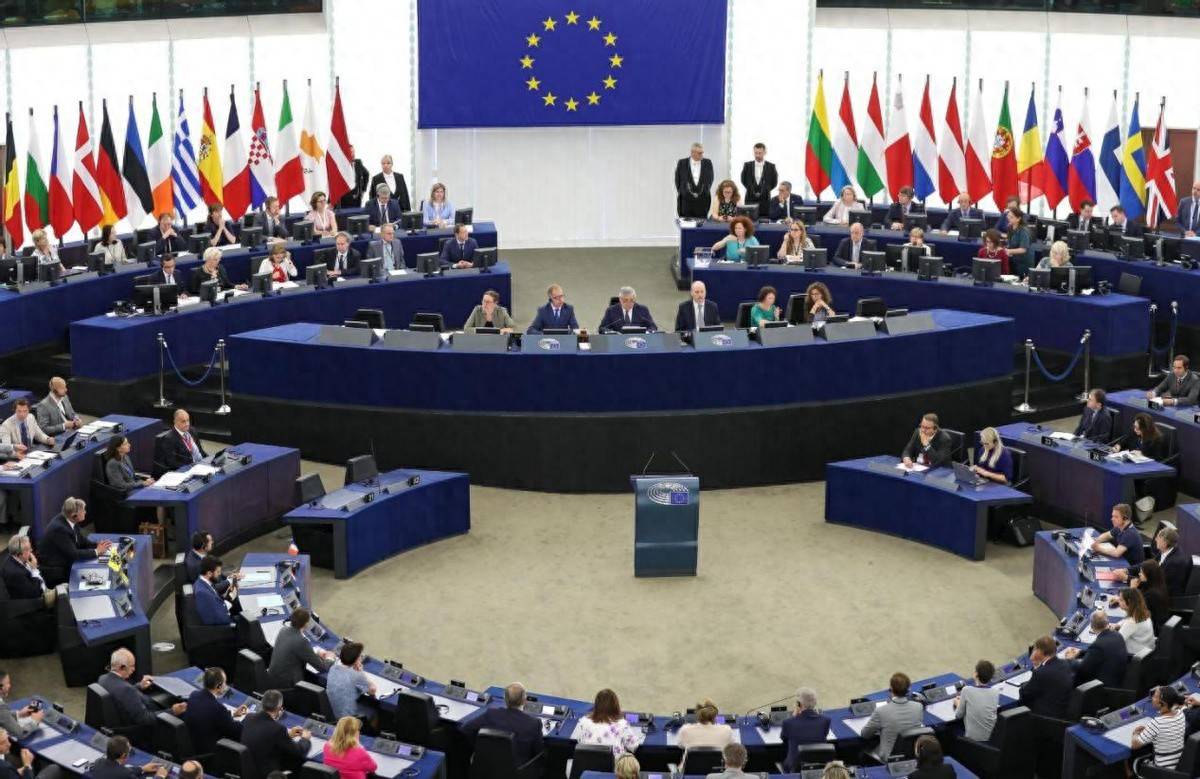
拟对华加税30%,法国欲打第一枪,中方点名警告后,德风向先变了
Sou Hu Cai Jing· 2026-02-15 03:29
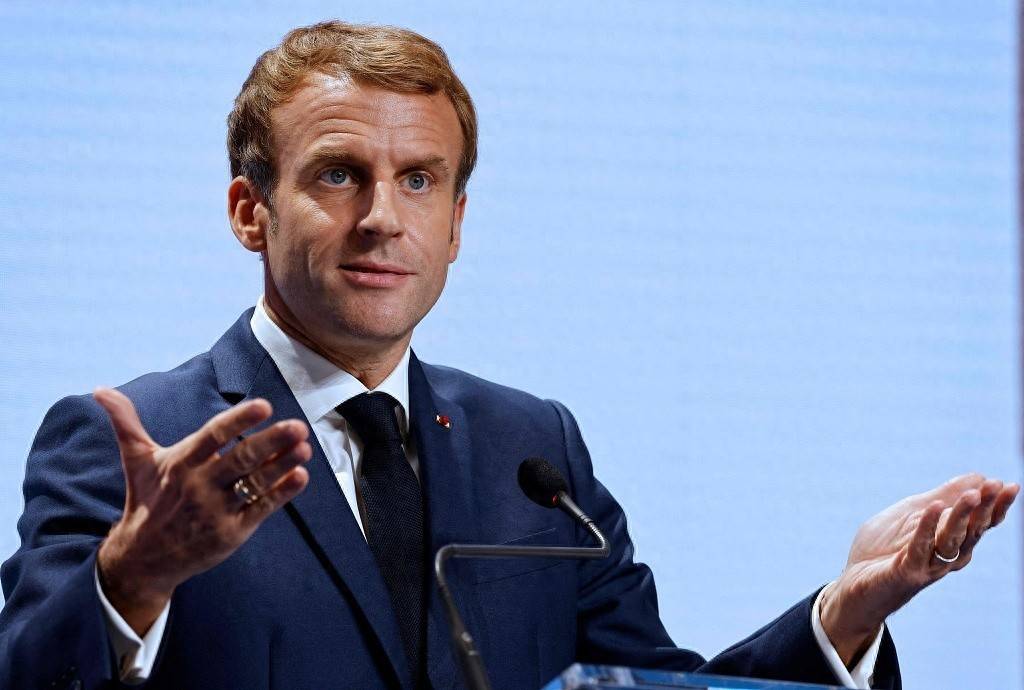
Core Viewpoint - France has proposed to the EU to impose approximately 30% tariffs on Chinese goods, driven by concerns over competition from China and the US, as highlighted by President Macron's earlier warnings about Europe's economic vulnerability [1][3]. Group 1: France's Proposal and Economic Context - The proposal for increased tariffs is rooted in France's competitive anxiety, as Europe faces sluggish economic growth and declining manufacturing competitiveness [1]. - An internal EU report indicates that Europe lags significantly behind China and the US in investments in emerging fields such as green technology, artificial intelligence, and quantum computing [1]. - France advocates for a "Europe First" strategy, emphasizing trade protection and industrial support policies, particularly in sectors like renewable energy, automotive, and photovoltaics, where Chinese manufacturing poses a significant challenge [1]. Group 2: Germany's Position and Economic Implications - Germany's cautious stance on the proposed tariffs is influenced by its heavy reliance on exports and close trade ties with China, making it wary of potential negative impacts on its manufacturing sector [3][4]. - German Chancellor Merz highlighted the stark economic growth disparities, noting that China's average annual growth rate over the past 20 years is around 8%, compared to 1% for the EU, urging for reforms to improve internal efficiency and reduce regulatory barriers [3][4]. - Germany's focus is on enhancing its competitiveness rather than imposing trade barriers, reflecting a pragmatic approach to the challenges posed by external competition [4]. Group 3: Future Policy Directions and Global Impact - The future policy direction of the EU will depend on internal coordination among member states, with potential outcomes ranging from increased trade protection to a focus on internal reforms and efficiency improvements [6]. - The choices made by Europe will have significant implications for the global economic landscape, affecting global supply chains and trade systems, given the substantial trade volume and industrial connections between China and the EU [6]. - A confrontational stance could lead to adverse effects for both parties, emphasizing the need for cooperation alongside competition [6].
和光同程:天下武功,唯快不破
第一财经· 2026-02-15 01:23
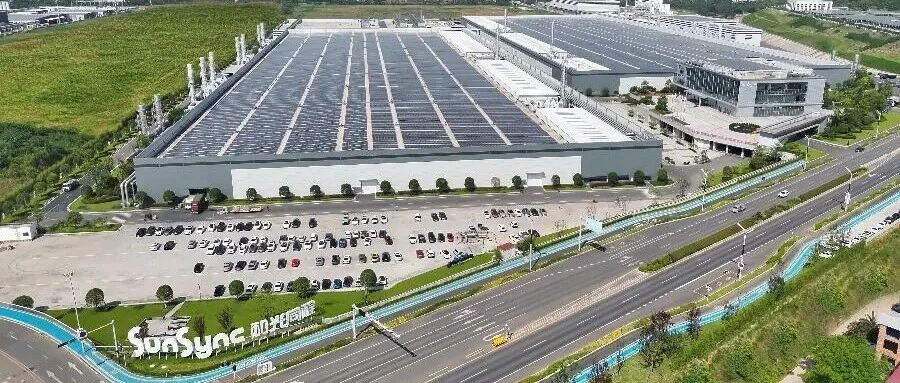
Core Viewpoint - The article highlights the rapid growth and resilience of He Guang Tong Cheng, a photovoltaic company that has thrived in a challenging industry environment, achieving continuous cash profitability and recognition despite the overall downturn in the solar sector [4][12]. Group 1: Company Overview - He Guang Tong Cheng was established in Yibin, Sichuan, and has been operational for only 29 months, yet it has achieved significant milestones such as being recognized as a "zero-carbon factory" and a "black light factory" [4][25]. - The company has demonstrated remarkable speed in its operations, completing the registration, signing, construction, and production phases within a year, which is notably fast for the photovoltaic industry [5][6]. Group 2: Business Strategy - The company's strategy emphasizes quick decision-making and market responsiveness, allowing it to adapt swiftly to changes and capitalize on opportunities [9][12]. - He Guang Tong Cheng's founder, Xie Yi, has adopted a hands-on approach, living on-site to ensure effective management and problem-solving [13][14]. Group 3: Industry Context - The photovoltaic industry is characterized by rapid technological advancements and long investment return cycles, creating a paradox that requires companies to be agile and responsive to market shifts [12][19]. - Despite the industry's downturn, He Guang Tong Cheng has reported a 49% year-on-year revenue growth and has managed to significantly reduce losses, showcasing its ability to navigate through tough market conditions [12][25]. Group 4: Team and Leadership - The leadership team at He Guang Tong Cheng consists of experienced professionals from the photovoltaic sector, contributing to the company's innovative and efficient operations [18][19]. - The company has attracted significant investment from top venture capital firms and industry players, indicating strong confidence in its business model and team [19]. Group 5: Location Advantage - Yibin was chosen as the operational base due to its evolving industrial landscape and supportive local government, which aligns with the company's fast-paced operational philosophy [21][24]. - The city has transformed from a traditional economy to one focused on digital and green industries, providing a conducive environment for He Guang Tong Cheng's growth [22][24].
嘉兴借力“最暖返乡潮”擘画“最强招商季”
Xin Lang Cai Jing· 2026-02-15 00:02
Group 1 - The core message of the event is to encourage local talents and entrepreneurs to contribute ideas and resources for the development of Jiaxing, emphasizing a commitment to prioritize investment in the region [1][2] - The event featured the appointment of "Jiaxing City Investment Cooperation Ambassadors," who are distinguished individuals from various sectors, including aerospace, finance, and biomedicine, tasked with promoting Jiaxing's image and facilitating project connections [2][3] - Jiaxing's economic report highlighted the latest achievements in social and economic development, promoting a modern industrial system centered on new materials, next-generation communication, smart photovoltaics, and new energy vehicles [1][3] Group 2 - The ambassadors possess unique advantages as they can represent Jiaxing's interests and connect their resources with local needs, enhancing the city's investment appeal [2] - The event is part of a broader strategy to establish a long-term "city partner" mechanism, aiming to transform emotional ties into tangible development resources for Jiaxing [3] - The commitment from local talents reflects a positive outlook on Jiaxing's business environment and development prospects, contributing to the city's competitive edge within the Yangtze River Delta urban agglomeration [3]
以多元形式点燃乡村年味,第二届德胜乡村振兴大集启幕
Xin Lang Cai Jing· 2026-02-14 15:36
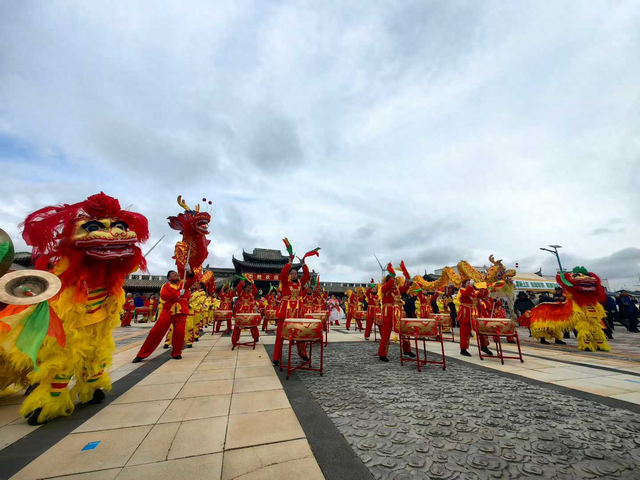
Core Viewpoint - The event "Happy Opening Smile, Prosperous Desheng Year" showcased the achievements of rural revitalization in Desheng Village, combining folk performances, public welfare, and cultural tourism to celebrate the New Year and foster community spirit [1][3]. Group 1: Event Highlights - The event featured vibrant folk performances, including a grand parade of folk dances, dragon and lion dances, and street performances, creating a lively atmosphere that attracted attendees [1][3]. - A special area for local cuisine was set up, offering traditional dishes that reflect the village's culture, while public welfare activities distributed "Fu" characters to convey New Year blessings [3]. - The night concluded with a dazzling lantern display and a bonfire gathering, where villagers and visitors celebrated together, enhancing the cultural experience [3]. Group 2: Economic Development - Desheng Village has developed three key industries: potatoes, photovoltaics, and homestays, with annual potato production exceeding 10 million yuan, stable income from photovoltaics over 600,000 yuan, and over 50,000 tourists hosted in homestays [5]. - The village's average annual income per capita is projected to reach 25,800 yuan by 2025, with collective annual income reaching 3.5 million yuan, marking a significant transformation from a poor village to a prosperous one [5]. - Efforts to strengthen cultural teams and improve cultural facilities have integrated traditional culture with modern civilization, enriching the village's cultural atmosphere [5].
又一资本大佬栽了,2000亿资本帝国一夜崩塌
Feng Huang Wang Cai Jing· 2026-02-14 10:49
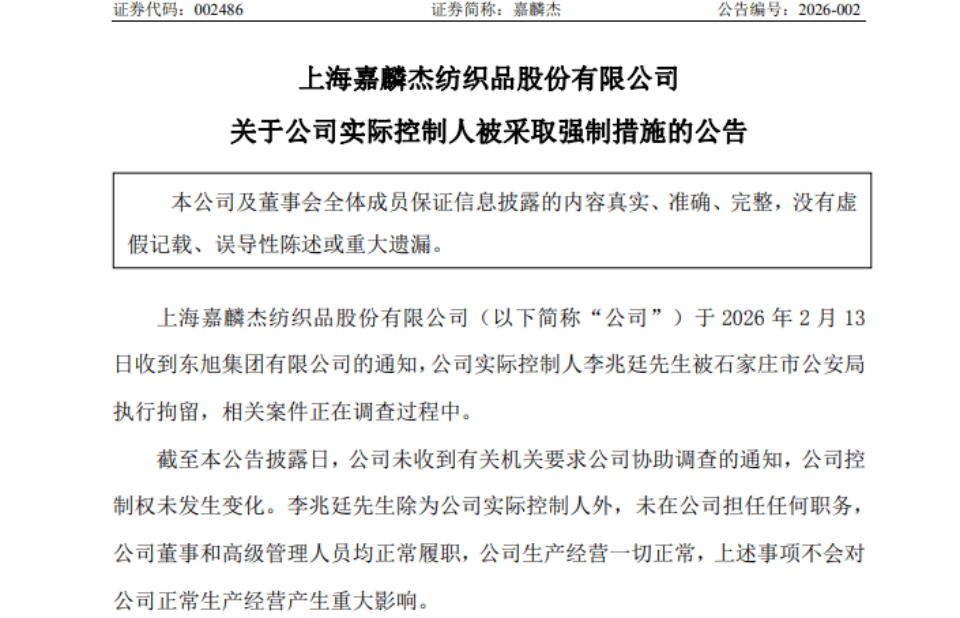
Core Viewpoint - The recent detention of Li Zhaoting, the actual controller of Jialinjie, raises concerns about the company's future amidst ongoing investigations into financial misconduct within the Dongxu Group, which Li leads [2][4][14]. Group 1: Company Overview - Jialinjie (002486) announced that its actual controller, Li Zhaoting, was detained by the Shijiazhuang Public Security Bureau, while the company claims its operations remain normal [2]. - As the last remaining listed company of the Dongxu Group, Jialinjie's market value is reported at 2.605 billion yuan, with a stock price of 3.16 yuan per share [2]. - Jialinjie specializes in high-end outdoor sports fabric and garment research and sales, with a reported revenue of 918 million yuan and a net profit of approximately 52 million yuan for the first three quarters of 2025, reflecting a year-on-year growth of 205.46% [13]. Group 2: Financial Misconduct and Consequences - Li Zhaoting's financial downfall is linked to a major financial fraud case, where from 2015 to 2019, the Dongxu Group inflated revenues by 47.825 billion yuan and profits by 13 billion yuan through fictitious business activities [6]. - The group faced severe penalties, including a record fine of 1.7 billion yuan imposed by regulatory authorities, with Li personally fined approximately 590 million yuan and banned from the securities market for life [6][7]. - The financial misconduct led to the delisting of Dongxu's two major companies, Dongxu Optoelectronics and Dongxu Blue Sky, due to continuous stock price declines [12]. Group 3: Historical Context and Business Strategy - Li Zhaoting's rise began in the 1990s, with the establishment of Dongxu Group, which became a leading manufacturer in CRT equipment and later transitioned to LCD glass substrates [10]. - The group's aggressive capital strategy involved high leverage, with pledges on shares reaching 92.3% and 99.35% for Dongxu Optoelectronics and Dongxu Blue Sky, respectively, leading to significant financial risk [10]. - The financial issues began surfacing in 2019, when Dongxu Optoelectronics reported high cash reserves but failed to meet bond obligations, indicating underlying problems within the capital structure [12].

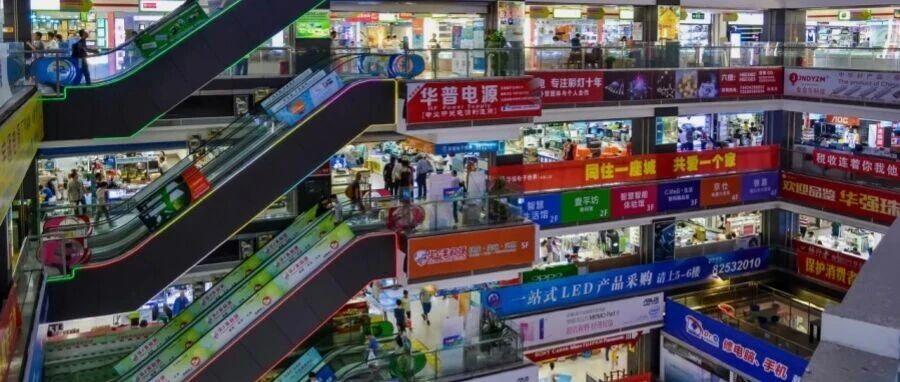
外国人涌入深圳爆买
21世纪经济报道· 2026-02-14 10:30
Core Viewpoint - Shenzhen is actively promoting the construction of a comprehensive payment demonstration zone to meet the growing demand for non-cash payments, with significant growth projected in transaction volume and value by 2025 [1]. Group 1: Payment Trends and Projections - By 2025, the number of non-cash payment transactions in Shenzhen is expected to reach 21.9 billion, a year-on-year increase of 15%, with a transaction value of 2.5 trillion yuan, up 10% year-on-year [1]. - Overall consumer spending in Shenzhen is projected to grow by 10% due to effective consumption promotion policies [1]. Group 2: International Consumer Activity - In 2025, the total number of inbound and outbound travelers in Shenzhen is expected to reach 274 million, a 14% increase year-on-year, marking a historical high [2]. - Non-cash payment transactions by foreign consumers in Shenzhen are projected to reach 190 million, totaling 26.46 billion yuan, representing year-on-year growth of 28% and 31% respectively [2]. - Hong Kong, Macau, and Taiwan residents account for 82% of the total transaction value from foreign consumers, with Hong Kong residents showing a significant increase in spending [2]. Group 3: Tax Refund System - Shenzhen has established a convenient tax refund system that includes multiple channels such as cash, bank cards, and electronic wallets, with innovative measures like refunds to domestic and foreign electronic wallets [4]. - The number of stores eligible for tax refunds has surpassed 2,000, with over 1,000 new stores added in 2025 [4]. - The total number of tax refund transactions in Shenzhen is expected to reach 68,000 in 2025, a 13-fold increase year-on-year, with the total refund amount increasing by 2.4 times [4]. Group 4: Consumer Spending Patterns - Foreign consumers in Shenzhen primarily spend in supermarkets and restaurants, accounting for over 70% of total spending [6]. - The tourism and entertainment sectors are emerging as significant growth areas, with transaction volume and value increasing by 327% and 219% year-on-year, respectively [6]. Group 5: Payment Methods - The acceptance of mobile payments among foreign consumers has significantly increased, with over 70% of transaction values attributed to mobile payment methods [7]. - Transactions using foreign cards linked to domestic wallets have seen a year-on-year increase of 48.2% in transaction volume and 51.9% in transaction value [7]. - The use of foreign cards for large transactions remains prevalent, with 5% of transaction volume and 26% of transaction value coming from card payments [7].
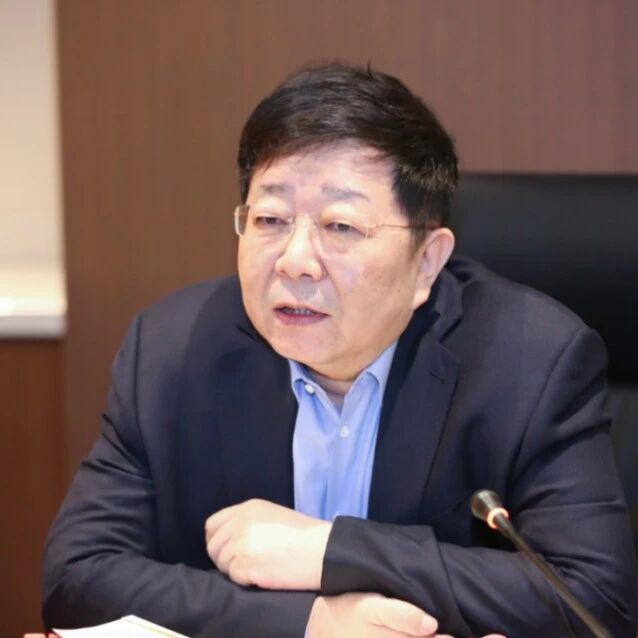
又一资本大佬栽了,2000亿资本帝国一夜崩塌
凤凰网财经· 2026-02-14 10:29
Core Viewpoint - The article discusses the downfall of Li Zhaoting, the former richest person in Shijiazhuang and head of the Dongxu Group, highlighting his recent detention by the police and the financial scandals that led to the collapse of his business empire [2][4][17]. Group 1: Li Zhaoting's Detention and Company Impact - On February 13, 2024, it was announced that Li Zhaoting, the actual controller of the listed company Jialinjie, was detained by the Shijiazhuang Public Security Bureau, with the company claiming that operations remain normal despite his legal troubles [2][16]. - Jialinjie, as the last remaining listed company of the Dongxu Group, reported a stock price of 3.16 yuan per share and a market value of 2.605 billion yuan on February 14, 2024 [2]. Group 2: Financial Fraud and Penalties - Li Zhaoting's downfall was preceded by a financial fraud investigation that revealed significant misconduct from 2015 to 2019, including the inflation of revenue by 47.825 billion yuan and profits by 13.001 billion yuan [6][8]. - The Dongxu Group was found to have illegally raised 7.565 billion yuan and 3.5 billion yuan through fraudulent means in 2017 and 2018, respectively, leading to a record penalty of 1.7 billion yuan imposed by regulatory authorities in 2025 [8][9]. Group 3: The Rise and Fall of the Dongxu Empire - Li Zhaoting founded the Dongxu Group in 1997, which became a leading manufacturer in the CRT equipment sector, later transitioning to LCD glass substrates [10][11]. - At its peak, the Dongxu Group had a debt of 142.6 billion yuan, with a staggering 94.03% of its debt being short-term, indicating a highly leveraged business model that was vulnerable to market changes [12][14]. - The financial issues became apparent in 2019 when Dongxu Guangdian had 18.3 billion yuan in cash but could not repay 3.5 billion yuan in bonds, signaling underlying problems [14]. Group 4: Current Status of Jialinjie - Jialinjie reported a revenue of 918 million yuan and a net profit of 51.996 million yuan for the first three quarters of 2025, reflecting a year-on-year growth of 205.46% [16]. - Despite the turmoil surrounding its actual controller, Jialinjie remains a focus for investors, questioning its ability to operate independently under the current circumstances [16].
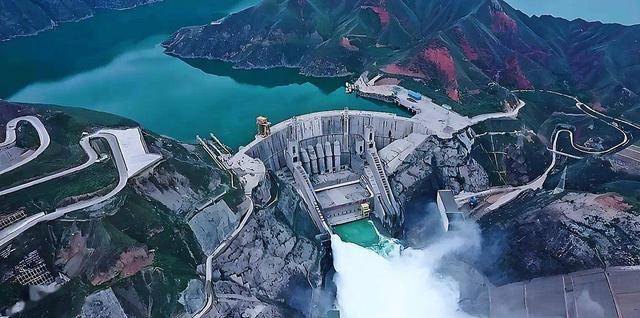
仅凭一个西藏,便能满足中国现在与未来,所有的能源需求!
Sou Hu Cai Jing· 2026-02-14 10:06
Core Insights - The article discusses China's significant investment in the Tibet region, particularly focusing on the construction of the Yarlung Tsangpo River hydropower project, which is expected to generate substantial clean energy and transform the region's economic landscape [1][3]. Group 1: Investment and Infrastructure - The total investment for the Yarlung Tsangpo hydropower project is estimated at 1.2 trillion yuan, which translates to approximately 170 billion USD, equating to about 850 yuan per person for China's 1.4 billion population [1][3]. - The project involves constructing a series of hydropower stations with a total installed capacity of 70-80 million kilowatts, expected to generate around 300 billion kilowatt-hours of electricity annually, equivalent to the output of three Three Gorges projects [3][5]. Group 2: Resource Potential - Tibet possesses the highest technical potential for hydropower resources in China, with over 370 rivers having a hydropower capacity exceeding 10,000 kilowatts, and the Yarlung Tsangpo River's hydropower density being three times that of the Yangtze River [7][9]. - Tibet also has the richest solar energy resources in China, with annual sunshine exceeding 3,000 hours, and the highest geothermal energy potential, exemplified by the Yangbajing geothermal field [9][11]. Group 3: Energy Transmission - Since 2011, four major "power highways" have been constructed to transmit electricity from Tibet to other regions, with the upcoming ±800 kV ultra-high voltage direct current project expected to facilitate the transfer of nearly 40 billion kilowatt-hours of clean energy annually to central China [17][20]. - Future plans include the construction of over ten ultra-high voltage transmission lines by the middle of this century, aiming to export more than 500 billion kilowatt-hours of electricity annually, significantly increasing the current export capacity [21][27]. Group 4: Economic Transformation - The development of low-cost hydropower in Tibet is expected to attract high-energy industries, such as aluminum processing and data centers, to the region, creating a complete industrial chain from raw materials to end products [24][26]. - The National Energy Administration has designated Tibet as a "clean energy transmission base," aligning with China's goals for carbon neutrality and sustainable energy development [27][28].
乘势启程,奔腾不息!理财周刊-财事汇马年新春献词
Xin Lang Cai Jing· 2026-02-14 09:15
Core Insights - The article highlights the resilience and growth of China's economy in 2025, marking a significant year as it concludes the "14th Five-Year Plan" and begins the "15th Five-Year Plan" [1][2] Economic Performance - China's GDP is expected to exceed 140 trillion yuan, showcasing improvements in economic strength, technological capabilities, and overall national power [1] - The macroeconomic environment in 2025 is characterized by stability, progress, innovation, and resilience, with effective policies supporting growth, employment, and price stability [2] Consumer and Investment Trends - The consumer market is recovering, driven by strong domestic demand, with cultural and tourism sectors thriving and "Guochao" consumption becoming a key growth driver [2] - Investment structures are optimizing, with rapid growth in new infrastructure and high-end manufacturing, supported by major projects like the Tianwen-1 mission and the commissioning of advanced naval vessels [2] Technological Innovation - There is a deep integration of technological innovation and industry, with significant advancements in AI, chip development, and new business models such as humanoid robots and drones [2][4] - Emerging industries like AI, semiconductor chips, and renewable energy are gaining attention and investment, benefiting from policy support and technological breakthroughs [4][5] Capital Market Dynamics - The capital market in 2025 experienced fluctuations but also opportunities, with active trading in A-shares and significant daily transaction volumes [3][4] - Structural trends in the market show strong performance in sectors like technology, high-end manufacturing, and renewable energy, despite some short-term adjustments [4] Future Outlook - The year 2026 is anticipated to bring more opportunities and challenges, with a focus on high-quality development and long-term investment strategies [5] - Key sectors expected to thrive include technology innovation, green industries, and consumer sectors, driven by rising household wealth and consumption demand [5]