Workflow
多晶硅
icon
Search documents
固态电池设备稳步迭代,关注等静压设备进展
2025-08-11 01:21
Summary of Key Points from Conference Call Industry Overview - The focus is on the solid-state battery industry, particularly the development of isostatic pressing equipment which is crucial for enhancing battery life and performance [1][2][4][22]. Core Insights and Arguments - **Isostatic Equipment Development**: Domestic companies are in the early stages of research and development for isostatic equipment, with notable progress from companies like Nakanor and Xian Dao Intelligent. However, many are still in the sample testing phase, indicating significant R&D challenges [1][3][4][22]. - **Solid-State Battery Production**: The mass production of solid-state batteries is approaching, with critical attention needed on both equipment (isostatic, dry forming, stacking) and materials (lithium sulfide, electrolytes, and upstream materials) [1][5]. - **Market Sentiment on Lithium Sulfide**: There is no consensus on the production process for lithium sulfide, with multiple methods being explored, similar to the competitive landscape seen in lithium hexafluorophosphate [1][6]. - **Advantages of Afternoon New Energy**: Afternoon New Energy is highlighted for its strengths in solid-state electrolytes and electrode materials, particularly in CVD process for lithium sulfide [1][7]. - **Photovoltaic Industry Trends**: The photovoltaic sector is experiencing price increases for polysilicon and silicon wafers due to supply-side reforms, with a positive outlook despite existing market uncertainties [1][8][9][10]. - **AI DC Power Equipment**: There is growing interest in AI DC power equipment, particularly in relation to Meta's liquid cooling initiatives, with a focus on capital expenditures from major overseas manufacturers [1][11]. - **Humanoid Robotics**: The upcoming World Robot Conference is expected to catalyze interest in the humanoid robotics sector, with strategic investments from companies like LG Electronics [1][12]. - **Wind Power Sector Recovery**: Wind turbine prices are showing signs of recovery, which is beneficial for turbine manufacturers [1][13]. Additional Important Insights - **Importance of Isostatic Technology**: Isostatic technology is essential for ensuring the tight contact between the positive electrode, solid electrolyte, and negative electrode, which is critical for achieving over 1,000 cycles of performance [1][16]. - **Investment Opportunities**: The market views investment opportunities in the isostatic segment favorably due to the scarcity of suitable targets. Companies like Jinlihua Electronics are attracting attention for their potential in lithium battery isostatic equipment [1][17]. - **Company Developments**: Nakanor is the only company currently offering isostatic equipment for lithium batteries, with plans to release prototypes soon. Their market position is not yet fully reflected in their valuation [1][20][21]. - **Future Market Dynamics**: The solid-state battery production process requires significant advancements in isostatic equipment, with current capacities needing to scale from 100 liters to 2000 liters to meet production demands [1][22]. - **Monitoring Other Companies**: Companies like Xian Dao Intelligent should also be monitored for potential developments in the lithium battery sector, as their progress could impact overall investment evaluations [1][23].
7月中国通胀数据基本符合预期
Dong Zheng Qi Huo· 2025-08-11 00:49
Report Industry Investment Ratings Not provided in the content. Core Views of the Report - The overall market is influenced by multiple factors including geopolitical events, economic data, and policy changes. For instance, the potential outcomes of the US-Russia talks and the uncertainty in the US-China trade relationship are key factors affecting various markets [17][44]. - In the financial market, different asset classes have different outlooks. Gold is expected to continue its oscillatory trend with increased volatility; the US dollar is predicted to remain weak in the short - term; and the US stock market may face correction risks due to the fluctuating interest - rate cut expectations [13][18][22]. - In the commodity market, each sector has its own supply - demand dynamics. For example, the油脂 market may experience short - term pullbacks but has long - term potential for long - positions; the copper market is likely to have high - level oscillations with inventory increases limiting the upside [33][57]. Summary by Directory 1. Financial News and Reviews 1.1 Macro Strategy (Gold) - Fed's Bowman supports three interest rate cuts this year. The gold price oscillated on Friday with increased intraday volatility. After the White House clarified that imported gold bars would not be taxed, the COMEX gold price declined to narrow the spread with London gold. The gold price is in an oscillatory range, and short - term oscillations are expected to continue with attention to correction risks [12][13]. 1.2 Macro Strategy (Foreign Exchange Futures - US Dollar Index) - The NATO Secretary - General is optimistic about the "Trump - Putin meeting". Nordic and Baltic leaders reaffirmed their support for Ukraine. The US - Russia meeting in Alaska and the European stance on Ukraine make the outcome of the meeting and the cease - fire in the Russia - Ukraine conflict highly uncertain, leading to the US dollar remaining weak in the short - term [14][15][17]. 1.3 Macro Strategy (US Stock Index Futures) - Fed officials have different views on interest rates. Some support maintaining the current rate due to unmet inflation targets, while others advocate for rate cuts. The market's interest - rate cut expectations are volatile, and the US stock market at its current level may face correction risks [19][21][22]. 1.4 Macro Strategy (Treasury Bond Futures) - The issuance of local bonds with VAT on interest started on August 8. The central bank conducted reverse repurchase operations. The bond market is expected to be in a favorable period in the first half of August, and trading - position long - holders can continue to hold their positions [23][24][27]. 1.5 Macro Strategy (Stock Index Futures) - In July, China's CPI was flat year - on - year, and PPI decreased by 3.6% year - on - year. Beijing optimized its housing purchase restrictions, and the capital market is expected not to have a large - scale IPO expansion. The strengthening of the core CPI may support the stock market pricing, and it is recommended to allocate evenly among stock indices [28][29][31]. 2. Commodity News and Reviews 2.1 Agricultural Products (Soybean Oil/Rapeseed Oil/Palm Oil) - The actual soybean crushing volume in the 32nd week was 2177500 tons, and the expected volume in the 33rd week is 2369500 tons. Multiple countries' policies may change. India may raise edible oil import tariffs, and there are rumors about the US RVO proposal. The short - term oil market may pull back, but it has long - term potential for long - positions, and it is recommended to go long on dips [32][33]. 2.2 Agricultural Products (Soybean Meal) - The market expects the USDA August supply - demand report to raise the US soybean yield. The US soybean market is weak, while the domestic soybean meal market is relatively strong. It is recommended to continue to focus on the development of Sino - US relations and changes in import and demand [34][35]. 2.3 Agricultural Products (Sugar) - Brazil's sugar exports decreased in July, indicating weak export demand. The international sugar market is under pressure due to the expected oversupply in the 25/26 season. However, factors such as the low sugar - ethanol price difference and poor cane quality may limit the downside of the ICE raw sugar price. The domestic sugar market is also under pressure from increased imports, but the downside of the Zhengzhou sugar price is limited, and it is not recommended to short aggressively [39][40]. 2.4 Agricultural Products (Cotton) - The US tariff policy and the uncertainty in the US - China trade relationship increase market concerns. The ICE cotton price is expected to remain weak in the short - term. Domestically, the cotton supply is tight before the new cotton harvest, and there may be a small - scale "rush to buy" at the beginning of the new cotton season. The 1 - month contract may rebound, and it is recommended to pay attention to the US - China trade policy [44]. 2.5 Black Metals (Rebar/Hot - Rolled Coil) - China has completed the ultra - low emission transformation of 600 million tons of crude steel production capacity. The inventory of five major steel products is increasing, and the demand has not changed significantly. The steel price is expected to oscillate in the short - term due to the limited impact of environmental protection restrictions on supply and the difficulty of the spot price to follow the increase [45][47]. 2.6 Agricultural Products (Corn Starch) - The cassava starch inventory has increased again at a high level, and the price difference with corn starch has narrowed. There is no driving force for the price difference to strengthen in the supply - demand situation, and the price difference in the 09 contract may be affected by the new corn harvest in North China [48]. 2.7 Agricultural Products (Corn) - The成交 rate of imported corn auctions remains low. The market's demand for imported corn substitutes is expected to decline, and the old - crop spot price is likely to weaken. It is recommended to hold short positions in new - crop corn and pay attention to the weather [49][50]. 2.8 Non - ferrous Metals (Alumina) - Two factories of a Shanxi alumina enterprise were affected by ore supply. The spot price remained stable, and the futures price was weak. It is recommended to wait and see [51][53]. 2.9 Non - ferrous Metals (Copper) - The US is interested in investing in Pakistan's copper mining. Chile's Codelco partially restarted a copper mine. Macro factors may provide short - term support for the copper price, but the increase in global inventory will limit the upside. It is recommended to wait and see for single - side trading and focus on the cross - market reverse arbitrage strategy [54][57]. 2.10 Non - ferrous Metals (Polysilicon) - The Guangzhou Futures Exchange added new registered brands for polysilicon futures. The spot trading is light, and the inventory is increasing. The short - term polysilicon price may range between 45000 - 57000 yuan/ton, and it may reach over 60000 yuan/ton in the long - term. It is recommended to go long on dips and consider the 9 - 12 positive arbitrage [58][60]. 2.11 Non - ferrous Metals (Industrial Silicon) - Some production capacities in Xinjiang have resumed production. The supply may increase in August, but the demand from polysilicon may lead to inventory reduction. It is recommended to go long on dips in the short - term, with risks from large - factory resumption and polysilicon production cuts [61][62]. 2.12 Non - ferrous Metals (Lithium Carbonate) - Ningde Times' Jiaxiaowo mining site will stop production. The production loss will lead to inventory reduction in the third - quarter balance sheet. The short - term price is expected to be strong, and it is recommended to go long on dips and consider the inter - month positive arbitrage [63]. 2.13 Non - ferrous Metals (Lead) - The primary lead production is expected to increase, while the secondary lead production is affected by sewage inspections. The demand is in the pre - peak season waiting to be verified. It is recommended to hold long positions established at low prices and pay attention to the positive arbitrage between domestic and foreign markets [65][66]. 2.14 Non - ferrous Metals (Zinc) - The LME zinc inventory has decreased significantly, while the domestic zinc supply is high. The demand is stable in the primary processing sector. The short - term trading of Shanghai zinc is difficult, and it is recommended to manage positions for single - side trading, consider the medium - term positive arbitrage, and wait and see for the domestic - foreign trading [67][68]. 2.15 Non - ferrous Metals (Nickel) - The LME nickel inventory has increased. The macro - environment provides some support, but the supply is expected to be in surplus. The short - term nickel price is unlikely to decline significantly, and it is recommended to focus on short - term trading opportunities and consider short - selling at high prices in the medium - term [69][70]. 2.16 Energy Chemicals (Carbon Emissions) - The EU carbon price oscillated last week. The carbon price may be supported by the buying demand before the compliance deadline, but the weak demand may limit the upside. The EU carbon price is expected to oscillate in the short - term [71][72]. 2.17 Energy Chemicals (Crude Oil) - The US oil rig count decreased. India's state - owned refineries are招标 to purchase non - Russian crude oil. The oil price has fallen to a new low since early June due to reduced geopolitical risk premiums. The short - term oil price volatility is expected to increase [73][74][76]. 2.18 Energy Chemicals (Caustic Soda) - The Shandong caustic soda market is stable. The supply has decreased slightly, and the demand is average. The caustic soda spot price is starting to weaken, but the downside is limited due to factors such as low liquid chlorine prices and strong coal prices [77][78]. 2.19 Energy Chemicals (Pulp) - The imported wood pulp spot market has limited adjustments. The futures price is oscillating. The anti - involution sentiment has cooled down, and the pulp market is expected to be weak and oscillatory in the short - term [79]. 2.20 Energy Chemicals (PVC) - The domestic PVC powder market is weakly oscillating. The futures price is down, and the trading is light. The PVC fundamentals are weak, but the macro - environment and coal prices provide support. The market is expected to oscillate [80]. 2.21 Energy Chemicals (PX) - A South Korean PX plant is under maintenance, and Japanese PX plants are restarting. The PX price is affected by downstream demand, PTA spot price, and other factors, and is expected to oscillate in the short - term [81]. 2.22 Energy Chemicals (PTA) - A Northeast PTA plant is shutting down. The weaving industry is in the off - season, and the PTA supply and demand have little contradiction. The PTA price mainly follows the crude oil price and is expected to oscillate in the short - term [82][83]. 2.23 Shipping Index (Container Freight Rate) - Maersk's second - quarter earnings were strong. The SCFI index has declined. The shipping companies are accelerating price cuts, and the supply pressure is increasing. The freight rate may continue to decline, and it is recommended to pay attention to the short - selling opportunities when the market is boosted by sentiment [84][87].
镍:矿端支撑逻辑削弱,冶炼端逻辑限制弹性不锈钢,多空博弈加剧,钢价震荡运行
Guo Tai Jun An Qi Huo· 2025-08-10 12:47
1. Report Industry Investment Ratings No relevant content provided. 2. Core Views of the Report - For nickel, it is expected to trade in a narrow - range with limited upside and downside, and investors should focus on range - bound trading and double - selling option strategies. The support from the ore end is weakening, and the smelting end restricts price elasticity. [4] - For stainless steel, the price is expected to oscillate as the multi - empty game intensifies. Bulls focus on macro - expectations and marginal improvements, while bears focus on weak reality and short - term valuations. [5] - For industrial silicon, it is recommended to short at high levels in the short term, following coking coal in the short run, and pay attention to the upstream factory resumption rhythm. [28][33] - For polysilicon, the market sentiment has cooled, and the price may correct. It is recommended to buy on dips in the third quarter. [28][34] - For lithium carbonate, due to the shutdown of the Jianxiawo mine, the price is expected to rise. If overseas supply increases to fill the gap, the price may fall after the project resumes. [54][56] - For palm oil, with strong supply and demand in the producing areas, the strategy is to go long on dips. [2][71] - For soybean oil, new export drivers have emerged, and investors should pay attention to the results of Sino - US negotiations. [2][72] 3. Summaries by Related Catalogs Nickel and Stainless Steel Market Outlook - Nickel price is expected to trade in a narrow range, with limited upside due to increasing global refined nickel inventory and long - term low - cost supply expectations, but difficult to fall sharply in the short term. [4] - Stainless steel price will oscillate as the multi - empty game intensifies, with bulls and bears having different focuses. [5] Inventory Changes - Chinese refined nickel social inventory decreased by 536 tons to 38,578 tons, while LME nickel inventory increased by 5,160 tons to 209,082 tons. [6][7] - Nickel - iron inventory at the end of July decreased by 10% month - on - month but increased by 56% year - on - year. [8] - Stainless steel social total inventory decreased by 0.44% week - on - week. [8] Market News - Multiple events such as potential export restrictions, project startups, environmental violations, and policy changes in Indonesia have occurred. [9][10] Industrial Silicon and Polysilicon Price Trends - Industrial silicon futures oscillated strongly, while spot prices declined. Polysilicon futures rose and then fell, and spot transactions showed no significant improvement. [28] Supply and Demand Fundamentals - Industrial silicon industry inventory turned to accumulation, with increased production in the southwest and northwest regions. The demand from polysilicon and organic silicon sectors increased marginally. [29][30] - Polysilicon supply increased in the short term, and inventory started to accumulate. The demand from the silicon wafer sector increased slightly, but the upstream price increase was not smoothly transmitted to the downstream. [30][31] Market Outlook - Industrial silicon: Pay attention to the upstream factory resumption rhythm, and it is recommended to short at high levels. The expected price range next week is 8,200 - 9,000 yuan/ton. [32][33] - Polysilicon: The price may correct, and it is recommended to buy on dips in the third quarter. The expected price range next week is 47,000 - 54,000 yuan/ton. [34] Lithium Carbonate Price Trends - Lithium carbonate futures prices increased significantly, and the basis of long - term contracts turned negative. [54] Supply and Demand Fundamentals - The Jianxiawo mine of CATL will stop production, and there is no short - term resumption plan. The supply of lithium concentrate and lithium carbonate from overseas increased, and the demand from the new energy vehicle and energy storage markets continued to recover. The social inventory increased, with upstream de - stocking and downstream inventory accumulation. [55] Market Outlook - The price is expected to rise due to the mine shutdown. If overseas supply fills the gap, the price may fall after the project resumes. The expected price range of the futures main contract is 75,000 - 100,000 yuan/ton. [56][57] Palm Oil and Soybean Oil Market Outlook - Palm oil: With strong supply and demand in the producing areas, the strategy is to go long on dips. [2][71] - Soybean oil: New export drivers have emerged, and investors should pay attention to the results of Sino - US negotiations. [2][72]
连续逼空!商品期货上演“疯狂一周”
Shen Zhen Shang Bao· 2025-08-08 07:27
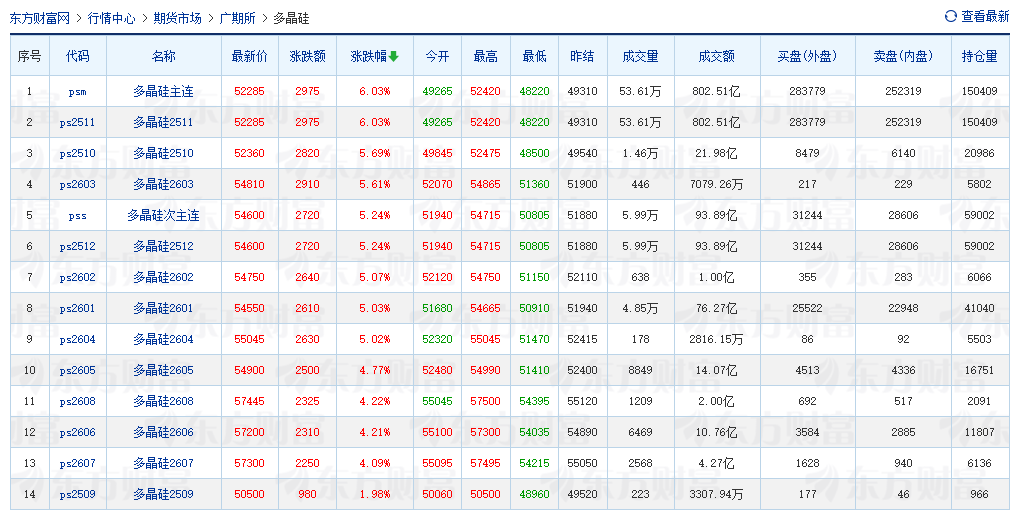
深圳商报讯 (记者陈燕青)在各种反内卷利好的刺激下,上周国内商品期货走出波澜壮阔的行 情,焦煤期货主力合约罕见四连板。经过上周的大涨,焦煤、碳酸锂、多晶硅等期货主力合约已创出近 5个月的新高,多个品种的持仓量也都已创下历史新高。 对于本轮商品期货的大涨,深圳一家期货公司投研人士分析称,"主要有三方面原因:一是在一系 列政策出台下,市场对于经济进一步回升的预期增强;二是高层多次表态反内卷,部分行业也在减产, 引发了供给压缩的预期;三是美联储降息预期增强,国内流动性宽松,部分资金借机炒作。" "本轮大涨更多是基于供给压缩预期的炒作,个人认为不管从成交量还是涨幅来看,最近部分商品 炒作过度了,像多晶硅不到一个月涨幅超过50%,"上海一位期货私募人士表示,"这显然是脱离了基本 面的炒作,建议多头即时止盈。" A股相关板块也跟随期货上涨。潞安环能单周大涨 35%,山西焦煤上涨26%;多晶硅板块通威股份 单周上涨26%,大全能源上涨23%;天齐锂业单周上涨31%,赣锋锂业上涨17%。 值得一提的是,焦煤期货已连续4个交易日涨停。引发焦煤行情的导火索是国家能源局综合司一则 通知。通知要求对今年1-6月单月原煤产量超过公告产 ...
《特殊商品》日报-20250808
Guang Fa Qi Huo· 2025-08-08 06:31
1. Report Industry Investment Ratings There is no information provided regarding industry investment ratings in the reports. 2. Core Views of the Reports Rubber Industry - Supply: Labor return in Cambodia and disrupted rubber tapping in Thailand may lead to a stronger raw material price expectation. Attention should be paid to raw material supply during the peak season [1]. - Demand: Replacement demand shows decent performance, and market trading activity is expected to increase with the implementation of price policies. Winter snow - tire agents are starting to stock up, and order activity is expected to rise in the next period. If raw material supply is smooth during the peak season, consider short - selling opportunities [1]. Log Industry - Supply: Supply pressure may increase. The number of arriving ships at ports will increase this week [3]. - Demand: In August, high - temperature weather leads to a market off - season. Future shipments are expected to decrease, and spot prices remain under pressure. The short - term futures market is expected to fluctuate widely between 800 - 850 [3]. Glass and Soda Ash Industry - Soda Ash: This week, production has rebounded significantly, inventory has increased, and the futures market has weakened. The supply - demand situation shows an obvious surplus. After the second - quarter photovoltaic installation rush, photovoltaic glass capacity growth has slowed, and float glass capacity is stable with future supply - demand pressure. There is no growth expectation for demand. Consider short - selling on price rebounds during the traditional maintenance season in August [4]. - Glass: The futures market has weakened significantly, and market sentiment has declined. After the previous price increase, inventory has shifted from manufacturers to middle - men, and there may be a rush to sell. Deep - processing orders are weak, and the glass demand side faces pressure. The industry needs capacity clearance. Track policy implementation and downstream stocking performance in August [4]. Industrial Silicon Industry - Supply: Pay attention to the resumption plans of large enterprises in Xinjiang and the progress of the anti - cut - throat competition meeting in the southwest. Under the anti - cut - throat competition policy, the overall price center of industrial silicon may move up. If raw material costs such as coal rise, the price center of industrial silicon is expected to increase [5]. - Price Range: The main price fluctuation range in August may be between 8000 - 10000 yuan/ton. Consider buying on dips if the price falls to 8000 - 8500 yuan/ton [5]. Polysilicon Industry - Supply - Demand: In August, both supply and demand of polysilicon are increasing, but the supply growth rate is higher. Domestic polysilicon production in July was about 10.78 million tons, and weekly production increased by 4% to 2.65 million tons. August production is expected to be around 12.5 million tons [6]. - Price Strategy: The main price fluctuation range may be between 45,000 - 58,000 yuan/ton. Consider buying on dips and buying put options on price increases [6]. 3. Summary by Relevant Catalogs Rubber Industry Spot Prices and Basis - Yunnan state - owned whole - latex rubber (SCRWF) in Shanghai decreased by 100 yuan/ton to 14,400 yuan/ton, a decline of 0.69% [1]. - The basis of whole - latex rubber (switched to the 2509 contract) decreased by 130 to - 1125, a decline of 13.07% [1]. Monthly Spreads - The 9 - 1 spread decreased by 15 to - 975, a decline of 1.56% [1]. - The 1 - 5 spread increased by 10 to - 120, an increase of 7.69% [1]. Fundamental Data - In June, Thailand's rubber production increased by 120,400 tons to 392,600 tons, a growth of 44.23% [1]. - Indonesia's production decreased by 24,100 tons to 176,200 tons, a decline of 12.03% [1]. Inventory Changes - Bonded area inventory increased by 5798 tons to 640,384 tons, an increase of 0.91% [1]. Log Industry Futures and Spot Prices - Log 2509 remained unchanged at 832.5, with a 0.00% change [3]. - Log 2511 decreased by 0.5 to 840.0, a decline of 0.06% [3]. Supply - In June, port shipping volume increased by 37,000 cubic meters to 1.76 million cubic meters, a growth of 2.12% [3]. - The number of departing ships from New Zealand to China, Japan, and South Korea decreased by 5 to 53, a decline of 8.62% [3]. Inventory - As of August 1, the total inventory of national coniferous logs was 3.17 million cubic meters [3]. Demand - As of August 1, the average daily log shipment was 64,200 cubic meters [3]. Glass and Soda Ash Industry Glass - Related Prices and Spreads - North China's glass price decreased by 10 yuan/ton to 1180 yuan/ton, a decline of 0.84% [4]. - The glass 2505 contract decreased by 10 to 1309, a decline of 0.76% [4]. Soda Ash - Related Prices and Spreads - North China's soda ash price remained unchanged at 1350 yuan/ton, with a 0.00% change [4]. - The soda ash 2505 contract decreased by 12 to 1412, a decline of 0.84% [4]. Supply - Soda ash production increased by 45,000 tons to 744,700 tons, a growth of 6.42% [4]. - Float glass daily melting volume remained unchanged at 159,600 tons, with a 0.00% change [4]. Inventory - Glass factory inventory increased by 2.348 million weight - boxes to 61.847 million weight - boxes, an increase of 3.95% [4]. - Soda ash factory inventory increased by 69,300 tons to 1.8651 million tons, an increase of 3.86% [4]. Industrial Silicon Industry Spot Prices and Main Contract Basis - East China's oxygen - containing S15530 industrial silicon price remained unchanged at 9250 yuan/ton, with a 0.00% change [5]. - The basis of S15530 increased by 45 to 595, an increase of 8.18% [5]. Monthly Spreads - The 2508 - 2509 spread increased by 130 to 40, an increase of 144.44% [5]. Fundamental Data - National industrial silicon production decreased by 41,400 tons to 300,800 tons, a decline of 12.10% [5]. - Xinjiang's industrial silicon production decreased by 43,300 tons to 167,500 tons, a decline of 20.55% [5]. Inventory Changes - Xinjiang's inventory decreased by 1200 tons to 116,900 tons, a decline of 1.02% [5]. - Social inventory increased by 7000 tons to 547,000 tons, an increase of 1.30% [5]. Polysilicon Industry Spot Prices and Basis - The average price of N - type re - feed material remained unchanged at 47,000 yuan/ton, with a 0.00% change [6]. - The N - type material basis increased by 1235 to - 3110, an increase of 28.42% [6]. Futures Prices and Monthly Spreads - The main contract decreased by 1235 to 20110, a decline of 2.41% [6]. - The spread between the current month and the first - continuous contract increased by 2075 to - 10, an increase of 99.52% [6]. Fundamental Data - Weekly polysilicon production increased by 29,000 tons to 294,000 tons, a growth of 10.94% [6]. - Monthly polysilicon production increased by 49,000 tons to 1.01 million tons, a growth of 5.10% [6]. Inventory Changes - Polysilicon inventory increased by 4000 tons to 233,000 tons, an increase of 1.75% [6]. - Silicon wafer inventory increased by 9600 GW to 19,110 GW, an increase of 5.29% [6].
"反内卷"推进下多晶硅行业现积极信号 头部企业积极限产或为破局之路
百川盈孚数据显示,8月6日,多晶硅价格指数为46500元/吨,月涨幅高达34.78%。同日,多晶硅期货主 力合约日内涨幅达4%。 作为光伏行业上游关键原材料之一,多晶硅市场正迎来关键性变局。 短期内多晶硅价格或维持高位运转 政策积极信号亦不断释放。有业内专家对上海证券报记者表示,推动整个行业止损盈利,关键在于头部 企业严格履行自律限产措施,进而达成去库存目标。价格获得有效支撑后,多晶硅行业方能步入稳定有 序发展阶段。 "反内卷"积极信号密集释放 "有必要再总结一下:市场化兼并重组+政策强制约束+技术淘汰机制。"8月4日,一位多晶硅上市公司 高管在微信朋友圈就"反内卷"的主要措施作出点评。 市场化兼并重组涉及到落后产能淘汰。一家硅料龙头企业相关人士透露,7月29日,一场硅料头部企业 闭门会议在北京召开。虽然外界传闻此会议与硅料行业并购重组有关,但该硅料龙头企业相关人士对记 者表示一切以官方发布为准。 虽然该闭门会议就并购重组的商议进展尚不为外界所知,不过,上海证券报近日曾报道该并购重组方案 的主要交易思路。记者从业内获悉,头部硅料企业正筹划出资设立一个类似OPEC(石油输出国组织) 的行业组织。该组织的形式为一 ...
广发期货《特殊商品》日报-20250808
Guang Fa Qi Huo· 2025-08-08 03:12
Report on the Rubber Industry 1. Core Viewpoint - Monitor the raw material supply situation during the peak production season in major producing areas. If the raw material supply goes smoothly, consider short - selling at high prices [1]. 2. Summary by Directory Spot Price and Basis - The price of Yunnan state - owned whole - latex rubber (SCRWF) in Shanghai decreased by 100 yuan/ton to 14,400 yuan/ton, a decline of 0.69%. The basis of whole - latex rubber (switched to the 2509 contract) decreased by 130 to - 1,125, a decline of 13.07%. The price of Thai standard mixed rubber increased by 50 yuan/ton to 14,350 yuan/ton, an increase of 0.35% [1]. Monthly Spread - The 9 - 1 spread decreased by 15 to - 975, a decline of 1.56%. The 1 - 5 spread increased by 10 to - 120, an increase of 7.69%. The 5 - 9 spread increased by 5 to 1,095, an increase of 0.46% [1]. Fundamental Data - In June, Thailand's rubber production was 392,600 tons, a year - on - year increase of 44.23%. Indonesia's production was 176,200 tons, a year - on - year decrease of 12.03%. India's production was 62,400 tons, a year - on - year increase of 30.82%. China's production was 103,200 tons, a year - on - year increase [1]. Inventory Change - The bonded area inventory increased by 5,798 tons to 640,384 tons, an increase of 0.91%. The warehouse futures inventory of natural rubber on the SHFE increased by 2,318 tons to 39,716 tons, an increase of 6.20% [1]. Report on the Log Industry 1. Core Viewpoint - The supply pressure may increase. The demand is in the off - season, and the spot price is still under pressure. The short - term futures price is expected to fluctuate widely in the range of 800 - 850 [3]. 2. Summary by Directory Futures and Spot Price - The price of Log 2509 remained unchanged at 832.5. The price of Log 2511 decreased by 0.5 to 840, a decline of 0.06%. The price of Log 2601 remained unchanged at 841.5 [3]. Import Cost Calculation - The RMB - US dollar exchange rate remained unchanged at 7.183. The import theoretical cost increased by 13.84 yuan to 818.70 yuan [3]. Supply - In June, the port shipping volume was 1.76 million cubic meters, a year - on - year increase of 2.12%. The number of departing ships from New Zealand to China, Japan, and South Korea decreased by 5 to 53, a decline of 8.62% [3]. Inventory - As of August 1, the total inventory of national coniferous logs was 3.17 million cubic meters. The inventory in Shandong increased by 20,000 cubic meters to 1.95 million cubic meters, an increase of 1.04%. The inventory in Jiangsu decreased by 56,000 cubic meters to 960,000 cubic meters, a decline of 5.55% [3]. Demand - As of August 1, the average daily outbound volume of logs was 64,200 cubic meters. The demand last week increased by 10,000 cubic meters compared with the previous week [3]. Report on the Glass and Soda Ash Industry 1. Core Viewpoint Soda Ash - The supply is in excess. The spot sales are weak. Consider short - selling at high prices in the short - term and monitor the implementation of policies and the load - regulation of soda ash plants [4]. Glass - The futures price has weakened, and the market sentiment has declined. The overall spot price is difficult to increase further. Hold short positions and monitor the implementation of policies and the stocking performance of downstream industries [4]. 2. Summary by Directory Glass - related Price and Spread - The prices in North China, East China, and South China decreased, while the price in Central China remained unchanged. The prices of Glass 2505 and Glass 2509 decreased [4]. Soda Ash - related Price and Spread - The prices in North China, East China, Central China, and Northwest China remained unchanged. The prices of Soda Ash 2505 and Soda Ash 2509 decreased [4]. Supply - The soda ash production rate increased from 80.27% to 85.41%, and the weekly production increased by 45,000 tons to 744,700 tons [4]. Inventory - The glass factory inventory increased by 2.348 million weight - cases to 61.847 million weight - cases, an increase of 3.95%. The soda ash factory inventory increased by 69,300 tons to 1.8651 million tons, an increase of 3.86% [4]. Report on the Industrial Silicon Industry 1. Core Viewpoint - The spot price of industrial silicon is stable with a slight increase. The price is expected to fluctuate between 8,000 - 10,000 yuan/ton in August. Consider buying at low prices when the price drops to 8,000 - 8,500 yuan/ton. Pay attention to position control and risk management [5]. 2. Summary by Directory Spot Price and Basis - The price of East China oxygen - containing S15530 industrial silicon remained unchanged at 9,250 yuan/ton. The basis increased by 45 to 595, an increase of 8.18% [5]. Monthly Spread - The 2508 - 2509 spread increased by 130 to 40, an increase of 144.44%. The 2509 - 2510 spread decreased by 10 to - 25, a decline of 66.67% [5]. Fundamental Data - The national industrial silicon production was 300,800 tons, a year - on - year decrease of 12.10%. The organic silicon DMC production was 199,800 tons, a year - on - year decrease of 4.54% [5]. Inventory Change - The Xinjiang factory inventory decreased by 1,200 tons to 116,900 tons, a decline of 1.02%. The social inventory increased by 7,000 tons to 547,000 tons, an increase of 1.30% [5]. Report on the Polysilicon Industry 1. Core Viewpoint - The polysilicon price fluctuates and declines. The main price fluctuation range is expected to be between 45,000 - 58,000 yuan/ton. Consider buying at low prices and buying put options to short at high prices [6]. 2. Summary by Directory Spot Price and Basis - The average price of N - type re - feeding material remained unchanged at 47,000 yuan/ton. The basis of N - type material increased by 1,235 to - 3,110, an increase of 28.42% [6]. Futures Price and Monthly Spread - The price of the main contract decreased by 1,235 to 20,110, a decline of 2.41%. The spread between the current month and the first - continuous contract increased by 2,075 to - 10, an increase of 99.52% [6]. Fundamental Data - The weekly silicon wafer production was 12.02 GW, a year - on - year increase of 9.27%. The weekly polysilicon production was 29,400 tons, a year - on - year increase of 10.94% [6]. Inventory Change - The polysilicon inventory increased by 4,000 tons to 233,000 tons, an increase of 1.75%. The silicon wafer inventory increased by 960,000 pieces to 19.11 million pieces, an increase of 5.29% [6].
新能源及有色金属日报:短期供应增量较多,多晶硅累库压力增大-20250808
Hua Tai Qi Huo· 2025-08-08 03:10
Report Industry Investment Rating - Not provided Core Views - For industrial silicon, prices are stable, with a slight increase in inventory and the market influenced by overall commodity sentiment [1][3] - For polysilicon, there is a large inventory accumulation pressure due to increased production and average consumption, and the market is greatly affected by anti - involution policies [4][7] Market Analysis Industrial Silicon - On August 7, 2025, the industrial silicon futures price fluctuated, the 2511 main contract opened at 8680 yuan/ton and closed at 8655 yuan/ton, a change of 0.46% from the previous settlement [1] - The spot price of industrial silicon was stable, with the price of East China oxygen - passing 553 silicon at 9100 - 9400 yuan/ton and 421 silicon at 9500 - 9900 yuan/ton [1] - The total social inventory of industrial silicon on August 7 was 54.7 tons, a week - on - week increase of 0.7 tons, with the social delivery warehouse inventory increasing by 0.8 tons [1] - The organic silicon DMC quotation was 11800 - 12500 yuan/ton, and the domestic DMC market entered a game stage with rational transactions and a downward price center [2] Polysilicon - On August 7, 2025, the polysilicon futures main contract 2511 declined, opening at 51290 yuan/ton and closing at 50110 yuan/ton, a 2.80% change from the previous day [4] - The spot price of polysilicon was stable, with N - type material at 45.00 - 49.00 yuan/kg and n - type granular silicon at 43.00 - 46.00 yuan/kg [4] - Polysilicon and silicon wafer inventories increased, with polysilicon inventory at 23.30 (a 1.75% week - on - week change) and silicon wafer inventory at 19.11GW (a 5.29% week - on - week change) [4] - Polysilicon weekly output was 29400.00 tons (a 10.94% week - on - week change), and silicon wafer output was 12.02GW (a 9.27% week - on - week change) [4] Silicon Wafer, Battery Cell and Component - Domestic N - type 18Xmm silicon wafers were 1.20 yuan/piece, N - type 210mm were 1.55 yuan/piece, and N - type 210R silicon wafers were 1.35 yuan/piece [4] - The prices of various types of battery cells remained stable, such as the efficient PERC182 battery cell at 0.27 yuan/W [6] - The mainstream transaction prices of various types of components remained stable, such as the PERC182mm at 0.67 - 0.74 yuan/W [6] Strategy Industrial Silicon - Unilateral: Neutral; Cross - period: None; Cross - variety: None; Spot - futures: None; Options: None [3] Polysilicon - Unilateral: Short - term range operation; Cross - period: None; Cross - variety: None; Spot - futures: None; Options: None [7] Influencing Factors - Factors affecting the market include the resumption and new production capacity in the Northwest and Southwest, polysilicon and organic silicon enterprise start - up changes, policy disturbances, and macro and capital sentiment [5]
Miran获特朗普提名出任美联储理事
Dong Zheng Qi Huo· 2025-08-08 01:54
Investment Rating of the Report The provided content does not mention the industry investment rating. Core Viewpoints of the Report - Gold prices are trending upward with strong performance, influenced by the risk - aversion sentiment due to the implementation of reciprocal tariffs by the US. The potential US tariff on Swiss gold imports has significantly increased the premium of COMEX gold over London gold. The short - term trend of the US dollar is weak. The US stock index futures face the need for more data to verify the intensification of economic downward pressure, and there is a risk of correction at the current level. The bond market is in a favorable period in early August, but the upward rhythm is relatively tortuous. For various commodities, their prices are affected by factors such as supply - demand relationships, policies, and international situations [14][19][23][31]. Summary by Directory 1. Financial News and Comments 1.1 Macro Strategy (Gold) - The US allows 401(k) investors to invest in alternative assets. Trump nominates a new Fed governor. China's gold reserves increased by 1.86 tons in July. Gold prices are trending upward, and there are arbitrage opportunities due to the widening regional price difference [12][13][14]. 1.2 Macro Strategy (Foreign Exchange Futures - US Dollar Index) - Miran is nominated as a Fed governor by Trump. The US dollar is expected to weaken in the short term [18][19]. 1.3 Macro Strategy (US Stock Index Futures) - Trump nominates Stephen Miran as a Fed governor. The risk in the job market has increased, and inflation expectations have risen in July. The possibility of a Fed rate cut within the year has increased in the short term, but the long - term independence of the Fed is affected. Attention should be paid to the risk of correction [21][22][23]. 1.4 Macro Strategy (Stock Index Futures) - China's import and export data in July exceeded expectations. It is recommended to allocate various stock indices evenly [25][27][28]. 1.5 Macro Strategy (Treasury Bond Futures) - The central bank conducted reverse repurchase operations. China's import and export data in July exceeded expectations. The sustainability of strong export growth is questionable. The bond market is in a favorable period in early August, but the upward rhythm is tortuous, and the timing of going long should be carefully grasped [29][30][31]. 2. Commodity News and Comments 2.1 Agricultural Products (Soybean Meal) - China imported 1166.6 million tons of soybeans in July. ANEC expects Brazil to export 815 million tons of soybeans in August. US soybean exports were better than expected, and CBOT soybeans stopped falling and stabilized. The supply in China may tighten in the fourth quarter if no US soybeans are purchased. The operating center of soybean meal futures prices is expected to move up [33][35][37]. 2.2 Agricultural Products (Soybean Oil/Rapeseed Oil/Palm Oil) - China imported 53.4 million tons of edible vegetable oil in July. The oil market is expected to maintain a strong - side oscillating trend. It is not recommended to enter the market today, and existing long positions can be held [39]. 2.3 Black Metals (Rebar/Hot - Rolled Coil) - The excavator monthly operation rate in July was 56.7%. The inventory of five major steel products increased this week, suppressing the market. Steel prices are driven by policies, but it is difficult for spot prices to rise. It is recommended to be cautious about market rallies [40][41][42]. 2.4 Agricultural Products (Corn Starch) - The operating rate of the corn starch industry increased, and inventory accumulated again. The supply - demand situation does not support the strengthening of the rice - flour price difference, and the regional price difference may be unfavorable to the 09 contract [44][45]. 2.5 Agricultural Products (Corn) - The northern port inventory is similar to that of the same period last year. The inventory of deep - processing enterprises decreased, and consumption slightly increased. It is recommended to hold new - crop short positions and pay attention to the weather [47][48][49]. 2.6 Black Metals (Steam Coal) - The price of steam coal in the northern port market was strong on August 7. The coal price is expected to remain strong in the short term, but it is difficult to continue to rebound. Attention should be paid to the change in daily consumption in mid - August [49]. 2.7 Black Metals (Iron Ore) - China imported 10462.3 million tons of iron ore and its concentrates in July. The ore price is expected to be weakly oscillating in the short term [50][51]. 2.8 Agricultural Products (Cotton) - India's cotton planting area in the 25/26 season is 1058.7 million hectares. Vietnamese textile enterprises have weak restocking intentions. Textile and clothing exports declined in July. Zhengzhou cotton is expected to have limited room for further decline in the short term and may rebound [52][53][54]. 2.9 Black Metals (Coking Coal/Coke) - The online auction price of coking coal in Jinzhong Lingshi market increased. The coking coal market has strong speculation sentiment due to policy and inspection factors, and the impact on the fundamentals depends on further policies [58][59]. 2.10 Non - ferrous Metals (Alumina) - A large - scale alumina enterprise in Guangxi postponed the maintenance of a roasting furnace to August 16. The alumina futures price is expected to be weakly oscillating, and it is recommended to wait and see [60][61]. 2.11 Non - ferrous Metals (Polysilicon) - Jingao's project is under pre - approval publicity. The spot transaction price has increased, and the polysilicon price is expected to operate between 45000 - 57000 yuan/ton in the short term. A strategy of selling out - of - the - money put options can be considered [62][63][64]. 2.12 Non - ferrous Metals (Industrial Silicon) - The social inventory of industrial silicon increased by 0.7 million tons. The supply may increase slightly in August, and the balance sheet may still show inventory reduction. It is recommended to pay attention to the opportunity of going long at 8000 - 8500 yuan/ton [65][67]. 2.13 Non - ferrous Metals (Copper) - China's copper import volume increased in July. A copper mine accident in Chile affected production. The macro - sentiment is favorable to copper prices in the short term, but inventory accumulation suppresses the market. It is recommended to wait and see for single - side trading and pay attention to the internal - external reverse arbitrage strategy [68][70][71]. 2.14 Non - ferrous Metals (Nickel) - LME nickel inventory decreased by 240 tons on August 7. The nickel price is difficult to decline deeply in the short term. It is recommended to pay attention to short - term band opportunities and medium - term short - selling opportunities at high prices [73][74][75]. 2.15 Non - ferrous Metals (Lithium Carbonate) - Australia will invest in a lithium project. The demand is strong in August, and the supply risk remains. It is recommended to wait and see before the risk event is resolved and take profit on the 9 - 11 reverse arbitrage [76][77]. 2.16 Non - ferrous Metals (Lead) - Pan American Silver's lead concentrate production increased in the second quarter. The lead price has cost support at the bottom. It is recommended to pay attention to the opportunity of going long at low prices and wait and see for arbitrage [78][79]. 2.17 Non - ferrous Metals (Zinc) - Pan American Silver's zinc concentrate production increased in the second quarter. The zinc price may continue to rise in the short term. It is recommended to wait and see for single - side trading and pay attention to the medium - term positive arbitrage opportunity [80][81][82]. 2.18 Energy and Chemicals (Liquefied Petroleum Gas) - China's LPG weekly commodity volume increased slightly, and the inventory situation changed. The fundamentals are weak, and attention should be paid to the behavior of factory warehouses [83][84]. 2.19 Energy and Chemicals (Carbon Emission) - The CEA price is oscillating. It is recommended to buy on dips cautiously for enterprises with quota demand [85][86]. 2.20 Energy and Chemicals (Caustic Soda) - The price of liquid caustic soda in Shandong decreased, and the inventory increased. The downward space of caustic soda is limited [87][88][89]. 2.21 Energy and Chemicals (Pulp) - The price of imported wood pulp is stable. The pulp market is expected to be weakly oscillating in the short term [91]. 2.22 Energy and Chemicals (PVC) - The PVC powder market is locally weak. The PVC price is expected to oscillate in the short term due to cost support from coal [92][93]. 2.23 Energy and Chemicals (PX) - PX supply may increase, and PTA is in a loss. PX may accumulate inventory in August - September, and the market is expected to oscillate in the short term [93][94]. 2.24 Energy and Chemicals (PTA) - The operating rate in Jiangsu and Zhejiang has been adjusted locally. The downstream is still in the off - season, and the PTA market is expected to oscillate in the short term [95][96][97]. 2.25 Energy and Chemicals (Styrene) - A new styrene device of Jingbo has produced qualified products. The styrene market is expected to oscillate at the current price [99]. 2.26 Energy and Chemicals (Soda Ash) - The inventory of soda ash manufacturers increased. In the medium term, a strategy of short - selling at high prices can be considered for soda ash [100]. 2.27 Energy and Chemicals (Float Glass) - The inventory of float glass manufacturers increased. The glass price is expected to oscillate. It is recommended to be cautious in single - side trading and focus on arbitrage [101][102]. 2.28 Shipping Index (Container Freight Rate) - China's import and export data from January to July was released. The container freight rate is expected to be weakly oscillating, and attention should be paid to the opportunity of short - selling on rebounds [103][104].
建信期货多晶硅日报-20250808
Jian Xin Qi Huo· 2025-08-08 01:03
Group 1: Industry Investment Rating - No relevant content Group 2: Core Viewpoints - The polysilicon contract opened lower and encountered resistance on the upside. The closing price of PS2509 was 50,110 yuan/ton, with a decline of 2.80%. The trading volume was 400,810 lots, and the open interest was 136,324 lots, a net decrease of 2,072 lots. Polysilicon is supported by comprehensive costs and spot prices, but the price increase in the industrial chain has not been smoothly transmitted to the component end. The supply in August has increased significantly to 125,000 tons, which can meet the downstream demand of 56.82GW. The terminal demand has been decreasing since June, and the monthly output of silicon wafers and cells has dropped to about 52GW. The supply and demand are generally in a loose pattern. The supply - demand situation has not improved significantly, and the policy implementation has cooled the market sentiment. The price is expected to fluctuate widely [4]. Group 3: Summary by Directory 1. Market Review and Outlook - Market performance: The polysilicon contract PS2509 closed at 50,110 yuan/ton, down 2.80%, with a trading volume of 400,810 lots and an open interest of 136,324 lots, a net decrease of 2,072 lots [4]. - Future outlook: Polysilicon has a rigid lower - bound support from costs and spot prices, but the price increase in the industrial chain is not smoothly transmitted to components. Supply in August is 125,000 tons, meeting 56.82GW of downstream demand. Terminal demand has been decreasing since June, with silicon wafer and cell monthly output at about 52GW. The supply - demand remains loose, and the price will mainly fluctuate widely [4]. 2. Market News - On August 7th, the number of polysilicon warehouse receipts was 3,580 lots, a net increase of 60 lots from the previous trading day [5]. - From January to June, the cumulative photovoltaic installed capacity was 212.21GW, a year - on - year increase of 107.07%. The domestic installed capacity in June was only 14GW, showing a significant decline [5]. - On August 1st, the Ministry of Industry and Information Technology issued a notice on the special energy - saving supervision task list for the polysilicon industry in 2025, requiring local departments to standardize supervision procedures and report results by September 30th [5]. - In June 2025, China exported about 21.7GW of photovoltaic components, a 3% month - on - month decrease and a 2% decrease compared with June 2024. From January to June, the cumulative export was about 127.3GW, a 3% decrease compared with the same period last year [5].