
农产品流通

Search documents
农 产 品(000061) - 000061农产品2025年11月11日至11月13日投资者关系活动记录表
2025-11-13 05:00
Company Overview - Shenzhen Agricultural Products Group Co., Ltd. was established in 1989 and listed on the Shenzhen Stock Exchange in 1997. The company has built 35 physical agricultural product logistics parks across over 20 major cities in China, forming the largest wholesale market network in the country. The average annual trading volume of its wholesale markets exceeds 33 million tons, with an average annual transaction value exceeding 250 billion yuan [1][2]. Business Operations - The company operates across the entire agricultural product supply chain, including standardized base planting, cold chain processing, wholesale market construction and operation, urban ingredient distribution, brand development, and import-export trade [2]. - The company focuses on creating a modern agricultural product circulation ecosystem, aiming to achieve efficient collaboration and value reconstruction across the entire supply chain [2]. Financial Performance - In the first three quarters of 2025, the company achieved a revenue of 5.197 billion yuan, representing a year-on-year growth of 36.11%. This growth is attributed to the expansion of subsidiaries such as Shenzhen Haijixing Import and Export Company and Tianjin Haijixing [3]. - However, net profit attributable to shareholders and basic earnings per share decreased year-on-year due to competitive market strategies and reduced non-recurring gains [3]. Market Strategy - The company is actively promoting digital transformation and enhancing supply chain efficiency through digital tools and data analysis, which strengthens its role as a core hub in the supply chain [4]. - Future plans include expanding the agricultural product wholesale market, particularly in key regions like Shanghai, Guangzhou, and Chengdu, while also upgrading older markets [5]. Logistics and Distribution - The company is developing a seafood distribution hub in South China, leveraging its proximity to established markets to enhance operational efficiency [6]. - The urban ingredient distribution business targets clients such as military, hospitals, schools, and large enterprises, focusing on market-oriented operations and efficient supply chain management [7]. Brand Development - The company is expanding its "Deep Agricultural Selection" product line, ensuring quality through rigorous testing and promoting its brand through various marketing activities [7]. - Successful products include high-quality items like Sichuan Pa Pa Gan and Danzhou Beibei Pumpkin, among others [7]. Digital Transformation - The company is enhancing its digital capabilities through big data, IoT, and cloud computing, with initiatives like the Deep Agricultural Aggregation Trading System and a price collection and release platform [8]. - These efforts aim to improve market operational efficiency and transparency in pricing [8]. Capital Expenditure and Dividend Strategy - The company adheres to a "steady and orderly" principle in capital investment, adjusting resource allocation based on project progress and market conditions. It emphasizes stable cash dividends while considering future profitability and cash flow [8].

我国农产品网络零售额持续增长
Zhong Guo Xin Wen Wang· 2025-11-12 11:18
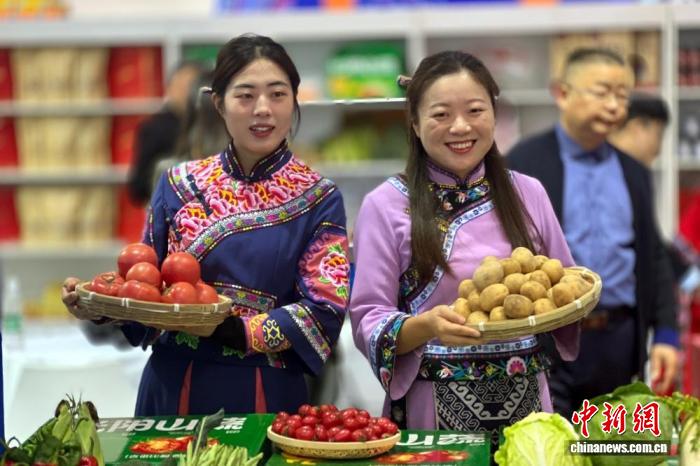
我国农产品网络零售额持续增长 中新网宜昌11月12日电 (记者 郭晓莹)2025全国农商互联暨乡村振兴产销对接活动12日在湖北宜昌启 动,商务部流通产业促进中心主任王斌在会上表示,今年前三季度,我国农产品网络零售额同比增长 9.6%,全国农村网商数超过1950万家,同比增长6.4%。 编辑:张澍楠 广告等商务合作,请点击这里 本文为转载内容,授权事宜请联系原著作权人 中新经纬版权所有,未经书面授权,任何单位及个人不得转载、摘编或以其它方式使用。 关注中新经纬微信公众号(微信搜索"中新经纬"或"jwview"),看更多精彩财经资讯。 2025全国农商互联暨乡村振兴产销对接活动12日启动,参展商展示农产品。郭晓莹 摄 据了解,近年来各级商务部门加快健全农产品供应链,并积极搭建农产品供需对接平台,推动农产品消 费和农民收入双提升。截至2024年底,商务部门支持建设各类农产品冷链设施近2000万立方米,有效满 足南菜北运、西果东送等跨区域调运需求;2018年以来全国商务系统累计开展农产品产销对接活动3300 多场,采购各类农产品近1000亿元。 本次活动举办地宜昌市农业资源丰富,其"水陆空铁"立体交通网络和三峡区域物 ...

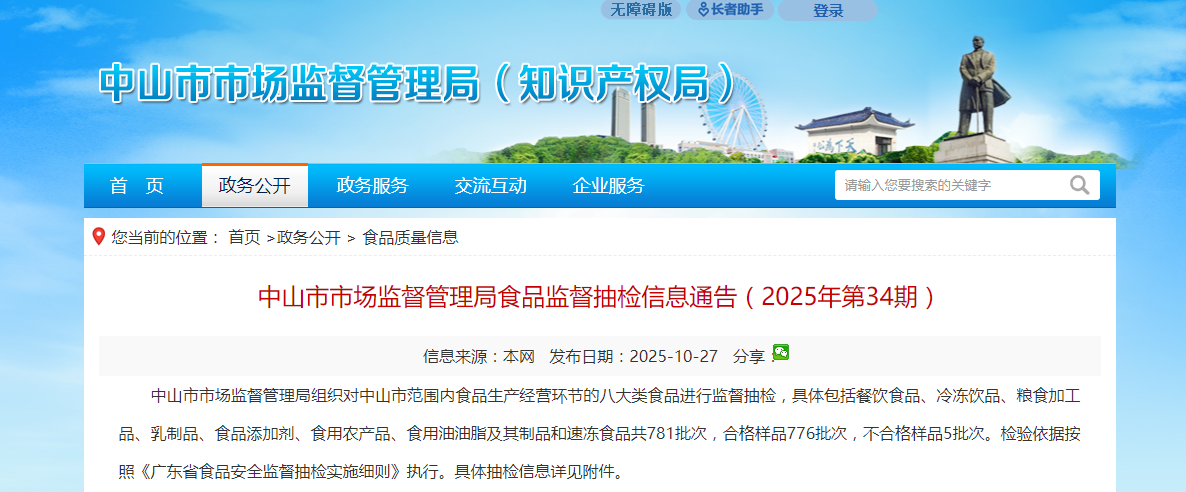
广东省中山市市场监督管理局食品监督抽检信息通告(2025年第34期)
Zhong Guo Zhi Liang Xin Wen Wang· 2025-11-07 05:08
Core Points - The Zhongshan Market Supervision Administration conducted a food safety inspection across eight categories of food, testing a total of 781 samples, with 776 passing and 5 failing the safety standards [2]. Group 1: Inspection Results - A total of 781 food samples were tested, with 776 samples deemed qualified, resulting in a pass rate of approximately 99.36% [2]. - The inspection covered various food categories, including catering food, frozen drinks, grain products, dairy products, food additives, edible agricultural products, edible oils, and frozen foods [2]. Group 2: Consumer Engagement - The administration encourages consumers to participate in food safety supervision and report any harmful food products or illegal activities by calling the complaint hotline 12345 [2].
农 产 品(000061) - 000061农产品2025年11月3日投资者关系活动记录表
2025-11-04 11:24
Company Overview - Shenzhen Agricultural Products Group Co., Ltd. was established in 1989 and listed on the Shenzhen Stock Exchange in 1997, forming a large-scale wholesale market network across over 20 major cities in China [1] - The company operates 35 physical agricultural product logistics parks, with an average annual trading volume exceeding 33 million tons and an average annual transaction value exceeding 250 billion yuan [1] Business Operations - The company focuses on the entire agricultural product supply chain, including standardized base planting, cold chain processing, wholesale market construction, urban ingredient distribution, brand development, and import-export services [1] - It has established partnerships with approximately 440,000 acres of planting bases across multiple provinces, including Guangdong, Guangxi, and Sichuan [3] Strategic Initiatives - The company aims to create a modern agricultural product circulation ecosystem, emphasizing digital transformation and efficient collaboration across the supply chain [2] - It is actively developing high-quality planting bases guided by market demand, promoting product safety and quality through multiple testing standards [2] Revenue Structure - The revenue structure of the wholesale market management business includes rent, commissions, management fees, and parking fees, with pricing influenced by local economic conditions and market competition [2] Digital Transformation - The company is enhancing its digital operations through big data, IoT, and cloud computing, including the implementation of a unified payment system and various management systems to improve operational efficiency [4] - A price collection and publication platform has been launched to provide merchants with price dynamics and enhance industry transparency [4] Market Positioning - The company positions its wholesale markets as key sales hubs, considering factors such as strategic planning, logistics, urban development, and investment returns in its market investments [2] - It is exploring new retail formats that complement the wholesale market, enhancing supply chain efficiency and service capabilities [3]
一文了解:支持农产品生产、流通等环节的税收政策
蓝色柳林财税室· 2025-11-01 01:24
Agricultural Production Tax Policies - The value-added tax (VAT) on self-produced agricultural products sold by agricultural producers is exempt [1] - Income from agricultural, forestry, animal husbandry, and fishery projects can be exempted or reduced from corporate income tax [2][3] - Individuals and sole proprietorships engaged in planting, breeding, and fishing activities are temporarily exempt from individual income tax [4][5] - Vessels registered as fishing or aquaculture boats are exempt from vehicle and vessel tax [6][7] - Land directly used for agricultural production is exempt from urban land use tax [8][9] Agricultural Circulation Tax Policies - VAT is exempt on the sale of vegetables and certain fresh meat and egg products by wholesalers and retailers [10][11] - Farmers and cooperatives are exempt from stamp duty on contracts for purchasing agricultural materials or selling agricultural products [12][13] - Properties and land used in agricultural wholesale and retail markets are temporarily exempt from property tax and urban land use tax [14][15] Agricultural Service Tax Policies - VAT is exempt for services related to agricultural tillage, irrigation, pest control, and animal health [16] Support for Agricultural Industrialization Tax Policies - VAT is exempt for sales of livestock under the "company + farmer" operating model [17] - Agricultural cooperatives selling products produced by their members are treated as agricultural producers and are exempt from VAT [18][19] - Land leased for agricultural production is exempt from VAT [21][22] - Companies using the "company + farmer" model in agricultural projects can enjoy corporate income tax reductions [23][24] - Income from initial processing of agricultural products is exempt from corporate income tax [25][26]
守护“菜篮子”的安全感 首衡给出民生保供“确定性”答案
Yang Guang Wang· 2025-10-27 08:20
Core Insights - The article highlights the operational efficiency and strategic importance of the Shouheng Gaobeidian market as a major agricultural product distribution hub in the Beijing-Tianjin-Hebei region, serving over 400 million people and handling nearly 80,000 tons of daily transactions [1][2]. Group 1: Market Operations - Shouheng Gaobeidian market is the largest agricultural product distribution hub in the Beijing-Tianjin-Hebei area, facilitating the collection and distribution of fruits and vegetables from across the country [2]. - The market operates a "direct sourcing + smart logistics" model, ensuring that products like leeks can reach consumers within 36 hours from the farm [2]. - The market accounts for 52% of the total supply of fruits and vegetables in the Beijing-Tianjin-Hebei region, with a real-time monitoring system in place to detect price fluctuations [2]. Group 2: Emergency Response and Supply Chain - In response to adverse weather conditions, the market quickly mobilized over 200 transport vehicles to stabilize prices of essential vegetables during a summer rainfall event in 2024 [2]. - The establishment of a major emergency supply station can support over 110 million people for more than seven days, reinforcing the market's role in national food security [3]. - The company has developed a "South-North Dual Core" strategy, coordinating resources from various regions to ensure a steady supply of agricultural products [3]. Group 3: Infrastructure and Logistics - Shouheng has built over 300 urban warehouses across the country, enabling direct delivery of fresh produce to community terminals and stores [4]. - The company has created a multi-level supply system that connects wholesale markets, urban warehouses, and community fresh food stores, ensuring efficient distribution [4]. - The cold chain system has a total storage capacity of 300,000 tons, maintaining food quality and safety through continuous low-temperature monitoring [5][6]. Group 4: Quality Control and Management - All agricultural products entering the market undergo strict safety inspections to ensure quality from source to consumer [6]. - The company employs an "order agriculture" model, establishing long-term partnerships with producers to ensure stable income and product quality [6]. - Digital technologies enhance the management system, with smart warehousing and big data platforms facilitating supply-demand matching and traceability [6].
从月薪5000的“打工仔”到千亿市值公司联席总裁,“货车帮主”消失5年,我们在水果仓库找到了再创业的他!
Mei Ri Jing Ji Xin Wen· 2025-10-23 05:01
Core Viewpoint - The article highlights the emergence of B2B platforms like Markfruit Factory as crucial players in the agricultural supply chain, especially in the context of the competitive landscape of e-commerce platforms like Taobao, JD.com, and Pinduoduo during the "Double 11" shopping festival [1]. Group 1: Company Overview - Markfruit Factory, founded by CEO Luo Peng, is positioned as a leading B2B platform in the fresh produce sector, focusing on reducing supply chain inefficiencies and losses [1][19]. - The company aims to leverage digital capabilities to streamline distribution, reduce costs, and enhance efficiency in the agricultural supply chain [19][25]. Group 2: Luo Peng's Background - Luo Peng has a notable background, having served as a co-CEO of the previously largest digital freight platform, Manbang Group, and has held various significant positions, including being a national representative [3]. - After a five-year hiatus from media exposure, Luo Peng re-emerged to share his vision for Markfruit Factory, emphasizing the importance of transforming the agricultural supply chain [3][19]. Group 3: Challenges in Agricultural Supply Chain - The article outlines three major issues in the domestic agricultural distribution market: "unable to eat," "unable to afford," and "unable to sell" [18]. - Significant losses in agricultural products are attributed to inefficiencies in the supply chain, with estimates indicating that 30% of products are lost during distribution due to inadequate infrastructure [17][19]. Group 4: Business Model and Strategy - Markfruit Factory's business model focuses on providing essential services to wholesalers and retailers without relying on subsidies, aiming to create a sustainable trading mechanism [25][27]. - The company has developed a self-researched system that optimizes logistics, achieving a 95% cargo load efficiency and significantly reducing costs [23][25]. Group 5: Future Prospects - The potential market for agricultural products in China is vast, with transaction volumes in key categories reaching between 6 trillion to 8 trillion yuan, while Markfruit Factory aims for a transaction volume of 6 billion yuan in 2024 [27]. - Luo Peng expresses confidence in the company's growth trajectory, emphasizing the importance of building a robust infrastructure for agricultural distribution rather than following the traditional internet model of heavy subsidies [27][28].

“菜篮子”这样的工程奇迹,为何只出现在中国?
Hu Xiu· 2025-10-22 02:39
Core Insights - The article emphasizes the significance of the "vegetable basket project" in China, which has transformed the country's food supply system and ensured food security for its citizens [13][43][64] - It highlights the differences between China's approach to food supply and that of Western developed countries, focusing on the role of government intervention and public welfare [44][61] Group 1: Historical Context - The "vegetable basket project" was initiated in the late 1980s to address food supply shortages in rapidly urbanizing areas, establishing a comprehensive system for production, circulation, and regulation [13][15][18] - The project has evolved through four stages, each addressing different challenges in food supply and quality [14][31] Group 2: Stages of Development - The first stage (1988-1994) focused on improving urban food supply channels and establishing a national circulation framework to alleviate food shortages [15][20] - The second stage (1994-1999) introduced facility agriculture to overcome seasonal limitations in vegetable production, leading to significant increases in output [21][25] - The third stage (1999-2009) aimed at enhancing food quality and safety, introducing certification systems and market access regulations [27][28] - The fourth stage (2010-present) emphasizes the integration of technology and logistics to create a resilient food supply system, including cold chain logistics and modern market structures [31][33] Group 3: Comparison with Western Models - The article contrasts China's "vegetable basket project" with the food supply systems in Western countries, highlighting the latter's reliance on market forces and capital efficiency, which often leads to limited product diversity [46][61] - It discusses how China's government-driven approach ensures a diverse and stable food supply, while Western models tend to prioritize profit over public welfare [45][52] Group 4: Current Impact and Future Outlook - The "vegetable basket project" has successfully eliminated food shortages in China, providing citizens with a wide variety of fresh produce year-round [44][64] - The project continues to adapt and evolve, demonstrating resilience during crises such as the COVID-19 pandemic, ensuring food security for millions [39][41][43]
从“货车帮主”到“水果司令”:“消失”五年 他做了一件改变水果供应链的大事
Mei Ri Jing Ji Xin Wen· 2025-10-21 15:25
Core Insights - The article discusses the rise of B2B e-commerce platforms, particularly focusing on the company "Biaoguo Factory," which is positioned as a key player in the agricultural supply chain, especially in the fresh produce sector [1][14]. Company Overview - Biaoguo Factory, founded by CEO Luo Peng, has emerged as a leading B2B platform in the fresh produce market over the past five years, aiming to streamline the supply chain and reduce costs [1][14]. - The company operates with a focus on digital capabilities to enhance distribution efficiency and minimize losses in the agricultural supply chain [14][20]. Industry Context - The article highlights the challenges in China's agricultural distribution market, including high costs and significant product losses, with estimates indicating that up to 30% of produce is wasted due to inadequate infrastructure [12][13]. - Luo Peng's vision is to address these issues by reducing the number of distribution layers and improving delivery efficiency, ultimately benefiting consumers, farmers, and wholesalers [14][20]. Business Model - Biaoguo Factory's business model avoids traditional e-commerce strategies like price wars and subsidies, instead focusing on providing essential services to wholesalers and retailers, fostering long-term partnerships [20][21]. - The company has developed a proprietary logistics system that allows for efficient route planning and maximizes vehicle load, achieving up to 95% cargo capacity utilization [19][20]. Growth and Future Prospects - The company has seen significant growth, with projections indicating a transaction volume of 60 billion yuan in 2024, representing a small fraction of the overall market potential estimated at 6 to 8 trillion yuan for key agricultural products [21]. - Luo Peng expresses confidence in the company's future, emphasizing the importance of building a robust infrastructure for agricultural distribution that benefits all stakeholders involved [21].

合百集团:公司产业覆盖零售业及农产品流通两大主业
Zheng Quan Ri Bao Zhi Sheng· 2025-10-21 11:38
Core Viewpoint - Company focuses on enhancing regional consumption vitality and releasing local consumption potential by aligning with national policies to promote consumption and expand domestic demand [1] Group 1: Company Overview - Company is a leading comprehensive commercial circulation enterprise in Anhui Province, covering two main industries: retail and agricultural product circulation [1] - Retail sector includes various sub-sectors such as department stores, home appliances, supermarket chains, e-commerce, and wholesale trade [1] Group 2: Strategic Focus - Company is deepening the layout of first stores and first launches while exploring innovative consumption scenarios based on regional consumption characteristics [1] - The strategy aims to actively contribute to enhancing regional consumption vitality and unlocking local consumption potential [1]