广告业

Search documents
分众传媒: 国泰海通证券股份有限公司关于本次交易产业政策和交易类型的核查意见
Zheng Quan Zhi Xing· 2025-08-06 14:12
Group 1 - The transaction involves the acquisition of 100% equity of Chengdu Xinchao Media Group Co., Ltd. by the listed company, Focus Media Information Technology Co., Ltd., through a combination of share issuance and cash payment [1][4] - The main business of the listed company is the development and operation of outdoor advertising in the life circle media sector, focusing on building media and cinema screen advertising [1][2] - The target company's primary business is also outdoor advertising, specializing in digital and print advertising services in residential communities [1][2] Group 2 - The independent financial advisor concluded that both the listed company and the target company belong to the advertising industry, and the transaction does not fall under the categories of industries supported for mergers and acquisitions by the State Council and relevant ministries [2][3] - The transaction type is classified as a horizontal or vertical merger within the same industry [3] - The transaction does not constitute a restructuring listing as there has been no change in the actual controller of the listed company in the past 36 months [3][4] Group 3 - The transaction involves the issuance of shares to 50 counterparties, including Chongqing JD Haijia E-commerce Co., Ltd., Zhang Jixue, and Baidu Online Network Technology (Beijing) Co., Ltd. [4] - As of the date of the review, the listed company is not under investigation by the China Securities Regulatory Commission [4]


分众传媒: 华泰联合证券有限责任公司关于本次交易产业政策和交易类型的核查意见
Zheng Quan Zhi Xing· 2025-08-06 14:12
Core Viewpoint - The transaction involves the acquisition of 100% equity of Chengdu Xinchao Media Group Co., Ltd. by Focus Media Information Technology Co., Ltd. through a combination of share issuance and cash payment, with independent financial advisor Huatai United Securities providing a review of the transaction's compliance with relevant regulations [1][2]. Group 1: Industry and Company Analysis - The main business of the listed company is the development and operation of outdoor advertising in the lifestyle media sector, focusing on elevator media and cinema screen advertising [1][2]. - The target company also operates in the outdoor advertising sector, specializing in digital and print advertising services in residential communities, indicating that both companies belong to the advertising industry [2][3]. - The independent financial advisor confirmed that the transaction does not fall under the categories of industries supported for mergers and acquisitions as outlined by the State Council and relevant ministries, such as automotive, steel, and pharmaceuticals [2][3]. Group 2: Transaction Details - The transaction type is classified as a merger within the same industry, as both the listed company and the target company operate in the advertising sector [3]. - The transaction does not constitute a restructuring listing, as there has been no change in the actual controller of the listed company within the past 36 months, maintaining Media Management Hong Kong Limited as the controlling shareholder [3][4]. - The transaction involves the issuance of shares to 50 counterparties, including Chongqing Jingdong Haijia E-commerce Co., Ltd., Zhang Jixue, and Baidu Online Network Technology (Beijing) Co., Ltd. [4].
市场监管总局:上半年广告业头部企事业单位收入增长11.3%
Xin Jing Bao· 2025-08-06 06:06
编辑 张磊 上半年,北京、上海、广东、浙江、福建5个省市头部企事业单位广告业务收入合计6377.5亿元,同比 增长12.1%,占全国头部企事业单位广告业务总收入的78.8%,比上年同期提高0.5个百分点。 新京报讯 据市场监管总局消息,近日,市场监管总局对全国广告业头部企事业单位开展统计调查,数 据显示,上半年上述单位实现广告业务收入8088.9亿元,同比增长11.3%。分季度看,第一季度和第二 季度同比均增长11.3%。从环比看,第二季度头部企事业单位广告业务收入增长35.5%。 上半年,头部企事业单位互联网广告发布收入4167.9亿元,同比增长19.0%,占广告发布收入总量的 81.1%。人工智能等先进技术驱动广告业创新发展,互联网广告发布收入增速继续领跑服务业 (5.5%),快于信息传输、软件和信息技术服务业(11.1%),广告业经济发展新动能特征明显。 ...
上半年广告业头部企事业单位广告业务收入同比增长11.3%
Bei Jing Shang Bao· 2025-08-06 03:51
Core Insights - The National Market Supervision Administration reported that the top advertising enterprises in China achieved an advertising business revenue of 808.9 billion yuan in the first half of the year, marking a year-on-year growth of 11.3% [1] - Internet advertising revenue from these top enterprises reached 416.79 billion yuan, with a year-on-year increase of 19.0%, accounting for 81.1% of total advertising revenue [1] - The advertising industry is showing significant growth driven by advanced technologies like artificial intelligence, outpacing the service industry growth rate of 5.5% and the information transmission, software, and IT services sector growth rate of 11.1% [1] Quarterly Performance - In the first and second quarters, the advertising business revenue for top enterprises grew by 11.3% year-on-year [1] - The second quarter saw a substantial quarter-on-quarter increase of 35.5% in advertising business revenue [1] Regional Performance - The combined advertising business revenue of top enterprises in Beijing, Shanghai, Guangdong, Zhejiang, and Fujian reached 637.75 billion yuan, reflecting a year-on-year growth of 12.1% and accounting for 78.8% of the total revenue from top enterprises nationwide, an increase of 0.5 percentage points from the previous year [1]
市场监管总局:上半年上述单位实现广告业务收入8088.9亿元 同比增长11.3%
智通财经网· 2025-08-06 02:32
Core Viewpoint - The advertising industry in China has shown significant growth in the first half of the year, with a total revenue of 808.89 billion yuan, reflecting a year-on-year increase of 11.3% [1] Group 1: Overall Advertising Revenue - The top advertising enterprises achieved a revenue of 808.89 billion yuan in the first half of the year, with a year-on-year growth of 11.3% [1] - Both the first and second quarters recorded a year-on-year growth of 11.3% in advertising revenue [1] - The second quarter saw a quarter-on-quarter increase of 35.5% in advertising revenue [1] Group 2: Internet Advertising Revenue - Internet advertising revenue reached 416.79 billion yuan in the first half of the year, marking a year-on-year increase of 19.0% and accounting for 81.1% of total advertising revenue [1] - The growth rate of internet advertising revenue outpaced the overall service industry growth of 5.5% and the information transmission, software, and IT services growth of 11.1% [1] Group 3: Regional Performance - The combined advertising revenue of top enterprises in Beijing, Shanghai, Guangdong, Zhejiang, and Fujian reached 637.75 billion yuan, with a year-on-year growth of 12.1% [1] - These five regions accounted for 78.8% of the total advertising revenue from top enterprises, an increase of 0.5 percentage points compared to the same period last year [1]
增长11.3%!上半年广告业头部企事业单位发力
Yang Shi Wang· 2025-08-06 02:22
Core Insights - The market regulatory authority conducted a statistical survey on leading advertising enterprises, revealing that these entities achieved an advertising revenue of 808.89 billion yuan in the first half of the year, marking a year-on-year growth of 11.3% [1] Group 1: Advertising Revenue Performance - In the first half of the year, the leading enterprises' advertising revenue showed a consistent growth of 11.3% in both the first and second quarters [1] - Quarter-on-quarter, the second quarter saw a significant increase of 35.5% in advertising revenue for these enterprises [1] Group 2: Internet Advertising Growth - Internet advertising revenue reached 416.79 billion yuan in the first half of the year, reflecting a year-on-year increase of 19.0%, which constitutes 81.1% of the total advertising revenue [1] - The growth rate of internet advertising outpaced the overall service industry growth of 5.5% and the information transmission, software, and IT services sector growth of 11.1% [1] Group 3: Regional Performance - The combined advertising revenue from leading enterprises in Beijing, Shanghai, Guangdong, Zhejiang, and Fujian totaled 637.75 billion yuan, with a year-on-year growth of 12.1%, accounting for 78.8% of the total advertising revenue from leading enterprises nationwide [1] - This regional contribution represents an increase of 0.5 percentage points compared to the same period last year [1]
以区块链技术重塑计算广告生态
Xin Hua Ri Bao· 2025-07-30 23:33
Core Insights - The article discusses the integration of blockchain technology into the digital advertising sector, particularly in computational advertising, highlighting its potential to address issues such as user privacy and data integrity [1][4]. Group 1: Blockchain Applications in Computational Advertising - Smart contracts facilitate automated ad placement and performance verification, enhancing settlement efficiency and providing reliable data for ad effectiveness assessment [2][3]. - Distributed ledger technology helps break down information silos by allowing encrypted user data to be stored on the blockchain, thus improving data privacy and enabling advertisers to create accurate user profiles [2][3]. - Blockchain technology enables precise targeting and strategy optimization by analyzing various data points, allowing advertisers to adjust their strategies based on real-time feedback [3]. Group 2: Enhancing Transparency and Trust - The application of blockchain increases data transparency and credibility, allowing all parties to verify the authenticity and completeness of ad performance data [4]. - Blockchain's consensus mechanism ensures that only verified data is recorded, promoting fairness and integrity in advertising transactions [4]. Group 3: Addressing Fraud and Inefficiencies - Blockchain technology effectively identifies and eliminates fraudulent ad placements and invalid traffic by recording key exposure data and employing verification mechanisms [5]. - The technology streamlines the digital advertising supply chain by simplifying collaboration processes and enabling real-time information sharing among stakeholders [6]. Group 4: Optimizing Advertising Expenditure - Blockchain provides advertisers with precise expenditure management tools, allowing for real-time analysis of ad spending and automatic budget adjustments based on performance [6]. - The dynamic budget management approach enhances the effectiveness of advertising investments by directing funds to the most successful strategies [6]. Conclusion - Overall, blockchain technology presents significant opportunities for the computational advertising industry by addressing existing challenges and enhancing operational efficiency, transparency, and trust [6].
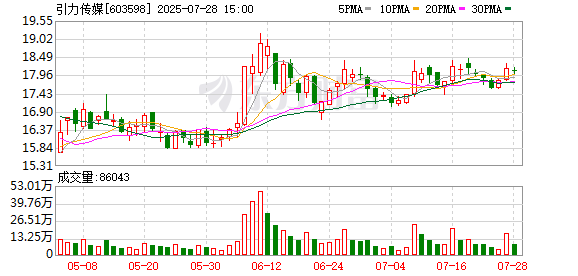
上交所对引力传媒及有关责任人予以通报批评
Mei Ri Jing Ji Xin Wen· 2025-07-28 09:40
Group 1 - The Shanghai Stock Exchange issued a decision to publicly criticize Gravity Media Co., Ltd. and its responsible individuals for failing to disclose performance forecasts in a timely manner [2][4] - The company reported a projected net loss of between 17 million to 19 million yuan for the fiscal year 2024, with the actual net loss recorded at 18,105,075.90 yuan [3][4] - The responsible individuals, including the chairman, general manager, financial director, and board secretary, were found to have violated multiple provisions of the Shanghai Stock Exchange's listing rules [4][6] Group 2 - The company argued that it did not intentionally violate regulations, citing reliance on past practices and claiming that market impact was minimal [5][6] - The disciplinary committee rejected the company's arguments, stating that the failure to disclose the performance forecast was a clear violation and that the reasons provided were not valid [6] - The company is required to submit a rectification report within one month, addressing compliance issues and improving information disclosure practices [7] Group 3 - For the fiscal year 2024, Gravity Media's revenue was entirely derived from the advertising industry, accounting for 100% of its income [8]


中国广告协会张国华:AI 重构广告生态,品牌建设需 “技术赋能 + 内功修炼” 双轮驱动
Jing Ji Guan Cha Bao· 2025-07-24 01:48
Core Insights - The forum highlighted the transformative role of AI in the advertising industry, shifting from tool-based applications to a comprehensive system-level reconstruction [2] - The integration of AI in brand development is essential for enhancing soft power in marketing and storytelling, addressing the current shortcomings of Chinese brands [2] - The emphasis on data-driven strategies over experience-driven approaches marks a significant evolution in brand building [3] Group 1: AI's Impact on Brand Development - AI is evolving from a supportive role to a central role in the marketing chain, influencing everything from product design to market promotion [2] - The application of AI allows for real-time audience targeting and strategy adjustments, enhancing brand health assessments [2] - AI's comprehensive involvement in the entire branding process is expected to lead to deeper transformations in brand construction [2] Group 2: Promoting Hohhot as a City Brand - Hohhot's branding should move beyond traditional perceptions, highlighting its diverse offerings, including modern industries and cultural experiences [4] - A suggested slogan, "Once you come, you won't want to leave," aims to encapsulate the city's appeal while leveraging AI for targeted content generation [4] - The city can utilize AI to create differentiated promotional strategies based on tourist preferences [3] Group 3: Sustainable Development of Cultural Tourism Brands - Long-term brand value requires consistent effort rather than relying on short-term gimmicks [5] - Essential infrastructure improvements and cultural experiences are necessary for sustainable tourism development [5] - The focus should be on creating meaningful connections and enhancing service quality to foster lasting brand loyalty [5]
@广告、娱乐业纳税人,文化事业建设费减征延续啦!
蓝色柳林财税室· 2025-07-24 00:45
Group 1 - The article discusses the advertising and entertainment service sectors in China, highlighting the responsibilities of advertising media units and outdoor advertising operators in providing services both domestically and internationally [3][5]. - It defines advertising services to include advertising agency services and the publication, broadcasting, promotion, and display of advertisements [3]. - The entertainment services mentioned include various venues such as karaoke halls, dance halls, nightclubs, bars, billiard halls, golf courses, and amusement activities like shooting, hunting, and arcade games [3].