
空调制造

Search documents
长三角加力破除市场分割——纵深推进全国统一大市场建设观察之二(人民眼·建设全国统一大市场)
Ren Min Ri Bao· 2025-08-14 22:13
Core Viewpoint - The integration of the Yangtze River Delta region is crucial for establishing a unified national market, enhancing efficiency, and promoting economic development through streamlined processes and improved connectivity [1][2][3]. Group 1: Administrative Efficiency - The "cross-regional handling" initiative allows businesses to complete migration procedures between provinces in less than a day, significantly reducing bureaucratic delays [2]. - The implementation of a unified online service platform has enabled 203 high-frequency administrative services to be processed across provinces, enhancing convenience for residents and businesses [4]. - The optimization of administrative processes aims to break down local protectionism and market fragmentation, thereby improving market operational efficiency [3]. Group 2: Transportation Connectivity - The launch of the high-speed rail loop connecting major cities in the Yangtze River Delta has improved travel convenience, facilitating business operations across the region [6]. - The new rail service has seen significant usage, with over 116.7 million passengers in its first year and an average occupancy rate of 80.5% [6]. - The integration of transportation infrastructure is essential for enhancing the flow of resources and promoting a unified national market [5]. Group 3: Logistics and Trade - The "joint unloading" model has transformed logistics for companies in Anhui, allowing them to ship products directly from local ports to international destinations, reducing transit time by 50% and logistics costs by 30% [8]. - The model has achieved full coverage of first-class waterway ports in Anhui, with a significant increase in the number of transactions processed [8]. Group 4: Financial Integration - The establishment of a financial support platform has facilitated timely loans for technology companies, with over 2,600 registered enterprises and a total credit issuance exceeding 7 billion yuan [10]. - The collaboration between different regions in financial services exemplifies the seamless flow of financial resources across the Yangtze River Delta [10]. Group 5: Innovation and Talent Development - The creation of innovation centers in Shanghai has supported local enterprises in talent acquisition and project development, fostering a collaborative environment for technological advancement [12]. - The G60 Innovation Corridor has connected multiple cities, enhancing the flow of innovative resources and contributing to regional economic growth [12]. Group 6: Consumer Services - The introduction of a cross-regional return policy for retail products has improved consumer convenience, allowing customers to return items purchased in one city at stores in another [13][14]. - The initiative aims to enhance customer satisfaction and promote regional retail integration [14]. Group 7: Regulatory Collaboration - The establishment of a collaborative regulatory framework among different regions aims to enhance the efficiency of market supervision and protect intellectual property rights [16][18]. - The joint inspections and shared regulatory information among regions are designed to streamline enforcement and improve compliance [17][18]. Group 8: Food Safety and Traceability - The implementation of a digital traceability system for food products has improved safety standards and operational transparency for local food producers [20]. - The initiative aims to create a comprehensive data tracking system from production to consumption, enhancing food safety management [20].
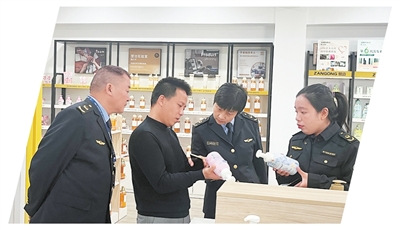
长三角加力破除市场分割(人民眼·建设全国统一大市场)
Ren Min Ri Bao· 2025-08-14 22:10
Core Viewpoint - The article discusses the integration and optimization of the Yangtze River Delta region's market, highlighting the benefits of streamlined administrative processes, improved transportation connectivity, and enhanced financial support for businesses, all contributing to the establishment of a unified national market. Group 1: Administrative Efficiency - The "cross-regional handling" service allows businesses to complete migration procedures in less than a day, significantly reducing the bureaucratic burden [6][8] - The implementation of a unified online platform has enabled 203 high-frequency administrative services to be processed across provinces, enhancing efficiency [10] - The integration of data sharing between different regions has streamlined the process for businesses, allowing for quicker approvals and reduced travel [9][10] Group 2: Transportation Connectivity - The launch of the G8388 high-speed train has improved connectivity between major cities in the Yangtze River Delta, facilitating easier travel for business purposes [11][12] - The "super ring line" has seen over 116.7 million passengers in its first year, with an average occupancy rate of 80.5%, indicating strong demand for improved transportation links [11][12] - The "river-sea intermodal" model has allowed Anhui province to efficiently export goods, reducing logistics costs by 30% and transit time by 50% [14] Group 3: Financial Support and Resource Sharing - The establishment of the "E Enterprise Loan" service platform has provided over 70 billion yuan in loans to small and medium-sized enterprises, facilitating access to necessary funding [16] - The collaboration between different regions has enabled financial institutions to offer tailored products to businesses, enhancing the flow of financial resources [16] - The integration of innovation and technology resources across regions has led to successful product development and commercialization [17][18] Group 4: Consumer Market Integration - The introduction of a cross-regional return policy allows consumers to return products purchased in one region at stores in another, enhancing customer convenience [19][20] - The establishment of a unified return mechanism has seen participation from 141 businesses, promoting consumer confidence and satisfaction [20] Group 5: Regulatory Collaboration - The joint inspections by market supervision departments from different regions aim to enhance the protection of intellectual property rights and improve regulatory efficiency [22][23] - The implementation of a comprehensive regulatory framework allows for streamlined inspections across multiple jurisdictions, reducing redundancy [24][25] - The development of a digital traceability system for food safety has improved compliance and safety standards in the region [26]

奥克斯电气通过联交所聆讯
Zheng Quan Shi Bao Wang· 2025-08-13 03:22
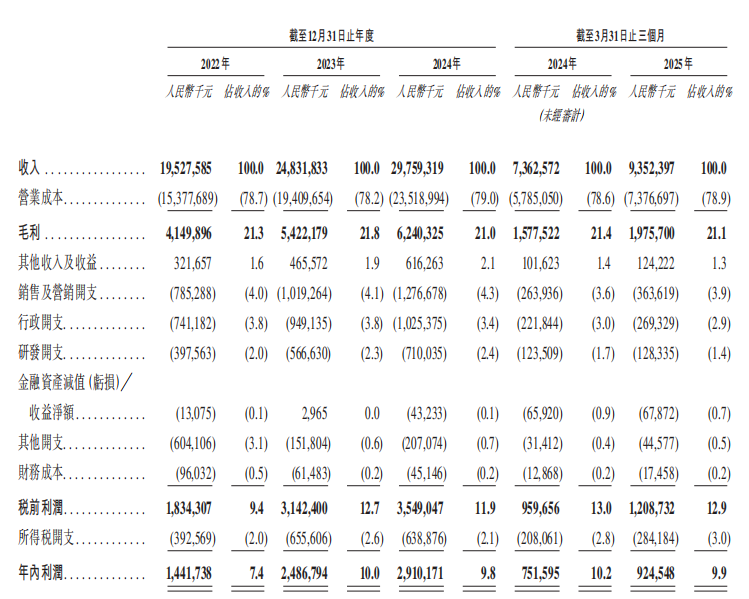
Core Viewpoint - The company, AUX Electric Co., Ltd., is preparing for an IPO and has submitted its prospectus, aiming to leverage its position as a leading provider of high-quality air conditioning solutions globally [1] Group 1: Company Overview - AUX Electric Co., Ltd. is recognized as a global leader in the design, research and development, production, sales, and service of both household and central air conditioning systems [1] Group 2: Financial Performance - The net profit for the fiscal year 2023 is projected to be 2.487 billion yuan, with a year-on-year increase of 72.49% - For the fiscal year 2024, the net profit is expected to reach 2.910 billion yuan, reflecting a year-on-year growth of 17.03% - In the first quarter of 2025, the net profit is anticipated to be 925 million yuan, showing a year-on-year increase of 23.01% [1]
AAON(AAON) - 2025 Q2 - Earnings Call Transcript
2025-08-11 14:00
Financial Data and Key Metrics Changes - Net sales for Q2 2025 declined by $2 million or 0.6% year-over-year to $311.6 million, driven by a 20.9% decline in Aon branded sales, offset by a 90% increase in Basics branded sales [22][23] - Gross margin decreased to 26.6%, down 950 basis points, primarily due to lower production volumes of Aon branded equipment [23][24] - Non-GAAP adjusted EBITDA was 14.9%, down 1120 basis points, and non-GAAP adjusted EPS was $0.22, a decrease of 64.5% from the previous year [23] Business Line Data and Key Metrics Changes - Aon Oklahoma segment net sales declined by 18%, impacted by supply chain disruptions and coil supply shortages due to ERP implementation [25][26] - Aon Coil Products sales grew by $27.1 million or 86.4%, primarily driven by Basics brand products [28] - Basics segment sales increased by 20.4% due to continued demand for data center solutions, with gross margin contracting by 60 basis points [29] Market Data and Key Metrics Changes - Basics branded data center sales surged by 127% in Q2 and 269% year-to-date, indicating strong market demand [19] - National accounts orders for Aon brand grew by 163% year-over-year in Q2, reflecting effective customer engagement [20] - Aon branded Alpha Class heat pump business saw sales growth of 8% in Q2, with bookings increasing by approximately 61% [21] Company Strategy and Development Direction - The company is focused on addressing ERP implementation challenges while maintaining confidence in its long-term strategy [6][7] - The Basics brand is identified as the primary growth engine, with expectations of a 40% year-over-year increase in sales [35] - The company plans to ramp up production at both Tulsa and Longview facilities to meet strong demand, particularly in the data center market [36][37] Management's Comments on Operating Environment and Future Outlook - Management acknowledged the challenges faced in Q2 due to ERP implementation but expressed confidence in recovery and long-term growth [6][42] - The company revised its full-year 2025 outlook to anticipate low teens sales growth and gross margins of 28% to 29% [38] - Management highlighted strong underlying fundamentals and a solid backlog, expecting significant growth in Aon branded sales in the second half of the year [41] Other Important Information - The company incurred $3 million in costs related to the new Memphis facility during the quarter, impacting overall financial performance [23] - Cash flow used in operations year-to-date was $31 million, compared to $127.9 million in the same period last year, reflecting increased investments in working capital [31] Q&A Session Summary Question: Guidance and ERP Implementation Impact - Management indicated that the revised guidance reflects the impact of ERP implementation and lower production volumes, with a focus on recovery in the second half of the year [44][45] Question: Data Center Backlog Health - Management confirmed strong activity in the data center market, with year-over-year sales up 127% in Q2, and emphasized the importance of capacity to meet demand [50][51] Question: Applied Digital Partnership Significance - The partnership with Applied Digital is crucial for Basics, as it involves supplying thermal management solutions for AI data centers, indicating strong future order potential [57][59] Question: Fourth Quarter Growth Expectations - Management expects strong growth in Q4, with a focus on ramping production and leveraging backlog, while still considering ERP impacts [61][62] Question: Aon Brand Booking Strength - The increase in Aon brand bookings is attributed to a successful national account strategy and strong product value proposition, despite a challenging non-residential market [66][68]

2025中央空调行业趋势:从"控温"到"控风",舒适与隐形成新赛道
艾瑞咨询· 2025-08-01 00:07
Core Viewpoint - The central air conditioning industry is undergoing a transformation from merely meeting basic functional needs to enhancing quality experiences, driven by evolving consumer demands and technological innovations [1]. Trend Summaries Trend 1: Comfort Airflow as Core Competitive Dimension - "Comfort experience" has replaced energy efficiency as the primary focus for brands, with over 35% of online discussions centered on keywords like "comfortable airflow" and "no direct blowing" [2]. - 40.3% of households face issues with uneven heating, while 38.8% report discomfort from direct cold air, highlighting the need for precise control over airflow in various scenarios [2]. - Innovations in airflow technology are emerging, with adjustable designs replacing fixed vents, allowing for better alignment with human comfort [2]. Trend 2: Integration of Home Design Needs - 71.0% of users consider the integration of air conditioning with home decor as a significant factor, with "decorative," "hidden," and "minimalist" designs becoming essential [3]. - Traditional products often fail to meet these aesthetic demands, leading to a rise in innovative designs that blend seamlessly with home interiors [5]. - Simplifying installation processes is becoming crucial, as 41.5% of users have faced issues with complex installation requirements [5]. Trend 3: Technological Innovations Driving Performance Upgrades - Under the "dual carbon" policy, energy-efficient technologies like heat pumps are becoming central to performance upgrades, offering heating efficiency 2-4 times greater than traditional electric heating [7]. - Innovations in airflow patterns are breaking traditional limitations, with leading brands developing multi-mode airflow solutions to address issues like uneven temperature distribution [9]. - 88.9% of users express a clear demand for dual-direction airflow and hidden airflow control technologies, indicating a strong market recognition of these innovations [10]. Conclusion - The central air conditioning industry is evolving towards a focus on user comfort, aesthetic integration, and energy efficiency, driven by technological advancements that address real consumer needs [22].

今日投资参考:信创板块景气度持续回升
Zheng Quan Shi Bao Wang· 2025-07-30 02:03
Market Overview - The Shanghai Composite Index experienced a slight increase of 0.33%, closing at 3609.71 points, while the Shenzhen Component Index rose by 0.64% to 11289.41 points, and the ChiNext Index surged by 1.86% to 2406.59 points, indicating a positive market sentiment [1] - The total trading volume in the Shanghai and Shenzhen markets reached 182.96 billion yuan, an increase of approximately 63 billion yuan compared to the previous day [1] Sector Performance - The insurance, banking, and agriculture sectors saw declines, while the pharmaceutical, steel, and semiconductor sectors showed significant gains [1] - The innovative drug, CPO concept, and composite copper foil concepts were particularly active in the market [1] Policy Impact - According to Everbright Securities, the ongoing policy initiatives are expected to sustain the "anti-involution" market trend, with a focus on sectors likely to benefit from these policies, such as coal, steel, photovoltaic, and building materials [1] - The current market trend is characterized by "rotating supplementary growth," suggesting that there are opportunities for stocks that may experience a rebound [1] Stablecoin Regulation - The Hong Kong Monetary Authority (HKMA) is set to implement a regulatory framework for stablecoin issuers starting August 1, with the first licenses expected to be issued by the end of the year [2] - Institutions interested in applying for stablecoin licenses are encouraged to contact the HKMA by August 31 for guidance [2] - The stablecoin industry is anticipated to grow as global regulatory policies are established, providing a foundation for demand in the future [2] Domestic Server Procurement - China Unicom announced a centralized procurement project for general servers, with a total of 87,020 units planned for purchase to support its "computing network intelligence" business [3] - The domestic procurement ratio for these servers is expected to exceed 90%, indicating a significant increase from previous levels [3] - The demand for servers reflects a recovery in the domestic information technology sector, with positive growth in bidding activities [3] Photovoltaic Industry Clarification - The China Photovoltaic Industry Association issued a clarification regarding rumors about the photovoltaic sector, particularly concerning multi-crystalline silicon [4] - The association emphasized the importance of adhering to legal and market principles in addressing competition issues within the industry [4] Coal Market Update - The coal market has seen a rebound in prices since June, with the spot price for 5500 kcal thermal coal at ports around 650 yuan per ton, up 30 yuan from the end of June [5] - The price of Shanxi coking coal has also increased, reaching 1290 yuan per ton, reflecting a rise of 170 yuan since the end of June [5] Air Conditioning Exports - China's air conditioning exports surged by 10% year-on-year in the first half of the year, totaling 9.35 billion USD, driven by extreme heat conditions globally [5] - Exports to EU countries saw a remarkable increase of 43.2%, with export value reaching 3.76 billion USD, marking a historical high for the same period [5]

申菱环境(301018):温控领先厂商 有望业绩拐点
Xin Lang Cai Jing· 2025-07-28 10:34
Core Insights - The company has expanded its business horizontally, with liquid cooling for data centers becoming a key growth driver. It has evolved from industrial specialty air conditioning to data centers and energy storage heat pumps, establishing a comprehensive layout across four major sectors: data services, industrial processes, specialty products, and high-end public construction [1] - From 2018 to 2022, the company's revenue and net profit attributable to shareholders grew at compound annual growth rates of 19% and 13%, respectively. In 2023, profits faced pressure, but revenue and net profit are expected to grow by 20% and 10% year-on-year in 2024, with data services revenue share increasing from 35% in 2023 to 51% [1] - The company aims to achieve a "one body, two wings" strategic layout, focusing on "digital energy vertical integrated solutions" and supported by "ICT intelligent computing and new energy temperature control" and "specialty environmental control" [1] Business Growth and Orders - The data services segment is expected to see a 95% year-on-year increase in new orders in 2024, driven by strong demand for data centers. The new manufacturing bases for nuclear power specialty air conditioning and liquid cooling are projected to generate over 10 billion yuan in revenue by 2027 and over 20 billion yuan by 2030 [2] - The company is set to benefit from the booming AI-driven data center market, with liquid cooling expected to enter a rapid growth phase. Domestic internet capital expenditures are rising, creating a positive feedback loop for computing power investments [2][3] Revenue and Client Relationships - In 2024, the data services segment's revenue is projected to grow by approximately 75.4%, with liquid cooling product revenue increasing to about 2.9 times that of 2023. Major clients include Huawei, ByteDance, Tencent, Alibaba, and Baidu, positioning the company to benefit from the AI wave [3] - The company is expanding its overseas business, particularly in Southeast Asia, focusing on data center projects, especially AI computing centers [3] Power Market Opportunities - The company is well-positioned to benefit from the accelerated construction of hydropower and ultra-high voltage power systems, with significant investments expected in the power grid sector. The company has experience in servicing wind power and direct current transmission projects [3][4] - The company has a strong market share in hydropower air conditioning and is actively participating in the Yarlung Tsangpo River hydropower development project, which is expected to contribute to future revenue growth [4] Profit Forecast and Valuation - The company is expected to achieve revenues of 4.158 billion, 5.520 billion, and 6.886 billion yuan from 2025 to 2027, with year-on-year growth rates of 37.9%, 32.8%, and 24.7%, respectively. Net profits are projected to be 281 million, 385 million, and 518 million yuan, with corresponding year-on-year growth rates of 143.8%, 36.5%, and 34.8% [6]
奥克斯负债率82% 去年分红38亿郑坚江家族获36.6亿
Zhong Guo Jing Ji Wang· 2025-07-27 23:25
Core Viewpoint - The article discusses the IPO application of Aux Electric Co., Ltd. and highlights its financial performance, market position, and corporate governance structure, indicating both growth potential and significant challenges ahead. Company Overview - Aux Electric, established in 1994, is a comprehensive air conditioning provider involved in design, R&D, production, sales, and service, operating in over 150 countries and regions [1][3]. - According to Frost & Sullivan, Aux is the fifth-largest air conditioning provider globally by sales volume, with a market share of 7.1% in 2024 [1][3]. Financial Performance - Aux's revenue for 2022, 2023, 2024, and Q1 2025 was RMB 19.53 billion, RMB 24.83 billion, RMB 29.76 billion, and RMB 9.35 billion, respectively. Net profits for the same periods were RMB 1.44 billion, RMB 2.49 billion, RMB 2.91 billion, and RMB 0.92 billion [2][3]. - Despite revenue and net profit growth, the growth rates have shown a significant decline, with 2023 and 2024 revenue growth rates at 27.2% and 19.8%, and net profit growth rates at 72.5% and 17.0% [3]. Debt and Dividend Policy - Aux has a high debt level, with asset-liability ratios of 88.3%, 78.8%, 84.1%, and 82.5% from 2022 to Q1 2025. The net current liabilities were RMB 3.19 billion, RMB 2.03 billion, RMB 2.47 billion, and RMB 0.79 billion during the same period [2][8]. - In a notable move, Aux declared a one-time dividend of RMB 3.794 billion in 2024, which accounted for 55% of its net profit over the past three years, with the Zheng family receiving approximately RMB 3.656 billion [2][8]. Market Position and Comparison - Aux's gross profit margins were 21.3%, 21.8%, and 21.0% for 2022, 2023, and 2024, significantly lower than Gree Electric's 34.91% and Midea Group's 29.97% in 2024 [5]. - R&D expenditure as a percentage of revenue for Aux was 2.4% in 2024, lower than Midea Group's 3.99% and Gree Electric's 3.77% [5]. Corporate Governance - Aux is a family-controlled enterprise, with the founder Zheng Jianjiang controlling approximately 96.36% of the voting rights through various entities [1][6]. - Zheng Jianjiang holds 85% of the shares in Aux Holdings, with his brother and relatives holding the remaining shares [1][6].
董明珠“仇敌”,要IPO了
Sou Hu Cai Jing· 2025-07-26 12:24
Core Viewpoint - The news highlights the upcoming IPO of AUX Electric Co., a major player in the air conditioning market, which is seeking to capitalize on the current hot IPO environment in Hong Kong after a previous unsuccessful attempt in January 2025 [1][11]. Company Overview - AUX Electric Co. is recognized as the "fifth largest air conditioning supplier globally" and has a history dating back to the 1990s when it entered the burgeoning Chinese air conditioning market [1][11]. - The company was founded by Zheng Jianjiang, who aimed to disrupt the market dominated by high-priced competitors by initiating aggressive price wars, earning the nickname "air conditioning butcher" [1][6]. Market Position and Strategy - AUX has achieved significant revenue growth, with projected revenues of 195.28 billion yuan, 248.32 billion yuan, and 297.59 billion yuan for the years 2022, 2023, and 2024 respectively, alongside adjusted net profits of 14.49 billion yuan, 25.11 billion yuan, and 29.35 billion yuan [11]. - The company has successfully expanded its market presence internationally, operating in over 150 countries and regions, while focusing on lower-tier domestic markets to avoid competition with major players like Gree and Midea [2][9]. Competitive Landscape - The air conditioning market has seen a shift from a single dominant player to a more fragmented competitive landscape, with AUX's aggressive pricing strategy significantly impacting competitors like Spring Lan [1][8]. - Despite its growth, AUX still lags behind major competitors, with Midea's revenue reaching 407.2 billion yuan and Gree's at 190 billion yuan, indicating a substantial gap in market share and financial performance [2][11]. IPO Context - The recent surge in IPO activity in Hong Kong presents a strategic opportunity for AUX to secure funding and enhance its market position, especially after a significant pre-IPO dividend payout of 3.794 billion yuan [11]. - The company aims to leverage its global market share of 7.1% to attract investors and establish a stronger foothold in the competitive air conditioning industry [11].
多重因素影响 哈空调叫停子公司新能源材料项目
Zheng Quan Ri Bao Wang· 2025-07-23 06:43
Core Viewpoint - Harbin Air Conditioning Co., Ltd. (hereinafter referred to as "the Company") announced the termination of its investment plan for a new project aimed at producing 1.2 million sets of new energy materials and supporting products due to economic feasibility concerns stemming from various external factors [1][2]. Group 1: Project Termination - The Company’s board approved the termination of the investment plan for the new energy materials project, which had not commenced substantial construction despite obtaining land use rights [1]. - Reasons for termination include significant fluctuations in import costs due to tariff policy adjustments, transportation, and exchange rate volatility, alongside intensified market competition and pressure on product prices [1][2]. - The project was initially intended to enhance the Company's market expansion capabilities and meet strategic development needs [2]. Group 2: Financial Performance - The Company issued a pre-loss announcement for the first half of 2025, projecting revenue of approximately 548 million yuan, a decline of about 23% compared to the same period last year [3]. - The decline in sales revenue is attributed to adverse macroeconomic conditions and intensified industry competition [3]. Group 3: Strategic Implications - The termination of the project may disrupt the Company's supply chain enhancement efforts and potentially lead to missed opportunities in capacity and technology development [2]. - The Company emphasized that the decision to terminate the project is a prudent measure aimed at optimizing resource allocation and improving operational efficiency, asserting that it will not significantly impact existing business operations or financial results [2][3]. - Experts suggest that while the termination may have short-term negative effects on the Company's brand image and investor confidence, timely cessation of the project could prevent larger losses and maintain financial stability [3].
