计算机硬件

Search documents
谷歌市值反超苹果,AI竞争向“模型+芯片”双重差异化进化
Quan Jing Wang· 2026-01-09 07:15
Group 1: Alphabet's Market Position - Alphabet's stock price rose by 2.43% to $321.98, increasing its market capitalization to $3.88 trillion, surpassing Apple for the first time since 2019 [1] - Since 2025, Alphabet's stock has surged over 60%, marking its best annual performance since the 2009 financial crisis, while Apple's stock increased by less than 10% [1] - The market's reaction reflects a shift in focus towards AI capabilities, indicating a restructured landscape for tech giants in the AI era [1] Group 2: AI Industry Development - Alphabet's market cap surpassing Apple is seen as a catalyst for accelerated AI industry development, prompting tech companies to invest in AI core competencies [2] - The focus on AI infrastructure and application development highlights the importance of energy as a core bottleneck, with companies like Lenovo leading in liquid cooling technology to address energy challenges [2] Group 3: Computing Power and Infrastructure - Computing power is the primary beneficiary of AI development, with Google aiming to double its computing capacity every six months and achieve a 1000-fold increase in the next 4 to 5 years [3] - Lenovo has established partnerships with major chip manufacturers like NVIDIA, AMD, Intel, and Qualcomm to enhance its AI computing infrastructure [3][4] Group 4: Energy Supply Challenges - The expansion of AI infrastructure necessitates a robust energy supply, leading major tech companies to invest directly in energy solutions [4] - Alphabet's acquisition of Intersect for $4.75 billion highlights the urgency for large tech firms to address energy bottlenecks in AI development [4] Group 5: Liquid Cooling Technology - Lenovo's liquid cooling technology has seen a 154% year-on-year revenue increase, significantly outpacing the server market growth [5] - The technology reduces system power consumption by 40% compared to traditional air cooling, with over 80,000 units deployed globally [5] Group 6: AI Model and Chip Integration - Google's Gemini series has surpassed OpenAI's GPT series, capturing 18% of the generative AI web traffic, indicating a competitive shift in the AI model landscape [8] - Google's TPU chips are now being marketed as alternatives to NVIDIA GPUs, with projected shipments reaching 3.7 million and 5 million units in 2026 and 2027, respectively [9] Group 7: Lenovo's Strategic Positioning - Lenovo's integration of Google's Gemini model into its products, such as the Lenovo Qira personal AI, showcases its strategy to leverage partnerships while maintaining a diverse AI application ecosystem [10] - As a key supplier of AI computing infrastructure, Lenovo's liquid cooling technology aligns well with Google's TPU chip requirements, enhancing its competitive edge [10] Group 8: Future Outlook - Alphabet's stock continued to rise, further solidifying its market lead over Apple, as the tech industry's focus shifts towards AI [11] - Companies like Lenovo are positioning themselves to become core players in the AI landscape by expanding their advantages in both computing power and application development [11]


AI PC告别「算力堆砌」,联想Qira炸场、高通英特尔秀肌肉,CES2026吹响号角
3 6 Ke· 2026-01-09 00:08
Core Insights - The AI PC is transitioning from a mere productivity tool to a core component of the AI ecosystem, as evidenced by the advancements showcased at CES 2026, including Qualcomm's Snapdragon X2 Plus and Lenovo's hybrid AI strategy [1] - Lenovo introduced the world's first personal AI super-intelligent agent, Lenovo Qira, which differentiates itself by being cross-platform and user-centric, capable of integrating with various devices [2][4] - The AI capabilities of new PCs are supported by hardware advancements from companies like Intel and Qualcomm, enabling a new generation of AI PCs that enhance user experience and efficiency [7][12] Group 1 - Lenovo Qira operates across multiple devices, allowing seamless integration and task management, which enhances user productivity and privacy [4][6] - The AI PC models launched by Lenovo, such as the Yoga Slim 7x, feature Snapdragon X2 Elite processors, offering significant performance and battery life improvements [9][10] - HP has also introduced new AI PC models, including the OmniBook series, which leverage both Snapdragon and Intel processors to cater to diverse user needs [14][23] Group 2 - The Snapdragon X2 series processors provide up to 85 TOPS of AI computing power, enabling AI functionalities across all new products [12] - Intel's latest Core Ultra processors deliver 180 TOPS of AI computing power, competing effectively with ARM-based chips in terms of performance and battery life [16][27] - The collaboration between Lenovo and Intel has resulted in the Aura Edition series, which features advanced AI capabilities for enhanced user interaction and privacy protection [20][22] Group 3 - The CES 2026 event marks a significant milestone for AI PCs, moving beyond theoretical discussions to practical applications that enhance user experience [28] - The focus of AI PC development has shifted towards creating intuitive, user-friendly experiences that anticipate user needs, rather than merely increasing computational power [28] - The advancements in AI PCs signify the beginning of a new era where human-computer interaction becomes more seamless and integrated into daily tasks [28]


联想+英伟达 干了件大事
2 1 Shi Ji Jing Ji Bao Dao· 2026-01-08 23:05
Core Insights - The dialogue at CES 2026 between Lenovo's CEO Yang Yuanqing and NVIDIA's CEO Jensen Huang marks a significant collaboration aimed at advancing AI technology and infrastructure [2][3][7]. Group 1: Collaboration and Innovation - Lenovo and NVIDIA announced the "Lenovo AI Cloud Super Factory," which aims to significantly reduce the "time to first token" for AI deployment and scale up to 100,000 GPUs to support trillion-parameter AI models [2][7]. - The collaboration leverages NVIDIA's latest Vera Rubin system, designed for advanced inference and AI agents, providing robust support for the initiative [2][8]. Group 2: AI Development and Strategy - Yang Yuanqing introduced the concept of "Hybrid AI," emphasizing the coexistence of personal, enterprise, and public intelligence to meet diverse needs [4][5]. - The focus on "human-centric intelligence" reflects a shift towards AI that serves individual and enterprise needs, moving beyond generic models [11][12]. Group 3: Infrastructure and Technology - The "AI Cloud Super Factory" aims to industrialize AI infrastructure, ensuring predictable performance and manageable operations, addressing the evolving demands of AI applications [8][9]. - Lenovo's liquid cooling technology will be integrated into the project, enhancing efficiency and safety in AI deployments [9]. Group 4: Market Position and Future Outlook - The partnership positions Lenovo as a leader in integrating design, manufacturing, and global deployment of AI infrastructure, while NVIDIA maintains its dominance in computational power [3][12]. - The dialogue suggests a pivotal moment in AI development, transitioning from algorithmic advancements to practical applications, with infrastructure builders like Lenovo and NVIDIA taking center stage [12].

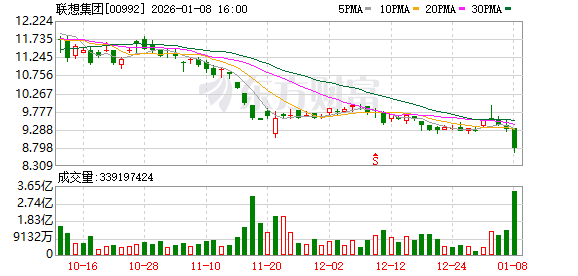
阿木:联想在AI赛道上已构建三大优势
Feng Huang Wang Cai Jing· 2026-01-08 03:59
Group 1 - Lenovo has achieved generational leadership in both personal AI and enterprise AI, supported by three main advantages: a leading hybrid AI strategy, substantial R&D investment, and an open ecosystem [1][2] - The hybrid AI strategy combines public AI with personal and enterprise AI, which has become an industry consensus since the emergence of ChatGPT at the end of 2022 [1] - Lenovo's products are increasingly defined as AI Ready, moving beyond being mere tools, and the company focuses on creating a collaborative ecosystem with partners and customers [1] Group 2 - In the personal AI sector, Lenovo launched the industry's first edge-based personal super-intelligent agent, Tianxi AI, and globally debuted AI PCs with five key features, marking the third generational upgrade in the PC industry [2] - In the enterprise AI domain, Lenovo has established a hybrid AI advantage that supports the implementation of intelligent agents, creating the Qingtian engine and an AI solution library [2] - Lenovo aims to strengthen its advantages and collaborate with more ecosystem partners to drive deeper intelligent evolution in China's AI industry [2]

联想发布Yoga Mini i迷你主机:小巧便携,性能强劲
Xin Lang Cai Jing· 2026-01-08 01:30
Core Insights - Lenovo launched the new Yoga Mini i mini PC during the International Consumer Electronics Show on January 7, 2026, emphasizing portability and structural strength with a cylindrical design weighing 600 grams and a volume of 0.65 liters [2][3] Product Features - The device integrates speaker and microphone modules, supporting multimodal interaction experiences. It includes an accelerometer and touch sensing capabilities for intuitive user interaction, along with a fingerprint recognition module for enhanced security and convenience [2][3] - Hardware specifications allow for an Intel Core Ultra X7 series 358H processor, up to 32GB of LPDDR5X RAM, and a 2TB PCIe 4.0 solid-state drive [2][3] - Wireless connectivity supports Wi-Fi 7 and Bluetooth 6.0 standards, featuring user presence detection based on Wi-Fi signal changes, enabling automatic wake-up operations [2][3] - The device offers a rich array of ports, including two Thunderbolt 4 ports, two full-featured USB-C Gen 2 ports, USB-A, and HDMI ports, supporting connections for up to four external displays [2][3] Pricing and Availability - The expected starting price for the Yoga Mini i is $699.99, with plans for official release in June 2026 [2][3]
确认2026年停更新品 华硕“失守”游戏手机
Zhong Guo Jing Ying Bao· 2026-01-08 00:54
Core Viewpoint - ASUS will suspend the launch of new smartphones, including ZenFone and ROG Phone, in 2026 due to regular business adjustments and rising component costs, particularly storage prices [1][4][5]. Group 1: Business Adjustments - ASUS confirmed that it will not release new smartphones in 2026, emphasizing that after-sales service and software updates will remain unchanged [1]. - The decision is attributed to significant increases in upstream component costs, making it difficult for ASUS to sustain its smartphone business [1][4]. - Industry insiders speculate that the rising storage prices are a primary factor behind this decision [1][4]. Group 2: Historical Context - ASUS began its mobile journey in 2003 with the launch of the J100 3G flip phone and gained traction with the ZenFone series in 2014, which was well-received in emerging markets [2]. - The ROG Phone series, launched in 2018, positioned ASUS among the top gaming phone brands, but the company has faced challenges due to market saturation and increased competition [2]. - ASUS's smartphone revenue has significantly declined, dropping from 18% in 2016 to approximately 1% in 2023, leading to a strategic focus on the ZenFone and ROG Phone lines [3]. Group 3: Market Conditions - The global smartphone market is experiencing a downturn, with forecasts for 2026 showing reduced shipment volumes, further pressuring manufacturers [5]. - The rising costs of DRAM have increased the bill of materials (BoM) for smartphones by approximately 25% for low-end, 15% for mid-range, and 10% for high-end devices [4]. - ASUS's smartphone shipments are projected to be only in the tens of thousands in 2025, with a significant portion concentrated in the Asia-Pacific region [5]. Group 4: Financial Performance - Despite the challenges in the smartphone sector, ASUS's overall performance remains strong, driven by AI servers and gaming products, with a revenue of 535.98 billion New Taiwan Dollars in the first three quarters of 2025, a 24% year-on-year increase [5]. - However, the rising costs have impacted profitability, with a 9% decline in gross profit year-on-year, leading to a net profit decrease of 16% [5]. Group 5: Future Directions - ASUS is shifting its focus towards AI infrastructure, with plans to enhance its server business, which is approaching 20% of total revenue [6]. - The company is also considering price adjustments for its PC products due to rising storage costs, indicating a broader trend in the industry [7]. - There are rumors about ASUS entering the DRAM manufacturing market to stabilize its supply chain, although the company has denied these claims [7].
华硕射三箭 强攻AI PC
Jing Ji Ri Bao· 2026-01-07 23:46
Core Insights - ASUS is aggressively pursuing the AI PC market, unveiling its new generation of AI technologies during the CES 2026 event with a focus on Workspace AI, Creator AI, and Everyday AI to meet consumer, creator, and commercial demands [1] Group 1: AI Strategy and Product Focus - ASUS's AI strategy encompasses seven areas, including AI Infrastructure, Sustainability AI, Workspace AI, Industrial AI, Everyday AI, Creator AI, and Healthcare AI, with a specific focus on Workspace AI, Creator AI, and Everyday AI at CES [2] - The new commercial and creator devices from ASUS are primarily equipped with Intel's latest processors, while also increasing the use of AMD and Qualcomm chips, aiming to create a comprehensive AI ecosystem with proprietary AI software [2] Group 2: Product Launches - ASUS introduced the ASUS V400 AiO, the world's first all-in-one computer featuring the Snapdragon X processor, supporting multitasking, light creative work, and casual gaming, along with complete Copilot AI functionality [3]

英特尔CEO陈立武:AI正在重塑软硬件市场格局
Xin Lang Cai Jing· 2026-01-07 02:57
Core Viewpoint - The event highlights the collaboration between Intel and Lenovo in developing AI-driven PC experiences, emphasizing the transformative impact of AI on the hardware and software market [1][2]. Group 1: AI and Market Impact - Intel's CEO, Chen Liwu, stated that AI is reshaping the entire hardware and software market landscape, enhancing user experiences through continuous iteration [1][2]. - The focus on AI is expected to drive significant advancements in daily life experiences for users [1][2]. Group 2: Product Launches - During CES 2026, Intel and Lenovo unveiled the Aura Edition AI PC and the FIFA-branded gaming laptop, Legion Pro 7i, which are products of their joint development efforts [1][2]. - The Aura Edition product line will feature Intel's first chip built on its proprietary 18A process technology, the Core Ultra 300 series processor [1][2]. Group 3: Future Collaboration - Chen Liwu indicated that Intel and Lenovo plan to deepen their collaboration in the areas of PCs, data centers, and cloud computing in the future [1][2].

联想、英伟达干了件大事
2 1 Shi Ji Jing Ji Bao Dao· 2026-01-07 02:56
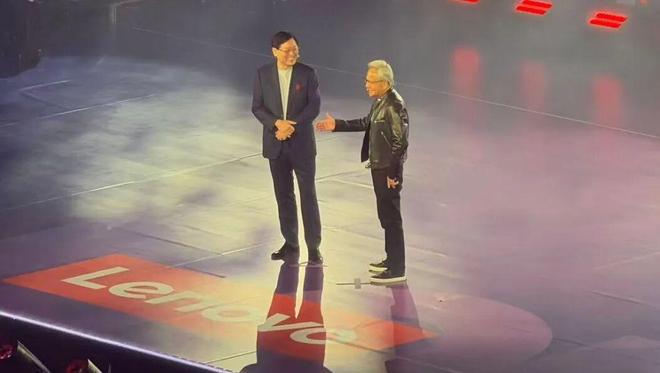
Core Insights - The dialogue at CES 2026 between Lenovo's CEO Yang Yuanqing and NVIDIA's CEO Jensen Huang marks a significant collaboration aimed at advancing AI technology, specifically through the establishment of the "Lenovo AI Cloud Super Factory" [1][2][6] Group 1: Collaboration and Technology - Lenovo and NVIDIA's partnership is positioned as a transformative step in making AI more accessible and practical for users, with Lenovo being the "king of global computing devices" and NVIDIA the "king of global computing power" [2] - The "Lenovo AI Cloud Super Factory" aims to reduce the "time to first token" for AI deployment significantly, with the capacity to scale up to 100,000 GPUs to support trillion-parameter models [1][6][9] - NVIDIA's latest platform, including the Vera Rubin system, will provide essential support for this initiative, focusing on advanced reasoning and large-scale deployments [1][8][9] Group 2: AI Strategy and Vision - Yang Yuanqing introduced the concept of "Hybrid AI," emphasizing the need for AI to cater to individual, enterprise, and public intelligence, moving beyond generic models [6][11] - The strategy addresses the challenges of high inference costs and data privacy concerns, proposing a secure and efficient pathway for AI applications [6][11] - The collaboration aims to deliver AI infrastructure as a utility, akin to water and electricity, facilitating rapid adoption of AI technologies by businesses [11]
联想、英伟达干了件大事
21世纪经济报道· 2026-01-07 02:51
Core Viewpoint - The dialogue between Lenovo's CEO Yang Yuanqing and NVIDIA's CEO Jensen Huang at CES 2026 highlights a significant collaboration aimed at advancing AI technology through the establishment of the "Lenovo AI Cloud Super Factory," which is expected to enhance AI deployment efficiency and scalability [1][6]. Group 1: Collaboration and Technology - Lenovo and NVIDIA are collaborating to create the "Lenovo AI Cloud Super Factory," which aims to support cloud service providers by significantly reducing the "time to first token" for AI deployment and scaling up to 100,000 GPUs [1][6]. - NVIDIA's latest platform, Vera Rubin, will play a crucial role in this collaboration, providing robust support for advanced AI training and inference systems [1][6]. - The partnership is positioned as a transformative step in making AI more accessible and practical for various applications, moving from cloud-based solutions to real-world usage [2][6]. Group 2: AI Strategy and Insights - Yang Yuanqing emphasizes the need for a hybrid approach to AI, combining personal, enterprise, and public intelligence to meet diverse user needs, moving beyond generic models [4][9]. - The concept of "Hybrid AI" aims to create tailored intelligent solutions that address the specific requirements of individuals and businesses, ensuring data privacy and security [4][9]. - The collaboration seeks to address the challenges of high inference costs and data privacy concerns that have hindered the widespread adoption of AI technologies [4][10]. Group 3: Infrastructure and Future Outlook - The "Lenovo AI Cloud Super Factory" is designed to industrialize AI infrastructure, making performance predictable and deployment manageable, which is essential as AI evolves to understand complex environments [6][10]. - Lenovo's capabilities in design, manufacturing, and global deployment will complement NVIDIA's expertise in chip and acceleration platforms, enhancing the overall effectiveness of the AI solutions [7][10]. - The partnership is expected to quadruple in scale over the next two years, indicating strong growth potential in the AI infrastructure market [7].