
量子科技

Search documents
量子科技成中国地方两会热词 多地布局未来产业
Xin Lang Cai Jing· 2026-02-06 10:41
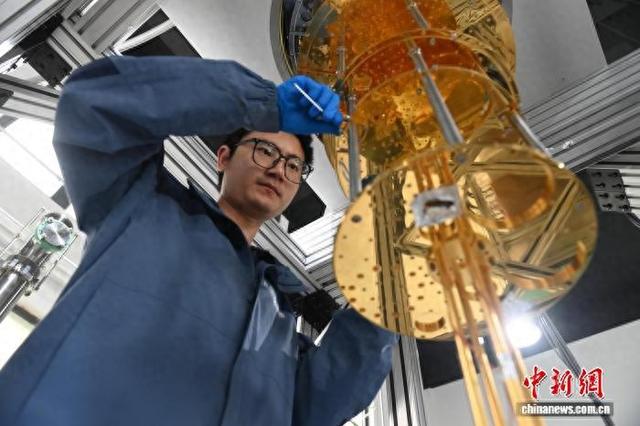
量子科技主要涵盖通信、计算与精密测量三大领域,不仅能筑牢信息安全屏障、带来算力飞跃、实现超 高精度感知,更能突破传统技术的天花板。未来,它有望催生信息技术、新能源、新材料及生物医药等 领域的颠覆性创新。 中新社成都2月6日电 (单鹏)连日来,中国地方两会密集召开,量子科技相关领域多次被提及,成为各地 抢占未来发展制高点的关键赛道。 北京提出培育量子科技、生物制造等新增长点;上海提出制定实施量子计算等领域未来产业培育方案; 四川、湖北等提出前瞻布局量子科技等未来产业;广东提出大力发展量子科技等重点细分产业,形成一 批投资热点和新增长点;安徽量子计算优越性持续突破、领跑全球,今年将继续加速布局量子科技等未 来产业。 2025年4月21日,合肥知冷低温科技有限公司生产制造车间里,技术人员正在为量子计算用极低温稀释 制冷机进行零部件组装。 中新社记者 韩苏原 摄 "量子科技是国际竞争最激烈的领域之一。"四川省政协委员、电子科技大学物理学院院长王志明表示, 中国十分重视量子科技发展,在量子精密测量、量子通信等关键领域取得了显著进展,一些成果已进入 落地阶段,影响着国计民生。 王志明表示,量子科技从实验室走向工程化,充足 ...

积极布局未来产业,各地有何“密码”?
Xin Lang Cai Jing· 2026-02-06 06:35
转自:央视新闻 来源:央视新闻 未来产业已成2026年开年热词。"十五五"开局之年,中央政治局今年的首次集体学习,聚焦未来产业发 展。地方两会上,"培育壮大未来产业""加强未来产业布局" "推进未来产业先导区建设"等也是各省区市 政府工作报告强调的重点。什么是未来产业,它离我们的生活还有多远?哪些省份在未来产业布局上处 于领跑位置?它们的领跑密码是什么?01何为未来产业?近两年,机器人、"人造太阳"、6G(第六代 移动通信)这些科技新词在新闻中越发常见。机器人从春晚舞台跑进田径赛场,解锁更多技能,动作愈 加流畅,具身智能的应用场景日益增多。"人造太阳"2025年实现1亿摄氏度、1066秒稳态运行,刷新世 界纪录,我国可控核聚变正从基础科学迈向关键工程实践。6G技术试验已开启第二阶段,人、机、 物、智能体的"万物智联"时代越来越近……这些正是未来产业的代表。简单来说,未来产业是指由前沿 技术驱动,当前处于孕育萌发阶段或产业化初期,具有显著战略性、引领性、颠覆性和不确定性的前瞻 性新兴产业。"十五五"规划建议中,在"建设现代化产业体系,巩固壮大实体经济"部分,对发展未来产 业作了具体说明。"前瞻布局未来产业,探索 ...
盘中,大幅拉升!重大突破!量子科技,突传利好!
券商中国· 2026-02-06 06:34
Core Viewpoint - The article highlights a significant breakthrough in scalable quantum network research by the team led by Academician Pan Jianwei from the University of Science and Technology of China, marking a transition from theoretical concepts to practical possibilities in quantum communication and expanding China's international leadership in this field [1][2]. Group 1: Breakthroughs in Quantum Technology - The research team has constructed the basic module for a scalable quantum relay, enabling long-distance quantum networks to become a reality [2][3]. - The team achieved high-fidelity entanglement between single-atom nodes over long distances and successfully extended the transmission distance of device-independent quantum key distribution (DI-QKD) beyond 100 kilometers [2][4]. - These advancements are seen as a milestone following the "Mozi" quantum satellite, further solidifying China's position in quantum communication and networking [2][3]. Group 2: Market Response and Investment Opportunities - Following the announcement, several quantum technology stocks surged in the A-share market, with notable increases in companies like Longfly Fiber, Geer Software, and Hengtong Optic-Electric [1][5]. - The quantum computing market is projected to grow from $800 million in 2021 to $50.37 billion by 2024, with an expected CAGR of 87.64% reaching approximately $219.98 billion by 2030 [5]. - The article emphasizes that quantum computing could address the increasing demand for computational power in the AI era, providing a new paradigm for computational supply [5]. Group 3: Quantum Computing Industry Chain - The upstream of the quantum computing industry chain includes dilution refrigerators, measurement and control systems, and quantum chips, which collectively account for about 86% of the core segments [6]. - Domestic companies are accelerating innovation and domestic substitution in response to strict regulations on high-end measurement and control equipment in Europe and the U.S. [6]. - The article notes that the application market for quantum computing in fields such as financial risk control, biomedicine, and chemical material design is expected to exceed $100 billion in the next decade [6].




我国量子科技研究取得新突破
财联社· 2026-02-06 02:11
Core Viewpoint - The research team led by Academician Pan Jianwei from the University of Science and Technology of China has achieved significant breakthroughs in quantum networking, including the first scalable quantum relay module and the ability to distribute device-independent quantum keys over distances exceeding 100 kilometers [1][5][6]. Group 1: Quantum Relay Technology - The ultimate goal of quantum information science is to construct efficient and secure quantum networks, which rely on long-distance deterministic quantum entanglement distribution [4]. - The challenge of signal attenuation in optical fibers has been a major barrier to long-distance quantum entanglement distribution, which the team addressed through the development of "quantum relay" technology [4]. - The team successfully created a basic module for scalable quantum relays, enabling the effective connection of entangled segments over long distances, thus making long-distance quantum networks a feasible reality [4][6]. Group 2: Device-Independent Quantum Key Distribution - The research team made advancements in device-independent quantum key distribution, which is crucial for the security of quantum communication [5]. - Previously, the maximum transmission distance for this technology was only a few hundred meters, but the team has now achieved over 100 kilometers using quantum relay technology [5]. - This breakthrough ensures that even if the quantum devices are completely untrustworthy, the generated keys remain secure, enhancing the overall security of quantum communication systems [5]. Group 3: Future Implications - These technological breakthroughs solidify China's international leadership in quantum technology and lay the groundwork for the future construction of a quantum internet [6]. - Academician Pan Jianwei indicated that with an additional 10 to 15 years of effort, a universal quantum computer could connect all quantum computers into a network, transforming the concept of a quantum internet into reality [6]. - This development would revolutionize the way information is perceived and understood in the material world, providing a revolutionary means to comprehend the universe [6].

量子科技持续发酵 德美化工涨停
Xin Lang Cai Jing· 2026-02-06 01:40
量子科技概念股盘中走强,德美化工拉升触及涨停,格尔软件、科大国创、神州信息、国盾量子等纷纷 冲高。 ...

我国量子科技研究取得新突破 量子网络走向现实可能
Huan Qiu Wang Zi Xun· 2026-02-05 23:13
Core Insights - The research team led by Academician Pan Jianwei at the University of Science and Technology of China has achieved significant breakthroughs in the field of quantum networks, specifically in scalable quantum relay modules and device-independent quantum key distribution (QKD) over distances exceeding 100 kilometers [1][5]. Group 1: Quantum Relay Technology - The team has successfully implemented a basic module for scalable quantum relays, which addresses the challenge of signal attenuation in optical fibers that limits the distance for quantum entanglement distribution [4]. - The concept of "quantum relay" involves setting up multiple "relay stations" along the long-distance journey of quantum signals to create entanglement between adjacent stations, thereby enabling entanglement distribution over long distances [4]. Group 2: Device-Independent Quantum Key Distribution - The research has also made advancements in device-independent quantum key distribution, which ensures the security of generated keys even if the quantum devices are completely untrustworthy [5]. - Previously, the maximum transmission distance for this technology was only a few hundred meters, but the new breakthrough allows for secure key distribution over distances greater than 100 kilometers [5]. Group 3: Future Implications - These breakthroughs solidify China's international leading position in quantum technology and lay the groundwork for the future construction of a quantum internet [5]. - Academician Pan Jianwei indicated that with continued efforts over the next 10 to 15 years, a universal quantum computer could connect all quantum computers into a network, making the quantum internet a reality and revolutionizing our understanding of the material world [5].

如何抢占新兴产业未来产业赛道
Xin Lang Cai Jing· 2026-02-05 22:20
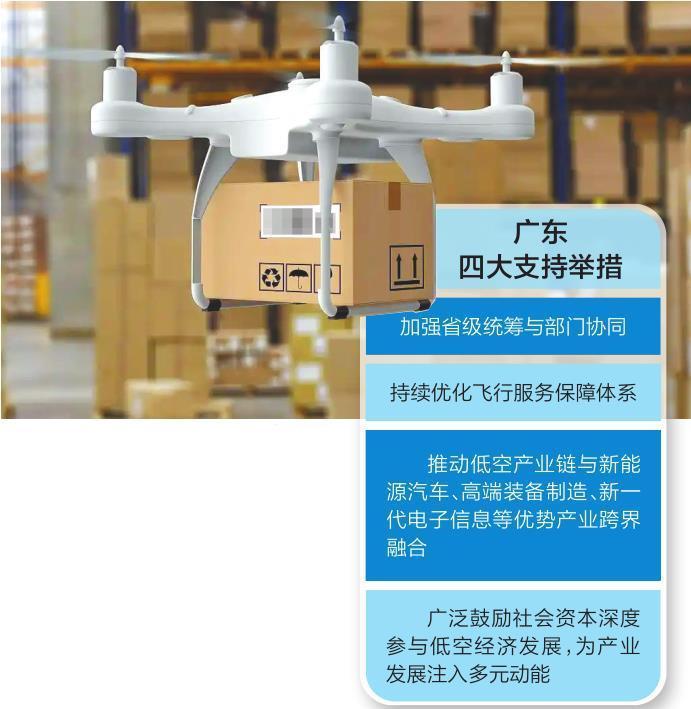
Core Insights - In 2026, China's emerging industries are expected to collectively enter a phase of mass production and ecological construction, with a focus on strategic emerging industries and localized development paths [6] Group 1: Low Altitude Economy - Guangdong is establishing itself as a benchmark for the low altitude economy, leveraging its complete industrial chain and policy framework, aiming for an industry scale exceeding 300 billion yuan by 2026 [7][8] - The province has over 15,000 low altitude industry chain enterprises, accounting for more than 30% of the national total, with over 2,000 drone manufacturing companies [7] - Guangdong is enhancing its infrastructure and policy environment to support low altitude logistics, medical rescue, and agricultural monitoring applications [8] Group 2: Embodied Intelligence - Shanghai is positioning itself as a global innovation hub for embodied intelligence, with plans to achieve significant breakthroughs in core algorithms and technologies by 2027 [9][11] - The city aims to support key projects financially and establish several high-quality incubators for the embodied intelligence sector [11] Group 3: New Energy Storage - Inner Mongolia is leading the development of new energy storage, focusing on attracting leading enterprises and building a comprehensive industrial chain [12][13] - The region has established a capacity to support 28.5 million kilowatt-hours of installed demand, with significant projects underway, including a large-scale energy storage project [13] Group 4: New Materials - Jiangsu is enhancing its new materials industry through a comprehensive innovation system, with 32 provincial key laboratories and 15 national enterprise technology centers established [14][15] - The province's advanced materials industry has surpassed 1 trillion yuan in output value, with significant clusters in Suzhou focusing on nanomaterials and advanced carbon materials [15] Group 5: Deep Sea and Aerospace Integration - Shandong is promoting the integration of deep sea and aerospace industries through a "chain leader" system, enhancing efficiency and fostering a collaborative industrial ecosystem [16][17] - The province is developing key technologies in both fields and establishing a unique layout for manufacturing and launching [17] Group 6: Quantum Technology - Anhui is building a global hub for quantum technology, with over 100 companies in the sector and a focus on practical applications through the "thousand scenarios" initiative [18][20] - The province has established a quantum future industry park and is providing comprehensive support for technology development and industry collaboration [20]
中国各地区的未来产业全景图:6大重点方向与10大创新标志性产品
材料汇· 2026-02-05 15:00
点击 最 下方 关注《材料汇》 , 点击"在看"和" "并分享 添加 小编微信 ,遇见 志同道合 的你 正文 未来产业由前沿技术驱动,当前处于孕育萌发阶段或产业化初期,是具有显著战略性、引领性、颠覆性和不确定 性的前瞻性新兴产业。大力发展未来产业,是引领科技进步、带动产业升级、培育新质生产力的战略选择。 | 地区 | 未来制造 | 未来信息 | 中国各地区的未来产业全景图 未来材料 | 未来能源 | 未来空间 | 未来健康 | | --- | --- | --- | --- | --- | --- | --- | | | 智能制造 激光制造 循环制造 共享制造 | 卫星互联网 量子信息; 大模型 | 先进基础材料升级 高性能碳纤维、先 | 核聚变 氢能 新型储能 | 载人航天 探月探火 ア星导航 深海作业装备 深海智能无人平台 | 细胞和基因技术 合成生物 脑 交互 | | | 生物制造 | | | | | | | | 纳米制造 | 下一代移动通信 | | 核能 | | | | | | | | | 临空无人系统 | | | | | | | | 先进高效航空器 | | | | | | | | 深海潜水器 | | ...

“十五五”期间地区生产总值年均计划增长5%左右 江苏:奋力书写“强富美高”新篇章
Shang Hai Zheng Quan Bao· 2026-02-03 18:19
Core Insights - Jiangsu aims for an average GDP growth of around 5% during the "15th Five-Year Plan" period, with a focus on high-quality development and integration of technological and industrial innovation [6][7] - The province's GDP reached 14.2 trillion yuan during the "14th Five-Year Plan," with an average annual growth of 5.7% and significant contributions from manufacturing and service sectors [3][4] - Jiangsu plans to invest heavily in infrastructure, targeting 240 billion yuan in transportation, 45 billion yuan in water conservancy, and 170 billion yuan in energy by 2026 [7] Economic Performance - Jiangsu's GDP per capita reached 167,000 yuan, with public budget revenue exceeding one trillion yuan during the "14th Five-Year Plan" [3] - The manufacturing sector accounted for 33.5% of the GDP, while the service sector contributed 54% [3] - The province has maintained the highest level of new loans in the country for four consecutive years, with a strong presence in the stock market [3] Innovation and Technology - Jiangsu's R&D investment intensity reached 3.38%, with an average of 34.2 high-value invention patents per ten thousand people [3] - The province has established six national technology innovation centers and over 480 joint innovation centers with enterprises [3] - Plans for 2026 include the establishment of 10 provincial concept verification centers, 30 benchmark incubators, and 10 provincial manufacturing pilot platforms to enhance innovation [7] Industrial Development - Jiangsu has deepened the "1650" industrial system construction, with 14 national advanced manufacturing clusters and a strategic emerging industry fund exceeding 200 billion yuan [4] - The province aims to enhance the international competitiveness of its manufacturing base by focusing on high-quality development in key industries [4][8] - Future industries such as quantum technology, biomanufacturing, and hydrogen energy are prioritized for development [8]

各地“投资任务书”竞逐未来新动能
Zheng Quan Ri Bao· 2026-02-03 16:29
Group 1 - Effective investment is seen as a stabilizing force for growth, with a focus on "big projects" across various regions [1] - For instance, Henan plans to implement over 1,000 key provincial projects with an annual investment of 1 trillion yuan, while Shanghai aims for a major engineering investment of 255 billion yuan [1] - Beijing emphasizes optimizing the implementation of key projects and maintaining a strong project reserve, with a total investment of no less than 200 billion yuan aimed at private capital [1] Group 2 - Regions are focusing on cultivating new productive forces to activate new momentum for high-quality development, with Zhejiang supporting private enterprises in new infrastructure and productive sectors [2] - Henan is accelerating the construction of a new energy system and optimizing its power grid structure, while also advancing projects in digital infrastructure [2] - The layout of these initiatives shows three characteristics: precise direction focusing on AI, bio-manufacturing, and low-altitude economy; practical paths; and emphasis on regional collaboration [2] Group 3 - The next steps should focus on promoting the cross-regional allocation of innovative elements and constructing a comprehensive support system for "basic research + technological breakthroughs + industrialization of results" [3]