
低空经济

Search documents
刚刚,利好来了!万亿市场沸腾!
券商中国· 2025-11-23 07:47
Core Viewpoint - The low-altitude economy in China is experiencing strong growth, with projections indicating a market size of 1.5 trillion yuan by 2025 and potentially exceeding 2 trillion yuan by 2030 [1][3]. Group 1: Industry Growth and Projections - The low-altitude economy is recognized as a strategic emerging industry, transitioning from a technology catch-up phase to a leading position in certain areas [3]. - The rapid expansion of the industry is supported by significant breakthroughs in low-altitude equipment, with 969 companies registered in the civil unmanned aerial vehicle product information system and over 478 million units [3][6]. - The low-altitude logistics sector is particularly dynamic, with over 140 new low-altitude logistics routes expected to open in 2024 and an order volume of 48 billion in the instant delivery industry [3]. Group 2: Policy Support and Infrastructure Development - The Ministry of Industry and Information Technology (MIIT) is actively promoting the development of the civil aviation and low-altitude equipment industries, emphasizing the importance of infrastructure and commercial model innovation [2][4]. - Recent government measures encourage private investment in low-altitude economic infrastructure and support the establishment of application scenarios across various sectors [8]. - The MIIT aims to enhance the collaborative development of the low-altitude industry by focusing on key enterprises and products, fostering innovation, and integrating new technologies [9]. Group 3: Challenges and Strategic Initiatives - Despite the growth potential, the low-altitude economy faces challenges such as infrastructure layout, airspace resource utilization, and talent shortages [4]. - The government is implementing a multi-faceted approach to overcome these challenges, including infrastructure prioritization, airspace optimization, and ecosystem development [4][8]. - The MIIT is also focusing on typical application scenarios like emergency rescue, logistics, and agricultural protection to promote sustainable business models in low-altitude equipment [7].


报告:长三角地区已形成26个国家级先进制造业集群 占全国约三分之一
Zheng Quan Shi Bao Wang· 2025-11-23 07:20
Core Insights - The Yangtze River Delta region has established 26 national-level advanced manufacturing clusters, accounting for 32.5% of the national total, demonstrating significant industrial agglomeration and synergy effects [1] - From 2020 to the first half of 2025, financing events and amounts in the high-end equipment sector in the Yangtze River Delta accounted for nearly half of the national total, indicating strong confidence from the capital market [1] - The region is recognized as the core cluster for high-end equipment manufacturing in China, benefiting from continuous policy support and strategic integration among Shanghai, Jiangsu, Zhejiang, and Anhui [2] Industry Development - The report highlights that China has maintained its position as the world's largest industrial robot market for 12 consecutive years, with significant growth in emerging categories such as collaborative and service robots [2] - The energy equipment sector is expanding but facing intense competition, with policies guiding the industry towards demand-driven, quality-focused, and structurally optimized development [2] - The low-altitude economy is identified as a strategic emerging industry, with future commercial development focusing on urban air transportation, agricultural applications, and low-altitude tourism [2] Strategic Recommendations - Companies are encouraged to overcome critical technology bottlenecks and achieve manufacturing autonomy while accelerating independent research and development [3] - Emphasis is placed on enhancing digital capabilities to support intelligent and green development, leveraging industrial internet connectivity across the entire value chain [3] - The industry should attract more capital investment and encourage companies to engage with multi-tiered capital markets for direct financing [3] - Companies are advised to expedite their international expansion and deepen global layouts to enhance supply chain resilience and security [3]
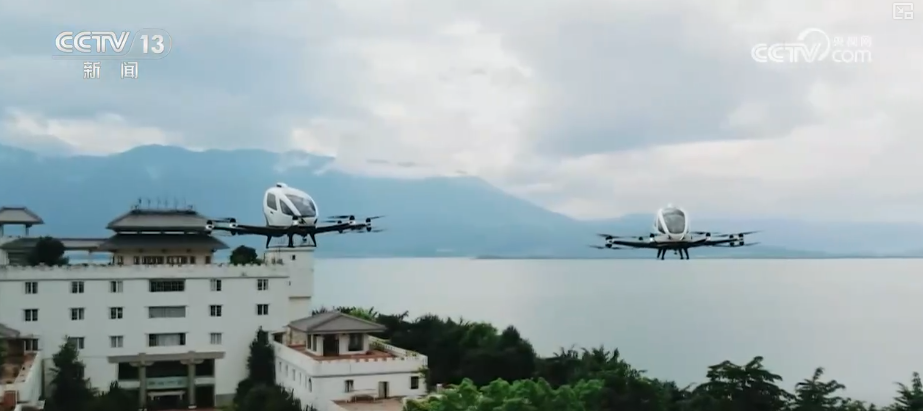
多轮驱动发力,1.5万亿元!低空经济增长强劲 向“规模化落地”跨越
Yang Shi Wang· 2025-11-23 06:52
Core Insights - The low-altitude economy in China is experiencing rapid growth, with the market expected to reach 1.5 trillion yuan by 2025 and potentially exceed 2 trillion yuan by 2030, indicating a strong upward trend in industry development [1][4]. Industry Growth - The low-altitude equipment industry has made significant breakthroughs, with 969 companies registered in the civil unmanned aerial vehicle product information system, and over 478 million aircraft recorded [4]. - The output value of civil aviation products is projected to surpass 160 billion yuan in 2024, reflecting a year-on-year growth of 23.6% [6]. Policy and Regional Development - Policy initiatives have led to successful pilot projects in regions such as Xinjiang, the Guangdong-Hong Kong-Macao Greater Bay Area, and the Yangtze River Delta, particularly in the low-altitude logistics sector [9]. - In 2024, over 140 new low-altitude logistics routes are expected to be opened, with instant delivery orders reaching 48 billion [9]. Urban Development and New Business Models - Cities like Shenzhen, Chengdu, and Nanchang are developing low-altitude industry clusters, fostering new business models in areas such as drone logistics, manned travel, and low-altitude tourism [12]. - The low-altitude economy is seen as a crucial driver for regional coordinated development and industrial upgrading [12]. Challenges and Solutions - The low-altitude economy faces challenges including infrastructure layout, airspace resource utilization, innovation in business models, and talent shortages [14][16]. - To address these challenges, China is enhancing pilot projects and systematic layouts, focusing on infrastructure, airspace optimization, and ecosystem integration [18]. Future Outlook - The industry is transitioning from being policy-driven to market-driven, with ongoing efforts to resolve bottlenecks in infrastructure, airspace management, and business models [20].
一周落地三个项目 未来产业集链成群
Sou Hu Cai Jing· 2025-11-23 06:33
成都未来科技城。 智元创新生产的人形机器人。 众航智飞全倾转旋翼eVTOL总部落地成都未来科技城 将围绕新型全倾转eVTOL、混合动力系统等方向开展研发与生产制造,构建"研发—制造—验证"的一体 化体系,预计达产后形成年产约100台eVTOL的产能 百度智能云AI+文体娱乐创智中心在成都东部新区揭牌 该平台将推动先进技术与文体娱场景深度融合,驱动体育、文化、影视、娱乐等产业智能化升级与协同 发展。茵麦体育、匠体科技等首批6家企业签约入驻 郫都区与智元创新共建西南具身智能产业基地 该项目是成都第一个规模较大的具身智能机器人研发生产制造项目,将在人形机器人研发、智能制造等 领域开展深度合作 党的二十届四中全会提出,要优化提升传统产业,培育壮大新兴产业和未来产业。 这些未来产业项目短时间内相继落地,犹如一组强劲的节拍器,为这座城市年底经济冲刺奏响了奋进的 乐章。这既彰显了成都以高质量项目引领现代化产业体系建设的坚定决心,也将助推成都在未来产业赛 道上加快成势、集链成群。 签约加速 三个项目接续落地 随着年底收官战的深入推进,成都正以项目落地的"加速度",跑出产业集聚的"高质量",为明年经济发 展积蓄强劲动能。通过梳 ...

低空经济的“金点子”在江西景德镇闪耀
Xin Hua Cai Jing· 2025-11-23 05:10
新华财经南昌11月23日电(记者崔璐)11月22日下午,第十四届中国创新创业大赛旋翼飞行器专业赛颁 奖仪式在江西省景德镇高新区举行。来自低空经济领域的专家以及企业代表齐聚一堂,共话低空经济发 展前沿趋势、关键技术和产业未来。活动期间还发布了《中国低空经济年度发展报告》《低空经济发展 格局与产业链竞争洞察》。 活动期间,低空融合发展创新实验室秘书长李济军发布了《中国低空经济年度发展报告》。该报告 从"低空经济"的内涵出发,梳理了我国低空经济的发展历程、目前呈现的特征和竞争格局,并从国家高 端智库和媒体的视角,遴选出11个典型地区的低空经济创新实践案例和11个低空经济头部企业的场景应 用探索案例,勾勒出一幅较为清晰的全国低空经济发展画卷。 火炬高技术产业开发中心中部中心发布了《低空经济发展格局与产业链竞争洞察》。火炬中心中部区域 中心副主任叶张辉表示,未来宜通过"创新攻坚、专利护航、区域协同、生态培育"四轮驱动,将我国的 庞大市场和应用需求优势,转化为坚实的技术优势、产业优势和竞争优势,在全球低空经济格局中占据 领先地位。 中国航空学会产业创新投资工作委员会副主任委员、中国航空工业集团有限公司科技委专职委员殷卫宁 ...
《中国低空经济年度发展报告》在江西景德镇发布
Xin Hua Cai Jing· 2025-11-23 05:10
低空融合发展创新实验室秘书长李济军表示,《报告》核心内容主要有以下四点: 第一,这是一场"战略已定、未来已来"的产业浪潮。《报告》指出,低空经济已不再是纸面概念,而是 国家明确布局的战略性新兴产业。从中央到地方,政策体系持续健全,立法保障稳步推进。特别是2024 年以来,一系列政策为产业发展扫清了障碍、注入了强心剂。全国多个省份将低空经济写入政府工作报 告,广东、浙江、江苏等地更率先启动立法工作。 新华财经南昌11月23日电(记者崔璐)11月22日,第十四届中国创新创业大赛旋翼飞行器专业赛颁奖仪 式在江西景德镇举行。期间,低空融合发展创新实验室发布了《中国低空经济年度发展报告》(以下简 称《报告》)。 据介绍,《报告》梳理了我国低空经济的发展历程、发展特征和竞争格局,并遴选出11个典型地区的低 空经济创新实践案例和11个低空经济头部企业的场景应用探索案例,勾勒出一幅比较清晰的全国低空经 济发展画卷。 第二,这是一个"规模初显、增长可期"的万亿蓝海。《报告》引用相关数据,2024年,全国低空经济市 场规模已达到6702.5亿元,预计2025年将突破万亿元大关。截至2025上半年,我国实名登记无人机总数 已突破2 ...
2025年我国低空经济市场规模预计将达1.5万亿元
Yang Shi Xin Wen· 2025-11-23 03:42
Core Viewpoint - The low-altitude economy in China is experiencing rapid growth, with projections indicating a market size of 1.5 trillion yuan by 2025 and over 2 trillion yuan by 2030, driven by advancements in low-altitude equipment and supportive policies [1][3]. Group 1: Market Growth and Projections - The low-altitude economy market is expected to reach 1.5 trillion yuan by 2025 and exceed 2 trillion yuan by 2030, indicating strong growth momentum [1]. - The civil aviation product output value is projected to surpass 160 billion yuan in 2024, reflecting a year-on-year increase of 23.6% [1]. Group 2: Industry Development and Infrastructure - There are currently 969 companies registered in the civil unmanned aerial vehicle product information system, with 3,191 types of products and over 4.78 million aircraft [1]. - Cities like Shenzhen, Chengdu, and Nanchang are developing low-altitude industry clusters, fostering new business models in areas such as drone logistics and low-altitude tourism [3]. Group 3: Challenges and Solutions - The low-altitude economy faces challenges including infrastructure layout, airspace resource utilization, commercial model innovation, and talent reserve [4]. - The government is enhancing pilot projects and systematic layouts to address challenges in commercial models and infrastructure, promoting a shift from "policy-driven" to "market-driven" development [6].

当“煤城”遇上无人机
Da Zhong Ri Bao· 2025-11-23 01:02
枣庄力争到2027年集聚低空经济链上企业50家以上,产业规模达到100亿元 当"煤城"遇上无人机 "这个零件,一定要注意……"冬日暖阳下,山东枣矿技术学院低空飞行器产业学院的实训室,教师 李文龙正指导学生组装无人机,他同时身兼天津联航通用航空有限公司工程师。不远处,枣庄低空经济 动力谷的生产车间里,一架架FWH-1500无人机正陆续下线。 "既能学习感兴趣的无人机技术,又能直接对接企业需求,毕业就能上岗。"学生孙滢滢说。 "选择落户枣庄,不仅因为这里有定制化厂房,更因为政府的'量身定制'服务让我们安心。"山东航 景创新科技有限公司综合管理部部长宋慧说。 作为战略性新兴产业,低空经济正成为区域经济竞争的新赛道。枣庄,凭何抢占先机?又将如何蹚 出一条资源型城市的"飞天之路"? 该项目由山东薛经开投资发展集团与中科院周成虎院士团队共同建设,以构建城市级无人机遥感监 测服务体系为核心,通过建设"一网统飞、多域协同"的低空数字基础设施,实现全域覆盖、智能调度、 数据共享的低空应用生态。 "当前我市正处在优化升级的关键期,大力发展低空产业既是把握宏观形势作出的战略选择,也是 加快新旧动能转换、前瞻布局未来产业的现实需要。 ...
为中国式现代化提供坚强物质支撑——建设现代化产业体系 巩固壮大实体经济根基
Ren Min Ri Bao· 2025-11-22 22:04
Core Viewpoint - The construction of a modern industrial system is essential for China's economic development, emphasizing the importance of the real economy and technological innovation as foundational elements for future growth [1][5]. Group 1: Importance of the Real Economy - The real economy is highlighted as the cornerstone of national strength, with a focus on its role in supporting economic stability and growth [1][3]. - In Shandong's Bingzhou, the local kitchenware industry, which includes over 2,800 enterprises, has transformed through innovation and investment, now accounting for 40% of the national market [2][4]. Group 2: Current Economic Data - In 2024, China's industrial added value is projected to reach 40.5 trillion yuan, constituting about 30% of the GDP, with a year-on-year growth of 6.1% in the first three quarters of the current year [4]. - The real economy employs over 400 million people, representing more than half of the national employment population [4]. Group 3: Future Directions and Strategies - The modern industrial system is crucial for achieving high-quality development, with a focus on localizing and regionalizing industrial and supply chains [5][6]. - The "14th Five-Year Plan" has laid a solid foundation for building a modern industrial system, with China's manufacturing value added accounting for nearly 30% of the global total [6][7]. Group 4: Technological Advancements - The shift towards intelligent, green, and integrated transformations in the real economy is essential for enhancing competitiveness [7][10]. - The "smart revolution" in manufacturing has led to a 12% to 15% increase in productivity, exemplified by Shanghai's turbine manufacturing plant [8]. Group 5: Emerging Pillar Industries - The concept of "emerging pillar industries" combines characteristics of both emerging and traditional industries, playing a significant role in economic growth and technological advancement [12][17]. - By 2025, the added value of strategic emerging industries is expected to exceed 17% of GDP, indicating a substantial increase from previous years [18]. Group 6: Market Opportunities - The low-altitude economy is projected to reach a market size of 1.5 trillion yuan this year, with expectations of growing to 3.5 trillion yuan by 2035 [20]. - The traditional industries, which currently account for about 80% of manufacturing value added, are also expected to see significant market expansion, potentially adding around 10 trillion yuan in the next five years [21].
为中国式现代化提供坚强物质支撑
Ren Min Ri Bao· 2025-11-22 22:00
Core Viewpoint - The construction of a modern industrial system is essential for China's economic development, emphasizing the importance of the real economy and technological innovation as foundational elements for future growth [1][5][21]. Group 1: Importance of the Real Economy - The real economy is highlighted as the cornerstone of national strength, with a focus on its role in supporting economic stability and growth [1][3]. - In Shandong's Bingzhou, the local kitchenware industry, which includes over 2,800 enterprises, has successfully transformed through innovation and investment, now accounting for 40% of the national market [2][4]. - The industrial added value in China is projected to reach 40.5 trillion yuan in 2024, contributing approximately 30% to the GDP, with a year-on-year growth of 6.1% in the first three quarters of the current year [4]. Group 2: Modern Industrial System Construction - The modern industrial system is described as a key link between production and consumption, crucial for achieving high-quality development [5][21]. - The "14th Five-Year Plan" has laid a solid foundation for building this system, with China's manufacturing value added accounting for nearly 30% of the global total [6][7]. - The shift towards intelligent, green, and integrated transformations in the real economy is emphasized as vital for enhancing competitiveness [7][10]. Group 3: Emerging Pillar Industries - The concept of "emerging pillar industries" is introduced, which combines characteristics of both emerging and pillar industries, playing a significant role in economic growth and technological advancement [11][12][17]. - Predictions indicate that by 2025, the added value of strategic emerging industries will exceed 17% of GDP, marking a significant increase from previous years [18]. - The low-altitude economy is cited as a promising sector, with a market size expected to reach 1.5 trillion yuan this year and potentially 3.5 trillion yuan by 2035 [20]. Group 4: Future Outlook - The need to optimize traditional industries while strategically developing future industries is stressed, with traditional sectors currently accounting for about 80% of manufacturing value added [21]. - The potential for new industries to emerge as significant contributors to the economy over the next decade is highlighted, suggesting a transformative impact on China's high-tech sector [21].