半导体

Search documents

高通:200亿美元股票回购
财联社· 2026-03-17 13:25
Core Viewpoint - Qualcomm has approved a $20 billion stock buyback plan and will increase its dividend level, with the quarterly dividend rising from $0.89 to $0.92 per share, leading to a pre-market stock price increase of over 2% [1] Group 1 - Qualcomm's stock buyback plan is valued at $20 billion, indicating a strong commitment to returning value to shareholders [1] - The quarterly dividend has been increased to $0.92 per share from the previous $0.89 per share, reflecting the company's positive financial outlook [1] - Following the announcement, Qualcomm's stock price saw a pre-market increase of more than 2%, suggesting positive market sentiment [1]


GTC2026黄仁勋主题演讲点评:CPO/液冷/LPU重构算力底座,英伟达定义下一阶段算力范式
Bank of China Securities· 2026-03-17 13:18
Investment Rating - The industry investment rating is "Outperform the Market," indicating that the industry index is expected to perform better than the benchmark index in the next 6-12 months [11]. Core Insights - Nvidia's CEO Jensen Huang presented at GTC 2026, highlighting the evolution of technology from Rubin to Feynman, with significant changes including the application of CPO and liquid cooling technologies, and the introduction of LPU with integrated large-capacity SRAM to enhance inference performance. Huang anticipates that agentic AI and physical AI will be key growth points for the future of AI [1][3]. - Nvidia's flagship computing platform, Vera Rubin, integrates seven types of chips and five types of racks, with expectations of revenue exceeding $1 trillion by 2027. The Feynman computing platform is expected to be released in 2028, further enhancing capabilities [3]. - The report emphasizes that CPO, liquid cooling, and LPU are foundational changes in AI computing infrastructure, focusing on performance and efficiency in inference applications [3]. Summary by Sections Investment Recommendations - Recommended companies to focus on include: - CPO Chips and Packaging: Tianfu Communication, Zhongji Xuchuang, Jingfang Technology, Changdian Technology, and Huanxu Electronics - Optical Fiber: Changfei Fiber, Hengtong Optic-Electric, and Zhongtian Technology - PCB and Materials: Shennan Circuit, Huitian Technology, Pengding Holdings, Shenghong Technology, and others - Server Assembly: Industrial Fulian - Power and Cooling: Yingweike, Magmi Tech, Lingyi Zhi Zao, and others - High-Speed Copper Cables: Zhaolong Interconnect and Wolong Nuclear Materials [3].
电子行业:CXL方案优化AI存储架构,头部厂商有望加速应用
Orient Securities· 2026-03-17 12:24
Investment Rating - The report maintains a "Positive" outlook on the industry [5] Core Viewpoints - The CXL solution optimizes AI storage architecture, and leading manufacturers are expected to accelerate its application [3][10] - The demand for memory capacity in AI inference is increasing, and the current server memory expansion is limited by the number of slots and the capacity of individual memory modules [10][19] - CXL memory pooling solutions can significantly enhance storage system efficiency and reshape the hardware composition in AI computing facilities [8][10] Summary by Sections 1. CXL Solutions Optimize Storage Efficiency and Adapt to AI Inference Needs - CXL solutions help expand memory capacity and optimize storage architecture, addressing limitations in existing AI computing facilities [19] - CXL memory pooling can achieve unified addressing and scheduling of memory resources across CPUs, GPUs, and other accelerators, supporting larger-scale and higher-concurrency model training and inference tasks [21][24] - Innovations in CXL solutions are ongoing, further adapting to AI inference requirements [32][38] 2. CXL-Related Hardware and Software Are Gradually Improving, with Leading Manufacturers Accelerating Application - CXL specifications are continuously upgraded, with transmission rates increasing from 32 GT/s to 128 GT/s by 2025 [49] - Major manufacturers like NVIDIA and Alibaba are actively advancing CXL solutions, with NVIDIA acquiring Enfabrica to enhance its CXL technology ecosystem [58][65] 3. CXL Solution Penetration Rate Is Expected to Increase, Opening Growth Space for the Industry Chain - The penetration rate of CXL technology in server DRAM is projected to grow from nearly zero in 2024 to about 15% by 2030 [70] - By 2026, it is expected that 68% of servers will support CXL functionality, indicating a significant shift towards CXL-capable servers [72] 4. CXL Applications Are Expected to Accelerate, with Related Companies Deeply Benefiting - Companies such as 澜起科技 (Lanke Technology), 聚辰股份 (Jucheng Co.), and 江波龙 (Jiangbolong) are positioned to benefit from the acceleration of CXL applications [13][75] - 澜起科技 reported a revenue of 5.46 billion yuan in 2025, a 50% year-on-year increase, and a net profit of 2.24 billion yuan, up 58% [76][80] - 聚辰股份 achieved a revenue of 1.22 billion yuan and a net profit of 360 million yuan in 2025, marking historical highs [85] - 江波龙 launched its CXL 2.0 memory expansion module, contributing to its revenue growth of 72% in 2024 [91][93]



半导体精品公众号推荐!
国芯网· 2026-03-17 12:20
Core Viewpoint - The article emphasizes the importance of focusing on high-quality information sources in the fragmented era of the semiconductor industry, suggesting that professionals should streamline their information intake to enhance efficiency and effectiveness. Group 1: Recommended WeChat Public Accounts - The article lists five recommended WeChat public accounts for semiconductor professionals to follow, which include: - "半导体技术天地" for technical materials and expert explanations [1] - "全球电子市场" as the leading platform in the semiconductor industry with 500,000 followers [5] - "半导体行业圈" as a community for semiconductor professionals [7] - "半导体产业联盟" for a comprehensive industry network [9] - "半导体全产业链联盟" for insights across the entire semiconductor supply chain [11] Group 2: Community Engagement - The article mentions a free open group with 80,000 members, promoting community engagement among semiconductor professionals [12] - It provides steps for joining the community, including scanning a QR code and responding with "加群" in the WeChat public account [13][15]
没买盘啊
Datayes· 2026-03-17 12:18
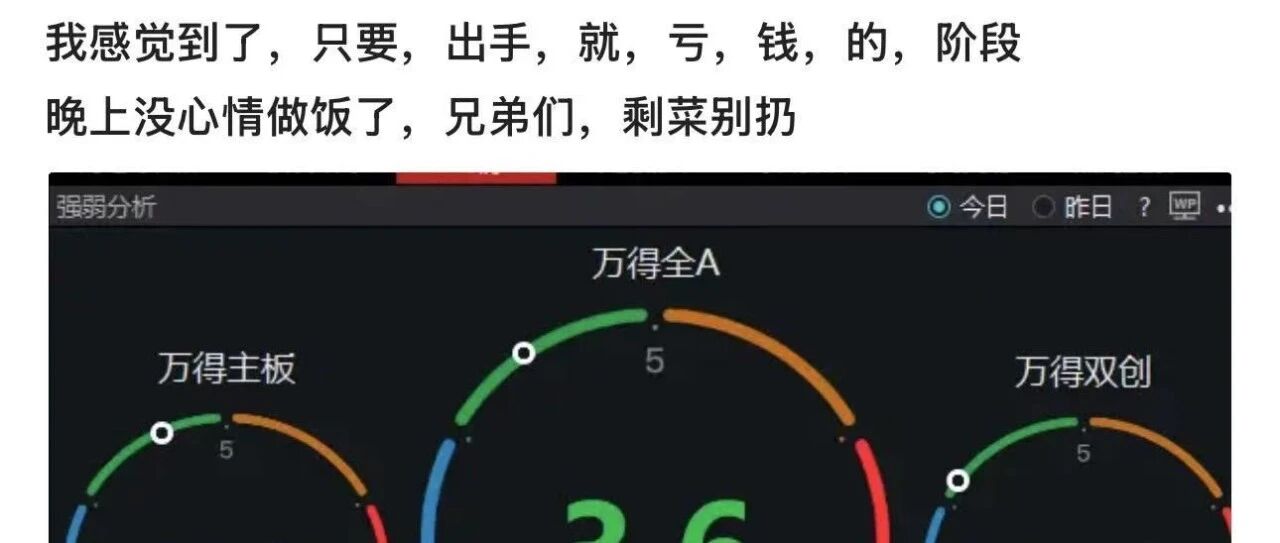
Core Viewpoint - The article discusses the recent downturn in the A-share market, highlighting the unexpected declines despite initial optimism surrounding events like the GTC conference and the performance of various sectors, particularly real estate and technology [1][5][9]. Market Performance - From March 2 to March 17, the number of declining stocks in the A-share market fluctuated significantly, with peaks of over 4,800 stocks on March 3 and 4,523 on March 17, indicating a bearish trend [4]. - On March 17, the three major indices closed down, with the Shanghai Composite Index falling by 0.85%, the Shenzhen Component by 1.87%, and the ChiNext by 2.29%. The total market turnover was 22,247.26 billion yuan, a decrease of 1,153.86 billion yuan from the previous day [16]. Sector Analysis - The real estate sector has seen mixed signals, with some stocks initially rising but ultimately facing pressure due to broader market trends. The article notes that new housing sales are weak, while second-hand housing remains stable, indicating a lack of strength in the overall market [10]. - The technology sector, particularly stocks related to computing power hardware, experienced significant declines following the GTC conference, with companies like Tianfu Communication and Longguang Huaxin dropping over 10% [16]. Investment Sentiment - There is a prevailing sentiment of caution among investors, with many opting to reduce exposure amid geopolitical tensions and market volatility. The article suggests that controlling positions and adopting a wait-and-see approach may be prudent in the current environment [13][16]. - The article also highlights the potential for foreign capital inflows into Hong Kong, driven by geopolitical factors, as some investors consider reallocating assets due to instability in the Middle East [12][11]. Price Adjustments - Several companies have announced price increases for their products due to rising raw material costs, with Li Min Co. raising prices by 10%-15% for certain pesticides and chemicals, and Murata announcing price hikes of 15%-35% for passive components [21][23]. - The price of Vitamin A has surged by 35% since the end of February, reflecting broader inflationary pressures in the agricultural and chemical sectors [21]. Regulatory Environment - Recent regulatory changes in China have tightened the IPO process for red-chip companies in Hong Kong, which may increase listing costs and affect foreign investment dynamics [13].



又有A股公司遭下调!信用评级进入密集调整期
证券时报· 2026-03-17 11:58
Core Viewpoint - The article highlights the trend of credit rating adjustments in the capital market, indicating a cautious attitude towards corporate profitability and debt repayment capabilities as more annual reports are disclosed [1]. Group 1: Credit Rating Adjustments - A total of 108 listed companies have updated their credit ratings this year, with 5 experiencing downgrades and only 1 upgrade, reflecting a "more downgrades than upgrades" trend [1][3]. - Among the downgraded companies, sectors affected include environmental engineering, semiconductors, and agriculture [3]. - Shanghai Xinjie announced a downgrade of China Energy Conservation and Environmental Protection Group's long-term credit rating from AA to AA- due to expected significant losses in 2025, with projected net losses between 1.697 billion to 2.262 billion yuan [3][4]. Group 2: Company Performance and Ratings - The downgrade of China Energy Conservation is attributed to declining revenue and substantial asset impairment provisions due to cash flow issues from historical projects [3][4]. - Other companies like Aerospace Hongtu and Wentai Technology also faced downgrades due to declining performance and significant debt repayment pressures [5]. - In contrast, Huaguang Huaneng received an upgrade to "AAAsti," indicating strong debt repayment capability and stability despite a revenue decline of 7.89% and a net profit drop of 28.46% in the first three quarters [7][8].



算力升级+自主可控:把握行业双主线【20260309-20260315】
Datong Securities· 2026-03-17 11:54
Investment Rating - The industry investment rating is "Positive" (maintained) [3] Core Insights - The report emphasizes the dual focus on computing power upgrades and self-control within the industry, highlighting the importance of specialized architectures for AI applications [2][26] - The global semiconductor sales have shown significant growth, with January 2026 sales reaching $82.5 billion, a year-on-year increase of 46.1% [19][20] - The storage chip industry is experiencing an upward trend, driven by strong demand for high-performance memory from AI servers and data centers [23] Summary by Sections Weekly Market Review - The Shanghai Composite Index fell by 0.7% to 4095.45 points, while the Shenzhen Component Index rose by 0.76% to 14280.78 points, and the ChiNext Index increased by 2.51% to 3310.28 points during the week of March 9-15, 2026 [1][7] - The electronics sector declined by 1.23%, underperforming the Shanghai Composite Index by 0.53 percentage points [7] Industry Data Tracking - Global smartphone shipments reached 336 million units in Q4 2025, marking a year-on-year growth of 2.28% [18] - The semiconductor sales in China for January 2026 were $22.8 billion, reflecting a 47% year-on-year increase [20] - The DRAM prices have been on a strong upward trend since June 2025, indicating a new cycle of growth in the storage chip industry [23] Investment Recommendations - The report suggests that as AI applications extend from training to inference, there is a growing demand for low-latency and high-throughput computing hardware [26] - Companies with core technology reserves in AI computing hardware are expected to benefit from the upcoming infrastructure development cycle [2][26] Industry News - NVIDIA's GTC 2026 conference is set to unveil updates on AI infrastructure, including the Feynman chip architecture [28] - Applied Materials has partnered with Micron and SK Hynix to accelerate the development of next-generation storage technologies for AI and high-performance computing [29] - NVIDIA and Samsung are collaborating to develop ferroelectric NAND flash memory, aiming to meet the increasing demand for AI-related storage solutions [30]
到明年底,至少赚1万亿”!英伟达连发7款芯片,还推出自己的“龙虾
Guo Ji Jin Rong Bao· 2026-03-17 11:24
Core Viewpoint - Nvidia's CEO Jensen Huang predicts that AI chip revenue will reach at least $1 trillion by 2027, doubling previous forecasts, driven by explosive growth in computing demand [4][5]. Group 1: AI Chip Revenue Forecast - Huang's prediction of $1 trillion in AI chip revenue by 2027 is a significant increase from the $500 billion forecast made in October 2025 [4]. - The surge in revenue expectations is attributed to a million-fold increase in computing demand over the past two years [4]. - Goldman Sachs noted that this long-term revenue visibility greatly exceeds Wall Street's expectations, alleviating concerns about potential peaks in AI capital expenditures by 2026 [4]. Group 2: New AI Computing System - Nvidia introduced the Vera Rubin AI computing system, which consists of seven chips and five rack systems, marking a shift from being a GPU supplier to a full-stack AI infrastructure provider [5]. - The Vera CPU, designed specifically for agent AI and reinforcement learning, is claimed to be twice as efficient as traditional rack-level CPUs and 50% faster [5]. - Major cloud service providers like Alibaba, ByteDance, and Meta are confirmed to deploy the Vera CPU [5]. Group 3: Token Factory Economics - Huang introduced the concept of "Token Factory Economics," emphasizing the need for data centers to produce tokens continuously, which are the smallest semantic units for AI models [6][7]. - The efficiency of token throughput per watt will determine production costs, with a new valuation framework shifting focus from chip sales to AI factory production efficiency [7]. - The concept suggests that engineers will require an annual token budget, with companies allocating a portion of salaries for token distribution to enhance productivity [7]. Group 4: OpenClaw and NemoClaw - Huang highlighted the significance of the OpenClaw open-source project, comparing its impact on AI to that of Windows on personal computing [8][9]. - Nvidia launched the NemoClaw platform, a deployment tool optimized for OpenClaw, allowing easy integration of GPU servers into the OpenClaw ecosystem [9].
从四次到两次:SEC 酝酿财报改革,美股信任机制面临大考
美股研究社· 2026-03-17 11:22
Core Viewpoint - The core of the capital market is not profit, but information. A reduction in information disclosure will lead to a re-pricing of risk in the market [1]. Group 1: Potential Changes in Disclosure Regulations - The U.S. capital market is at a potential crossroads, with the SEC considering a reform that would allow companies to choose to disclose earnings only twice a year instead of quarterly [2][4]. - This change is not merely a regulatory adjustment but could fundamentally alter the operational logic of the U.S. stock market [5]. Group 2: Historical Context and Current Trends - For the past fifty years, U.S. public companies have adhered to a quarterly disclosure system, which has been a symbol of transparency in the market [7]. - The number of publicly listed companies in the U.S. has decreased from nearly 8,000 in 1996 to about 4,300 today, indicating a trend towards privatization partly due to the costs associated with information disclosure [8][9]. Group 3: Implications of Reduced Disclosure Frequency - Proponents of reducing disclosure frequency argue that quarterly earnings reports lead to "short-termism," pressuring management to prioritize short-term profits over long-term strategy [9]. - However, reducing the frequency of disclosures may lead to decreased transparency, making it harder for investors to access critical operational data [10]. Group 4: Market Dynamics and Investor Behavior - The discussion around disclosure frequency represents a re-negotiation of the balance between corporate management rights and investor information rights [11]. - If earnings reports are reduced, the "transparency premium" that U.S. stocks enjoy may be reassessed, potentially leading to a decline in overall market valuations [12][14]. Group 5: Comparative Analysis with Other Markets - The article draws parallels with the South Korean market, where companies like Samsung and SK Hynix face valuation discounts due to governance and transparency issues, suggesting that reduced transparency in the U.S. could lead to similar outcomes [15][16]. Group 6: Long-term Consequences and Investor Sentiment - Historical experience shows that trust in capital markets takes decades to build but can be destroyed quickly through regulatory setbacks [17]. - The long-term foundation of capital markets is trust, which relies on timely and comprehensive information disclosure. A decline in transparency could erode the global appeal of U.S. markets [19][20].