水产养殖

Search documents
中山农业科技特派员下沉一线,为水产养殖注入绿色动能
Nan Fang Nong Cun Bao· 2025-09-17 09:03
Core Viewpoint - The article emphasizes the efforts of Zhongshan Agricultural Technology Special Commissioners (light cavalry) in promoting green and healthy aquaculture practices to ensure food safety and support the sustainable development of the aquaculture industry [2][4][20]. Group 1: Promotion of New Technologies - The special commissioners focus on introducing new varieties and technologies, enhancing quality control, and protecting the ecological environment as key areas of development [2][3]. - They conduct comprehensive demonstrations and promotions of green aquaculture technologies to facilitate the industry's transformation [3][4]. Group 2: Technical Support and Guidance - The agricultural technology special commissioners systematically outline key management practices, disease prevention, product transportation, and safety production to provide technical services for aquaculture [6][8]. - They distribute technical guidelines, lists of banned veterinary drugs, and common drug detection lists to ensure farmers have clear instructions and responses [7][8]. Group 3: On-Site Demonstration and Project Implementation - The initiative includes leading projects such as smart aquaculture and upgrading breeding ponds, as well as exploring new service technologies for specific fish species [11][12]. - The special commissioners provide on-site guidance for project design and implementation, promoting smart aquaculture production technologies and equipment [13][14]. Group 4: One-on-One Support and Emergency Response - The special commissioners engage in one-on-one guidance in key breeding areas, checking records and assisting in production documentation [15][16]. - They offer emergency plans for unexpected situations, ensuring effective implementation of technical solutions [17]. Group 5: Future Directions - Zhongshan plans to continue enhancing the work mechanism of agricultural technology special commissioners, focusing on technical tracking and service promotion to drive the aquaculture industry towards greener, higher quality, and more efficient development [19][20].


从田间到餐桌 央企打造食品“鲜”活样板
Zhong Guo Zheng Quan Bao· 2025-09-16 22:37
Group 1: Central Enterprises' Role in Food Supply Chain - Central enterprises are actively reshaping China's food supply chain, transitioning from "eating enough" to "eating well and healthily" [1] - The efficient operation of the food supply chain is exemplified by COFCO's automated systems, which allow for rapid processing of soybeans into edible oil [1] - Central enterprises are seen as leaders in technological innovation and industry upgrades, contributing to national food security strategies [1] Group 2: Healthier Food Production Techniques - COFCO has developed a key technology system for edible oil quality control, significantly improving the retention of nutrients such as vitamin E and plant sterols [2] - The new processing technology has increased the retention rates of plant sterols to over 90% and vitamin E to over 95% [2] - Huaren Wanjia is enhancing the quality of protein supply through automated and intelligent farming practices for egg production [3] Group 3: Comprehensive Supply Chain Management - Huaren Wanjia has established a complete supply chain management system for its "Runjia" brand eggs, resulting in significant sales growth [3] - The company aims to expand its product offerings across various categories, including fruits, vegetables, and meat [3] - Central enterprises are integrating technology and supply chain management to promote healthier dietary structures in China [3] Group 4: Innovations in Aquaculture - State Grid Xinjiang Electric Power Company has enabled successful seafood farming in Xinjiang through stable electricity supply [5] - The "Bay Area Lingding" self-propelled aquaculture vessel, developed by China Communications Construction Company, is set to enhance fish farming efficiency [6] - This vessel is expected to produce an annual yield of 5,000 tons, contributing to sustainable seafood supply [6] Group 5: Global Sourcing and Consumer Demand - Central enterprises are leveraging global supply chains to meet the rising demand for high-quality imported foods, such as Chilean cherries [7] - COFCO is expanding its international cooperation to introduce premium agricultural products, including flaxseed oil and Honduran shrimp [8] - The company has achieved significant operational scale, managing over 180 million tons of agricultural products annually [9]
从田间到餐桌央企打造食品“鲜”活样板
Zhong Guo Zheng Quan Bao· 2025-09-16 20:20
Core Insights - The article highlights the proactive role of state-owned enterprises (SOEs) in reshaping China's food supply chain, emphasizing a shift from merely filling stomachs to providing healthier and higher-quality food options [1][2][3] Group 1: Food Supply Chain Innovations - SOEs are implementing advanced technologies and full-chain management to enhance food quality and safety, particularly in the edible oil sector [2][3] - The research team at COFCO has developed a key technology system for quality control in edible oil, significantly improving the retention rates of nutrients such as plant sterols and vitamin E [2] - The "Runjia" brand of eggs from China Resources has seen sales exceed last year's total within six months, showcasing the effectiveness of their integrated supply chain management [3] Group 2: Aquaculture Developments - State Grid Xinjiang Electric Power Company has facilitated the successful aquaculture of various seafood in Xinjiang, supported by stable electricity supply and advanced technology [4][5] - The "Bay Area Lingding" self-propelled aquaculture vessel, developed by China Communications Construction Company, is set to produce 5,000 tons of seafood annually, contributing to sustainable aquaculture practices [6] Group 3: Import and Global Supply Chain - Companies like China National Machinery Import and Export Corporation are leveraging global supply chains to import high-quality products such as Chilean cherries, meeting the growing demand for premium food items in China [7] - COFCO is expanding its international cooperation by introducing various high-end agricultural products, including flaxseed oil and Honduran white shrimp, to enhance consumer choices [7] - COFCO's annual agricultural product handling exceeds 180 million tons, positioning it as a key player in the global agricultural supply chain [7]
“一带一路”国际研修班到访天津汉沽盐场
Sou Hu Cai Jing· 2025-09-16 15:55
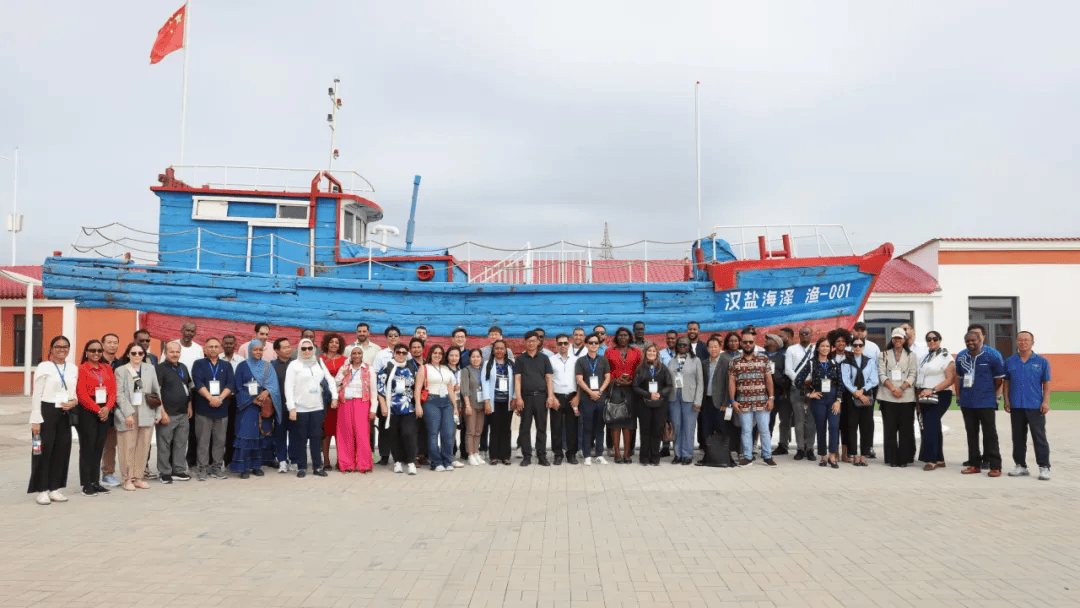
Group 1 - The event was organized by the Ministry of Commerce and the International Cooperation Center of the National Development and Reform Commission, focusing on long-term development planning and green industry development under the Belt and Road Initiative [1][8] - Over 50 officials participated in the visit to the Tianjin Bohai Chemical Group's Han Gu Salt Field, which highlighted the integration of cultural heritage, green industry, ecological aquaculture, and resource recycling [1][6] - The visit included immersive experiences at the Tianjin Changlu Sea Salt Cultural Tourism Zone, showcasing the historical context of sea salt culture and the blend of traditional salt-making techniques with modern tourism [6][8] Group 2 - Participants observed the technological research and production processes of the microalgae health industry at Han Salt Keri Biological Company, recognizing the growth potential of the green biological industry [6][8] - The aquaculture base of Han Salt Modern Aquatic Technology Company was visited, where officials experienced the ecological farming environment and tasted high-quality seafood products, demonstrating the success of the ecological aquaculture model [6][8] - The visit concluded with a focus on the seawater bromine production process at the brine comprehensive utilization plant, emphasizing the Han Gu Salt Field's approach to the tiered development and recycling of marine resources [6][8]
青岛莱西创新路子做强支柱
Jing Ji Ri Bao· 2025-09-16 03:29
Group 1 - The core idea of the news is the successful implementation of the "Strong Village Common Prosperity Company" model in Jiaoshan Village, which has significantly improved the local economy and community welfare through organized collective efforts and market integration [2][4][6] - Jiaoshan Village has seen a transformation from low income levels to a projected collective economic income exceeding 16 million yuan in 2024, with specific targets of 60 tons of crayfish and 100 tons of hairy crabs production [2][3] - The establishment of the "Strong Village Common Prosperity Company" has allowed for better resource integration and market access, leading to increased income for local farmers and the community [4][5][6] Group 2 - The model emphasizes the importance of party leadership and grassroots organization in driving rural economic development, with a structured approach to village governance and resource management [2][3][8] - The company has successfully linked local farmers with larger markets, ensuring better pricing and sales channels for agricultural products, thus enhancing profitability [5][6] - The collective economic model has resulted in all 111 administrative villages in Laixi achieving a minimum collective income of 500,000 yuan, showcasing the effectiveness of this approach [5][6][7] Group 3 - The integration of social capital and market forces through the "Strong Village Common Prosperity Company" has led to the establishment of various projects, including night markets and ecological parks, which attract tourism and generate additional revenue [3][4] - The model has also facilitated the development of diverse agricultural products, such as blueberries and mushrooms, contributing to the overall economic growth of the region [3][6][7] - The profit-sharing mechanism established by the company ensures that villagers benefit directly from the economic activities, fostering a sense of partnership and community involvement [7][8]
椰风海韵织锦绣
Jin Rong Shi Bao· 2025-09-16 02:32
Core Viewpoint - The Bank of China Hainan Branch is prioritizing financial services for rural revitalization, focusing on key areas and weaknesses to enhance financial services in rural agriculture and support farmers' development [1][6]. Group 1: Financial Services for Aquaculture - The East Star Grouper aquaculture industry in Hainan is experiencing significant growth due to favorable geographical conditions, with farmers like Mr. Huang expanding their operations despite facing financial challenges [2][3]. - The Bank of China Hainan Branch provided a tailored financial service plan for Mr. Huang, resulting in a loan of 500,000 yuan, which enabled him to improve his aquaculture practices and expand his business [3]. - Since 2025, the bank has issued loans to 42 East Star Grouper farmers, totaling 16.76 million yuan, facilitating their market expansion [3]. Group 2: Financial Support for Tropical Fruit Industry - Farmers like Mr. Chen are expanding their Hami melon cultivation due to high demand, but face liquidity issues for operational costs [4]. - The Bank of China Le Dong Branch responded by offering a favorable "Yunong Loan" with simplified approval processes, resulting in loans totaling 75.6 million yuan for 241 Hami melon farmers by June 2025 [4]. Group 3: Agricultural Financing Innovations - The Bank of China Hainan Branch is optimizing its "Yunong Quick Loan" information archiving model to better understand the financial needs of farmers and provide tailored loans [5]. - The bank is enhancing the diversity and accessibility of its financial products to support high-quality development in rural industries [6]. Group 4: Support for Agricultural Enterprises - The Bank of China Haikou Qiongshan Branch established a green channel for agricultural credit, providing a 60 million yuan loan to a pig farming company facing cash flow issues due to price fluctuations [7]. - The bank is prioritizing financial services for key agricultural enterprises and has signed cooperation agreements to support food security initiatives [7]. Group 5: Rural Payment Environment Improvement - The Bank of China Hainan Branch is improving payment acceptance tools in rural areas and promoting digital RMB payment scenarios to reduce operational costs for rural merchants [8]. - The bank is developing a new model for inclusive financial services through the "Yunong Tong APP + service points," addressing financial service challenges in rural areas [8].

资金流信用赋能“海洋牧场”建设
Jin Rong Shi Bao· 2025-09-16 02:23
Core Viewpoint - The establishment of the "fund flow platform + modern marine ranch" financing credit in Shantou's Nanao County aims to support the development of the marine aquaculture industry and modern marine ranches, leveraging the region's rich marine resources and addressing challenges posed by natural disasters and financing difficulties [1][2][3] Group 1: Industry Development - Nanao County, as Guangdong's only island county, has abundant marine fishery resources and pollution-free seawater, making it an ideal location for aquaculture [1] - The transition from traditional extensive aquaculture to modern large-scale aquaculture is exemplified by a local company adopting deep-water cage farming, which benefits from deeper waters and rich feed resources [2] - The deep-water cage farming primarily focuses on high-value fish like the red snapper, which is known for its tender meat and delicious taste [2] Group 2: Financial Support and Innovation - The "fund flow platform" has expanded its application scenarios, providing inclusive and green financial support to Nanao County, which is committed to not developing heavy industry [3] - The People's Bank of China Shantou Branch has facilitated a total credit of 4 million yuan to six marine ranch enterprises through the fund flow platform, demonstrating a significant financial commitment to the marine economy [3] - The collaboration between financial institutions and local governments aims to enhance the financial support for modern marine ranches, with a total credit agreement of 400 million yuan signed for the development of marine ranches [3]
三文鱼价格跳水
Hu Xiu· 2025-09-15 23:21
Core Insights - The price of salmon in China has significantly decreased, with prices for raw salmon dropping to 19.9 yuan per 100 grams and 99 yuan for 500 grams of imported salmon, primarily from Norway [1] - Norway's market share of salmon in China has surged from 39% at the beginning of the year to 71% by June, marking the highest level in 15 years [1] - The increase in Norwegian salmon imports is attributed to the release of consumer demand in China, with the country becoming the sixth largest global export market for Atlantic salmon [2][3] Supply and Demand Dynamics - The decline in salmon prices in China is influenced by slow growth in international market demand, leading to an oversupply situation [2] - The diversification of sales channels has made salmon more accessible to consumers, enhancing repurchase rates [2] Export Growth - From January to August this year, Norway exported 61,000 tons of salmon to China, a 120% increase year-on-year, with export value reaching 5.425 billion Norwegian kroner, up 66% [3] - China has become Norway's fifth largest export market for salmon, with the fastest growth among the top ten markets [3] Market Positioning - Norway has effectively capitalized on growth opportunities in the Chinese market, unlike other countries such as Chile and Australia [4] - The influence of a country's imported food products in China depends on stable quality and significant market investment [4] Marketing and Promotion - Norway has invested heavily in marketing its salmon in China for over 20 years, conducting various promotional activities [5] - The Norwegian Seafood Council plans to increase its market budget by 70% to further capture growth opportunities in China, focusing on digital platforms and local partnerships [5] Domestic Production Challenges - China aims to achieve local farming of Norwegian salmon by 2025, with a focus on maintaining product freshness [6] - However, the domestic salmon farming industry faces challenges in consumer perception regarding the quality of inland-farmed salmon [8] Consumer Education - There is a need for domestic brands to enhance market education to alleviate consumer concerns about the quality of inland-farmed salmon [9] - The price difference between imported salmon and domestic rainbow trout may impact consumer choices, as imported salmon is generally more expensive due to higher transportation costs [9][10] Future Market Outlook - The salmon market in China is expected to continue growing over the next 3 to 5 years, with a potential increase in product variety [11] - The market may see a shift in consumer preferences, leading to a more diverse range of salmon products available [11]
明阳智能等新设牧渔公司,含水产养殖业务
Qi Cha Cha· 2025-09-15 06:10
Core Viewpoint - The establishment of Guangdong Feihai Aquaculture Co., Ltd. indicates a growing interest in the aquaculture sector, particularly in the context of smart agriculture and food sales [1] Company Summary - Guangdong Feihai Aquaculture Co., Ltd. has been recently established with a registered capital of 10 million yuan [1] - The company is involved in various activities including aquaculture, seed production, internet sales of food, smart agricultural management, and wholesale and retail of aquatic products [1] - The ownership structure includes Zhongshan Agricultural Investment Development Co., Ltd. and Mingyang Smart Energy's wholly-owned subsidiary Mingyang Marine Fisheries (Guangdong) Co., Ltd. [1]

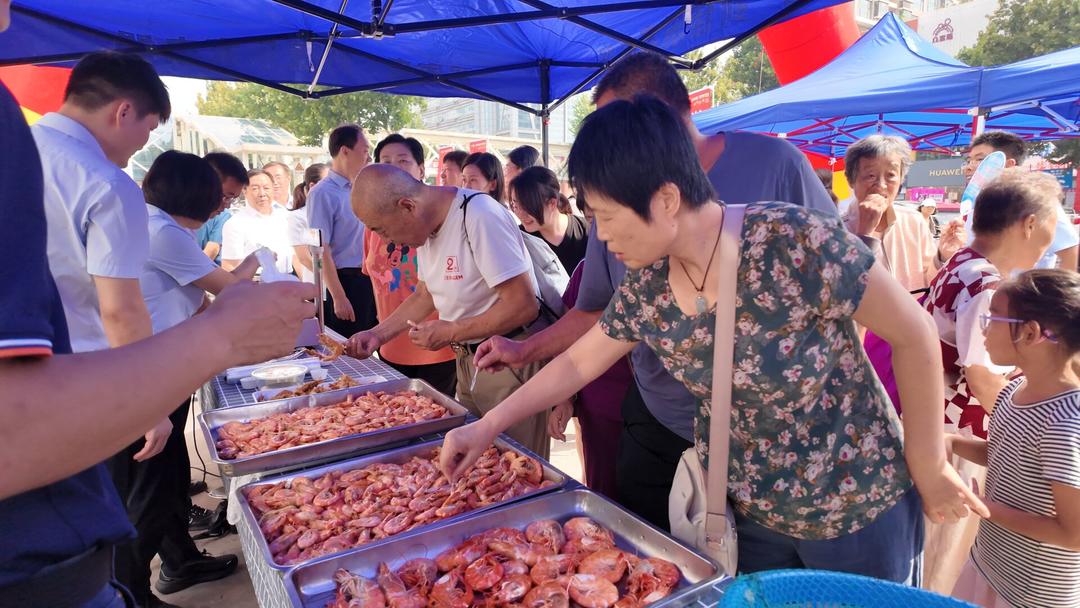
潍坊市海渔局举办无抗活虾推介活动,对虾产业迈入无抗新台阶
Qi Lu Wan Bao Wang· 2025-09-15 06:04
Core Viewpoint - The event in Weifang marks a significant step towards the high-quality development of the shrimp industry, focusing on promoting safe, healthy, and high-quality antibiotic-free shrimp products [1][3]. Industry Overview - The South American white shrimp has been cultivated in Weifang for over 20 years, benefiting from local high-quality brine and suitable temperatures, leading to quality upgrades through the efforts of local enterprises [3]. - The promotion of antibiotic-free aquaculture is essential for addressing potential antibiotic residue risks, ensuring food safety, and enhancing the international competitiveness of China's aquatic products [5]. Company Initiatives - Shandong Hengxing Aquaculture Development Co., Ltd. emphasizes a prevention-first approach, integrating disease prevention techniques to ensure that live shrimp are free from antibiotics and pathogens [3][5]. - The company is committed to food safety, adhering to quality standards and regulations, and implementing a traceability system to ensure consumer confidence [5]. Event Highlights - The promotional event featured various activities, including showcasing high-quality antibiotic-free shrimp products and sharing core technologies and management experiences from aquaculture representatives [7]. - The event provided opportunities for direct negotiations and partnerships between antibiotic-free shrimp producers and major supermarket buyers, enhancing market connections [7]. - Future plans include strengthening policy guidance and technical support for antibiotic-free aquaculture standards, improving market supervision, and building brands to ensure more "reliable shrimp" reach consumers [7].