
无人机

Search documents
卓翼智能完成2亿元C轮战略融资,杭州低空产业独家投资
Sou Hu Cai Jing· 2025-12-12 04:06
近日,北京卓翼智能科技有限公司(简称:卓翼智能)完成2亿元C轮融资,由杭州市实业投资集团有限公司子公司杭州低空产业发展 有限公司独家投资。 这是卓翼智能继2023年底完成由中航工业、中关村科学城领投的2.49亿元B轮融资、2024年获北京先进制造产业基金1亿元B+轮投资 后,再度斩获重量级投资。 公司创始人&董事长&总经理任雪峰毕业于北京航空航天大学(北航)导航制导与控制专业,并受聘为北航"低空技术与工程"企业导 师,拥有多年无人机飞行控制系统、无人机仿真系统研发经验;是中国第一批接触系留无人机的成员之一。 来源:猎云网 据天眼查,卓翼智能成立于2015年,致力于无人系统的研制、仿真、 试验与训练,是全球领先的智能无人系统解决方案的研发商和生 产商,核心产品包括:无人机平台、集群智能无人平台、无人数字孪生系统、无人机作战仿真平台,应用涵盖国防、教育科研、应急 消防、水利林草、电力、石油与天然气等领域。 截至目前,公司已经完成了8轮融资。 其核心团队主要来自北航、北理等知名高校,是北航系校友创办的国内规模最大的低空经济企业之一。自成立以来,卓翼智能持续获 得北航在人才与科研方面的大力支持。2024年卓翼智能与北 ...


2天卖了3000万元 全景无人机是门好生意吗
2 1 Shi Ji Jing Ji Bao Dao· 2025-12-12 02:32
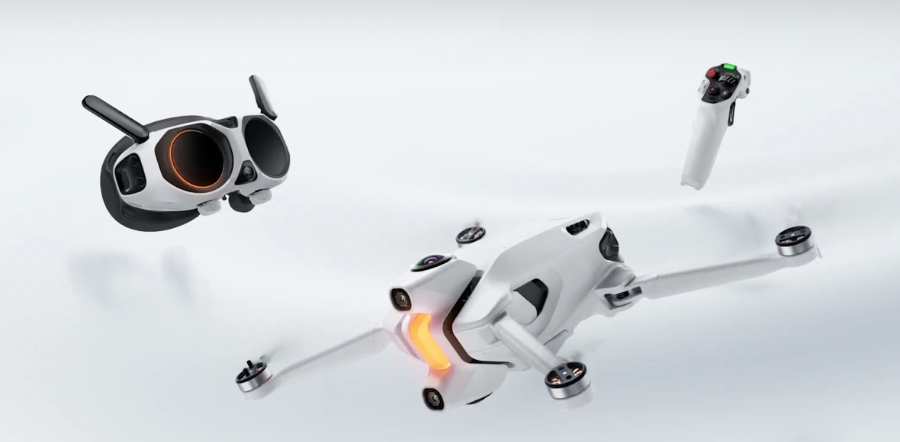
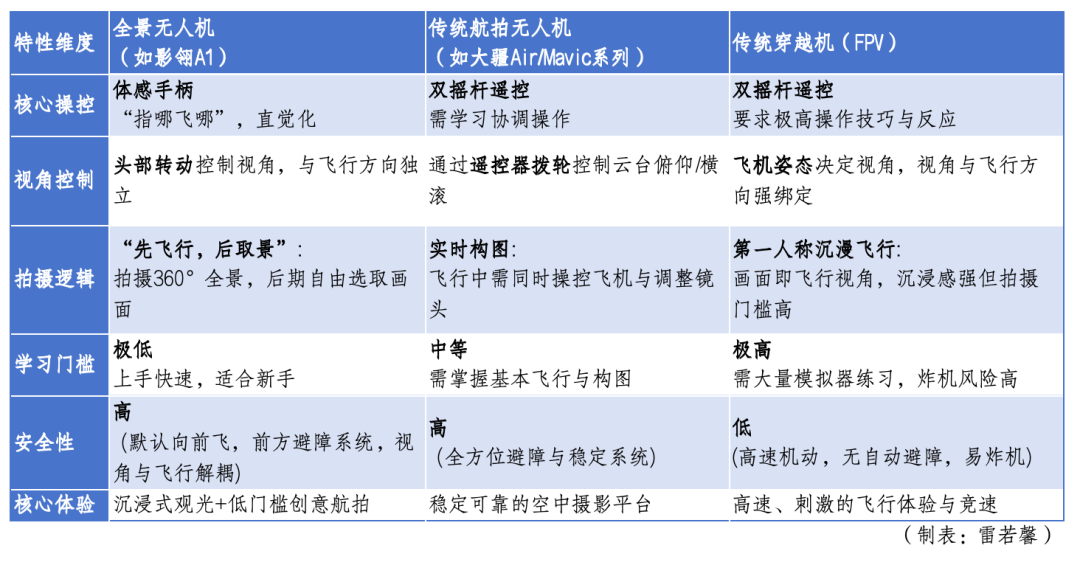
Core Insights - The launch of the Antigravity A1, the world's first panoramic drone, achieved sales exceeding 30 million yuan within 48 hours, highlighting its strong market entry amidst a slowing consumer drone market [1] - The global consumer drone market is projected to reach $4.27 billion in 2024, with a year-on-year growth of 7%, indicating a shift from double-digit growth to a more moderate pace [1] Product Differentiation - The panoramic drone integrates a 360° camera with a drone platform, offering an immersive "what you see is what you get" aerial photography experience, which differentiates it from traditional drones [2][4] - Key features of the panoramic drone include intuitive motion control, real-time perspective adjustment through head movement, and a low learning curve, making it accessible to new users [4][5] Market Dynamics - The traditional drone market is highly segmented, with established players like DJI focusing on diverse product lines, while the introduction of the panoramic drone may create new market opportunities [8][9] - The panoramic drone targets users who are deterred by the complexity of traditional drones, potentially activating an untapped middle market [11][12] Innovation and Future Potential - The panoramic drone represents a shift from traditional drone capabilities to a "panoramic perception platform," suggesting broader applications in fields like security, emergency response, and live event broadcasting [15][16] - The integration of VR/AR technologies with the panoramic drone could enhance content creation and user engagement, potentially accelerating the adoption of VR applications [16][18] Sales and Market Projections - Initial sales data indicates that the panoramic drone could achieve a shipment scale of approximately one million units if demand for panoramic features is significant [12] - The pricing strategy for the A1, starting at 6,799 yuan, reflects the higher costs associated with its advanced technology, including VR glasses and high-end components [7]

GPT-5.2发布;摩尔线程提示风险并预估业绩丨科技风向标
2 1 Shi Ji Jing Ji Bao Dao· 2025-12-12 02:32
Group 1: Technology Developments - OpenAI has released the latest version of its AI model, GPT-5.2, which aims to enhance economic value by excelling in tasks such as spreadsheet creation, presentation making, code writing, image recognition, long text understanding, tool usage, and managing complex multi-step projects, outperforming industry professionals in 44 specific knowledge work tasks [2] - DingTalk has launched version 8.1.10, introducing AI-powered features such as AI Q&A and AI dynamic reply suggestions, enhancing user interaction [5] - QQ has implemented an AI summary feature for group chats, allowing users to quickly grasp key messages without scrolling through extensive chat histories [7] Group 2: Corporate Announcements - Elon Musk hinted at a potential IPO for SpaceX, indicating the company's financial health with consistent positive cash flow and regular stock buybacks [4] - JD Group announced the listing of JD Industrial on the Hong Kong Stock Exchange, with shares starting trading at 14.1 HKD [13] - ZTE Corporation's stock fell approximately 2% following news of an investigation related to compliance with the U.S. Foreign Corrupt Practices Act, although the company maintains that its operations are normal [10] Group 3: Strategic Partnerships and Initiatives - Guangdong Province and JD Group have established the first "Modern Rider Academy" in China, focusing on vocational training for delivery personnel, aiming to cover over 100,000 full-time riders in the region within three years [9] - Huawei has announced the beta launch of its HarmonyOS for computers, with the ecosystem expanding from around 2,000 applications to 12,000, indicating significant growth in its application coverage [8] Group 4: Mergers and Acquisitions - Chuangyuan Xinke plans to acquire 100% of Weiyu Tiandao for 886 million CNY, focusing on satellite navigation testing technology [17] - Whirlpool intends to purchase assets related to washing machines from its controlling shareholder, Gree Electric Appliances, to eliminate competition concerns [16] - Blue Shield Optoelectronics has decided to terminate a planned acquisition of shares in Shanghai Star Thinking Semiconductor for 80 million CNY, citing the need to control investments and protect shareholder interests [15]



黑龙江省首个校园低空物流配送新场景落地冰城
Xin Hua Wang· 2025-12-12 02:23
近日,一架京东物流无人机在哈尔滨石油学院校园内平落,将一件快递准确投送至指定位置。这标 志着京东集团在我省商业物流配送领域首个常态化运营的低空经济应用场景,正式在哈尔滨落地运行, 也成为哈尔滨新区推动低空经济从"场景应用"迈向"场化运营"的关键一步。 在国家加快培育低空经济新增长极的背景下,哈尔滨新区始终将低空经济作为产业转型升级的重要 抓手,系统布局、全力推进,已逐步构建起覆盖农业植保、政务巡检、应急救援和商业物流等多领域的 低空应用生态。从北大荒集团、惠达科技农业无人机规模化应用,到构建"七分钟应急响应圈"提升城市 安全能级,再到此次携手京东打造校园物流新场景,新区持续拓展低空技术的商业化路径,推动"低空 +"融合发展走深走实。 同时,构建"航线即供应链"的智能调度新体系。整合京东订单系统、飞行调度平台与校园空域资 源,推动实现"一次飞行、多站投递",建立起从分拣中心到终端用户的空中即时通道,重塑传统物流运 行方式,显著提升全链路运行效率。 该场景还搭建起"产教融合、双向赋能"的协同发展平台。双方共建京东物流现代产业学院及无人机 配送实训基地,将产业真实场景与教学实训深度融合,实现了"产业运营赋能教学、教 ...
2天卖了3000万元,全景无人机是门好生意吗
2 1 Shi Ji Jing Ji Bao Dao· 2025-12-12 01:25
Core Insights - The launch of the Antigravity A1, the world's first panoramic drone, achieved sales exceeding 30 million yuan within 48 hours, indicating strong market interest [1][14]. - In a slowing consumer drone market, where industry leader DJI is diversifying, the A1's performance stands out, raising questions about whether it represents a "technical micro-innovation" or a "scene revolution" that could create a new product category [2][9]. Product Differentiation - The panoramic drone integrates a 360° camera with a drone platform, offering an intuitive "what you see is what you get" aerial shooting experience, allowing users to control the view by simply turning their heads [3][5]. - Compared to traditional drones, the A1 features a low learning curve, high safety, and immersive user experience, making it appealing to new users and those deterred by the complexity of existing products [5][6][11]. Market Context - The global consumer drone market is projected to reach $4.27 billion in 2024, with a modest growth rate of 3.4% over the next five years, contrasting sharply with previous double-digit growth [2]. - Despite initial sales success, the A1's higher price point compared to traditional drones raises concerns about its long-term market viability and user retention [8][14]. Competitive Landscape - The introduction of the A1 challenges the notion that the consumer drone market is saturated, suggesting that unmet niche demands could provide fertile ground for new product categories [9][10]. - The contrasting strategies of DJI, focusing on incremental innovation, and the disruptive approach of the A1 highlight different paths to market success [14]. Future Potential - The A1's design and technology could pave the way for applications beyond consumer use, such as in security, emergency response, and live event broadcasting, enhancing the overall utility of drones [16][17]. - The success of the A1 will depend on its ability to lower usage barriers, expand creative possibilities, and develop supportive ecosystems for panoramic content creation [17][18].

“九天”无人机首飞告捷!航空航天ETF天弘(159241)最新规模创新高!跟踪指数昨日逆市收涨,单日获资金净申购近5000万份
Sou Hu Cai Jing· 2025-12-12 01:23
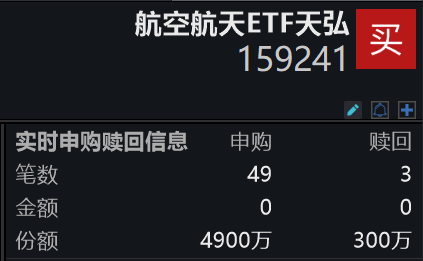
截至2025年12月11日收盘,航空航天ETF天弘(159241)换手26.66%,高居同类产品第一,成交1.39亿元,市场交投活跃。跟踪的 国证航天航空行业指数(CN5082)逆市上涨0.12%,成分股中国卫星(600118)上涨4.89%,航天晨光(600501)上涨4.69%,国博电子 (688375)上涨4.16%,光启技术(002625)上涨3.62%,华秦科技(688281)上涨3.21%。 值得一提的是,航空航天ETF天弘(159241)获资金积极布局,全天净申购4600万份。 | | 航空航天ETF天弘 159241 | ਕੇ | | --- | --- | --- | | | | * Q + | | 实时申购赎回信息 | 申购 | 赎回 | | 笔数 | 49 | 3 | | 金额 | 0 | O | | 份额 | 4900万 | 300万 | 拉长时间看,截至12月11日,航空航天ETF天弘(159241)最新规模达5.73亿元,创成立以来新高。航空航天ETF天弘(159241)近1 周份额增长3200.00万份,实现显著增长。 资金流入方面,航空航天ETF天弘(159241)最新资金净流 ...
2天卖了3000万元,全景无人机是门好生意吗
21世纪经济报道· 2025-12-12 01:20
Core Insights - The article discusses the launch of the Antigravity A1, the world's first panoramic drone, which achieved sales of over 30 million yuan within 48 hours, highlighting its potential in a slowing consumer drone market [1][10]. - The global consumer drone market is projected to reach $4.27 billion in 2024, with a growth rate of 7%, indicating a shift from double-digit growth to a more moderate pace [1][10]. - The emergence of panoramic drones raises questions about whether they represent a minor technological innovation or a significant new category in the market [1][10]. Product Comparison - The panoramic drone integrates a 360° camera with a drone platform, allowing for intuitive control through head movements, which differentiates it from traditional drones that require complex controls [3][4]. - Key differences between panoramic drones and traditional drones include control methods, perspective management, and user experience, with panoramic drones offering a lower learning curve and higher immersion [4][5]. - The A1's pricing strategy reflects its advanced technology, including VR glasses, which increases its cost compared to traditional drones [5][6]. Market Dynamics - The consumer drone market is perceived to be nearing saturation, with a projected shipment of approximately 4.8 million units in 2024, leading to a focus on replacement and niche demand [8][10]. - The introduction of the A1 could create structural opportunities in a market where mainstream products meet most consumer needs, potentially tapping into previously unmet demands [8][10]. - The A1's appeal lies in attracting users who are deterred by the complexity of traditional drones, particularly younger demographics interested in social sharing [10][11]. Future Potential - The article suggests that the success of the panoramic drone will depend on its ability to create a positive feedback loop of user experience, product iteration, and cost reduction [13][15]. - The potential applications of panoramic drones extend beyond consumer use, with possibilities in security, emergency response, and live event broadcasting, indicating a shift from merely being "flying cameras" to "panoramic perception platforms" [14][15]. - The integration of panoramic drones with VR/AR technologies could revolutionize content creation, making it more accessible and efficient [14][15].

中央经济工作会议最新信号,结构性货币政策工具“加量降价”可期;泽连斯基:若获安全保障,愿支持在战时举行大选;马斯克:若重来,不会领导“政府效率部”丨早报
Sou Hu Cai Jing· 2025-12-12 00:16
中央经济工作会议最新信号,结构性货币政策工具"加量降价"可期 中央经济工作会议中关于2026年货币政策延续适度宽松的基调,显示出宏观政策保持很强的连续性、稳 定性。除了总量政策提出运用降准降息外,会议还要求畅通货币政策传导机制,引导金融机构加力支持 扩大内需、科技创新、中小微企业等重点领域。 泽连斯基:若获安全保障 愿支持在战时举行大选 【今日推荐】 马斯克:若重来,不会领导"政府效率部" 美国电动车制造商特斯拉公司、太空探索技术公司创始人埃隆·马斯克日前表示,如果重来,他不会领 导"政府效率部",而是专注运营自己的企业。马斯克说:"我想我总体上会在我的公司工作,而不是领 导'政府效率部'。这样他们(反对者)就不会烧车了。" 【观国内】 中央部署明年财政政策:重视解决地方财政困难 中央经济工作会议称,明年要继续实施更加积极的财政政策。保持必要的财政赤字、债务总规模和支出 总量,加强财政科学管理,优化财政支出结构,规范税收优惠、财政补贴政策。重视解决地方财政困 难,兜牢基层"三保"底线。严肃财经纪律,坚持党政机关过紧日子。 当地时间11日,乌克兰总统泽连斯基在会见记者时表示,在获得国际伙伴提供充分安全保障前提下 ...
【8点见】“九天”无人机成功首飞
Yang Shi Wang· 2025-12-12 00:04
Group 1 - The Ministry of Foreign Affairs of China advises citizens to avoid traveling to Japan due to multiple earthquakes in the region [1] - The Chinese Embassy in Cambodia reports that 46 Chinese citizens have been rescued from a telecom fraud zone since the end of November [1] - During the 14th Five-Year Plan period, the cumulative expenditure of the medical insurance fund in China reached approximately 13 trillion yuan, maintaining an annual growth rate of around 10% [1] - The Ministry of Education states that 495,000 students are expected to return from studying abroad in 2024, representing a year-on-year increase of 19.1% [1] - China successfully completed a full-scale venting test of a 10 MPa high-pressure hydrogen pipeline for the first time [1] - The first domestically produced heavy-duty electric vertical take-off and landing aircraft, AR-E800, successfully completed its maiden flight [1] - In the first eleven months, China's automobile production and sales exceeded 31 million units, with both showing a year-on-year increase of over 10% [1] Group 2 - The "Jiutian" drone successfully completed its maiden flight in Pucheng, Shaanxi on December 11 [3] - Multiple international organizations, including the World Bank and the International Monetary Fund, have raised their economic growth forecasts for China in 2025 [3] - The Ukrainian President Zelensky has submitted an updated peace plan to the United States [3] - The Thai Prime Minister has submitted a request to dissolve the lower house of parliament to the King [3] - A border conflict between Cambodia and Thailand resulted in the deaths of at least 10 Cambodian civilians and 9 Thai soldiers [3]

南财早新闻|中央经济工作会议释放最新信号;白银价格创历史新高
2 1 Shi Ji Jing Ji Bao Dao· 2025-12-11 23:42
(原标题:南财早新闻|中央经济工作会议释放最新信号;白银价格创历史新高) 今日关注 1、中央经济工作会议12月10日至11日在北京举行。会议对2025年做出了"我国经济顶压前行、向新向优 发展"的重要判断。对于2026年经济工作,中央经济工作会议提出"加大逆周期和跨周期调节力度",其 中对多项宏观政策的部署,措辞则从2025年的"加大""加强""增加""扩大"等,转为更加注重"保持""优 化"。同时,会议提出了多项新举措、新任务。详情>>> 2、据新华社,商务部新闻发言人何亚东11日说,中方已通过荷兰驻华使馆,要求荷兰经济部落实与中 方磋商共识,推动安世(荷兰)尽快派员来华。 宏观经济 1、据新华社,世界银行11日在京发布最新一期中国经济简报,相较上期简报,对2025年中国经济增速 预期上调0.4个百分点。 2、商务部发言人何亚东11日表示,商务部将以海南自贸港封关运作为契机,大力推进制度型开放。 3、中国汽车工业协会公布最新数据显示,2025年前11个月,我国汽车产销量均超过了3100万辆,同比 均实现两位数增长。其中,新能源汽车产销分别完成1490.7万辆和1478万辆,同比分别增长31.4%和 31.2 ...
