啤酒

Search documents
茅台价格回涨来年推“市场化”;华润嘉士伯推电商定制|观酒周报
2 1 Shi Ji Jing Ji Bao Dao· 2025-12-15 03:23
Core Viewpoint - Moutai is implementing significant reforms in product, channel, and pricing strategies, including a temporary halt in product shipments and a shift towards market-oriented pricing to alleviate pressure on distributors and enhance consumer access [1][4][6]. Short-term Policies - Moutai has decided to suspend the shipment of its products this month, delaying the execution of its first-quarter plans until further notice [1][3]. - This decision is aimed at reducing the financial burden on distributors during a period of tight cash flow, preventing panic selling of inventory [2]. Price Dynamics - Following Moutai's announcements, prices for its products have seen a rapid increase, with the price of 53-degree 500ml Flying Moutai rising to 1570 yuan, reflecting a daily increase of 70 yuan [3]. - Retail prices have also surged, with local liquor stores quoting prices between 1754 yuan and 1799 yuan for Moutai products [3]. Long-term Policies - Moutai plans to reduce the production volume of several products, including Moutai Chen Nian 15 Year and Moutai Zodiac Wine, while lowering the sales requirements for non-standard products [5]. - The company is considering a "fully market-oriented" pricing strategy, where products will be sold at market prices, starting with select non-standard Moutai products [6]. Distribution Strategy - Moutai may relax the recruitment criteria for distributors, which would mark a significant change in its distribution strategy after years of stability [9]. - The company is encouraging distributors to explore online sales channels, as evidenced by successful e-commerce initiatives by some distributors [9]. Industry Trends - Other companies in the industry, such as Kweichow Moutai and Wuliangye, are also announcing mid-term dividend distributions, indicating a trend of financial returns to shareholders [22][23]. - The beer industry is projected to experience growth in production, revenue, and profit by 2025, with an expected production volume of 37 million kiloliters and a revenue increase of 4% [18].




年终盘点|果味化、奶茶化、功能化,啤酒行业增长虽稳但竞争已入深水区
Di Yi Cai Jing· 2025-12-15 03:21
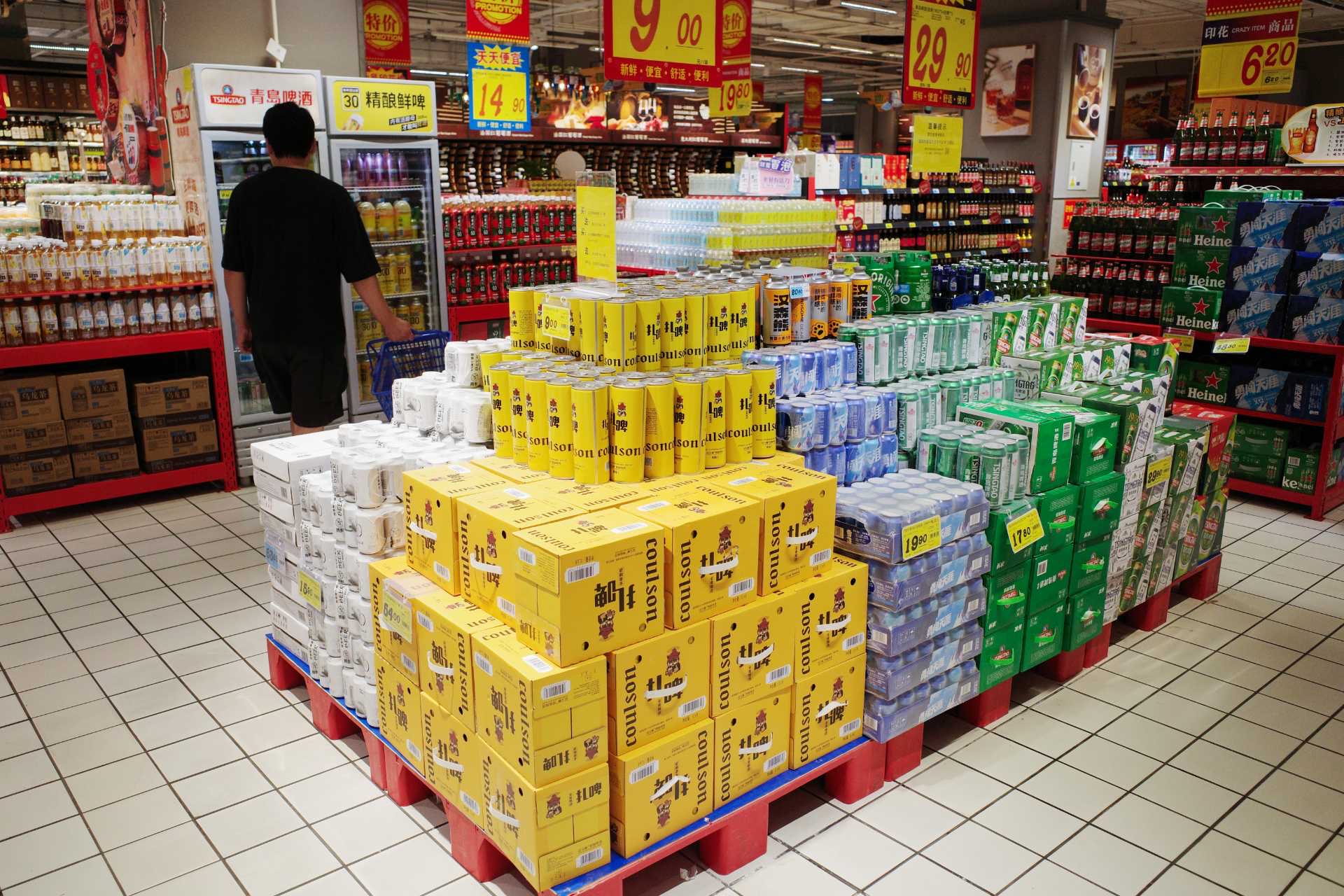
Core Insights - The beer industry is experiencing significant changes driven by self-consumption trends, with a shift towards high-end products and innovative flavors expected to continue into 2025 [1][4]. Industry Growth - The beer sector is one of the few categories maintaining growth amidst a broader adjustment in the alcoholic beverage market, with domestic production and sales of white and wine sectors declining [3]. - The China Beer Association forecasts a continued single-digit revenue growth for the beer industry in 2025, with profits expected to grow in double digits [3]. High-End Product Trends - The beer industry's rapid growth in recent years has been attributed to a shift towards high-end products, although overall growth rates have slowed this year due to various market pressures [4]. - The proportion of mid-to-high-end beer products has increased to over 40%, indicating a structural upgrade in product offerings [4]. New Market Entrants - The stable growth and high-end prospects of the beer market have attracted significant interest from outside capital, with various companies from different sectors, including liquor and food, entering the beer industry [4][5]. Flavor Innovation - The high-end phase of beer is evolving into a quality and experience upgrade, with innovative flavors such as fruit and tea-infused beers gaining popularity [6]. - The emergence of fruit-flavored beers has positioned them among the top three categories outside traditional beer, appealing to younger consumers [6]. Changing Consumer Preferences - The Z generation's participation in drinking is increasing, with beer and wine being their top choices, driven by emotional value and a focus on taste, health, and aroma [7]. - There is a notable rise in low-alcohol, non-alcoholic, low-sugar, and functional beers, reflecting changing consumer demands [7]. Retail Channel Evolution - The rise of instant retail channels is reshaping the beer industry, with significant growth in online sales, particularly through platforms like Meituan, which reported a 100% year-on-year increase in alcohol sales [8]. - Major domestic beer companies are accelerating partnerships with new retail channels to better understand consumer needs and enhance product development [8].


交银国际_消费行业2026年展望:新常态下的消费新动能_
2025-12-15 02:13
Summary of the Conference Call Transcript Industry Overview - **Industry**: Consumer Sector - **2025 Performance**: The consumer market in mainland China has shown a mild recovery, with a year-on-year growth of 4.3% in retail sales from January to October 2025, indicating a steady recovery path [1][6][29]. - **2026 Outlook**: The consumer market is expected to continue its moderate growth, characterized by slower overall demand growth but increasing rational consumption and demand tiering, which will drive structural differentiation and become a key growth driver in niche markets [1][6][7]. Key Insights Consumer Behavior - **Consumer Confidence**: The consumer confidence index has gradually improved but remains below the neutral level of 100, indicating cautious consumer sentiment regarding future income and employment [7][13]. - **Spending Trends**: Consumers are increasingly focused on value for money and emotional value, with a high willingness to pay for emotional experiences, which is reshaping brand competition [26][31][32]. Market Dynamics - **Segment Performance**: Different segments are recovering at varying paces. Categories like home appliances, jewelry, and food staples have shown strong growth, while others like dining and personal care have seen slight declines [23][62]. - **Channel Evolution**: The integration of online and offline channels is deepening, with online growth slightly outpacing offline. New retail formats are emerging, focusing on consumer-centric approaches [37][28]. Technological Impact - **AI Integration**: Artificial intelligence is increasingly being integrated into various industry segments, enhancing operational efficiency and potentially reshaping competitive dynamics [49][50]. Investment Strategy - **2026 Investment Focus**: A balanced strategy is recommended, combining defensive sectors with stable cash flows and high-growth potential opportunities. Key sectors to focus on include: - Defensive companies benefiting from supply-demand improvements, such as Shenzhou (2313 HK) and Yili (600887 CH) [56]. - Fast-growing niche leaders like Pop Mart (9992 HK) and Miniso (9896 HK) [56]. - Industry leaders with strong growth foundations and resilience, such as Anta (2020 HK) and China Resources Beer (291 HK) [56]. Risks - **Macro Uncertainties**: Potential risks include macroeconomic uncertainties, commodity inflation exceeding expectations, international trade uncertainties, and insufficient consumer stimulus policies [57]. Additional Insights - **Emerging Trends**: The rise of emotional consumption is driving growth in categories like trendy toys and cultural products, with brands leveraging IP ecosystems for rapid revenue growth [68][70]. - **Global Expansion**: Chinese consumer brands are increasingly looking to expand internationally, particularly in Southeast Asia, to tap into new growth opportunities [35][36]. This summary encapsulates the key points from the conference call, highlighting the current state and future outlook of the consumer sector, along with strategic investment recommendations and associated risks.
飞天茅台批价连续两日回升;布局散酒零售终端,古井打酒铺开业丨酒业早参
Mei Ri Jing Ji Xin Wen· 2025-12-15 01:33
NO.1 飞天茅台批价连续两日回升 飞天茅台批价连续两日明显回升。12月13日,各平台飞天茅台散瓶批价已经重新站上1500元/瓶,飞天 茅台原箱最高报价为1560元/瓶。12月14日,各报价平台数据显示,相比12月13日飞天茅台批价上涨幅 度在40元~80元/瓶。目前,飞天茅台散瓶批价最高报价1580元/瓶,原箱最高突破1600元/瓶。此外,蛇 茅、精品茅台、公斤茅台等其他非标产品的市场批价也迎来了普遍上涨。其中,蛇茅的市场批价在某第 三方报价平台上涨80元/瓶。 点评:这一价格反弹对茅台而言,既缓解了此前渠道恐慌性抛售的压力,又巩固了其核心产品的价格锚 点,修复了经销商体系的盈利预期,为春节旺季动销筑牢基础。在白酒行业深陷库存高企、需求收缩的 调整期内,茅台的价格企稳不仅为高端白酒市场划定了价格底线,也为同行提供了渠道调控的参考范 式。 NO.2 布局散酒零售终端,古井打酒铺开业 近日,古井打酒铺·亳州桐乡路店正式开业。据悉,该店铺主打"现打现卖""即打即喝"模式,前店后坊 工厂直供,满足消费者对新鲜、实在、高性价比光瓶酒的需求。作为老八大名酒企业推出的新型散酒零 售终端,该店提供浓香、清香、明绿香型白酒及 ...

【“打通全国统一大市场堵点卡点”热点问题探析⑦】破局“内卷” 开拓蓝海
Jing Ji Ri Bao· 2025-12-14 22:51
Core Viewpoint - The article highlights the detrimental effects of "involution" competition across various industries, leading to price wars, reduced profit margins, and increased quality and safety risks. It emphasizes the need for a unified national market to promote high-quality development in enterprises and industries [1][3][7]. Group 1: Industry Challenges - The washing detergent industry is facing severe competition from low-quality products with less than 5% active ingredient content, which are capturing market share through low pricing, putting quality products at a disadvantage [1]. - "Involution" competition is characterized by irrational competition due to market mechanism failures, where companies resort to price wars instead of leveraging differentiation or technological advantages, resulting in "increased production without increased revenue" [2]. - Various industries, including steel, photovoltaics, automotive, and catering, are experiencing similar challenges due to intense price competition, leading to a consensus among over 20 industry associations to advocate for "anti-involution" measures [3]. Group 2: Solutions and Strategies - To enhance market efficiency, it is essential to eliminate barriers to fair competition, which is a key aspect of building a unified national market. This will help stabilize the commercial ecosystem and address supply-demand imbalances [3]. - Companies are encouraged to abandon the outdated "scale-first" mentality and focus on creating value through quality products and strong brands. For instance, China Resources Beer closed 40 factories and reduced over 5 million tons of redundant capacity to focus on value creation [3]. - Innovation is crucial for traditional manufacturing to break free from path dependence and scale bottlenecks. Companies like Weiqiao Venture Group are collaborating with research institutions and adopting new technologies to transform their business models [4]. Group 3: Brand and Market Positioning - In a market characterized by information asymmetry, low-quality products often mislead consumers, necessitating a shift towards rebuilding trust in "quality for price" mechanisms and enhancing user experience and brand value [5]. - The home appliance industry has maintained a relatively rational approach due to years of system development, with a shift in market power from companies to consumers, who now seek personalized and emotionally resonant experiences [5]. - Companies like Hisense are witnessing a reversal in consumer behavior, with domestic brands gaining recognition for quality, indicating a shift towards "Chinese manufacturing" being associated with technological premium [5]. Group 4: Global Expansion - The construction of a unified national market is not a closed "internal cycle" but an open market that encourages both domestic and international engagement. Companies are urged to expand globally to alleviate domestic competition pressures and enhance competitiveness [6]. - Jack Technology has entered a global leadership phase, establishing production bases tailored to regional markets, while Miniso emphasizes cultural integration in its global strategy, showcasing the importance of local insights in international expansion [6]. Group 5: Future Outlook - Building a unified national market aims to create fairer, more efficient, and more valuable competition. Companies must focus on innovation, brand strength, and global presence to escape internal strife and contribute to China's high-quality economic development [7].

食品饮料周观点:白酒龙头信号积极,量贩龙头景气扩张-20251214
GOLDEN SUN SECURITIES· 2025-12-14 08:32
Investment Rating - The report maintains an "Accumulate" rating for the food and beverage industry, indicating a positive outlook for key players in the sector [1]. Core Insights - The report highlights that leading liquor companies, such as Moutai and Wuliangye, are taking proactive measures to optimize channels and pricing in response to market conditions, suggesting a potential recovery in valuation and fundamentals for the sector [2]. - The focus on domestic demand as a primary driver of growth is emphasized, with a notable increase in the Consumer Price Index (CPI) by 0.7% year-on-year in November, driven by rising food prices [1][6]. - The report identifies several key players in the beverage sector, recommending a focus on high-growth stocks and those benefiting from policy support or recovery improvements [1][3]. Summary by Sections Liquor Sector - Moutai is enhancing market supply and demand management by controlling inventory and optimizing cash flow for distributors, which is expected to stabilize market prices and boost confidence [2]. - Wuliangye is implementing a series of supportive policies for distributors, indicating a strategic approach to maintain market stability and confidence [2]. Beer and Beverage Sector - The beer sector is entering a seasonal downturn, with recommendations to focus on stable growth companies and those contributing significantly to revenue [3]. - The beverage industry is characterized by intense competition, with new product launches and strategic channel expansions being crucial for growth [3]. Food Sector - The approval of the listing for "Mingming Hen Mang" signifies a positive trend in the food sector, with a focus on expanding retail and operational efficiency [6]. - Salted snacks and health-oriented products are highlighted as key growth areas, with companies like Yanjing Beer and Zhujiang Beer recommended for their strong market positions [3][6].

赣州塔小二啤酒有限公司成立 注册资本10万人民币
Sou Hu Cai Jing· 2025-12-13 04:03
天眼查App显示,近日,赣州塔小二啤酒有限公司成立,法定代表人为肖承英,注册资本10万人民币, 经营范围为许可项目:酒制品生产,酒类经营,食品销售,餐饮服务(不产生油烟、异味、废气),食 品互联网销售,第二类增值电信业务(依法须经批准的项目,经相关部门批准后在许可有效期内方可开 展经营活动,具体经营项目和许可期限以相关部门批准文件或许可证件为准)一般项目:食品销售(仅 销售预包装食品),外卖递送服务,食品互联网销售(仅销售预包装食品),保健食品(预包装)销 售,日用百货销售,日用品销售,互联网销售(除销售需要许可的商品),技术服务、技术开发、技术 咨询、技术交流、技术转让、技术推广(除依法须经批准的项目外,凭营业执照依法自主开展经营活 动)。 ...
燕京啤酒:推进企业有限多元化战略稳步落地
Zheng Quan Ri Bao Wang· 2025-12-12 13:41
Core Viewpoint - Yanjing Beer (000729) is leveraging its synergies in production equipment, supply chain, and terminal channels between beer and soft drinks to enhance its market presence and profitability through a diversified product strategy [1] Group 1 - The company is focusing on the dining and on-premise consumption scenarios to meet diverse consumer preferences [1] - Yanjing Beer is forming a "beer + soft drink" product combination to cater to consumer demands [1] - The strategy aims to continuously improve channel profitability, market share, and brand influence [1] Group 2 - The company is advancing its limited diversification strategy steadily [1]
百威亚太(01876.HK)授出2938.8万份受限制股份单位
Ge Long Hui· 2025-12-12 13:13
Group 1 - The company Budweiser APAC (01876.HK) announced the grant of a total of 29,388,393 restricted share units to certain eligible employees and directors under its new restricted share unit plan adopted on November 25, 2020, and revised on May 8, 2023 [1] - The grant of restricted share units is scheduled to occur on December 12, 2025 [1] Group 2 - Nelson Jamel will resign from his position as a non-executive director of Budweiser APAC [2]

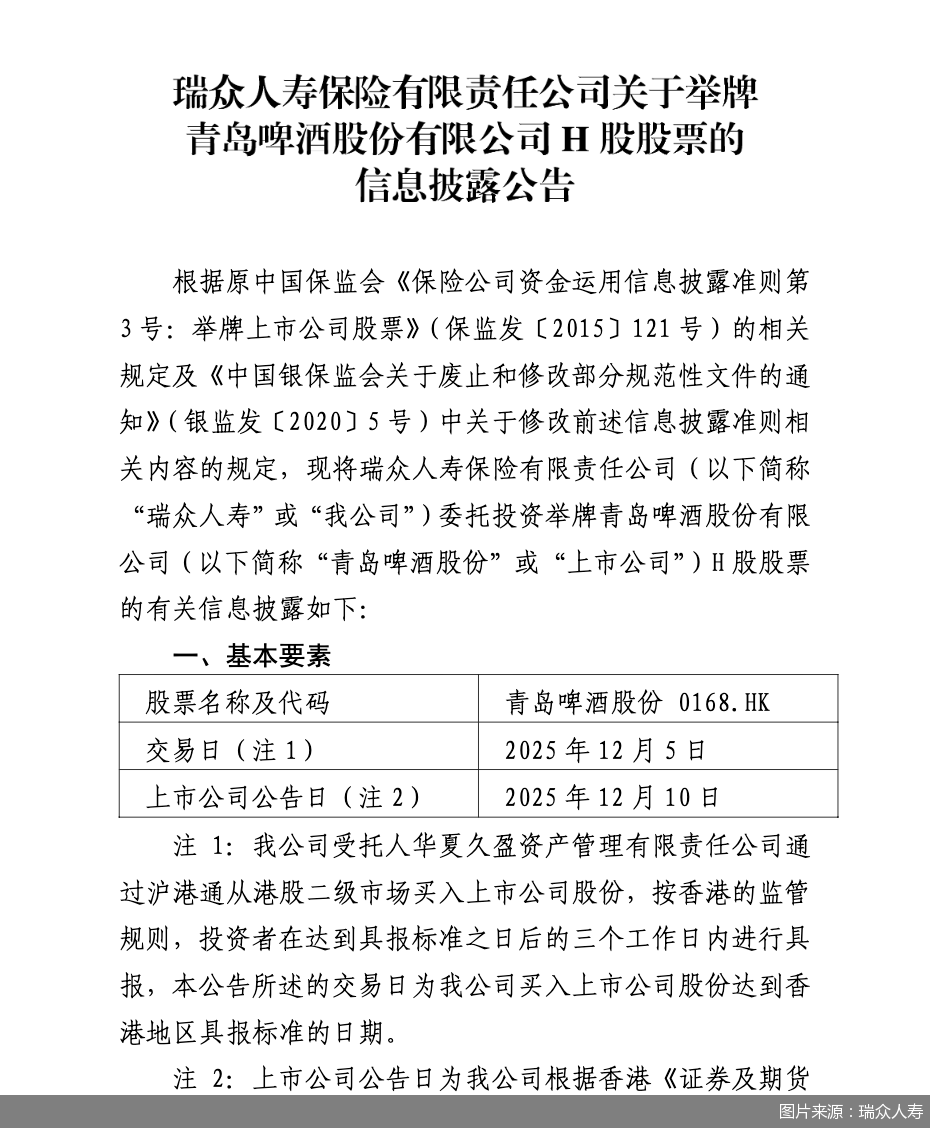
瑞众人寿举牌青岛啤酒H股
Bei Jing Shang Bao· 2025-12-12 12:06
Core Insights - 瑞众人寿保险有限责任公司 announced the acquisition of 200,000 shares of Qingdao Beer Co., Ltd. H-shares on December 5, involving a total investment of HKD 10.6414 million [1] - Following this acquisition, the company now holds a total of 32.764 million H-shares of Qingdao Beer, representing 5% of its H-share capital [1] - The book value of the company's holdings in Qingdao Beer H-shares is approximately RMB 1.571 billion, based on the closing price of HKD 52.75 per share on December 5 and the exchange rate on that date [1] Summary by Categories - **Company Acquisition** - 瑞众人寿保险 purchased 200,000 H-shares of Qingdao Beer on December 5 [1] - The total investment for this acquisition was HKD 10.6414 million [1] - **Shareholding Details** - After the acquisition, 瑞众人寿保险 holds 32.764 million H-shares of Qingdao Beer, which is 5% of the total H-share capital [1] - **Financial Valuation** - The book value of the H-shares held by 瑞众人寿保险 is approximately RMB 1.571 billion, calculated using the closing price of HKD 52.75 per share and the exchange rate on December 5 [1]