数据库

Search documents
研判2025!中国关系型数据库行业市场规模、产品数量、竞争格局及未来趋势分析:仍占据市场主流地位,公有云关系型数据库发展迅速[图]
Chan Ye Xin Xi Wang· 2025-08-17 01:02
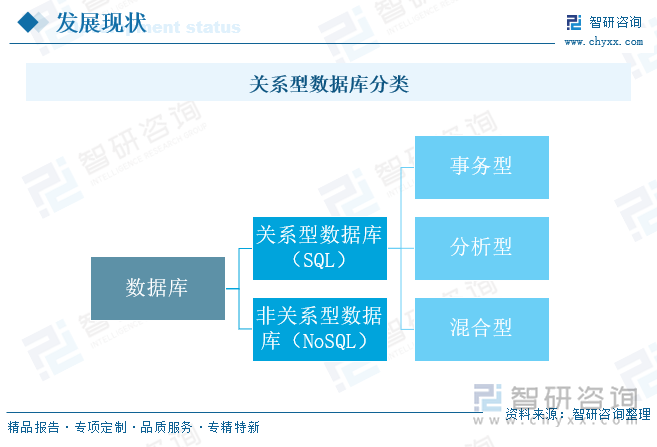
Core Insights - The relational database industry in China is experiencing rapid growth, driven by the "14th Five-Year Plan" which emphasizes digital development and the construction of a digital China [1][8] - The market size of China's relational database industry is projected to reach 29.98 billion yuan (approximately 4.21 billion USD) in 2024, with a year-on-year growth of 12.0% [8][10] - The public cloud has become the primary deployment method for relational databases, with the public cloud relational database market expected to reach 19.51 billion yuan in 2024, accounting for 65.1% of the market share [10][18] Market Overview - The overall database market in China is expected to reach 59.616 billion yuan in 2024, growing by 14% year-on-year [6][8] - The domestic relational database market is characterized by a diverse range of participants, including traditional vendors, startups, cloud providers, and cross-industry players, leading to intense competition [18][19] - The market concentration is increasing, with the top five players in the public cloud relational database market expected to hold nearly 85% of the market share by the second half of 2024 [18][19] Product Landscape - As of June 2025, there are 164 database products in China, with 96 being relational databases, representing 58.5% of the total [12][14] - The global database product landscape shows a predominance of non-relational and hybrid databases, while China maintains a focus on relational databases [12][14] Competitive Landscape - Major players in the public cloud relational database market include Alibaba Cloud and Tencent Cloud, which dominate the market [18][19] - In the on-premises relational database market, local companies like Huawei, Dameng, and Tencent compete with international firms such as Oracle, Microsoft, and SAP [18][19] Technological Trends - The relational database market in China is expected to exceed 75 billion yuan by 2029, driven by software localization, rapid AI application development, and the growth of the digital economy [21] - Key technological trends include the deepening of cloud-native databases and the integration of vector engines and multimodal data management [21]



国有六大行数据库调研:Oracle仅存少量业务,华为云GaussDB占比居首
Guan Cha Zhe Wang· 2025-08-15 02:17
Core Insights - The article highlights the rising adoption of domestic databases in China's financial sector, particularly the Huawei Cloud GaussDB database, which has shown superior performance compared to Oracle and other foreign competitors [1][3] - GaussDB is positioned as a fully autonomous, distributed cloud database that supports critical financial operations, demonstrating significant advancements in both technology maturity and security [1][2] Group 1: GaussDB Adoption and Performance - A survey of China's six major state-owned banks reveals that only a small number of business systems currently utilize Oracle databases, while GaussDB is the most widely adopted domestic database [1] - GaussDB has been successfully implemented in key business scenarios across finance, government, and energy sectors, with notable examples including Postal Savings Bank supporting 20 billion transactions daily and ICBC reducing recovery time from 15-30 minutes to 2 minutes [3] Group 2: Technical Advantages of GaussDB - GaussDB features a three-layer pooled transparent multi-write architecture that decouples compute, storage, and caching resources, enhancing performance and resource utilization [2] - The database includes a unique soft-hard collaborative data security protection scheme, achieving the highest security certification (CC EAL4+) [2] - Future enhancements will focus on performance and resource utilization improvements, enabling rapid fault detection and recovery [2] Group 3: Industry Impact and Standards - Huawei Cloud is leading efforts to establish national standards for cloud-native relational database management systems, collaborating with over 20 industry leaders to define core features [3] - The rapid development of domestic software, particularly in cloud computing and databases, is expected to transform China's information industry landscape and promote national technological independence [3]
八成武汉毕业生选择去民企 硬核科技企业最有吸引力
Chang Jiang Ri Bao· 2025-08-10 00:33
Core Insights - The article highlights the shift in young professionals' career choices in Wuhan, moving from state-owned enterprises to dynamic private companies, particularly in the tech sector [2][11]. Group 1: Growth of Private Enterprises - Wuhan's private economy has seen significant growth, with the total number of private enterprises reaching 1.159 million, and 182,000 new private enterprises established in the first half of the year [4][16]. - In 2025, 162,500 new graduates chose to work in private enterprises, with 80% of graduates opting for this path [3]. Group 2: Emerging Industries - Private enterprises in Wuhan are focusing on new sectors such as artificial intelligence and low-altitude economy, becoming the main battleground for innovation [5]. - Among the 44 unicorn companies in the city, 84% are private enterprises, and 79.3% of the 384 specialized and innovative "little giant" companies are also private [6][7]. Group 3: Young Talent Attraction - The article describes various successful tech startups in Wuhan that are attracting young talent, such as Hezhima Intelligent Technology and Dingcheng Technology, which have developed advanced products and secured investments from major companies [8]. - Young entrepreneurs, including those under 30, are leading innovative companies in Wuhan, showcasing a trend of youthful leadership in the private sector [9][10]. Group 4: Government Support - The local government has implemented policies to support the development of small and medium-sized enterprises and improve the business environment, which has positively impacted the growth of the private economy [12][15]. - The establishment of government industry funds with an annual budget of over 4 billion yuan aims to nurture technology-driven startups in Wuhan [15].
被踢出中国市场!垄断中国30年,却扬言绝不培养中国员工
Sou Hu Cai Jing· 2025-08-09 01:45
Core Perspective - Oracle's decline in the Chinese market illustrates the risks of complacency and neglecting local talent development after a long period of market dominance [2][28]. Group 1: Market Entry and Dominance - Oracle entered the Chinese market in the late 1980s, capitalizing on the demand for advanced information technology during China's reform and opening-up period [4]. - The company quickly established a monopoly in the database market, with enterprises paying substantial software and service fees, sometimes reaching hundreds of millions annually [5][8]. Group 2: Business Practices and Employee Treatment - Over time, Oracle's business practices became increasingly aggressive, with exorbitant pricing and mandatory maintenance fees, leading to strained relationships with clients like China Unicom [7][10]. - The company's founder publicly stated a refusal to train Chinese employees, creating a culture where local staff were relegated to menial tasks, while key technical roles remained occupied by foreign employees [12][14]. Group 3: Rise of Domestic Competitors - Discontent among Chinese enterprises led to a surge in domestic database development, with Alibaba, Huawei, and Tencent launching competitive products that outperformed Oracle's offerings at lower prices [16][19][21]. - The Chinese government's push for information technology localization and data security further accelerated the adoption of domestic databases, as critical sectors sought to reduce reliance on foreign technology [23][24]. Group 4: Oracle's Decline - Oracle failed to adapt to market changes, clinging to outdated technology while competitors embraced cloud computing and big data [26]. - A significant layoff in 2019, where over 900 employees were let go, signaled Oracle's retreat from the Chinese market, further confirmed by the removal of its database from key systems by major clients like Taobao [26][28].


国产数据库在金融领域应用逐渐深入
Jin Rong Shi Bao· 2025-08-08 07:55
Core Insights - The distributed transaction database market in China's financial sector is accelerating, with a market size of approximately $220 million in 2023, reflecting a year-on-year growth of 12.1% [1] - Domestic databases are gradually being adopted in the financial industry, moving away from reliance on foreign technologies due to increased emphasis on data security and self-controllable technologies [1][4] - The market is characterized by a "headstrong" trend, with the top five vendors holding nearly 90% of the market share, approximately 86.9% [3] Market Dynamics - The digital transformation in the financial sector is driven by factors such as the growth of banking business scale, rapid product innovation, and the need for high system availability [2] - OceanBase leads the market with a 23.2% share in the local deployment of distributed transaction databases in the financial sector, generating revenue of 270 million yuan [3] - The banking sub-market is estimated to be around $150 million in 2023, primarily corresponding to internal trading systems [3] Challenges and Opportunities - Domestic database vendors are still in a catch-up phase, primarily used in peripheral areas of financial institutions, while core systems are still dominated by foreign vendors like Oracle [4] - Financial databases require high concurrency, low latency, high availability, and strong disaster recovery capabilities, which pose significant challenges for domestic vendors [6] - The transition from peripheral to core systems is often gradual, with financial institutions adopting a risk-controlled approach [5] Future Outlook - The year 2024 is anticipated to mark a large-scale deployment phase for distributed databases, necessitating continuous optimization of product performance and enhancement of core capabilities by vendors [7] - Collaboration between financial institutions and vendors is crucial for successful digital transformation, as it cannot be achieved independently by either party [8] - There is optimism regarding the potential of domestic databases to meet the high-performance and reliability demands of the financial sector as technology and experience improve over time [8]
OceanBase: 以分布式数据库支持金融机构核心系统升级 助力高质量发展
Jin Rong Shi Bao· 2025-08-08 07:55
Group 1 - The central financial work conference emphasizes the importance of technology finance, green finance, inclusive finance, pension finance, and digital finance for the high-quality development of the financial industry, advocating for innovation and sustainable development in financial services [2] - The digital transformation of financial institutions is no longer optional but a necessity driven by regulatory policies and the digital economy, with a significant increase in data volume from TB to PB and ZB levels [3][4] - The shift from centralized databases to distributed databases is a major trend in the industry, as traditional centralized systems struggle to handle massive data and high concurrency demands [4][6] Group 2 - OceanBase, a distributed database, has been widely adopted by major financial institutions for core system upgrades, demonstrating significant improvements in performance, reliability, and cost-effectiveness [8][11] - The successful upgrade of core systems, such as the Industrial and Commercial Bank of China and China Pacific Insurance, showcases the feasibility and benefits of transitioning to distributed database architectures [8][12] - OceanBase's self-developed technology ensures independent control over core code, enhancing security and performance while meeting the high demands of the financial sector [7][11] Group 3 - The upgrade process for core systems involves a structured approach, including demand analysis, technical selection, application adaptation, and continuous monitoring, which helps ensure a smooth transition [9] - Financial institutions like China Pacific Insurance and Bank of Communications are actively pursuing distributed upgrades to enhance operational stability and meet modern business needs [12][13] - OceanBase has achieved significant market share in the financial sector, being the leading independent database vendor and demonstrating its capability to support large-scale financial operations [11]
如何进一步促进“技术—资本—产业”的良性循环?产学研各界人士共话科创板新征程
Zheng Quan Shi Bao Wang· 2025-08-04 08:56
Core Insights - The establishment of the Sci-Tech Innovation Board (STAR Market) has significantly supported technological innovation and industrial upgrading in China since its launch on July 22, 2019 [1] - The board has facilitated a deep integration of capital and innovation, enabling companies to overcome technological bottlenecks and achieve substantial growth in research and development [1][2] - The STAR Market has created a favorable ecosystem for technology-driven enterprises, enhancing the flow and integration of innovation elements such as technology, capital, and talent [3] Company Highlights - Zhongfu Shenying has established the world's largest single high-performance carbon fiber production base, achieving mass production of T1100-grade ultra-high-strength carbon fiber [1] - Dameng Data, founded by Feng Yucai, developed China's first database management system, benefiting from the STAR Market as a capital and market accelerator [2] - Kaisa Biotech has seen its core R&D personnel deeply engaged with the company's growth, leading to continuous product optimization and expansion into new application areas [2] Industry Developments - The STAR Market has implemented systemic institutional innovations across various aspects such as issuance, listing, trading, and mergers, creating a robust ecosystem for the "technology-industry-capital" cycle [3] - The board has fostered a collaborative environment that promotes the integration of innovation chains, industrial chains, capital chains, and talent chains, driving the industry towards collective advancement [3]
超级赛道再迎利好,融资客加仓叠加筹码集中
Sou Hu Cai Jing· 2025-08-04 06:34
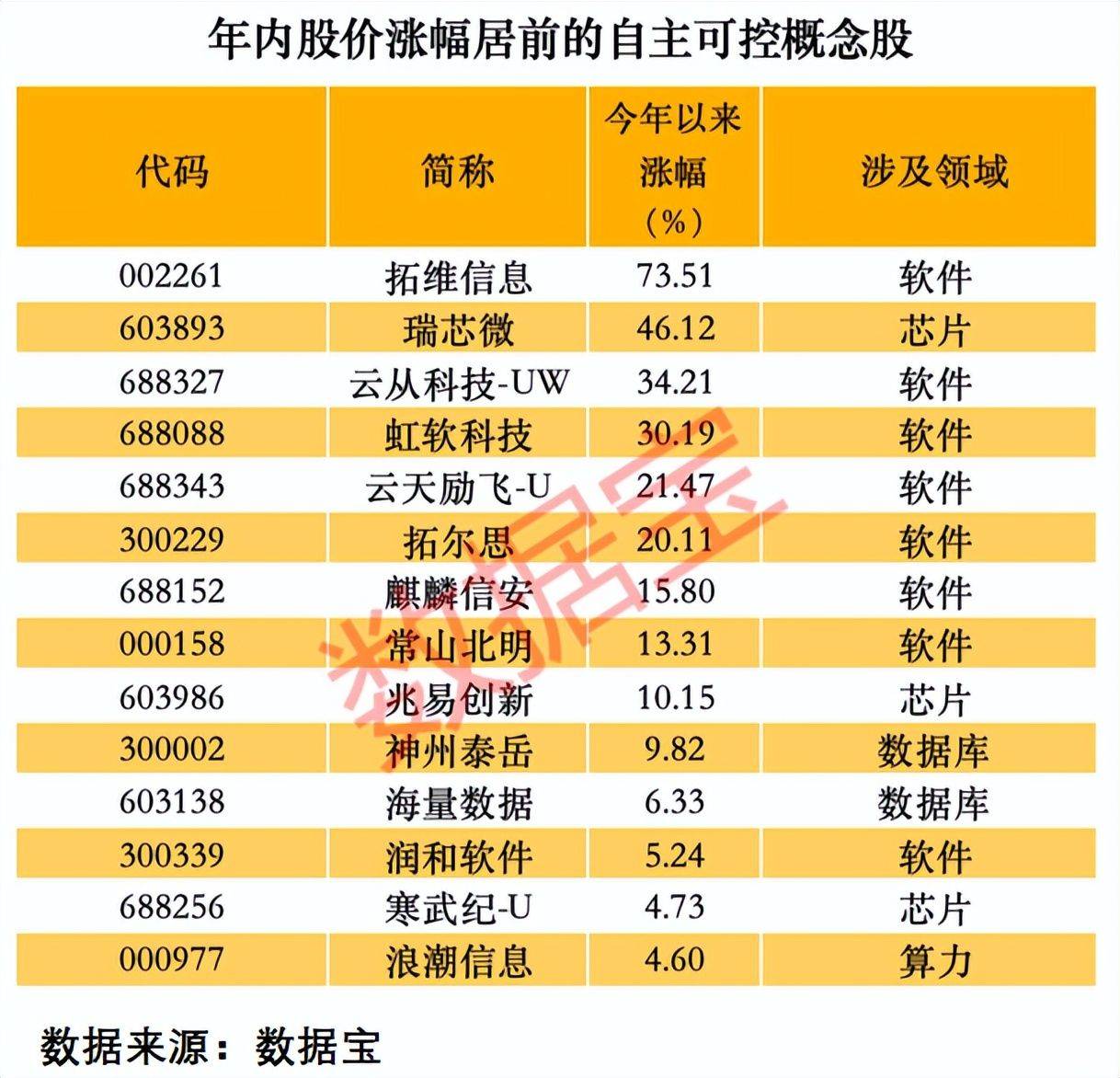
Group 1: Industry Overview - The artificial intelligence industry in China is projected to grow from 18 billion yuan in 2017 to 600 billion yuan by 2024, and is expected to exceed 1 trillion yuan by 2030 [1] - 40 self-controlled concept stocks have seen an average increase of over 8% this year, with notable performances from companies like 瑞芯微 (190% profit growth) and 云从科技 (34% stock price increase) [1][3] Group 2: Market Dynamics - The perception of market news can vary significantly based on the perspective of different stakeholders, often leading to misleading interpretations for retail investors [5] - Historical patterns indicate that institutional investors often act before major news is released, suggesting a strategic approach to stock trading [8][15] Group 3: Institutional Behavior - The analysis of "institutional inventory" data is crucial, as it reflects the level of institutional participation in stock trading, indicating potential bullish sentiment [7][16] - Active institutional inventory can signal that large funds are positioning themselves for future gains, even if stock prices do not immediately reflect this [15] Group 4: Investment Strategy - Investors are encouraged to look beyond surface-level data and consider which companies possess core technologies versus those merely riding trends [16] - Establishing a quantitative analysis framework and focusing on key indicators like "institutional inventory" can provide deeper insights into market movements [19]


敢投创新的种子、营造成长的生态,5只行业第一股出自武汉
Chang Jiang Ri Bao· 2025-08-01 12:06
Core Viewpoint - The emergence of "first stocks" in various sectors from Wuhan highlights the city's commitment to fostering innovation and creating a supportive ecosystem for technology-driven companies [5][12]. Group 1: First Stocks from Wuhan - The first domestic database stock, Dameng Data, was listed in June 2024 [1][17]. - The first esports stock, Xingjing Weiw, was listed in July 2024 on NASDAQ [2][19][20]. - The first interactive AI stock, Voicecom, was listed in July 2024 on the Hong Kong Stock Exchange [3][22][23]. - The first intelligent driving chip stock, Hezhima Intelligent, was listed in August 2024 on the Hong Kong Stock Exchange [4][26][27]. - The first intelligent time-series data stock, Yuanguang Technology, was listed in June 2024 [5]. Group 2: Investment Ecosystem in Wuhan - The government of Wuhan has established funds to support early-stage technology companies, focusing on "early investment, small investment, hard technology" [8]. - The Wuhan government aims to create a long-term investment environment, with funds having a maximum duration of 15 years to support startups through their development phases [10][12]. - The city plans to establish over 50 specialized technology financial institutions and increase the scale of equity investment funds to over 300 billion yuan by 2027 [13]. Group 3: Challenges and Support for Startups - Startups face significant challenges, including funding, talent, location, and market access, often referred to as the "valley of death" [10]. - The Wuhan government is working to improve the investment ecosystem by allowing for a certain level of loss in seed and angel funds, thus providing a safety net for investors [11]. - The focus is on nurturing small enterprises to grow into larger, sustainable businesses through patient capital and supportive policies [12][13].

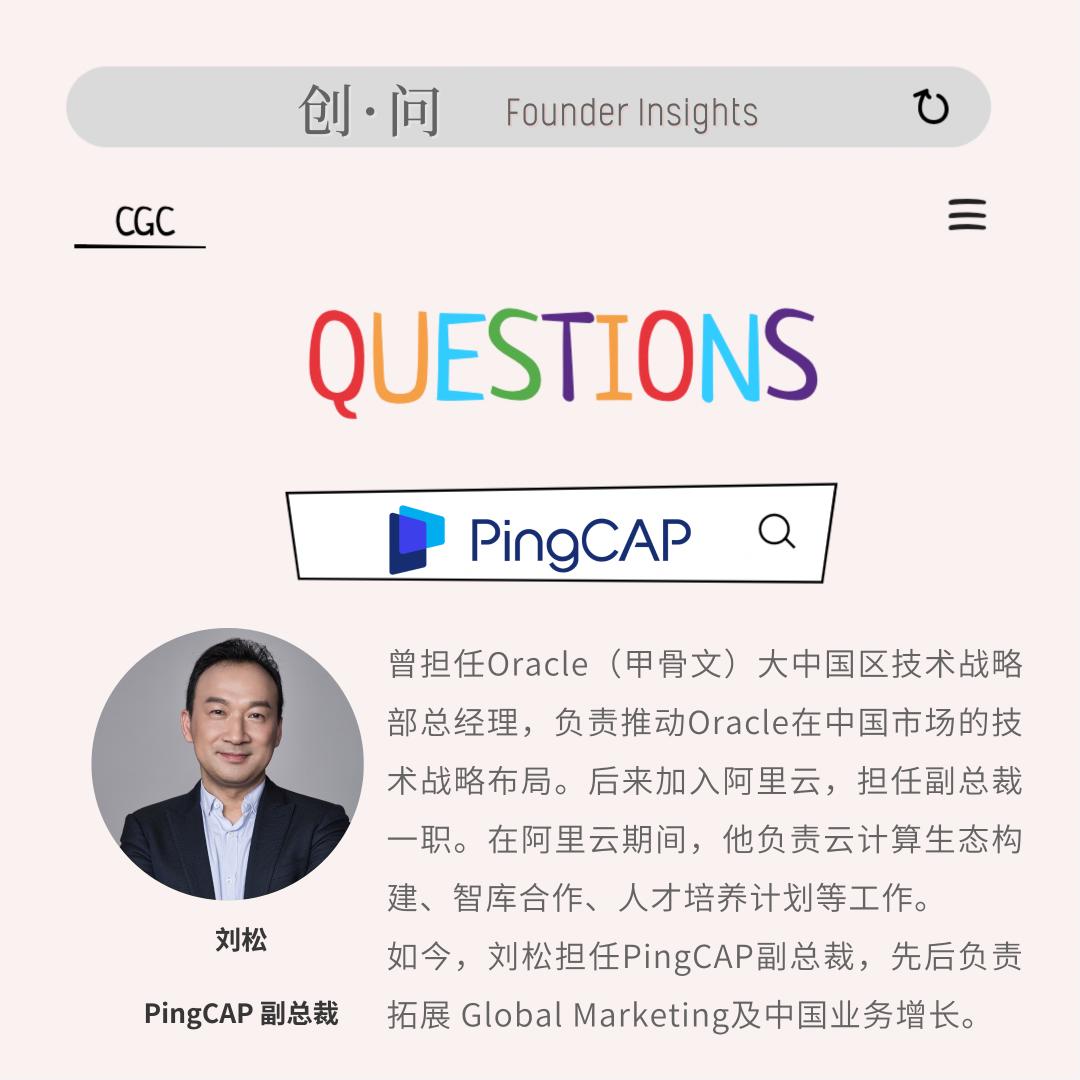
创·问|PingCAP 刘松:AI 即将重塑数据库,未来为 Agent 而生
3 6 Ke· 2025-07-31 08:31
Core Insights - PingCAP, founded in 2015, is a leading open-source distributed database provider, focusing on delivering stable, efficient, and secure data services to global enterprises, thereby facilitating digital transformation [4][5][29] - The company has served over 4,000 enterprises across more than 45 countries, with its distributed database product TiDB gaining significant traction on GitHub, amassing over 37,000 stars [4][5] - AI is viewed as a transformative force in the database industry, potentially reshaping vendor valuations and competitive dynamics [4][12][40] Group 1: Company Overview - PingCAP's core offerings include open-source distributed database products, solutions, consulting, technical support, and training services [4][5] - The company emphasizes a culture of openness and democratic decision-making, attracting talent from various backgrounds, including seasoned professionals from Oracle and Alibaba [4][5] - The company aims to establish itself as a globally respected foundational software company, leveraging its experience in the highly competitive Chinese market [5][29] Group 2: AI Integration and Industry Trends - AI is perceived as a dual-edged sword, possessing disruptive capabilities while also requiring practical applications and user engagement to realize its full potential [8][9] - The integration of AI with databases is expected to fundamentally change the role of databases, shifting from serving data engineers to supporting intelligent agents [12][22] - The emergence of AI-driven agents necessitates advancements in database technology to enhance interaction and data retrieval accuracy [12][22] Group 3: Market Dynamics and Competition - The database market in China has seen a significant contraction, with a reduction of 64 companies in the past year, intensifying competition among remaining players [5][32] - PingCAP differentiates itself by focusing on product strength and ecosystem development rather than merely being a substitute for traditional database solutions [31][32] - The company has successfully transitioned clients from legacy systems like Oracle and MySQL to its TiDB platform, highlighting its competitive advantages in scalability and mixed-load processing [28][31] Group 4: Globalization and Localization Strategy - PingCAP's global expansion strategy is rooted in its open-source model and cloud capabilities, which have proven effective in building customer trust [35][36] - The company prioritizes local talent and cultural adaptation in its international operations, ensuring effective communication and service delivery [36][38] - The firm aims to leverage its experience in the demanding Chinese market to enhance its offerings and establish a strong presence in international markets [29][35] Group 5: Future Outlook and Technological Evolution - The future of databases is expected to be shaped by the convergence of AI, cloud computing, and open-source technologies, creating new opportunities for innovation [40][42] - Key technological advancements anticipated include the rise of serverless architectures and the integration of AI with database functionalities [42] - The evolving landscape will require databases to effectively support intelligent agents, enhancing their role as knowledge repositories and decision-making tools [22][40]