新零售

Search documents
21书评丨打造“软价值”,不断扩大需求
2 1 Shi Ji Jing Ji Bao Dao· 2025-09-30 14:41
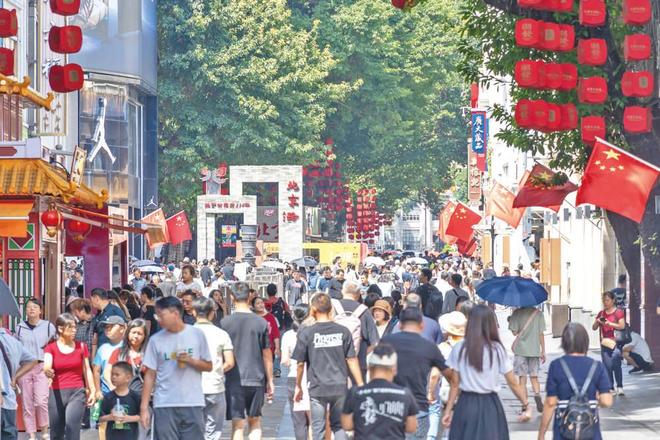
Core Insights - The book "Creating New Demand" by economists Teng Tai and Zhang Haibing emphasizes the importance of creating demand through understanding consumer behavior and societal trends, shifting from basic material needs to high-quality spiritual needs [2][3] Group 1: Consumer Behavior and Trends - Consumers are increasingly focused on the experiential and spiritual aspects of consumption, valuing meaning, aesthetics, fashion, and cultural significance alongside traditional factors like quality and price [2][3] - The transition from traditional retail to new retail emphasizes not only product availability and pricing but also factors like fast delivery, convenience, interactivity, and social features [2][3] Group 2: Soft Value Creation - The book introduces the concept of "soft value," which encompasses non-material aspects such as research and development, design, creativity, branding, and user experience, which are crucial for meeting spiritual needs [3][4] - Soft value is distinct from soft power; it is an economic concept focused on the intrinsic value of products and services, while soft power is a political concept [3] Group 3: Enhancing Consumer Experience - Improving customer experience is identified as a key factor in creating new demand, with each purchase representing a lifestyle choice [4][5] - The "soft value creation equation" suggests that soft value can lead to exponential economic value, highlighting the importance of effective innovation, traffic management, experience enhancement, business model innovation, and organizational change [4] Group 4: Practical Applications - The book discusses how sectors like agriculture, manufacturing, and services can benefit from soft value creation, which often involves indirect paths to profitability, such as prioritizing public value before monetization [4] - Successful tourism and cultural experiences are linked to a focus on enhancing visitor experiences, indicating that traditional revenue models need to evolve to meet consumer expectations [5]

扬州持续强化服务业招商引资
Xin Hua Ri Bao· 2025-09-29 21:27
Core Insights - Yangzhou has actively promoted service industry investment attraction this year, achieving significant results through various events and initiatives Group 1: Investment Attraction Activities - Yangzhou organized multiple promotional events including Shanghai industry investment, Slim West Lake modern service industry, and digital economy initiatives, leading to notable outcomes [1] - A series of investment attraction activities were conducted, resulting in 71 projects with over 1 billion yuan signed, totaling an investment of 16.1 billion yuan, with 37 projects in the service sector [2] Group 2: Project Progress and Indicators - From January to August, Yangzhou signed 274 major service industry projects worth over 1 billion yuan, with 166 new projects started and 62 completed [3] - Among the 18 major projects signed worth over 1 billion yuan, 11 have already commenced construction [3] Group 3: Provincial Project Development - Yangzhou has completed 84.5% of the annual investment plan for 55 key provincial service industry projects, totaling 15.64 billion yuan [4] - Several projects, including those in digital economy and health services, have exceeded their annual investment targets, supporting the transformation and upgrading of Yangzhou's service industry [4] Group 4: Future Focus - Yangzhou aims to continue focusing on key areas in the service industry to attract more high-quality projects and increase investment [4]

俺来也启动C轮融资,全球招募财务顾问加速上市进程
Sou Hu Cai Jing· 2025-09-23 09:08
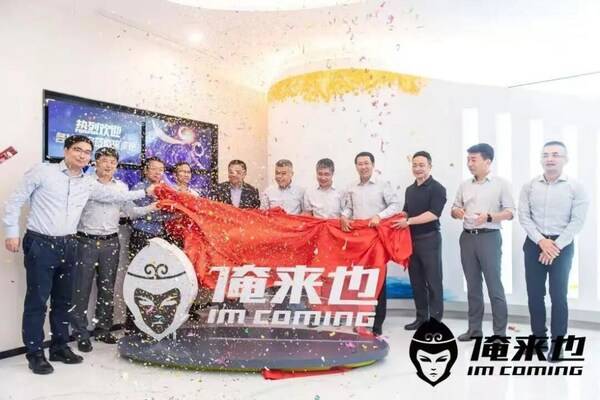
Financing Background and Shareholder Advantages - The company, Ainailei (Shanghai) Network Technology Co., Ltd., has officially launched its C round financing, aiming to raise 300 million RMB [3] - Previous funding included a successful Pre-C round in April 2025, securing support from notable investors such as Mojian Capital and Tongce Capital, reflecting strong market recognition of the company's model and the digital economy in campuses [1][3] - Historical investors include well-known institutions like Semir Group and Sullivan, providing strategic collaboration and ecosystem empowerment [1] C Round Financing and Shareholder Structure Optimization - The C round financing (Pre-IPO round) aims to raise 300 million RMB, primarily for consolidating the company's leading position in digital services for universities and expanding its digital service ecosystem [3] - The company plans to optimize its existing shareholder structure during this financing round to enhance governance efficiency and capital structure health [3] Financial Advisor Recruitment Requirements and Priorities - The company seeks financial advisors with expertise in AI, big data, and smart logistics to enhance its digital service capabilities [3] - Advisors should have experience in expanding business models from universities to various community and enterprise scenarios [3] - The recruitment process emphasizes the need for advisors with strong connections to top investment institutions and experience in IPO operations [4][7] Recruitment Process and Selection Mechanism - Ainailei will follow a bidding process to select a financial advisor, ensuring fairness and transparency [5] - The selection process includes submission of proposals, preliminary screening, live presentations, and evaluation by an expert committee [7] - The recruitment timeline includes a submission deadline of October 10, 2025, with results announced by October 30, 2025 [7] Company Overview - Ainailei is a leading digital campus service platform established in November 2014, covering various student life scenarios across over 500 universities [6] - The company operates six major business segments, including local life services, campus cultural media, digital supply chain platforms, and smart dining management systems [6][8] - Ainailei aims to create a comprehensive digital marketing ecosystem that connects students, university administrators, and brand partners, enhancing interaction and value [8]
中信证券杨清朴:新零售行业生态重塑 把握结构性机遇
Zhong Guo Zheng Quan Bao· 2025-09-18 00:11
Core Viewpoint - The new retail industry is undergoing a multi-dimensional transformation driven by consumer demand, technological innovation, and policy guidance, creating structural opportunities within the sector [1][2]. Industry Dynamics - The new retail sector is showing strong growth, with offline and online integration becoming the core driver of performance. The rapid expansion of offline formats like IP derivatives and hard discount retail, along with the notable growth of instant retail, is propelling the retail industry forward [2]. - Three forces are driving this trend: the evolution of consumer emotional needs, technological advancements, and innovative business models. These factors enable new retail to better match current consumer demands compared to traditional retail [2]. - Cross-border new retail is reshaping the industry landscape by integrating domestic supply chains into the global market, enhancing the efficiency of Chinese manufacturing in reaching overseas consumers [2]. Competitive Landscape - The new retail industry has developed a differentiated competitive landscape with three main types of players: 1. Traditional retail companies, which leverage solid physical networks and mature supply chains, focusing on digital transformation and supply chain optimization [3]. 2. Internet giants, which utilize technological barriers and vast data resources to achieve low-cost customer acquisition and enhance operational efficiency through big data and AI [3]. 3. Emerging brands that capture niche consumer demands with agile business models and strong IP operations, driving innovation within the industry [3]. Market Opportunities - AI technology is increasingly penetrating various industries, with its impact on new retail focusing on cost reduction and efficiency enhancement. AI applications, such as AI customer service, are becoming industry standards, significantly improving operational efficiency [4]. - The combination of green consumption and new retail is creating new opportunities, particularly in the "second-hand economy," driven by policies encouraging recycling and trade-in programs. Companies need to build integrated online and offline networks for second-hand transactions and leverage big data for efficient matching of supply and demand [5]. - The lower-tier markets and county economies represent another key growth point for new retail, with a rising demand for quality and cost-effectiveness. Retail formats that emphasize value and emotional engagement are well-positioned to meet these needs [5]. Future Outlook - Companies are encouraged to enhance product quality, optimize after-sales service, and improve supply-demand matching precision to attract capital and shift valuation logic from short-term performance to long-term brand value [6]. Structural Investment Opportunities - The new retail sector exhibits significant differences in value across various sub-sectors. Offline discount retail and instant retail align well with key market trends, offering a favorable balance between growth potential and valuation safety [7]. - Investors should focus on core indicators rather than single dimensions when evaluating companies, considering financial health and transformation effectiveness as critical factors [7]. - Different types of investors should adopt tailored strategies: individual investors should prioritize mature products and stable cash flows, while institutional investors can explore innovative business models with low penetration rates or undervalued internet platforms [8].

中信证券杨清朴: 新零售行业生态重塑 把握结构性机遇
Zhong Guo Zheng Quan Bao· 2025-09-17 20:30
Core Viewpoint - The new retail industry is undergoing a multi-dimensional transformation driven by consumer demand, technological innovation, and policy guidance, creating structural opportunities within the sector [1] Group 1: Industry Dynamics - The new retail sector is showing strong growth, with offline and online integration becoming the core driver of performance [2] - The rapid development of cross-border new retail is reshaping the overall industry landscape, pushing domestic supply chains to further integrate into the global market [2] - The industry has formed a differentiated competitive landscape with three main types of players: traditional retailers, internet giants, and emerging brands, each with unique core competencies [3] Group 2: Technological Impact - AI technology is gradually penetrating various industries, with its core benefits for new retail being cost reduction and efficiency enhancement [4] - AI applications, such as AI customer service, are becoming industry standards, significantly improving operational efficiency and reducing costs [4] Group 3: Market Opportunities - The combination of green consumption and new retail is creating new opportunities, particularly through the "second-hand economy" [5] - The lower-tier markets and county economies represent another key growth point for new retail, with increasing demand for quality upgrades and cost-effectiveness [5][6] Group 4: Investment Insights - Different segments within the new retail sector exhibit significant differences in cost-performance ratios, with offline discount retail and instant retail being highlighted as particularly attractive investment opportunities [7] - Investors are advised to focus on core indicators of companies rather than relying on a single dimension for evaluation, emphasizing the importance of stable cash flow and the effectiveness of digital transformation [7][8]

新零售行业生态重塑 把握结构性机遇
Zhong Guo Zheng Quan Bao· 2025-09-17 20:19
Core Viewpoint - The new retail industry is undergoing a multi-dimensional transformation driven by consumer demand, technological innovation, and policy guidance, creating structural opportunities within the sector [1] Growth Momentum Upgrade - The new retail sector is showing strong development vitality, with innovative business models that integrate offline and online channels becoming the core driver of performance growth [1] - The growth of offline formats like IP derivatives and hard discount retail, along with the rapid expansion of the online-offline integrated instant retail market, is contributing to a robust retail industry [1] - Three forces are driving this trend: the evolution of consumer emotional needs, technological upgrades facilitating digital transformation, and business model innovations driving supply chain improvements [1] Market Restructuring - The rapid development of cross-border new retail is reshaping the overall industry landscape, pushing domestic supply chains further into the global market [2] - The new retail industry has formed a differentiated competitive landscape with three types of players: traditional retail enterprises, internet giants, and emerging brands, each with distinct core competencies [2] - Traditional retailers focus on optimizing their physical networks and supply chains, internet giants leverage technology and data for low-cost customer acquisition, while emerging brands capture niche consumer demands with agile business models [2] New Market Spaces - The combination of green consumption and new retail is creating new opportunities, with the "second-hand economy" becoming a focal point [3] - The second-hand market is thriving, driven by policies encouraging recycling and the younger generation's trend towards second-hand fashion [3] - The underdeveloped markets and county economies represent another key growth point for new retail, with a focus on differentiated expansion strategies [3] Future Outlook - Companies need to enhance product quality, optimize after-sales service, and improve supply-demand matching precision to attract capital [4] - The new retail sector shows significant differences in value across various sub-sectors, with offline discount retail and instant retail being highlighted as particularly attractive investment opportunities [4] Structural Opportunities - Investors should focus on core indicators of companies rather than relying on single-dimensional assessments, as the retail sector transitions from a recovery phase to one of structural opportunities [5] - Key considerations include the financial health of companies and the effectiveness of their transformation efforts, such as the return on investment in new business areas [5] Differentiated Investment Strategies - Different types of investors should adopt tailored strategies based on their characteristics, with individual investors focusing on mature products and stable cash flow [6] - Institutional investors can target innovative business models with low market penetration or internet platform companies with low valuation levels [6]
推动城市一刻钟便民生活圈建设扩围升级 重点聚焦服务“一老一小”
Zhong Guo Zheng Quan Bao· 2025-09-16 23:37
Core Insights - The article discusses the expansion and upgrade of the "15-Minute Convenience Living Circle" in urban areas, focusing on services for the elderly and children, and extending this model to eligible county towns [1][4]. Group 1: Development and Impact - The "15-Minute Convenience Living Circle" aims to meet the daily consumption needs of different age groups and adapt to demographic changes, serving as a crucial platform for community consumption [3]. - As of the end of 2024, 5,188 convenience living circles have been established across 210 pilot areas, serving 118 million community residents and creating 7.324 million jobs, reflecting a year-on-year growth of 44.9% [2]. Group 2: Policy Support - Continuous policy support has been provided for the construction of the convenience living circles, with a three-year action plan (2023-2025) aiming for nationwide implementation in eligible cities by 2025 [4]. - Recent government initiatives have emphasized the integration of community service facilities, including shopping, dining, and maintenance services, to enhance consumer convenience [4]. Group 3: Business Engagement - Companies like Alibaba's Hema are actively engaging in this sector, with their community store model gaining popularity, evidenced by nearly 300 stores opened by the end of August [6]. - The diversity of business models within the convenience living circles is acknowledged, but there is a need for improved support for various service types, especially in older communities [6]. Group 4: Recommendations for Improvement - Experts suggest enhancing policy and institutional innovations to create a more interconnected and comprehensive living circle, focusing on optimizing services for the elderly and children [7]. - Financial support mechanisms are recommended, including subsidies for essential service providers and tax incentives for community businesses, to foster sustainable development [7].
重点聚焦服务“一老一小” 推动城市一刻钟便民生活圈建设扩围升级
Zhong Guo Zheng Quan Bao· 2025-09-16 20:41
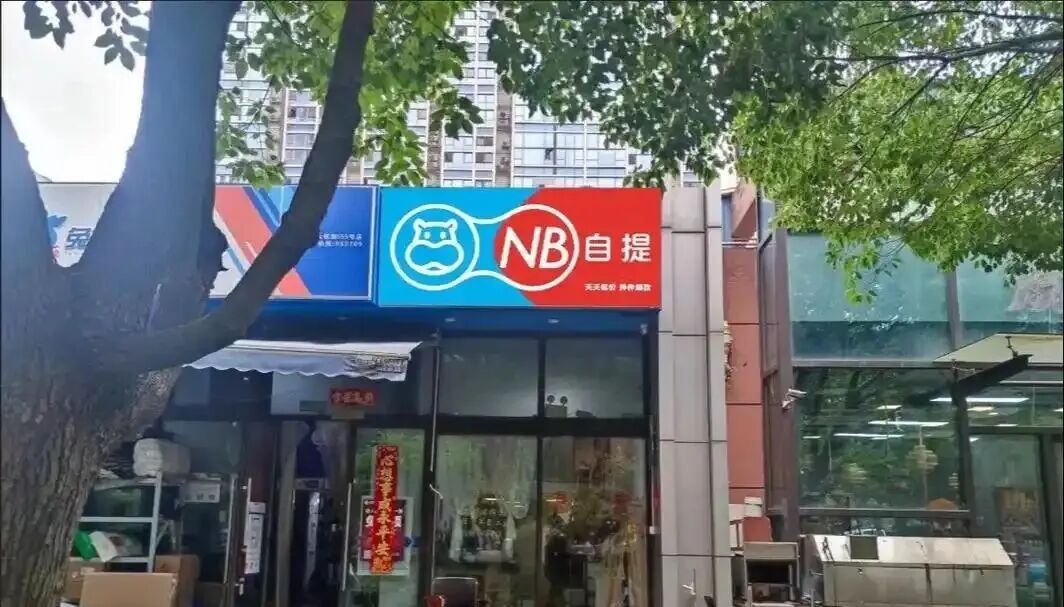
Core Viewpoint - The construction of urban 15-minute convenience living circles is essential for adapting to demographic changes and meeting the daily consumption needs of different age groups, particularly focusing on services for the elderly and children [1][3]. Group 1: Urban Convenience Living Circles - The urban 15-minute convenience living circle aims to serve community residents within a walking distance of approximately 15 minutes, targeting basic and quality consumption needs through a variety of business formats [2]. - As of the end of 2024, 5,188 urban convenience living circles have been established across 210 pilot areas, serving 118 million community residents and creating 7.324 million jobs, reflecting a year-on-year growth of 44.9% [2]. Group 2: Policy Support - The Chinese government has been continuously supporting the construction of urban convenience living circles, with a three-year action plan (2023-2025) aiming for comprehensive implementation in all eligible cities by 2025 [4]. - Recent notifications have identified 30 pilot areas for the second batch of urban convenience living circle initiatives, emphasizing the need for provincial departments to enhance guidance and policy support [4]. Group 3: Business Engagement - Companies like Alibaba's Hema are actively expanding into community retail formats, with nearly 300 stores of the budget community supermarket "Chao He Suan NB" opened in Jiangsu, Zhejiang, and Shanghai regions by the end of August [5]. - The diversity of business formats within urban convenience living circles is acknowledged, but there is a need for improved support measures, particularly in older communities lacking services for the elderly and children [5]. Group 4: Future Development and Recommendations - Experts suggest enhancing policy and institutional innovations to create a more integrated and interconnected urban convenience living circle system, focusing on optimizing services for the elderly and children [6]. - Recommendations include increasing financial support for essential service businesses and community commercial enterprises, as well as developing sustainable financing systems and innovative financial tools like REITs to stimulate investment [6].
盒马的社区自提梦彻底醒了
3 6 Ke· 2025-09-06 06:33
Group 1 - Hema has recently made significant strategic adjustments, including the closure of its neighborhood pickup service and the abandonment of its membership store model, indicating a shift in focus towards core business operations [2][12][16] - The neighborhood pickup service, launched in July 2021, was intended to enhance community retail engagement but has now been deemed unsuccessful, leading to its complete shutdown by October 4 [6][12][16] - Hema's recent performance shows promising growth, with a reported GMV exceeding 75 billion yuan for the fiscal year 2025, marking its first year of adjusted EBITA profitability [13][14] Group 2 - The rise of instant retail and improved delivery efficiencies have diminished the appeal of community pickup models, as consumers increasingly prefer home delivery options [12][17] - Hema's strategic pivot towards its fresh food and discount store formats aims to capitalize on the growing demand in lower-tier markets, particularly in the Yangtze River Delta region [14][16] - The competitive landscape is intensifying, with major players like JD and Meituan entering the discount supermarket sector, posing challenges for Hema's new discount store format [17]
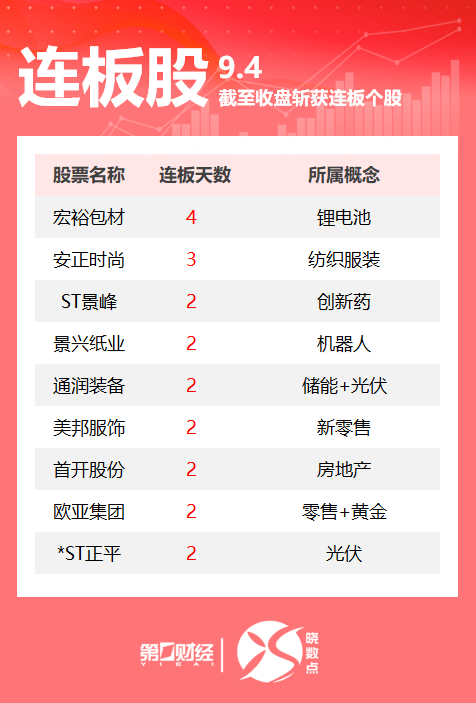
连板股追踪丨A股今日共44只个股涨停 这只锂电池股4连板
Di Yi Cai Jing· 2025-09-04 07:37
Group 1 - The core viewpoint of the article highlights the performance of specific stocks in the A-share market, particularly focusing on the solar and lithium battery sectors [1] - As of September 4, a total of 44 stocks in the A-share market reached their daily limit up, indicating strong investor interest and market momentum [1] - Notable stocks include Hongyu Packaging, which achieved a four-day consecutive limit up in the lithium battery sector, and Tongrun Equipment, which recorded a two-day consecutive limit up in the energy storage and solar sectors [1] Group 2 - The article provides a detailed list of stocks that have achieved consecutive limit ups, categorizing them by their respective sectors [1] - The stocks with consecutive limit ups include: - Hongyu Packaging (4 days, Lithium Battery) - Anzheng Fashion (3 days, Textile and Apparel) - ST Jingfeng (2 days, Innovative Medicine) - Tongrun Equipment (2 days, Energy Storage + Solar) [1] - This performance reflects the growing interest and investment in renewable energy and related technologies within the market [1]