服装零售

Search documents
迅销:Q1业绩超预期,上调全年盈利预测
Sou Hu Cai Jing· 2026-01-08 07:18
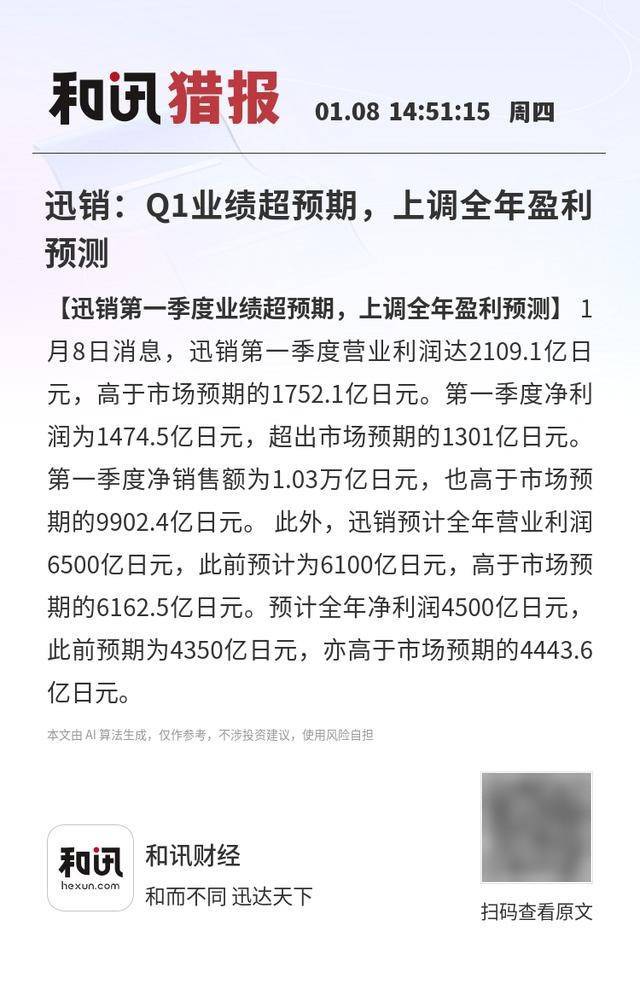
【迅销第一季度业绩超预期,上调全年盈利预测】1月8日消息,迅销第一季度营业利润达2109.1亿日 元,高于市场预期的1752.1亿日元。第一季度净利润为1474.5亿日元,超出市场预期的1301亿日元。第 一季度净销售额为1.03万亿日元,也高于市场预期的9902.4亿日元。此外,迅销预计全年营业利润6500 亿日元,此前预计为6100亿日元,高于市场预期的6162.5亿日元。预计全年净利润4500亿日元,此前预 期为4350亿日元,亦高于市场预期的4443.6亿日元。 本文由 AI 算法生成,仅作参考,不涉投资建议,使用风险自担 【迅销第一季度业绩超预期,上调全年盈利预测】 1 月8日消息,迅销第一季度营业利润达2109.1亿日 元,高于市场预期的1752.1亿日元。第一季度净利 润为1474.5亿日元,超出市场预期的1301亿日元。 第一季度净销售额为1.03万亿日元,也高于市场预 期的9902.4亿日元。 此外,迅销预计全年营业利润 6500亿日元,此前预计为6100亿日元,高于市场预 期的6162.5亿日元。预计全年净利润4500亿日元, 此前预期为4350亿日元,亦高于市场预期的4443.6 亿日元 ...

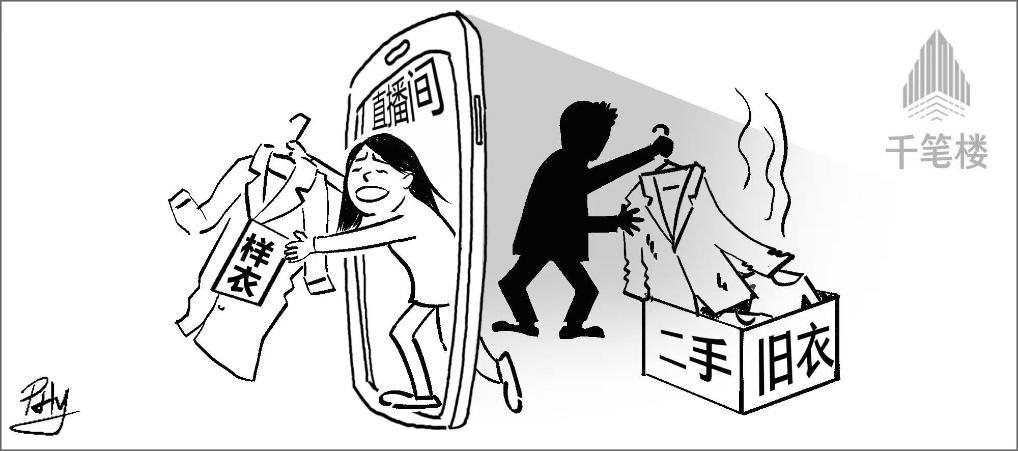
千笔楼丨“旧衣”变“样衣”,可憎可恶!
Xin Hua She· 2026-01-08 02:47
Core Viewpoint - The article highlights the deceptive practices in live-streaming sales, where second-hand clothes are marketed as "new" or "samples," misleading consumers and violating regulations [2][6][9]. Group 1: Deceptive Practices - Many live-streaming hosts promote clothing items labeled as "micro-dirt" or "micro-defects" at extremely low prices, which are often second-hand clothes from questionable sources [2][4]. - Consumers are often misled by attractive marketing tactics, including persuasive language and lighting effects that conceal defects [4][5]. - The practice of selling second-hand clothes as new items is characterized as consumer fraud, with sellers using misleading terms to obscure the true condition of the products [6][8]. Group 2: Impact on Consumers - The target demographic for these sales often includes low-income individuals who are price-sensitive and may lack awareness of their consumer rights [8]. - Many consumers experience disappointment upon receiving items that are damaged or dirty, and face challenges in returning these products due to sellers' refusal to accept returns based on misleading policies [5][6]. Group 3: Regulatory Response - The State Administration for Market Regulation and the National Internet Information Office have issued guidelines to prevent false advertising and the sale of illegal goods in live-streaming [9][11]. - There is a call for increased enforcement and monitoring of the second-hand clothing supply chain to protect consumers and maintain market order [9][11]. - E-commerce platforms are urged to take responsibility for verifying seller qualifications and product information to ensure consumer safety [11].
南极电商涉5亿余元诉讼,还是“卖吊牌”惹的祸
经济观察报· 2026-01-06 09:57
Core Viewpoint - The article discusses the ongoing legal disputes faced by Nanjing E-commerce Co., Ltd. (南极电商) related to its brand licensing model, particularly with its partner Shanghai Xinhe Zhao Enterprise Development Co., Ltd. (上海新和兆), highlighting the decline of its once profitable licensing business and the associated risks [1][2][9]. Group 1: Legal Disputes - Nanjing E-commerce announced two lawsuits involving Shanghai Xinhe Zhao, with one case amounting to 565 million yuan, primarily concerning the unauthorized use of the "Cardi Le Crocodile" brand [2][4]. - The timeline of the lawsuits shows that Shanghai Xinhe Zhao initially filed a claim for approximately 20 million yuan in January 2025, which was later increased to 565 million yuan in December 2025 [4]. - Nanjing E-commerce claims that Shanghai Xinhe Zhao violated the licensing agreement by unauthorized modifications and sublicensing, leading to multiple trademark infringement lawsuits against both companies [5][6]. Group 2: Decline of Licensing Model - The licensing model, once a significant revenue driver for Nanjing E-commerce, has seen a drastic decline, with revenues from brand licensing dropping from 747 million yuan in 2021 to 235 million yuan in 2023, a decrease of over 70% [9]. - In 2020, the licensing business contributed 30% of Nanjing E-commerce's total revenue, but by 2024, the overall revenue fell to 3.358 billion yuan, with a net loss of 237 million yuan [9][10]. - The rapid expansion of authorized dealers from 6,079 in 2020 to 10,311 in 2021 has led to quality control issues, resulting in multiple products being listed as substandard by regulatory authorities [9][10]. Group 3: Strategic Transformation - In response to the challenges posed by the licensing model, Nanjing E-commerce initiated a strategic transformation in 2023, focusing on "fashion licensing + strategic cooperation licensing + self-operated retail" [10]. - The company aims to shift from merely selling licenses to building its own brand, with self-operated products targeting the "affordable alternatives" market [10]. - In the first half of 2025, self-operated revenue reached 52.54 million yuan, a year-on-year increase of 152.01%, although overall sales expenses rose significantly, indicating ongoing financial challenges [11].


华侨青年让新中式服装在澳大利亚“圈粉”
Zhong Guo Xin Wen Wang· 2026-01-06 02:17
Core Insights - A new Chinese-style clothing store named "Jin" has opened in Sydney, Australia, featuring hundreds of designs that blend traditional elements with modern aesthetics [2] - The store was established by overseas Chinese youth Yang Shijia, who recognized the popularity of "new Chinese-style" clothing during her travels in China and aimed to promote it overseas [2] - The first store opened in December 2024, and a second location has already been established near Sydney Town Hall, attracting a diverse customer base [2] Customer Demographics - Approximately 70% of the customers are Chinese, while 30% are local Australians [2] - Local customers show a preference for styles such as fishtail skirts and half-length skirts [2] Cultural Engagement - The store regularly hosts salons and sharing sessions to introduce the fabrics and craftsmanship of traditional Chinese clothing, enhancing the understanding of Chinese fashion culture among customers [2]
足疗店庆典表演结束,服装店遭遇无理由退货
Yang Zi Wan Bao Wang· 2026-01-05 14:17
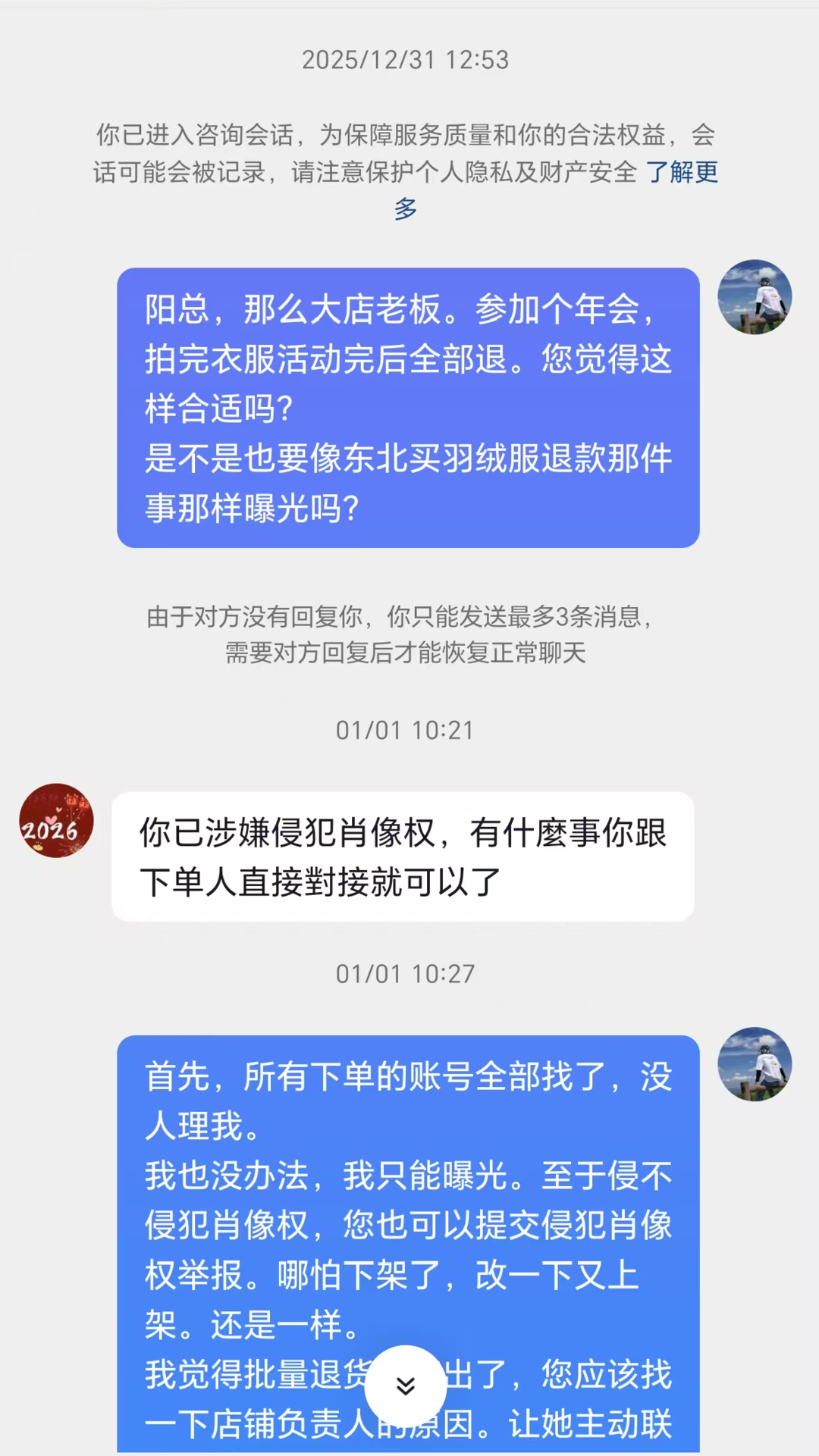
安徽一家服装店近日接到湖南衡东县的20多套衣服订单,没想到数日后遭遇无理由退货,价值超过3000元。服装店老板马先生起初不知道原因,很快刷到 一家足疗公司十周年庆典视频,看到有人身穿从其店所购的服装登台表演。他和下单者及该足疗店交涉,但始终未得到解决,他将此事发到抖音,视频被 对方投诉下架。于是他开始发"沉浸式拆包"视频,受到很多网友的关注。紫牛新闻记者与该公司联系,其工作人员称退货属于个人行为,与其公司无关, 已请律师介入。而马先生表示,他所陈述的都是事实,也会用法律手段维护自己的权益。 这家服装店的老板马先生告诉紫牛新闻记者,2025年12月21日到22日,湖南衡东县有人通过某电商平台陆续在他们的店铺下了20个订单,购买了24套短袖 蛙服套装,包括上衣、下裤和腰带。"我们店铺收到这些订单后,就很快正常发货了。然而从12月28日晚7点到29日上午7点30分左右,陆陆续续收到18个 订单的无理由退货要求,合计22套服装,有两套没有退货。" 18个退货订单全部在衡东县,其中17个为洣水镇,一个为吴集镇。具体地址除了私人住址,还有5个为"缦某"品牌的康养店或轻养馆等,两个为"御某 堂"品牌的会所,天眼查信息显示, ...
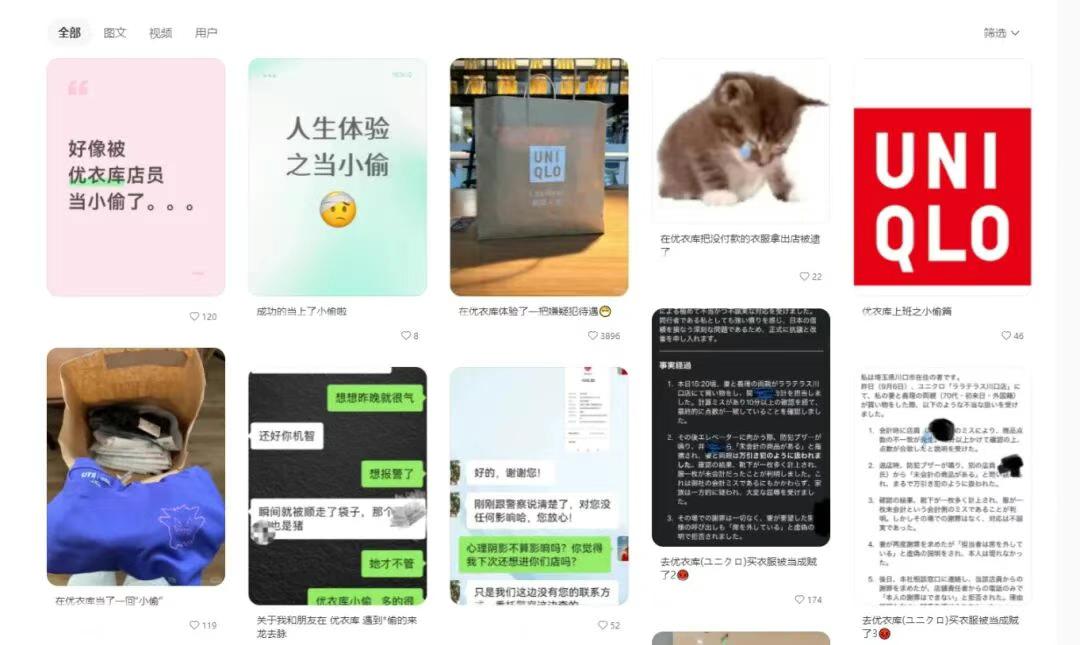
偷拍「疑似小偷」的顾客成了优衣库员工KPI?多少人逛个街吃火锅都在被商家悄悄标记
3 6 Ke· 2026-01-04 01:48
Core Viewpoint - Uniqlo has been reported to use "surveillance" on customers to prevent theft, leading to significant backlash from consumers who feel offended by being treated as potential thieves [1][3][4]. Group 1: Surveillance Practices - Some Uniqlo stores have been found to take photos of "suspicious customers," which are then shared in internal group chats with hundreds of employees [3][4]. - The criteria for being labeled as "suspicious" can be arbitrary, including simply wearing a backpack or a mask while passing by fitting rooms [3][4]. - This practice is not isolated to individual employees but is driven by management directives, with area managers pressuring staff to identify at least one suspicious case daily [4][13]. Group 2: Theft Challenges - Uniqlo's self-service shopping model, while providing a comfortable experience, also creates opportunities for theft, as the store layout allows for easy concealment of stolen items [5][12]. - Common theft methods include cutting RFID tags from clothing in fitting rooms, which has resulted in significant monthly losses for some stores [6][9]. - The increase in theft incidents has led to heightened scrutiny on loss rates, which are now tied to employee performance metrics, further pressuring staff to monitor customers closely [13][26]. Group 3: Customer Experience and Privacy Concerns - The use of surveillance and tagging customers has raised concerns about privacy and the potential for discrimination, as customers may be unfairly categorized based on superficial traits [21][26]. - The trend of labeling customers is not limited to Uniqlo; it reflects a broader industry practice where businesses collect extensive data on consumer behavior, sometimes leading to uncomfortable or invasive profiling [22][27]. - As retailers increasingly rely on technology and data to manage customer interactions, there is a growing anxiety about how this information is used and the implications for personal privacy [27][28].
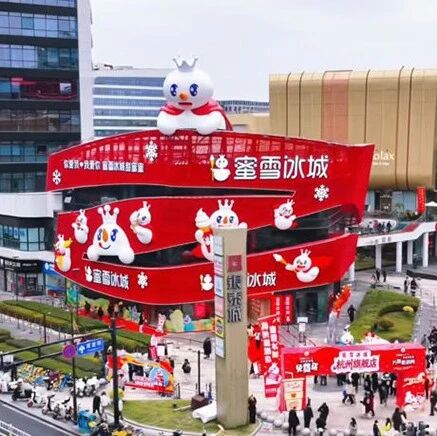
从始祖鸟到雪王,为什么都在开大店?
36氪· 2026-01-03 13:08
Core Viewpoint - The article discusses the trend of large retail stores emerging in various industries, emphasizing their role in enhancing brand experience and community engagement, while also addressing the shift from traditional retail models to more experiential and emotionally-driven shopping environments [5][10][25]. Group 1: Large Store Trends - Miniso has successfully implemented a new large store model, with Miniso Land generating 1.5 billion yuan in sales within its first year in Shanghai, primarily driven by IP products [8][7]. - The trend of opening large stores is not limited to Miniso; brands like Honey Snow Ice City and H&M are also expanding their flagship stores significantly, with sizes ranging from 600 to 2400 square meters [12][21][22]. - The shift towards larger stores is seen as a response to market saturation in smaller formats, with brands aiming to create high-value, differentiated experiences [13][18][30]. Group 2: Consumer Experience and Engagement - Large stores are designed to enhance consumer engagement by offering unique experiences, such as themed areas and exclusive products, which help build brand loyalty [25][35]. - The success of large stores is attributed to their ability to create immersive environments that cannot be easily replicated online, thus providing a compelling reason for consumers to visit [39][68]. - Brands are increasingly focusing on the emotional value of shopping experiences, moving away from purely functional offerings to those that resonate with consumers on a deeper level [7][10][37]. Group 3: Market Dynamics and Challenges - Despite the trend towards large stores, the retail environment is facing challenges, including rising vacancy rates in shopping centers, which have reached 28.7% [30]. - The article notes that while some large store initiatives have failed, successful examples demonstrate that well-executed large stores can outperform traditional formats in terms of sales per square meter [32][45]. - The current retail landscape requires brands to innovate and adapt their strategies to remain relevant, particularly in the face of economic pressures and changing consumer preferences [30][41].
“宫斗”升级,市值腰斩,消费者正在抛弃Lululemon?
新浪财经· 2025-12-31 12:32
Core Viewpoint - Lululemon is facing significant challenges, including a decline in performance and a loss of brand identity, prompting founder Chip Wilson to call for a reform of the board and management strategies [2][5][6]. Group 1: Company Performance - Lululemon's CEO Calvin McDonald, who has been in position for seven years, will step down on January 31, 2026, with no successor announced yet [3]. - The company's revenue growth has slowed, with a 12.8% year-over-year decline in net profit for Q3 of fiscal year 2025, and the stock price has dropped over 52% within the year [3][5]. - In the Americas, net revenue decreased by 2% to $1.7 billion, which constitutes 68% of total revenue, indicating a loss of customer base to emerging brands like Alo and Vuori [5][6]. Group 2: Brand Identity and Strategy - Chip Wilson criticizes the current management for prioritizing short-term financial performance over long-term strategic vision, leading to a dilution of the brand's identity [6]. - He identifies five key issues with the board's approach, including a lack of commitment to long-term strategy, a shift towards a business-oriented mindset that stifles innovation, and a loss of the brand's "cool factor" [6]. - Wilson argues that recent acquisitions, such as the purchase of the Mirror fitness brand, have wasted resources and compromised Lululemon's premium positioning by lowering quality standards [6][7]. Group 3: Market Competition - The competitive landscape has intensified, with numerous brands entering the market, making it difficult for Lululemon to maintain its status as a leader in the athleisure segment [8]. - The rise of alternative brands offering similar products at competitive prices has led to a fragmented market, particularly in the yoga pants category [8]. Group 4: Consumer Sentiment - Despite a reported 46% year-over-year revenue growth in the Chinese market for Q3 of fiscal year 2025, concerns are rising about the stability of Lululemon's customer base in China, which accounts for less than 20% of total revenue [10]. - Long-time consumers express dissatisfaction with the declining quality and lack of innovation in Lululemon's products, noting that recent purchases do not meet the standards of earlier items [11][12][13]. - Many consumers feel that the brand has lost its original identity and focus, leading to a sense of confusion about its direction and purpose [14].

真维斯杨勋:在浪潮中判断,在周期里守业|我们的四分之一世纪
经济观察报· 2025-12-31 12:30
Core Viewpoint - The article reflects on the decline of the Jeanswest brand in China, highlighting the shift from physical stores to online sales over the past decade, and the nostalgia associated with the brand's earlier days [2][3]. Company History and Development - Jeanswest was acquired by Yang Xun in 1990 and introduced to mainland China, coinciding with a cultural shift where clothing became a form of self-expression for youth [8]. - The brand initially thrived by adopting an open display and try-on model, catering to young consumers, and implementing a rapid product turnover strategy [8]. - By 2013, Jeanswest had nearly 3,000 stores in mainland China, generating close to 5 billion yuan in annual sales [10]. Challenges and Strategic Shifts - The entry of fast-fashion brands like ZARA and H&M in the 2010s intensified competition, leading to inventory management issues and a significant reduction in store numbers from over 3,000 to 1,219 by 2017 [12]. - In response to declining sales, Jeanswest began closing underperforming stores and shifted focus to e-commerce, which had previously been limited to handling excess inventory [12][16]. - The company restructured its product offerings and inventory management, leading to a significant increase in online sales from 460 million yuan in 2019 to 6 billion yuan by 2024 [16]. Operational Adjustments - The brand adopted a "fast fashion" approach, allowing for rapid design and production cycles, which enabled quick responses to market trends [15]. - A multi-platform strategy was implemented, with distinct online stores targeting different consumer segments, reflecting a shift from a one-size-fits-all approach to a more tailored strategy [15]. Leadership and Management Philosophy - Yang Xun emphasizes the importance of responsibility and stability in business operations, focusing on sustainable profitability rather than aggressive expansion [19][21]. - The company maintains a rigorous performance review process, ensuring accountability and quick corrective actions to address underperformance [20]. - Yang Xun's personal experiences with poverty shape the company's ethos, driving a commitment to creating stable employment and maintaining social responsibility [21][22].

真维斯杨勋:在浪潮中判断,在周期里守业|我们的四分之一世纪
Jing Ji Guan Cha Bao· 2025-12-31 08:41
Core Insights - The article discusses the evolution and challenges faced by the clothing brand Jeanswest in China, highlighting its transition from a popular retail chain to a focus on e-commerce due to changing consumer behaviors and market dynamics. Group 1: Company History and Expansion - Jeanswest was acquired by Yang Xun in 1990 and introduced to the Chinese market during a time when clothing began to symbolize self-expression for youth [5] - The brand adopted an innovative retail model, moving away from traditional department store sales to open displays and customer engagement, which quickly gained popularity among young consumers [6] - By 2013, Jeanswest had expanded to nearly 3,000 stores in China, achieving annual sales of nearly 5 billion yuan [7] Group 2: Market Challenges and Strategic Shifts - The entry of fast-fashion brands like ZARA and H&M in the 2010s intensified competition, leading to a decline in Jeanswest's sales and an increase in inventory issues [8] - The company responded to declining performance by closing underperforming stores and shifting focus to e-commerce, which began in 2009 but only gained traction after 2014 [9][12] - By 2019, online sales had increased significantly from 460 million yuan to 6 billion yuan by 2024, marking a growth of over 13 times [12] Group 3: Operational Adjustments and Management Philosophy - Jeanswest restructured its product offerings and inventory management to better align with consumer demand and market trends, implementing a "brand ecosystem" approach [9][10] - The management emphasizes a culture of accountability and rapid response to market changes, with regular performance reviews and a focus on maintaining operational efficiency [14] - Yang Xun's philosophy centers on the distinction between entrepreneurship and stewardship, prioritizing long-term sustainability and social responsibility over short-term profits [13][15]