
水泥

Search documents
国内高频 | 生产走弱,需求改善(申万宏观·赵伟团队)
申万宏源宏观· 2026-02-13 01:18
Group 1: Industrial Production Trends - Industrial production has slightly declined, with a small recovery in blast furnace operation rates, which increased by 0.5% week-on-week and 0.5 percentage points year-on-year to 2.4% [2] - Steel apparent consumption decreased by 5.1% week-on-week and fell by 6.8 percentage points year-on-year to -5.5% [2] - Steel social inventory saw a significant increase, rising by 5.6% week-on-week [2] Group 2: Construction Industry Insights - Cement production showed a slight recovery, but the shipment rate declined, with a week-on-week decrease of 7.7% and a year-on-year drop of 1.7 percentage points to -7.7% [19] - The cement inventory ratio increased, rising by 2.3% week-on-week and 3.2 percentage points year-on-year to 4.2% [19] - The average price of cement decreased by 0.8% week-on-week [19] Group 3: Demand and Consumption Patterns - The average daily transaction area of commercial housing in 30 major cities decreased by 1.6% week-on-week but increased by 2.9 percentage points year-on-year to -19% [37] - The transaction performance varied by city tier, with first-tier and third-tier cities showing resilience, while second-tier cities experienced weakness [37] - Port cargo throughput and railway freight volume both increased year-on-year, with port container throughput rising by 12.0 percentage points to 14.5% [45] Group 4: Price Trends - Agricultural product prices showed divergence, with pork prices stable, egg prices rising by 0.1%, and vegetable and fruit prices declining by 3.1% and 0.3% respectively [76] - The industrial product price index decreased by 1.8% week-on-week, with energy and chemical prices down by 0.9% and metal prices down by 3.6% [85]

海螺水泥:公司将持续抓好生产经营,实施精准有效投资
Zheng Quan Ri Bao· 2026-02-12 12:16
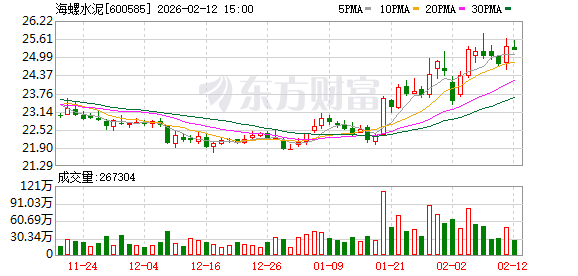
证券日报网讯 2月12日,海螺水泥在互动平台回答投资者提问时表示,公司将持续抓好生产经营,实施 精准有效投资,强化创新驱动,推进低碳绿色循环发展,积极推动市值管理,回应市场关切,持续为广 大股东创造价值。 (文章来源:证券日报) ...
塔牌集团设定2026年经营目标,计划注销股份并推进战略转型
Jing Ji Guan Cha Wang· 2026-02-12 10:56
Core Viewpoint - The company has set a net profit target of 530 million yuan and a cement production and sales target of 16 million tons for 2026, while also planning to cancel part of its repurchased shares [1][2]. Performance Strategy - At the annual work mobilization meeting held on February 7, 2026, the company confirmed its net profit target of 530 million yuan and cement production and sales target of 16 million tons, emphasizing a focus on intelligent transformation, extreme cost reduction, and diversified business development [2]. Company Status - The company plans to cancel 18,124,508 repurchased shares, reducing the total share capital from approximately 1.192 billion shares to about 1.174 billion shares, with a corresponding decrease in registered capital. This matter was approved at the shareholders' meeting in December 2025 [3]. Regulatory Situation - On December 12, 2025, some shareholders and their managers received warning letters from the Guangdong Securities Regulatory Bureau and the Shenzhen Stock Exchange due to violations, which may impact market sentiment [4]. Strategic Advancement - The company aims to focus on intelligent production as a core strategy, accelerating the expansion of its "Cement+" business while addressing industry demand decline and challenges related to green transformation. Continuous monitoring of related developments is necessary [5].

债市 进一步走强动力不足
Qi Huo Ri Bao· 2026-02-12 09:16
Group 1 - The bond market has shown a pattern of "narrow yield fluctuations, long-end leading gains, and synchronized strength in futures and spot markets" since February, supported by a reasonably ample liquidity environment and weak financing demand during the production off-season [1] - The central bank's recent actions, including a net injection of 100 billion yuan through a three-month reverse repurchase agreement and the resumption of 14-day reverse repos, have stabilized liquidity in the interbank market, providing support for the bond market [1] - The issuance of government bonds has surged in early February, while the equity market has stabilized, limiting the downward space for yields and making it difficult for the bond market to achieve a trend breakthrough [1] Group 2 - The central bank's monetary policy report indicates that the effects of the moderately accommodative monetary policy implemented in 2025 are gradually becoming evident, with significant impacts on stabilizing economic growth and financial market operations [2] - The report emphasizes the continuation of a supportive monetary policy stance, with a focus on expanding domestic demand and optimizing supply, while indicating a low probability of short-term reserve requirement ratio (RRR) cuts or interest rate reductions [2] - The central bank is expected to maintain a "protective" policy tone, avoiding abrupt changes, which will help the bond market maintain a strong oscillating pattern and prevent large fluctuations [3] Group 3 - Consumer prices (CPI) rose by 0.2% year-on-year in January, with core CPI (excluding food and energy) increasing by 0.8% year-on-year, indicating a moderate rise in service and industrial consumer goods prices [4] - The Producer Price Index (PPI) decreased by 1.4% year-on-year in January, but the decline has narrowed compared to the previous month, with a month-on-month increase of 0.4%, suggesting a bottoming out and recovery in industrial product prices [4] Group 4 - The bond market has entered a recovery phase due to multiple factors, but the recent drop in the 10-year government bond yield below 1.8% and the cooling of short-term interest rate cut expectations indicate insufficient driving forces for further declines, leading to a lack of momentum for a trend breakthrough [5]
忧虑工业竞争力,德国要求欧盟修改或推迟碳排放市场
Hua Er Jie Jian Wen· 2026-02-12 07:52
欧盟气候政策正面临重大转向,工业竞争力考量开始压倒此前的减排共识。 据彭博社周四报道,德国总理Friedrich Merz在比利时安特卫普举行的重工业峰会上表示,如果欧盟碳 排放交易体系无法帮助工业实现清洁生产转型,欧盟应该对修改或推迟该市场持开放态度。 欧盟碳排放交易体系(ETS)正因高碳价而受到批评,化工、造纸和水泥等行业企业认为这削弱了其竞争 力。这一议题预计将成为周四欧盟领导人非正式会议的核心议题之一,一些成员国呼吁采取措施降低碳 排放价格或暂停该计划。 欧盟委员会计划在今年第三季度公布碳市场改革方案。在地缘政治压力、竞争加剧以及能源成本上升的 背景下,五年前在气候行动上占主导地位的广泛共识已经破裂,政策重心正转向降低能源成本。 德国明确要求修改碳市场规则 Merz在安特卫普峰会上强调,欧盟碳排放交易体系的设立初衷是减少碳排放,同时帮助受监管企业向 无污染生产转型。"如果这无法实现,如果这不是正确的工具,我们应该非常开放地修改它,或者至少 推迟它",他表示,就像此前对建筑和交通领域新碳市场所做的那样。 作为欧盟最大经济体,德国去年已经表示将寻求放宽对污染最严重行业的排放规则。Merz明确表 示:"我完 ...
科技回调资金换道!建材板块具备高股息与低估值护城河,布局建材ETF(159745)承接顺周期配置需求
Sou Hu Cai Jing· 2026-02-12 07:22
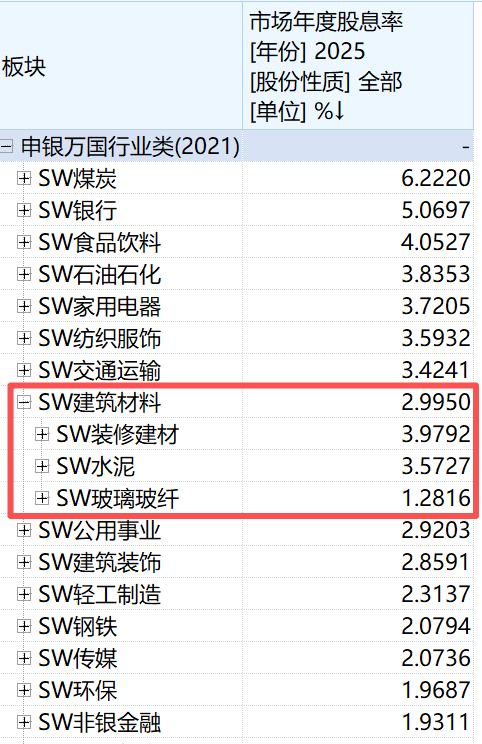
Group 1 - The core viewpoint is that in a macro environment characterized by low interest rates and asset scarcity, high dividend strategies have become a "ballast" for institutional fund allocation, with the building materials sector being a stable choice due to its high dividend and safety margin attributes [1] - The building materials sector's high dividend characteristic is not merely a reflection of profit fluctuations but is a result of improved industry competition and cash flow realization, with leading companies in the cement industry maintaining dividend yields between 3.5% and 5.0%, significantly higher than the ten-year government bond yield [2][4] - By 2025, the building materials sector is projected to rank 8th in dividend yield among Shenwan's primary industries, surpassing traditional high-dividend sectors such as utilities and steel, with renovation materials and cement yielding close to 4% [2][3] Group 2 - The building materials sector has undergone three years of deep adjustment, resulting in a "cash cow" characteristic, with capital expenditure peaking and free cash flow becoming abundant, as major cement companies' fixed asset spending is expected to decline by over 40% compared to the 2021 peak [3][4] - The "anti-involution" policy has led to effective production scheduling and capacity replacement mechanisms, which have suppressed vicious price wars, allowing leading companies to maintain a high dividend payout ratio of 30% to 50% despite a decline in profit margins [4] - The renovation materials segment also shows high dividend potential, with leading companies like Weixing New Materials and Beixin Building Materials maintaining stable dividend rates above 40%, indicating a positive cycle of profit growth and dividend increases [4] Group 3 - The current valuation of the building materials sector is low, with the CSI All Share Building Materials Index's price-to-book ratio at only 1.15%, indicating that the market has overly reflected pessimistic expectations, with some leading cement companies' price-to-book ratios falling below 0.8 [6] - The current valuation levels are lower than during the financial deleveraging period in 2018 and the real estate crisis in 2022, providing a solid safety margin that can offer considerable capital gains even if profits are under short-term pressure [6] - The building materials ETF (159745) tracks the CSI All Share Building Materials Index, covering leading companies across the entire industry chain, providing an efficient tool for investors to allocate to the building materials sector [6][8] Group 4 - Investors looking to capitalize on the cyclical recovery in the building materials sector can consider the building materials ETF (159745) for both short-term trading and long-term allocation to undervalued, high-dividend sectors, especially in a market environment where funds are shifting towards cyclical stocks [9]
中国建材股价创阶段新高,政策与行业催化推动上涨
Jing Ji Guan Cha Wang· 2026-02-12 04:17
Stock Performance - China National Building Material's stock price has shown strong performance, reaching a new high, with a closing price of HKD 6.44 on February 12, 2026, reflecting a single-day increase of 1.90% and a cumulative increase of 16.67% over the past five days, and a year-to-date increase of 25.78% [2] - On February 11, 2026, the stock price surged by 11.46%, with trading volume increasing to HKD 839 million and a turnover rate of 3.65%, pushing the stock price above HKD 6.3, marking the highest level since October 2025 [2] - Technical indicators show a continuous expansion in the MACD histogram, with the KDJ indicator's K line rising to 83.56, indicating a strong market position [2] Industry Policy and Environment - Supply-side reforms are deepening, with a report from Zhongtai Securities indicating that the cement industry is improving capacity utilization through the reduction of actual clinker capacity and off-peak production policies, leading to a recovery in industry profits [3] - The building materials sector is currently undervalued, with significant capital inflow, as evidenced by over HKD 1.5 billion net inflow into building materials ETFs in the past 20 days [3] - Improved expectations for real estate policies have emerged, with a publication emphasizing the need to stabilize the real estate market, leading to a resurgence in building material demand [3] Company Fundamentals - The new materials segment has shown significant growth, with a reported 235% year-on-year increase in net profit for Q3 2025, partially offsetting pressures from the cement business [4] - The company’s new materials fund has invested in 48 projects with a total delivery scale of HKD 12.14 billion, focusing on sectors such as semiconductors and new energy materials [4] - The pressure from impairment losses is easing, with the company expecting a full-year loss primarily due to impairment provisions for properties, plants, and goodwill, estimated between HKD 6 billion and 8.3 billion, but the market perceives this as a fully priced-in negative [4] Capital Movement - On February 11, 2026, there was a notable net inflow of institutional funds, with retail investor activity also increasing, leading to a nearly tenfold increase in trading volume compared to the previous day [5] - The building materials ETF has attracted significant capital, reflecting optimistic market sentiment regarding improvements in the industry fundamentals [5]
东吴水泥股东将股票由浦银国际证券转入马银证券(香港) 转仓市值3.78亿港元
Zhi Tong Cai Jing· 2026-02-12 01:31
Group 1 - The core point of the article highlights the transfer of shares of Dongwu Cement (00695) from Puyin International Securities to Masyin Securities, with a market value of HKD 378 million, representing 6.92% of the total shares [1] - Dongwu Cement's major shareholder, Goldview, previously announced in August that it sold part of its shares to Hong Kong Aviation and Fenyuan Capital, both of which have strong state-owned enterprise backgrounds [1] - Hong Kong Aviation is a wholly-owned subsidiary of Hong Kong Aviation Group, with the ultimate beneficial owner being the Suzhou State-owned Assets Supervision and Administration Commission [1] Group 2 - Fenyuan Capital is a wholly-owned subsidiary of Fenhu Investment Group, which is a core platform under the management committee of Fenhu High-tech Industrial Development Zone, also affiliated with Suzhou State-owned Assets [1]
东吴水泥(00695)股东将股票由浦银国际证券转入马银证券(香港) 转仓市值3.78亿港元
智通财经网· 2026-02-12 01:19
Group 1 - The core point of the article highlights the transfer of shares of Dongwu Cement (00695) from Puyin International Securities to Masyin Securities (Hong Kong), with a market value of HKD 378 million, representing 6.92% of the company [1] - Last August, Dongwu Cement announced that its controlling shareholder, Goldview, sold part of its shares to Hong Kong Port Aviation and Fenyuan Capital, both of which have strong state-owned backgrounds [1] - Hong Kong Port Aviation is a wholly-owned subsidiary of the Hong Kong Port Aviation Group, with the ultimate beneficial owner being the Suzhou State-owned Assets Supervision and Administration Commission [1] Group 2 - Fenyuan Capital is a wholly-owned subsidiary of Fenhu Investment Group, which is a core platform under the management committee of the Fenhu High-tech Industrial Development Zone, also belonging to Suzhou State-owned Assets [1]
山东生态环境厅厅长侯翠荣:天空“透亮”了,我的心“敞亮”了|厅长讲述攻坚故事
Zhong Guo Huan Jing Bao· 2026-02-12 00:10
Core Viewpoint - The article highlights significant improvements in air quality in Shandong province, attributed to concerted efforts in pollution control and environmental management, leading to a tangible sense of well-being among residents [1][4]. Group 1: Pollution Control Strategies - The province has adopted source reduction as a fundamental strategy, focusing on structural pollution issues and promoting a green and low-carbon transformation of the economy [2]. - Actions include the reduction of excess capacities in steel, coking, and local refining industries, with a complete exit of long-process steel production in major pollution transmission cities [2]. - Non-fossil energy generation capacity has surpassed 100 million kilowatts in coastal provinces, marking a historic shift where non-fossil energy exceeds coal power [2]. Group 2: Engineering and Management Measures - Industrial enterprises are prioritized in pollution prevention, with stringent oversight and accountability measures in place [2][3]. - The province has implemented ultra-low emission transformations in key industries, with all 12 long-process steel enterprises achieving ultra-low emissions [2]. - A comprehensive air quality monitoring network has been established, enabling real-time supervision and management of pollution sources [3]. Group 3: Weather and Emergency Response - The province employs differentiated and precise management of heavy pollution weather, revising emergency plans to ensure effective and legally compliant responses [3]. - The focus is on proactive measures to enhance environmental performance in key industries, with a target of adding 159 new high-performance enterprises by 2025 [3]. Group 4: Achievements and Future Goals - By 2025, all major air quality indicators in the province are expected to reach their best levels since monitoring began, with a significant increase in the number of good air quality days [4]. - PM2.5 concentration has dropped to 32.4 micrograms per cubic meter, achieving a historic breakthrough in air quality standards [4]. - Despite notable achievements, the province acknowledges the need for continued efforts to solidify these gains and address ongoing challenges in air quality management [4].