航空发动机

Search documents
中国AES100发动机配装全球首款6吨级倾转旋翼机成功首飞
Zhong Guo Xin Wen Wang· 2025-12-28 13:01
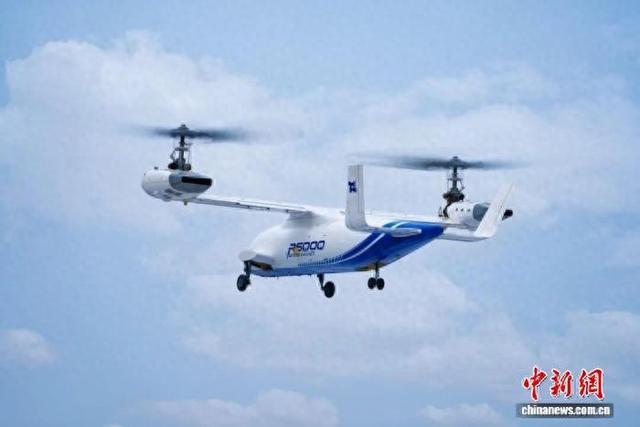
Core Viewpoint - The successful maiden flight of the AES100 engine equipped on the R6000 tilt-rotor aircraft marks a significant milestone in China's aviation industry, showcasing advancements in domestic engine technology and its application in general aviation [1][3][5]. Group 1: Engine and Aircraft Development - The AES100 engine is China's first independently developed 1000 kW class advanced civil turboshaft engine, which was successfully tested on the R6000 tilt-rotor aircraft [1][3]. - The successful flight demonstrates the effective collaboration between advanced power systems and aircraft design, highlighting a breakthrough in the domestic aviation power sector [3][4]. - The engine's design considers the complex operational requirements of tilt-rotor aircraft, balancing high power output during hover and efficient operation during cruise [3][4]. Group 2: Market and Future Prospects - The AES100 engine project targets the urgent demand for high-performance power in the general aviation market, with plans to obtain the Type Certificate (TC) by August 2024 and the Production Certificate (PC) by June 2025 [3][4]. - The successful maiden flight of the R6000 validates the compatibility of the AES100 engine with the tilt-rotor transmission and rotor systems, indicating a significant advancement in domestic aviation technology [4][5]. - The AES100 engine is expected to be equipped on multiple aircraft models, setting a record for three aircraft maiden flights within a year, showcasing its adaptability and technological maturity [7].


国产涡扇发动机点火、低空动力产业园亮相 四川天府新区低空经济赛道破局突围
Mei Ri Jing Ji Xin Wen· 2025-12-27 13:30
Core Insights - The Tianfu New Area has successfully ignited a 2000-kilogram thrust turbofan engine, marking a significant milestone in the development of the low-altitude economy in Sichuan Province [1] - The region aims to establish a comprehensive industrial chain covering safety networks, technology research and development, equipment manufacturing, application scenarios, and market promotion to tap into the trillion-level low-altitude economic sector [1] Group 1: Low-altitude Economy Development - The Sichuan low-altitude economy is being supported by a "smart hub" that integrates data from the Sichuan Low-altitude Airspace Operation Service Center and the Chengdu Low-altitude Traffic Management Service Platform, creating a unified network across the province [1] - By 2026, the low-altitude airspace reporting system is expected to cover all 21 cities (prefectures) in the province, with an estimated annual flight reporting exceeding 250,000 flights [2] Group 2: Technological Advancements - Chengdu Kongyu Technology has developed a "full-domain digital low-altitude safety control platform" with a false alarm rate of less than 0.5%, enhancing the safety of low-altitude operations [2] - The F918 turbofan engine, developed by Sichuan Tianfu Light Power Technology Co., has advanced performance metrics, including a maximum flight altitude of nearly 20 kilometers and a maximum flight Mach number of 0.9, significantly expanding the application boundaries in general aviation [2] Group 3: Industrial Infrastructure - The Tianfu New Area features substantial infrastructure support for the low-altitude economy, including a 49,000 square meter low-altitude economic industrial park and a 12.8 square kilometer aviation power technology innovation zone [3] - Specialized parks like Fengqi Valley Technology Innovation Park and Tianfu Haichuang Park are strategically positioned to foster clusters in low-altitude power, composite materials, and industrial drones, facilitating a complete industrial chain from manufacturing to core components and supporting services [3] Group 4: Collaborative Ecosystem - The first application scenario release event in March highlighted a focus on urban management through five application scenarios, including urban inspections and forest fire prevention, emphasizing collaboration among industry players [3] - The Tianfu New Area is described as a "low-altitude economic circle," where companies can collaborate and innovate, supported by an ecosystem that encourages rapid testing and validation of new applications [3]
曹建国已从院士名单中撤下
第一财经· 2025-12-27 09:21
Core Viewpoint - The article discusses the removal of Cao Jianguo's name from the Chinese Academy of Engineering's list of academicians, following his departure from key positions in the China Aviation Engine Group and the National Committee of the Chinese People's Political Consultative Conference [3][4]. Group 1 - Cao Jianguo, former chairman and party secretary of China Aviation Engine Group, has been removed from the list of academicians of the Chinese Academy of Engineering [3]. - He was born in August 1963 and graduated from Beijing University of Aeronautics and Astronautics in 1985, obtaining a bachelor's degree in flight control [3]. - Cao Jianguo held various significant positions in the aerospace industry, including director and president of the Third Research Institute of China Aerospace Science and Industry Corporation [3]. Group 2 - In May 2025, the official website of China Aviation Engine Group updated its information, indicating that Cao Jianguo no longer serves as chairman and party secretary [4]. - On December 24, 2025, the 45th chairman meeting of the 14th National Committee of the Chinese People's Political Consultative Conference was held, which included a decision to revoke the qualifications of eight committee members, including Cao Jianguo [4].

曹建国已从院士名单中撤下
中国能源报· 2025-12-27 04:33
曾任中国航空发动机集团有限公司董事长、党组书记的曹建国,其名字已从院士名单中撤下。 12月2 7日,据中国工程院官网"全体院士名单"显示,曾任中国航空发动机集团有限公司(以下简称"中国航发集团")董事长、党组书 记的曹建国,其名字已从院士名单中撤下。 12月24日,政协第十四届全国委员会第四十五次主席会议在京召开。会议审议通过关于撤销8名政协第十四届全国委员会委员资格的 决定,提请政协第十四届全国委员会常务委员会第十五次会议追认,其中就包括曹建国。 来源:澎湃新闻 End 欢迎分享给你的朋友! 出品 | 中国能源报(c ne ne rgy) 责编 | 李慧颖 人民服系社主管主办 能 源 领 域 最 大 的 原 创 内 容 基 地 发行热线 010-6536 9497 中国航标报 真 010-6536 9481 传 � 人民- Dast 践行央媒使命 守望能源变革 2026年《中国能源报》 ■ O 全年定价480元|份 每周一出版 lip toil 21/ 国内邮发代号1-6 国内统一刊号为CN11—0068 回發 ack 1 14 中国超强网(含官方微博、官方微信 )入列中央新闻网站 ▲ 曹建国(资料图) 公 ...

国内首台(套),四川氢能产业“再下一城”
Xin Lang Cai Jing· 2025-12-25 08:20
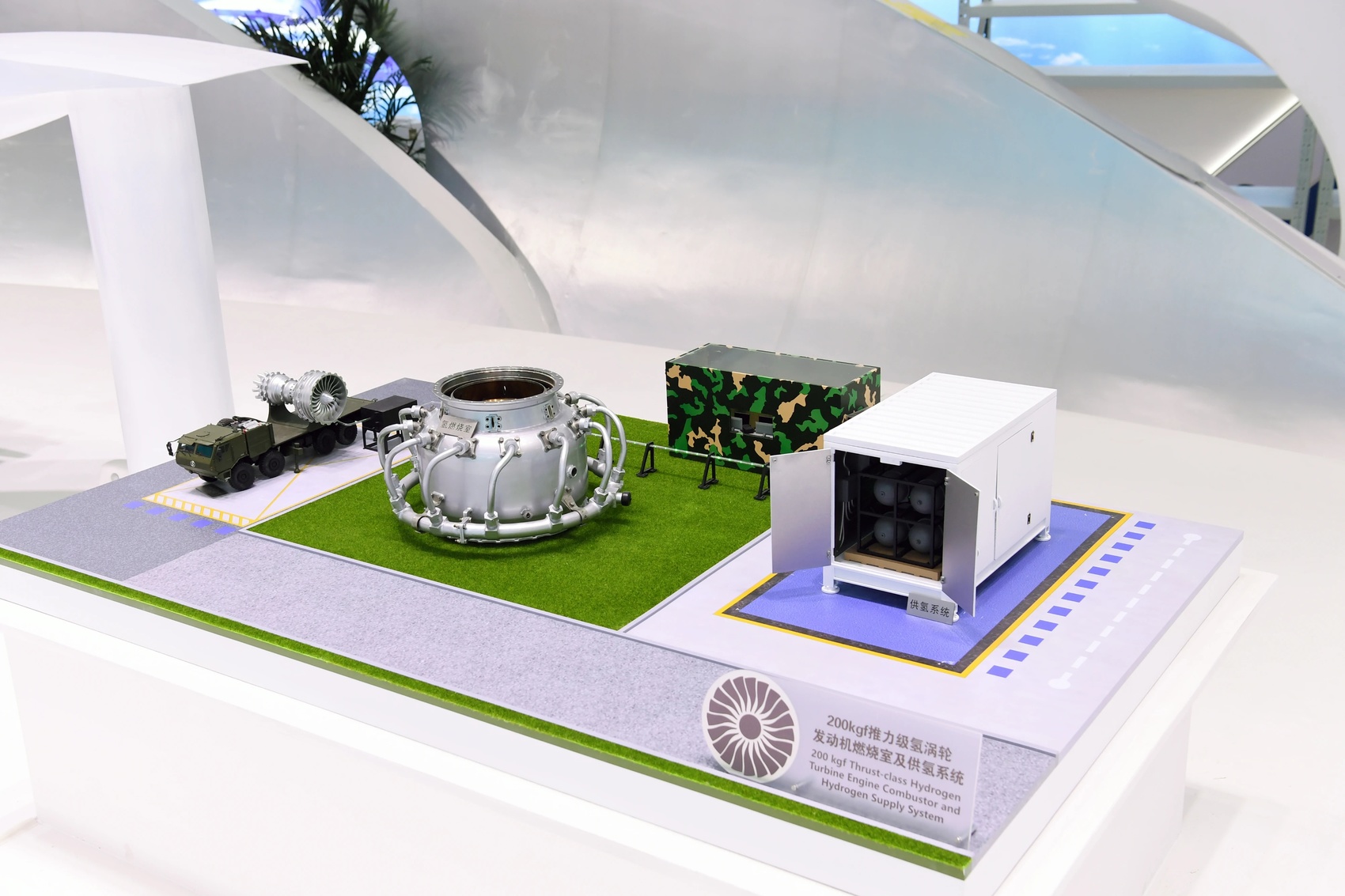
转自:川观新闻 四中全会精神在基层 党的二十届四中全会通过的"十五五"规划建议提出,前瞻布局未来产业,探索多元技术路线、典型应用场景、可行商业模式、市场监管规则,推动量子科 技、生物制造、氢能和核聚变能、脑机接口、具身智能、第六代移动通信等成为新的经济增长点。 位于C位的就是氢燃烧室。马存祥说,发动机被称为"飞机的心脏",而燃烧室是"心脏中的心脏"。"心脏"里燃烧的,过去是柴油,现在是氢气。 氢元素约占宇宙物质总量的81.75%,在地球水体中储量丰富;其燃烧热值高,是航空煤油的近3倍;其燃烧后排放物基本是水,清洁无污染。因此,氢能航 空动力是未来实现零碳排放的关键动力形式之一,全生命周期内可以实现航空业75%以上的碳减排。 但想让氢气老老实实"燃烧",却一点不容易,主要因为氢气的"暴脾气"——易燃易爆,火焰传播速度是燃油的6倍。 该如何让"桀骜不驯"的氢气乖乖听话?马存祥带着科研团队在燃烧室构造上下功夫。 烧油的飞机大家坐过,烧氢气的呢?目前这个技术难题,正在四川一点点被攻克。 2024年珠海航展,我国首台(套)氢燃料航空涡轮发动机与试验系统亮相,研发单位正是中国航发四川燃气涡轮研究院(下称"中国航发涡轮院" ...
航发产业链24、25H1数据分析:干将发硎,有作其芒
Guotou Securities· 2025-12-25 07:18
Investment Rating - The report maintains an investment rating of "Outperform the Market - A" for the aerospace power industry [5] Core Insights - The aerospace power industry is approaching a strategic layout timing, with a focus on downstream sectors such as aerospace power and control systems, benefiting from the iteration and release of new aircraft models [1][2] - The maintenance aftermarket is expected to become a second growth curve, with significant revenue generated from maintenance services [2] - The "14th Five-Year Plan" has seen key models of large engines entering a stock market phase, while medium engines are experiencing a recovery in growth [1][16] - The supply chain has matured, with a stable supplier landscape and reduced disturbances from new entrants [2][24] Summary by Sections Industry Overview - The large engine industry has entered a stock market phase, with the maintenance aftermarket opening up; medium engine growth is recovering [16] - The small thrust and turboshaft engine sectors are experiencing further contraction [18] - Key upstream suppliers in the aerospace power system have seen growth rates narrow, indicating a transition to a stable phase [20] - New suppliers have reached considerable capacity during the "14th Five-Year Plan" [21] Main Engine Manufacturers - Major manufacturers include the Dawn Company, West Aviation Group, Guizhou Liyang, and Southern Company, which form a comprehensive platform for the development and production of all types of aircraft engines [31] Supply Chain - The "small core, big collaboration" system has matured, with significant growth in strategic external suppliers while some internal suppliers face declining revenues [24] - The report highlights the importance of the maintenance aftermarket and military trade as potential growth areas [30] Future Outlook - The report suggests that the aerospace power industry will see structural growth driven by the maintenance aftermarket and military exports, particularly in light of geopolitical factors [2][30]




航亚科技股价涨5.31%,上银基金旗下1只基金重仓,持有6.18万股浮盈赚取8.41万元
Xin Lang Cai Jing· 2025-12-25 03:08
Group 1 - The core point of the news is that Hangya Technology's stock price increased by 5.31%, reaching 26.95 yuan per share, with a trading volume of 1.33 billion yuan and a turnover rate of 1.97%, resulting in a total market capitalization of 69.94 billion yuan [1] - Hangya Technology, established on January 30, 2013, and listed on December 16, 2020, specializes in the research, production, and sales of aviation engine blades, integral blades, and orthopedic implant forgings [1] - The company's main business revenue composition is as follows: aviation products account for 91.40%, medical products 7.62%, and others 0.98% [1] Group 2 - From the perspective of fund holdings, one fund under Shangyin Fund has a significant position in Hangya Technology, with the Shangyin Future Life Flexible Allocation Mixed A Fund (007393) holding 61,800 shares, representing 3.38% of the fund's net value, making it the ninth-largest holding [2] - The Shangyin Future Life Flexible Allocation Mixed A Fund was established on July 15, 2019, with a latest scale of 32.9041 million yuan, and has achieved a year-to-date return of 36.27%, ranking 2357 out of 8087 in its category [2] - The fund manager, Chen Bo, has been in position for 5 years and 328 days, with the fund's total asset scale at 791 million yuan, achieving the best return of 86.19% and the worst return of -8.38% during his tenure [2]

17.99亿主力资金净流入 航空发动机概念涨3.31%
Zheng Quan Shi Bao Wang· 2025-12-24 09:46
Group 1 - The aviation engine concept sector rose by 3.31%, ranking 6th among concept sectors, with 85 stocks increasing, including Youyan Powder Materials and Chaojie Co., which hit a 20% limit up [1] - Notable gainers included Zhongchao Holdings, Runbei Aerospace, and Boyun New Materials, which also reached their daily limit up, with respective increases of 17.36%, 14.22%, and 11.58% [1] - The sector saw a net inflow of 1.799 billion yuan from main funds, with 49 stocks receiving net inflows, and 6 stocks exceeding 100 million yuan in net inflow [2] Group 2 - The top net inflow stock was Chaojie Co., with a net inflow of 428 million yuan, followed by Zhongchao Holdings and Boyun New Materials with net inflows of 384 million yuan and 202 million yuan, respectively [2][3] - The net inflow ratios for Zhongchao Holdings, Boyun New Materials, and Runbei Aerospace were 33.92%, 27.99%, and 22.47% respectively, indicating strong investor interest [3] - Stocks such as *ST Xinyan, Feiwo Technology, and Guanglian Aviation also showed significant gains, with increases of 17.36%, 14.22%, and 11.58% respectively [1][2]


2025年10月中国涡轮喷气发动机进口数量和进口金额分别为47台和5.2亿美元
Chan Ye Xin Xi Wang· 2025-12-21 02:14
Core Insights - The report by Zhiyan Consulting highlights significant growth in China's turbojet engine imports, with a notable increase in both quantity and value in 2025 [1][2]. Group 1: Import Statistics - In October 2025, China imported 47 turbojet engines, marking a year-on-year increase of 42.4% [1]. - The import value for these engines reached $520 million, reflecting a year-on-year growth of 54.9% [1]. Group 2: Industry Context - Zhiyan Consulting is recognized as a leading industry consulting firm in China, specializing in in-depth industry research and providing comprehensive consulting services for investment decisions [2].

航发控制发生2笔大宗交易 合计成交4.00亿元
Zheng Quan Shi Bao Wang· 2025-12-12 09:45
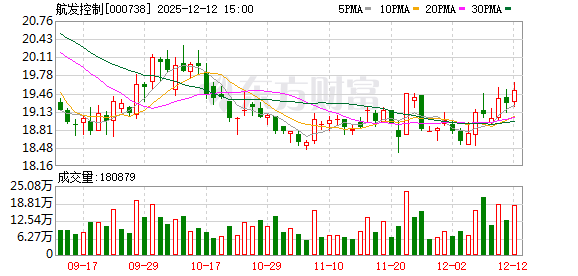
航发控制12月12日大宗交易平台共发生2笔成交,合计成交量2240.67万股,成交金额4.00亿元。成交价 格均为17.85元,相对今日收盘价折价8.51%。 证券时报·数据宝统计显示,航发控制今日收盘价为19.51元,上涨1.25%,日换手率为1.38%,成交额为 3.52亿元,全天主力资金净流入1713.20万元,近5日该股累计上涨2.09%,近5日资金合计净流入144.55 万元。 两融数据显示,该股最新融资余额为8.40亿元,近5日增加1591.59万元,增幅为1.93%。 据天眼查APP显示,中国航发动力控制股份有限公司成立于1997年06月20日,注册资本131518.4001万 人民币。(数据宝) | 成交量 | 成交金额 | 成交价 | 相对当日收盘 | | | | --- | --- | --- | --- | --- | --- | | (万 | (万元) | 格 | 折溢价(%) | 买方营业部 | 卖方营业部 | | 股) | | (元) | | | | | 1240.67 | 22145.96 | 17.85 | -8.51 | 中航证券有限公司北 | 方正证券股份有限公司株洲 | ...