
血液制品

Search documents
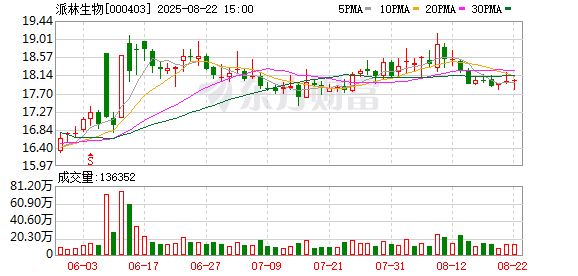
营业收入净利润双双回落 派林生物发布2025年半年报
Xin Lang Cai Jing· 2025-08-22 13:09
Core Viewpoint - Palin Bio's financial performance in the first half of 2025 shows a significant decline in both revenue and net profit compared to the same period last year, raising concerns about the company's operational challenges and future growth potential [1][2][5]. Financial Performance - The company's revenue for the first half of 2025 was 986.48 million yuan, a decrease of 13.18% from 1,136.18 million yuan in the same period last year [2]. - The net profit attributable to shareholders was 235.79 million yuan, down 27.89% from 326.98 million yuan year-on-year [2]. - The net profit after deducting non-recurring gains and losses was 214.67 million yuan, reflecting a decline of 27.63% compared to 296.63 million yuan in the previous year [2]. Reasons for Decline - The decline in revenue and profit is attributed to the capacity expansion efforts of the company's wholly-owned subsidiaries, which led to a decrease in product supply [5]. - Despite the drop in revenue and profit, the company reported an increase in plasma collection volume, exceeding 770 tons, which is an 11% year-on-year growth [5]. Industry Outlook - The blood products industry in China is characterized by scarcity and irreplaceability, providing a sustainable development foundation [5]. - The domestic supply of blood products is currently insufficient, with over 60% of human albumin relying on imports, indicating a significant market opportunity for domestic producers [5]. - The industry is expected to undergo consolidation driven by policy guidance and market competition, with potential for export and project cooperation in overseas markets [5]. Company Position and Strategy - Palin Bio ranks among the top players in the domestic blood products industry, with a total of 11 products and 38 plasma collection stations, placing it in the top three of the industry [6]. - The company emphasizes product quality and safety management, multi-brand operations, and resource integration to enhance brand effect and synergy [6]. - Palin Bio is actively advancing its product development, with over 10 products in the pipeline, aiming to maintain its leading position in the industry [6].



派林生物上半年业绩承压后迎新机 控制权变更引行业关注
Zheng Quan Ri Bao Wang· 2025-08-22 12:48
Core Viewpoint - The company, Pailin Biopharmaceutical Co., Ltd., reported a decline in revenue and net profit for the first half of 2025 due to capacity adjustments in its subsidiaries, but is positioned for strategic upgrades through a potential change in control following a planned acquisition by China National Pharmaceutical Group [1][5][6]. Financial Performance - For the first half of 2025, the company achieved operating revenue of 986 million yuan, a year-on-year decrease of 13.18% - The net profit attributable to shareholders was 236 million yuan, down 27.89% - The net profit excluding non-recurring gains and losses was 215 million yuan, a decline of 27.63% [1]. Business Operations - The company specializes in the research, development, production, and sales of blood products, which are critical for medical emergencies and certain disease treatments [2]. - As of June 30, the company operated 38 single plasma collection stations, ranking among the top three in the industry, and is expected to collect over 1,400 tons of plasma in 2024 [2]. - The company has formed a strategic partnership with Xinjiang Deyuan to expand plasma supply, with over 210 tons supplied from cooperative stations in the first half of the year [2]. Capacity Expansion - The company is undergoing capacity expansion through its subsidiaries, with both Guangdong Shuanglin and Pailin Feike completing their second-phase capacity expansions, increasing total annual capacity to over 3,000 tons [3]. - The company reported a plasma collection volume of over 770 tons in the first half of 2025, an increase of approximately 11% year-on-year, with significant supply growth expected in the second half following the completion of capacity expansions [3]. Research and Development - The company increased its R&D expenditure to 58.216 million yuan in the first half of 2025, a year-on-year increase of 32.46%, focusing on key projects such as new generation intravenous immunoglobulin and coagulation factor IX preparations [4]. - The company has developed a product matrix of 11 types of blood products, ranking third in the industry, which supports profit enhancement from plasma [4]. Industry Position and Control Change - The blood product industry in China is characterized by strict production controls, with fewer than 30 companies operating as of the end of 2021, leading to a supply shortage of nearly 5,000 tons [5]. - The industry is experiencing accelerated mergers and acquisitions, with major players like Pailin Biopharmaceutical, and the competitive landscape is shifting towards a concentration of large-scale enterprises [5]. - The planned acquisition by China National Pharmaceutical Group is expected to enhance the company's technological capabilities and resource synergies, with formal transaction documents due by September 10 [6][7].
博雅生物上半年营收同比增长12.51% 吨浆产值稳居行业前列
Zheng Quan Ri Bao Wang· 2025-08-22 11:59
Core Viewpoint - The company reported a revenue of 1.008 billion yuan in the first half of 2025, representing a year-on-year growth of 12.51%, with a net profit attributable to shareholders of 225 million yuan, and proposed a cash dividend of 1.5 yuan per 10 shares [1] Group 1: Company Performance - The company is one of the few blood product enterprises in China with a complete range of Class III products and the capability to expand plasma collection stations, supported significantly by its actual controller, China Resources Group [2] - The company has 21 plasma collection stations, with 20 currently operational, and the raw plasma collection volume reached 320.39 tons, a year-on-year increase of 7.2%, surpassing the industry average growth rate [2] - The company maintains a leading position in terms of plasma output value and gross profit margin within the industry [2] Group 2: Operational Strategy - The company employs a flexible strategy of "renting before building" for new plasma stations and continuously optimizes the standardized processes for station construction, effectively shortening construction cycles and accelerating raw material collection [2] - The company enhances the operational management level of existing plasma stations through standardization measures across various business systems [2] Group 3: Industry Context - The supply of raw plasma is tight due to the special nature of its source and strict national regulations, which directly impacts the production scale and capacity of blood product enterprises [3] - The company has ensured stable raw plasma supply while optimizing production processes and enhancing quality management to maintain product yield and qualification rates [3] Group 4: Research and Development - The company has increased its R&D investment to 44.719 million yuan in the first half of the year, a year-on-year growth of 2.12%, and has successfully launched several products, including PCC and high-concentration intravenous immunoglobulin [4] - The company is advancing several projects, including tetanus immunoglobulin and subcutaneous immunoglobulin, with the tetanus immunoglobulin application already submitted for review [4] - The successful approval of 10% intravenous immunoglobulin positions the company as the third domestic enterprise to have this product, enhancing its plasma utilization rate [4] Group 5: Market Outlook - The blood product market in China is projected to reach approximately 60 billion yuan in 2024 and is expected to grow to 100 billion yuan by 2030, indicating significant growth potential for the industry [5] - The industry is still in an upward trajectory, characterized as a sunrise industry with substantial future development space [5]

派林生物上半年业绩同比下行 公司采浆量快速提升已积极扩产
Zheng Quan Shi Bao Wang· 2025-08-22 07:59
Core Viewpoint - The company reported a decline in revenue and net profit for the first half of 2025, primarily due to ongoing capacity expansion efforts at its subsidiaries, which are expected to enhance product supply in the latter half of the year [2][3] Group 1: Financial Performance - The company achieved operating revenue of 986 million yuan, a year-on-year decrease of 13.18% [2] - The net profit attributable to shareholders was 236 million yuan, down 27.89% year-on-year [2] - The net profit after deducting non-recurring items was 215 million yuan, reflecting a decline of 27.63% compared to the previous year [2] Group 2: Business Operations - The company specializes in the research, development, production, and sales of blood products, with a total of 11 products and 38 collection stations, ranking third in the industry [2] - The company’s plasma collection volume exceeded 770 tons in the first half of 2025, representing an approximate year-on-year growth of 11% [3] - The company’s total annual production capacity is set to exceed 3,000 tons following the successful completion of capacity expansions at its subsidiaries [2][3] Group 3: Industry Outlook - The blood products industry in China is characterized by strict regulatory controls and a relative supply shortage, with the annual plasma collection volume accounting for only about 18% of the global total [3] - The market size for blood products in China is projected to reach 60 billion yuan in 2024 and is expected to grow to 95 billion yuan by 2030, indicating significant growth potential [3] - The industry is experiencing increasing concentration through mergers and acquisitions, with leading companies gaining more advantages over smaller firms [4] Group 4: International Cooperation - The company’s subsidiary, Guangdong Shuanglin, signed a framework cooperation agreement with BRAINFARMA to promote overseas sales, but the agreement was terminated due to changes in market trends and regulatory policies [4][5] - The company plans to continue seeking opportunities for overseas regulatory registration and export of its products, including immunoglobulin [5]
天坛生物上半年实现营收31.10亿元采浆量1361吨巩固龙头地位
Xin Lang Cai Jing· 2025-08-21 21:02
Core Viewpoint - TianTan Biological disclosed its 2025 semi-annual report, showing a revenue of 3.11 billion yuan, a year-on-year increase of 9.47%, while the net profit attributable to shareholders decreased by 12.88% to 633 million yuan [1] Financial Performance - The company achieved a revenue of 3.11 billion yuan in the first half of 2025, reflecting a growth of 9.47% compared to the previous year [1] - The net profit attributable to shareholders was 633 million yuan, which represents a decline of 12.88% year-on-year [1] Operational Highlights - The number of single plasma collection stations and the scale of plasma collection continue to maintain a leading position in China, with a total of 107 stations across 16 provinces/regions, of which 85 are operational [1] - The company has made significant progress in innovative research and development, with several new products achieving milestones, including the approval of a new immunoglobulin product [1] Project and Technology Development - The company is actively promoting engineering projects and information technology construction, accelerating smart upgrades and industrial collaboration, which enhances production and management efficiency [1] - The Chengdu Rongsheng recombinant factor workshop project has completed acceptance inspection, and the production of recombinant human coagulation factor VIII is underway [1] International Business Strategy - The company is implementing its internationalization strategy, continuously advancing international market development and registration preparations, and has initiated product registration processes in multiple target markets [1] - The company has achieved progress in the registration of intravenous immunoglobulin products for international markets [1] Product Portfolio - The company operates seven blood product manufacturing enterprises, offering human albumin, human immunoglobulin, and coagulation factor products, with a total of 15 varieties and 102 production licenses [1]

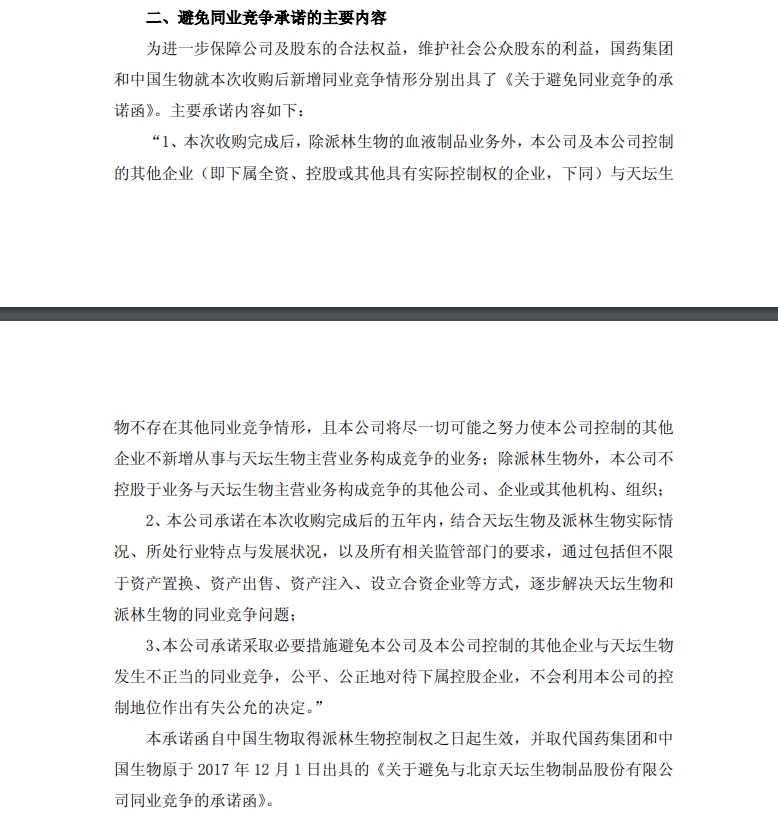
承诺5年内整合天坛生物与派林生物,血液制品行业要变天?
Jin Rong Jie· 2025-08-21 11:33
Core Viewpoint - The acquisition of 21.03% of Plin Bio by China National Pharmaceutical Group (Sinopharm) will lead to a significant restructuring of the blood products industry in China, potentially creating a dominant player in the market within five years [1][3]. Group 1: Acquisition Details - Sinopharm's subsidiary, China Bio, has committed to resolving any potential competition with Tian Tan Bio through various means, including asset swaps and joint ventures, within five years [1][4]. - The acquisition marks the third change in control for Plin Bio in just seven years, indicating a volatile ownership landscape [3][4]. - The acquisition agreement involves a cash purchase of the 21.03% stake from the controlling shareholder, Shengbang Yinghao [4]. Group 2: Industry Impact - The blood products industry in China is currently dominated by seven major listed companies, including Tian Tan Bio and Plin Bio, which together control nearly 60% of production capacity and over 70% of plasma collection stations [6]. - Following the acquisition, the combined revenue of Tian Tan Bio and Plin Bio could exceed 86.87 billion yuan, surpassing the current leader, Shanghai Raist, which reported revenues of 81.76 billion yuan [6]. - The consolidation of Tian Tan Bio and Plin Bio is expected to create a new industry leader, significantly altering the competitive landscape of the blood products sector in China [6].
上海莱士: 关于控股股东增持公司股份计划实施期限过半的进展公告
Zheng Quan Zhi Xing· 2025-08-21 10:19
Core Viewpoint - The controlling shareholder, Haiyingkang (Qingdao) Medical Technology Co., Ltd., is actively increasing its stake in Shanghai Laishi Blood Products Co., Ltd. to enhance investor confidence and demonstrate long-term investment value [1][2]. Group 1: Shareholding Increase Plan - Haiyingkang plans to increase its shareholding in Shanghai Laishi by investing between RMB 250 million and RMB 500 million within a six-month period through centralized bidding [1][2]. - As of August 21, 2025, Haiyingkang has acquired 26,440,800 shares, representing 0.40% of the total share capital of 6,637,984,837 shares, with an investment amount of RMB 180.5459 million (excluding transaction fees) [2][3]. Group 2: Current Shareholding Status - As of August 21, 2025, Haiyingkang holds 1,501,018,852 shares, accounting for 22.61% of the total share capital [3]. - Including the voting rights delegated from Grifols, S.A., Haiyingkang controls a total of 1,938,088,508 shares, which is 29.20% of the total voting rights [3].

合伙人反目,瑞幸董事长黎辉再陷股权争议
Sou Hu Cai Jing· 2025-08-18 09:25
Core Viewpoint - The ongoing dispute between Luckin Coffee's chairman, Li Hui, and former chairman of Taibang Biologic, Zhou Fan, centers around the ownership of shares following the privatization of Taibang Biologic, with allegations of misleading investors and harming shareholder interests [2][5][11]. Group 1: Shareholder Dispute - Zhou Fan accuses Li Hui of unilaterally canceling the original management team's co-investment shares and redistributing them after the privatization of Taibang Biologic [2][3]. - Zhou Fan holds approximately 534,010 shares of Taibang Biologic, representing about 13.77% of the company, valued at over $656 million (approximately 4.6 billion RMB) based on a $4.76 billion valuation during privatization [4][6]. - The conflict escalates as both parties assert differing claims regarding the ownership of Zhou Fan's shares, with Taibang Biologic's management stating that Zhou is merely exercising voting rights on behalf of the platform [5][12]. Group 2: Company Background and Investment Strategy - Taibang Biologic, previously a publicly listed company, specializes in blood products and has been undervalued in the market [16][20]. - The investment strategy of Dazhong Capital, which includes high equity stakes and active involvement in management, is exemplified by its handling of both Luckin Coffee and Taibang Biologic [10][19]. - Dazhong Capital's approach contrasts with typical private equity firms, as it often seeks to gain control during governance crises, as seen in the cases of both companies [19][20]. Group 3: Market Context and Implications - The public conflict between partners in a private equity firm is unusual and suggests that internal resolutions have failed, potentially impacting the stability and long-term commitment of the management team [11][12]. - The management team at Taibang Biologic is currently in a precarious position, with the new management having already made decisions regarding share distribution, raising legal and regulatory concerns [12][20]. - The situation reflects broader implications for investor confidence and governance practices within the private equity sector, particularly in the context of management buyouts and share distribution disputes [11][20].

医药生物行业报告(2025.08.11-2025.08.17):工信部等七部门印发《关于推动脑机接口产业创新发展的实施意见》,相关行业确定性提高
China Post Securities· 2025-08-18 09:11
Investment Rating - The industry investment rating is "Outperform" [2] Core Insights - The report highlights the issuance of the "Implementation Opinions on Promoting the Innovation and Development of Brain-Machine Interface Industry" by the Ministry of Industry and Information Technology and six other departments, which increases certainty in the related industry [5][14] - The pharmaceutical and biotechnology sector has shown a 3.08% increase this week, outperforming the CSI 300 index by 0.7 percentage points, ranking 10th among 31 sub-industries [20][21] - The report indicates that the brain-machine interface technology is in a period of accelerated transformation, with domestic companies expected to gradually achieve commercialization, leading to rapid market expansion [6][17] Summary by Sections Industry Overview - The closing index for the industry is 9029.09, with a 52-week high of 9029.09 and a low of 6070.89 [2] Weekly Performance - The medical research outsourcing sector had the highest increase this week at 7.77%, followed by the hospital sector at 5.59% and medical consumables at 4.47% [7][21] - The report notes a significant divergence in performance among sub-sectors, with offline pharmacies experiencing the largest decline at 1.82% [7][21] Beneficiary Stocks - Beneficiary stocks in the innovative drug sector include companies such as Innovent Biologics, Kintor Pharmaceutical, and BeiGene for H-shares, and Zai Lab, Eucure Biopharma, and others for A-shares [8] - In the medical device and consumables sector, companies like Mindray Medical, Weigao Group, and others are highlighted as beneficiaries [8] Sub-sector Analysis - The report emphasizes that the innovative drug sector is expected to continue performing well due to overseas business development expectations and supportive policy documents [26] - The medical device sector is projected to benefit from policies promoting the replacement of old equipment, with significant growth expected in the second quarter of 2025 [27][28] - The IVD sector is anticipated to see marginal improvements due to optimized procurement policies, with AI-assisted diagnostics being a promising direction [31][32] Market Trends - The report indicates that the overall trend for the medical device industry is positive, driven by innovation, mergers, and internationalization, with leading Chinese companies expected to grow into global leaders [28] - The report also notes that the traditional Chinese medicine sector is expected to see a turning point as inventory clears and procurement policies are implemented [40]
医药生物行业周报(8月第3周):商保创新药目录推出在即-20250818
Century Securities· 2025-08-18 00:59
Investment Rating - The report does not explicitly state an investment rating for the industry, but it indicates a positive trend in the pharmaceutical and biotechnology sector with a weekly increase of 3.08% [3][8]. Core Insights - The pharmaceutical and biotechnology sector outperformed the Wind All A index and the CSI 300 index during the week of August 11 to August 15, with notable gains in medical research outsourcing (7.77%), hospitals (5.59%), and medical consumables (4.47%) [3][8]. - The upcoming launch of the commercial insurance innovative drug directory is expected to activate the domestic high-end payment market for innovative drugs, with 121 drug names passing preliminary review [3][8]. - The World Conference on Lung Cancer (WCLC) will take place from September 6 to 9, showcasing significant research advancements in lung cancer, with domestic research playing an increasingly important role [3][8]. Market Weekly Review - The pharmaceutical and biotechnology sector rose by 3.08%, outperforming the Wind All A index (2.95%) and the CSI 300 index (2.37%) [3][8]. - Medical research outsourcing, hospitals, and medical consumables led the sector's gains, while offline pharmacies, blood products, and medical circulation experienced declines [3][8]. - Notable individual stock performances included Sino Medical (69.1%), Innovation Medical (51.5%), and Guangsheng Tang (40.7%) for gains, while *ST Suwu (-16.8%), ST Sansheng (-15.2%), and Nanhua Biological (-14.2%) faced significant losses [3][11]. Industry News and Key Company Announcements - The National Medical Insurance Administration announced the preliminary review of the 2025 National Basic Medical Insurance drug directory and the commercial insurance innovative drug directory [3][13]. - Novo Nordisk received accelerated FDA approval for its therapy Wegovy for treating non-alcoholic steatohepatitis (NASH) [3][13]. - Yunnan Baiyao approved a full acquisition of An Guo Shi Ju Yao Tang Pharmaceutical Co., Ltd. for 660 million RMB to enhance its traditional Chinese medicine business [3][15]. - Insmed's DPP1 inhibitor Brensocatib received FDA approval for treating non-cystic fibrosis bronchiectasis [3][14].


