
高等教育

Search documents
1.18亿元!四川农业大学采购大批仪器(含重点实验室建设项目)
仪器信息网· 2025-11-05 03:55
Core Viewpoint - Sichuan Agricultural University has announced multiple government procurement intentions for laboratory equipment, with a total budget of 1.18 billion yuan, indicating significant investment in agricultural technology and research capabilities [2][5]. Procurement Overview - The university plans to procure 15 items of laboratory equipment, with a total budget of 1.18 billion yuan, covering areas such as grain and vegetable processing equipment, food manufacturing equipment, laboratory chromatography equipment, and nutritional evaluation equipment [2][5]. - The expected procurement period is from June to November 2025 [2]. Detailed Procurement Items - The procurement includes various projects aimed at enhancing teaching and research capabilities, such as: - Teaching instruments for traditional Chinese medicine breeding technology [4]. - Equipment for food microbiome and new quality food processing laboratories [6]. - Chromatography and nutritional evaluation equipment for food laboratories [6]. - Various other laboratory equipment aimed at supporting agricultural research and education [7]. Institutional Background - Sichuan Agricultural University is a key institution in China's agricultural higher education, recognized for its strengths in biotechnology and agricultural technology [9]. - The university has a comprehensive academic structure with 27 colleges covering multiple disciplines, and it is home to nationally recognized key laboratories [8][9].


浙江将培养更多理工农医类人才
Zhong Guo Xin Wen Wang· 2025-11-05 01:40
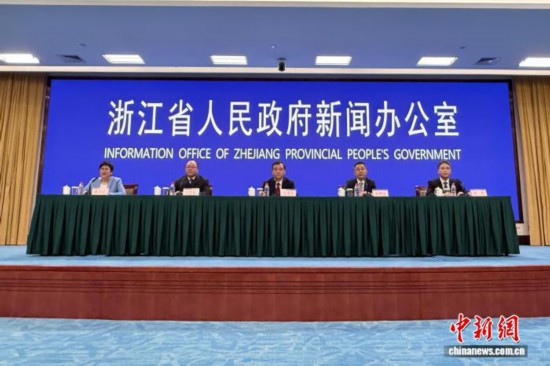
Core Viewpoint - Zhejiang Province aims to increase the proportion of students in science, engineering, agriculture, and medical fields to over 60% by 2030, in order to supply human capital for advanced manufacturing, emerging industries, and future industries [1][2]. Group 1: Educational Strategy - Since the beginning of the 14th Five-Year Plan, Zhejiang's universities have been graduating approximately 400,000 students annually, with over 80% remaining in the province for employment and entrepreneurship [2]. - About 65% of graduates choose small and micro enterprises as their first career destination [2]. - In the past three years, 61.5% of newly established undergraduate programs and 71.8% of new master's and doctoral programs in the province have been in science, engineering, agriculture, and medical fields, aligning with the needs of industrial transformation and upgrading [2]. Group 2: Future Plans - During the 15th Five-Year Plan period, Zhejiang will strengthen science education, promote higher education, and optimize vocational education [2]. - The province plans to enhance scientific education from an early age by increasing experimental and practical courses, fostering creativity, and allowing students to engage with real production scenarios and job practices [2]. - For instance, starting from elementary school, artificial intelligence general education courses will be widely implemented to cultivate students' AI literacy, transforming "book-smart" individuals into "creatively capable" individuals [2].
坚持把教育作为国之大计、党之大计
Ren Min Ri Bao· 2025-11-04 22:12
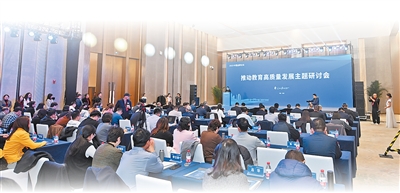
Group 1 - Education is fundamental for building a modern socialist country, with technology as the key and talent as the core resource [2][4][5] - The integration of education, technology, and talent is essential for enhancing the international competitiveness of Chinese brands [2][3] - The development of a high-quality education system is crucial for sustainable economic and social development [4][5] Group 2 - The "Education Brand" awareness should be established to create a high-quality education system that meets regional economic needs [4][5] - Collaboration between leading enterprises and high-level universities is encouraged to build research platforms and practical bases [5][6] - The Xiong'an New Area is positioned as a new high ground for education development, attracting quality educational resources [6][7] Group 3 - The focus on innovative education models and deepening cooperation between schools and enterprises is emphasized [6][8] - The establishment of a global education center city is seen as a pathway to enhance China's educational international influence [13][14] - The integration of sports into education is highlighted as a vital aspect of holistic education development [15][16]
高校加快学科专业调整 有985高校停招24个本科专业
Di Yi Cai Jing· 2025-11-04 11:38
Group 1 - The rapid development of emerging industries necessitates adjustments in higher education programs to align with the needs of industrial transformation and upgrading [1] - A number of "Double First-Class" universities in China have announced the establishment of new colleges focusing on cutting-edge technologies and emerging industries, particularly in fields such as artificial intelligence, future technologies, and quantum science [1] - The establishment of the first Artificial Intelligence and Robotics College at Northwest A&F University marks a significant milestone for agricultural and forestry universities in China [1] Group 2 - New research-oriented universities are increasingly becoming popular among high-scoring students, with some new institutions achieving admission scores comparable to or exceeding those of established 985 universities [2] - Traditional universities are encouraged to adapt to economic and social development needs by adding new programs while also considering the reduction or elimination of programs that do not align with their institutional focus [2] Group 3 - An increasing number of universities, including those classified as 985, are discontinuing or suspending certain programs, reflecting a trend towards program optimization [3] - East China Normal University plans to add one new program in data science while discontinuing 24 programs, indicating a shift in focus towards more relevant fields [3] - Shandong University has announced the suspension of 27 programs and the introduction of two new programs, further illustrating the trend of program adjustments in response to market demands [3]
有985高校停招24个本科专业
第一财经· 2025-11-04 11:36
Core Viewpoint - The rapid development of emerging industries necessitates adjustments in higher education systems, leading to an accelerated restructuring of academic programs in Chinese universities to align with national strategic needs and technological advancements [3]. Group 1: New Academic Programs - A number of "Double First Class" universities have announced the establishment of new colleges focusing on cutting-edge technologies and emerging industries, particularly in fields such as artificial intelligence, future technologies, aerospace technology, quantum science, and information dissemination [3]. - On September 7, 2023, Northwest A&F University inaugurated the first Artificial Intelligence and Robotics College among agricultural and forestry universities in China [3]. - On October 27, 2023, Henan University held a strategic consultation meeting for new engineering disciplines, planning to establish nine new engineering colleges focusing on areas like new energy, intelligent manufacturing, and artificial intelligence [3]. Group 2: Trends in University Admissions - New research-oriented universities, such as Fujian Fuyou University and Ningbo Oriental Institute of Technology, have seen their admission scores rivaling or exceeding those of established 985 universities in their first year of undergraduate enrollment [4]. - The increasing popularity of these new universities reflects a shift in student preferences towards institutions that align with modern industry demands [4]. Group 3: Professional Program Adjustments - Traditional universities are increasingly adjusting their professional offerings by adding new programs while also discontinuing those that do not align with economic and social development needs [5]. - Recent data from East China Normal University indicates that in 2025, the university will add one new program in data science while discontinuing 24 programs, including various fields such as environmental engineering and international trade [6]. - Shandong University has also announced the suspension of 27 programs, including financial engineering and world history, while introducing two new programs in engineering software and sports training [6].

高校加快学科专业调整,有985高校停招24个本科专业
Di Yi Cai Jing· 2025-11-04 11:19
Group 1 - The emergence of new research-oriented universities is increasingly attracting high-scoring students, with institutions like Fujian Fuyou University and Ningbo Oriental Institute of Technology achieving admission scores comparable to or exceeding those of established 985 universities [2] - Traditional universities are facing challenges due to a proliferation of diverse and sometimes misaligned programs, prompting a need for adaptation to economic and societal demands through the introduction of new programs and the discontinuation of less relevant ones [2] Group 2 - A growing number of universities are discontinuing or suspending certain programs, including notable 985 universities, as evidenced by East China Normal University's announcement of 24 programs being phased out by 2025 [3] - Shandong University has also reported a reduction in its program offerings, with 27 programs, including Financial Engineering and Civil Engineering, being suspended, while introducing new programs such as Engineering Software and Sports Training [3] Group 3 - Several "Double First-Class" universities are establishing new colleges focused on cutting-edge technologies and emerging industries, such as artificial intelligence and quantum technology, to align with national strategic needs [1] - Northwest A&F University has established the first Artificial Intelligence and Robotics College among agricultural and forestry universities in China, highlighting the trend of specialized institutions responding to technological advancements [1]
盛阅春会见香港理工大学校董会主席林大辉
Chang Jiang Ri Bao· 2025-11-04 11:12
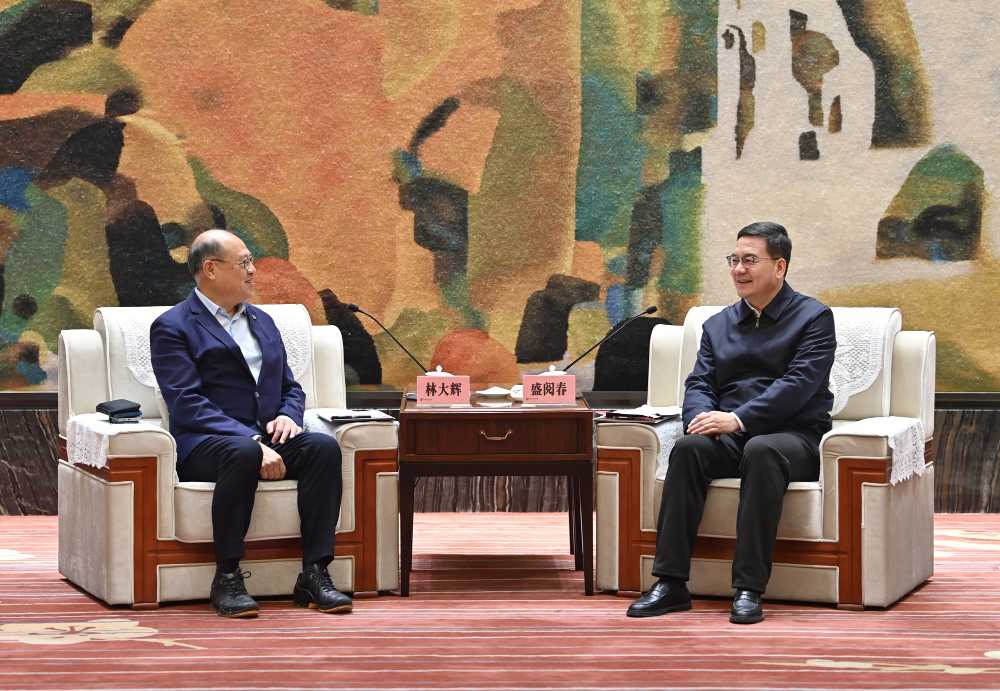
Core Points - The meeting between the Mayor of Wuhan, Sheng Yuechun, and the Chairman of the Board of Hong Kong Polytechnic University, Lin Dahui, emphasizes the importance of collaboration in technology and industry innovation [1][3] - Wuhan is positioned as a key hub for science and education, with significant support from national leadership for technological advancements [3][5] - The establishment of the Hong Kong Polytechnic University Wuhan Technology Innovation Research Institute is seen as a strategic opportunity to enhance cooperation in technology innovation and talent development [5] Group 1 - Wuhan is recognized as a national center for science and education, with a strong emphasis on technological and industrial innovation [3] - The local government aims to create a conducive environment for innovation and entrepreneurship, focusing on high-end scientific resources and collaboration with universities and enterprises [3][5] - The partnership aims to drive advancements in critical sectors such as life sciences, artificial intelligence, new energy, and new materials [5]
韩国高校招生新政 拒收“校园霸凌生”
Xin Hua She· 2025-11-04 06:44
Group 1 - South Korean universities are changing their admission policies to reject applicants with records of school violence, with six out of ten top national universities implementing this rule for the 2025 admissions season [1] - A total of 45 applicants were rejected due to school violence records, including 2 from Seoul National University and 22 from Kyungpook National University [1] - Starting in 2026, all South Korean universities will be required to consider applicants' school violence records during admissions [1] Group 2 - The penalties for school violence in South Korea range from written apologies to expulsion, categorized into nine levels, with the highest levels being permanently recorded [1] - Kyungpook National University has established a strict point deduction system for applicants based on their school violence penalties, with deductions ranging from 10 to 150 points depending on the severity of the offense [1] - Teacher training and medical universities are also considering similar measures to reject applicants with any record of school violence [1] Group 3 - The change in admission policies reflects a deeper cultural shift in South Korea, where school violence is increasingly recognized as a societal issue rather than a personal dispute [2] - There is a growing societal demand for accountability regarding school violence, with an emphasis on the long-term consequences for perpetrators [2] - The perception of school violence has evolved, with it now being viewed as an infringement on basic rights, necessitating a shift in how such behaviors are addressed [2]
第五届水利学科青年(C类)/地区科学基金结题项目学术研讨会在江苏大学举行
Yang Zi Wan Bao Wang· 2025-11-04 05:12
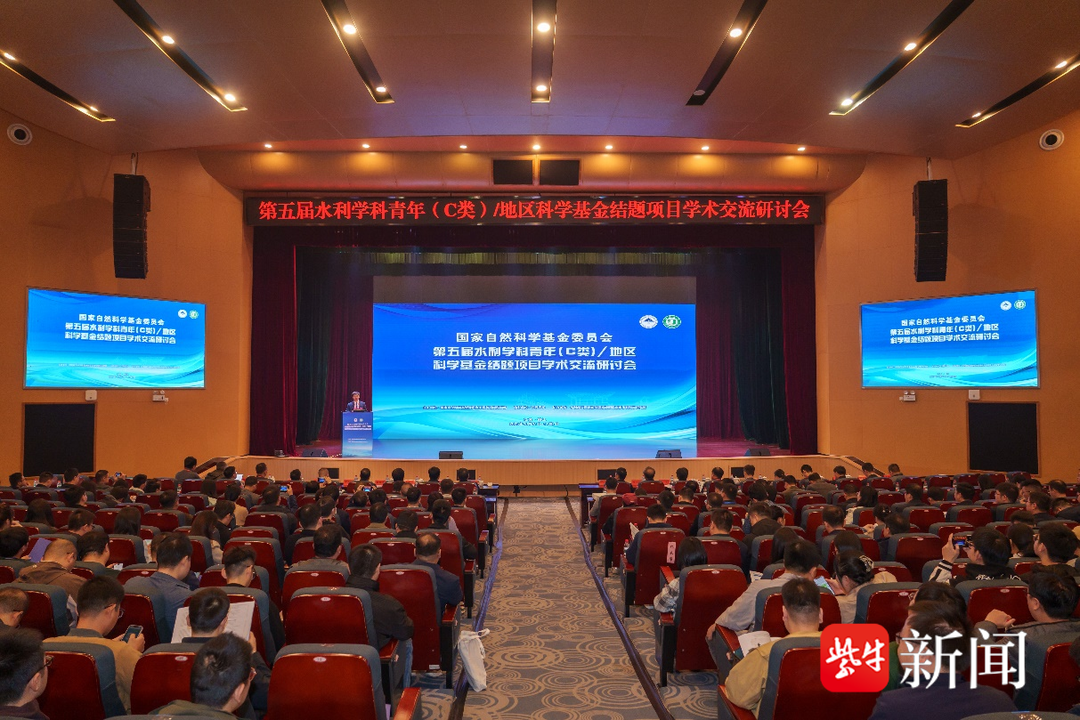
Core Insights - The conference focused on the innovation and development of basic scientific research in water conservancy science and engineering, aiming to promote the growth and exchange of young scholars [1][5]. Group 1: Conference Overview - The academic exchange seminar was held from October 31 to November 2 in Zhenjiang, Jiangsu, organized by the National Natural Science Foundation of China [1]. - The event attracted over 200 experts and representatives from more than 80 universities and research institutions, including Tsinghua University, Peking University, and Jiangsu University [3]. Group 2: Key Presentations - Notable presentations included topics such as "Intelligent Era and Water Conservancy Engineering Construction and Operation," and "Hydrodynamic Reconstruction and System Governance under Water Network Patterns" [5]. - Presenters provided specific suggestions and hopes for the research directions and growth paths of young scholars [5]. Group 3: Academic Exchange and Discussions - The conference featured four sub-forums where 48 young project leaders shared their academic achievements and innovative ideas from their research projects [7]. - Discussions included themes like project selection, interdisciplinary collaboration, and academic exchanges, with experts providing detailed guidance based on their research experiences [9]. Group 4: Institutional Support and Future Directions - The seminar aimed to establish a platform for academic achievements and innovative ideas, enhancing the innovative thinking capabilities of young talents [5]. - The event was hosted by the Engineering and Materials Science Department of the National Natural Science Foundation, with Jiangsu University as the organizer [11].
1.54亿元,上海科技大学采购大批仪器设备,年度预算已近10亿
仪器信息网· 2025-11-04 03:56
Core Viewpoint - ShanghaiTech University has announced procurement intentions for 36 items of laboratory equipment, with a total budget of 154 million yuan, scheduled for procurement between August and December 2025 [2][3]. Procurement Overview - The procurement includes specialized sterilizers for laboratory animals, interdisciplinary multimodal AI computing platform server clusters, hard X-ray free electron laser devices, and high-precision angle measuring instruments among others [3][4]. - The total budget for the procurement is 154 million yuan, indicating significant investment in advanced research capabilities [2][3]. Detailed Procurement List - The procurement list includes: - Hard X-ray free electron laser device with a budget of 350 million yuan [5]. - Specialized sterilizers for laboratory animals, with a requirement for 5 units, designed for high-temperature and high-pressure sterilization [7]. - Interdisciplinary multimodal AI computing platform server clusters, requiring 30 GPU computing nodes [8]. - Other notable items include molecular pumps, diagnostic equipment, and various vacuum systems, all aimed at enhancing research infrastructure [6][9]. Timeline and Delivery - The expected procurement timeline is set for August to December 2025, with specific delivery and installation requirements outlined for each item [3][4]. - Quality assurance periods for the equipment range from 1 to 2 years, ensuring reliability and performance in research applications [8][11].
