自动驾驶

Search documents
一家投资OpenAI的硅谷基金的深度研究
3 6 Ke· 2025-12-25 11:33
Core Insights - The discussion revolves around the investment landscape in the U.S., particularly focusing on AI, reindustrialization, and financial innovation as the three main investment themes for the future [12][13]. Group 1: Investment Themes - The three main investment themes identified are AI, reindustrialization, and the digitization of finance, which are interconnected [12][13]. - AI is recognized as a dominant force, with significant investments in chips and cloud infrastructure [13]. - Reindustrialization includes aspects like rare earths, domestic manufacturing, and data centers, with a focus on how these relate to AI [13]. - Financial innovation is highlighted by the introduction of legislation like the Genius Act, which aims to enhance the efficiency of stablecoin payments [14]. Group 2: Market Dynamics - The U.S. stock market has experienced increased volatility post-2020, with multiple downturns compared to historical trends [10]. - The AI sector has seen a surge in interest and investment, particularly in 2023, following a period of market pessimism in 2022 [10][11]. - The investment community is closely monitoring U.S.-China relations and the activity of IPOs in Hong Kong, which could influence future investments in China [14]. Group 3: Company-Specific Insights - OpenAI is viewed as a product company rather than just a model company, with a strong emphasis on user experience and first-mover advantage [15]. - The business model of OpenAI is characterized by high costs associated with training and inference, leading to a negative cash flow initially, but with potential for future profitability [16][18]. - OpenAI's revenue streams are diversified, with significant contributions from ChatGPT, API services, and potential advertising revenue [19][22]. - Anthropic is noted for its strong business model focused on B2B services, with a rapidly improving profit margin [38]. Group 4: Competitive Landscape - OpenAI's main competitors are identified as Google, which has a strong market position due to its integrated services [25]. - The competitive dynamics between OpenAI and Google are highlighted, with Google leveraging its existing services to maintain market share [27]. - The emergence of new AI model companies is noted, with varying degrees of success and investment interest [44]. Group 5: Future Outlook - The prediction market is identified as a new and rapidly growing sector, with significant trading volumes and potential for expansion [63][64]. - The overall sentiment in the investment community is cautiously optimistic, with a focus on identifying disruptive technologies and companies that can capture large market opportunities [61].

华科&港大提出UniLION:基于线性组 RNN 的统一自动驾驶模型
自动驾驶之心· 2025-12-25 09:33
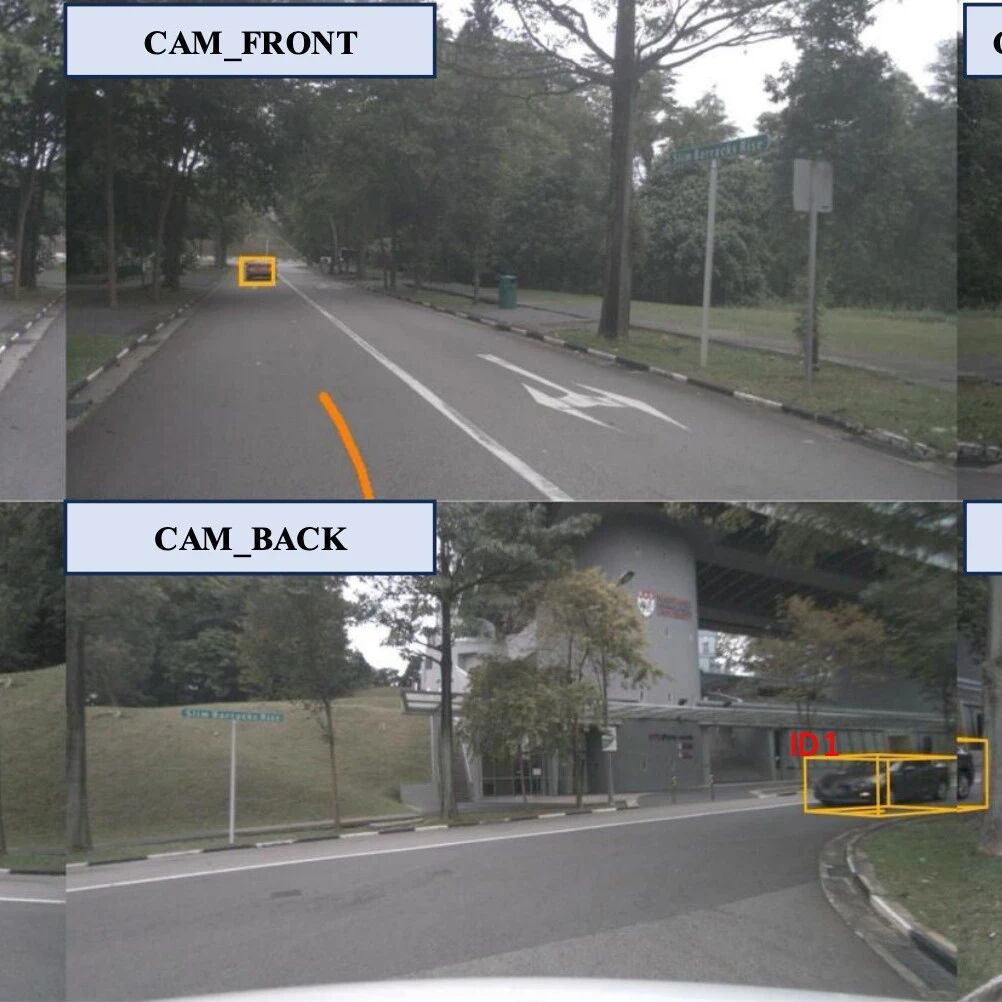
Core Viewpoint - UniLION is a groundbreaking unified autonomous driving framework developed by the University of Hong Kong, Huazhong University of Science and Technology, and Baidu, which effectively addresses computational efficiency issues in processing large-scale point cloud data and multi-view images using linear group RNN technology [2][3]. Group 1: Project Overview - UniLION is designed to efficiently handle large-scale LiDAR point clouds, high-resolution multi-view images, and temporal data without the need for explicit temporal or multi-modal fusion modules, supporting various configurations seamlessly [4][5]. - The framework aims to simplify the design of multi-modal and multi-task autonomous driving systems while maintaining superior performance across core tasks such as 3D perception, prediction, and planning [3][44]. Group 2: Research Background and Challenges - Current autonomous driving systems face challenges in computational efficiency, multi-modal fusion complexity, temporal information processing, and multi-task learning difficulties [5]. - Traditional Transformer models introduce significant computational overhead due to their quadratic complexity in attention mechanisms when processing long sequences [5]. Group 3: Innovations of UniLION - UniLION features a unified 3D backbone network based on linear group RNN, allowing seamless processing of different modalities and temporal information without explicit fusion modules [8]. - The framework utilizes linear computational complexity to convert multi-view images, LiDAR point clouds, and temporal information into tokens for unified integration in 3D space [8]. - UniLION generates a compact unified bird's-eye view (BEV) representation of heterogeneous multi-modal information and time series, serving as shared features for various downstream tasks [8]. Group 4: Performance Results - UniLION demonstrated competitive and state-of-the-art performance on the nuScenes dataset, achieving 74.9% NDS and 72.2% mAP in 3D object detection, 76.2% AMOTA in multi-object tracking, and 72.3% mIoU in BEV map segmentation [20]. - The strongest temporal multi-modal version of UniLION achieved 75.4% NDS and 73.2% mAP in detection tasks, showcasing its advanced capabilities across multiple evaluation tasks [20]. Group 5: Efficiency and Robustness - UniLION significantly reduces computational resource requirements and inference time through its linear computational complexity, making it suitable for deployment in real-world autonomous driving systems [35]. - The framework exhibits strong robustness against sensor misalignment, maintaining performance even under high misalignment levels [32]. Group 6: Future Prospects - Future work includes expanding UniLION to support additional sensor modalities, applying it in real-world autonomous driving systems, and exploring large-scale pre-training to enhance its generalization capabilities [45].
香港运输署再批自动驾驶车辆先导牌照 涵盖转机停车场至机场海天中转大楼路段
Zhi Tong Cai Jing· 2025-12-25 09:20
Core Viewpoint - The Hong Kong Transport Department has issued a new pilot license for autonomous vehicles, aiming to facilitate passenger transport from the Hong Kong-Zhuhai-Macao Bridge to the Hong Kong International Airport [1][2] Group 1: Project Details - The approved testing route for autonomous vehicles spans from the "Transfer Parking Lot" at the Hong Kong-Zhuhai-Macao Bridge to the entrance of the restricted area at the airport [1] - During the initial testing phase, each autonomous vehicle will have a backup operator onboard to take control if necessary [1] - All pilot autonomous vehicles must display a designated label from the Hong Kong Transport Department for identification by other road users [1] Group 2: Future Plans and Applications - The Transport Department anticipates transitioning to passenger operations after successful testing, allowing travelers to park at the automated "Transfer Parking Lot" and take autonomous vehicles to the SkyPier for transfers [2] - The department invites interested organizations or companies to submit applications for pilot licenses, which will be evaluated based on various factors including design, operational scope, and compliance with national or international standards [2]
天眼新知 从技术验证到商业量产,自动驾驶产业链的增长逻辑与机遇
Huan Qiu Wang Zi Xun· 2025-12-25 04:46
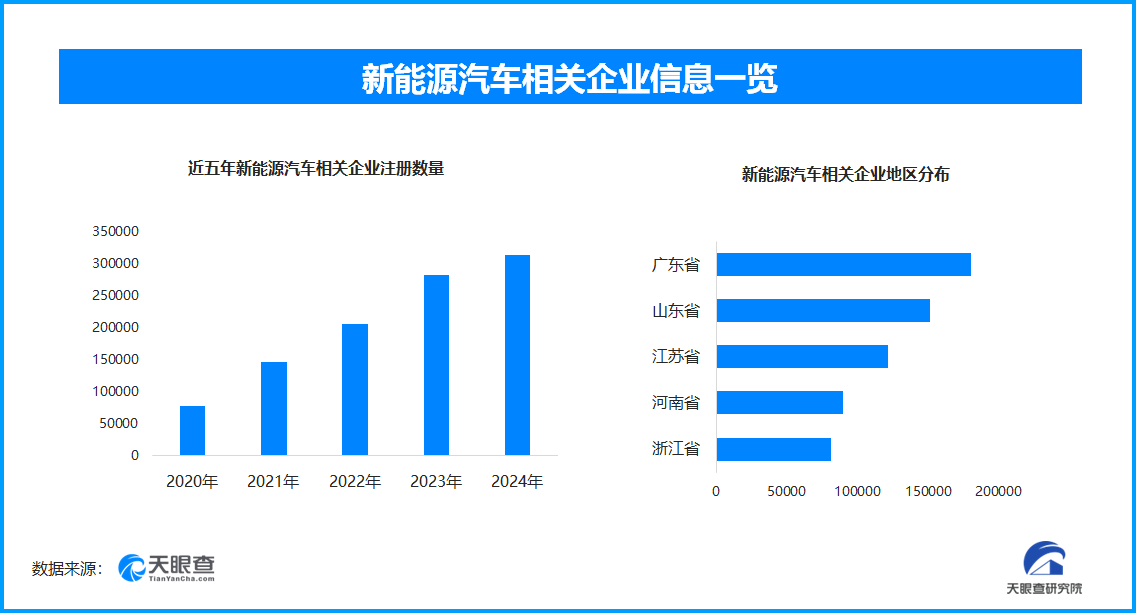
Group 1: Industry Trends - The year 2025 marks a critical turning point for China's automotive industry, with the penetration rate of new energy passenger vehicles surpassing 50%, indicating a shift from "policy-driven" to "market-driven" dynamics [1] - The Ministry of Industry and Information Technology (MIIT) has issued the first batch of L3-level conditional autonomous driving vehicle permits, signaling a transition from closed testing to commercial application [1][6] - The combination of these trends is reshaping the competitive landscape of the automotive industry and signaling a clear demand for core supply chain components such as lidar, domain controllers, and high-precision maps [1] Group 2: Market Growth and Consumer Behavior - The new energy vehicle (NEV) market has seen significant growth, with production and sales reaching 14.907 million and 14.78 million units respectively from January to November 2025, reflecting a year-on-year increase of 31.4% and 31.2% [2] - Structural changes in consumer demand are driving this growth, with over 60% of consumers expected to replace their vehicles, and 70% of younger consumers prioritizing intelligent driving features in their purchasing decisions [2] - The sales growth in lower-tier cities is notable, with a 61% increase in NEV sales, and the 100,000 to 150,000 yuan price range becoming mainstream [2] Group 3: Technological Advancements - The diversification of technology routes is enhancing the potential for intelligent development, with pure electric vehicles remaining the market's mainstay, while plug-in hybrids and range-extended models are expected to exceed 8 million units in sales by 2025 [5] - The transition to a "hardware + software + services" business model among NEV companies is driving increased investment in intelligent driving technology, fostering a positive cycle of research, application, and iteration [5] Group 4: Autonomous Driving Development - The issuance of L3-level permits represents a controlled commercialization phase, with clear responsibilities established for both manufacturers and drivers during system takeover scenarios [6][8] - The market for lidar is projected to reach 24.07 billion yuan in 2025, reflecting a 127% increase from 13.96 billion yuan in 2024, driven by the demand for precise environmental perception in L3-level autonomous driving [9] - The domestic market for high-precision maps is expected to grow to 6.5 billion yuan in 2025, up from 5 billion yuan in 2024, enhancing the reliability of autonomous driving systems [9] Group 5: Investment Opportunities - There are over 8900 existing autonomous driving-related companies in China, with Guangdong, Hebei, and Beijing leading in the number of enterprises [6] - Investors can leverage tools to identify core enterprises and potential collaboration opportunities within the supply chain of NEVs and intelligent components [5][9] - The continuous decline in technology costs, expansion of pilot areas, and improvement of regulatory frameworks are expected to drive the evolution of autonomous driving from specific scenarios to widespread coverage [10]
刚做了一份世界模型的学习路线图,面向初学者......
自动驾驶之心· 2025-12-25 03:24
Core Viewpoint - The article discusses the distinction between world models and end-to-end models in autonomous driving, clarifying that world models are not a specific technology but rather a category of models with certain capabilities. It emphasizes the trend in the industry towards using world models for closed-loop simulation to address the high costs associated with corner cases in autonomous driving [2]. Course Overview - The course on world models in autonomous driving is structured into six chapters, covering the introduction, background knowledge, discussions on general world models, video generation-based models, OCC-based models, and job-related insights in the industry [5][6][7][8][9]. Chapter Summaries - **Chapter 1: Introduction to World Models** This chapter outlines the relationship between world models and end-to-end autonomous driving, discussing the development history and current applications of world models, as well as various streams such as pure simulation, simulation plus planning, and generating sensor inputs [5]. - **Chapter 2: Background Knowledge** This chapter covers foundational knowledge related to world models, including scene representation, Transformer technology, and BEV perception, which are crucial for understanding subsequent chapters [6]. - **Chapter 3: General World Models** Focuses on popular general world models like Marble from Li Fei-Fei's team and Genie 3 from DeepMind, discussing their core technologies and design philosophies [7]. - **Chapter 4: Video Generation-Based World Models** This chapter delves into video generation algorithms, starting with GAIA-1 & GAIA-2 and extending to recent works like UniScene and OpenDWM, highlighting both classic and cutting-edge advancements in this area [8]. - **Chapter 5: OCC-Based World Models** Concentrates on OCC generation algorithms, discussing three major papers and a practical project, emphasizing the potential for these methods to extend into vehicle trajectory planning [9]. - **Chapter 6: World Model Job Topics** This chapter shares practical insights from the instructor's experience, addressing industry applications, pain points, and interview preparation for positions related to world models [9]. Learning Outcomes - The course aims to provide a comprehensive understanding of world models in autonomous driving, equipping participants with the knowledge to achieve a level comparable to one year of experience as a world model algorithm engineer [10].

爆发的L4,得抓住这波风口......
自动驾驶之心· 2025-12-25 03:24
Group 1 - The article introduces a new L4 autonomous driving community focused on financing, technological advancements, and various applications such as RoboTaxi, RoboBus, RoboVan, unmanned delivery, unmanned mining trucks, and heavy-duty trucks [1]
刷新NAVSIM SOTA,复旦引望提出Masked Diffusion端到端自动驾驶新框架
机器之心· 2025-12-25 03:12
Core Insights - The article discusses the transition in end-to-end autonomous driving from a "modular" approach to a "unified" paradigm with the rise of Vision-Language-Action (VLA) models, highlighting the limitations of existing autoregressive generation paradigms [2] - It introduces the WAM-Diff framework, which innovatively incorporates discrete masked diffusion models into VLA autonomous driving planning, addressing the challenges of single-direction temporal generation [2][6] Group 1: WAM-Diff Framework - WAM-Diff utilizes Hybrid Discrete Action Tokenization to convert continuous 2D trajectory coordinates into high-precision discrete tokens, achieving an error control within 0.005 [6] - The framework employs Masked Diffusion as its backbone, allowing for parallel prediction of all token positions, significantly enhancing inference efficiency and enabling global optimization [6] - WAM-Diff explores decoding strategies, revealing that the reverse-causal strategy outperforms others in closed-loop metrics, validating the "end-to-begin" planning logic [9][20] Group 2: Performance Metrics - In the authoritative NAVSIM benchmark, WAM-Diff achieved state-of-the-art (SOTA) scores of 91.0 PDMS in NAVSIM-v1 and 89.7 EPDMS in NAVSIM-v2, demonstrating its potential in complex autonomous driving scenarios [3][18] - The model surpassed competitors like DiffusionDrive and ReCogDrive, indicating its robustness in balancing safety and compliance in real-world driving conditions [18] Group 3: Technical Innovations - WAM-Diff integrates a Low-Rank Adaptation Mixture-of-Experts (LoRA-MoE) architecture, which includes 64 lightweight experts for dynamic routing and sparse activation, enhancing model capacity and adaptability [11] - The Group Sequence Policy Optimization (GSPO) algorithm is introduced to bridge the gap between open-loop training and closed-loop execution, optimizing trajectory sequences based on safety, compliance, and comfort metrics [14] Group 4: Conclusion - The emergence of WAM-Diff marks a significant step towards discrete, structured, and closed-loop autonomous driving planning, emphasizing the importance of both "how to generate" and "what to generate" in the VLA era [25]

文远知行20251224
2025-12-25 02:43
Summary of WeRide's Conference Call Company Overview - WeRide focuses on L4 autonomous driving technology, with product lines including Robotaxi, Robobus, Robovan, and Robosweeper, and is testing and operating in multiple global locations, expecting a commercial explosion in 2026 [2][3] Core Insights and Arguments - WeRide has developed a self-research V2X autonomous driving technology platform that provides products and services from L2 to L4, collaborating with automakers and mobility platforms to accelerate commercialization, forming a "iron triangle" model [2][6] - The company has partnered with Bosch in the ADAS field, contributing advanced technology and product development experience, which has positively impacted performance [2][12] - From 2020 to 2022, WeRide's revenue grew at a compound annual growth rate (CAGR) of 439%, but is expected to decline in 2023-2024 due to macroeconomic conditions and completion of customized R&D services [2][14] - In the first three quarters of 2025, revenue increased by 60% year-on-year, with losses expected to narrow [2][15] Market Potential - The global L4 market is projected to reach trillions in the next three years, with significant potential in various segments: - The domestic Robotaxi market is estimated at 236 billion RMB, currently less than 1% market share [4][16] - Robobus market potential is between 15-35 billion RMB, with about 2% market share [4][19] - Robovan market potential is 164.5 billion RMB, also around 2% market share [4][24] - The Robosweeper market is estimated at 11.3-22.5 billion RMB, with a 4.7% market share [5][20] Financial Performance - Revenue projections for 2025 to 2027 are 550 million, 1 billion, and 1.866 billion RMB, respectively, with net losses of 1.4 billion, 1.3 billion, and 1 billion RMB [8][37] - The gross margin has decreased from 74% to 31% from 2020 to 2024, with fluctuations due to product structure changes and pricing strategies [15][14] Strategic Partnerships - WeRide collaborates closely with automotive manufacturers, bus groups, and taxi groups to explore the commercialization of L4 autonomous driving through the iron triangle model [9][33] - Key partnerships include collaborations with Nissan, GAC, and Geely for Robotaxi production, and with Yutong and King Long for Robobus [30][34] Future Development Directions - WeRide plans to accelerate global business expansion and further enhance its smart mobility business, focusing on high-level intelligent driving solutions [10][29] - The company aims to develop safe and reliable autonomous driving technologies to cover more smart mobility, smart logistics, and smart sanitation scenarios [10][30] Technological Advancements - WeRide's self-developed Waymo One platform features a full-stack autonomous driving software algorithm and modular hardware architecture, supporting a range of autonomous driving products from L2 to L4 [23][26] - The company has developed a high-performance computing platform with Lenovo, reducing costs by 50% and providing 2000 TOPS AI computing power [28][24] Global Expansion and Deployment - WeRide has initiated commercial operations in Abu Dhabi and Dubai, with plans to expand to Riyadh and other regions [29][35] - The company has received multiple autonomous driving licenses across several countries, including Switzerland, China, UAE, Saudi Arabia, Singapore, France, Belgium, and Japan [35][36] Conclusion - WeRide is positioned as a leading supplier of L4 autonomous driving products and solutions, with significant growth potential in various markets and a strong focus on technological innovation and strategic partnerships to drive commercialization [37]

美国旧金山停电致Waymo自动驾驶出租车集体趴窝 官方回应
Feng Huang Wang· 2025-12-25 00:13
Core Viewpoint - Waymo's autonomous vehicles are designed to handle situations where traffic lights are out by treating them as four-way stops, but the scale of the issue has led to operational challenges [1] Group 1: Operational Performance - Waymo reported that its vehicles successfully navigated over 7,000 instances of non-functioning traffic lights, but this led to a surge in requests for confirmation checks to ensure safety [1] - The increase in confirmation requests resulted in task backlogs and response delays, exacerbating traffic congestion on already crowded streets [1] Group 2: Service Suspension - Waymo temporarily suspended its services in San Francisco at the request of city officials to clear streets for emergency responders during a widespread power outage [1] - The company emphasized that this decision was made to prevent further congestion and to ensure that emergency vehicles could operate effectively during peak rescue times [1] Group 3: Industry Context - The power outage in San Francisco caused significant disruptions to public transportation and impacted Waymo's autonomous taxi services [1] - In contrast, Tesla's Robotaxi service reportedly was not affected by the power outage, as noted by Elon Musk [1]

在资本赛道狂飙,在漆黑路口熄火:Waymo的2025扩张悖论
3 6 Ke· 2025-12-25 00:09
在资本追捧与业务狂奔的背后,Waymo用2025年证明:自动驾驶的最终考验并非技术本身,而是其能否在现实世界的混乱与秩序之间找到可靠的平衡 点。 12月20日,旧金山遭遇一场罕见的大规模停电。太平洋煤气与电力公司一座变电站突发火灾,导致全市30%区域交通信号灯熄灭。 然而,在这场城市应急事件中,最引人注目的并非人类司机的混乱应对,而是——Waymo自动驾驶车队的集体"宕机"。 在社交媒体传播的视频上,多辆白色Waymo车辆在漆黑路口停滞不前,红色尾灯在夜色中闪烁,后方排起长龙。 Waymo车辆停摆导致交通堵塞 而就在几天前,外媒The Information刚刚报道称,Waymo正与潜在投资者洽谈融资事宜,公司估值至少达1000亿美元。该报援引知情人士消息称, Waymo的融资规模或超100亿美元,预计将于明年年初落地。 从百亿级融资洽谈、千万级订单达成,到跨城市与跨国业务布局,再到突发事故与安全争议,2025年对于谷歌母公司Alphabet旗下自动驾驶子公司 Waymo而言,是商业化扩张提速、资本关注度飙升的一年,也是技术落地遭遇多重现实挑战的一年。 Waymo在自动驾驶赛道的攻坚之路充满突破与波折,也勾勒 ...