
高阶智驾

Search documents
新质生产力领航 深圳“20+8”产业政策3.0版将出炉
Zhong Guo Zheng Quan Bao· 2026-02-11 20:23
Core Viewpoint - Shenzhen aims to enhance its modern industrial system by implementing the "20+8" strategic emerging industry cluster and future industry policy system 3.0 by 2026, targeting a growth of over 7% in the added value of strategic emerging industries [1] Group 1: Strategic Emerging Industries - By 2025, the added value of Shenzhen's strategic emerging industries is projected to reach 1.67 trillion yuan, accounting for 43% of the regional GDP, with 1,333 national-level specialized and innovative "little giant" enterprises [1] - Shenzhen will focus on enhancing the development capabilities of key industries such as new generation electronic information, new energy vehicles, and semiconductors, while accelerating the construction of major integrated circuit manufacturing projects [2] - The city plans to expand its low-altitude economy, biomedicine, and high-performance materials sectors, promoting deep collaboration in manufacturing and service support [2] Group 2: Innovation and Talent Attraction - Shenzhen will accelerate the construction of key research projects in various fields, including integrated circuits and advanced materials, with over 150 major R&D projects planned [3] - The city aims to increase R&D investment by over 10% this year and attract high-level talent in key technology sectors through initiatives like the "Million Talents Gathering" plan [3] - Shenzhen plans to establish a robust ecosystem of over 10,000 innovation and investment funds, supporting high-growth enterprises [3] Group 3: Urban Development and Infrastructure - Shenzhen will develop new urban areas with a focus on integrating education, research, and finance, while enhancing infrastructure such as the extension of Metro Line 13 [4] - The city aims to become a global leader in smart city development, with plans to add 2,000 5G-A base stations and improve IoT sensing platforms [4] Group 4: Consumer Market and Economic Growth - Expanding domestic demand and promoting consumption will be a priority for Shenzhen in 2026, with initiatives to foster new consumption growth points in AI and other sectors [6] - The city plans to develop world-class commercial districts and enhance the retail environment, including the addition of over 500 duty-free shops [7] - Shenzhen's retail sales are expected to stabilize at over 1 trillion yuan during the "14th Five-Year Plan" period, with significant growth in the wholesale and retail sectors [7] Group 5: Tourism and Cultural Development - Shenzhen aims to become a world-class tourist destination by developing various attractions and enhancing the overall tourism experience [5][6] - The city will focus on integrating sports and technology to create immersive consumer experiences in the sports sector [5] - Recommendations include improving the accommodation ecosystem to meet diverse consumer needs, enhancing the overall tourism infrastructure [8]
招商证券:中美同步推高阶智驾 料智驾板块将率先突破低谷
智通财经网· 2025-12-22 02:49
Core Viewpoint - The report from China Merchants Securities indicates that the high-level autonomous driving sector in China and the U.S. is advancing simultaneously, suggesting that the autonomous driving segment is expected to break out of its recent downturn [1] Group 1: Industry Developments - China's L3 production access has achieved institutional implementation, with a cautious and orderly pace of commercialization [1] - Tesla's Robotaxi testing without safety drivers is progressing, indicating rapid evolution in autonomous driving technology [1] Group 2: Investment Recommendations - The report recommends the following companies for investment: Xpeng Motors-W (09868) and Tesla (TSLA.US) for complete vehicles [1] - For components, the report suggests Horizon Robotics-W (09660) and Hesai Technology-W (02525) [1] - For Robotaxi operations, the recommendation is for Pony.ai-W (02026) [1]


零跑汽车曹力辟谣:从来没说过与华为道不同不相为谋
Bei Ke Cai Jing· 2025-10-30 11:49
Core Viewpoint - The senior vice president of Leap Motor, Cao Li, clarified that the company has never stated that it would not collaborate with Huawei, emphasizing that Leap Motor will not use Huawei's Qian Kun driving system in its future high-level autonomous driving technology [1]. Group 1: Company Positioning - Leap Motor is committed to a strategy of fully self-developed core technologies, which is not in conflict with collaborating with other excellent companies [1]. - The company focuses on technological innovation and aims to provide high-quality, high-configuration products to users [1]. Group 2: Industry Context - Cao Li acknowledged that the current state of China's new energy vehicle industry is a result of collective efforts from all industry participants [2]. - There is a call for a more objective, rational, and healthy public opinion environment to allow Leap Motor to focus on vehicle production [2].

港股异动 汽配股尾盘涨幅进一步扩大 敏实集团(00425)涨近8% 耐世特(01316)涨超6%
Jin Rong Jie· 2025-08-25 08:11
Group 1 - Automotive parts stocks saw significant gains, with Minth Group rising 7.11% to HKD 34.64, Nexperia up 6.16% to HKD 6.89, and Delta Electronics increasing 5.27% to HKD 28.74 [1] - A report from China Merchants Securities highlights a noticeable off-season in the car market for July, attributed to sales overreach in June and temporary subsidy interruptions in some regions. However, a new batch of national subsidies amounting to 68 billion is expected to boost the market towards the end of August [1] - The upcoming World Robot Conference is anticipated to act as a catalyst for the robotics industry and related sectors, with a focus on companies that have significant product deliveries and ongoing order fulfillment [1] Group 2 - According to Minsheng Securities, BYD's entire model lineup will feature advanced driving capabilities, with models priced around 200,000 expected to be a major growth area for advanced driving technology. The year 2025 is projected to be a turning point for equal access to intelligent driving [1] - Tesla's Full Self-Driving (FSD) has surpassed 3 billion miles in cumulative mileage, with version 13 achieving parking-to-parking functionality. The rapid growth of Tesla's AI computing power is providing strong support for model training [1] - There is optimism regarding the growth potential in the intelligent driving domain, cockpit domain control, and steer-by-wire chassis sectors [1]

汽配股尾盘涨幅进一步扩大 敏实集团涨近8% 耐世特涨超6%
Zhi Tong Cai Jing· 2025-08-25 08:04
Group 1 - Automotive parts stocks saw significant gains, with Minth Group rising 7.11% to HKD 34.64, Nexperia up 6.16% to HKD 6.89, and Delta Electronics increasing 5.27% to HKD 28.74 [1] - According to a report from China Merchants Securities Hong Kong, July showed clear signs of a seasonal downturn in the automotive market, influenced by sales overreach in June and temporary subsidy interruptions in some regions [1] - The central government has allocated an additional 68 billion yuan in subsidies, which is expected to help the market recover towards the end of August, transitioning into a peak season [1] Group 2 - Minsheng Securities highlighted that BYD's entire model lineup will feature advanced driving capabilities, with models priced around 200,000 yuan expected to be a major growth area for advanced driving technology [1] - Tesla's Full Self-Driving (FSD) has accumulated over 30 billion miles, with the V13 version achieving parking-to-parking functionality, indicating rapid growth in AI computing power for model training [1] - The potential for growth in domains such as intelligent driving domain control, cockpit domain control, and drive-by-wire chassis is viewed positively [1]
小米决定:改名
程序员的那些事· 2025-05-06 03:33
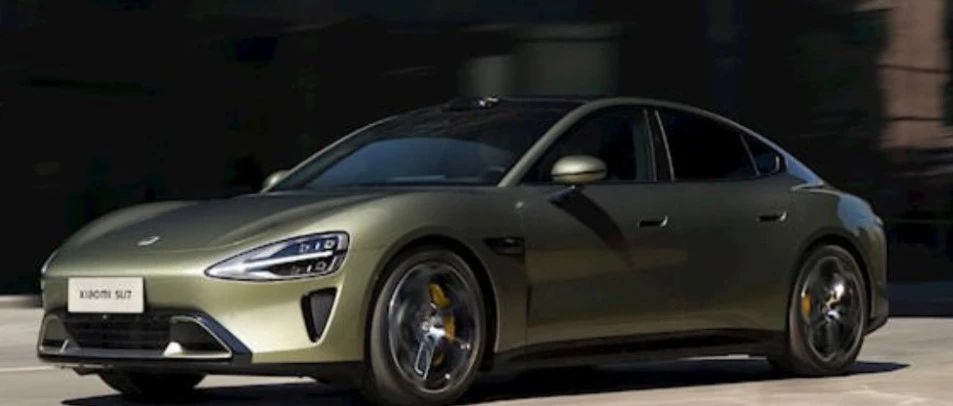
Core Viewpoint - Xiaomi has changed its vehicle ordering page terminology from "Intelligent Driving" to "Assisted Driving" in response to stricter regulatory policies and safety considerations [4][5][6]. Regulatory Changes - The Ministry of Industry and Information Technology (MIIT) held a meeting on April 16, announcing that terms like "Intelligent Driving" and "Autonomous Driving" cannot be used loosely, as they may lead to misunderstandings. Car manufacturers must adopt the terminology "Assisted Driving" or "Intelligent Driving Level + Assisted Driving" [6]. Safety and Responsibility - The previous use of "Intelligent Driving" led to consumer confusion with "Autonomous Driving," resulting in potential misuse. An incident involving the Xiaomi SU7 highlighted the risks associated with vague terminology. The name change aims to clarify functionality and reduce the risk of user errors [7]. - The China Association of Automobile Manufacturers issued a statement urging car manufacturers to adhere to the national standards for advertising and naming driving assistance features, emphasizing the importance of clear and responsible communication to prevent dangerous misuse [7]. Industry-Wide Impact - Xiaomi's renaming is part of a broader trend, with several other car manufacturers also adjusting their terminology. Tesla, BYD, Li Auto, Horizon Robotics, and XPeng have all modified their promotional language to align with the new regulatory standards [8]. - This wave of renaming represents a significant shift in the intelligent driving industry, emphasizing safety and accountability in advertising practices [8].


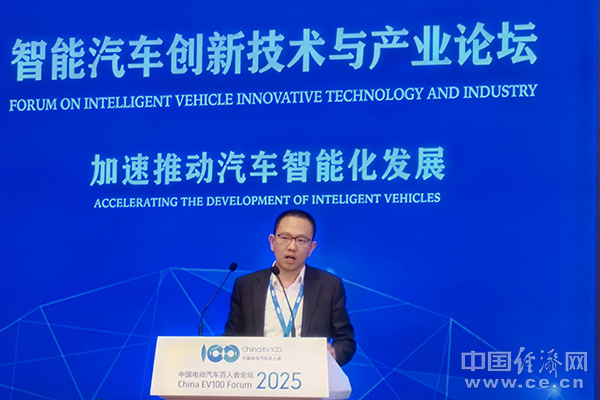
电动汽车百人会(2025)|博世吴永桥:中阶智驾将是标配,座舱才是车企主战场
Zhong Guo Jing Ji Wang· 2025-03-31 02:40
Core Viewpoint - The future of mid-level intelligent driving will become a standard feature in vehicles, similar to seat belts and airbags, leading manufacturers to rely on suppliers for development rather than investing heavily in in-house research and development [1][3]. Group 1: Industry Trends - Mid-level intelligent driving technology, exemplified by BYD's "Tianshen Eye," will be standard in vehicles priced between 80,000 to 150,000 yuan, featuring computing power of 80-150 TOPS and functionalities like highway navigation and automatic parking [3]. - Within three years, it is predicted that high-level intelligent driving will become widespread in vehicles over 150,000 yuan, with full navigation capabilities across various environments [3]. - The cost of developing mid-level intelligent driving systems is significant, with companies like Bosch investing nearly 2 billion yuan in the field last year [3]. Group 2: Supplier Dynamics - Tier 1 suppliers such as Bosch, Yuanrong Qihang, Huawei, and Momenta can support multiple clients and dozens of vehicle models, making it more cost-effective compared to manufacturers developing in-house with limited teams [3]. - Manufacturers typically require a team of 1,000 to 2,000 people to develop around 10 models, which is less efficient compared to the capabilities of suppliers [3]. Group 3: Future Focus Areas - For future L3 and L4 level autonomous driving, components can be managed by the supply chain, allowing manufacturers to focus on areas like user experience and after-sales service that suppliers may not adequately address [4].
汽车行业周动态:比亚迪宣布全系车型将搭载高阶智驾,华为上汽或合作敲定鸿蒙智行新品牌
INDUSTRIAL SECURITIES· 2025-02-21 03:31
Investment Rating - The industry investment rating is maintained as "Recommended" [1] Core Insights - The automotive sector has shown a positive performance with the Shanghai Composite Index increasing by 1.3% and the automotive sub-index (SW Automotive) rising by 1.2% during the week [2] - The year-to-date performance for the automotive sector indicates a 15.4% increase, with the passenger vehicle segment (SW Passenger Vehicles) leading at 17.2% [2] - Notable stock performances include Dongfeng Technology with a weekly increase of 26.7% and Xiangyou Pump with a 15.8% rise, while the worst performers included Construction Industry with a decline of 11.5% [11] Summary by Relevant Sections - **Market Performance**: The automotive sector's weekly trading volume reached 480.6 billion, with a year-to-date increase of 15.4% [2] - **Stock Highlights**: The top gainers in the automotive sector include Dongfeng Technology (+26.7%) and Xiangyou Pump (+15.8%), while the top losers include Construction Industry (-11.5%) and Fuda Shares (-10.5%) [11] - **Sector Analysis**: The SW Passenger Vehicles index has shown a significant increase of 17.2% year-to-date, indicating strong market demand and performance [2]