
软件

Search documents
打造行业数智化发展新优势 双汇发展与金蝶签署战略合作协议
Zhong Guo Xin Wen Wang· 2026-02-02 06:16
Core Insights - The strategic cooperation signing ceremony between Shuanghui and Kingdee marks a significant step towards digital transformation in the meat and fresh products industry, focusing on ERP application replacement and the establishment of a financial sharing platform [2][3] Group 1: Strategic Goals - The collaboration aims to achieve four core objectives, including comprehensive ERP application replacement across the entire business chain, data governance, and the promotion of a digital transformation team [2] - The project is seen as a strategic reshaping for Shuanghui's core competitiveness over the next 10 to 20 years, emphasizing the importance of digital infrastructure for high-quality development [3] Group 2: Leadership Perspectives - Shuanghui's Chairman, Wan Hongwei, highlighted the challenges faced by existing systems in terms of technology architecture and data collaboration, framing the ERP upgrade as a critical initiative for future competitiveness [3] - Kingdee's President, Zhang Yong, noted that the ERP upgrade is not just a system update but a key measure for building a digital core engine and restructuring management capabilities [3] Group 3: Future Outlook - The partnership is expected to enhance operational efficiency, deepen management transformation, and foster innovation capabilities, with the goal of establishing a "century-old brilliant digital Shuanghui" [4]


未知机构:美股一周动态市场情绪与板块表现回顾本周市场全景-20260202
未知机构· 2026-02-02 02:10
Summary of Key Points from Conference Call Records Industry Overview - **Market Sentiment**: The market experienced increased volatility this week, with a significant decline in risk appetite. Managed healthcare and software sectors faced the largest sell-offs, while momentum indicators across various assets weakened, contributing to negative market reactions, such as a 27% drop in silver and a 9% decline in gold [1][1]. - **Asset Management Flows**: Asset management institutions recorded a net purchase of approximately $3 billion, primarily focused on select stocks within the technology and industrial sectors. In contrast, hedge funds had a net sell of about $4 billion, driven by macro product sell-offs [1][1]. Sector Performance Technology Sector - **Stock Movements**: The Nasdaq 100 index saw a slight increase of about 0.5%, but this did not reflect the significant price volatility within the sector. Major tech companies reported mixed earnings, with Meta rising 10% due to strong revenue guidance, while Microsoft fell 10% as Azure growth stabilized. Apple’s revenue exceeded expectations, but stock remained flat due to uncertainties in storage prices [3][3]. - **Software Sector**: Following disappointing earnings from companies like Microsoft and SAP, the software sector became a focal point, with the IGV index plummeting 5%, marking a record high trading volume and ending a short-term rebound for the sector [3][3]. Consumer Sector - **Performance Trends**: The consumer sector lagged behind the market, with a notable underperformance of 500 basis points over six consecutive days. Despite this, many consumer stocks reported solid EPS results [4][5]. Healthcare Sector - **Market Adjustments**: Non-therapeutic healthcare stocks faced significant pressure, particularly in the managed healthcare sector, due to the impact of MAAdvanced Notice and Tools policies exceeding expectations. The volatility in stock prices for companies like DHR and TMO was particularly pronounced as earnings season commenced [5][5]. Energy Sector - **Earnings Reports**: Major U.S. energy stocks, including ExxonMobil and Chevron, reported first-quarter earnings that surpassed market expectations. However, investors remained cautious regarding their production guidance, especially in light of challenges in Kazakhstan. The oilfield services sector saw increased attention, particularly on LBRT, which exceeded EBITDA expectations by 50% and announced new power business opportunities [5][5]. Industrial Sector - **Market Dynamics**: The industrial sector experienced its strongest start since 2010, with material stocks rising by 800 basis points. However, price volatility was influenced by macro events and geopolitical factors. Post-earnings season, performance varied, with chemical stocks showing resilience against a backdrop of weak fundamentals, while leading companies in industrial AI and defense saw declines [6][6]. Real Estate Sector - **Market Concerns**: The real estate sector was primarily affected by a 3% drop in Caterpillar (CAT), raising concerns about housing affordability transactions. This impacted related stocks, including IT and VMware, as well as others indirectly linked to the transaction [6][6]. Additional Insights - **Market Evaluation**: The market is currently assessing the transmission range of recent interest rate fluctuations, indicating a broader concern regarding economic conditions and their impact on various sectors [7][7].
“研发飞地”架起成果转化快速通道——江西新余探索柔性引才新机制
Xin Lang Cai Jing· 2026-02-01 23:26
Core Viewpoint - The "R&D Outpost" model in Xinyu, Jiangxi Province, is an innovative mechanism aimed at attracting high-end talent and enhancing industrial competitiveness through flexible talent acquisition and rapid transformation of research outcomes into practical applications [1][2]. Group 1: R&D Outpost Model - The "R&D Outpost" model allows companies to establish research facilities in high-end talent-rich areas while ensuring that the research outcomes are transferred back to Xinyu for local industrial application [2][3]. - Since 2015, Xinyu has been implementing the "R&D Outpost" model, which promotes an "off-site research, local transformation" collaborative innovation system [2][3]. - As of now, Xinyu has recognized 26 "R&D Outposts," with 25 led by enterprises and one by the government, covering key industries such as lithium batteries, optics, and biomedicine [2][3]. Group 2: Policy Support and Talent Attraction - In August 2022, Xinyu introduced a policy to support the construction of "R&D Outposts," providing 300,000 yuan in funding for recognized outposts located outside the province [2]. - The policy eliminates geographical restrictions, allowing full-time talent recruited for "R&D Outposts" to apply for professional titles in Xinyu without being constrained by household registration or archives [2][3]. - The "R&D Outpost" model has attracted over 600 technology talents, including 4 national-level talents and 35 PhDs [2][3]. Group 3: Economic Impact and Performance Assessment - The "R&D Outposts" have collectively applied for 168 key research projects and developed 487 new products, generating over 5 billion yuan in comprehensive economic benefits [4][5]. - A differentiated performance assessment mechanism will be established by 2025 to evaluate the effectiveness of "R&D Outposts" based on talent recruitment, R&D investment, outcome transformation, and economic benefits [4][5]. - The successful implementation of the "R&D Outpost" model in Xinyu serves as a replicable solution for similar regions facing talent acquisition challenges [5].
华泰A股策略:转向胜率思维
Xin Lang Cai Jing· 2026-02-01 23:20
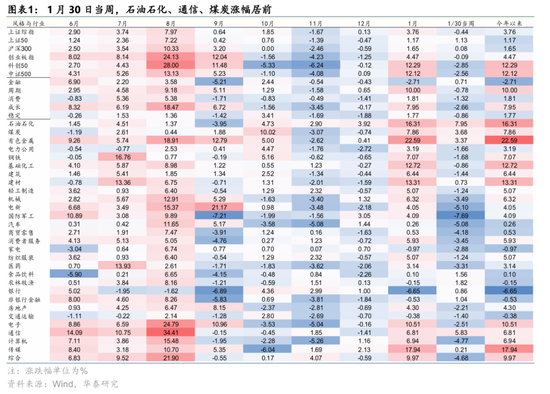
Core Viewpoint - The A-share market is experiencing high volatility at elevated levels, with external and internal factors limiting risk appetite ahead of the holiday season. The core drivers of the current spring market rally remain unchanged, suggesting potential opportunities for investment after adjustments [1][17]. Group 1: Market Analysis - The A-share market has shown a preference for value stocks, with a notable shift towards lower valuation sectors such as liquor and consumer goods, increasing the difficulty of capturing excess returns [1][17]. - Historical spring market adjustments are often driven by profit-taking pressures, policy and fundamental validations, and external environmental shocks. If adjustments are primarily due to fund behavior, they may provide space for subsequent increases [2][18][20]. Group 2: Economic Indicators - As of now, over 50% of annual performance forecasts have been disclosed across all A-shares, with a higher than average positive forecast rate in sectors such as non-bank financials, materials, and consumer goods. The sectors with the highest projected net profit growth include military, machinery, and consumer products [3][21]. - The overall industry prosperity index has risen for two consecutive months, indicating improvements in various sectors, including power equipment, semiconductors, and consumer goods [3][21]. Group 3: Valuation Observations - Current valuation and trading conditions indicate that sectors like computing power and materials are experiencing high levels of crowding, while consumer and export chains, as well as AI applications, are less crowded, presenting potential investment opportunities [4][22]. - The trading crowding in sectors such as semiconductors and aerospace equipment shows signs of decline, while consumer goods and financial sectors are beginning to recover from low trading crowding [4][22]. Group 4: Investment Recommendations - The market is expected to maintain volatility in the short term, with a potential continuation of the spring rally post-holiday. It is recommended to focus on high-quality, low-valuation sectors such as power equipment, semiconductors, and consumer goods [5][23]. - The investment strategy should include a shift towards sectors with high growth potential and favorable valuations, while also considering thematic investments in AI applications and consumer travel chains benefiting from the holiday season [5][23].
2025年我国软件业务收入同比增长13.2% 出口同比增长7.7%
Ren Min Ri Bao· 2026-02-01 22:13
Core Insights - The software business revenue in China is projected to reach 15,483.1 billion yuan in 2025, representing a year-on-year growth of 13.2% [1] - The total profit of the software industry is expected to be 1,884.8 billion yuan in 2025, with a year-on-year increase of 7.3% [1] - Software exports are forecasted to be 62.73 billion USD in 2025, showing a year-on-year growth of 7.7%, maintaining positive growth for 10 consecutive months [1] Software Product Revenue - Software product revenue is anticipated to reach 3,236.1 billion yuan in 2025, reflecting a year-on-year growth of 10.4%, accounting for 20.9% of the total industry revenue [1] Information Technology Services - Revenue from information technology services is projected to be 10,636.6 billion yuan in 2025, with a year-on-year growth of 14.7%, making up 68.7% of the total industry revenue [1] Information Security and Embedded Systems - Revenue from information security products and services is expected to be 223.5 billion yuan in 2025, showing a year-on-year growth of 6.7% [1] - Revenue from embedded systems software is projected to reach 1,386.9 billion yuan in 2025, with a year-on-year increase of 9.3% [1]
黄海清:建议组建中国异构计算软件生态联盟,建立中国的类CUDA系统
Xin Lang Cai Jing· 2026-02-01 16:12
Core Viewpoint - The article highlights a proposal by Dr. Huang Haiqing, a member of the Shanghai Political Consultative Conference and Chairman of Shanghai Yizhi Electronic Technology Co., Ltd., advocating for the establishment of a Chinese version of a "heterogeneous computing" unified software alliance ecosystem, similar to NVIDIA's programming sharing software platform, which is deemed crucial for the entire industry [1]. Group 1 - Dr. Huang suggests that the establishment of a unified software alliance ecosystem is a significant deployment for the industry [1]. - The proposed platform aims to enhance collaboration and innovation within the computing sector in China [1]. - The initiative is positioned as a strategic move to strengthen China's capabilities in heterogeneous computing [1].
港股周观点 | 科技+周期耗材主线回撤而非反转
Xin Lang Cai Jing· 2026-02-01 15:00
Market Overview - The Hang Seng Index reached a four-year high last week, but experienced a technical pullback due to a hawkish Federal Reserve chair nomination, indicating a risk-off sentiment in global equity markets [1] - The market sentiment index moved from panic to optimism within 16 days, suggesting a shift in investor sentiment [1] - Current market volatility is expected to persist, but it is more likely to be a correction rather than a reversal of market performance [1] Earnings and Revenue Expectations - Non-financial earnings expectations have been revised upward by 0.4% over the past four weeks, while revenue expectations have been slightly downgraded by 0.1% [2] - The sectors with the most significant upward revisions in earnings expectations include non-ferrous metals (7.7%), military industry (4.0%), and electric new energy (1.8%) [2] Capital Flow - Foreign capital continues to flow into Hong Kong stocks, with net inflows reaching $2.8 billion, up from $1.95 billion the previous week [3] - Active foreign capital has seen a continuous inflow for three weeks, with a record weekly inflow of $640 million [3] - The nomination of Kevin Warsh as the next Federal Reserve chair has led to short-term volatility, but the medium-term liquidity outlook remains accommodative [3] Market Sentiment - The market sentiment index has risen to 62.1, indicating an optimistic outlook [4] - Factors contributing to this optimism include strong net inflows from southbound capital and high buying intensity [4] Investment Recommendations - Companies with earnings certainty should be considered as core holdings, while opportunities to increase allocations in technology and cyclical materials should be explored during market corrections [5] - Focus on sectors showing upward trends, such as AI-related industries, semiconductor manufacturing, and innovative pharmaceuticals [5]
境外权益(港美股)周度策略报告-20260201
Guo Tai Jun An Qi Huo· 2026-02-01 12:21
Report Industry Investment Rating There is no information about the report industry investment rating in the given content. Core Viewpoints - This week, the three major US stock indexes showed mixed performance. The Dow fell 0.42%, the S&P 500 rose 0.34%, and the Nasdaq fell 0.17%. The nomination of Wash as the next Fed Chairman, tech giant earnings reports, and geopolitical risks are the three core factors driving the US stock market this week [6]. - In the short - term, under regulatory guidance, the slow - bull market with a "slower slope" is progressing steadily. Before the Spring Festival, market liquidity may be weak. It is recommended to focus on high - performance technology stocks and balance with low - level cyclical dividend - paying stocks. Next week, pay attention to the mapping opportunities of A - share hardware and Hong Kong stocks (Internet) when US tech giants release their earnings reports [13]. - In the medium - term, for Chinese stocks, it is recommended to focus on three main lines: technology assets with clear industrial trends supported by policies, some new energy sectors with "supply - side clearance" and "demand - side improvement", and the non - ferrous metals sector benefiting from tight supply, strong structural demand, and interest - rate cut catalysis [13]. - AI in the US stock market is a local bubble rather than a systemic one. The market is currently punishing individual companies with aggressive capital expenditures. The current situation may be similar to that in 1997 from the perspective of the ROIC of the technology industry. It is necessary to dynamically track whether the "ROIC - WACC" of US tech giants and the index level shows a sharp convergence trend [25]. Summary by Related Catalogs US Stocks - This week, Microsoft's stock price dropped significantly. The gap between software companies represented by Microsoft/Oracle and the Philadelphia Semiconductor Index (hardware) has further widened. Nearly one - third of S&P 500 component stocks have disclosed their earnings reports, and the Q4 2025 earnings of US stock sectors are still strong [3]. - Next week, chip stocks AMD, Qualcomm, and Google and Amazon among the "Magnificent Seven" will release their earnings reports. The market will further assess the US economy and the rhythm of future interest - rate cuts through the upcoming US non - farm payroll data. The earnings performance of US tech giants next week is a key window for verifying the "AI bubble". In the short - term, it is necessary to be vigilant about the risk of higher volatility in the US stock market next week. In the medium - term, the report is still optimistic about the investment opportunities in the US stock hardware sector [8]. - AI is a local bubble. Since November 2025, the AI narrative has shifted from rewarding Capex spending to worrying about "liability - like" CAPEX and low visibility of return on investment. The current market pricing is punishing "individual" companies with aggressive capital expenditures, not a systemic risk. The ROIC of the "Magnificent Seven" tech giants has shown a downward inflection point in the past two quarters. It is necessary to track the divergence between "financing growth" and "profit growth" and whether the decline in ROIC will spread to the index level [21][25]. Chinese Stocks - This week, the overall Chinese stock market was slightly volatile, but there were bright spots in the structure. High - performance technology stocks and low - level cyclical stocks with high dividends led the gains. The leading sectors included gold and jewelry, optical modules, and oil and gas exploration [9][10]. - February is the month with the highest winning rate for A - shares over the years. In the short - term, under regulatory guidance, the slow - bull market is progressing steadily. It is recommended to focus on high - performance technology stocks and balance with low - level cyclical dividend - paying stocks. Next week, pay attention to the mapping opportunities of A - share hardware and Hong Kong stocks (Internet) when US tech giants release their earnings reports [12][13]. - In the medium - term, Chinese stocks are recommended to focus on three main lines: technology assets with clear industrial trends supported by policies, some new energy sectors with "supply - side clearance" and "demand - side improvement", and the non - ferrous metals sector benefiting from tight supply, strong structural demand, and interest - rate cut catalysis [13]. - A - share companies with expected profit growth of more than 100% are mainly concentrated in the electronics, basic chemicals, pharmaceutical biology, and power equipment industries [14].

科技+周期耗材主线回撤而非反转
HTSC· 2026-02-01 11:27
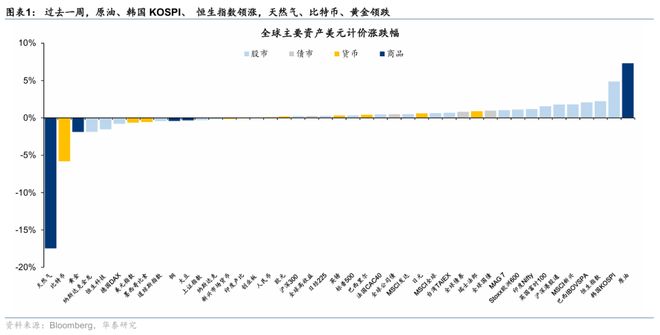
Core Viewpoints - The recent market pullback is seen as a technical correction rather than a reversal, primarily driven by the rapid rise in stock prices and the hawkish stance of the newly nominated Federal Reserve Chair [2] - The current market sentiment has shifted to an optimistic zone, with the emotional index reaching 62.1, indicating a potential for continued volatility in the short term [5][49] - The three driving factors for market space in the first quarter remain intact: improved liquidity, resonance in the funding environment, and upward revisions in profit expectations [2] Fundamental Analysis - Non-financial profit expectations have been revised upward by 0.4% over the past four weeks, while revenue expectations have been slightly adjusted downward by 0.1% [3] - The sectors with the most significant upward revisions in profit expectations include non-ferrous metals (7.7%), military industry (4.0%), and new energy (1.8%) [3] - The official manufacturing PMI for January stands at 49.3, reflecting demand-side pressures, although there are positive signals in price recovery [3] Funding Environment - Foreign capital continues to flow into the Hong Kong stock market, with net inflows reaching $2.8 billion, up from $1.95 billion the previous week [4] - Active foreign capital has seen a continuous inflow for three weeks, with a record weekly inflow of $640 million, while passive foreign capital remains at a high level [4] - The nomination of Kevin Warsh as the next Federal Reserve Chair has led to short-term volatility, but the medium-term liquidity outlook remains relatively loose [4] Market Sentiment - The market sentiment has quickly transitioned into an optimistic zone, with the emotional index indicating a potential accumulation of short-term volatility risks [5][49] - The sentiment indicators, including net inflows from southbound funds and the AH premium score, remain high, suggesting strong market participation [5] Investment Recommendations - Emphasis on companies with earnings certainty as a core holding, with a focus on the technology and cyclical materials sectors for potential incremental investments [6] - Short-term attention should be given to leading companies' earnings reports and industry developments, particularly in the AI supply chain [6] - Mid-term strategies should continue to overweight resource stocks, insurance, and local Hong Kong stocks after stabilization [6]
图解1月ETF涨跌幅、资金流
Ge Long Hui· 2026-02-01 09:04
Group 1 - In January 2026, the A-share ETF market showed a clear divergence, with over 200 billion yuan flowing into industry-themed ETFs such as non-ferrous metals, gold, chemicals, and satellite, while core broad-based ETFs like CSI 300 and CSI 1000 experienced a net outflow exceeding 1 trillion yuan [1][6] - The Shanghai Composite Index rose by 3.76% in January, reaching above the 4100-point mark, while the Sci-Tech 50 Index saw an increase of over 12% [2] - Significant gains were observed in various ETFs, with semiconductor and gold stock ETFs rising over 40%, and mining and non-ferrous metal ETFs increasing by over 20% [2][3] Group 2 - In January, the banking ETF fell by over 6%, along with declines in the automotive and battery ETFs [4] - On January 28, a notable increase in ETF trading volume was recorded, with the Huatai-PineBridge CSI 300 ETF exceeding 40 billion yuan in trading volume, marking the highest since 2015 for the SSE 50 ETF [5] - Over 1 trillion yuan was withdrawn from broad-based ETFs in January, with significant outflows from the CSI 300, CSI 1000, and SSE 50 ETFs, while industry-themed ETFs saw net inflows exceeding 10 billion yuan [6] Group 3 - In January, there was a substantial inflow of overseas funds into Chinese stock assets, with a net inflow of 16.659 billion USD into mainland Chinese stock funds, according to Goldman Sachs [7]