咖啡

Search documents
昨晚158家咖啡店撑起一个IPO
3 6 Ke· 2025-09-13 03:33
Core Insights - The global coffee market is experiencing unprecedented turbulence in 2025, with major players divesting assets while a regional brand, Black Rock Coffee, successfully goes public [1][2] Industry Overview - Major companies like Starbucks and Coca-Cola are facing challenges, leading to asset sales, while Black Rock Coffee's IPO represents a rare success in the sector [1][2] - The IPO of Black Rock Coffee Bar raised funds at a price of $20 per share, closing at $27.53, marking a 38% increase and a market valuation of approximately $1.31 billion [1] Company Strategy - Black Rock Coffee's success is attributed to its "drive-thru" model and digitalization, which enhance efficiency and cater to the fast-paced needs of suburban consumers [2][3] - The company has 158 locations across seven states, focusing on high-frequency customer engagement and operational efficiency [5][6] Financial Performance - In 2024, Black Rock Coffee reported total revenue of $160.9 million, a 20.8% year-over-year increase, with a 24.2% increase in the first half of 2025 [6] - The company is currently in a loss phase, but the loss has narrowed to $1.945 million, showing improvement from the previous year [6][7] - The average unit volume (AUV) for new stores is approximately $1.1 million, with a payback period of about 18 months and a cash return rate of around 40% [6][7] Market Positioning - Black Rock Coffee's pricing strategy is competitive, avoiding the pitfalls of low-cost competition while offering better value than Starbucks [5][6] - The company has a strong membership program, with over 1.8 million users, contributing to 64% of orders, enhancing customer loyalty [7] Future Outlook - The IPO is seen as a significant milestone, indicating that regional brands can thrive amidst global giants through effective operational strategies [8] - The company aims to expand its store network and compete with larger chains like Starbucks and Dutch Bros, which have successfully scaled their operations [2][8]
茶咖日报|星巴克中国出售进入倒计时,四家顶级机构进入最后角逐
Guan Cha Zhe Wang· 2025-09-12 14:33
Group 1: Starbucks China Sale - Starbucks China is in the final stages of a sale, with potential buyers including Boyu Capital, Carlyle Group, EQT, and Sequoia China, expected to finalize by the end of October [1] - The sale attracted interest from over 20 institutions, with Starbucks potentially retaining 30% of the equity, ensuring it remains a major shareholder in its Chinese operations [1] - For the third fiscal quarter of 2025, Starbucks reported total revenue of $9.456 billion, a year-on-year increase of 3.8%, while net profit fell by 47.1% to $558 million [1] Group 2: Performance in China - Starbucks China experienced a revenue increase of 8% year-on-year, reaching $790 million, with same-store sales up by 2% [2] - The number of Starbucks stores in China reached 7,828, with 70 new stores opened and expansion into 17 new county-level markets [2] - The company faces challenges from domestic premium coffee brands and has reduced prices on non-coffee products to enhance overall sales performance [2] Group 3: Tea Baidao's Coffee Initiative - Tea Baidao has launched a trial of freshly brewed coffee products in select stores in Guangdong and Sichuan, featuring a menu with 10 coffee options priced between 6.9 yuan and 12.9 yuan [3] - Daily sales of coffee products at trial locations average 40-50 cups, indicating a positive reception despite competition from popular tea drinks [3] - This is not Tea Baidao's first venture into coffee, as it previously introduced a coffee sub-brand called "Kafei" in 2023 [3] Group 4: Alipay and Luckin Coffee Collaboration - Alipay has launched the first AI payment system in mainland China in collaboration with Luckin Coffee, allowing users to place orders and make payments through AI interaction [4][5] - This initiative represents a significant advancement in the commercialization of AI applications in consumer transactions [5] Group 5: Coffee Robotics Investment - Shanghai Heitun COFE+ has announced the global launch of its sixth-generation coffee robot and is initiating a Series B financing round, with the first round led by Da Pu Asset Management [7] - The company, founded in 2018, has developed coffee robots that are now operational in 15 provinces in China and exported to over 50 countries across five continents [7]



星巴克中国出售倒计时,四家顶级机构最后角逐
Guan Cha Zhe Wang· 2025-09-12 14:28
Group 1: Starbucks China Sale - Starbucks China is in the final stages of a sale, with potential buyers including Boyu Capital, Carlyle Group, EQT, and Sequoia China, expected to finalize by the end of October [1] - The sale attracted over 20 interested institutions, with Starbucks potentially retaining 30% of the equity, ensuring it remains the major shareholder in Starbucks China [1] - As of the third fiscal quarter of 2025, Starbucks reported total revenue of $9.456 billion, a year-on-year increase of 3.8%, while net profit dropped by 47.1% to $558 million [1] Group 2: Performance in China - Starbucks China experienced a revenue increase of 8% year-on-year, reaching $790 million, with same-store sales up by 2% [2] - The number of Starbucks stores in China reached 7,828, with 70 new stores opened and expansion into 17 new county-level markets [2] - The company faces challenges from domestic premium coffee brands and has reduced prices on non-coffee products to enhance overall sales performance [2] Group 3: Tea Baidao's Coffee Initiative - Tea Baidao has launched a trial of freshly brewed coffee products in select stores in Guangdong and Sichuan, featuring a menu with 10 coffee options priced between 6.9 yuan and 12.9 yuan [3] - Daily sales of coffee products in trial stores average 40-50 cups, with peak times requiring a wait of about 15 minutes [3] - This is not Tea Baidao's first venture into coffee, as it previously introduced a coffee sub-brand "Kafei" in 2023 [3] Group 4: Alipay and Luckin Coffee Collaboration - Alipay has launched the first AI payment system in mainland China in collaboration with Luckin Coffee, allowing users to place orders and make payments through an AI assistant [4][5] - This initiative represents a significant advancement in the commercialization of AI applications in consumer transactions [5] Group 5: Shanghai Heitun COFE+ Coffee Robot Financing - Shanghai Heitun COFE+ has announced the global launch of its sixth-generation coffee robot and is initiating Series B financing, with the first round led by Da Pu Asset Management [7] - The company, established in 2018, has developed coffee robots that are now operational in 15 provinces in China and exported to over 50 countries across five continents [7]

星巴克中国出售案进入决赛圈|大并购
3 6 Ke· 2025-09-12 13:19
Core Viewpoint - The bidding process for Starbucks' China business has narrowed down to four private equity firms: Boyu Capital, Carlyle Group, EQT, and Sequoia China, with a valuation of approximately $5 billion based on projected EBITDA of $400 to $500 million for 2025 [1][8]. Group 1: Bidding Firms - Carlyle Group is a notable contender due to its previous investment experience in McDonald's China, where it held a 28% stake and achieved a net gain of approximately $1.2 billion from a $1.8 billion sale [2][8]. - Boyu Capital has been a key player in mergers and acquisitions, gaining recognition through high-profile deals such as Alibaba's buyback of Yahoo shares [3][4]. - EQT, while less known in China, has a strong background in the Asian market and has successfully exited investments totaling $15.1 billion in the first half of the year, primarily through mergers rather than IPOs [5][6]. - Sequoia China has been active in mergers, recently acquiring a majority stake in Marshall Group for €1.1 billion (approximately 8.4 billion RMB) and has a significant fundraising capability, completing a 18 billion RMB fundraising in July 2024 [6][7]. Group 2: Starbucks' Sale Process - Starbucks has been in the spotlight for a year regarding its potential sale, initially evaluating strategic options including partial stake sales while maintaining significant ownership [8][9]. - The valuation of Starbucks' China business has fluctuated, with estimates ranging from $5 billion to as high as $10 billion, reflecting market uncertainties regarding its growth trajectory amid competition from local brands [9][10]. - Starbucks has indicated it will not sell the entire business, retaining core assets and a stake, which may influence the bidding dynamics by reducing the control premium typically sought by buyers [10][11].
星巴克,或许将出售中国业务控制权
2 1 Shi Ji Jing Ji Bao Dao· 2025-09-12 02:30
Group 1: Starbucks China Sale - Starbucks is preparing to sell its controlling stake in its China business, with final bids expected by early October from firms including Carlyle, Hillhouse, Sequoia China, and Boyu Capital [1] - The deal structure remains negotiable, but Starbucks aims to retain control over its coffee roasting facilities in China to maintain quality [1] - CEO Brian Niccol expressed confidence in the Chinese market and indicated that Starbucks is evaluating over 20 interested institutions for potential partnerships to expand its store count significantly [1] Group 2: Competitive Landscape - Luckin Coffee reported a 47.1% year-on-year revenue growth in Q2, reaching 12.36 billion yuan, significantly outpacing Starbucks, which saw an 8% revenue increase to 7.9 billion USD (approximately 56.25 billion yuan) [2] - Luckin's same-store sales grew by 13.4% in Q2, driven primarily by an increase in cup volume, while Starbucks experienced a 2% increase in same-store sales with a 4% decline in average transaction value [2] - The competitive dynamics in the Chinese coffee market are shifting, prompting local capital to pursue Starbucks due to its potential for localized growth [2]
第三次获得“中国投资热点城市”殊荣——长沙高水平开放再加码
Sou Hu Cai Jing· 2025-09-12 02:28
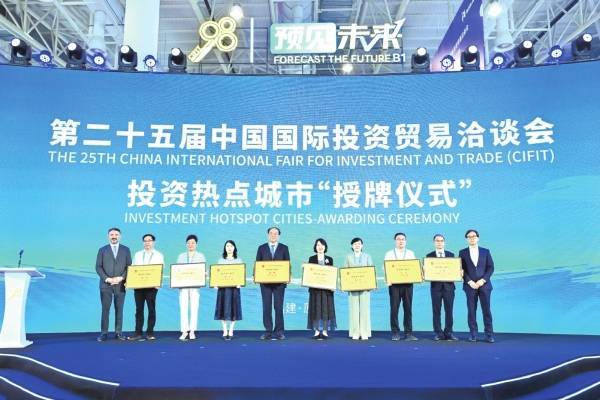
Core Points - Changsha has been recognized as a "Chinese Investment Hotspot City" for the third time at the 25th China International Investment and Trade Fair held in Xiamen [2][3] - The city has achieved significant growth in foreign direct investment, with a year-on-year increase of 26.3% from January to July, and 140 new foreign-invested enterprises established, marking a 6.06% increase [4] Investment Attraction - Changsha has been awarded titles such as "China's Most Attractive Investment City" and "Top Ten Most Satisfied Cities for Foreign Investment," attracting 201 Fortune 500 companies [4] - The city is transitioning from an "inland hub" to an "open highland," enhancing its appeal to international capital [5] International Cooperation - Changsha has established strong ties with Germany, with numerous German companies setting up operations in the city, including BASF and Bosch [6] - The city has implemented a comprehensive plan for attracting German investment, including the establishment of a dedicated platform and various supportive policies [7] Business Environment - Changsha's favorable business environment and innovative vitality have led to significant foreign reinvestment, exemplified by a Hong Kong company reinvesting profits into local projects [8] - The city has launched measures to stabilize foreign trade, including support for enterprises participating in international exhibitions and financing initiatives [9][10] Trade with Africa - Changsha's trade with Africa has surged, with a 57.5% year-on-year increase in imports and exports, making up 54.4% of Hunan Province's total trade with Africa [11] - The city aims to develop a robust coffee industry, targeting a coffee import and export scale of 3 billion by 2027 [11][12] Infrastructure Development - Changsha has established a cross-border RMB center to facilitate trade settlements and has launched several key projects to enhance Sino-African cooperation [12] - The city has opened new air routes to Nairobi and Addis Ababa, improving connectivity for cultural and economic exchanges [12]
星巴克中国出售或10月底敲定 股权比例是关键
2 1 Shi Ji Jing Ji Bao Dao· 2025-09-11 23:17
Core Viewpoint - Starbucks is in the final stages of selling its stake in the Chinese market, with potential buyers including Boyu Capital, Carlyle Group, EQT, and Sequoia China, aiming to finalize the deal by the end of October [1][2]. Group 1: Stake Sale Details - The key issue regarding the stake sale is the percentage of ownership that Starbucks will retain, with indications that the company may keep around 30% of the stake while distributing the remaining shares among several buyers [2][3]. - Starbucks CEO Brian Niccol emphasized the importance of retaining a significant portion of equity in the Chinese market to ensure the company's interests are met [2][4]. Group 2: Market Position and Competition - Starbucks has opened 70 new stores in China, bringing the total to 7,828 as of the end of June [1]. - The competitive landscape is shifting, with Luckin Coffee reporting a 47.1% year-on-year revenue increase to 12.36 billion yuan, significantly outpacing Starbucks [11]. - Luckin Coffee's store count reached 26,206 by the end of the second quarter, highlighting a growing gap in market presence compared to Starbucks [11]. Group 3: Operational Flexibility - Starbucks China has gained more operational flexibility, including the ability to adjust prices and engage in local partnerships, such as a collaboration with Xiaohongshu [8][10]. - The company reported an 8% year-on-year revenue growth to 790 million USD (approximately 5.625 billion yuan) for the latest fiscal quarter, marking three consecutive quarters of growth [10]. Group 4: Strategic Importance of Local Partnerships - Finding a partner that understands the Chinese market is crucial for Starbucks' expansion strategy, as indicated by Niccol [13]. - The trend of local coffee brands rapidly expanding, such as Kudi Coffee with over 15,000 stores, poses a significant challenge to Starbucks' market share [12].
【环时深度】“主权巴西计划”积极应对美关税冲击
Huan Qiu Shi Bao· 2025-09-11 23:00
Group 1 - The "Sovereign Brazil Plan" aims to support exporters, maintain employment, encourage investment in strategic sectors, and ensure economic development in response to U.S. tariffs [1][4] - The plan includes three main pillars: strengthening production, protecting workers, and promoting commercial diplomacy and multilateralism [3][4] - The U.S. tariffs have led to a significant decline in Brazilian exports to the U.S., with an 18.5% year-on-year drop in August, amounting to $2.76 billion [4] Group 2 - The plan proposes measures such as relaxing credit limits, extending tax refund periods, and providing special credit of 30 billion Brazilian Reais (approximately 39.55 billion RMB) to affected companies [5][11] - A National Employment Monitoring Committee will be established to oversee employment levels and benefits in sectors directly impacted by U.S. tariffs [5][11] - The plan emphasizes market diversification to reduce reliance on the U.S. market, with ongoing negotiations with the EU, EFTA, UAE, and Canada [6][10] Group 3 - The Brazilian government aims to rebuild and strengthen its export financing and insurance systems to enhance competitiveness and reduce vulnerability to similar future measures [7][12] - The "Sovereign Brazil Plan" is expected to provide relief to affected industries, including agriculture, metallurgy, manufacturing, and automotive parts [11][12] - Analysts suggest that the plan's effectiveness will depend on its implementation and the equitable distribution of resources to small and medium-sized enterprises [12][13]

外卖补贴“散场”,茶饮、咖啡高增长如何“续杯”?
Mei Ri Jing Ji Xin Wen· 2025-09-11 13:33
Core Viewpoint - The recent subsidy wars among food delivery platforms have significantly impacted the ready-to-drink tea and coffee market, leading to unsustainable growth driven by external incentives rather than organic demand [1][5][8]. Group 1: Market Dynamics - The competition among major food delivery platforms like Meituan, Alibaba, and JD has intensified, resulting in substantial subsidies that have disrupted the pricing structure of the ready-to-drink tea and coffee market [2][3]. - In the first half of 2025, major brands such as Luckin Coffee, Gu Ming, and Mi Xue Ice City reported a combined revenue of 55 billion yuan, an increase of 13.5 billion yuan year-on-year, largely attributed to these subsidies [1][3]. Group 2: Financial Performance - Luckin Coffee reported a net income of 21.22 billion yuan in the first half of 2025, a 44.6% increase year-on-year, with a net profit of 1.78 billion yuan, up from 788 million yuan in the previous year [3]. - Gu Ming achieved a revenue of 5.663 billion yuan in the same period, marking a 41.2% year-on-year growth, while Mi Xue Ice City expanded its store count significantly, contributing to its revenue growth [3][4]. Group 3: Sustainability Concerns - Analysts express concerns regarding the sustainability of the growth driven by delivery subsidies, suggesting that the impressive financial results may not be replicable in the absence of such incentives [5][8]. - The reliance on delivery platforms has led to a decline in dine-in orders, which are more profitable for stores, raising questions about the long-term viability of the current business model [9]. Group 4: Future Strategies - The market regulator has indicated a shift towards more sustainable practices, urging platforms to control subsidies and enhance service quality, which may lead to a decline in sales growth for tea and coffee brands [7][10]. - Companies are now focusing on improving in-store efficiency, increasing customer retention, and exploring international markets as part of their long-term strategies [9][10].

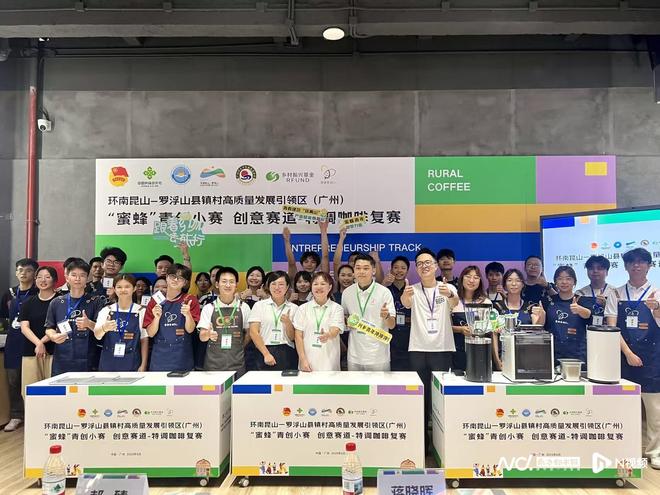
乡村咖啡,青春特调!广州这场青创小赛点燃乡村振兴新引擎
Nan Fang Du Shi Bao· 2025-09-11 13:28
Core Insights - The "Bee" Youth Innovation and Entrepreneurship Competition focuses on the "Rural Coffee Industry" and aims to ignite rural revitalization through youth creativity and entrepreneurship [1][3] - A total of 820 participants registered for the competition, with 48 finalists competing in the final round [3][4] - The competition features two main categories: entrepreneurship and creativity, showcasing projects related to coffee cultivation, brand operation, cultural tourism integration, and innovative heritage [3][4] Group 1: Competition Overview - The competition was launched in April, attracting 820 participants, including 307 in the entrepreneurship track and 513 in the creativity track [3] - After multiple rounds of evaluation, 18 entrepreneurial projects and 30 creative projects advanced to the finals, reflecting deep youth engagement in the rural coffee industry [3][4] - The final event highlighted innovative coffee products and business plans, with participants presenting unique ideas such as nitrogen-infused lychee coffee and local coffee shop concepts [4][6] Group 2: Project Support and Development - Winning projects will receive monetary rewards and support for project incubation, including policy assistance and mentorship [8] - Notable winning projects include the "Guangzhou Luodong Craftsman Town Youth Coffee Workshop" and "Silent Star" in the creativity track, showcasing the potential of youth-led initiatives in the rural coffee sector [8] - The competition aims to cultivate a new generation of youth capable of operating rural coffee businesses and transforming creative ideas into tangible rural development outcomes [8] Group 3: Tourism and Community Engagement - The event also launched a "Follow the Rural Coffee Journey" initiative, promoting 68 rural coffee spaces and creating a tourism map to enhance visitor experiences [9] - The initiative aims to connect urban visitors with rural landscapes and local culinary experiences through coffee tourism [9] - Future promotional efforts will focus on attracting visitors to explore rural areas and enjoy the unique offerings of the rural coffee industry [9]