调味品

Search documents
海天味业(03288.HK)10月28日举行董事会会议审议及批准第三季度业绩
Ge Long Hui A P P· 2025-10-16 09:05
Group 1 - The company, Haitian Flavor Industry (03288.HK), announced that its board meeting will be held on October 28, 2025, to review and approve the third quarter performance for the nine months ending September 30, 2025 [1]
酱菜宝宝接接乐,接住美味,100%有奖!
Bei Jing Ri Bao Ke Hu Duan· 2025-10-16 08:30
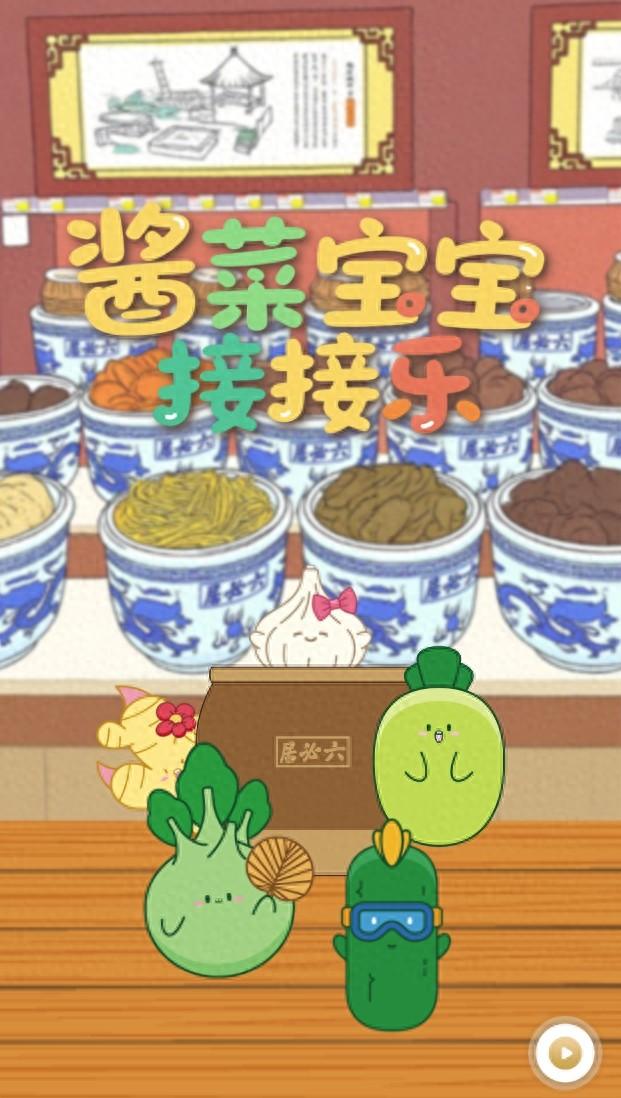
Core Points - The "Exhibition and Purchase" event, part of the "Autumn Consumer Season" in the Exhibition Road area, has launched the 7th Liu Bi Ju Pickled Vegetable Culture Food Festival and the "Taste 600 Years of National Style Culture Market" [1] - Liu Bi Ju has introduced a mobile game called "Pick the Pickled Vegetable Babies," allowing users to catch falling pickled vegetable characters for points and a chance to win prizes [1][4] - The game consists of three progressively difficult levels, and players who complete all levels can participate in a 100% winning lottery for Liu Bi Ju electronic coupons or Meituan coupon packages [4][5] Game Details - Players control a jar to catch falling "Pickled Vegetable Babies" while avoiding non-pickled items to score points [4] - Each user has one free lottery chance during the event, which runs until October 31, 2025 [5][6] - Winners must follow prompts to claim their prizes, with specific instructions for using Liu Bi Ju coupons and Meituan packages [7]

王致和携非遗技艺进校园,有机料酒等新品亮相
Bei Ke Cai Jing· 2025-10-16 07:26
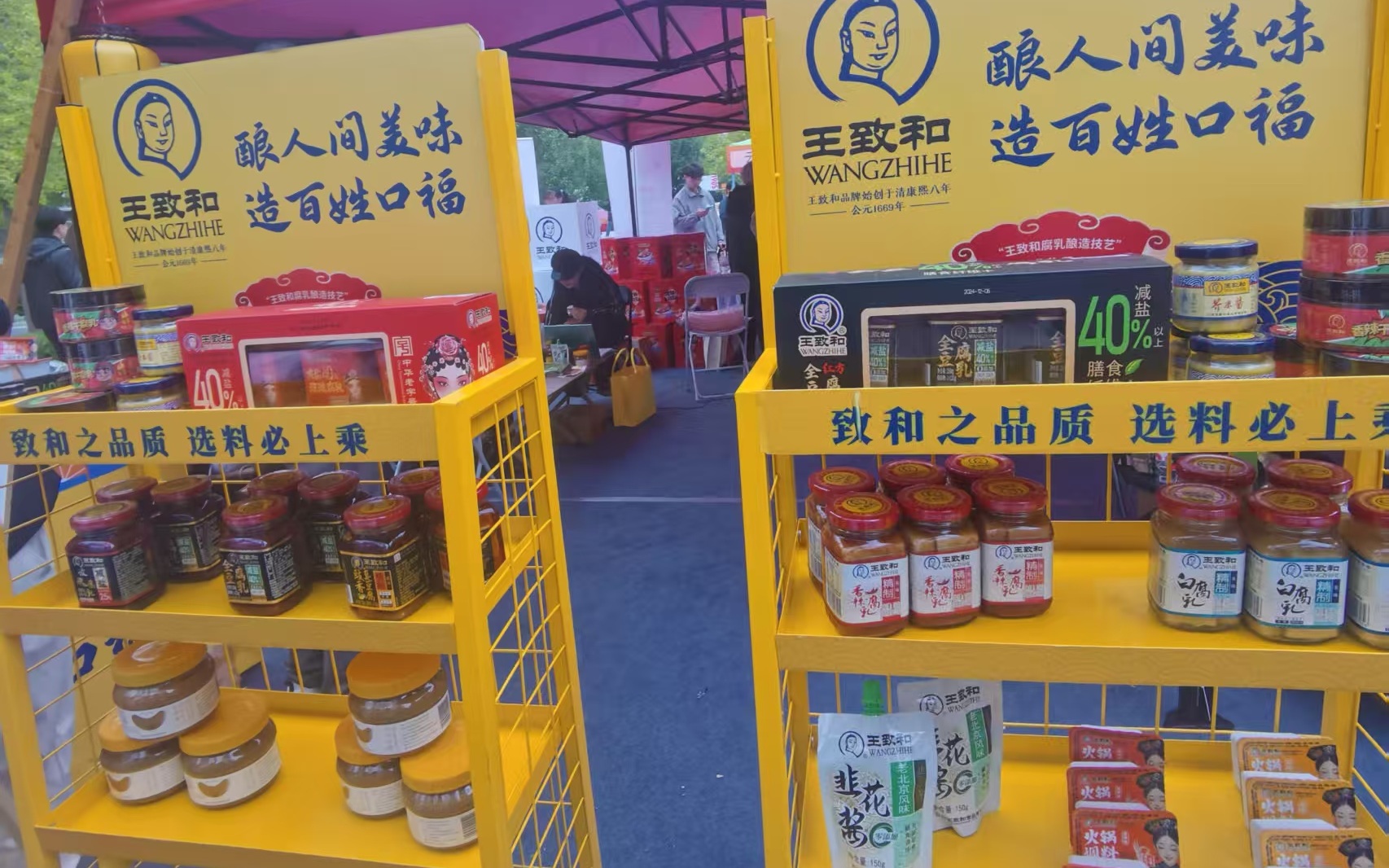
Group 1 - The event celebrated the 120th anniversary of China Agricultural University, showcasing the traditional fermentation technique of "Wang Zhi He" and its new products [1][3] - Interactive areas included cultural creative products like keychains and fridge magnets, as well as a food tasting area featuring popular dishes that attracted many young visitors [1][3] - New product displays featured innovative items such as spicy dry fermented tofu, black truffle mushroom sauce, and organic fermented products that have received organic certification [1][3] Group 2 - The event included a non-heritage experience area where participants could engage in traditional tofu-making processes, enhancing their understanding of the cultural heritage [3][5] - An original musical play titled "Wang Zhi He" was performed, narrating the entrepreneurial journey and craftsmanship spirit of the brand, encapsulating over 350 years of its history [3][5]
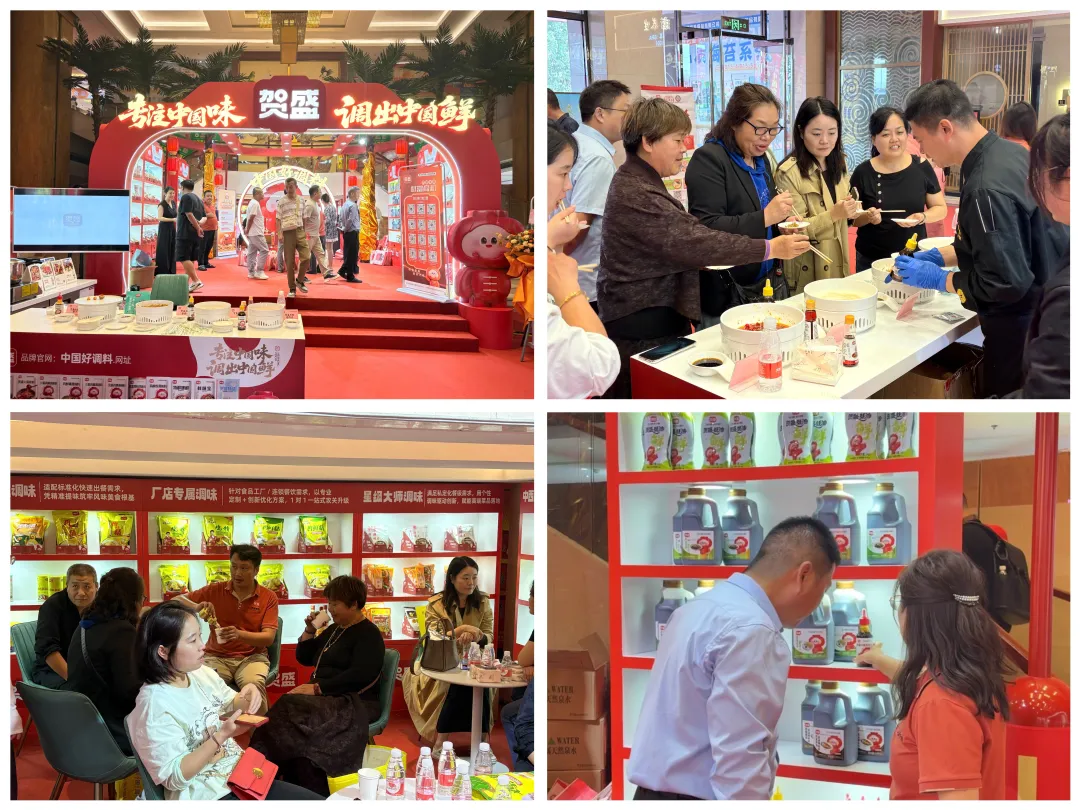
贺盛实业秋糖“鲜”芒毕露,引领调味新风尚
Zhong Guo Shi Pin Wang· 2025-10-16 07:23
Core Viewpoint - The article highlights the success of Hesheng Industrial at the Nanjing Autumn Sugar Exhibition, showcasing its unique "fresh" flavor proposition and diverse product offerings that cater to consumer demand for health and taste [1][2]. Product Differentiation - Hesheng Industrial's differentiated product matrix includes over 20 newly packaged products such as MSG, chicken essence, and compound sauces, designed to meet the health and flavor needs of consumers [2][4]. - The company emphasizes its commitment to "freshness" through its core values of focusing on enhancing flavor and maintaining quality, which has established a strong strategic barrier in the market [2][9]. Brand Development - The introduction of a new brand IP centered around the concept of "freshness guardian" aims to connect emotionally with younger consumers, enhancing brand loyalty [5][6]. - Hesheng Industrial's strategy includes showcasing both new and existing products to attract new customers while maintaining its market presence with established offerings [6][11]. Market Positioning - The company has established a long-term partnership with Jiangnan University for research and development, further solidifying its market leadership in the compound seasoning industry [7]. - Hesheng Industrial has developed over 20 flavor types and serves more than 1,200 popular chain restaurants across China, demonstrating its extensive market reach [7][9]. Innovation and Expansion - The company has launched specialty products that cater to high-demand markets, such as a new chicken essence variant that enhances freshness for creative culinary applications [8]. - Hesheng Industrial's 39 years of dedication to the seasoning industry has positioned it as a key player in the global market, exporting products to over ten countries and regions [9]. Partnership and Collaboration - The launch of the "Thousand Merchants Plan" aims to recruit partners by leveraging a vast network of brand resources and sales agents, providing comprehensive support for market expansion [11][14]. - Hesheng Industrial offers differentiated cooperation plans for various channels, allowing partners to benefit from the brand's quality endorsement and production standards [11][14].
千禾味业:2025年半年度权益分派实施公告
Zheng Quan Ri Bao Zhi Sheng· 2025-10-15 13:12
Core Viewpoint - Qianhe Flavor Industry announced its profit distribution and capital increase plan for the first half of 2025, which includes a cash dividend and a stock bonus [1] Group 1: Profit Distribution - The company will distribute a cash dividend of 0.1 yuan per share (tax included) based on a total share capital of 1,025,481,086 shares [1] - The dividend distribution date is set for October 23, 2025, with the record date being October 22, 2025 [1] Group 2: Capital Increase - The company plans to increase its capital by issuing 0.3 additional shares for every share held, using its capital reserve [1]

恒顺醋业(600305.SH):恒顺集团累计增持0.57%公司股份
Ge Long Hui A P P· 2025-10-15 12:08
Core Viewpoint - Hengshun Vinegar Industry (600305.SH) announced a shareholding increase by Hengshun Group, indicating a positive outlook on the company's stock performance and potential growth opportunities [1] Group 1 - As of October 14, 2025, Hengshun Group has cumulatively increased its shareholding by 6.293313 million shares, representing 0.57% of the company's total share capital [1] - The total amount invested in the share increase is approximately 49.9996 million yuan [1] - The equity change has triggered a threshold of 1% [1]

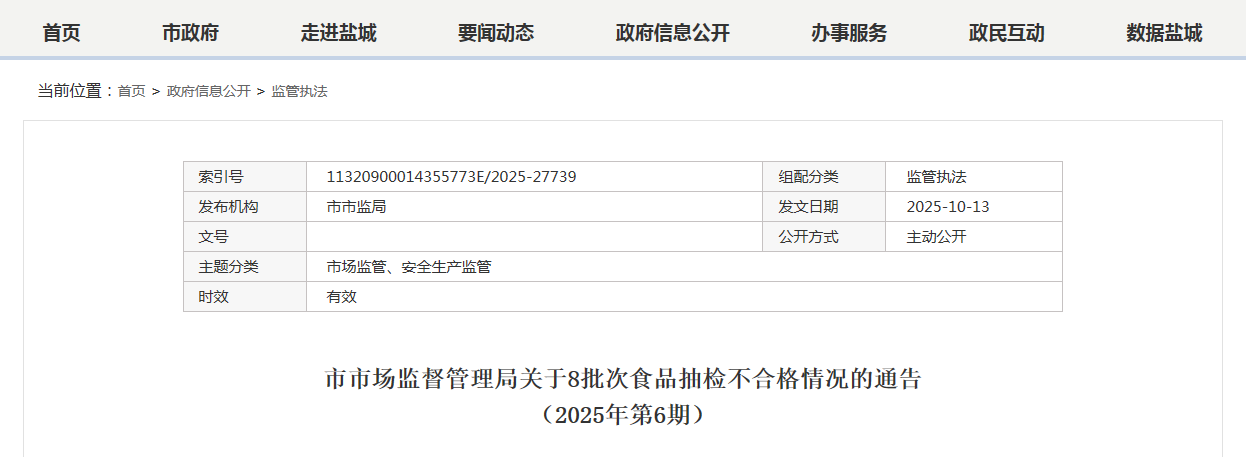
江苏省盐城市市场监督管理局关于8批次食品抽检不合格情况的通告(2025年第6期)
Zhong Guo Zhi Liang Xin Wen Wang· 2025-10-15 08:23
Summary of Key Points Core Viewpoint The Salt City Market Supervision Administration has reported that out of 288 batches of food products tested in 2025, 8 batches of agricultural products were found to be non-compliant with safety standards, prompting immediate action to control risks and ensure public safety [3]. Group 1: Food Safety Inspection Results - A total of 288 batches of food products were tested, covering 18 categories including snacks, beverages, and agricultural products [3]. - 8 batches of agricultural products were identified as non-compliant, with specific violations related to pesticide residues and heavy metals [3]. Group 2: Actions Taken - The Market Supervision Administration has instructed relevant local departments to take immediate action to trace the distribution of the non-compliant products [3]. - Measures include urging companies to remove and recall the affected products to mitigate risks [3]. Group 3: Specific Non-Compliant Products - Non-compliant products included items such as yellow eel with a detected residue of enrofloxacin at 2.96×10³ µg/kg, exceeding the standard limit of 100 µg/kg [3]. - Other violations included cadmium levels in lily bulbs at 0.265 mg/kg, surpassing the allowable limit of 0.05 mg/kg [3].


日辰股份股价涨5.55%,中信保诚基金旗下1只基金位居十大流通股东,持有95.06万股浮盈赚取160.65万元
Xin Lang Cai Jing· 2025-10-15 07:33
Group 1 - The core viewpoint of the news is that Rizhao Food Co., Ltd. (日辰股份) has seen a stock price increase of 5.55%, reaching 32.16 CNY per share, with a total market capitalization of 3.171 billion CNY [1] - Rizhao Food specializes in the research, production, and sales of compound seasonings, primarily targeting food processing and catering enterprises, providing customized seasoning solutions [1] - The revenue composition of Rizhao Food includes 71.72% from sauce seasonings, 22.29% from powdered seasonings, 5.15% from baked goods, 0.63% from food additives, and 0.21% from other sources [1] Group 2 - Among the top shareholders of Rizhao Food, CITIC Prudential Fund's multi-strategy mixed fund (LOF) A has entered the top ten, holding 950,600 shares, which is 0.96% of the circulating shares [2] - The CITIC Prudential multi-strategy mixed fund (LOF) A has achieved a year-to-date return of 38.84% and a one-year return of 51.83%, ranking 1535 out of 8161 and 742 out of 8015 respectively [2] - The fund manager, Wang Ying, has been in position for 8 years and 244 days, with the fund's total asset size at 6.176 billion CNY [3]

海天味业,匆匆忙忙跌跌撞撞这五年
Hu Xiu· 2025-10-15 03:25
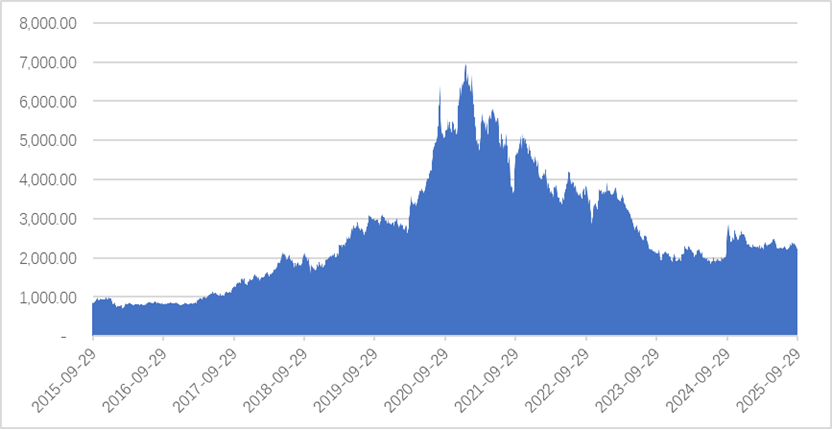
Core Viewpoint - The article discusses the decline of previously high-performing stocks, particularly focusing on Haitian Flavoring and Food Co., which has transitioned from a market darling to a struggling entity, highlighting the lessons learned from this shift [1][2]. Company Overview - Haitian Flavoring and Food Co. was once revered in the A-share market, known for its soy sauce and other condiments, achieving a market share of 13.2% in China and 6.2% globally by 2024 [3][7]. - The company's stock price surged from 13.17 yuan in September 2015 to 85.95 yuan in September 2020, marking a 5.5-fold increase over five years [4]. Performance Metrics - The company experienced significant growth during 2015-2020, with revenue growth rates not less than 15% and net profit growth rates around 20% [8]. - Return on Equity (ROE) remained above 30%, with sales gross margins over 40% and net profit margins between 22% and 28% during this period [8][19]. - However, since its peak in 2021, the stock price has dropped nearly 70%, attributed to declining performance and valuation contraction [17][20]. Valuation Analysis - The price-to-earnings (PE) ratio peaked at 112, which was unsustainable given the company's growth prospects, leading to a current PE of 33.4 [20][22]. - The company's net profit growth has slowed significantly, with annualized growth rates below 3% from 2022 to 2025 [19]. Market Position and Strategy - Despite the challenges, Haitian Flavoring still holds a leading position in the condiment market, with a market share concentration of only 10.9% among the top five companies, indicating potential for growth [24]. - The company aims to enhance market share through strategies like quality improvement, overseas expansion, and channel penetration, although past performance in these areas has been mixed [25][29]. Lessons Learned - The case of Haitian Flavoring illustrates that even strong companies can face significant declines if market conditions change and if valuations become detached from realistic growth expectations [33][34]. - Investors should be cautious of anchoring their decisions to past stock prices and should focus on current valuations and market logic [38].
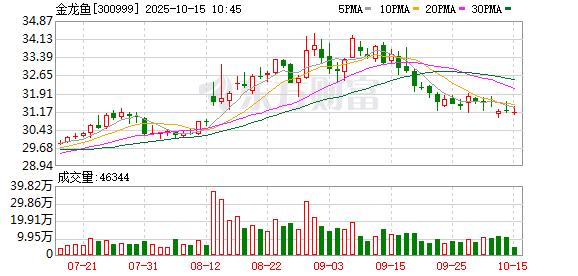
山西金龙鱼梁汾醋业有限公司注册资本增至约6.8亿元
Zheng Quan Ri Bao· 2025-10-15 02:45
Group 1 - The core point of the article is the increase in registered capital of Shanxi Jinlongyu Liangfen Vinegar Industry Co., Ltd. from approximately 580 million to about 680 million yuan [2] - The company was established in November 2010 and is fully owned by Jinlongyu [2] - The business scope of the company includes research and development of vinegar products, technical consulting, and technical services [2]