饮料

Search documents
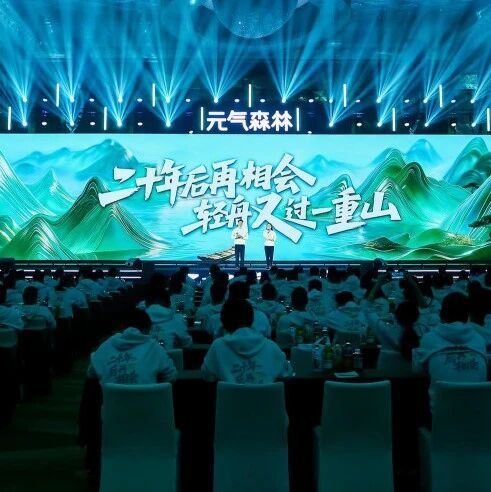
伙伴共赢、亲清并济,元气森林与供应商共同掌舵,“把船划得更快”
Cai Jing Wang· 2025-11-26 13:29
Core Insights - Yuanqi Forest maintains a dual strategy of "change and constancy," achieving a 26% growth in overall performance this year, with specific product lines like electrolyte water and vitamin water seeing even higher increases [1][2] - The company emphasizes trust and collaboration with suppliers, which has led to breakthroughs in the industry and a focus on long-term partnerships [2][3] Performance Metrics - Overall performance growth of 26% this year, with specific product lines experiencing significant increases: electrolyte water (34%), iced tea (56%), good self (36%), vitamin water (128%), and sparkling water (52%) [1] - The company has engaged over 600 suppliers and participated in over 130 bidding projects, contributing to the development of more than 70 new products [10] Supplier Relationships - Trust is the foundation of Yuanqi Forest's relationships with suppliers, leading to a cycle of mutual problem-solving and responsiveness [3][5] - The company has established a partnership model characterized by "partners, transparency, cost reduction, and openness," which enhances collaboration and efficiency [7][12] Operational Strategies - Yuanqi Forest focuses on lifecycle management of suppliers and long-term partnerships with those demonstrating comprehensive capabilities and innovation potential [7] - The company aims to optimize costs and innovate products while ensuring a stable supply chain, which is seen as a core competency [7][8] Future Outlook - The company plans to deepen collaboration with agricultural producers and equipment partners to enhance supply chain efficiency and competitiveness [10][12] - Yuanqi Forest is committed to a transparent and clear operational process, ensuring that suppliers are well-informed and engaged in the partnership [11]
《疯狂动物城2》联名60+品牌,为什么迪士尼永远无法忽视中国?
Jing Ji Guan Cha Wang· 2025-11-26 10:41
Core Insights - The release of Disney's animated film "Zootopia 2" has generated significant box office revenue, with a first-day domestic box office of 1.74 billion and a global box office of 57.64 million [2][4] - The film's marketing strategy in China has involved over 60 brand collaborations, creating a highly commercialized IP marketing environment [5][17] - Disney views the Chinese market as a key area for growth, leveraging the film's popularity to test a new "IP emotional economy" model [13][17] Box Office Performance - The first-day box office reached 1.74 billion, with a cumulative box office of 1.88 billion and a projected total box office of 25.64 billion [4][12] - The film's global box office stands at 57.87 million, with significant contributions from the domestic market [4][12] Marketing Strategy - The marketing campaign is characterized as a large-scale social marketing experiment, integrating various sectors such as food, fashion, and automotive [5][12] - Collaborations with brands like Luckin Coffee and Uniqlo have resulted in significant sales increases, showcasing the effectiveness of the IP in driving consumer engagement [7][10] Brand Collaborations - The film has seen partnerships with brands across multiple industries, including food and beverage, apparel, and automotive, creating a pervasive presence in urban environments [10][12] - The collaboration with automotive brands has provided a visually impactful marketing strategy, enhancing brand visibility [12][13] Consumer Engagement - The emotional connection of characters Judy and Nick resonates with young consumers, making the film's merchandise more appealing [15][16] - The trend of emotional consumption is growing, with brands increasingly focusing on leveraging IP for growth rather than mere aesthetics [15][17] Market Potential - Disney's strategic focus on the Chinese market reflects its recognition of the region's unique consumer dynamics and potential for long-term value [13][14] - The success of "Zootopia 2" in China is indicative of the country's evolving role as a vibrant and creative landscape for international IP [17]



首批“零碳工厂”落成,太古可口可乐跑出绿色智能加速度
Guo Ji Jin Rong Bao· 2025-11-26 08:00
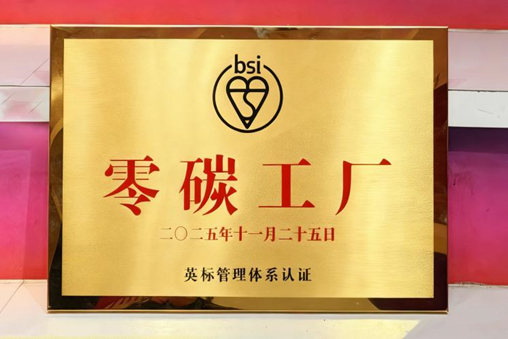
Core Insights - Swire Coca-Cola's factories in Nanjing and Wuhan have achieved ISO14068-1:2023 certification, marking them as the first zero-carbon factories in the China region [1][3] - This milestone reflects Swire Coca-Cola's commitment to sustainable development and aligns with China's high-quality development and dual carbon strategy [1][2] Group 1: Zero-Carbon Certification - The two factories are recognized as zero-carbon facilities, showcasing Swire Coca-Cola's long-term efforts in promoting green and intelligent manufacturing [4] - The Jiangsu factory has implemented a revolutionary energy system upgrade, significantly reducing steam usage and expected to cut over 20,000 tons of greenhouse gas emissions, equivalent to the carbon absorption of 160,000 trees annually [2][4] - The Hubei factory has adopted a unique circular economy approach, converting agricultural waste into clean heating, replacing 700,000 cubic meters of fossil fuel annually, and reducing carbon emissions by 1,515 tons [2][4] Group 2: Sustainability Strategy - Swire Coca-Cola's sustainability efforts have led to a 13% increase in energy efficiency since 2018, with 11 factories powered entirely by renewable energy and 13 equipped with solar facilities, covering about 60% of daily electricity needs [4] - The company extends its carbon reduction initiatives throughout the supply chain, promoting the use of new energy vehicles in logistics and energy-efficient refrigerators in sales, fostering a comprehensive green ecosystem [4] - The 2030 Sustainability Strategy aims to reduce carbon emissions from core operations by 70% (compared to 2018 levels) and encompasses seven key areas, integrating strategic execution with business development [6] Group 3: Future Outlook - Swire Coca-Cola views sustainable development as an investment for the future, with plans for continuous technological innovation and system optimization to ensure the solid implementation of green transformation [8] - Upcoming projects include the foundation of a new factory in Hainan by the end of this year and the operation of new production bases in the Greater Bay Area and Suzhou next year, contributing to the green transformation of the beverage industry in China [8]

“豆奶大王”未能扭转业绩颓势,84岁掌舵人不敢退休
Xin Lang Cai Jing· 2025-11-26 07:26
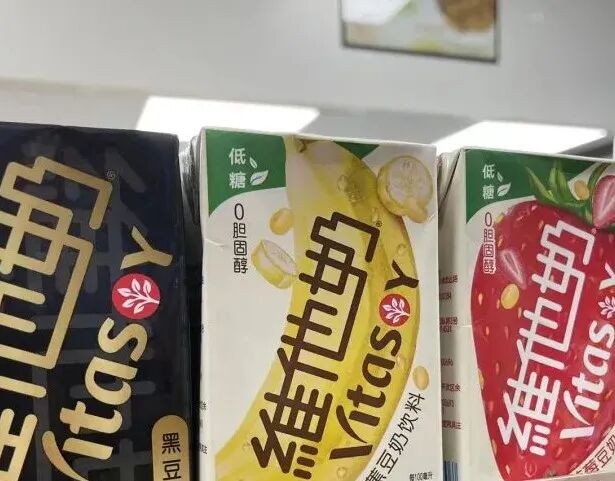
Core Viewpoint - Vitasoy International is struggling to reverse its declining performance, with a 6% year-on-year drop in revenue for the first half of the 2026 fiscal year, primarily due to a 9% decline in revenue from the mainland China market [1][2]. Group 1: Financial Performance - For the first half of the 2026 fiscal year, Vitasoy reported revenue of HKD 3.227 billion, a decrease of 6% year-on-year [1]. - The company's operating profit was HKD 247 million, down 4% year-on-year, while the profit attributable to shareholders increased by 1% to HKD 172 million [1]. - The gross profit margin slightly decreased from 51.6% to 51.1% due to falling product prices in mainland China [1]. Group 2: Market Challenges - Vitasoy's revenue from the mainland China market was HKD 1.778 billion, representing a 9% decline year-on-year, which is the main reason for the overall revenue drop [1][2]. - The plant-based beverage market, where Vitasoy operates, has seen significant growth slow down, with a mere 2% year-on-year growth in 2023 [2]. - Increased competition from major players like Mengniu, Yili, and Dali Foods, who have launched their own soy milk products, is squeezing Vitasoy's market share [2]. Group 3: Strategic Responses - Vitasoy is undergoing leadership changes, with a new head for mainland operations appointed in April 2024, following several leadership transitions [3]. - The company has introduced new products such as sugar-free lemon tea and plans to increase the proportion of low-sugar or no-added-sugar products to 80% by the 2030/31 fiscal year [3]. - To address channel weaknesses, Vitasoy has partnered with over 800 Lawson convenience stores and various dining establishments to launch breakfast sets aimed at boosting sales [3]. Group 4: Leadership Transition - Vitasoy was founded by the Lo family in 1940, and after the passing of founder Lo Kwai Sang in 1995, his son Lo Yau Lee has led the company for 30 years [4]. - In November 2023, Lo Yau Lee's daughter, Lo Chi Mei, was appointed as vice-chairman of the board, signaling a potential succession plan [4][5]. - Lo Yau Lee has indicated that the transition of leadership will be gradual over the next two to three years [5].

大窑重磅推出“醇香”系列,深耕植物蛋白赛道开辟礼赠新增长
Qi Lu Wan Bao· 2025-11-26 05:52
Core Insights - The article highlights the launch of three new plant-based protein beverages by Dayao Beverage, targeting the trends of consumption upgrade and gift market demand [1] Group 1: Product Innovation - Dayao's new product line includes almond milk, walnut milk, and peanut milk, focusing on craftsmanship innovation and a full-scenario layout strategy [1] - The plant-based beverage market in China reached a scale of 125 billion yuan in 2023, expected to exceed 230 billion yuan by 2029, with natural and healthy product attributes being core consumer demands [2] - The new products utilize 240 ml easy-to-open can packaging and stone grinding technology to maximize the retention of natural nutrients and flavors [2] - The almond milk is made from high-quality wild almonds, while the walnut milk is sourced from a premium growing area, ensuring the preservation of natural aroma and nutritional value [2] - The peanut milk boasts a protein content of 1.1g per 100ml, emphasizing the focus on health and nutrition [2] Group 2: Market Strategy - The competition in the plant-based beverage market has shifted from product comparison to capturing scene value, with the gift market being a significant opportunity [3] - Dayao aims to create a comprehensive product matrix that covers both daily consumption and gift consumption, targeting the traditional gift market for new growth points [3] - The introduction of the new product line is a key step in Dayao's transition from a "carbonated beverage expert" to a "full-scenario beverage service provider" [3] - The products are designed to be suitable for various consumption scenarios, including holiday gifting, family gatherings, and casual consumption, thus creating a comprehensive consumption ecosystem [3] Group 3: Strategic Upgrade - The strategic upgrade reflects Dayao's deep understanding of consumer needs, positioning the new product line as an emotional carrier rather than just a beverage [4] - As the year-end holiday season approaches, Dayao strengthens its competitiveness in the health beverage market through this strategic upgrade [4] - The dual-track model of "daily consumption + holiday gifting" is expected to lead to breakthroughs in both the gift market and mass consumption market, transitioning the industry from "category competition" to "ecosystem competition" [4]
维他奶内地不好卖,84岁掌舵人不敢退休
3 6 Ke· 2025-11-26 04:48
Core Viewpoint - Vitasoy International (00345.HK) continues to struggle with declining performance, reporting a 6% year-on-year decrease in revenue for the first half of the 2026 fiscal year, primarily due to a significant drop in sales in the mainland China market [1][2]. Group 1: Financial Performance - For the first half of the 2026 fiscal year, Vitasoy reported revenue of HKD 3.227 billion, a decrease of 6% year-on-year [1]. - The company's operating profit was HKD 247 million, down 4% year-on-year, while the profit attributable to shareholders increased by 1% to HKD 172 million [1]. - Revenue from the mainland China market was HKD 1.778 billion, representing a 9% decline year-on-year, which was the main contributor to the overall revenue drop [1]. Group 2: Market Dynamics - Vitasoy's market share in the plant-based beverage sector has been pressured by increased competition from major players like Mengniu, Yili, and Dali Foods, which have launched their own soy milk products [2]. - The overall growth of the plant-based beverage market in China has slowed, with a reported year-on-year growth rate of only 2% in 2023 [2]. - The rise of new consumption channels such as social e-commerce and membership stores has further challenged Vitasoy, which has traditionally relied on conventional retail networks [2]. Group 3: Strategic Initiatives - Vitasoy is attempting to revitalize its product line by introducing new offerings such as sugar-free lemon tea and high-fiber soy milk, with plans to increase the proportion of low-sugar or no-added-sugar products to 80% by the 2030/31 fiscal year [5]. - The company has implemented price reductions of approximately 10%-15% on its lemon tea products in the mainland market to stimulate sales [5]. - Vitasoy has also partnered with over 800 Lawson convenience stores and various dining establishments in regions like Hunan and Hubei to launch breakfast sets aimed at boosting sales [5]. Group 4: Leadership Changes - Vitasoy has experienced several leadership changes in its mainland operations, with the latest appointment of Wang Dong, a former executive from Procter & Gamble and PepsiCo, as the head of mainland operations [3]. - The company is in a transitional phase regarding its leadership, with the founder's daughter, Luo Qimei, being seen as a potential successor to the current chairman, Luo Youri [6].
椰树集团成立国水食品饮料公司
Zheng Quan Shi Bao Wang· 2025-11-26 03:25
人民财讯11月26日电,企查查APP显示,近日,海南椰树国水食品饮料有限责任公司成立,法定代表人 为赵波,经营范围包含饮料生产;食品生产;食品销售;食品用塑料包装容器工具制品销售;普通玻璃 容器制造等。企查查股权穿透显示,该公司由椰树集团有限公司全资持股。 ...
元气森林,驶回增长正轨
3 6 Ke· 2025-11-26 02:26
Core Insights - The overall growth rate of the fast-moving consumer goods (FMCG) market in 2025 is projected to be 4.8%, with the beverage category standing out as a stable growth segment in China's FMCG industry [1][3] - The beverage industry has undergone significant restructuring over the past three years, driven by a trend towards "healthier consumption" [3][4] - Yuanqi Forest has emerged as a notable player in the beverage market, achieving an overall growth rate approximately four times the industry average, with a reported 26% year-on-year increase in 2025 [1][4] Industry Trends - The beverage industry is experiencing a structural transformation led by health-conscious consumption, with no-sugar beverages and functional drinks seeing double-digit growth [3][4] - Key consumer preferences include "ingredient transparency" and "low-sugar, no additives," which are becoming central to purchasing decisions [3] - Despite the clear trend towards health-focused products, the industry faces challenges such as high inventory turnover rates and intense competition among brands [3][4] Company Performance - Yuanqi Forest's core product categories have shown impressive growth, with specific products like Alien Electrolyte Water and various flavored sparkling waters achieving year-on-year growth rates of 34% and 52% respectively [4] - The company has maintained a double-digit growth rate for three consecutive years, significantly outpacing the overall industry growth [4][5] Innovation and Strategy - The company's success is attributed to its focus on "brand + good products," emphasizing the importance of innovation and understanding consumer needs [5][10] - Yuanqi Forest has implemented a robust product innovation mechanism, allowing for rapid iteration and adaptation to market demands [12][13] - The company has established a digital supply chain strategy to enhance transparency and reduce operational risks for distributors [13] Market Challenges - The beverage market is becoming increasingly crowded, with over 30 brands launching sparkling water products between 2019 and 2023, leading to a decline in growth for this category [9] - The industry is witnessing a high rate of new product failures, with many products being quickly eliminated from the market [12] Future Outlook - Yuanqi Forest aims to continue focusing on creating meaningful products for consumers, emphasizing the need for patience and confidence in building a sustainable brand [8][11] - The company recognizes that differentiation through continuous innovation is essential for maintaining competitive advantage in a rapidly evolving market [8][10]

上市不到半年市值蒸发超六成 IFBH基石投资者浮亏解禁在即
Xin Lang Zheng Quan· 2025-11-26 02:14
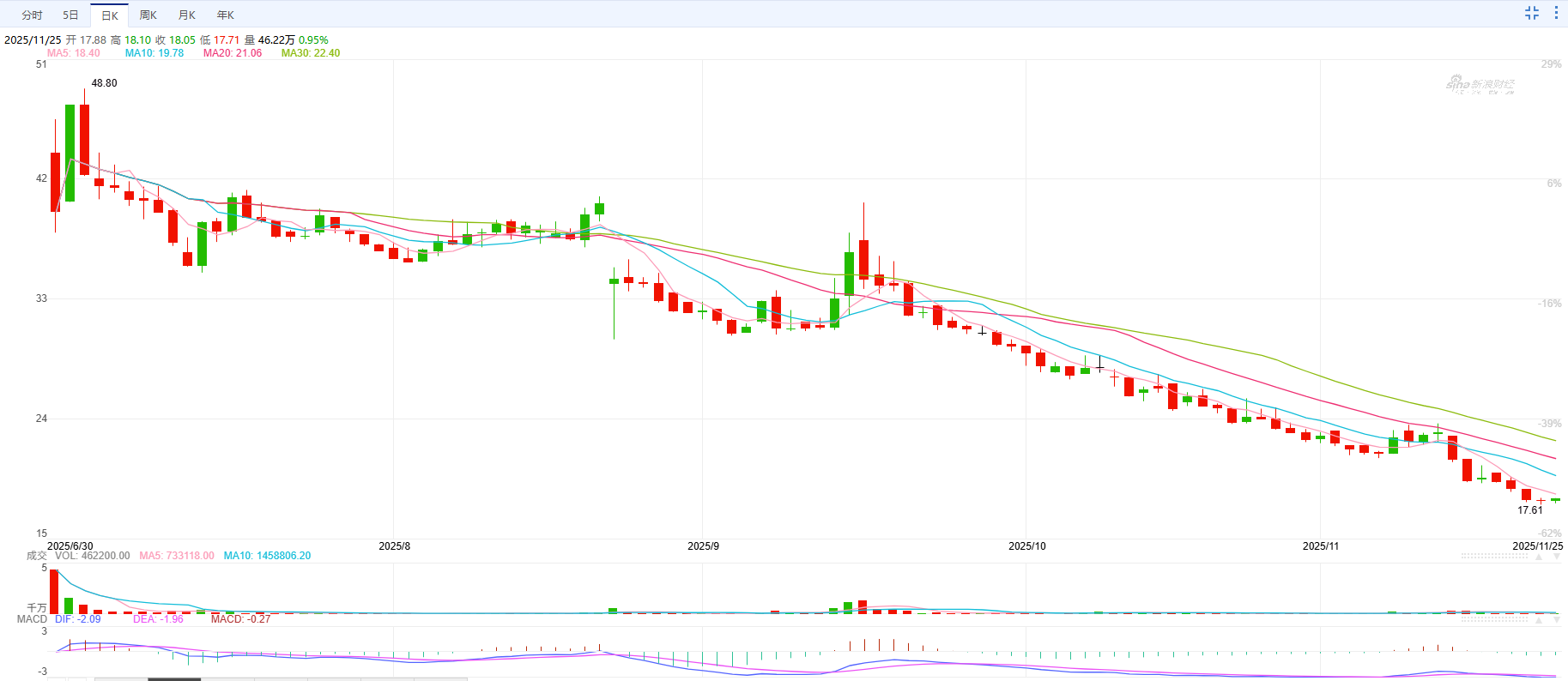
Core Insights - IFBH experienced a rapid rise and subsequent fall in stock price after its IPO, with a peak increase of over 65% on the first trading day, but has since seen a decline of 62% from its peak [1][2][3] Financial Performance - As of the latest closing, IFBH's stock price is HKD 18.05, with a market capitalization of approximately HKD 48.13 billion, reflecting a loss of nearly HKD 80 billion since its peak [2] - For the first half of 2025, IFBH reported total revenue of USD 9,446.40 million, a year-on-year increase of 31.5%, but net profit decreased by 4.8% to USD 1,497.60 million [5][6] - The gross profit margin fell by 4.7% to 33.7% due to the appreciation of the Thai baht against the US dollar [5] Market Dependency and Risks - IFBH's revenue is heavily reliant on the Chinese mainland market, which accounted for 92.6% of total revenue, but growth in this segment has slowed significantly [5][6] - The sales growth of IFBH's main product, coconut water, has also decelerated, with a year-on-year increase of 33.3%, down from 83.7% in the previous period [6][8] - The company faces intensified competition in the coconut water market, leading to a decline in market share and pricing pressures [8][9] Investor Sentiment and Future Outlook - The company’s cornerstone investors, who hold approximately 1.12 billion shares, will have their lock-up period end on December 29, 2025, raising concerns about potential sell-offs that could further depress stock prices [4][12][13] - Despite a strong initial investor backing, the stock has seen a cumulative decline of 38.7% since October 2, 2023, with cornerstone investors facing an average loss of 35.1% [12][13]
元气森林,驶回增长正轨
36氪· 2025-11-26 00:09
Core Insights - The beverage industry in 2025 is undergoing a structural transformation driven by "health consumption" trends [2][6] - The overall growth rate of the fast-moving consumer goods (FMCG) market is modest at 4.8%, but the beverage category shows relatively stable growth [3][8] - The rise of innovative products such as sparkling water, sugar-free tea, and functional drinks indicates a shift towards healthier beverage options [6][8] Industry Trends - The beverage industry has experienced a "major reshuffle" over the past three years, with health-oriented products gaining significant traction [6][8] - Nielsen's report highlights that sugar-free beverages have seen double-digit growth, while functional drinks are among the fastest-growing categories [6][8] - The market is characterized by high brand homogeneity and intense competition, with issues like high inventory turnover rates and product sell-through challenges [6][7] Company Performance - Genki Forest has achieved remarkable growth, with a reported 26% year-on-year increase in overall performance for 2025, significantly outpacing the industry average [8][9] - Specific product categories within Genki Forest have shown exceptional growth, such as the Alien Electrolyte Water (34% growth) and the Vitamin Water (128% growth) [8][9] - The company's success is attributed to a strong focus on brand and product quality, aligning with health and functional trends [9][12] Innovation and Strategy - Genki Forest emphasizes the importance of "brand + good product" as the core of its business strategy [9][12] - The company has adopted a patient approach to product development, focusing on creating meaningful products for consumers [12][19] - Continuous innovation is crucial, with the company investing in product testing and consumer feedback mechanisms to ensure relevance and quality [19][20] Market Challenges - Despite the health trend, the beverage market faces challenges such as market saturation and the rapid obsolescence of new products [14][18] - The carbonated beverage segment is experiencing a decline, prompting Genki Forest to innovate within this category to maintain growth [14][18] - The company acknowledges the need for sustainable innovation to differentiate itself in a crowded market [14][19]