
潮玩

Search documents
不用替泡泡玛特操心
创业邦· 2025-12-24 03:25
Core Viewpoint - The article discusses the recent performance and challenges faced by Pop Mart, highlighting the disparity between its market valuation and actual sales growth, as well as the implications of its IP strategy on long-term sustainability [7][10][21]. Financial Performance - In August, Pop Mart reported that it earned the same amount in the first half of the year as it did in the entire previous year, with expectations of reaching 30 billion yuan in revenue [7]. - Following the report, Pop Mart's market value peaked at 450 billion yuan but subsequently fell sharply, losing 44% of its stock price and 200 billion yuan in market capitalization over four months [9][21]. Market Sentiment and IP Strategy - Analysts from Deutsche Bank and Bernstein raised concerns about Pop Mart's reliance on its key IP, Labubu, suggesting that the loss of scarcity and declining consumer interest could lead to a rapid decline in sales [9][10]. - Bernstein's report identified three main issues: declining popularity of Labubu, a drop in online sales, and decreasing second-hand market premiums for Pop Mart products [11]. IP Portfolio and Sales Growth - Despite concerns about Labubu, Pop Mart has a diverse IP portfolio, including THE MONSTERS, DIMOO, SKULLPANDA, Molly, and CRYBABY, with Labubu accounting for only 34.7% of revenue [11][14]. - Sales growth for other IPs remains stable, indicating that the company is not solely dependent on Labubu for revenue [14][20]. Market Dynamics and Valuation - The article notes that Pop Mart's market valuation has been subject to significant fluctuations, similar to past trends where the stock surged and then plummeted [21][26]. - The decline in stock price is attributed to a combination of market liquidity issues and the high valuation reached during periods of intense investor enthusiasm [31][32]. Consumer Behavior and Trends - The article emphasizes a generational shift in consumer behavior, where younger consumers value design and cultural significance over practical utility, aligning with the appeal of collectible toys [46]. - This shift has led to a perception of Pop Mart's products as having emotional value, which has been both a driver of growth and a source of criticism regarding the sustainability of such a business model [46][47].


招商证券:维持泡泡玛特“强烈推荐”评级 海外本地化运营持续推进
Zhi Tong Cai Jing· 2025-12-24 01:56
Core Viewpoint - The report from China Merchants Securities maintains a "strong buy" rating for Pop Mart (09992), highlighting the company's overseas organizational structure as a driver for sustainable growth, and the strong potential of its IP products like LABUBU and Starry People [1] Group 1: Market Data and Trends - High-frequency data tracked by third parties shows a marginal growth trend, but there are issues with sample selection and interpretation, particularly regarding app download volumes and search indices [1] - User data indicates that the U.S. has the highest daily active users, followed by China, Japan, Australia, and Thailand, which shows significant discrepancies compared to the company's mid-year disclosures [1] - The online trading volume is affected by channel changes, limiting the data's reference value, especially during the initial surge of plush toy sales due to supply shortages [1] Group 2: Offline Sales and Secondary Market - The company emphasizes the importance of offline store experiences, which are seen as crucial for brand culture transmission, and plans to gradually return hot products to offline sales after resolving capacity issues [2] - Changes in the secondary market, particularly the adjustment of consignment standards for blind boxes, are expected to negatively impact transaction volumes [2] - Historical tracking shows limited correlation between the company's performance and secondary market prices, indicating potential challenges in managing market expectations [2] Group 3: Overseas Localization and Strategy - The company is advancing its overseas localization strategy, supported by a diverse IP and product matrix, flexible supply chain, and strong operational capabilities [3] - Recent organizational adjustments aim to enhance global operations, with regional headquarters established in Greater China, the Americas, Asia-Pacific, and Europe [3] - The company has seen promising local product performances post-adjustment, indicating potential for growth in international markets [3]


招商证券:维持泡泡玛特(09992)“强烈推荐”评级 海外本地化运营持续推进
智通财经网· 2025-12-24 01:46
Core Viewpoint - The report from China Merchants Securities maintains a "strong buy" rating for Pop Mart (09992), highlighting the company's overseas organizational structure as a driver for sustained growth, with strong potential in its IP products like LABUBU and Starry People [1] Group 1: Market Data and Trends - High-frequency data tracked by third parties shows a marginal growth trend, but there are issues with sample selection and interpretation, particularly regarding app download volumes and search indices [1] - User data indicates that the U.S. has the highest daily active users, followed by China, Japan, Australia, and Thailand, which shows a significant discrepancy compared to the company's mid-year disclosures [1] - The online trading volume is affected by channel changes, limiting the data's reference value, especially during the initial surge of plush toy sales due to supply shortages [1] Group 2: Offline Sales and Second-Hand Transactions - The company emphasizes the importance of offline store experiences, which are seen as crucial for brand culture transmission, and plans to gradually return hot products to offline sales after resolving capacity issues [2] - Changes in the second-hand trading standards for blind boxes have negatively impacted transaction volumes, as the new requirements for original packaging and unopened items are stricter [2] - Historical tracking shows limited correlation between the company's performance and second-hand prices, indicating potential challenges in managing market expectations [2] Group 3: Overseas Localization and Organizational Structure - The company is advancing its overseas localization strategy, supported by a diverse IP and product matrix, flexible supply chain, and strong operational capabilities [3] - An organizational restructuring has been completed to focus on regional strategies, establishing regional headquarters in Greater China, the Americas, Asia-Pacific, and Europe [3] - The restructuring aims to enhance local product performance, with expectations for regionally limited editions to increase from less than 5% in the first half of 2025 to 10%-15% [3]
这份最新趋势报告,为2026年消费市场划出重点(附下载链接)
Sou Hu Cai Jing· 2025-12-23 18:45
Core Insights - The report highlights a "moderate recovery with structural differentiation" in China's consumption market for the period from January to November 2025, with total retail sales of consumer goods reaching 45.6 trillion yuan, a year-on-year increase of 4% [1][2][8]. Consumption Market Overview - Total retail sales of consumer goods reached 45.6 trillion yuan, growing by 4% year-on-year, indicating a gradual release of domestic demand recovery [1][8]. - Significant growth was observed in discretionary consumption categories such as communication equipment (20.9%), gold and silver jewelry (13.5%), and home appliances (14.8%) [11]. - Service consumption continues to rise, with per capita service consumption accounting for 46.8% in the first three quarters [2][32]. - Online retail remains stable, accounting for approximately 25.9% of total retail sales, with a 5.7% increase in physical goods sold online [9]. Consumption Trends - The report identifies six major trends in the consumption market: 1. Stabilizing consumer confidence with internal differentiation 2. Coexistence of rational consumption and quality upgrades, with "value for money" becoming a core logic 3. The rise of emotional consumption, driven by Generation Z 4. Strong growth in lower-tier markets 5. Flourishing cultural and sports consumption driving surrounding economies 6. Acceleration of domestic brands going global, particularly in trendy toys, new energy vehicles, and smart home appliances [2][29]. Policy Impact on Consumption - Policies aimed at stimulating consumption include expanding the scope of trade-in programs to digital products and providing subsidies for consumer loans and childcare, effectively stimulating consumption potential [1][21][24]. - The report emphasizes that expanding domestic demand is crucial for economic rebalancing, requiring industrial upgrades and income distribution reforms to build a sustainable and healthy consumption market ecosystem [2][21]. Future Outlook - Looking ahead to 2026, the report anticipates a moderate recovery in total consumption volume, supported by the wealth effect, coordinated policy efforts, and gradual income improvements, with a projected retail sales growth rate of around 5% [2][63]. - The consumption structure is expected to evolve towards service consumption, emotional consumption, and green consumption, with traditional industries facing transformation challenges [2][70].

功能还是情绪?IP消费的价值抉择与增长路径
Zhong Guo Jing Ying Bao· 2025-12-23 14:31
Core Insights - The holiday season, particularly Christmas, is a significant time for emotional consumption, with brands leveraging various IPs to boost sales and profits [1] - The collaboration between popular IPs and consumer products is gaining traction, with companies like Bubble Mart and Miniso actively engaging in cross-industry partnerships [2][4] - The IP retail market in China is experiencing substantial growth, with a reported retail value of $13.77 billion in 2023, reflecting a year-on-year increase of 9.6% [6] Group 1: IP Collaborations and Market Trends - Popular IP collaborations, such as the partnership between Heytea and Bubble Mart's "Star People," have generated significant buzz on social media, with sales exceeding 100 million yuan in the first year of collaboration [2] - The interest consumption market is projected to surpass 380 billion yuan by the third quarter of 2025, indicating a growth rate of over 10% compared to the previous year [2] - The collaboration between Disney's "Zootopia 2" and over 60 brands showcases the potential for large-scale IP commercialization, with companies like Bubble Mart and Miniso leading the charge [3][5] Group 2: Strategies for IP Utilization - Companies are advised to segment their audience effectively, creating limited edition products for core fans while offering practical items for broader consumer groups [1] - The success of IPs relies on their ability to connect with consumers through quality content and innovative product offerings, as seen in the strategies of Disney and Bubble Mart [7][8] - Miniso's dual strategy of leveraging both international licensed IPs and signing exclusive agreements with original artists aims to build a robust IP ecosystem [8][9] Group 3: Challenges and Considerations - The risk of consumer fatigue due to oversaturation of IP collaborations is a concern, necessitating a focus on meaningful engagement rather than superficial partnerships [5][9] - The need for brands to align character emotions with consumer needs is crucial for successful IP integration, moving beyond mere branding to create relatable experiences [9] - The competitive landscape for IPs is intensifying, with companies exploring new methods to differentiate themselves and avoid homogenization in the market [7][9]
不用替泡泡玛特操心
36氪· 2025-12-23 13:56
Core Viewpoint - The article discusses the rise and fall of Pop Mart, highlighting the company's rapid growth and subsequent decline in market value, emphasizing the importance of emotional value in consumer products and the challenges faced by the company in maintaining its IP relevance and market perception [4][5][9]. Group 1: Financial Performance and Market Reaction - In August, Pop Mart reported earnings that surpassed the previous year's total, with expectations of reaching 30 billion this year [4]. - Following the earnings report, Pop Mart's market value peaked at 450 billion but subsequently fell by 44%, resulting in a loss of 200 billion in market capitalization over four months [5]. - The company's aggressive expansion aimed at resolving supply shortages led to a loss of perceived scarcity, which became a key argument for bearish analysts [7]. Group 2: IP and Market Perception - Analysts from Deutsche Bank and Bernstein criticized Pop Mart's reliance on its star IP, Labubu, suggesting that the lack of consumer interest in overseas stores and the release of excess inventory could diminish the brand's appeal [7][10]. - Bernstein's report identified three main issues: declining popularity of Labubu, a drop in online sales, and decreasing second-hand market premiums for Pop Mart products [9]. - Despite concerns about IP fatigue, Pop Mart's financial reports indicate that other IPs, such as Molly, continue to perform well, with Molly's sales growing from 40 million to 2 billion from 2017 to 2024 [11][15]. Group 3: Market Dynamics and Consumer Behavior - The article notes that the market's perception of Pop Mart fluctuates with emotional value, where the company's valuation can rapidly change based on consumer sentiment and market trends [8][10]. - The decline in Pop Mart's stock price is attributed to a combination of market liquidity issues and the high valuation reached during periods of heightened consumer interest [43][44]. - The article argues that the core issue for Pop Mart is the ongoing debate about the longevity of its IPs and whether they can sustain consumer interest without substantial content support [48][51]. Group 4: Future Outlook and Strategic Considerations - Pop Mart's strategy involves continuously discovering and nurturing new IPs to maintain consumer engagement and drive sales, with a focus on creating 10 billion-level sales IPs [62][63]. - The company aims to differentiate itself from traditional retail by leveraging its unique IP ownership model, which allows for greater consumer attraction compared to competitors [50]. - The article concludes that the evolving consumer attitudes towards design and cultural value in products will play a significant role in shaping Pop Mart's future success [67][68].
源飞宠物(001222):与潮玩品牌黑玩达成战略合作 主业表现良好
Xin Lang Cai Jing· 2025-12-23 10:34
Group 1 - Source Pet has formed a strategic partnership with the潮玩 brand Heyone 黑玩, focusing on leveraging its manufacturing and supply chain management capabilities in related consumer sectors [1] - The collaboration is expected to primarily involve OEM production, allowing Source Pet to utilize its supply-side advantages [1] - Source Pet has a well-established manufacturing and supply chain management system in the pet food and supplies sector, which is adaptable to high-quality潮玩 products [1] Group 2 - The trend for proprietary brands is positive, with the Pikapoo brand achieving strong sales performance [2] - The company has begun focusing on pet staple food since mid-2025, utilizing advertising and social media marketing to reach customers effectively [2] - The overseas OEM business is performing well, with limited impact from U.S. tariffs due to established production in Cambodia [2] Group 3 - The company expects net profits attributable to shareholders to reach 170 million, 220 million, and 280 million yuan from 2025 to 2027, with corresponding P/E ratios of 27.1X, 21.0X, and 16.5X [2]
年轻人的顶流“财神”,站上购物中心C位
3 6 Ke· 2025-12-23 10:06
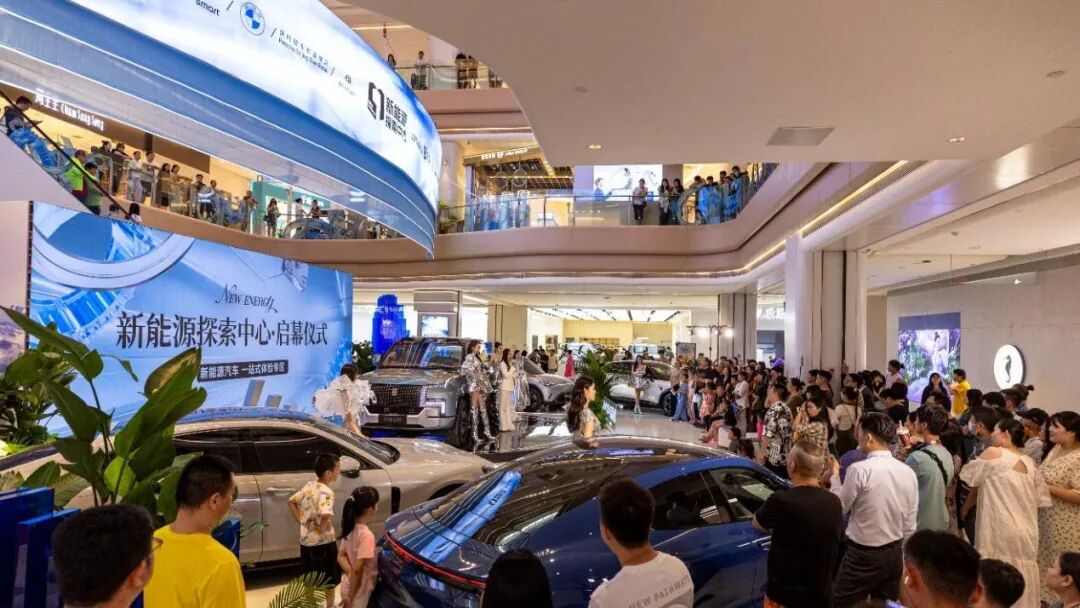
Group 1 - The core idea of the articles revolves around the shifting consumer behavior in shopping malls, particularly the trend of incorporating cultural and spiritual elements like "Caishen Hall" to attract younger consumers seeking emotional fulfillment and fortune [1][7][9] - There is a notable increase in the popularity of temple visits among young people, who are drawn to the spiritual and cultural significance, as well as the associated merchandise [1][12] - Shopping centers are facing challenges as traditional attractions like electric vehicle showrooms and "guzi" (a type of trendy snack) stores are experiencing a decline, leading to a need for innovative strategies to maintain foot traffic [2][4][6] Group 2 - The decline of electric vehicle showrooms in shopping malls is significant, with a 37% year-on-year decrease in the number of such stores, particularly affecting smaller brands [4][6] - The "guzi economy" is also witnessing a downturn, with nearly 100 physical stores closing or planning to close in the first quarter of the year, indicating a shift in consumer preferences [6][12] - The overall trend shows that shopping centers are struggling to adapt to the changing desires of younger consumers, who prefer more engaging and social experiences rather than traditional shopping [16][18] Group 3 - The introduction of "Caishen Hall" in shopping malls is a response to the growing consumer desire for fortune and prosperity, reflecting a broader cultural trend [7][9] - Despite the initial success of such concepts, there is a concern about product homogeneity in the cultural merchandise market, which may lead to consumer fatigue [11][12] - The ongoing evolution of shopping centers indicates a need for continuous adaptation to meet the emotional and experiential needs of the younger demographic [18] Group 4 - The closure of numerous shopping malls, particularly those over ten years old, highlights a significant shift in the retail landscape, with 38 malls reported to have closed in 2024 [13][14] - The trend of "consumption downgrade" is impacting high-end malls more severely, as consumer preferences shift away from traditional luxury shopping experiences [14][16] - The disconnect between shopping centers and younger consumers is evident, as the latter group favors more niche, community-oriented experiences over conventional retail environments [16][17]
长城基金曲少杰:Z世代撬动新消费市场 六大领域增长势头强劲
Zheng Quan Shi Bao Wang· 2025-12-23 08:12
Core Viewpoint - The Z generation is leading a new wave of consumption in China, shifting the market from mass consumption to personalized and rational consumption [1] Group 1: Market Trends - China's consumer market is transitioning towards individualistic and rational consumption patterns, driven by a large young population and a complete domestic industrial chain [1] - The emerging consumption sectors are showing strong growth momentum, particularly in six key areas: pet economy, trendy toys, ready-to-drink beverages, health consumption, smart wearables, and smart driving vehicles [1]
源飞宠物(001222):与潮玩品牌黑玩达成战略合作,主业表现良好
Xinda Securities· 2025-12-23 07:33
Investment Rating - The investment rating for Yuanfei Pet (001222) is not explicitly stated in the provided documents, but the report indicates a positive outlook on the company's performance and growth potential [1]. Core Insights - Yuanfei Pet has entered a strategic partnership with the trendy toy brand Heyone, focusing on leveraging its manufacturing and supply chain management capabilities in new consumer sectors [2]. - The company is expected to emphasize supply chain management in this collaboration rather than direct expansion into new business areas [2]. - The trend for the company's own brand is positive, with significant sales growth for its flagship product Pikapoo, which has consistently ranked among the top three in sales [2]. - The overseas OEM business is performing well, with limited impact from U.S. tariffs due to established production bases in Cambodia and ongoing expansion in Bangladesh [3]. - Profit forecasts for the company indicate a net profit of 170 million, 220 million, and 280 million yuan for 2025, 2026, and 2027 respectively, with corresponding P/E ratios of 27.1X, 21.0X, and 16.5X [3]. Financial Summary - Total revenue is projected to grow from 991 million yuan in 2023 to 2,631 million yuan in 2027, with a compound annual growth rate (CAGR) of approximately 22.7% [5]. - The net profit attributable to the parent company is expected to increase from 126 million yuan in 2023 to 283 million yuan in 2027, reflecting a significant recovery and growth trajectory [5]. - The gross margin is forecasted to remain stable around 22.5% to 22.9% over the next five years [5]. - The return on equity (ROE) is projected to improve from 10.3% in 2023 to 15.1% in 2027, indicating enhanced profitability and efficiency [5].