
自动驾驶

Search documents
创在广州 共赢未来丨创业者,为何都爱来广州?
2 1 Shi Ji Jing Ji Bao Dao· 2025-12-23 10:41
Group 1: Market Growth and Entrepreneurship in Guangzhou - As of Q3 2025, the number of market entities in Guangzhou reached 4.1506 million, a year-on-year increase of 14.89%, with enterprises accounting for 2.7551 million, up 20.86%, representing 66% of the total [1] - With a resident population of 18.97 million, there is one business owner for every five residents and one entrepreneur for every seven [1] - The biomedicine and health industry has 503,500 market entities, growing by 10.05%, while the intelligent equipment and robotics industry has 392,700, up 15.30% [1] - The software and internet industry has 343,600 entities, with a year-on-year growth of 16.38% [1] - Emerging sectors like future networks and quantum technology saw new registrations grow by 179.10% and 143.01%, respectively [1] Group 2: Success Stories from the Innovation and Entrepreneurship Competition - The Guangzhou Science and Technology Innovation and Entrepreneurship Competition has been a launchpad for many startups, with 13 unicorns and approximately 189 potential unicorns emerging over the past decade [4] - Notable companies like Hege Intelligent Technology and Yunzhou Biotechnology gained significant recognition and funding through their participation in the competition [2][4] - The competition has facilitated over 1,000 companies in securing nearly 50 billion yuan in equity financing and 300 companies obtaining 15.5 billion yuan in bank credit [4] Group 3: Support Mechanisms and Ecosystem Development - The competition has evolved to include a 100 million yuan direct investment fund and expanded to 19 tracks, aligning with Guangzhou's modern industrial system [7] - The introduction of market-oriented practices, such as "investment instead of evaluation," has streamlined the process for startups to receive funding and support [6][7] - Guangzhou's comprehensive innovation ecosystem includes a "creation, investment, loan, guarantee, and service" model, providing continuous support to award-winning companies [8] Group 4: Technological Advancements and Collaborations - Guangzhou has established over 50 national-level platforms to support startups, enabling significant projects to be elevated to national status [9] - Companies like Jingzhi Future have developed innovative medical devices with the help of local institutions, showcasing the region's commitment to technological advancement [9] - The collaboration between academia and industry, exemplified by partnerships with universities, has led to breakthroughs in fields like flexible display technology [10] Group 5: Future Outlook and Strategic Initiatives - The number of high-tech enterprises in Guangzhou has surpassed 13,500, more than seven times the number in 2015, indicating a robust growth trajectory [11] - Future initiatives will focus on increasing corporate participation in innovation decision-making and enhancing the role of enterprises in major technological projects [11] - Guangzhou aims to leverage its strategic advantages to foster a vibrant ecosystem for technological innovation, ensuring that the city remains at the forefront of emerging industries [12]


马斯克:走上最细、最险的那根钢丝
3 6 Ke· 2025-12-23 10:06
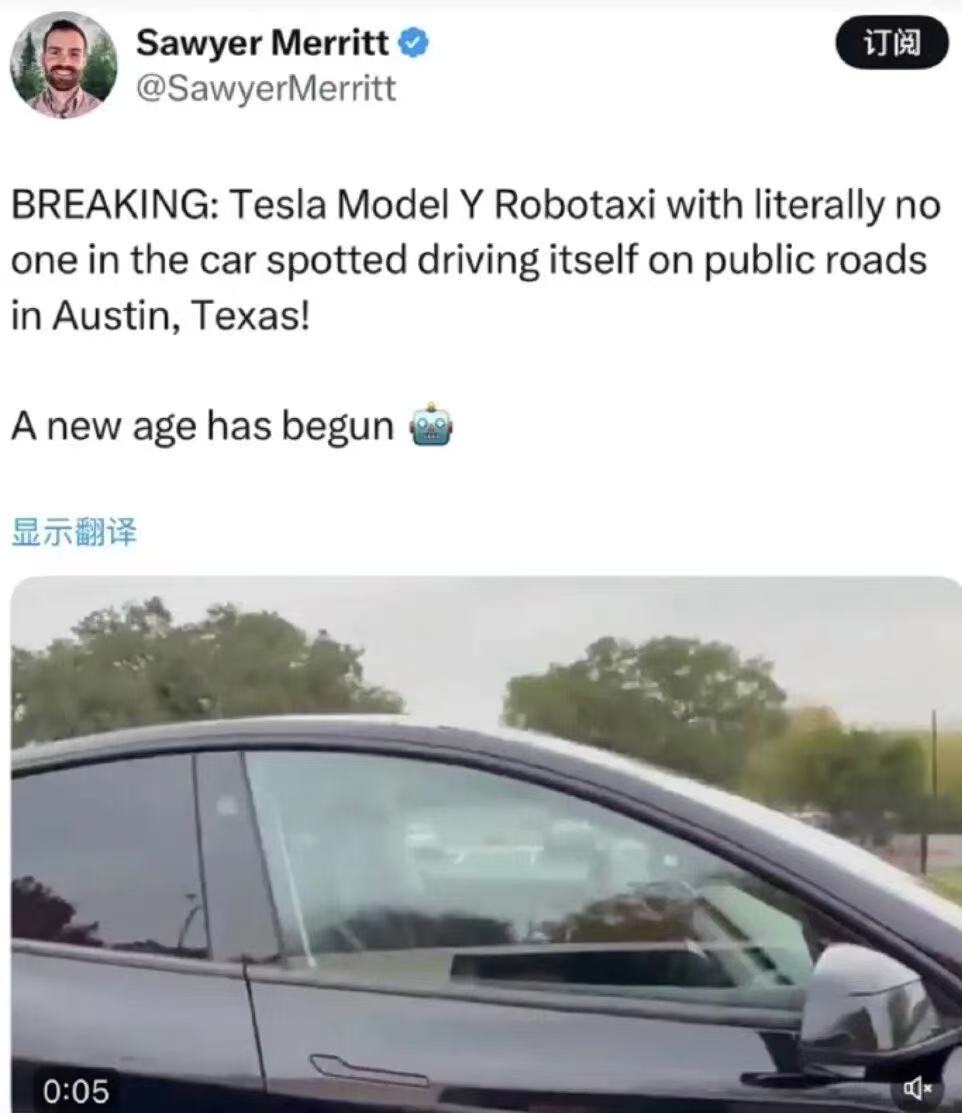
Group 1 - The core viewpoint of the article highlights Elon Musk's commitment to a pure vision-based approach for autonomous driving, despite criticism regarding user safety and the ability to handle complex weather and road conditions [2] - Tesla's autonomous driving system costs less than a quarter of Waymo's, indicating a significant cost advantage that could lead to Tesla dominating the industry if the pure vision approach proves successful [2] - The article discusses the risks associated with Tesla's reliance on visual algorithms, which have previously led to accidents due to misinterpretations in low-contrast situations [2] Group 2 - The financial prospects of the Robotaxi industry are described as a double-edged sword, where the pursuit of extreme cost reduction conflicts with public intolerance for safety risks [3] - The ultimate challenge for Tesla and the Robotaxi industry is balancing the deployment of services to avoid limited growth and cost reduction while also not disrupting the existing employment market for drivers [4] - The article emphasizes that while society is eager to see technological advancements, there is a reluctance to bear the costs associated with these changes, highlighting a societal tension [4]

两家美国网约车公司在英国与百度展开合作
Guan Cha Zhe Wang· 2025-12-23 08:12
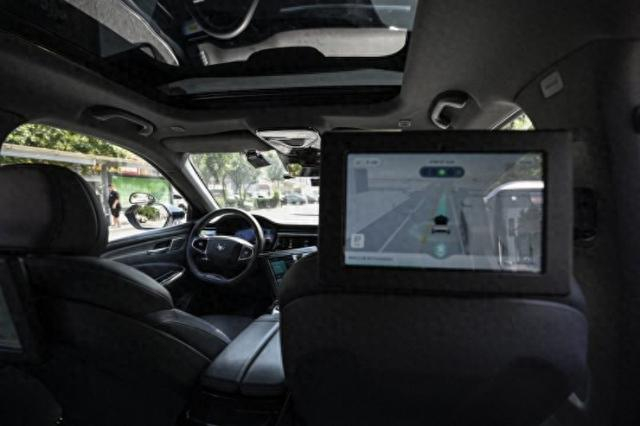
Group 1 - Uber and Lyft are collaborating with Baidu to launch autonomous taxi trials in the UK, indicating a competitive push for autonomous taxi services globally [1][3] - Uber plans to initiate a pilot project with Baidu's Apollo Go in London in the first half of 2026, following their initial partnership announcement in July [3] - Lyft's CEO announced plans to test dozens of Apollo Go RT6 vehicles in London next year, pending regulatory approval, as part of their collaboration with Baidu [3] Group 2 - The shift towards partnering with Chinese autonomous driving companies, such as Baidu, may be influenced by recent operational issues faced by Waymo's autonomous vehicles in the US [4] - Global ride-hailing platforms are increasingly choosing to collaborate with Chinese autonomous driving firms, expanding their services to various regions [4] - Southeast Asian ride-hailing company Grab is partnering with Momenta and WeRide to extend autonomous taxi services in Southeast Asia, while other companies are testing autonomous shuttle services in Singapore [5]



特斯拉一度逼近500美元大关 分析称一旦突破可能上行至550美元
Xin Lang Cai Jing· 2025-12-23 08:05
特斯拉股价在周一盘中刷新股价新高,一度上涨3.66%至每股498.82美元,逼近500美元大关。 Simpler Trading期权副总裁Danielle Shea表示,如果特斯拉股价突破500美元,将上行至550美元。 Shea表示,特斯拉具备大幅上行的条件,因为其近期在显著放量的情况下突破了历史新高。在她看来, 这是一个典型的技术形态:买盘压力会推动股价进一步上涨。如果股价能够在高成交量配合下有效突破 500美元关口,她预计股价将迅速上探520美元,并最终达到550美元 特斯拉股价在周一盘中刷新股价新高,一度上涨3.66%至每股498.82美元,逼近500美元大关。 Simpler Trading期权副总裁Danielle Shea表示,如果特斯拉股价突破500美元,将上行至550美元。 Shea表示,特斯拉具备大幅上行的条件,因为其近期在显著放量的情况下突破了历史新高。在她看来, 这是一个典型的技术形态:买盘压力会推动股价进一步上涨。如果股价能够在高成交量配合下有效突破 500美元关口,她预计股价将迅速上探520美元,并最终达到550美元 消息面上,美国特拉华州最高法院裁定恢复特斯拉2018年授予马斯克 ...
李泽湘干出一个百亿IPO
投中网· 2025-12-23 06:46
Core Viewpoint - The article highlights the successful IPO of Xidi Zhijia, marking a significant milestone in the hard technology sector, particularly in autonomous driving, and emphasizes the dual IPO year for investor Li Zexiang with another company, Woan Robotics, also approaching its IPO [4][16]. Group 1: Company Overview - Xidi Zhijia, headquartered in Changsha, has become the first publicly listed company for autonomous mining trucks, achieving a market capitalization of HKD 11.5 billion upon opening [6]. - The company has delivered 110 autonomous driving systems and serves 152 global clients, with a revenue increase of 1200% over three years [7]. - Xidi Zhijia ranks sixth among all smart driving commercial vehicle companies in China, holding a market share of approximately 5.2% [7]. Group 2: Financial Performance - Xidi Zhijia's revenue surged from CNY 31.05 million in 2022 to CNY 1.3 billion in 2023, with projections of CNY 4.1 billion for 2024, reflecting a compound annual growth rate of 263.1% [10]. - The company achieved a revenue of CNY 4.1 billion in the first half of 2025, marking a year-on-year growth of 56% [10]. Group 3: Investment and Valuation - Since its establishment, Xidi Zhijia has completed eight rounds of financing, raising nearly CNY 1.5 billion from notable investors such as Sequoia China and Lenovo Holdings, with its valuation increasing from USD 56 million to CNY 9 billion [11][12]. - The company’s valuation reached CNY 6 billion after a series of financing rounds in 2021, with significant investments from various venture capital firms [13][14]. Group 4: Technological Development and Market Strategy - Xidi Zhijia's technology focuses on integrating V2X and autonomous driving solutions, successfully deploying the first "active bus priority" system in China [10]. - The company has expanded its autonomous driving solutions to various cities, enhancing operational efficiency and punctuality across over 200 bus routes [10]. Group 5: Li Zexiang's Role and Broader Impact - Li Zexiang, known as the "father of DJI," co-founded Xidi Zhijia and has played a pivotal role in promoting hard technology entrepreneurship, emphasizing practical solutions to real-world problems [9][12]. - His involvement in both Xidi Zhijia and Woan Robotics illustrates a strategic focus on nurturing hard tech startups, with a significant impact on the industry landscape [16][17].

旧金山全城瘫痪!Waymo断电变「废铁」,马斯克纯视觉赢麻了
猿大侠· 2025-12-23 04:11
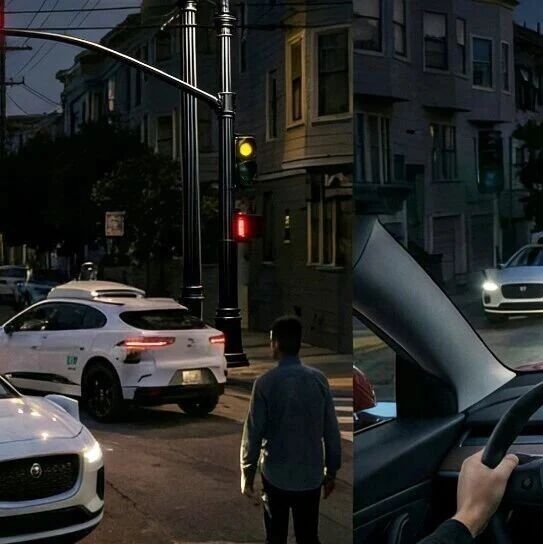
Core Viewpoint - The recent power outage in San Francisco highlighted the vulnerabilities of autonomous driving systems, particularly Waymo's, as their vehicles became immobilized and caused traffic chaos, contrasting with Tesla's unaffected Robotaxi service during the same incident [1][13][47]. Group 1: Incident Overview - A significant power outage in San Francisco disrupted the entire city's public transportation system and traffic signals, affecting up to 130,000 users during a peak shopping season [15]. - Waymo's autonomous vehicles became stranded at intersections and main roads, unable to move, effectively turning into "roadblocks" [4][6][7]. - The incident sparked widespread discussion on social media, showcasing the limitations of AI-driven systems in unexpected situations [8][12]. Group 2: Waymo's Response and Technology - Waymo temporarily suspended its ride-hailing service in the Bay Area and stated it was working closely with city officials to monitor infrastructure conditions [10]. - The power outage exposed a critical weakness in Waymo's reliance on a multi-sensor fusion system, which includes lidar, radar, cameras, and high-definition maps, as it struggled to operate without functioning traffic signals [22][24]. - The incident raised questions about the system's ability to handle chaotic urban environments, where predictable behavior is disrupted [33][35]. Group 3: Comparison with Tesla - In stark contrast, Tesla's vehicles, which rely primarily on cameras and AI, continued to operate without interruption during the outage, highlighting a fundamental difference in their technological approaches [48][49]. - While Waymo's system opted for a conservative risk management strategy by halting operations, Tesla's approach emphasizes adaptability in unpredictable conditions [51][52]. - The event underscored the ongoing debate about the reliability of autonomous driving technologies and the need for better solutions to handle sudden urban disruptions [55][56].
“小而美”突围港交所:希迪智驾14.2亿港元IPO锚定矿卡自动驾驶赛道
Sou Hu Cai Jing· 2025-12-23 02:41
Core Insights - Xidi Intelligent Driving Technology Co., Ltd. successfully listed on the Hong Kong Stock Exchange, raising approximately HKD 1.42 billion, marking a significant milestone for the company and the autonomous driving sector in Hong Kong [2][10] - The global autonomous driving market is experiencing explosive growth, with the market size expected to reach USD 273.8 billion by 2025, driven by both policy support and market demand [3] - Xidi focuses on the niche of autonomous driving for commercial vehicles, particularly in mining, which aligns with national safety regulations and addresses labor shortages and safety risks in traditional mining operations [4][10] Market and Technology Drivers - The autonomous driving industry is in a golden development period, supported by favorable policies and a growing market, with the global market size reaching approximately USD 158.3 billion in 2023, a year-on-year increase of 29.97% [3] - The cost of hardware components has decreased by about 40% over the past three years, with the cost of L2 systems dropping to the range of CNY 8,000 to CNY 12,000, accelerating the economic viability of autonomous driving solutions [6] Company Development and Financial Performance - Xidi's revenue grew from CNY 31.1 million in 2022 to CNY 410 million in 2024, with a compound annual growth rate of 263.1%, while adjusted net losses narrowed from CNY 159 million to CNY 127 million [8] - As of mid-2025, Xidi's total assets reached CNY 1.604 billion, a 29.04% increase from the beginning of the year, while total liabilities grew by 23.30% to CNY 2.911 billion [9] - The company has delivered 414 autonomous mining trucks and holds 647 indicative orders, with a market capitalization of approximately HKD 10 billion [6][9] Strategic Positioning - Xidi adopts a "small but beautiful" strategy, focusing on closed-scene applications in mining and ports, which allows for rapid technology implementation and commercial closure [10][12] - The company aims to utilize the raised funds primarily for R&D (55%), commercial expansion (15%), and industry chain integration (20%), addressing both long-term brand needs and short-term funding requirements [10] - Xidi's approach to focusing on specific scenarios helps avoid direct competition with larger players in the open-road segment, allowing it to build a competitive moat based on stable demand in closed environments [13]
深扒特斯拉ICCV的分享,我们找到了几个业内可能的解决方案......
自动驾驶之心· 2025-12-23 00:53
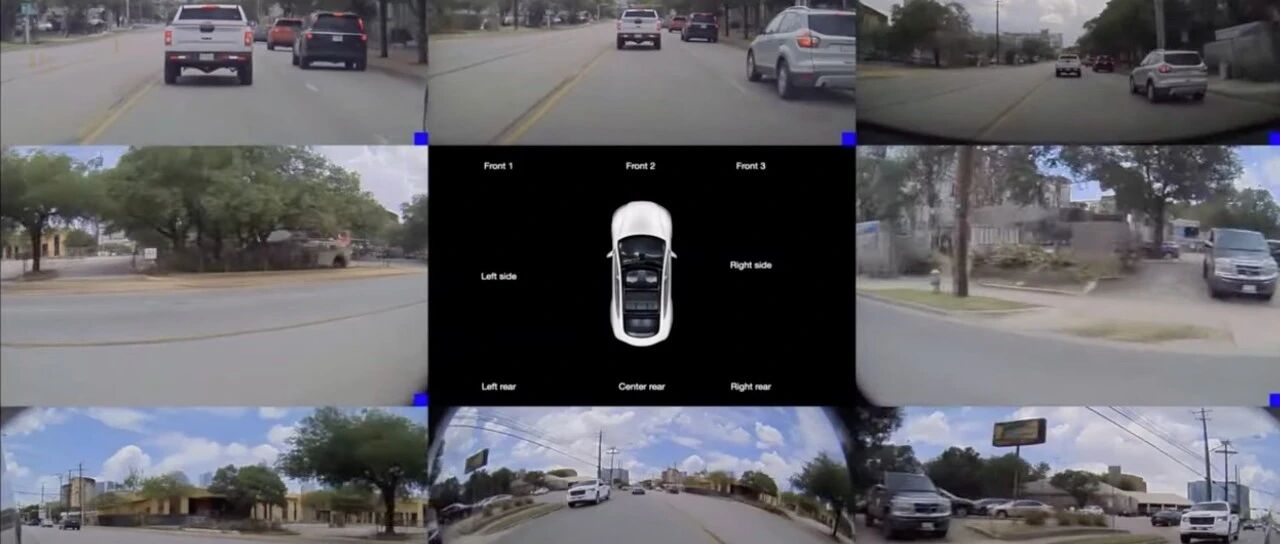
Core Insights - The article discusses Tesla's end-to-end autonomous driving solution, highlighting the challenges and innovative solutions developed to address them [3] Group 1: Challenges and Solutions - Challenge 1: Curse of dimensionality, requiring breakthroughs in both input and output layers to enhance computational efficiency and decision accuracy [4] - Solution: UniLION, a unified autonomous driving framework based on linear group RNN, efficiently processes multi-modal data and eliminates the need for intermediate perception and prediction results [4][7] - UniLION's key features include a unified 3D backbone network and the ability to handle various tasks simultaneously, achieving significant performance metrics such as 75.4% NDS and 73.2% mAP in detection tasks [11] Group 2: Interpretability and Safety - Challenge 2: The need for interpretability and safety guarantees in autonomous driving systems, which traditional models struggle to provide [12] - Solution: DrivePI, a unified spatial-aware 4D multi-modal large language model (MLLM) framework that integrates visual and language inputs to enhance system interpretability and safety [13][14] - DrivePI demonstrates superior performance in 3D occupancy prediction and trajectory planning, significantly reducing collision rates compared to existing models [13][17] Group 3: Evaluation - Challenge 3: The complexity of evaluating autonomous driving systems due to the unpredictability of human driving behavior and diverse interaction scenarios [18] - Solution: GenieDrive, a world model framework that uses 4D occupancy representation to generate physically consistent multi-view video sequences, enhancing the evaluation environment for autonomous systems [21][22] - GenieDrive achieves a 7.2% improvement in mIoU for 4D occupancy prediction and reduces FVD metrics by 20.7%, establishing new performance benchmarks [21][27] Group 4: Integrated Ecosystem - The three innovations—UniLION, DrivePI, and GenieDrive—form a synergistic ecosystem that enhances perception, decision-making, and evaluation in autonomous driving [30][31] - This integrated approach addresses key challenges in the industry, paving the way for safer, more reliable, and efficient autonomous driving systems, ultimately accelerating the transition to L4/L5 level autonomy [31]
快手直播间出现大量涉黄内容,快手回应:遭到黑灰产攻击;吉利汽车宣布完成极氪私有化;Waymo无人车闯祸了!路口集体趴窝导致堵车
雷峰网· 2025-12-23 00:34
Key Points - Waymo's autonomous vehicles experienced a significant malfunction, causing traffic congestion in San Francisco due to a power outage affecting traffic lights, leading to passengers being trapped for extended periods [4][5] - Light sail technology company, a Xiaomi-affiliated startup, is set to launch the world's first AI headphones with a camera, aiming to enhance human-computer interaction [8][9] - Kuaishou faced a major issue with explicit content appearing in live streams, which the platform attributed to a black market attack, and has reported the incident to authorities [10] - BYD confirmed salary increases for its R&D personnel, with adjustments targeting engineers in key areas such as battery materials and autonomous driving algorithms [12] - Geely announced the completion of the privatization of its electric vehicle brand, Zeekr, which will now be a wholly-owned subsidiary [15] - Tencent has hired a key talent from ByteDance's AI team, indicating a strategic move to bolster its capabilities in artificial intelligence [18] - Polestar, supported by Geely, secured a $600 million loan to stabilize its operations amid financial challenges, with plans for new model launches [31] - Honor's executive highlighted the ongoing cost pressures in the electronics industry, indicating that price increases for smartphones are inevitable [32] - Noitom Robotics completed a Pre-A+ funding round, raising several hundred million yuan to enhance its data solutions for humanoid robots [29][30] - The German railway company has ordered 200 electric buses from BYD, sparking controversy over local manufacturing preferences [48] - Nvidia's $5 billion investment in Intel aims to reshape the chip industry, focusing on developing customized CPUs and integrating GPU technologies [49][51]

国泰海通:维持计算机板块“增持”评级 AI大模型资本化进程加速
智通财经网· 2025-12-22 22:45
Group 1 - The domestic AI large model industry is experiencing a critical phase of accelerated technological productization and deepening capitalization processes [2] - Volcano Engine released the Doubao Model 1.8 and Seedance 1.5 Pro, achieving significant technological breakthroughs and reducing enterprise usage costs through innovative business models [2] - The daily token processing volume has surpassed 50 trillion, indicating robust operational capacity in the AI sector [2] Group 2 - The issuance of L3-level autonomous driving vehicle permits marks a transition to conditional commercialization in China, with specific models from Chang'an and BAIC gaining approval for limited road use [3] - The vehicles are subject to speed limits and the responsibility for vehicle operation lies with manufacturers during normal system operation, reflecting a cautious regulatory approach [3] - This development will provide essential practical evidence for improving technical standards, legal regulations, and insurance systems in the autonomous driving industry [3] Group 3 - Domestic GPU companies are actively pursuing capital market listings to support intensive R&D and market expansion, with Tensu Zhixin planning to raise $300 to $400 million through the Hong Kong Stock Exchange [4] - Other companies like Birran Technology and Kunlun Chip Technology are also advancing their listing processes, indicating a significant shift towards capital market-driven growth in China's semiconductor industry [4] - This trend highlights the acceleration of the self-sufficiency process in key design aspects of the semiconductor sector [4]
