
航空航天

Search documents
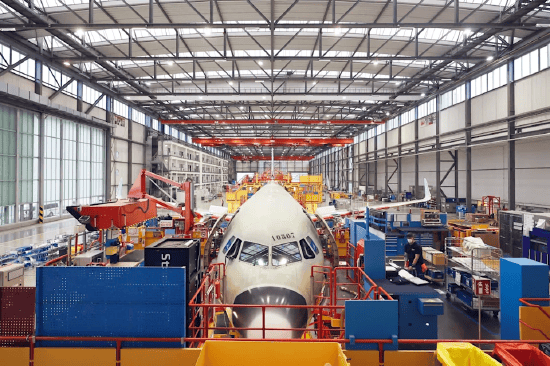
空客:超额完成2025年飞机交付量年度790架目标
Ge Long Hui· 2026-01-04 10:08
Core Viewpoint - Airbus Group is expected to deliver 793 aircraft in 2025, exceeding its revised annual target due to a significant increase in deliveries in the last days of the year [2] Group 1: Delivery Performance - The preliminary delivery figure of 793 aircraft may be subject to slight adjustments [2] - Airbus had previously lowered its delivery target for 2025 from approximately 820 aircraft due to issues with its A320 series, including a large-scale recall and non-compliant fuselage skin panels requiring additional inspections [2] Group 2: Market Context - Aircraft delivery volumes for both Airbus and its competitor Boeing are closely monitored market performance indicators, as they represent the largest cash source for both companies and are critical for assessing supply chain stability [2] - Airbus has faced ongoing challenges with timely procurement of various components, including interior parts and engines, which often leads to delays in aircraft deliveries [2]


企业想做大,创始人的想法是关键
创业家· 2026-01-04 10:07
Core Insights - The article emphasizes the importance of collaboration for entrepreneurs, suggesting that they should become "linkers" to leverage external partnerships for business growth [1] Group 1: Event Overview - The event led by Wu Shichun will take place from January 22 to 24, 2026, focusing on the technology manufacturing industry and exploring opportunities in a trillion-dollar market [2][6] - Participants will engage in deep learning experiences, including discussions with unicorn companies and investors, to enhance their understanding of industry dynamics and collaborative ecosystems [8] Group 2: Learning and Networking Opportunities - The program includes immersive learning sessions covering topics from technological innovation to commercialization strategies, aimed at equipping entrepreneurs with practical methodologies for overcoming challenges [8] - Attendees will have the chance to network with 100 entrepreneurial elites, fostering collaboration and problem-solving in real-time [8] Group 3: Featured Speakers and Topics - Notable speakers include Wu Shichun, a prominent angel investor and mentor, and Li Fenghui, founder of Yun Yao Aerospace, who will discuss opportunities and challenges in the aerospace sector [10][21] - The event will cover various sectors, including robotics, smart manufacturing, low-altitude economy, aerospace, and hard technology, highlighting the relevance of these fields in current market trends [22][24] Group 4: Event Logistics and Costs - The event costs 15,800 yuan per person, with an early bird discount of 12,800 yuan, covering accommodation, meals, and activity materials [25][27] - Participants are responsible for their travel expenses and any personal activities outside the scheduled program [27]

联合研究|组合推荐:长江研究2026年1月金股推荐
Changjiang Securities· 2026-01-04 08:46
Market Overview - The market is expected to experience style differentiation as it approaches the Spring Festival, maintaining a structural trend under narrow fluctuations[4] - Key focus areas include the release of December and annual economic data in late January and a concentrated period of earnings forecasts[4] Investment Strategy - The strategy emphasizes three main lines: 1. High-growth and high-elasticity sectors, including AI hardware (e.g., optical modules), energy storage, lithium batteries, and non-ferrous metals[4] 2. Market hot tracks such as commercial aerospace, robotics, and cultural tourism[4] 3. Low-position large financial sectors, focusing on high-certainty performance in brokerage, insurance, and banks with dividend expectations[4] Recommended Stocks - **Metals**: Yun Aluminum Co., Ltd. (000807.SZ) with a projected EPS of 1.87 in 2025 and a PE of 17.6[28] - **Chemicals**: Yara International (000893.SZ) with a projected EPS of 2.06 in 2025 and a PE of 23.3[28] - **New Energy**: Slin Smart Drive (301550.SZ) with a projected EPS of 1.32 in 2025 and a PE of 105.0[28] - **Machinery**: Hengli Hydraulic (601100.SH) with a projected EPS of 2.19 in 2025 and a PE of 50.2[28] - **Aerospace**: AVIC Xi'an Aircraft Industry Group (000768.SZ) with a projected EPS of 0.42 in 2025 and a PE of 60.3[28] - **Banking**: Jiangsu Bank (600919.SH) with a projected EPS of 1.76 in 2025 and a PE of 5.9[28] - **Non-Banking**: New China Life Insurance (601336.SH) with a projected EPS of 11.82 in 2025 and a PE of 5.9[28] - **Social Services**: Jin Jiang International (600754.SH) with a projected EPS of 0.89 in 2025 and a PE of 28.3[28] - **Electronics**: Dongshan Precision (002384.SZ) with a projected EPS of 0.77 in 2025 and a PE of 109.8[28] - **Telecommunications**: Zhongji Xuchuang (300308.SZ) with a projected EPS of 9.47 in 2025 and a PE of 64.4[28] Risk Factors - Economic recovery may fall short of expectations, leading to slow growth or stagnation[34] - Significant changes in individual stock fundamentals could adversely affect performance[34]



梦网科技:与神州六合就研发生产重载吊运无人机产品达成合作
Zheng Quan Shi Bao Wang· 2026-01-04 08:40
Core Viewpoint - The company Mengwang Technology (002123) has signed a cooperation agreement with Jiangxi Shenzhou Liuhe Helicopter Co., Ltd. to jointly develop and produce heavy-lift drone products, with a total development budget of 60 million yuan [1] Group 1 - The cooperation agreement involves the company's subsidiary entering into a separate technical development contract with Shenzhou Liuhe [1] - The payment for the product development will be made in stages by the company's subsidiary to Shenzhou Liuhe [1]

智能制造助力陕西工业转型升级
Shan Xi Ri Bao· 2026-01-04 00:42
据了解,该智能工厂总投资6.9亿元,实现了工艺设计数字化、制造设备网联化、生产流程自动 化、管控和决策智能化,是国内一流的数字化、自动化智能制造工厂,已累计突破40项关键技术,形成 18项国家和企业标准,申请专利60余项,智能制造取得新突破;深度参与陕西省及国家智能制造梯度培 育计划,通过数字化、网络化、智能化方式重构业务,成功打造了20余个智能制造场景并部署了9项AI 模型。 陕汽新能源商用车车架制造智能工厂的高效运转,是陕西智能制造助力工业转型升级的一个缩影。 智能制造已成为陕西转变工业增长方式、重塑工业增长动力的重要抓手。截至目前,全省共有16个 卓越级智能工厂、143个先进级智能工厂、402个基础级智能工厂。 "随着人工智能和大数据等新技术的创新应用,陕西智能制造快速发展,智能制造水平稳居西部前 列,智能工厂总数居西北第一、西部第三。"省工信厅相关负责人介绍,汽车、航空航天、输变电装 备、水泥建材、石油化工、消费品等行业重点企业广泛采用数控机床、工业机器人、增材制造、物联 网、智能物流仓储等装备技术以及人工智能、工业互联网等先进信息系统,开展智能制造标准化与新模 式应用,企业产品设计周期、劳动生产率、 ...
以赛为媒 筑牢科技人才根基
Shan Xi Ri Bao· 2026-01-04 00:35
Group 1 - The first Shaanxi Excellent Engineer Competition will be held in Yulin on December 18-19, 2025, featuring over 40 engineering teams from various enterprises, universities, and research institutions across the province [1] - The competition includes two tracks: the Challenge Competition and the Innovation Competition, covering eight major industries such as high-end equipment manufacturing, energy and chemical engineering, aerospace, and new generation information technology [1] - A total of 30 awards were presented, including 2 gold, 4 silver, 6 bronze, 8 excellence awards, and 10 outstanding technology achievement transformation awards [1] Group 2 - The competition serves as a valuable opportunity for engineers to learn from each other and exchange ideas, fostering innovation and collaboration [2] - Participants included both experienced technical leaders and emerging young engineers, highlighting the diverse talent pool in the engineering sector [3] - The event emphasizes the importance of technology for national strength, encouraging engineers to take on missions that support national strategies and local development [3] Group 3 - The Shaanxi Provincial Association for Science and Technology aims to cultivate excellent engineers and create high-level innovation competition platforms, enhancing the talent service mechanism [4] - Previous competitions in the province have shown significant participation and quality improvements, indicating a robust ecosystem for nurturing future technology talents [4] - The association plans to continue optimizing services and expanding platforms to promote deep integration of industry, academia, and research, contributing to the province's technological strength [4]
经营主体活跃 激荡发展活力
Xin Lang Cai Jing· 2026-01-03 22:19
Group 1 - The core viewpoint of the articles highlights the continuous innovation and growth of the private economy in Guizhou, exemplified by the successful listing of Zhongwei New Materials Co., Ltd. on the Hong Kong Stock Exchange, marking it as the first "A+H" share company in the new energy materials sector and the first company from Guizhou to achieve dual listing [1] - As of now, private economic entities account for 97.2% of all business entities in Guizhou, contributing over 60% of employment opportunities [1] - Guizhou has seen the emergence of 82 national-level specialized and innovative "little giant" enterprises, with a total of 1,587 innovative small and medium-sized enterprises and 13 manufacturing champions cultivated [1] Group 2 - Guizhou Dongyi Electric Technology Co., Ltd. set a new record in the province by obtaining a loan of 93 million yuan through data intellectual property pledges, showcasing innovative financing methods for private enterprises [2] - The total amount of data intellectual property pledge loans in the province has reached 314 million yuan, indicating a growing trend in leveraging intangible assets for financing [3] - Over 82% of surveyed enterprises believe that the business environment in Guizhou is continuously improving, with a total of 576,600 new business entities established in the province in 2025, reflecting a year-on-year growth of 4.38% [3] Group 3 - The "Guizhou Service" initiative has streamlined the approval process for projects, reducing processing time by 50% and the number of required documents by 40%, significantly enhancing operational efficiency for businesses [4] - The province has launched 65 integrated services for various business needs, reducing procedural steps and materials by an average of over 30%, with more than 2 million transactions completed [4] - The "cloud inspection" platform has improved efficiency by over 70% by allowing remote verification, thus reducing the need for physical inspections and saving time for businesses [4] Group 4 - Guizhou is focusing on enhancing existing enterprises as a strategy for attracting investment, with leading companies like Geely Automotive fostering a local supply chain that includes 47 supporting enterprises, achieving a localization rate of over 48% [5] - The province has established a "5+3" mechanism for major project recruitment, with 863 major projects planned and an investment target of 548.693 billion yuan, of which 652 projects have been signed and 444 have commenced construction [6] - The provincial government has introduced measures to support economic growth in the first quarter of 2026, including actions to cultivate and expand business entities and reduce operational costs for enterprises [6]
1月度金股:“春季行情”徐徐展开-20260103
Soochow Securities· 2026-01-03 12:01
Group 1 - The "Spring Market" is gradually unfolding, with both internal and external environments showing positive changes, including favorable macroeconomic conditions and supportive policies [2][3] - The report suggests that the focus for investment should be on growth sectors, particularly those related to the "14th Five-Year Plan," which is expected to attract significant capital [3][4] - Key investment directions for January include AI industry chains, emerging industries, and cyclical price increases in industrial metals and chemicals [6][7] Group 2 - The report highlights specific companies as top investment picks, including North China Innovation (机械), Maiwei Co., Ltd. (机械), Wanhua Chemical (能源化工), Chipbond Technology (电子), Ping An Insurance (非银), Zijin Mining (煤炭有色钢铁), Giant Network (传媒互联网), AVIC High-Tech (军工), Sanhua Intelligent Control (电新), and Kaiter (北交所) [7][11] - North China Innovation is expected to benefit from increased domestic equipment adoption and the expansion of storage and AI chip production [14][20] - Maiwei Co., Ltd. is positioned to capitalize on the U.S. solar expansion due to a significant gap in battery production capacity [23][30] - Wanhua Chemical is projected to strengthen its market position in MDI and TDI, with expected price increases due to supply constraints [33][35] - Chipbond Technology is set to benefit from the growing demand for PCB and semiconductor equipment driven by AI [41][42] - Ping An Insurance is anticipated to maintain strong growth in new business value (NBV) and dividend yield, supported by its insurance operations [45][46] - Zijin Mining is expected to see price increases in gold and copper, with a clear growth path in production [49][50] - Giant Network's game "Supernatural Action Group" is expected to show significant potential for long-term growth and profitability [56][57] - AVIC High-Tech is positioned to benefit from the increasing demand for aerospace composite materials as the C919 enters mass production [58][59] - Sanhua Intelligent Control is expected to see growth from its involvement in Tesla's supply chain and the increasing demand for cooling solutions in data centers and energy storage [65][66] - Kaiter is projected to benefit from the automotive electronics sector and its expansion into robotics and liquid cooling markets [72][78]






美军空袭委内瑞拉,对即将开盘的A股的影响(一)
Sou Hu Cai Jing· 2026-01-03 11:12
Core Viewpoint - The military strike ordered by the U.S. against Venezuela has created significant uncertainty in global markets, particularly affecting the Chinese A-share market, which is set to react after a holiday pause [1][2]. Group 1: Immediate Market Reactions - Global markets reacted swiftly to the news, with gold prices surging due to increased safe-haven buying and international oil prices rising sharply due to geopolitical risk premiums [2]. - The FTSE China A50 index futures, typically a leading indicator for A-shares, remained inactive on January 3, indicating that market sentiments and risk assessments would be bottled up until the market reopened on January 5 [2]. Group 2: Market Dynamics and Implications - The decision to bypass Congress for military action introduces new variables into market dynamics, creating a 12-hour delay for market reactions and increasing uncertainty regarding potential further military actions [3]. - The turmoil in Venezuela, a key OPEC member, is expected to have delayed impacts on the energy sector, particularly affecting domestic refining companies and airlines, while also providing time for the renewable energy sector to assess potential opportunities [4]. Group 3: Sector-Specific Impacts - The military intervention is likely to amplify concerns about energy inflation, with oil prices already rising, which will impact the energy supply chain and related sectors once the A-share market reopens [4]. - The military action's implications extend to the defense sector, where the unpredictability of U.S. military actions may lead to increased demand for defense stocks, reflecting a broader trend of heightened geopolitical tensions [5]. Group 4: Investment Strategies and Scenarios - Three potential scenarios for the A-share market opening on January 5 have been outlined: a panic-driven sell-off, a rational adjustment reflecting market resilience, or a strategic opportunity arising from perceived overreactions [8][9][10]. - Investors are advised to prepare by assessing their holdings, setting specific price triggers for action, and closely monitoring developments regarding potential further military actions and Congressional responses [15][17]. Group 5: Broader Market Repercussions - The military strike may lead to a reevaluation of geopolitical risk pricing in global capital markets, particularly affecting countries with existing tensions with the U.S. [6]. - The potential for a second round of attacks raises concerns about ongoing supply disruptions, which could have lasting effects on market stability and investor confidence [4][5].





【财经早报】港股重要调整!3月生效
Zhong Guo Zheng Quan Bao· 2026-01-03 00:35
Company News - Semiconductor Manufacturing International Corporation (SMIC) agreed to issue 357 million shares to the National Integrated Circuit Industry Investment Fund, increasing the fund's stake in SMIC's H-shares from 4.79% to 9.25%, nearly doubling its ownership [3] - Tesla reported a global delivery of 1.636 million vehicles in 2025, a year-on-year decline of approximately 8.6%, marking the first time Tesla's annual electric vehicle sales have been surpassed by Chinese manufacturer BYD [3] - Changan Automobile disclosed a 2025 sales figure of 2.913 million vehicles, representing a year-on-year growth of 8.5%, achieving a near nine-year high. Notably, its new energy vehicle sales reached 1.109 million units, up 51% year-on-year, while overseas sales increased by 18.9% to 637,000 units [3] - EVE Energy Co., Ltd. submitted a listing application to the Hong Kong Stock Exchange, with CITIC Securities as the exclusive sponsor [3] Industry Insights - According to CITIC Securities, the consensus on space computing has gradually formed, with major overseas players like SpaceX, Starcloud, and Google planning to establish space data centers. The domestic commercial space sector is also entering a phase of large-scale deployment, expected to experience explosive growth in the coming years [4] - Solar power, as the sole energy source for satellites, is anticipated to see its system cost share continue to rise. Currently, solar wing panels primarily utilize gallium arsenide technology, while new technologies such as P-type heterojunction and perovskite/silicon tandem are expected to gradually replace existing methods in the medium to long term [5] - The space photovoltaic market is projected to reach a trillion-yuan scale, presenting long-term investment opportunities in space photovoltaics [5]