供应链金融

Search documents
新股前瞻|毛利率高达95.9%,业绩稳健的中企云链已现隐忧?
智通财经网· 2025-05-26 05:38
Core Viewpoint - Zhongqi Yunlian Co., Ltd. is making a second attempt to go public on the Hong Kong Stock Exchange, supported by clearer regulatory guidelines for supply chain finance, which have shifted from cautious observation to active guidance and regulation [1][2]. Financial Performance - Zhongqi Yunlian has shown steady growth in revenue and net profit from 2022 to 2024, with revenues of 652 million, 879 million, and 991 million RMB, and corresponding net profits of 45.7 million, 152 million, and 157.5 million RMB [2][9]. Business Model and User Growth - The company operates an independent digital financial platform that connects supply chain data, facilitating financing needs for enterprises. User numbers on the platform have grown significantly, from approximately 230,000 in 2022 to 556,000 in 2024 [3][4]. Market Position - According to Frost & Sullivan, Zhongqi Yunlian ranks first in China's digital financial platforms with a market share of 12.9% as of 2024. The company has also surpassed 1 trillion RMB in confirmed accounts receivable, reaching over 2 trillion RMB within 20 months [4][10]. Revenue Composition - The company's core business segments include rights confirmation and factoring, digital scene business, and other ecological businesses. The rights confirmation and factoring business accounted for over 91% of total revenue from 2022 to 2024, with electronic voucher services being the primary revenue driver [4][5][6]. Profitability and Cost Structure - Zhongqi Yunlian has improved its gross margin from 87.7% in 2022 to 95.9% in 2024, primarily due to a shift towards higher-margin digital services. However, the company faces challenges with high sales and marketing expenses, which accounted for approximately 42% of total revenue in recent years [6][9]. Competitive Landscape - The company faces increasing competition from bank-affiliated platforms and state-owned enterprises that are developing their own supply chain finance platforms. This competition could pressure Zhongqi Yunlian's market share if it cannot differentiate its services [8][10]. Regulatory Environment - Recent regulatory changes require adjustments in accounts receivable payment terms, which may impact the company's performance. The company must adapt to these new compliance requirements to maintain its market position [10][11]. Industry Growth Potential - The independent digital enterprise confirmation platform market in China is projected to grow from 1.4 trillion RMB in 2022 to 6.6 trillion RMB by 2027, with a compound annual growth rate of 36.7%. As a market leader, Zhongqi Yunlian is well-positioned to benefit from this growth [10].

243家央企和665家省属国企大全
Sou Hu Cai Jing· 2025-05-25 23:37
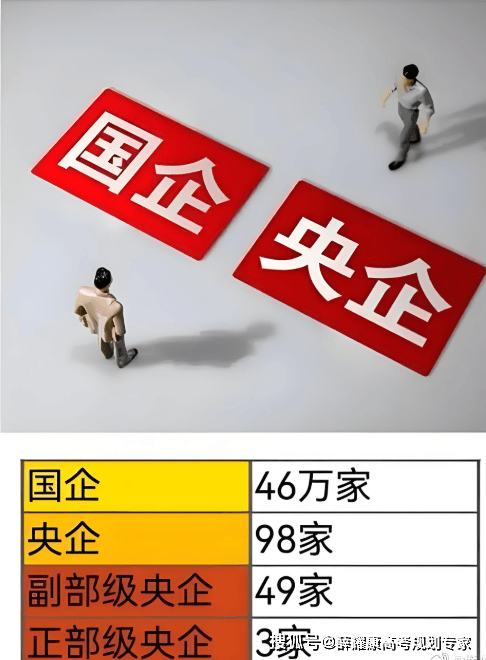
本科新增29个专业就业前景如何 我国目前各类央企共243家,其中由列入国务院国资委央企名录的央企98家、列入财政部中央企业名录的央企145家。这些央企和国企在2022年的营业收入 是82.6万亿,净利润是4.32万亿,上缴税收5.93万亿。约有员工3390万。 4月3日,易华录发布公告表示公司收到实际控制人中国华录集团有限公司(以下简称华录集团)通知,华录集团正在与中国电子科技集团有限公司(以下简称 中国电科)筹划重组事项,华录集团拟整合进入中国电科。华录集团与中国电子科技集团整合后,国务院国资委监管的中央企业数量或将由现在的98家减 少为97家。 | 国企 | 46万家 | | --- | --- | | क्रिश्र | 98家 | | 副部级央企 | 49家 | | 正部级中企 | 3 2017 0 2011 11:57 | 国务院国资委管理的98家中央企业排名依据什么规则?综合各方信源推测: 排名1-53的为副部级央企 。前53家中央企业的董事长、党委(党组)书记、总经理的人选由中央政治局常委会研究决定,这与一般副部长级干部的任免 权限相同,因此被认为相当于副部级干部。 所以,前53户在媒体报道中被 ...
0资金压力备战618!京东科技“百亿计划”再升级
Zhong Jin Zai Xian· 2025-05-15 11:31
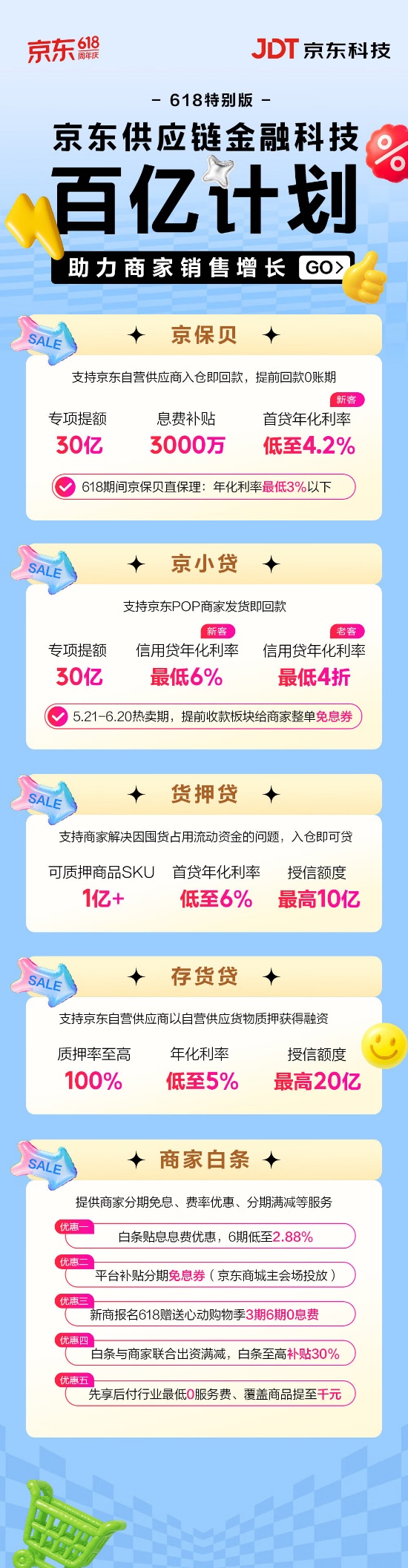
Core Viewpoint - JD.com is launching a special version of its "Billion Plan" for the 618 shopping festival, aimed at providing financial support to merchants with a total of 10 billion yuan in funding and various financial products to help them prepare for the mid-year consumption surge [1][5]. Group 1: Financial Products Offered - The "Billion Plan" 618 special edition includes five major products: Jingbaobei, Jingxiaodai, Huoyadui, Dinghuodai, and Merchant White Bar, providing a total of 10 billion yuan in special credit limits and millions in interest subsidies [1]. - Jingbaobei will offer a special credit limit of 3 billion yuan and an interest subsidy of 30 million yuan, with a first loan annual interest rate as low as 4.2%, which is lower than previous years [1][5]. - Jingxiaodai combines credit loans with early payment to help merchants supplement operating funds, with new customers starting at an annual interest rate of 6% and existing customers enjoying a 40% discount [1][4]. Group 2: Inventory Financing Solutions - Huoyadui allows merchants to use inventory as collateral for financing, covering over 100 million pledgeable SKU items, with a first loan annual interest rate starting at 6% [2][4]. - The "Inventory Loan" for JD's self-operated suppliers allows financing against self-operated goods with a pledge rate of up to 100% and an annual interest rate as low as 5% [2][4]. Group 3: Merchant White Bar Benefits - The Merchant White Bar offers installment interest-free options, fee discounts, and installment reductions to help merchants effectively acquire customers and boost sales [5]. - Special offers for the Merchant White Bar include an interest rate as low as 2.88% for six installments, which is below the industry average, and targeted interest-free coupons for over a million small and medium-sized merchants [5]. Group 4: Historical Context and Impact - Since the launch of its first supply chain financial product, Jingbaobei, in 2013, JD.com has served over a million small and micro enterprises, with a total loan amount exceeding 1 trillion yuan [5]. - For instance, Tianyin Holdings, a major distributor, received 2 billion yuan in financing from Jingbaobei within six hours before the 2023 618 event, demonstrating the efficiency and flexibility of JD's financial services [5].

盛业(06069.HK):拟配售引入战略股东 新业务拓展有望加速
Ge Long Hui· 2025-05-15 10:20
Group 1 - The company announced a placement agreement on May 13, aiming to issue up to 17,480,000 shares, representing approximately 1.77% of the company's existing share capital as of the announcement date, with expected proceeds of about HKD 209.59 million [1] - The placement price is set at HKD 11.99 per share, reflecting a discount of approximately 6.91% compared to the closing price on May 12 and an 8.50% discount compared to the average closing price over the previous five trading days [1] - The placement received strong demand, with over 10 times the initial target of HKD 156 million, leading to a final fundraising increase of about 35% [1] Group 2 - Strategic shareholders, including Jingtai Technology and Jiaoge Friends, are expected to accelerate the company's new business development, leveraging AI research and automation systems [2] - The net proceeds from the placement will primarily be used to enhance platform technology services, increase R&D investment, and support general working capital [2] - The company maintains a "buy" rating, anticipating sustained high growth driven by emerging industries and improved operational quality due to increasing platform revenue share [2]
东吴证券晨会纪要-20250515
Soochow Securities· 2025-05-14 23:30
Macro Strategy - The recent reduction of tariffs between China and the US, from a maximum of 145% to 30%, is expected to lower export uncertainties and may lead to a comprehensive trade framework agreement by the end of the year [1][9][10] - The US has made significant concessions in the negotiations, driven by increasing domestic political and economic pressures, particularly ahead of the midterm elections [1][9] - The trade conflict continues to create high uncertainty in economic data, with the US trade deficit increasing by 14% in March and consumer goods imports reaching a historical high [1][9] Industry Insights - The shift in local state-owned enterprises' bond financing from infrastructure and real estate to technology innovation indicates a growing focus on the tech sector [4][13] - The issuance of bonds for equity or fund investments by local state-owned enterprises has increased by 31.41%, while investments in infrastructure or real estate have decreased by 47.85% [4][13] - The technology sector is becoming a key driver of economic growth, with the digital economy's core industries expected to account for about 10% of GDP by the end of 2024 [10][11] Company Recommendations - Aerospace Hongtu (688066) has seen a downward revision in EPS forecasts for 2025-2026 due to demand-side impacts, but is expected to recover as downstream customer orders improve, maintaining a "buy" rating [7] - Shengye (06069.HK) is poised for accelerated new business development following a strategic placement, with a focus on supply chain finance and fintech services, also maintaining a "buy" rating [8]
上海票据交易所发布重要通知!涉及这些关键要点→
Jin Rong Shi Bao· 2025-05-13 03:30
Group 1 - The supply chain finance sector is experiencing growth in 2024, with an improved financing environment for small and medium-sized enterprises (SMEs) in China, despite traditional challenges such as fund occupation and accounts receivable delays [1] - The implementation of the "Notice on Regulating Supply Chain Finance Business" starting June 15, 2025, outlines 21 key tasks aimed at guiding the development of the industry, including the promotion of timely payments by core supply chain enterprises [2] - The Shanghai Commercial Paper Exchange has issued a notification detailing ten specific requirements for the reporting of accounts receivable electronic voucher business information, ensuring orderly progress in subsequent information reporting [2] Group 2 - The notification emphasizes that various financial institutions, including policy banks and foreign banks, must adhere to the reporting requirements for accounts receivable electronic voucher business information [3] - Reporting institutions are required to submit their accounts receivable electronic voucher business information directly to the Shanghai Commercial Paper Exchange and are prohibited from delegating this task to others [3] - Institutions and related parties must avoid making false or misleading claims regarding the reporting of accounts receivable electronic voucher business information to enterprises [3]
40万亿供应链金融市场迎新规 直击哪些行业潜规则?
Zhong Guo Jing Ying Bao· 2025-05-12 10:41
Core Viewpoint - The new regulations on supply chain finance in China aim to enhance the protection of small and medium-sized enterprises (SMEs) and improve the overall health of the supply chain finance ecosystem, effective from June 15, 2025 [1][2]. Summary by Relevant Sections Regulatory Changes - The People's Bank of China, along with several regulatory bodies, has issued new guidelines that officially include accounts receivable electronic vouchers into the regulatory framework, which is expected to foster industry development and innovation [2][3]. - The new regulations signal a shift towards "de-financialization" of supply chain finance platforms, emphasizing their role as information platforms rather than credit platforms, which will promote healthier development of third-party platforms [2][3]. Risk Management - The new regulations introduce a comprehensive credit risk management system, including monitoring of all debts of core enterprises and addressing risks associated with bill circulation [3][4]. - The regulations replace the previous cash flow indicators with a focus on the financial condition of enterprises as a risk warning metric, aiming to create a more robust credit risk prevention framework [3][4]. Payment Practices - The regulations address the issue of delayed payments to SMEs by core enterprises, mandating timely payments and prohibiting unreasonable payment terms or the abuse of non-cash payment methods to extend payment periods [5][6]. - The maximum payment period for accounts receivable electronic vouchers is set at six months, with a maximum of one year [5][6]. Fee Structures - The new guidelines regulate the charging practices of core enterprises and supply chain information service providers, ensuring that fees related to accounts receivable confirmation are reasonable and transparent [6][7]. - Core enterprises are prohibited from charging SMEs under the guise of accounts receivable confirmation and must clearly define and publicize their service fee standards [6][7].
这家公司再冲IPO!中车、中船等央企股东陆续退出
Guo Ji Jin Rong Bao· 2025-05-12 09:55
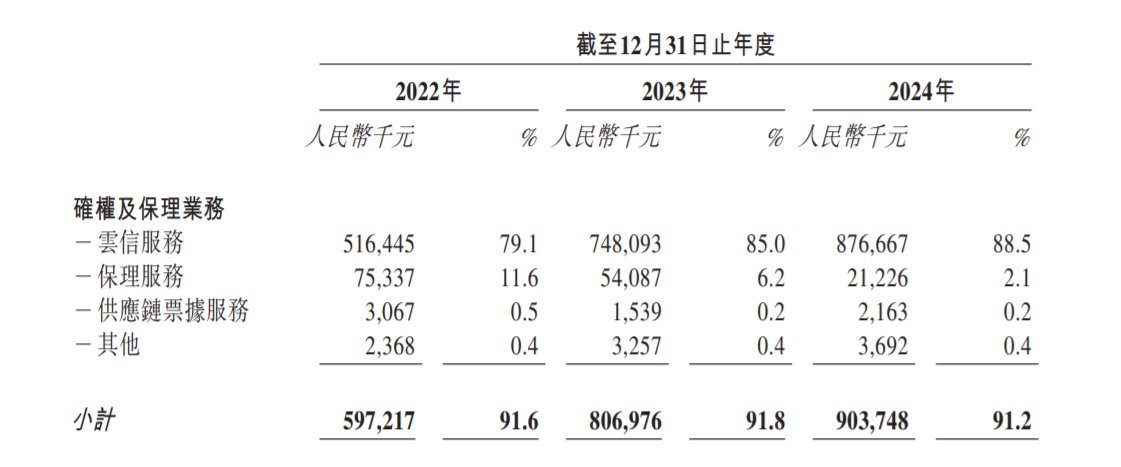
Core Viewpoint - Zhongqi Yunlian Co., Ltd. has submitted its prospectus to the Hong Kong Stock Exchange for the second time after an initial failure in October 2023, aiming to address challenges in supply chain finance through its digital financial platform [1] Company Background - Established in 2015, Zhongqi Yunlian is a mixed-ownership enterprise controlled by state-owned enterprises, initiated by China CRRC and involving multiple central and local state-owned enterprises and financial institutions [2] - The company utilizes blockchain and big data technologies to create an "N+N+N" ecosystem, linking core enterprises, chain enterprises, and financial institutions [2] - The largest shareholder is the employee stock ownership platform, Yunding Assets, holding 23.11% of shares, while other institutional investors hold a combined 20.73% [2] Business Performance - The core revenue sources are rights confirmation and factoring services, contributing 65.7%, 55.0%, and 55.2% of revenue from 2022 to 2024, with "Yunxin" services increasing from 79.1% to 88.5% during the same period [2][5] - The user base of the Yunlian platform grew from 230,434 to 556,588 from 2022 to 2024, covering 98% of China's municipalities [3] - The platform's core enterprise retention rates were 88.5%, 86.0%, and 87.8% over the same period [3] Market Position - According to Frost & Sullivan, Zhongqi Yunlian is the largest digital accounts receivable rights confirmation platform in China, holding a market share of 29.5% in confirmed accounts receivable and 32.6% in financing amounts as of 2024 [3][4] - The company has been recognized in the KPMG China Fintech 50 for four consecutive years [3] Financial Overview - Revenue increased from RMB 652.27 million in 2022 to RMB 991.01 million in 2024, with net profit rising from RMB 46.85 million to RMB 157.48 million during the same period [5][6] - The proportion of sales expenses relative to revenue was 46.7%, 42.7%, and 42.3% from 2022 to 2024, indicating high investment in sales despite user growth [8] Risks and Concerns - The high concentration of revenue from the "Yunxin" service raises concerns about income stability if core enterprises shift to self-built platforms or if market competition intensifies [5][7] - The company's current liabilities surged from RMB 482 million in 2022 to RMB 1.074 billion in 2024, indicating increased debt pressure [7][8]

大成研究 | 马宏伟等:证券合规地图系列文章(十八):供应链金融环节中的上市公司合规风险
Sou Hu Cai Jing· 2025-05-11 01:31
Group 1 - The core viewpoint of the article emphasizes the importance of regulatory measures to prevent risks and promote high-quality development in the capital market, as outlined in the new "National Nine Articles" [2] - The article discusses the need for a comprehensive approach to address compliance risks faced by listed companies, focusing on operational compliance, duty compliance, service compliance, and regulatory procedures [2] - The article is part of a series aimed at creating a compliance map for listed companies, specifically addressing operational compliance [2] Group 2 - Supply chain finance is defined as a financial innovation that integrates the flow of funds, goods, and information along the supply chain, aimed at alleviating financing pressure on small and medium-sized enterprises while enhancing overall operational efficiency [3][4] - The development of supply chain finance is currently in a strengthening phase, with significant policy support aimed at achieving comprehensive financial service coverage for key enterprises by the end of 2025 [5] - The article outlines three main models of supply chain finance: seller financing, buyer financing, and their respective sub-models [6][7][9] Group 3 - Supply chain finance presents risks for listed companies, particularly external risks such as legal and credit risks, which can arise from fraudulent activities or the creditworthiness of upstream and downstream enterprises [10][12] - Internal risks include operational and compliance risks, where companies must ensure strict internal controls to avoid becoming complicit in fraudulent activities [14][15] - The article provides examples of past incidents where companies faced significant legal and financial repercussions due to failures in managing supply chain finance risks [11][13] Group 4 - To mitigate risks associated with supply chain finance, listed companies should enhance external risk prevention measures, including credit assessments of involved enterprises and monitoring of logistics and warehousing [16] - Establishing internal risk response mechanisms is crucial, emphasizing the need for a strong compliance culture and adherence to regulatory trends to avoid potential legal issues [18]

中企云链:全球化3.0,最大产业数字金融平台业赴港IPO野望不会小
Sou Hu Cai Jing· 2025-05-08 12:49
Core Viewpoint - The article emphasizes the transformative role of Zhongqi Yunlian in supply chain finance, highlighting its significant achievements and the broader implications for the digital economy in China [1][3][4]. Company Overview - Zhongqi Yunlian is the largest independent digital financial platform in China, with over 20 trillion yuan in secured receivables, nearly 1 billion yuan in revenue, and a net profit margin of 15.9% [1]. - The company has established a digital network covering 98% of China's regional administrative areas, addressing the financing challenges faced by small and medium-sized enterprises (SMEs) [1][4]. Business Model and Services - The company operates on an independent platform model, facilitating financial transactions among various stakeholders in the supply chain, leveraging the credit of core enterprises to enhance cash flow for suppliers [3][4]. - Zhongqi Yunlian's services are primarily delivered through its "Yunxin" platform, which connects over 6,600 core enterprises and 546,413 chain enterprises, as well as 3,574 financial institutions [6][8]. Financial Performance - The company's revenue has shown steady growth, with figures of 652 million yuan in 2022, 879 million yuan in 2023, and projected 991 million yuan in 2024, alongside corresponding gross profits [7]. - In 2024, Zhongqi Yunlian achieved a net profit of approximately 157 million yuan, with a net profit margin of nearly 16% [7]. Market Position and Growth - Zhongqi Yunlian has become the first independent digital receivables platform in China to exceed 1 trillion yuan in secured receivables by May 2023, reaching 2 trillion yuan by January 2024 [4][5]. - The company holds a market share of 14.2% in secured receivables and 15.0% in financing volume for 2024, making it the largest independent digital receivables platform in China [5][6]. Industry Trends - The supply chain finance industry in China is experiencing robust growth, with a market size of approximately 41.3 trillion yuan in 2023, reflecting a year-on-year increase of 11.9% and a compound annual growth rate of 20.88% over the past five years [4][10]. - The industry is expected to exceed 60 trillion yuan by 2027, with a projected annual growth rate of 10.3% [10]. Technological Impact - Advances in technology, including big data, artificial intelligence, and blockchain, are driving the evolution of supply chain finance, enabling better connectivity between enterprises and financial institutions [9]. - Zhongqi Yunlian is leveraging these technologies to enhance its service offerings and improve the efficiency of financial transactions within the supply chain [9].