
生态治理

Search documents
宁波走好绿色路绘好美丽篇
Xin Hua Wang· 2025-08-20 02:26
Group 1 - Ningbo has expanded its "Marine Partner" recycling program from 2 to 11 collection points, recovering over 1,600 tons of discarded fishing gear [1] - The city has implemented 47 ecological civilization reform measures since 2017, establishing notable initiatives such as the "Ecological Environment Discussion Hall" and "Zero Direct Discharge of Sewage Areas" [1] - In 2024, Ningbo's ecological quality index (EQI) is projected to be 67.67, surpassing the national average [2] Group 2 - Ningbo's air quality has improved significantly, with a good rate of 91.3% and PM2.5 concentration reduced from 54 µg/m³ in 2013 to 23 µg/m³ in 2024 [3] - The city has achieved a water quality good rate of 98.9% and a functional compliance rate of 100% in 2024, up from 40.6% and 39.1% in 2005 respectively [3] - Ningbo has established a comprehensive biodiversity observation network, becoming a model for biodiversity-friendly cities [4] Group 3 - The first national blue carbon auction took place in Ningbo, with a transaction value of over 300,000 yuan, highlighting the city's innovative approach to ecological product valuation [4] - By 2030, Ningbo aims to establish a modern environmental governance system and enhance the supply of high-quality ecological products [5]
“做实政治监督 推动绿色发展”之二 让绿水青山永远成为福建的骄傲
Zhong Yang Ji Wei Guo Jia Jian Wei Wang Zhan· 2025-08-18 00:31
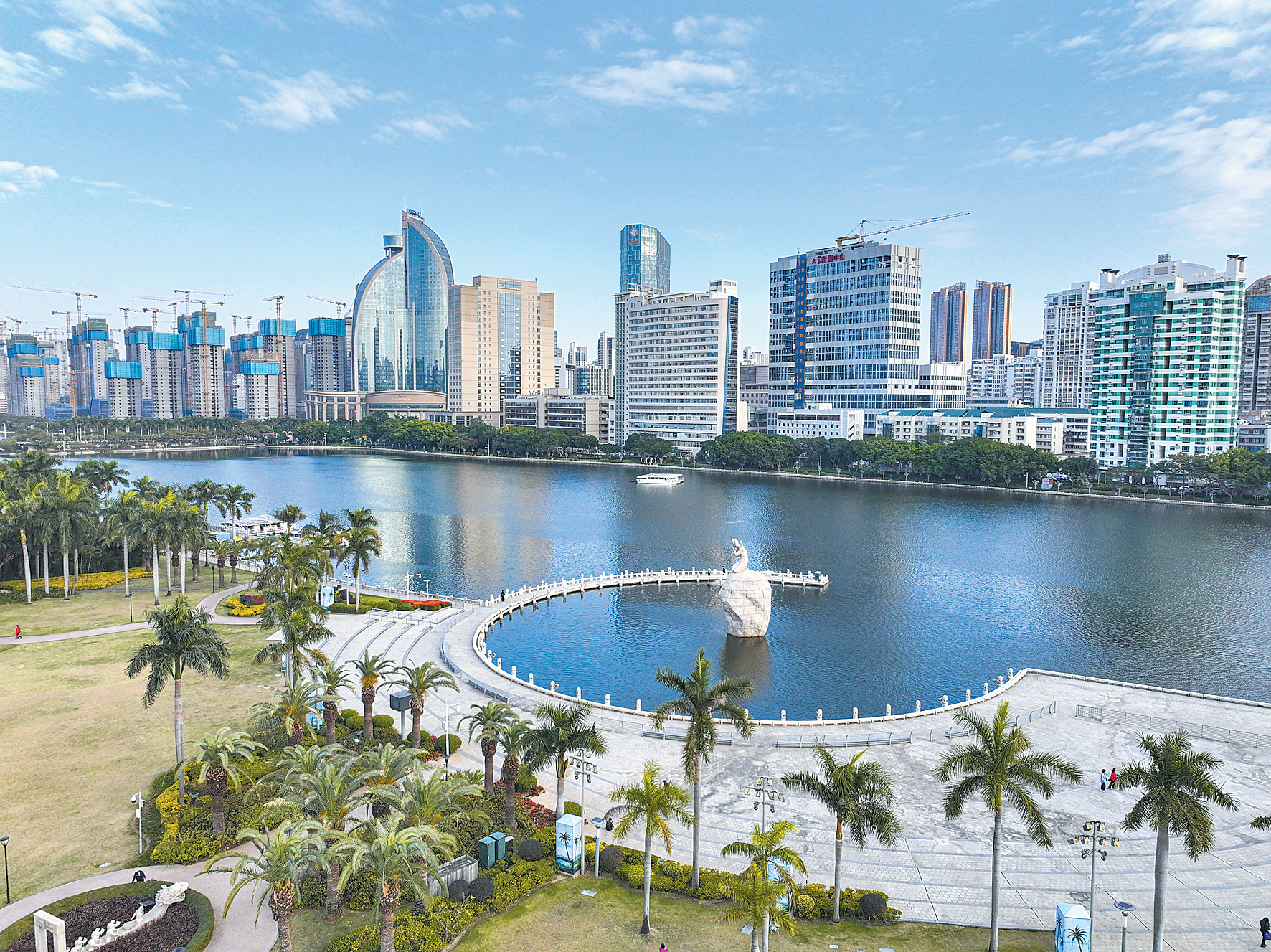
Group 1: Ecological Transformation - The transformation of Xiamen's Yundang Lake from a polluted "stinky lake" to a clear and green ecological landscape reflects the solid achievements of ecological governance in Fujian Province [2][3] - Yundang Lake has become a popular recreational area for citizens, symbolizing the successful implementation of ecological protection policies [3] Group 2: Ecological Governance and Supervision - Fujian Province, as the first ecological civilization pilot zone in China, emphasizes the integration of ecological protection into overall development strategies, guided by the principle of "green mountains and clear waters are invaluable assets" [3][7] - The local government has established a robust supervision mechanism to ensure the effective implementation of ecological protection policies, focusing on key areas such as forest management and environmental monitoring [7][10] Group 3: Community Involvement and Economic Benefits - The case of Huang Zhenfang's family forest farm in Ningde City illustrates how community involvement in afforestation has led to significant ecological and economic benefits, with collective income projected to reach 873,900 yuan in 2024 [6][8] - The integration of ecological resources into local economies, such as the development of tea gardens and carbon trading, demonstrates the tangible economic advantages of ecological protection [17] Group 4: Waterway Management and Improvement - The systematic governance of the Mulian River has transformed it from a flood-prone area to a well-managed waterway, enhancing the quality of life for local residents [9][12] - Continuous monitoring and innovative supervision mechanisms have been implemented to address water quality issues, resulting in a 3.18% improvement in the comprehensive water quality index in 2024 [12][11] Group 5: Future Directions - Fujian's disciplinary inspection and supervision agencies are committed to maintaining ecological protection as a political responsibility, aiming for more precise and effective oversight to ensure sustainable environmental health [18]

8地共建“两山”朋友圈 门头沟举办第三届永定河绿色发展论坛
Xin Jing Bao· 2025-08-16 10:43
Group 1 - The third Yungding River Green Development Forum focused on ecological civilization construction and the "Two Mountains" theory, promoting collaboration among various regions [1][2] - The Mentougou District has implemented a strategy of "ecological district, cultural prosperity, and technological strength," achieving a forest coverage rate of 48.64% and a PM2.5 concentration reduction from 36 µg/m³ in 2019 to 28.6 µg/m³ in 2024 [1][2] - The district's ecological system service value reached 35.97 billion yuan in 2024, an increase of 221 million yuan from the previous year, ranking first among Beijing's ecological conservation areas [1] Group 2 - Mentougou District is developing cultural tourism brands and has achieved a historic urban-rural income ratio of below 2 in 2024, while also focusing on high-tech industries such as artificial intelligence and medical devices [2] - A collaborative initiative called the "Two Mountains" friendship circle was launched, involving multiple districts and regions to enhance cooperation in ecological protection, green industries, and biodiversity [2][3] - The district aims to transform ecological advantages into economic and social benefits, sharing experiences and building mechanisms for sustainable development in the Beijing-Tianjin-Hebei region [3]
60秒看雄安|蓝绿交织生态美
Xin Hua She· 2025-08-15 13:16
Core Viewpoint - The establishment of Xiong'an New Area has led to significant ecological improvements, particularly in Baiyangdian, showcasing a successful model of ecological governance and urban development [1] Group 1: Ecological Governance - Baiyangdian has undergone the largest systematic ecological governance in its history since the establishment of Xiong'an New Area [1] - The water quality in Baiyangdian has consistently maintained a level of Class III for several years, ranking it among the good lakes in the country [1] - The area has transformed into a "bird paradise," with lush greenery and vibrant lotus flowers [1] Group 2: Urban Development Philosophy - The urban development philosophy of Xiong'an New Area emphasizes "planting trees first, then building cities" [1] - The ecological vision includes accessibility to nature, with plans for "3 kilometers into the forest, 1 kilometer into the forest belt, and 300 meters into parks" [1] - This vision is becoming a tangible reality for the local residents, enhancing their quality of life [1]
从山顶到海洋 福建接续推进生态省建设
Zhong Guo Fa Zhan Wang· 2025-08-15 07:04
Core Viewpoint - Fujian Province aims to establish a comprehensive ecological protection and governance framework from mountains to oceans, aligning with the national goal of building a beautiful China, as outlined in the recent policy document issued by the provincial government [1]. Summary by Sections Overall Requirements - The policy document sets ambitious targets for ecological and economic development, aiming for significant improvements in ecological quality by 2027 and the establishment of a comprehensive governance framework by 2030 [1]. Main Tasks - The document outlines 24 specific tasks focusing on "eight coordinations" and "eight major projects," including optimizing land-sea development, enhancing urban-rural collaboration, and promoting green low-carbon industrial upgrades [2][3]. Specific Initiatives - **Green and Clean Agriculture**: By 2027, the safety utilization rate of contaminated farmland is targeted to reach 95%, with a focus on resource recycling and the promotion of green agricultural products [3]. - **Pollution and Carbon Reduction**: The aim is to achieve a 40% completion rate for beautiful parks by 2027 and to implement green renovations in urban and rural housing [3]. - **Water Resource Management**: By 2030, the ecological water demand satisfaction rate for key rivers and lakes is expected to reach 85%, with a focus on comprehensive water environment governance [4]. - **Marine and Coastal Protection**: The document sets a goal for 50% of beautiful bays to be established by 2027, emphasizing the need for integrated pollution control in coastal areas [4]. Organizational Implementation - The document emphasizes the integration of these goals into the "14th Five-Year" plans across various sectors, encouraging local governments to tailor their strategies to regional characteristics [4]. Background and Achievements - Fujian has been recognized as the first provincial-level ecological civilization pilot zone and has made significant strides in sustainable development, achieving 4.3% of the national economic output with only 3% of the population and land [5].
“两山”20年山东实践丨“南竹北移”70多种,万里黄河绿生金
Qi Lu Wan Bao· 2025-08-15 00:47
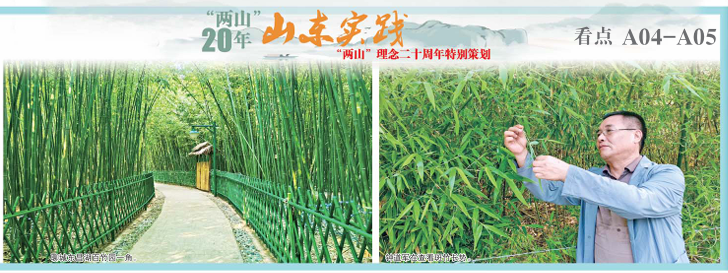
Core Concept - The article highlights the successful implementation of the "Two Mountains" theory in Shandong, particularly through the "South Bamboo North Migration" project, which has transformed barren saline-alkali land into thriving bamboo forests, showcasing ecological restoration and sustainable development [1][12]. Group 1: Background and Initiatives - The "Two Mountains" theory, proposed by Xi Jinping in 2005, emphasizes the balance between ecological protection and economic development, influencing global ecological governance [1]. - The "South Bamboo North Migration" initiative aims to cultivate bamboo in northern regions, overcoming challenges posed by harsh climates and saline-alkali soils [6][7]. Group 2: Challenges and Solutions - Initial attempts to cultivate bamboo faced significant challenges, including extreme cold and soil salinity, leading to high mortality rates among seedlings [6][7]. - Innovative techniques were developed, such as using Yellow River water for salinity management and selecting resilient bamboo varieties through rigorous testing under extreme weather conditions [7][8]. Group 3: Achievements and Expansion - Over 20 years, the project has successfully cultivated over 70 bamboo varieties suitable for northern climates, significantly exceeding previous expert predictions [8][9]. - The area dedicated to bamboo cultivation in Liaocheng has expanded from less than 100 acres in 2011 to over 3,000 acres by 2025, contributing to local ecological and economic benefits [9][10]. Group 4: Economic and Cultural Impact - The bamboo industry has created a positive feedback loop, enhancing local economies through bamboo-related products and cultural initiatives, with annual sales exceeding 10 million yuan [10][11]. - The integration of bamboo cultivation with tourism and cultural heritage has further increased local engagement and economic activity, demonstrating the multifaceted benefits of the initiative [11][12]. Group 5: Future Prospects - The success of the bamboo cultivation project in Shandong is being replicated in other regions, with plans to establish a major bamboo seedling export base to promote green development across China [13].
“两山”理念·江苏实践|八十亿立方米“放心水”惠及华北近一亿人——扬州以“全域皆源头”护清水北上
Xin Hua Ri Bao· 2025-08-14 23:16
编者按 2005年8月15日,时任浙江省委书记的习近平同志在浙江安吉余村调研时,首次提出"绿水 青山就是金山银山"的科学论断。党的十八大以来,在"两山"理念引领下,江苏各地坚定不移走生态优 先、绿色发展之路,深化生态文明建设,积极探索生态价值转化的新路径、新模式。绿水青山,正日益 成为江苏百姓坚实的幸福靠山。 为生动展现全省各地在拓宽"两山"转化通道、实现生态与经济发展双赢中的创新实践,即日起,本 报推出"'两山'理念·江苏实践"系列报道,敬请关注。 清晨,阳光洒在扬州芒稻河面,波光粼粼的水面倒映着两岸葱郁的植被,晨练的市民沿着亲水平台 慢跑,不时有白鹭掠过水面,勾勒出一幅美好的生态画卷。 作为南水北调东线源头城市,扬州的芒稻河上连大运河,下接长江,正是国家南水北调东线工程的 调水源头区,江都水利枢纽便由此抽水北送。 然而,上世纪八九十年代的芒稻河却是另一番模样:两岸造船厂、砂石码头无序分布,岸线侵占严 重,养殖尾水和生产生活废水直排入河,内河村塘淤塞,污染随处可见。 "谁能想到多年前这儿还是'臭水沟'呢?"家住附近的退休教师李玲回想当年,不禁感叹。 芒稻河的重要性人尽皆知,对其治理刻不容缓。党的十八大以来, ...
舟山泼墨绘“绿”奔赴“新”程
Zhong Guo Huan Jing Bao· 2025-08-12 01:36
Core Viewpoint - Zhoushan Islands are exemplifying the concept of "Lucid waters and lush mountains are invaluable assets" through various ecological and sustainable development practices, marking the 20th anniversary of this philosophy's introduction [1]. Group 1: Ecological Development - The establishment of the first local standard for ecological product value accounting in a marine area in Zhoushan provides a model for realizing ecological product value [1]. - Zhoushan is committed to high-level construction of a marine garden city, promoting the brand "Green Development Looks at Zhoushan" [1]. - The transformation of the Dihai Bay area from an industrial port to a beautiful ecological park illustrates the successful implementation of the "Two Mountains" concept [2]. Group 2: Environmental Management - Comprehensive water environment governance has turned previously polluted rivers into clean waterways, showcasing effective ecological resource management [4]. - Zhoushan ranks among the top cities in air quality in China, with a centralized sewage collection rate of 86.45% and a waste classification rate of 86.1% as of 2024 [4]. - The city has implemented a "no leaf sweeping" initiative to enhance seasonal aesthetics and established a real-time monitoring platform for environmental data [4]. Group 3: Rural Transformation - The transformation of rural areas, such as the New Village and Milin Village, demonstrates successful rural environmental improvement and the development of new tourism and hospitality industries [7][8]. - The "One Village, One Product" initiative has led to the creation of garden-like villages, enhancing local tourism and community engagement [8]. - Zhoushan has achieved a 50% coverage rate for beautiful rural areas, with significant investments in modernizing small towns and villages [8]. Group 4: Marine and Ecological Protection - Zhoushan has established a comprehensive marine sanitation mechanism to manage marine waste effectively, contributing to the protection of its marine ecosystem [10]. - The city has completed 113 out of 149 ecological infrastructure projects aimed at enhancing biodiversity and environmental quality [10]. - Community involvement in environmental protection is evident, with local volunteer groups actively participating in beach clean-ups and conservation efforts [11].

临夏州持续筑牢黄河上游生态安全屏障
Zhong Guo Huan Jing Bao· 2025-08-07 08:30
Core Viewpoint - The article emphasizes the ecological and economic development efforts in Linxia Hui Autonomous Prefecture, highlighting the region's strategic importance in water conservation and environmental protection while promoting high-quality economic growth [1]. Group 1: Ecological Protection and Restoration - Linxia Prefecture adopts a systematic governance approach to enhance ecological protection and restoration, focusing on key areas for soil and water loss prevention and treatment [2]. - The region has implemented 42 soil conservation projects, treating an area of 129.6 square kilometers, achieving a soil conservation rate of 67.14% and a forest coverage rate of 14.27% [2]. Group 2: Pollution Prevention and Control - The prefecture has been actively engaged in pollution prevention, with significant actions taken since 2019, including the closure of 155 brick and tile factories and the elimination of over 48,000 old vehicles [3]. - A total of 2,772,670 square meters of clean heating source transformations have been completed, alongside the establishment of pollution prevention facilities at 10 docks and a ship repair factory [3]. Group 3: Green Transformation and Sustainable Development - Linxia Prefecture is focused on transitioning to a green economy by balancing development with environmental protection, implementing strict ecological zoning and control measures [4]. - The region has seen a 10% reduction in energy consumption intensity from 2021 to 2023, exceeding the targets set for the 14th Five-Year Plan [4]. - The development of clean energy projects, including 178.4 MW of photovoltaic power, is a key focus area, alongside the promotion of ecological industries such as cultural tourism and health [4].
通辽市:“五个千万”工程推动科尔沁沙地系统治理全域修复
Nei Meng Gu Ri Bao· 2025-07-28 08:00
Core Insights - The article highlights the successful transformation of 2,690 acres of desert land into a green oasis in Baolin Gacha, Tongliao City, as part of the comprehensive desertification control efforts in the Khorchin Sandy Land [1][2] - The "Five Ten Million" project aims to implement a systematic approach to ecological restoration over eight years, covering a total of 35,900,800 acres [2][3] - The project includes various initiatives such as improving forest quality, enhancing grassland, and promoting sustainable agricultural practices to combat desertification and improve local ecosystems [2][3][4] Group 1 - The Khorchin Sandy Land spans approximately 99.5 million acres, with Tongliao City accounting for 55.2% of the sandy area, which has historically faced severe desertification issues [1] - Since 1978, Tongliao has implemented multiple ecological projects, achieving a total of 20.66 million acres of desertified land restoration by 2022, resulting in increased forest coverage and grassland vegetation [1][2] - The "Five Ten Million" project is not limited to desertification control but encompasses a holistic approach to managing mountains, water, forests, farmland, lakes, grasslands, and deserts [2][3] Group 2 - The project aims to increase the vegetation coverage of degraded grasslands from 35% to over 65%, potentially increasing grass yield by 50% [3] - As of now, the city has completed 2.52 million acres of desertification control, 3.69 million acres of forest quality improvement, and 4.57 million acres of grassland enhancement [4] - By 2030, the project is expected to steadily increase forest coverage and grassland vegetation, achieving 100% high-standard farmland construction in sandy areas, with an annual increase of 8% in per capita disposable income for residents [4]