粮食加工

Search documents
山东民营企业深耕“责任田” 扎根实业书写“担当答卷”
Zhong Guo Xin Wen Wang· 2025-08-14 19:25
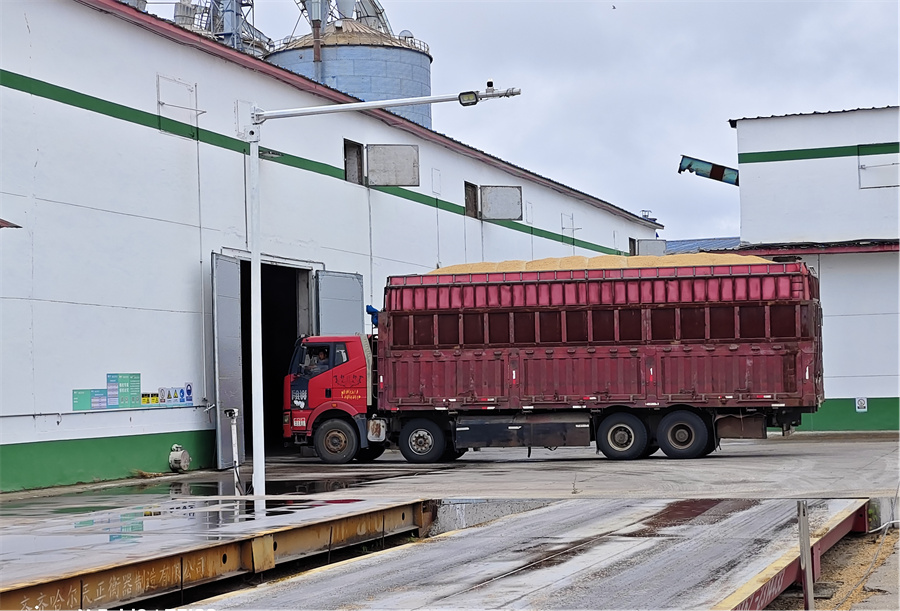
Group 1 - The "Double Cooperative Model" initiated by the village party branch encourages farmers to invest land, transforming small plots into larger, more efficient farming areas [2] - Jin Feng Agricultural Service Company provides comprehensive services from agricultural supplies to mechanized farming and post-harvest sales, enhancing productivity and reducing costs [2] - The village's land management strategy has improved efficiency, reduced debt, and increased income for farmers, with a guaranteed minimum income of 800 RMB per mu and potential year-end dividends [1][2] Group 2 - Fada Flour Group emphasizes quality control by sourcing wheat from local farmers within a ten-kilometer radius, ensuring high standards from field to processing [3] - The company has implemented strict sealing measures for transportation vehicles to minimize losses during the wheat transport process, reducing breakage rates from 0.3% to 0.2% [5] - The reduction in breakage rate translates to significant savings, equating to approximately 3,000 tons of wheat annually, which corresponds to the yield from around 6,000 to 7,000 mu of farmland [5] Group 3 - Shandong Wuzheng Group is innovating traditional agricultural practices with modern machinery, achieving a 25% reduction in fuel consumption with their hybrid CVT tractors [5] - The company has invested nearly 300 million RMB in green development projects, including energy-saving technology upgrades, contributing to reduced carbon emissions [5] - The private sector in Shandong is showing robust growth, with a reported increase in the private economy's value added by 5.7% year-on-year, accounting for 50.7% of the province's GDP [6]

发达面粉为企业发展插上“科技翅膀”
Qi Lu Wan Bao Wang· 2025-08-08 11:29
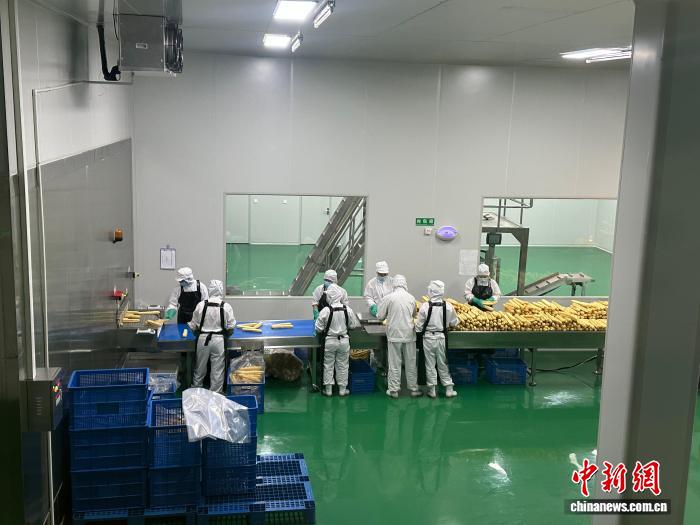
Core Insights - The "Grain Science - Fada Excellent Graduate" award was established by Fada Flour Group in collaboration with the National Grain and Material Reserve Bureau Research Institute, highlighting the company's commitment to talent development and social responsibility [1] - Fada Flour Group has been recognized as one of China's top ten grain processing enterprises and has received multiple accolades from national and provincial authorities, showcasing its industry leadership [1][2] Group 1 - Fada Flour Group emphasizes the importance of talent in its development, having established a culture of valuing skilled professionals since its inception [2] - The company has developed six research and development teams and employs over a hundred specialized R&D personnel, indicating a strong focus on technological innovation [2][3] - Fada Flour Group has successfully developed a range of market-friendly products, including high-fiber and high-protein items, demonstrating its capability in product innovation [2] Group 2 - The company collaborates with several academic institutions for research and development, enhancing its technological capabilities and leading to nearly 30 patent applications [3] - Fada Flour Group's wheat processing capacity has reached 10,000 tons per day, with a product matrix expanding to over 1,600 items, indicating significant operational scale [3] - The company has recently participated as the only private enterprise in drafting national standards for wheat flour and specialized wheat flour, reflecting its influence in the industry [4]
西安市阎良区关于2025年第六期食品安全“你点我检”专题抽检情况的通告(2025年第7号)
Zhong Guo Zhi Liang Xin Wen Wang· 2025-08-06 09:05
Core Viewpoint - The Xi'an Yanliang District Market Supervision Administration conducted a food safety inspection, revealing that out of 21 batches of food products tested, 18 were compliant while 3 were found to be non-compliant [3][4]. Summary by Category Overall Situation - A total of 21 batches were tested, including 14 batches of edible agricultural products, 4 batches of catering food, 2 batches of dairy products, and 1 batch of grain processing products. Among these, 18 batches passed the inspection while 3 batches failed [3]. Non-compliant Products - The non-compliant products identified include: 1. Long cowpea from Xinxing Xinyuan Dried Vegetable Store with a detected value of 0.73 mg/kg for thiamethoxam, exceeding the standard of ≤0.3 mg/kg [3]. 2. Lychee sugar from Fresh Taste Vegetable and Fruit Supermarket with a detected value of 0.50 mg/kg for pyraclostrobin, exceeding the standard of ≤0.1 mg/kg [3]. 3. Chopsticks from Jiayue Spinach Noodle Restaurant with a detected value of 0.056 mg/100cm² for anionic synthetic detergent (calculated as sodium dodecylbenzenesulfonate), which should not be detected [3]. Regulatory Actions - The Market Supervision Administration is taking action against the production and operation units of the non-compliant products in accordance with the Food Safety Law of the People's Republic of China, with further details to be published after the investigation and rectification are completed [4].
国家级期货交割库落地成都
Sou Hu Cai Jing· 2025-08-02 02:46
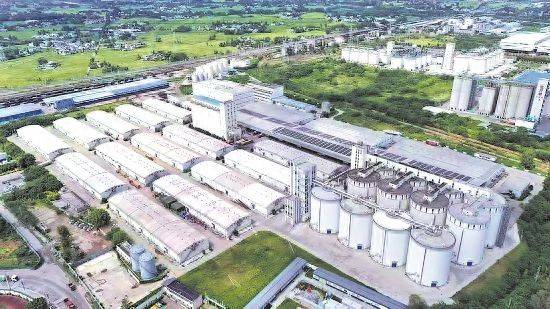
Group 1 - Zhengzhou Commodity Exchange announced the addition of Chengdu Grain Group as a designated delivery warehouse for rapeseed oil [2] - Chengdu Grain Group becomes the only local state-owned enterprise in the province with national-level qualifications for agricultural product delivery warehouses [2] - The establishment of this delivery warehouse is expected to significantly enhance the trading scale of grain and oil products [2] Group 2 - The new delivery warehouse will gradually create a leading demonstration effect and help build a grain processing industry cluster [2] - It will provide strong support for the construction of Chengdu as a service-oriented national logistics hub and the application for a national-level land port grain logistics hub [2]
安徽省黄山市市场监督管理局关于公布2025年第11期食品安全监督抽检信息的通告
Zhong Guo Zhi Liang Xin Wen Wang· 2025-08-01 09:01
Summary of Key Points Core Viewpoint - The Huangshan Market Supervision Administration conducted a food safety inspection of 89 samples across 18 categories, resulting in 86 compliant samples and 3 non-compliant samples, with local authorities taking action on the non-compliant products [1]. Group 1: Inspection Results - A total of 89 food samples were tested, with 86 passing and 3 failing the safety standards [1]. - The inspection covered various food categories, including grains, beverages, and processed foods [1]. Group 2: Non-Compliant Products - The local market supervision department is actively investigating and addressing the non-compliant food items identified during the inspection [1]. - Specific details of the non-compliant products, including the names of the companies and the nature of the violations, were documented for further action [4].
中原沃野谱新篇
Jing Ji Ri Bao· 2025-07-27 21:56
Core Insights - Henan province has successfully implemented a rural revitalization strategy focusing on "industrial strength, cultural soul, and governance efficiency," achieving significant agricultural productivity and rural development [1] - The province's grain production has consistently exceeded 130 billion jin for eight consecutive years, utilizing nearly 6% of the national arable land to produce about 10% of the country's grain [1] - By 2024, the per capita disposable income of rural residents in Henan is expected to surpass 21,000 yuan, with 5G coverage reaching 100% in administrative villages [1] Agricultural and Industrial Development - Henan Tianzhonghe Food Co., Ltd. in Wuzhi County has invested in advanced automated poultry farming systems, enhancing production efficiency and quality through technology [2] - Henan Qixiang Biotechnology Co., Ltd. focuses on vaccine development for poultry and livestock, with a production capacity of 7 billion doses of live vaccines and 1 billion milliliters of inactivated vaccines annually [2] - The county of Wuzhi is promoting industrial transformation by nurturing specialized enterprises, contributing to high-quality industrial development [2] Food Processing and Value Addition - Nanyang Biaodian Food Co., Ltd. processes local agricultural products, enhancing their value and providing significant income to local farmers through contract farming [3] - The county has established high-standard farmland and integrated agricultural development with rural construction, supporting local industry [3] Future Industrial Plans - By 2025, Henan aims to develop six major industrial clusters and eighteen collaborative chains, focusing on food processing, specialty planting, and rural tourism [4] - The province emphasizes agricultural technology and mechanization to enhance production efficiency and support agricultural modernization [4] Cultural Heritage and Tourism - The restoration of traditional villages in Henan, such as Lidu Village, has transformed them into tourist attractions, significantly increasing visitor numbers and revenue [5][6] - The integration of cultural heritage with tourism has created a vibrant industry ecosystem, enhancing local economies [7] Governance and Community Development - The establishment of a "Party Organization + Industry" model in Mengzhou has fostered local economic development and job creation [8] - Henan's governance model promotes community participation in decision-making, enhancing transparency and accountability [9][10]
中亚中国合作正迎来提质升级的黄金机遇期(国际论坛)
Ren Min Wang· 2025-07-25 21:55
Group 1 - The core viewpoint emphasizes the increasing importance of China's initiatives for the long-term development of Central Asia, marking a golden opportunity for upgrading cooperation between China and Central Asian countries [2][4] - The second China-Central Asia Summit resulted in over a hundred cooperation agreements, with the six heads of state declaring 2025-2026 as the "High-Quality Development Years" for China-Central Asia cooperation, focusing on trade, investment, and connectivity [2][3] - The summit serves as a key platform for enhancing bilateral relations, achieving significant cooperation agreements in infrastructure, energy, security, and trade, while promoting the Belt and Road Initiative to enhance regional connectivity [2][3] Group 2 - The relationship between Kazakhstan and China is steadily developing under the strategic guidance of both nations' leaders, expanding beyond mere economic cooperation to include regional stability and sustainable development [3][4] - Cooperation between Kazakhstan and China is diversifying into areas such as green economy, digital technology, and agricultural modernization, with multiple wind and solar projects initiated [3][4] - China's global initiatives focus on sustainable development, poverty reduction, and promoting South-South cooperation, which aligns with the economic diversification needs of Central Asian countries [3][4]

金健米业: 金健米业股份有限公司第九届董事会第四十二次会议决议公告
Zheng Quan Zhi Xing· 2025-07-22 10:19
Group 1 - The board of directors of Jin Jian Rice Industry Co., Ltd. held its 42nd meeting on July 22, 2025, with all 7 directors present via communication [1][2] - The board approved a proposal regarding the subsidiary's execution of the grain rotation business, which involves selling 4,383 tons of early indica rice to the related party, Hunan Provincial Reserve Grain Management Co., Ltd. [1][2] - The transaction price for the rice sale will follow local government policies on reserve grain purchase prices, ensuring compliance and fairness in the decision-making process [1][2] Group 2 - The proposal was reviewed and unanimously agreed upon by all independent directors before being submitted to the board for approval [1][2] - The voting results for the proposal were 6 votes in favor, 0 against, and 0 abstentions, indicating strong support from the board [2]

广东省中山市市场监督管理局食品监督抽检信息通告(2025年第25期)
Zhong Guo Zhi Liang Xin Wen Wang· 2025-07-21 08:45
Summary of Key Points Core Viewpoint - The Zhongshan Market Supervision Administration conducted a food safety inspection across seven categories of food products, revealing a high compliance rate with 101 out of 106 samples passing the tests, indicating a 95.3% pass rate [2]. Group 1: Inspection Results - A total of 106 food samples were tested, with 101 samples deemed qualified and 5 samples failing the inspection [2]. - The inspection covered various food categories including catering food, pastries, grain products, meat products, agricultural products, frozen foods, and beverages [2]. Group 2: Non-compliance Details - The five non-compliant samples included issues such as the presence of anionic synthetic detergents and excessive bacterial counts [2][3]. - Specific non-compliance cases included: - Sushi containing 0.021 mg/100 cm² of anionic synthetic detergent, which should not be detected [2]. - A sample of ginger with 0.71 mg/kg of pesticide residue, exceeding the allowable limit of 0.2 mg/kg [3]. - A frozen product containing 0.0852 g/kg of sorbic acid, which is prohibited [3]. Group 3: Consumer Engagement - The administration encourages consumers to participate in food safety supervision and report any harmful food products or illegal activities by calling the complaint hotline [2].
农发行桦川县支行投放全省系统内首笔“竞拍贷”775万元
Jing Ji Wang· 2025-07-21 08:40
Core Insights - The Agricultural Development Bank of China (ADBC) has successfully launched the first "Auction Loan" of 7.75 million yuan in the province, addressing the urgent funding needs of a grain processing enterprise for participating in policy-based rice auctions [1][3] - The "Auction Loan" is an innovative credit product designed to facilitate the digital transformation of grain, cotton, and oil businesses, specifically targeting the funding challenges faced by grain purchasing enterprises during national grain auctions [1][3] - The successful implementation of the "Auction Loan" reflects ADBC's commitment to enhancing financial services and supporting national food security strategies while integrating into local economic development [3] Group 1 - The "Auction Loan" effectively resolves the cash flow issues related to upfront payments for grain auctions, enabling enterprises to secure quality grain sources and maintain production continuity [3] - ADBC's approach includes close tracking of financing needs within the local grain processing sector, proactive communication of credit policies, and the establishment of dedicated financial service teams [1][3] - The bank aims to deepen its digital transformation, optimize credit processes, and enhance the coverage and penetration of policy-based financial services to ensure a smooth supply chain for grain purchasing [3]