
纺织服装业

Search documents
多图|从广东“潮”到新疆,岭南衣北上喀什精彩瞬间
Nan Fang Nong Cun Bao· 2025-08-17 09:34
Core Viewpoint - The event "Guangdong Textile and Apparel Entering Xinjiang" showcases the integration of Guangdong's textile and apparel industry into the Xinjiang market, promoting economic exchange and cultural interaction between the two regions [2][6][12]. Group 1: Event Overview - The event took place on August 16, featuring a fashion show that highlighted the diverse styles and quality of Guangdong's textile and apparel [2][4][7]. - A total of 14 apparel companies participated, demonstrating the charm and craftsmanship of Guangdong's fashion industry [4][25]. - The atmosphere was lively, with performances such as lion dances enhancing the cultural experience [13][16]. Group 2: Product Highlights - The fashion show included male models showcasing a variety of men's clothing styles, emphasizing fit and comfort [7][10]. - Female models presented stylish designs in women's pants, reflecting modern trends and versatility [10][18]. - Children's clothing was characterized by vibrant colors and playful designs, appealing to a younger audience [18][20]. Group 3: Economic and Cultural Exchange - The event served as a platform for business networking, facilitating resource exchange and collaboration between Guangdong and Xinjiang's textile industries [25][26]. - It illustrated the dynamic interaction between the two regions, promoting mutual growth and understanding [26].


报喜鸟:8月14日召开董事会会议
Mei Ri Jing Ji Xin Wen· 2025-08-15 11:56
Group 1 - The company reported that its eighth board meeting was held on August 14, 2025, to discuss asset impairment provisions and asset write-offs for the first half of 2025 [1] - For the year 2024, the company's revenue composition was 97.39% from the textile and apparel industry and 2.61% from other businesses [1] - The current market capitalization of the company is 5.6 billion yuan [2]

夏邑:纺织服装业由“织”变“智”
He Nan Ri Bao· 2025-08-14 09:02
Group 1 - The production efficiency in the textile industry has significantly improved due to smart manufacturing technologies, with some companies reducing labor from 200 to 20 while increasing capacity by 20% [1] - The implementation of intelligent systems in factories has led to a 30% increase in material transportation efficiency, showcasing the integration of electronic control, sensors, and wireless transmission technologies [1] - Major companies in the textile sector, such as Shunyang Textile and Dayang Yarn, are adopting advanced technologies, with Shunyang's high-end sewing thread capturing nearly 30% of the domestic high-end market [1] Group 2 - The push for innovation in the industry is driven by market demands, with companies like Shunyang achieving high standards through certifications and expanding into international markets [2] - Government policies have played a crucial role in facilitating industrial smart upgrades, with significant support in terms of equipment subsidies and talent recruitment [2] - The establishment of a grid-based service system in the industrial park has improved response times for technical and financial needs, enhancing overall operational efficiency by 40% [2] Group 3 - The region of Xiayi has transformed from a "new emerging textile base" to a "national torch high-end textile and clothing characteristic industrial base," emphasizing the importance of innovation [3] - The local government is focused on long-term industrial growth by nurturing small and medium enterprises and planning for national-level industrial clusters and demonstration projects [3]
东吴证券:给予健盛集团增持评级
Zheng Quan Zhi Xing· 2025-08-14 06:12
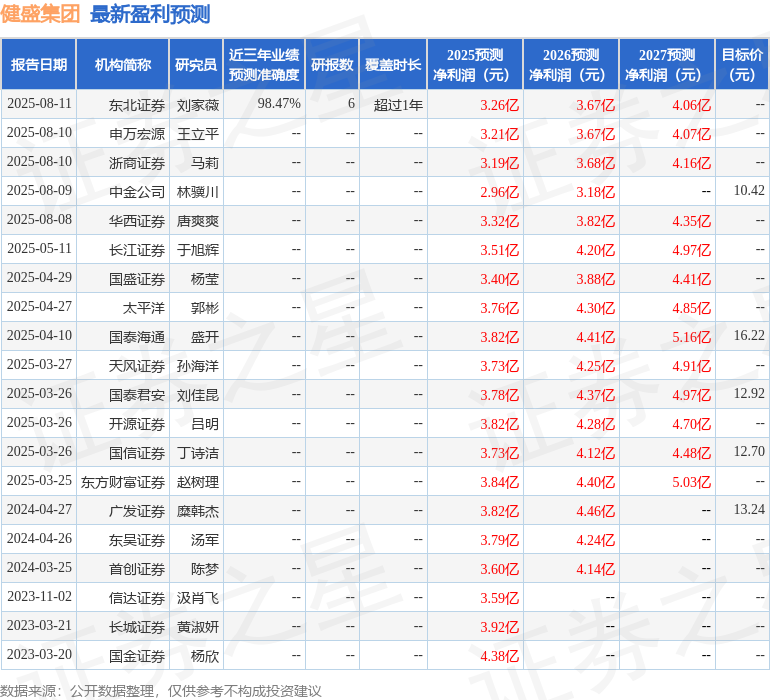
Core Insights - The report highlights that Jian Sheng Group (603558) has shown a slight revenue increase in H1 2025, but net profit has decreased significantly year-on-year, indicating challenges in the current market environment [1][2]. Financial Performance - For H1 2025, the company reported revenue of 1.171 billion yuan, a year-on-year increase of 0.19%, while the net profit attributable to shareholders was 142 million yuan, down 14.46% year-on-year [1]. - Quarterly breakdown shows Q1 revenue at 560 million yuan (+2.12% YoY) and Q2 revenue at 611 million yuan (-1.52% YoY), with net profits of 60.12 million yuan (-26.88% YoY) in Q1 and 81.62 million yuan (-2.23% YoY) in Q2 [1]. - The company maintained a mid-term dividend of 0.25 yuan per share, with a payout ratio of 61% [1]. Business Segments - Cotton sock business faced short-term pressure with H1 revenue at 839 million yuan (-0.7% YoY) and net profit at 109 million yuan (-19% YoY), primarily due to increased labor costs and lower-than-expected order growth [2]. - Seamless business showed resilience with H1 revenue of 332 million yuan (+2.6% YoY) and net profit of 32 million yuan (+6% YoY), driven by new client Tefron, which saw a revenue increase of over 50% YoY to 60 million yuan [2]. Profitability Metrics - The gross margin for H1 2025 was 28.17%, a decrease of 0.72 percentage points year-on-year, attributed to increased labor costs at the Vietnam facility [3]. - The expense ratios for sales, management, R&D, and financial costs were 3.24%, 8.87%, 1.57%, and -0.29%, respectively, with management expenses rising significantly due to the hiring of three vice presidents [3]. - The net profit margin for H1 2025 decreased by 2.07 percentage points to 12.11% [3]. Future Outlook - The management remains confident in the company's growth potential, with expectations for improved orders in the second half of the year, particularly from key clients like Uniqlo and new clients such as Brooks and New Balance [2][3]. - Profit forecasts for 2025-2027 are projected at 312 million, 354 million, and 403 million yuan, respectively, with corresponding price-to-earnings ratios of 11, 10, and 9 times [3].


美印贸易谈判陷僵局:美财长称印度“顽固” 9月联大或成缓和契机?
Di Yi Cai Jing· 2025-08-13 14:38
Group 1: Trade Relations and Tariffs - The U.S. has imposed an additional 25% tariff on Indian products due to India's import of Russian oil, raising the total tariff rate on Indian goods to 50% [1] - India's textile and apparel exports to the U.S. could decline by $2.5 to $3 billion as the U.S. market accounts for about one-third of India's apparel exports [2] - The high tariff rate of 50% on Indian goods is significantly higher than that of neighboring countries like Pakistan (19%) and Bangladesh (20%) [2] Group 2: Industry Impact - Indian apparel manufacturers are considering relocating production to countries like Bangladesh, Indonesia, and Vietnam to mitigate the impact of U.S. tariffs [2] - The Indian garment industry is facing a potential crisis, with calls for government support to help small and medium-sized enterprises survive the tariff challenges [2] - Despite the tariffs, certain sectors like electronics and pharmaceuticals continue to enjoy tariff exemptions, with India being the largest supplier of smartphones to the U.S. [3] Group 3: Negotiation Dynamics - The trade negotiations between India and the U.S. have stalled, primarily due to India's refusal to compromise on agricultural and dairy market access [4] - India's Prime Minister Modi has emphasized the importance of farmers' welfare, indicating that concessions in these areas are politically sensitive [4] - There have been some concessions from India, including tariff exemptions on industrial goods and agreements for companies like SpaceX to operate in India [4]
百隆东方(601339):首次覆盖报告:高分红色纺纱龙头,优势突出价值重估
GUOTAI HAITONG SECURITIES· 2025-08-13 13:34
Investment Rating - The report assigns a rating of "Buy" for the company [7]. Core Views - The company is a global leader in colored yarn production, maintaining high dividends and showcasing significant advantages in capacity, customer base, and procurement under the current tariff environment, which supports long-term stable growth [3][13]. - The company has a strong focus on shareholder returns, with a historical commitment to high dividend payouts, expected to continue in the future [17][31]. Summary by Sections Company Overview - The company has been a leader in the colored yarn industry for over 30 years, focusing on R&D, production, and sales of differentiated colored yarns using modern dyeing techniques [17]. - The actual controller holds over 70% of the shares, ensuring a stable and concentrated ownership structure [28]. Industry Analysis - The colored yarn market has shown steady growth, with a CAGR of 8% from 2010 to 2021, increasing its share of the total yarn market from 4.5% in 2009 to 15% in 2020 [13][41]. - The industry has high entry barriers due to experience, management capabilities, technology, capital requirements, and environmental regulations [44]. Competitive Advantages - The company has a significant capacity advantage, with nearly 80% of its production located in Vietnam, which provides a tariff advantage compared to competitors [13][45]. - The company has established strong relationships with major clients, including top garment manufacturers and global brands, ensuring a diversified customer base and good receivables turnover [13][45]. - The procurement strategy allows the company to manage costs effectively, even with rising raw material prices, due to its large purchasing scale and quality customer base [13][45]. Financial Forecast and Valuation - The company is expected to achieve net profits of 6.27 billion, 6.81 billion, and 7.55 billion yuan from 2025 to 2027, reflecting year-on-year growth rates of 52.7%, 8.8%, and 10.8% respectively [13]. - The target price for the stock is set at 7.06 yuan, based on a combination of PE and DCF valuation methods [13].

越南采取有力措施 维持贸易平衡
Shang Wu Bu Wang Zhan· 2025-08-11 17:09
Group 1 - Vietnam is proactively adjusting its import-export structure to maintain trade balance in response to the 20% tariffs imposed by the US on certain Vietnamese exports [1] - The Ministry of Industry and Trade of Vietnam emphasizes the intention to avoid a significant trade surplus with any partner, including the US, by increasing imports of high-value-added goods such as pharmaceuticals, medical equipment, high-tech products, and agricultural products [1] - In the first half of 2025, imports from the US of pharmaceuticals increased by 18% year-on-year, while cotton and clothing raw materials grew nearly 25%, indicating a strategic expansion of supply channels from the US [1] Group 2 - The textile and garment industry in Vietnam is also increasing imports of cotton, chemicals, and accessories from the US to enhance localization and product traceability [2] - Economic experts highlight the importance of maintaining the US as Vietnam's largest export market, viewing the tariffs as both a challenge and an opportunity for Vietnam to enhance its value chain and responsible trade partner image [2] - The Ministry of Industry and Trade plans to diversify export markets and negotiate new free trade agreements with various regions, while also focusing on combating origin fraud and promoting international cooperation in new fields such as energy transition and innovation [2]
印度各界人士:美征收额外关税将严重扰乱印美贸易
Sou Hu Cai Jing· 2025-08-10 07:00
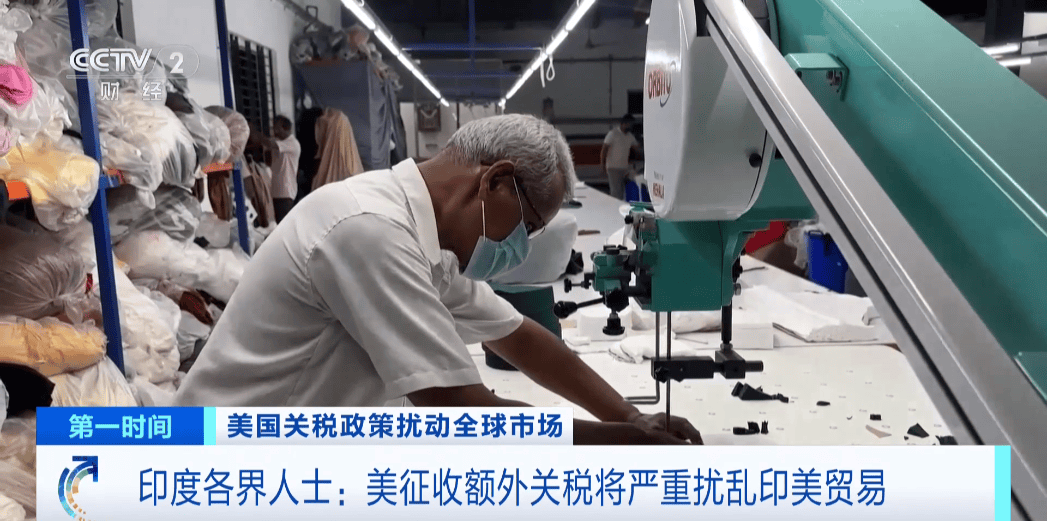
Group 1 - The U.S. has imposed a 25% additional tariff on Indian products, raising the total tariff rate to 50%, which is expected to disrupt U.S.-India trade significantly [1][3] - Moody's has indicated that the high tariffs could severely impact India's manufacturing sector and slow down economic growth, particularly affecting the jewelry, textiles, and automotive parts industries [3] - India's gem and jewelry exports totaled $32 billion from April 2023 to March 2024, with nearly $10 billion (over 30%) of that going to the U.S., making the sector vulnerable to the new tariffs [3] Group 2 - The diamond industry in India is facing increased costs of over 50% due to the tariffs, forcing businesses to prioritize price reductions while raw material prices are also rising [5] - The U.S. remains the largest market for India's textile and apparel exports, with potential immediate losses of $2.5 billion to $3 billion in exports due to the tariffs [7] - The automotive parts sector, which has seen rapid growth and achieved a trade surplus, exported $6.6 billion worth of parts to the U.S. in 2024, with $3 billion of that being commercial vehicle parts now threatened by the tariffs [7] Group 3 - Negotiations between the U.S. and India regarding tariff measures have stalled, with India refusing to grant tariff concessions on agriculture and dairy as requested by the U.S. [9]
印度纺织服装业对美大幅上调关税表示强烈担忧
Xin Hua She· 2025-08-08 13:21
Core Viewpoint - The recent U.S. tariff increase on Indian goods, particularly a 25% additional tariff on textiles and apparel, is expected to significantly impact India's export competitiveness, especially in the labor-intensive textile sector [1][2]. Group 1: Impact on Indian Textile and Apparel Industry - The U.S. is the largest market for Indian textiles and apparel, with these products being a major export category for India [1]. - The textile and apparel sector is projected to be one of the most affected industries due to the increased tariffs, with potential export declines of $2.5 to $3 billion [1][2]. - Indian exporters are facing difficulties due to the high tariffs, which could lead to a loss of competitive advantage in the U.S. market [1]. Group 2: Responses from Industry Leaders - Some companies are experiencing order cancellations and are attempting to expedite shipments before the full 50% tariff is implemented [2]. - Companies are considering relocating production to countries like Bangladesh, Indonesia, Vietnam, and Guatemala to mitigate tariff impacts [1]. - Industry leaders are calling for direct financial support from the Indian government to help small and medium-sized enterprises survive the adverse effects of the tariffs [2].
综述|印度纺织服装业对美大幅上调关税表示强烈担忧
Xin Hua She· 2025-08-08 12:43
Group 1 - The U.S. has imposed an additional 25% tariff on Indian products, raising the total tariff rate to 50%, which significantly impacts the competitiveness of India's textile and apparel industry [1] - The U.S. is the largest market for Indian textile and apparel exports, accounting for about one-third of India's total apparel export value [1] - The Indian apparel manufacturing sector anticipates a potential decline in exports by $2.5 billion to $3 billion due to the increased tariffs [1] Group 2 - Some Indian factories have received requests from clients to suspend orders, while others are trying to ship as much as possible before the full 50% tariff is implemented [2] - Companies in the textile and leather sectors are facing significant challenges, with potential job losses due to the impact of the tariffs [2] - The Indian apparel export promotion council has indicated that without direct financial support from the government, small and medium-sized enterprises focused on the U.S. market may face severe difficulties [2]