量子计算

Search documents
中经评论:3.9万亿元投入厚蓄硬核实力
Sou Hu Cai Jing· 2026-01-25 23:45
39262亿元研发经费、2.8%投入强度,国家统计局近日公布的2025年数据,标注出中国科技发展的新里 程碑——研发经费总量稳居世界第二,研发投入强度首次超越OECD国家平均水平。这3.9万亿元的硬核 投入,展现了中国坚持创新驱动的战略定力,更是中国从科技大国迈向科技强国的坚实底气。 市场需求是投入增长的内生动力。从制造业大国向科技强国迈进的过程中,产业对技术突破的依赖倒逼 研发投入增长。激烈的市场竞争促使企业持续创新,超大规模市场又为创新成果转化迭代提供沃土。 企业创新主体地位持续强化。企业早已成为我国研发投入的主体,经费投入比重超过77%。570余家工 业企业跻身全球研发投入2500强,产学研协同创新机制不断完善,新型举国体制优势与市场机制优势结 合,汇聚成全社会加码研发的磅礴合力。 巨额研发投入,正推动中国科技创新从量的积累走向质的飞跃。 产业升级速度持续提升。2025年,规模以上装备制造业、高技术制造业增加值占规模以上工业增加值的 比重分别达到36.8%和17.1%。智能制造工程扎实推进,智能工厂数量稳步增加,工业互联网融合应用 全面覆盖41个工业大类行业。 新质生产力培育步伐加快。我国在人工智能、量 ...
3.9万亿元投入厚蓄硬核实力
Sou Hu Cai Jing· 2026-01-25 23:11
39262亿元研发经费、2.8%投入强度,国家统计局近日公布的2025年数据,标注出中国科技发展的新里 程碑——研发经费总量稳居世界第二,研发投入强度首次超越OECD国家平均水平。这3.9万亿元的硬核 投入,展现了中国坚持创新驱动的战略定力,更是中国从科技大国迈向科技强国的坚实底气。 研发投入的持续攀升,是政策引领、市场驱动、主体发力同频共振的必然结果。 顶层设计为科技创新筑牢制度基石。从基础研究十年行动方案落地,到研发费用加计扣除等财税政策加 码,再到加快构建科技金融体制,国家以系统性举措为科技创新赋能,高水平科技自立自强成为我国现 代化建设的战略支撑。 新质生产力培育步伐加快。我国在人工智能、量子计算、新能源等领域实现关键突破,部分技术达到国 际领先水平。2025年,人工智能企业数量超过6000家,核心产业规模预计突破1.2万亿元。 企业创新主体地位持续强化。企业早已成为我国研发投入的主体,经费投入比重超过77%。570余家工 业企业跻身全球研发投入2500强,产学研协同创新机制不断完善,新型举国体制优势与市场机制优势结 合,汇聚成全社会加码研发的磅礴合力。 巨额研发投入,正推动中国科技创新从量的积累走向 ...

北京今年将全生态链推进机器人、商业航天等重点项目
Zhong Guo Xin Wen Wang· 2026-01-25 05:28
Core Viewpoint - Beijing aims to significantly develop high-tech industries in 2023, focusing on key projects such as robotics, commercial aerospace, and green advanced energy, while fostering new growth points in 6G, quantum technology, and biomanufacturing [1][2] Group 1: Key Projects and Initiatives - Beijing will promote the integrated circuit industry by expanding production capacity and constructing an international pharmaceutical innovation park [1] - The city plans to implement a humanoid robot acceleration development project and establish a national humanoid robot training base [2] - There will be a focus on building a high-performance quantum computing cloud platform and a quantum computing industry innovation center [2] Group 2: Technological Advancements - The government will enhance basic research and tackle key core technology challenges, establishing new research innovation platforms in areas like brain-machine interfaces and high-temperature superconductors [1] - Support will be provided for enterprises to undertake more technological research and development tasks [1] Group 3: Economic and Industrial Growth - Beijing aims to stimulate the vitality of various business entities, particularly supporting private enterprises in participating in major project construction [1] - The city will promote the digital transformation of traditional industries and enhance the quality of manufacturing [1]

西贝突曝大消息!
Sou Hu Cai Jing· 2026-01-24 13:03
Financing Activities - Haier New Energy completed over 1 billion RMB in Series B financing, with funds primarily allocated for R&D and market expansion in photovoltaic and energy storage systems [2] - Supermagnetic New Energy announced several hundred million RMB in angel round financing, focusing on the development of high-temperature superconducting magnetic systems for controllable nuclear fusion [2] - Ailios Biotech secured over 100 million RMB in pre-B round financing to enhance its self-developed filtration membranes for biopharmaceutical applications [3] - Anhui Anpin Intelligent Technology completed angel round financing to accelerate the promotion of intelligent tavern operation solutions [3] - Dongyi Technology raised over 100 million RMB in angel++ round financing to advance its "Robot for AI" strategy [4] - Dvision Medical completed several tens of millions RMB in A2 round financing to promote the development of super-microsurgery robots [5] - AI startup Anthropic is pursuing a new financing round aiming to raise 25 billion USD, with significant investments from major tech firms [5] - Xingsai Biotech completed nearly 100 million RMB in A++ round financing, focusing on single-cell analysis instruments [6] - Today Sleep, a startup, announced several tens of millions RMB in seed round financing to develop sleep-related smart products [7] - Zhejiang Dejin Biotech completed several tens of millions RMB in A round financing to advance its recombinant botulinum toxin products [7] - Yupan Intelligent completed 513 million RMB in Pre-IPO+ financing to enhance its capabilities in embodied intelligence and global expansion [8] - Nanjing Hairong Pharmaceutical raised 140 million RMB in a new round of financing to accelerate the development of innovative drugs [9] - Xibei Restaurant Group completed A round financing, with investments from various parties including the founder of a well-known restaurant brand [10] - New Yue Biotech completed several tens of millions RMB in A+ round financing to enhance its AI drug development capabilities [10] - AtomForm announced a new round of financing exceeding 100 million RMB to accelerate its commercialization process [11] - Liangxuan Technology completed several hundred million RMB in C round financing to promote quantum computing applications [12] - Lianbo Precision completed over 100 million RMB in C round financing to support high-end manufacturing initiatives [13] - Juwei Technology completed nearly 100 million RMB in A round financing to enhance its industrial IoT capabilities [14] - Lanjing Technology secured several tens of millions RMB in A+ round financing to focus on agricultural robotics [14] - Zhejiang Humanoid Robot Innovation Center completed 450 million RMB in Pre-A round financing, reflecting strong market confidence [15] - Epuji completed nearly 100 million USD in B round financing to strengthen its data center delivery capabilities [16] Investment Funds - The establishment of various investment funds, including a 20 billion RMB seed fund in Shanghai focusing on AI and intelligent models [19] - The launch of a 50 billion RMB investment fund in Zhengzhou aimed at supporting innovative industries [20] - The creation of a 10 billion RMB fusion energy venture capital fund in Hefei to support key technologies in nuclear fusion [20]
清华哈佛背景团队做量子计算机,营收翻倍增长,拿下数亿融资|早起看早期
36氪· 2026-01-24 01:17
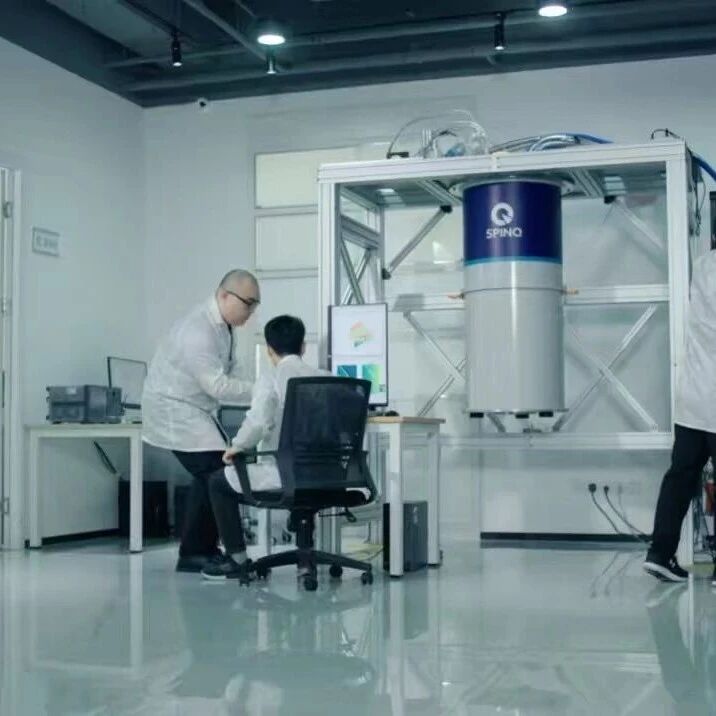
以下文章来源于硬氪 ,作者欧雪 硬氪 . 专注全球化、硬科技报道。36kr旗下官方账号。 设定了每年量子比特数至少翻倍的增长目标。 文 | 欧雪 编辑 | 袁斯来 来源| 硬氪 (ID:south_36kr) 封面来源 | 企业供图 硬氪获悉,量子计算企业深圳量旋科技有限公司(以下简称"量旋科技")近日完成数亿元C轮融资。我们总结了本轮融资信息和该公司几大亮点: 融资 金额及领投 机构 融资金额: 数亿元 融资轮次: C轮 投资机构: 隆利科技、毅达资本、晶凯资本、恒泰华盛等财务机构 技术亮点: 具备全栈自主研发与芯片量产能力;专注量子纠错技术,构建"硬件—算法—控制"协同体系;自建超导芯片产线,年产能可达数千片。 量子芯片实验室(图源/企业) 应用场景:覆盖科研机构、高校教育、金融科技、生物医药、材料研发等领域,并已扩展至企业研发场景。 市场体量 资金用途: 主要用于超导量子计算机全栈技术研发,涵盖芯片新工艺、量子纠错、测控系统及整机集成等关键方向 公司基 本信息 成立时间: 2018年 公司总部: 深圳 核心产品: 产业级超导量子计算机"大熊座"系列;教育级核磁量子计算机"双子座""三角座"系列;量子软件 ...
今年,满市场都是fomo情绪
FOFWEEKLY· 2026-01-22 10:00
Core Viewpoint - The current investment environment is characterized by high enthusiasm and urgency among investors, leading to a simplified investment process focused on relationships and quick decisions [5][6][7]. Group 1: Market Conditions - The equity investment market is described as a "sauna," with high temperatures and intense competition among investors [5]. - There is a significant rush for investment quotas, particularly in sectors like commercial aerospace and quantum computing, where valuations have rapidly increased [5][6]. - The market is experiencing a revival, with investors eager to recover lost time and profits from the previous years [6]. Group 2: Investment Trends - The hottest sectors currently include new energy and semiconductors, with specific subfields like lithium batteries and hydrogen energy attracting substantial investment [10]. - Valuations in these sectors have skyrocketed, with companies achieving valuations of billions despite relatively low revenues [10]. - However, there are concerns about overvaluation and potential market corrections, particularly in the lithium battery sector, which has seen a significant decline in interest and investment [11]. Group 3: Future Outlook - The article suggests that only leading companies in future technology sectors may qualify for IPOs on the STAR Market, while others might have to seek listings in Hong Kong [12]. - There is a cautionary note regarding the sustainability of the current investment enthusiasm, emphasizing the need for investors to be discerning and avoid following trends blindly [12][15]. - The best investment opportunities may arise during market downturns, where undervalued companies can be identified [13][15].

资本加码超导量子赛道 量旋科技完成数亿元C轮融资
Zheng Quan Shi Bao Wang· 2026-01-22 06:36
Group 1 - The core viewpoint of the news is that Liangxuan Technology has completed a multi-billion C round financing, which reflects the recognition of its technological strength and commercial achievements in the superconducting quantum computing sector [1] - The financing round was led by Longli Technology, Jingkai Capital, Hengtaihua, Yida Capital, Qingdao Hanrui, and Hainan Fengkaixiang, with continued investment from key individuals [1] - The investment signifies strong confidence from the capital market in the future prospects of the superconducting quantum computing industry, enabling Liangxuan Technology to accelerate core technology iteration, capacity expansion, and global layout [1] Group 2 - Liangxuan Technology's core team possesses international research experience and engineering implementation capabilities, with members from top institutions such as MIT, Harvard, Cambridge, Tsinghua, Peking University, and the University of Science and Technology of China [2] - The company has established a full industry chain layout from quantum chips to measurement and control systems, with leading technical indicators in the industry [2] - Liangxuan Technology has built a dedicated quantum chip production line to address global manufacturing challenges and is one of the few companies capable of standardized and large-scale production of superconducting quantum chips [2] - The company has launched the world's first programmable desktop nuclear magnetic quantum computer and has achieved significant sales, indicating strong commercial progress [2] - Liangxuan Technology is constructing a business matrix that includes industrial-grade superconducting quantum computing hardware, educational-grade nuclear magnetic quantum computing hardware, and software and cloud platforms, covering all scenarios from basic research to industrial applications [2]
量旋科技完成数亿元C轮融资
Xin Lang Cai Jing· 2026-01-22 04:21
Core Insights - Liangxuan Technology announced the completion of several hundred million yuan in Series C financing on January 22, with investments from Longli Technology, Jingkai Capital, Hengtai Huasheng, Yida Capital, Qingdao Hanrui, and Hainan Fengkaixiang [1][2] - The company aims to accelerate core technology iteration, expand production capacity, and pursue global layout to promote the large-scale application of quantum computing [1][2] Company Overview - Founded in 2018, Liangxuan Technology is a one-stop solution provider dedicated to the industrialization and popularization of quantum computing [1][2] - The company operates under a dual-driven strategy of technological research and commercial implementation, leveraging educational-level nuclear magnetic quantum computers, industrial-level superconducting quantum computers, quantum computing cloud platforms, and application software for industry layout [1][2] Industry Impact - Liangxuan Technology empowers various cutting-edge fields such as scientific research and education, drug development, financial technology, and artificial intelligence [1][2] - The company collaborates with partners to build scenario-based solutions, integrating quantum computing into diverse industries and transforming it into a true productivity tool [1][2]
清华75后,融资数亿
3 6 Ke· 2026-01-22 01:25
Core Insights - The quantum computing sector has seen significant investment, with Liangxuan Technology recently securing hundreds of millions in Series C funding, bringing its total funding to several hundred million since its inception in 2018 [2][3] Company Overview - Liangxuan Technology, founded in 2018 and headquartered in Shenzhen, has completed six rounds of financing, accumulating several hundred million in total [2] - The company has developed the world's first programmable desktop quantum computer, which has been sold to over 40 countries, and has also produced superconducting quantum chips and measurement control systems for export [2][3] Industry Challenges and Solutions - The traditional quantum computers are heavy (weighing around one ton) and expensive (costing several million dollars), making them inaccessible for most universities and research institutions [3] - Liangxuan Technology addresses this by offering a desktop quantum computer that, while not the most powerful, meets educational needs and is more affordable, priced at 400,000 yuan (approximately $60,000) [15] Market Transition and Future Outlook - The industry is transitioning from educational and research applications to industrial applications, with significant advancements expected by 2028 in fields like drug screening and new material design [5][21] - The quantum computing market is projected to exceed $1 billion in revenue by 2025, with potential growth to between $28 billion and $72 billion by 2035 [21][22] Product Development and Innovation - Liangxuan Technology's first product, the "Gemini" quantum computer, was introduced in 2020, weighing 90 kg and designed for educational use [15] - The company has also developed superconducting quantum chips, with the first exports occurring in November 2023, marking a significant milestone for Chinese companies in the global market [16] Investment and Growth Trajectory - The investment landscape for quantum computing has accelerated, with $700 million and $1.4 billion invested in 2020 and 2021, respectively, surpassing the total investment of the previous decade [19] - Liangxuan Technology has maintained a financing rhythm of approximately one round every 18 months, with a significant increase in orders, particularly for its superconducting products, which are expected to dominate sales by 2024 [21]
量旋科技获数亿元C轮融资,隆利科技、晶凯资本等参投
Xin Lang Cai Jing· 2026-01-22 01:01
Core Insights - Quantum computing leader, Quantum Spin Technology, has completed a C-round financing of several hundred million yuan, with investments from Longli Technology, Jingkai Capital, Hengtai Huasheng, Yida Capital, Qingdao Hanrui, and Hainan Fengkaixiang, alongside continued support from Kuang Zhong and Xia Zuoquan [1] Group 1 - Quantum Spin Technology has established high reliability in its products and global delivery capabilities, covering over 40 countries and regions across five continents [1] - The company serves more than 200 universities, enterprises, and research institutions, achieving global scale penetration of quantum computing products [1] - The diverse capital influx reflects recognition of Quantum Spin Technology's technical strength and commercialization achievements, as well as strong confidence in the prospects of the superconducting quantum computing sector [1]