
教育服务

Search documents
数读“十四五”答卷|历史性突破、世界规模最大!一组数据读懂加快建设“教育强国”进展成效!
Yang Guang Wang· 2025-09-24 01:57
Core Insights - The press conference highlighted the progress made in building a strong education system during the "14th Five-Year Plan" period, emphasizing significant reforms and achievements in higher education and vocational training [1]. Group 1: Higher Education Achievements - Over 5.5 million talents have been supplied to society through higher education during the "14th Five-Year Plan" [4]. - The adjustment ratio of academic disciplines and professional points has exceeded 20%, marking a historic breakthrough in the restriction of degree conferral solely based on thesis [9][13]. - "Double First-Class" universities have contributed to over 50% of the country's master's degree graduates and 80% of doctoral graduates, fulfilling over 90% of national high-level talent training tasks [16][17]. Group 2: Vocational Education Developments - Vocational education has provided 70% of the modern industry's newly added high-quality skilled talents [5][6]. - China has established the world's largest vocational education system, with 9,302 secondary vocational schools, 1,560 higher vocational schools, and 87 vocational undergraduate institutions, serving a total of 34 million students [25]. Group 3: Digital Education Initiatives - A comprehensive digital education platform has been built, covering over 200 regions and serving more than 170 million learners, making it the largest and highest quality smart education platform globally [22]. Group 4: Early Childhood Education Expansion - By the end of 2024, the gross enrollment rate for preschool education is expected to reach 92%, with 91.6% of children attending inclusive kindergartens [28].

港股异动 | 网龙(00777)早盘涨超10% 与璞康集团达成战略合作 加速AI技术在教育场景规模化落地
Zhi Tong Cai Jing· 2025-09-24 01:53
智通财经APP获悉,网龙(00777)早盘涨超10%,截至发稿,涨8.3%,报12.79港元,成交额4424.46万港 元。 目前,网龙教育业务已覆盖全球190多个国家和地区,服务超1亿用户。2025年,网龙与联合国教科文组 织高等教育创新中心(UNESCO-ICHEI)达成合作,共同推动智慧教室、AI课件共建等领域的发展。此次 与璞康的战略合作,将进一步加速AI技术在教育场景的规模化落地,推动"玩中学"理念在全球范围内的 实践与创新,为教育行业高质量发展注入新动能。 消息面上,据网龙官微消息,9月17日,在"AI向下·百业向上"2025 AI垂直行业峰会上,网龙网络公司与 璞康集团重磅签署战略合作协议。此次合作,双方将深度融合璞康"POOK玩学"体系及"POOK AI智能 体教学"产品,与网龙EDA AI课件平台、体素化内容库及AI互动技术,共同开发跨学科增强型课程,为 教育市场提供沉浸式、个性化的玩学新体验,赋能教育创新。 ...

网龙早盘涨超10% 与璞康集团达成战略合作 加速AI技术在教育场景规模化落地
Zhi Tong Cai Jing· 2025-09-24 01:46
消息面上,据网龙官微消息,9月17日,在"AI向下.百业向上"2025AI垂直行业峰会上,网龙网络公司与 璞康集团重磅签署战略合作协议。此次合作,双方将深度融合璞康"POOK玩学"体系及"POOK AI智能 体教学"产品,与网龙EDA AI课件平台、体素化内容库及AI互动技术,共同开发跨学科增强型课程,为 教育市场提供沉浸式、个性化的玩学新体验,赋能教育创新。 目前,网龙教育业务已覆盖全球190多个国家和地区,服务超1亿用户。2025年,网龙与联合国教科文组 织高等教育创新中心(UNESCO-ICHEI)达成合作,共同推动智慧教室、AI课件共建等领域的发展。此次 与璞康的战略合作,将进一步加速AI技术在教育场景的规模化落地,推动"玩中学"理念在全球范围内的 实践与创新,为教育行业高质量发展注入新动能。 网龙(00777)早盘涨超10%,截至发稿,涨8.3%,报12.79港元,成交额4424.46万港元。 ...
武汉人均期望寿命达83.56岁
Chang Jiang Ri Bao· 2025-09-24 00:46
Group 1: Education and Employment - During the "14th Five-Year Plan" period, Wuhan will establish 202 primary and secondary schools and 304 public kindergartens, adding 353,000 new student places [1] - A total of 1.19 million new urban jobs were created, maintaining overall employment stability, with 1.498 million new college graduates finding employment or starting businesses [1] Group 2: Healthcare - Over the past five years, the number of tertiary hospitals in Wuhan increased from 61 to 85, ensuring that residents can access medical services within 15 minutes in urban areas [2] - The average life expectancy in Wuhan rose from 80.57 years to 83.56 years, with major health indicators ranking among the best in the country [2] Group 3: Social Welfare and Housing - Wuhan has built a comprehensive network of 3,740 various types of elderly care facilities, expanding home care services to 37 projects, serving 11 million people annually [2] - The city has established 236,700 affordable rental housing units, achieving 95% of the "14th Five-Year Plan" target of 250,000 units [2] Group 4: Medical Insurance - Over the past five years, Wuhan provided medical insurance benefits to 432 million people, with reimbursement rates for employee and resident insurance remaining stable at around 80% and 70% respectively [3] - The average financial subsidy for residents' medical insurance increased from 580 yuan to 700 yuan [3]
从试水到普及,AI 通识课全面爆发
3 6 Ke· 2025-09-24 00:07
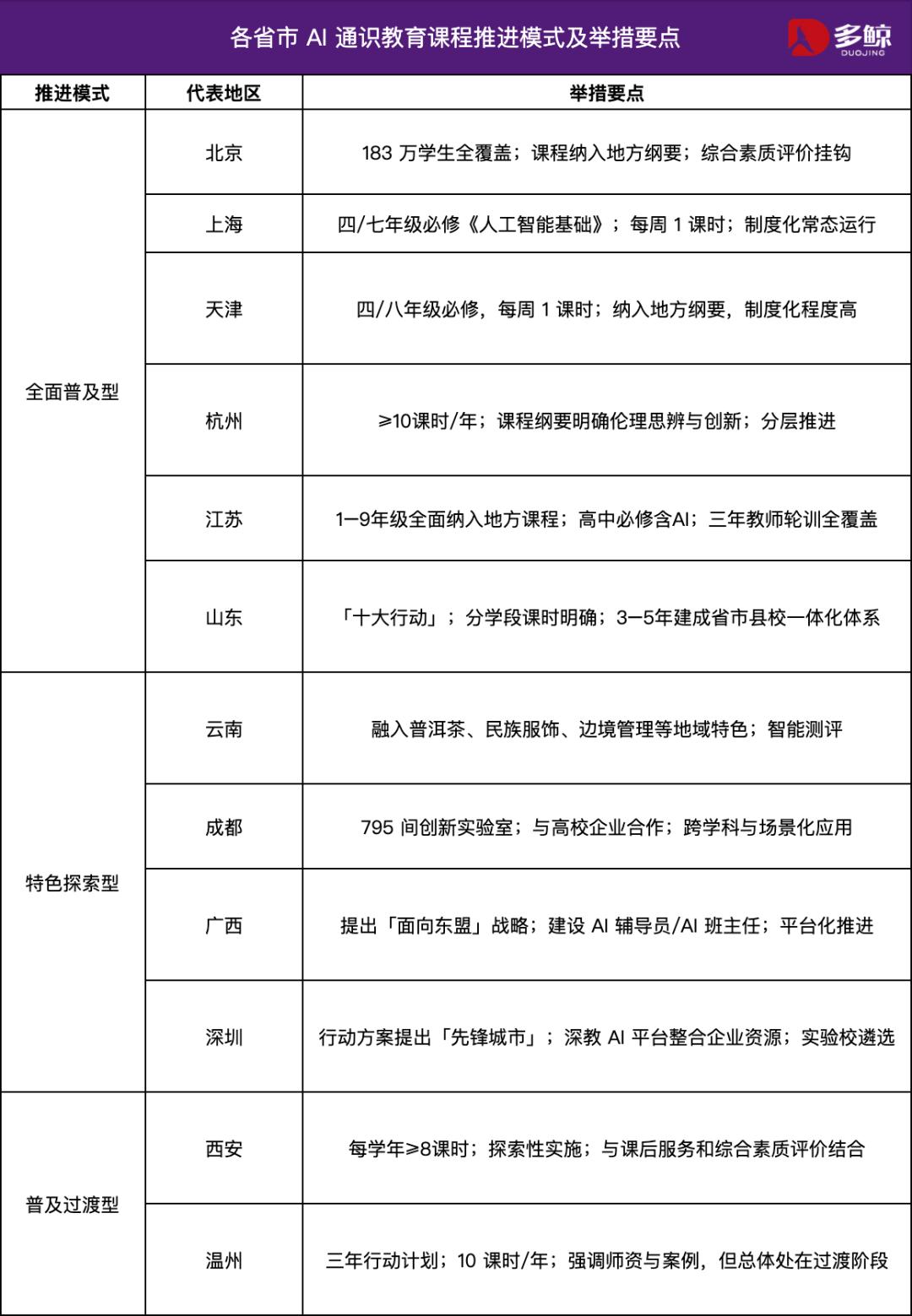
Group 1 - The emergence of AI in education has sparked discussions on how it should be integrated into classrooms, with concerns about its impact on students' learning abilities and classroom dynamics [1][2] - The introduction of AI-related courses in general education marks a shift from being an extracurricular novelty to a regular part of the educational curriculum [1][2] - Different regions are adopting various approaches to AI education, with some integrating it into formal curricula while others use lectures and activity weeks to introduce the concept [1][2][3] Group 2 - As of September 2025, Beijing has become the first city to implement AI general education across all primary and secondary schools, reaching over 1.83 million students with a minimum of 8 class hours per year [2][3] - Following Beijing, Shanghai plans to introduce a mandatory AI course for fourth and seventh graders, with a structured curriculum that includes 30 class hours annually [2][3] - Other cities like Hangzhou, Shenzhen, and Tianjin are also launching their own AI curricula, with varying focuses on practical application, ethical considerations, and integration with local culture [3][4] Group 3 - A common framework across regions includes a minimum of 8 to 10 class hours per year, with a progressive learning structure from elementary to high school [4][5] - Teacher training and resource development are recognized as critical components for the successful implementation of AI education, with various initiatives launched to address these needs [4][5] - There are distinct differences in the depth of institutionalization of AI courses, with some regions embedding them into local educational frameworks while others focus on experiential learning [4][5] Group 4 - The national landscape is forming three main models for AI education: comprehensive coverage (e.g., Beijing, Shanghai), localized exploration (e.g., Yunnan, Chengdu), and transitional approaches (e.g., Xi'an, Wenzhou) [5][6] - The importance of AI general education lies in its potential to reshape core competencies, promote educational equity, and enhance future competitiveness in the job market [7][8] - The integration of AI education is supported by both top-down policy frameworks and bottom-up resource ecosystems, indicating a collaborative effort to enhance AI literacy [9][10]
教育事业“十四五”高质量收官:高等教育累计向社会输送5500万人才、高考综合改革持续落地
Bei Jing Shang Bao· 2025-09-23 11:08
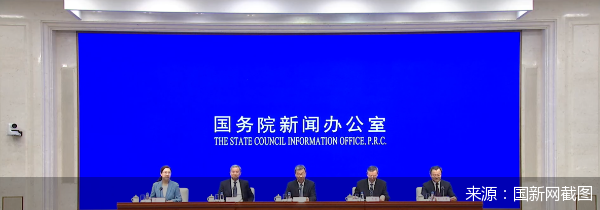
Group 1 - The core viewpoint of the article highlights the significant progress made in China's education sector during the "14th Five-Year Plan" period, with a focus on quality and inclusivity in education [1][4][5] - The implementation of a 15-minute break during classes has been widely explored across various regions, emphasizing the importance of physical education alongside academic subjects [3][4] - The gross enrollment rate for higher education has increased from 30% in 2012 to 60.8%, marking a significant shift towards a more inclusive education system [5][6] Group 2 - The Ministry of Education has reported that 5.5 million talents have been trained and delivered to society during the "14th Five-Year Plan" period, which is comparable to the total population of many developed countries [6] - The introduction of free preschool education is set to begin in the 2025 autumn semester, aiming to enhance the accessibility and quality of early childhood education [4][5] - China has established educational cooperation with 183 countries and regions, enhancing its global influence in education through various collaborative projects [6]
世界与中国:“企业家精神与十五五规划展望”企业家论坛成功举办
Sou Hu Cai Jing· 2025-09-23 10:52
Group 1: Forum Overview - The "World and China: Entrepreneurial Spirit and the 14th Five-Year Plan Outlook Forum" was successfully held in Guangzhou, gathering nearly 200 entrepreneurs from the Greater Bay Area along with renowned scholars and policymakers [1][2] - The forum focused on exploring the integration of entrepreneurial spirit with economic transformation, policy direction, and philosophical thinking in the context of global asset patterns [1][2] Group 2: Entrepreneurial Spirit and Philosophy - The president of the Bo Yan Philosophy Business School, Ouyang Qing, emphasized the importance of integrating science, philosophy, and religion in entrepreneurial spirit, highlighting that true entrepreneurs embody these three aspects [2][4] - Former Director of the Civil Aviation Administration of China, Li Jiaxiang, discussed the significance of entrepreneurial spirit in facing uncertainties and the necessity of aligning ideals with scientific thinking for sustained success [4][6] Group 3: Roundtable Discussions - A roundtable dialogue on "The Resilience and Inheritance of Entrepreneurial Spirit" featured discussions on mindset, practical actions, future foresight, and core values among a diverse group of entrepreneurs [6] - Participants included investors, traditional industry upgrade advocates, and pioneers of emerging industries, sharing insights from their experiences [6] Group 4: New Class Introduction - The opening ceremony for the 19th Financial Philosophy Industry Innovation Class highlighted the gathering of elite students from prestigious institutions, emphasizing the importance of philosophical thinking in navigating future challenges [8][10] - New student representative Li Zehang expressed the desire to explore global opportunities and achieve personal and corporate growth through the Bo Yan platform [10] Group 5: Keynote Speeches and Insights - The ceremony featured a keynote speech by Professor Wang Jun on "AI Civilization: The Twilight or New Dawn of Human Values," discussing the philosophical foundations of artificial intelligence and its implications for the future [13][17] - Economic commentator Fu Peng provided insights on the global economic transformation, emphasizing the impact of ideological divisions on economic models and the need for strategic asset allocation [17][19] Group 6: Conclusion and Future Outlook - The forum served as a platform for rich discussions on entrepreneurial spirit, innovation, and the implications of the 14th Five-Year Plan, providing valuable learning opportunities for participants [19]

广东将开展2025年“护苗·绿书签行动”系列宣传活动
Nan Fang Ri Bao Wang Luo Ban· 2025-09-23 07:19
Group 1 - The core initiative is the "Protect Seedlings · Green Bookmarks Action" series of promotional activities in Guangdong, aimed at enhancing the ability of young people to identify illegal publications and harmful information [1] - The activities will be conducted both online and offline across 21 cities in Guangdong from September to December, focusing on themes such as "Book Fragrance for Seedlings," "Safety for Seedlings," "Legal Education for Seedlings," and "Cultural Nourishment for Seedlings" [1] - Online efforts include the use of the "Guangdong Anti-Pornography and Illegal Publications" WeChat account to share real enforcement cases and conduct knowledge quizzes to help youth avoid illegal publications [1] Group 2 - Offline activities will include "Green Reading" lectures and the "Legal Education into Campus" initiative, which aims to instill good reading habits and enhance legal awareness among young people [1] - Guangdong is integrating the "High-Quality Development Project" with the "Protect Seedlings" initiative, organizing practical activities for youth to explore cultural heritage and historical sites [2] - Plans are in place to upgrade "Protect Seedlings · Minor Protection Stations" to provide comprehensive support services, including legal advice and psychological counseling for minors [2] Group 3 - Interactive activities will be launched to encourage social participation, such as the "Green Bookshelf" display event and the "AIGC" original animation design competition [2] - The initiative will also feature an exhibition of outstanding results to showcase typical cases and innovative practices in the "Anti-Pornography and Illegal Publications" efforts [2]
今年学前1年免费惠及1200多万儿童,“十四五”高教累计输送5500万人才相当于许多发达国家人口总量这场发布会信息量巨大
Mei Ri Jing Ji Xin Wen· 2025-09-23 07:11
Group 1: Education System Development - The Chinese education system has been established as the largest and highest quality globally, with the gross enrollment rate for preschool education increasing from 64.5% in 2012 to 92% by 2024, a rise of 27.5 percentage points [1] - The gross enrollment rate for higher education has more than doubled from 30% in 2012 to 60.8% currently, marking a significant transition to a recognized stage of popularization [1] - During the "14th Five-Year Plan" period, higher education institutions have supplied 55 million talents to society, equivalent to the total population of many developed countries [1] Group 2: Double First-Class Initiative - The "Double First-Class" initiative is a key project for building an education powerhouse, with these institutions training over 50% of the country's master's and 80% of doctoral students [3] - These universities are responsible for over 90% of the national urgent high-level talent training tasks, showcasing their significant role in national strategic needs [3] Group 3: Vocational Education - Vocational education has supplied over 70% of the new high-quality skilled talents for modern industries, playing a crucial role in the transition from "Made in China" to "Created in China" [6] - China has established the world's largest vocational education system, with 9,302 secondary vocational schools, 1,562 higher vocational schools, and 87 vocational colleges, serving 34 million students [6] - The education department has adjusted the professional structure in line with national strategies, adding 12,000 new professional points over five years, with 50% focused on engineering and technology [6][7] Group 4: Future Directions - The education department plans to enhance the vocational education system by promoting integration between vocational and general education, as well as between education and industry [7] - There is a commitment to building a high-level vocational education system that continuously cultivates skilled talents essential for China's modernization [7]
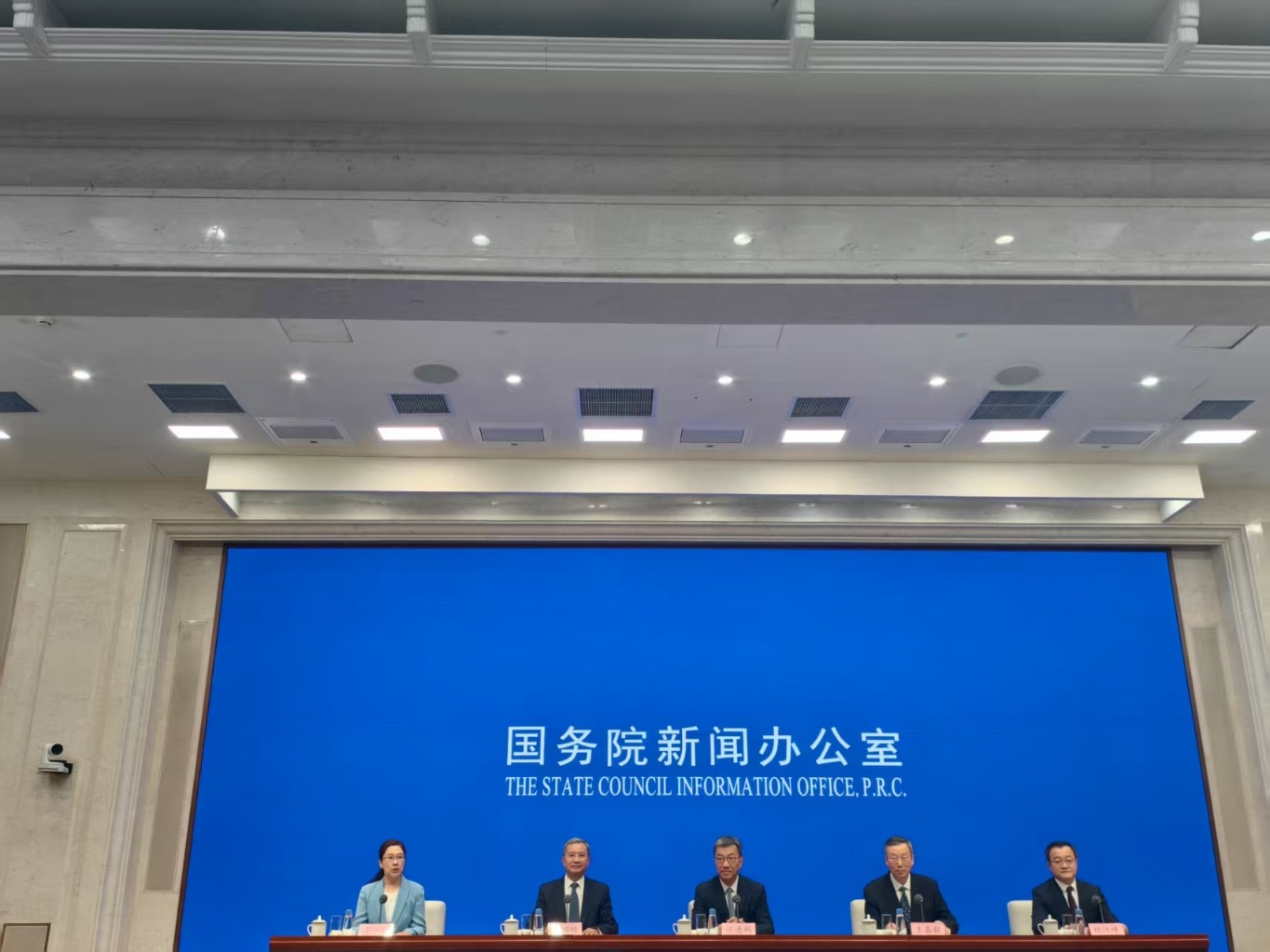
教育部定调:改变以升学为导向的资源配置,淡化竞争减少焦虑
Nan Fang Du Shi Bao· 2025-09-23 05:51
Core Viewpoint - The Chinese education system has achieved significant milestones during the "14th Five-Year Plan," with basic education reaching the average level of high-income countries and the establishment of the International STEM Research Institute in Shanghai, indicating international recognition of China's educational advancements [1][2]. Group 1: Basic Education Achievements - All 2,895 counties in China have achieved basic balance in compulsory education [2] - The gross enrollment rate for preschool education has increased from 64.5% in 2012 to 92%, benefiting over 12 million children this year [2] - The gross enrollment rate for higher education has more than doubled from 30% in 2012 to 60.8%, entering a stage recognized as universal by international standards [2] Group 2: Higher Education Contributions - "Double First-Class" universities have significantly contributed to national strategic needs, producing over 50% of master's and 80% of doctoral graduates, and fulfilling over 90% of national high-level talent training tasks [2] - During the "14th Five-Year Plan," higher education institutions have collectively supplied 55 million talents to support economic and social development [2] Group 3: Innovation and Reform - "Double First-Class" universities have made notable innovations in fields such as quantum technology, life sciences, artificial intelligence, material sciences, and space sciences, enhancing their strategic position in basic research and major technological breakthroughs [3] - The implementation of the new degree law marks a significant reform in talent cultivation, allowing graduate students to use patents and innovative designs to apply for degrees, breaking the traditional reliance on thesis-based evaluations [3]