
种业

Search documents
一批棉花新品种大面积推广应用 带动全国棉花单产显著提升
Ren Min Ri Bao Hai Wai Ban· 2025-10-25 10:33
随着新品种推广应用,棉花产业正迎来单产、品质和效益同步提升的新阶段。这些品种在纤维长度、强 度等关键品质指标上表现优异,同时具备良好的抗病性、抗逆性以及吐絮集中、适合机械采收等重要特 性,为提升棉花产业竞争力提供了核心种源。3年来,国家棉花生物育种项目带动了棉花育种整体水平 提升,全国棉花单产水平从项目启动前的132.8公斤提高到去年的144.8公斤,增长9%,其中良种的使用 起到了关键作用,良种化率提升5%以上,达到98%。(记者 郁静娴) 转自:人民日报海外版 在农业生物育种重大专项支持下,国内种业企业与科研单位协同攻关,运用分子标记选择、基因聚合等 现代育种技术,以"高产、优质、抗病、宜机采"为主攻方向,成功培育出"金棉2号""新塔棉11号"等30 多个综合性状突出的棉花新品种。 近日,记者从农业生物育种国家科技重大专项成果展示活动中获悉,近年来,我国在棉花生物育种领域 取得重要进展,一批高产、优质、抗逆、适合机采的棉花新品种成功培育并推广应用,为我国棉花产业 高质量发展提供了有力的科技支撑。 ...
农科盛宴蓄势待发
Shan Xi Ri Bao· 2025-10-24 22:19
Core Insights - The 32nd Yangling Agricultural High-tech Fair is set to open with a focus on innovation and future trends in agriculture, themed "New Quality Productivity, New Future of Agriculture" [1] - The exhibition has completed preparations, including venue setup, logistics, and guest invitations, ensuring a smooth event [1] Group 1: Exhibition Details - The exhibition will showcase new technologies, achievements, and models from various agricultural sectors, including contributions from ministries, provinces, and agricultural research institutions [1] - The D hall spans 10,000 square meters, highlighting significant agricultural innovations [1] - The C hall features a theme of "Empowering Technology, Industrial Development," showcasing over 20 types of selenium-rich agricultural products from Ankang [2] Group 2: Participant Insights - Exhibitors, such as Anif from Afghanistan, express optimism about improved venue conditions and larger booth spaces, anticipating strong sales [2] - Companies like Suzhou Jimu Robot Technology Co., Ltd. are actively involved in the exhibition, emphasizing the importance of the event for business opportunities [3] Group 3: Technological Innovations - The fair will highlight new technologies and products from the Chinese Academy of Agricultural Sciences and various provincial agricultural research institutes, including "black technology" in agriculture [4] - The event will also feature international participation, with over 100 companies from 27 countries in the Shanghai Cooperation Organization attending [4]
世界猪博会开幕+新希望加码养殖!农牧渔ETF(159275)微涨0.4%!机构:产能去化加速
Xin Lang Ji Jin· 2025-10-24 01:57
Group 1 - The agricultural and fishery ETF (159275) showed stable performance with a price increase of 0.4% and a trading volume of 696,000 yuan, bringing the fund's total size to 207 million yuan [1] - Key performing stocks included Honghui Fruits and Vegetables, Yisheng Shares, and Zhongxing Mushroom Industry, with increases of 3.28%, 3.13%, and 1.66% respectively [1] - Conversely, stocks such as Xiaoming Shares, COFCO Technology, and Zhongshui Fishery experienced declines of 4.07%, 3.53%, and 1.8% respectively [1] Group 2 - The 14th World Pig Industry Expo will be held from October 18 to 20, 2025, in Changsha, showcasing over 800 global enterprises and focusing on new technologies in the pig farming industry [1] - New Hope Liuhe invested 20 million yuan in September to establish a biotechnology company, enhancing its feed production and aquaculture business [1] - The pig farming industry is facing supply pressure with ongoing price declines, while poultry farming is impacted by avian influenza, creating uncertainty in breeding stock [2] Group 3 - The pig industry is entering a regulatory phase, with authorities aiming to stabilize prices through capacity reduction, although short-term pressures remain due to increased market supply [2] - The animal health sector is seeing improved competition dynamics, with clinical trials for African swine fever vaccines enhancing market expectations [2] - The pet food market is experiencing rapid growth, with domestic brands gaining traction despite limited impacts from tariffs on exports [2]

第三届崖州湾知识产权论坛举办
Hai Nan Ri Bao· 2025-10-24 01:39
Core Viewpoint - The third Yacheng Bay Intellectual Property Forum emphasizes the role of intellectual property in promoting innovation and high-quality development within the Hainan Free Trade Port [1] Group 1: Forum Overview - The forum was held on October 23 in Sanya, focusing on the theme "From Yacheng Bay to the World, Promoting Open and Integrated Innovation Ecology through Intellectual Property" [1] - Experts from the National Intellectual Property Administration and the World Intellectual Property Organization (WIPO) participated, discussing the characteristics of intellectual property innovation in Hainan [1] Group 2: International Collaboration - The forum featured international elements, with experts from WIPO, the Italian Embassy in China, Vietnam National University of Economics, King & Wood Mallesons, and Covington & Burling LLP [1] - This collaboration highlights the global interest in Hainan's intellectual property landscape and its implications for trade and innovation [1] Group 3: Focus Areas - Discussions centered on seed industry and deep-sea technology, exploring new pathways for intellectual property to empower the "Strengthening Agriculture" initiative and support diverse practices in the "Strengthening Marine" initiative [1] - Several important outcomes were announced during the forum, reflecting the practical experiences and achievements shared by participants [1]
神农种业10月23日获融资买入2052.98万元,融资余额2.40亿元
Xin Lang Zheng Quan· 2025-10-24 01:27
Core Viewpoint - The financial performance and trading activity of Shennong Agricultural Technology Co., Ltd. indicate a mixed outlook, with significant financing activity but a net outflow in margin trading on October 23, 2023 [1][2]. Financing Activity - On October 23, 2023, Shennong Agricultural had a financing buy-in amount of 20.53 million yuan, while the financing repayment was 31.06 million yuan, resulting in a net financing outflow of 10.53 million yuan [1]. - The total margin trading balance for Shennong Agricultural as of October 23, 2023, was 240 million yuan, which accounts for 5.18% of its circulating market value, indicating a high level of financing compared to the past year [1]. Margin Trading - On the same day, there were no shares sold or repaid in margin trading, with the margin balance also at zero, suggesting a lack of short-selling activity [1]. - The margin trading balance being at zero is noted to be at the 90th percentile level over the past year, indicating a high position in terms of margin trading activity [1]. Company Overview - Shennong Agricultural, established on December 29, 2000, and listed on March 16, 2011, is primarily engaged in the breeding, production, and sale of hybrid rice seeds, along with other agricultural products and services [2]. - The company's revenue composition includes hybrid rice seeds (40.24%), other seeds (28.71%), agricultural chemical products (19.32%), corn seeds (4.52%), aquatic products (3.34%), and other categories [2]. Financial Performance - For the first half of 2025, Shennong Agricultural reported a revenue of 87.22 million yuan, reflecting a year-on-year growth of 38.66%, while the net profit attributable to shareholders was a loss of 14.36 million yuan, showing an 8.89% increase compared to the previous period [2]. Shareholder Information - As of June 30, 2025, the number of shareholders for Shennong Agricultural was 82,900, an increase of 9.69% from the previous period, with an average of 10,696 circulating shares per shareholder, down by 8.83% [2][3]. - The company has cumulatively distributed 48.76 million yuan in dividends since its A-share listing, with no dividends paid in the last three years [3].

高层召开重磅会议!农牧渔板块持续盘整,资金接连加码!机构高呼底部或现
Xin Lang Ji Jin· 2025-10-24 01:25
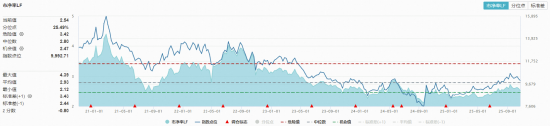
Group 1 - The agricultural sector is experiencing adjustments, yet funds are increasingly investing in related ETFs, with nearly 2 billion yuan accumulated since September 29 [1] - The Ministry of Agriculture and Rural Affairs held a meeting on October 21 to enhance grain yield through technology integration and support for genetically modified crops, benefiting related seed and planting companies [1] - In September, listed pig companies reported a decline in sales revenue, totaling 21.647 billion yuan, a year-on-year decrease of 18.74% and a month-on-month decrease of 10.77%, primarily due to falling pig prices [2] Group 2 - The average selling price of pigs dropped over 30% year-on-year and 5.42% month-on-month, reaching the lowest level since 2022 [2] - The Ministry of Agriculture and other authorities are focusing on controlling production capacity and reducing weight, which is expected to accelerate capacity reduction in the fourth quarter [2] - The current valuation of the agricultural sector is relatively low, with the agricultural ETF's price-to-book ratio at 2.54, indicating a good investment opportunity [2] Group 3 - Recent fluctuations in pork and piglet prices, along with increased slaughter rates, indicate a tightening supply in the pig farming industry [3] - The number of breeding sows is decreasing, and self-breeding operations are facing losses, leading to enhanced capacity reduction motivation [3] - In the livestock sector, beef prices are expected to rise in the medium to long term, while dairy prices remain low, and poultry prices are stable [3] Group 4 - The first agricultural ETF (159275) tracks the CSI Agricultural Index, with major holdings in leading companies like Muyuan Foods and Wens Foodstuffs, comprising about 40% of the index [4] - The ETF focuses on high-concentration industries, with over 90% of the top ten industries in agriculture, breeding, and feed sectors [4] - Investors can also access the agricultural ETF through linked funds for broader exposure [4]


会长话封关:“海南自贸港建设为鲁商开启机遇之门”
Zhong Guo Xin Wen Wang· 2025-10-23 12:37
Group 1 - The core viewpoint is that the operation of the Hainan Free Trade Port will create a more favorable investment environment, broader market space, and significant cost advantages for businesses, particularly those from Shandong province [1] - The Hainan Free Trade Port's operation is expected to provide three major opportunities for Shandong businesses: increased investment freedom and capital flow, expanded market access to Southeast Asia and global markets, and reduced operational costs due to zero tariffs and a 15% reduction in corporate and personal income taxes [2] - Specific examples include a 12% to 15% reduction in import component costs for marine equipment manufacturers and over 5 million yuan in annual tariff exemptions for hydrogen equipment produced in Hainan [2] Group 2 - The collaboration between Shandong and Hainan in agriculture includes the establishment of a breeding base for salt-tolerant rice, aiming for a yield of over 600 kg per mu by 2025, and a national breeding center for grouper fish with an annual capacity of 20 million tails [2] - In the marine economy, a resource library for aquatic species is being developed, which will shorten breeding cycles by 40% and improve survival rates by 20% through collaboration between Yantai and Sanya [3] - Hainan's investment policies, including the shortest negative list for foreign investment and the longest list of encouraged industries, are opening new opportunities for Shandong businesses to engage in cross-border investments and partnerships [4] Group 3 - The Hainan Shandong Chamber of Commerce is actively enhancing policy communication and enterprise services to help businesses seize opportunities in the Free Trade Port, while also addressing challenges such as information asymmetry and talent shortages [4] - Companies are investing in logistics and supply chain improvements, as well as attracting high-end talent by leveraging the 15% personal income tax incentive [4] - Future cooperation between Shandong and Hainan is expected to follow a model of "Shandong R&D + Hainan transformation + global sales," aiming to create competitive industrial clusters [5]
生物育种为我国棉花产业高质量发展赋能
Ke Ji Ri Bao· 2025-10-23 09:15
Core Insights - Significant progress has been made in cotton biotechnology breeding in China, with the successful cultivation and application of high-yield, high-quality, and stress-resistant cotton varieties, providing strong technological support for the high-quality development of the cotton industry [1][3] Group 1: Industry Overview - Cotton is a crucial economic crop related to national economy and people's livelihood, with stable production capacity and quality improvement being vital for ensuring the supply of textile raw materials and increasing farmers' income [1] - Xinjiang is the main cotton-producing region in China, accounting for approximately 92.2% of the national total output [1] Group 2: Technological Advancements - Under the support of major agricultural biotechnology breeding projects, domestic seed companies and research institutions have collaborated to utilize modern breeding technologies such as molecular marker selection and gene aggregation, focusing on traits like high yield, quality, disease resistance, and suitability for mechanical harvesting [2] - More than 30 new cotton varieties with outstanding comprehensive traits have been successfully cultivated, showing excellent performance in key quality indicators such as fiber length and strength, along with good disease resistance and adaptability to modern production methods [2] Group 3: Specific Varieties and Their Impact - The new variety Jinmian No. 2 demonstrates high-temperature tolerance, strong resistance to wilt and yellow wilt diseases, and excellent fiber quality, with a yield increase of 13.2% compared to the control in two years of regional trials, with a planned promotion area of 850,000 mu in 2024 and over 1 million mu in 2025 [2] - Another variety, Xintamian No. 11, aggregates multiple excellent traits for fiber quality and yield, showing a yield increase of 14.2% compared to the control in two years of regional trials, with a cumulative demonstration promotion of 320,000 mu planned for 2024-2025 [2] - Other notable varieties include Zhongmian Suo 1813, a high-yield salt-alkali resistant variety, Xinlu Mian No. 3, an early-maturing disease-resistant variety, and Guoxin Mian No. 37, a high-yield stable variety, all of which have been widely promoted in production [2] Group 4: Future Outlook - With the promotion and application of new varieties, the cotton industry in China is entering a new stage of simultaneous improvement in yield, quality, and efficiency, driven by continuous breakthroughs in biotechnology [3]
三亚市农业农村局帮扶工作科一级主任科员许如意:“做一粒扎根南繁沃土的‘好种子’”
Hai Nan Ri Bao· 2025-10-23 01:25
Core Insights - The article highlights the significant contributions of Xu Ruyi, a key figure in the agricultural sector in Sanya, who has been instrumental in advancing seed industry initiatives and ensuring food security in China [1][2] Group 1: Seed Industry Development - Xu Ruyi and her team addressed challenges in the seed industry by creating comprehensive plans, including the "Sanya Seed Industry Revitalization Implementation Plan" and the "Sanya South Breeding Industry Chain Planning," which established a supportive framework for healthy industry development [1] - Over the years, Xu has facilitated the inclusion of over 13,000 acres of new land into the core area policy of the South Breeding Base, implementing five major enhancement projects to improve soil fertility, smart agriculture, environmental conditions, safety supervision, and supporting service facilities [2] Group 2: Research and Safety Initiatives - In 2022, Xu led the formulation and implementation of the "National South Breeding Research and Breeding Protection Zone Time-Based Usage Classification Management Implementation Plan (2022-2025)," which effectively improved the utilization efficiency of the South Breeding Base [2] - Xu has also established a "Chief Risk Officer" system for biological safety and a collaborative working mechanism for biological safety risk prevention, emphasizing the importance of institutional innovation in safeguarding the seed industry's biological security [2] Group 3: Personal Commitment and Recognition - Xu Ruyi embodies the spirit of dedication in her role, inspired by the words of renowned agronomist Yuan Longping, and has been recognized as a "People-Satisfied Civil Servant" in Hainan Province for her efforts [2] - She expresses a commitment to continue her work in the South Breeding Base, likening her dedication to that of a seed that takes root and grows, aiming to meet the expectations of the people through tangible achievements [2]
京蒙协作再结硕果呼伦贝尔人才科创中心在北京启动
Nei Meng Gu Ri Bao· 2025-10-22 01:21
Core Points - The Hohhot Talent Sci-Tech Innovation Center (Beijing) was officially launched on October 20, marking a significant step for Hohhot in integrating into the Beijing-Tianjin-Hebei coordinated development strategy [1][2] - The center aims to leverage Beijing's technological advantages and Hohhot's industrial characteristics to create a demand-driven, market-oriented mechanism for technology transfer [1] - The center will enhance flexible talent recruitment models and improve service support systems to inject continuous intellectual support and innovative momentum into the modernization of Hohhot [1] Summary by Sections - **Launch and Purpose** - The center serves as an important platform for deepening cooperation between Beijing and Inner Mongolia, facilitating the integration of high-quality sci-tech resources [1][2] - **Collaboration and Agreements** - During the launch event, various research institutions and enterprises, including the Wang Hanzhong Academy team and Hohhot Academy, engaged in discussions and signed multiple cooperation agreements [1] - The Hohhot Agricultural Science Research Institute signed agreements with several seed companies, indicating a focus on agricultural innovation [1] - **Technological Achievements** - Eight technological achievements in the fields of medicine and agriculture were announced, showcasing the center's initial success in promoting technology transfer and industry collaboration [1]