
机器人制造

Search documents
机器人又有新工种!深铁、万科试点机器人乘地铁为商户配送货
Zheng Quan Zhi Xing· 2025-07-14 12:41
Core Insights - The rapid development of artificial intelligence and robotics is leading to the emergence of new job roles for robots, such as autonomous delivery robots in subway systems [1][3] - Shenzhen has achieved a record daily subway ridership of 10.47 million passengers, showcasing strong growth in public transport usage [2] - The collaboration between Shenzhen Metro Group and Vanke to implement autonomous delivery robots in subway stations addresses logistical challenges faced by merchants [3][5] Group 1: Industry Developments - The first autonomous delivery robot capable of using the subway system was tested in Shenzhen, marking a significant innovation in urban logistics [1][4] - Shenzhen's industrial robot production accounts for 20% of the national total, with a 71.3% share of the global consumer drone market and 58.6% of global service robot production [2] - The city is home to 1,600 robotics companies, creating a diverse range of applications for robots across various sectors [2] Group 2: Company Collaborations - The partnership between Shenzhen Metro and Vanke aims to enhance service efficiency for subway merchants through technology-driven logistics solutions [3][5] - Vanke's logistics arm, Wanwei Logistics, has developed an intelligent scheduling system that optimizes delivery routes based on real-time data [4] - Future collaborations may expand beyond logistics to include areas such as long-term rental housing and comprehensive urban development [5][6]


埃夫特: 埃夫特关于控股股东续签一致行动人协议的公告
Zheng Quan Zhi Xing· 2025-07-14 10:12
Core Viewpoint - The announcement details the renewal of the "Consistent Action Agreement" among the major shareholders of Aifute Intelligent Robot Co., Ltd, aimed at maintaining the stability of the company's control structure and ensuring continuity in its development strategy and management policies [1][4]. Group 1: Background of the Agreement - The major shareholders involved in the renewal include Wuhu Yuanhong Industrial Robot Investment Co., Ltd, Wuhu Yuanda Venture Capital Co., Ltd, Wuhu Ruibo Investment Management Center, and Wuhu Jiazhi Kewei Venture Capital Partnership [1][2]. - Wuhu Yuanhong and Wuhu Yuanda are the first and second largest shareholders, respectively, and are controlled by Wuhu Investment Holding Group, which is under the supervision of the Wuhu Municipal Government [1][2]. Group 2: Details of the Agreement - The original "Consistent Action Agreement" was signed before the company's initial public offering and was set to expire three years after the IPO. It was renewed on July 14, 2023, for one year, with an automatic extension clause [2]. - The agreement was supplemented on March 18, 2024, to include Wuhu Jiazhi, with the same validity as the original agreement. The agreement was automatically extended to July 2025 due to no objections being raised [2][3]. Group 3: Impact of the Agreement - The renewal of the agreement does not change the company's controlling shareholder or actual controller, which remains Wuhu Yuanhong and the Wuhu Municipal Government, respectively [4]. - This renewal is expected to stabilize the company's control and ensure continuity in its strategic and operational management, without negatively impacting daily operations or harming minority investors' interests [4].

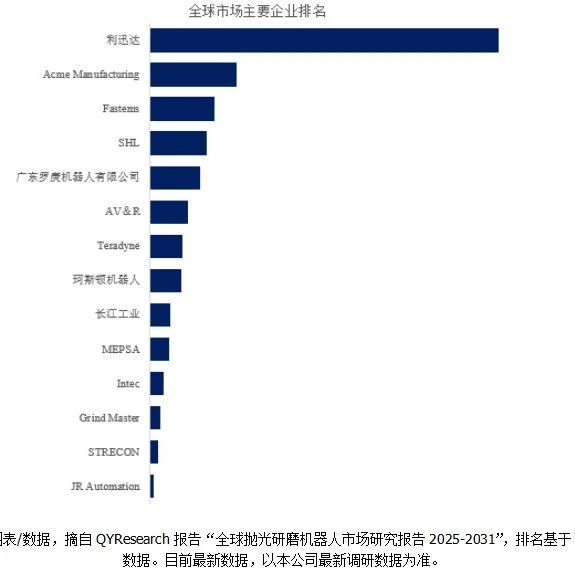
全球抛光研磨机器人市场前10强生产商排名及市场占有率
QYResearch· 2025-07-14 08:53
Core Viewpoint - The polishing and grinding robot market is expected to grow significantly, reaching a market size of $590 million by 2031, with a compound annual growth rate (CAGR) of 10.8% in the coming years [3]. Market Overview - Polishing and grinding robots are essential for industrial automation, capable of performing complex surface treatment tasks on various materials, including metals, plastics, and ceramics [1]. - The global market for polishing and grinding robots is dominated by major manufacturers, with the top ten companies holding approximately 56.0% of the market share in 2024 [7]. - The primary product type in this market is the gripping robot, which accounts for about 61.1% of the market share [11]. Application Segmentation - The automotive sector is the largest application market for polishing and grinding robots, representing approximately 33.3% of the total market share [15]. Market Drivers - The demand for automation solutions is increasing due to the advancement of "Industry 4.0" and smart manufacturing concepts, leading to a rapid adoption of polishing and grinding robots [16]. - Rising labor costs and challenges in workforce management are pushing companies to replace manual labor with robotic solutions [16]. - There is a growing need for high precision and consistency in manufacturing, particularly in sectors like automotive and electronics, where quality standards are stringent [16]. - Enhanced industrial safety and environmental regulations are driving the shift from traditional manual polishing to robotic systems, which help mitigate dust pollution and other safety hazards [16]. Technological Advancements - The maturity of sensing and force control technologies is enabling robots to adapt to complex polishing and grinding scenarios, improving their processing capabilities [18]. Market Challenges - High initial investment costs for robots and their integration pose significant financial challenges for small and medium-sized manufacturers [19]. - The complexity of polishing and grinding processes requires highly customized robotic systems, leading to longer implementation cycles and higher technical barriers [19]. - There is a shortage of skilled technicians for programming and maintaining these robotic systems, which can affect operational stability [19]. - Limited flexibility in supporting diverse manufacturing needs, such as frequent changes in workpieces, remains a challenge for robotic solutions [19]. - Slow adoption of automation technologies among traditional manufacturers due to a reliance on manual labor and a lack of understanding of the return on investment from automation [20].

全球外墙清洗机器人市场前10强生产商排名及市场占有率
QYResearch· 2025-07-14 08:53
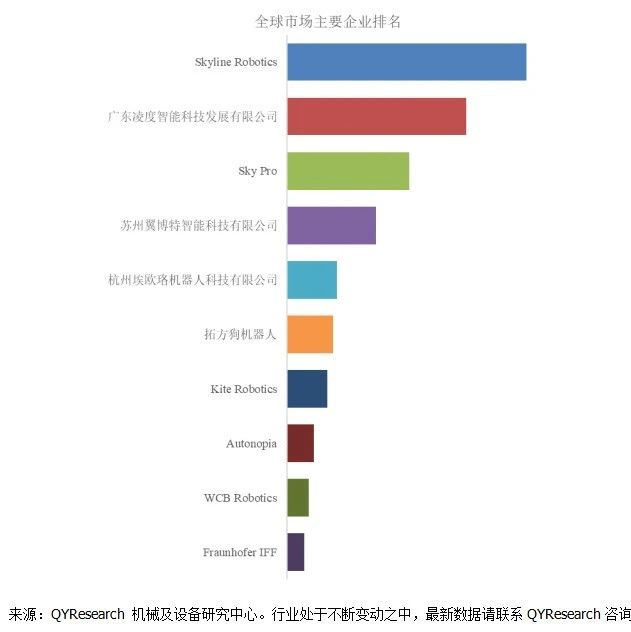
Core Viewpoint - The article discusses the growth and market dynamics of the exterior wall cleaning robot industry, highlighting the increasing demand driven by urban development and technological advancements. Market Overview - The Asia-Pacific region, particularly China, Japan, and South Korea, is the fastest-growing market for exterior wall cleaning robots, with a projected market size of $14.48 million in 2024, accounting for 46.98% of the global market. By 2031, it is expected to reach $29.58 million, increasing its market share to 51.18% [2] - The North American market is projected to be $10.19 million in 2024, representing 33.07% of the global market, while Europe will have a market size of $4.37 million, accounting for 14.18% [2] - The Chinese market is expected to grow from $9.60 million in 2024 to $19.82 million by 2031 [2] Competitive Landscape - Foreign brands dominate the high-end market with mature technology, while Chinese manufacturers excel in cost-effectiveness, customization, and local responsiveness, rapidly expanding their market share [3] - The industry faces challenges such as technological adaptation, high procurement costs, and inadequate regulations, but ongoing technological advancements are expected to enhance efficiency and broaden application scenarios [3] Market Size and Growth Rate - According to QYResearch, the global exterior wall cleaning robot market is projected to reach $0.6 billion by 2031, with a compound annual growth rate (CAGR) of 8.2% over the coming years [3] Product Segmentation - The suction cup type is the leading product segment, holding approximately 62.8% of the market share [9][12] - Commercial applications represent the largest demand source, accounting for about 95.1% of the market [11] Key Manufacturers - Major manufacturers in the global exterior wall cleaning robot market include Skyline Robotics, Guangdong Lingdu Intelligent Technology Development Co., Ltd., and Sky Pro, with the top three companies holding around 62.0% of the market share in 2024 [8]
海关总署:今年上半年我国工业机器人出口增长61.5%
news flash· 2025-07-14 02:24
Core Insights - China's industrial robot exports increased by 61.5% in the first half of the year, reflecting the country's strong position in the global market [1] - The growth in exports is attributed to the country's foreign trade enterprises seizing new trends in global energy transition and enhancing the supply of high-quality green products [1] - The export growth rates for lithium batteries and wind turbine generators also exceeded 20% during the same period, indicating a broader trend in the green technology sector [1] Industry Trends - The rise of versatile robots, including those used in cooking, cleaning, delivery, and entertainment, showcases the innovation and vitality of China's robotics industry [1] - China's market share in industrial robot exports has risen to the second largest globally, highlighting its competitive edge in the sector [1]
山东政商要情(7.7—7.13)
Jing Ji Guan Cha Wang· 2025-07-13 12:57
Group 1: Robotics Industry in Shandong - Shandong plans to exceed 50 billion yuan in robot manufacturing industry scale by 2027, aiming to cultivate over three leading enterprises with output exceeding 2 billion yuan each [2] - The "Action Plan" includes 18 measures covering technology innovation, industry cultivation, financial support, standard construction, talent support, and application promotion [2] - The plan aims to enhance technological innovation capabilities and development quality in the robotics sector, establishing Shandong as a national growth pole for robot R&D and manufacturing [2] Group 2: Low-altitude Economy in Shandong - Shandong ranks third in the nation with over 1,400 operational drone enterprises, showcasing a strong development momentum in the low-altitude economy [3] - The low-altitude industry in Shandong is characterized by integrated manufacturing and service development, with over 400 companies involved in the R&D and manufacturing of general aircraft and drones [3][4] - The province aims to strengthen the low-altitude industry's ecosystem by enhancing product innovation, deepening application promotion, and building a comprehensive industrial ecosystem [4] Group 3: Ecological Compensation in the Yellow River Basin - Shandong received 62.07 million yuan in ecological compensation from Henan for the Yellow River basin, contributing to the improvement of water quality in the region [5] - Since the establishment of the compensation mechanism in 2021, Shandong has received a total of 250 million yuan, promoting collaborative ecological protection efforts between the two provinces [5] Group 4: Employment Measures in Jinan - Jinan has introduced 20 specific measures to promote high-quality and sufficient employment, focusing on economic development, skill enhancement, and support for key groups [6] - The city has maintained an annual urban employment increase of over 170,000 in recent years, positioning itself as a significant employment hub [6] Group 5: Talent Development in Qingdao - Qingdao has implemented 20 measures to optimize the talent development ecosystem, focusing on identifying, supporting, and empowering talent [7] - The measures include financial support for young talents and specialized professionals, aiming to create a nurturing environment for talent growth [7] Group 6: Jerry's Gas Project in Algeria - Jerry Oilfield Services Group announced a project award worth approximately 6.126 billion yuan for the Rhourde Nouss gas boosting station in Algeria [8] - This project marks an expansion of Jerry's oil and gas engineering services in North Africa, aligning with the company's strategic focus on the Middle East and North Africa [8]


消息称松下推迟美国电池工厂生产计划,因特斯拉销售放缓;全球首款棉花激光打顶机器人亮相丨智能制造日报
创业邦· 2025-07-12 03:04
Group 1 - Panasonic delays the full production plan of its electric vehicle battery factory in the U.S. to March 2027 due to sluggish sales from its main customer, Tesla. The factory in Kansas, which has a construction cost of $4 billion, has an uncertain timeline for reaching its target capacity of 30 GWh [1] - Chery Automobile has recently published a patent for a "companion robot," which includes a base, support, functional mechanism, cover, inflation mechanism, and control unit, aimed at enhancing the safety of the robot's usage [1] - EVE Energy's Shenyang cylindrical battery base has entered the trial production phase, collaborating with BMW for the mass production of new generation models. The cylindrical batteries have already been validated in over 60,000 vehicles globally [1] Group 2 - The world's first cotton laser topping robot was unveiled, achieving an accuracy rate of 98.9% and operational efficiency ten times that of manual labor, capable of working on 6 to 8 acres per hour [1]

中国中车、中航工业等供应商,AI智能打磨机器人公司获数千万元A轮融资|早起看早期
36氪· 2025-07-11 15:25
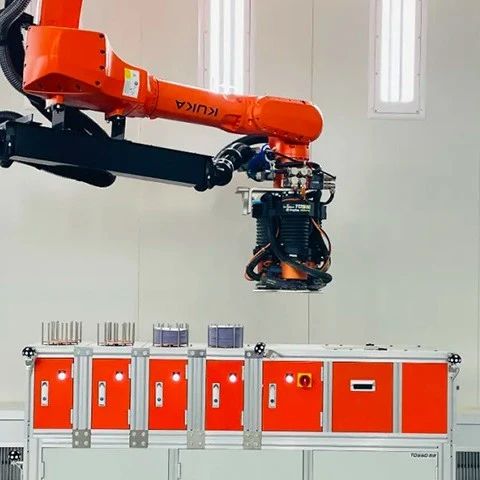
Core Viewpoint - Tusu Automation Technology (Shanghai) Co., Ltd. has completed several tens of millions in Series A financing, with the funds primarily allocated for R&D, team building, and operational support to enhance product optimization [4][11]. Company Overview - Founded in 2016, Tusu Technology focuses on solving automation challenges in industrial polishing, specializing in the development and production of AI intelligent polishing robots [4][7]. - The company offers automated polishing solutions with core self-developed product modules, including TS flexible constant force polishing devices and AI-specific polishing process modules [4][8]. Market Potential - The potential market demand for polishing robots in sectors such as rail transit, passenger vehicles, civil aviation, and wind power exceeds 35 billion yuan, with a continuous growth trend [7]. - The automation rate for surface polishing remains below 10%, indicating significant room for growth compared to other industrial automation areas [7]. Technology and Product Features - Tusu Technology's AI intelligent polishing robots utilize a full-stack self-developed technology, including defect recognition, online path planning, and real-time flexible force control [8][9]. - The TS flexible constant force polishing device can autonomously complete force control with just the input of contact force values, while the adaptive polishing tools can switch between different polishing modes [8][10]. Operational Efficiency - The AI intelligent polishing robots can significantly reduce labor requirements; for instance, a task that typically requires 14 workers over two days can be completed by four robots in the same timeframe [10]. - The company has established partnerships with leading firms in various industries, including China CRRC and China Aerospace, and aims to achieve a billion-level order target this year [10][11]. Investment Perspective - Investors view Tusu Technology as a key player in the automation sector, particularly in fine polishing and intelligent surface treatment, which currently has the lowest penetration rate in manufacturing [11]. - The company has already secured significant orders from benchmark clients and is expected to expand its customer base, supporting its medium to long-term growth [11].
港股上市后募资超IPO,同行企业为何境遇分化?
Sou Hu Cai Jing· 2025-07-11 11:27
Group 1 - The Hong Kong stock market has performed exceptionally well this year, with a double-digit increase in the main index, outperforming many global equity markets [2] - The new stock market has seen significant activity, with many new listings experiencing hundreds of times oversubscription during the offering phase, and post-listing performance has been strong, exemplified by companies like Mixue Group and CATL [2] - From early 2025 to July 11, the post-listing fundraising scale in the Hong Kong market reached HKD 164.418 billion, surpassing the IPO fundraising scale of HKD 123.564 billion, with the half-year post-listing fundraising nearly doubling last year's total [2] Group 2 - Placement has been the primary method for post-listing fundraising this year, with a total of HKD 156.985 billion raised, accounting for 95.5% of the total [4] - BYD and Xiaomi announced placement plans in March, raising HKD 43.509 billion and HKD 42.600 billion respectively, with proceeds aimed at R&D, overseas business development, and general corporate purposes [4] - Following their placements, both BYD and Xiaomi saw their stock prices continue to reach new highs, indicating market recognition of their growth potential [4] Group 3 - NIO raised HKD 4.03 billion through a placement in March for R&D and strengthening its balance sheet, but its stock price did not recover post-placement, reflecting market skepticism about its financial health and future prospects [8] - Robotics companies have also been active in fundraising, with several raising over HKD 1 billion, including Horizon Robotics and Fourth Paradigm [10] - Biotech companies, particularly those not yet profitable, are also seeking funds, with Innovent Biologics raising HKD 4.310 billion to support global expansion and pipeline development [10] Group 4 - Gold-related stocks have capitalized on rising gold prices to raise funds, with companies like Lao Pu Gold and Zhaojin Mining successfully completing fundraising while their stock prices continued to rise [11] - The Hong Kong stock market has seen significant price increases for companies like Pop Mart and Mixue Group, raising questions about whether these companies will also pursue fundraising opportunities [12] - Investor sentiment towards fundraising activities is influenced by the company's fundamentals, the rationale behind the fundraising, and the overall market environment [12] Group 5 - Companies like Innovent Biologics that raised funds while their stock prices were high were viewed positively by investors, while others that saw stock price declines post-fundraising faced skepticism regarding their pipeline progress and capital efficiency [13] - Gold-related fundraising activities are seen as timely moves to expand capacity in a favorable market environment, creating a positive feedback loop between stock price and fundraising [13] - Investors are encouraged to consider the fundamentals and growth prospects of companies rather than making decisions based solely on short-term stock price fluctuations or fundraising activities [14]



杭叉集团加快智慧物流与机器人赛道布局 拟通过增资扩股方式控股国自机器人
Zheng Quan Shi Bao Wang· 2025-07-10 11:49
Core Viewpoint - Hangcha Group is accelerating its layout in the smart logistics and robotics sector through the acquisition of a 99.23% stake in Guozi Robotics, enhancing its capabilities in intelligent logistics solutions [1][2][3]. Group 1: Acquisition Details - Hangcha Group's subsidiary, Hangcha Intelligent, plans to acquire the majority stake in Guozi Robotics from related parties, marking a significant step in the company's strategic expansion [1]. - The acquisition involves an increase in registered capital from 50 million to approximately 91.47 million yuan, with Hangcha Group holding 44.28% of Hangcha Intelligent post-transaction [4]. - The transaction does not involve cash expenditure, ensuring no direct impact on operating cash flow and alleviating financial pressure on the company [4]. Group 2: Industry Context - The forklift industry is rapidly transitioning towards smart logistics and robotics, with Hangcha Group leveraging its strong manufacturing capabilities and supply chain to establish a solid foundation in intelligent logistics [2]. - Hangcha Group has developed three major business segments in intelligent logistics, with a projected contract amount exceeding 1 billion yuan in 2024 [2]. Group 3: Future Prospects - The acquisition is expected to enhance the company's product development capabilities and facilitate the transition from traditional forklifts to intelligent solutions, positioning Hangcha Group for future growth [3]. - Guozi Robotics, recognized as a leading mobile robotics company, has a robust product line and a strong commitment to future profitability, with projected net profits showing a compound annual growth rate of 85.2% from 2025 to 2027 [5].
