
电信

Search documents
深圳市立研通信有限公司成立,注册资本200万人民币
Sou Hu Cai Jing· 2025-06-25 12:03
Core Insights - Shenzhen Liyan Communication Co., Ltd. has been established with a registered capital of 2 million RMB, fully owned by Shenzhen Jingliyuan Technology Co., Ltd. [1] Company Overview - The legal representative of Shenzhen Liyan Communication Co., Ltd. is Gu Zhihuang [1] - The company operates in the information transmission, software, and information technology services industry, specifically in telecommunications, broadcasting, television, and satellite transmission services [1] - The registered address is located at Tianan Digital Times Building, A Block, 2310, Tai Ran Si Road, Sha Tou Community, Futian District, Shenzhen [1] Shareholding Structure - Shenzhen Jingliyuan Technology Co., Ltd. holds 100% of the shares in Shenzhen Liyan Communication Co., Ltd. [1] Business Scope - The business scope includes sales of communication equipment, leasing of computer and communication equipment, sales of mobile communication devices, professional repair of communication transmission and switching equipment, sales of optical communication equipment, and satellite mobile communication terminal sales [1] - Additional services include 5G communication technology services, sales of electrical signal equipment, network equipment, electronic measuring instruments, navigation terminals, IoT devices, and various electronic products [1] - The company also engages in integrated circuit chip design and services, quantum computing technology services, and domestic and international trade [1]
深圳:稳步放宽或取消跨境交付、境外消费和自然人移动等模式下服务贸易限制措施
news flash· 2025-06-25 11:06
Core Viewpoint - Shenzhen Municipal Bureau of Commerce has issued measures to promote high-quality development of service consumption, focusing on expanding openness in the service sector [1] Group 1: Service Sector Expansion - The measures aim to deepen the expansion of the service industry to foreign markets [1] - Support for pilot programs in the medical field, including biotechnology and wholly foreign-owned hospitals, to enhance openness [1] - Gradual relaxation or removal of restrictions on service trade under cross-border delivery, overseas consumption, and individual mobility models [1] Group 2: Market Access and Innovation - Continuous efforts to relax market access in telecommunications, education, elderly care, medical, and health services [1] - Active participation in the creation of national service trade innovation and development demonstration zones [1]
工信部:前5个月电信业务收入累计完成7488亿元 同比增长1.4%
news flash· 2025-06-25 01:45
Core Insights - The Ministry of Industry and Information Technology reported that the total telecom business revenue for the first five months reached 748.8 billion yuan, reflecting a year-on-year growth of 1.4% [1] - When adjusted for last year's prices, the total telecom business volume showed a year-on-year increase of 8.6% [1] Telecom User Statistics - As of the end of May, the total number of fixed internet broadband access users among the three major telecom operators reached 682 million, with a net increase of 12.16 million users compared to the end of last year [1] - Users with fixed internet broadband access speeds of 100 Mbps and above totaled 648 million, accounting for 95% of the total user base [1] - Users with fixed internet broadband access speeds of 1000 Mbps and above reached 223 million, with a net increase of 16.35 million users, representing 32.7% of the total user base, an increase of 1.8 percentage points compared to the end of last year [1] Mobile Phone User Statistics - The total number of mobile phone users among the three major telecom operators and China Broadcasting reached 1.807 billion, with a net increase of 16.99 million users since the end of last year [1] - The number of 5G mobile phone users reached 1.098 billion, with a net increase of 84.14 million users, accounting for 60.8% of the total mobile phone user base [1]
夏季达沃斯论坛解读发展中国家发展之道
Zhong Guo Xin Wen Wang· 2025-06-24 12:08
Group 1 - The core viewpoint of the article emphasizes that industrialization and technological innovation are crucial for the development of emerging and developing economies [1][2] - According to the International Monetary Fund, in 2023, the GDP of emerging and developing economies accounted for 58.9% of the global economy [1] - Experts at the forum highlighted that many developing countries face challenges in implementing industrialization despite having the necessary strategies, particularly in the context of globalization [1] Group 2 - The Chairman of the Hong Kong Stock Exchange stated that the future of industrialization is focused on innovative technologies, with significant investments made by China in this area [2] - An example was provided regarding the development of large language models, indicating that substantial funding is not a prerequisite for success, as demonstrated by China's DeepSeek model [2] - The Chairman of Angola's Unitel emphasized the importance of diversifying technology sources and sending students and workers abroad to better utilize foreign technologies [2]
联合国贸发会议报告显示——全球外国直接投资持续下降
Jing Ji Ri Bao· 2025-06-22 22:04
Group 1 - The core viewpoint of the report is that global foreign direct investment (FDI) continues to decline, with a projected decrease of 11% to approximately $1.5 trillion in 2024, marking the second consecutive year of decline [1][2] - The decline in international project financing (IPF) is particularly severe for developing countries, with a projected drop of 26% in 2024, which is the third consecutive year of significant decline [2][3] - Investment related to sustainable development goals (SDGs) has also seen substantial decreases across various sectors, including a 23% drop in renewable energy investments, a 35% decline in infrastructure investments, and a 30% decrease in water, sanitation, and hygiene projects [2][3] Group 2 - The digital economy is highlighted as the only growth area, with international investment in this sector expected to double in 2024, focusing on data centers, artificial intelligence (AI), cloud computing, and cybersecurity [2][3] - However, there is a notable imbalance in the distribution of digital economy investments, with most funds concentrated in a few countries like China and the United States, leaving structural weak economies marginalized [3] - The report emphasizes the need for a shift in investment direction and global cooperation to achieve equitable and sustainable development, advocating for the integration of digital strategies with industrial policies and sustainable development goals [4]
5G-A与AI融合,华为引领电信新变革,生活场景将如何焕新?
Sou Hu Cai Jing· 2025-06-22 09:39
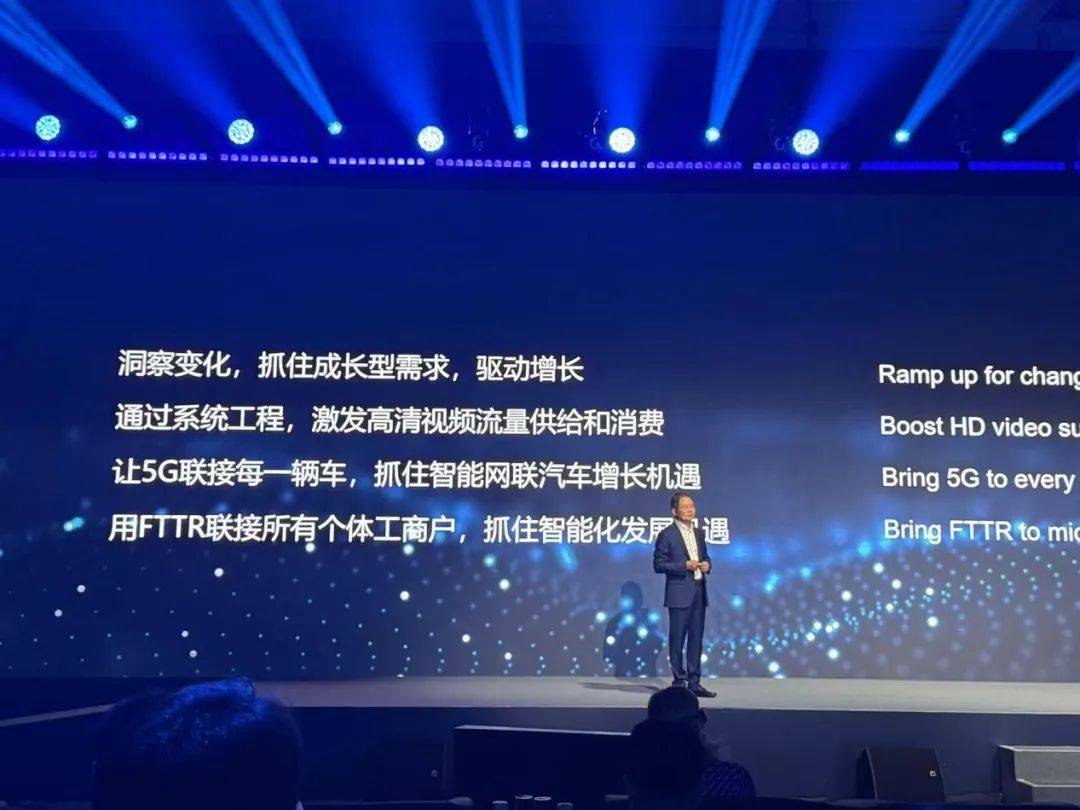
Core Insights - The 2025 Shanghai World Mobile Communication Conference (MWC Shanghai) focused on exploring new growth paths under the integration of 5G-A and artificial intelligence (AI) [1] - Huawei showcased its new business model for 5G-A experience management and AItoX intelligent body business paradigm, emphasizing the value creation through AI [1] - China leads in 5G-A development with over 300 cities covered and user numbers exceeding ten million [1] Group 1 - Huawei's Vice Chairman Xu Zhijun highlighted the untapped potential of 5G-A, particularly in meeting high-value user demands such as those in the live streaming and high-definition video sectors [1] - In the B-end market, 5G technology has significant application potential in the smart connected vehicle sector, with a call for healthy competition among operators to control 5G intellectual property costs [3] - FTTR (Fiber to the Room) technology is emerging as a new growth point for telecom operators, addressing the needs of high-end households and improving network coverage for small businesses [3] Group 2 - Huawei's exhibition attracted significant attention, showcasing innovations in 5G-A and AI, particularly in the context of smart living, smart transportation, and smart production [3] - The integration of 5G-A and AI enables personalized health management through intelligent analysis of user data, facilitating remote consultations and automated delivery services [3] - Huawei introduced a new AI ultra-broadband (UBB) solution to enhance network autonomy and support AI applications, improving user experience in terms of connectivity and performance [5] Group 3 - Huawei is committed to collaborating closely with operators to explore growth strategies tailored to different market environments and competitive landscapes [7]

固定收益周报:本轮资金面高点的预估-20250622
Huaxin Securities· 2025-06-22 06:31
Report Industry Investment Rating The provided content does not mention the report industry investment rating. Core Viewpoints of the Report - China remains in a marginal de - leveraging process, with the goal of stabilizing the macro - leverage ratio unchanged. The large - scale debt resolution reduces local government financing costs and the probability of large - scale defaults and liquidity risks [2]. - The current loose money - market conditions are difficult to sustain, and the peak of the current round of money - market conditions is expected to occur between June 23 and July 4 [2][7]. - The stock - bond ratio favors bonds, and the equity style trends towards value. Currently, long - term bonds have a slightly higher cost - performance ratio than value - type equity assets [6][22][23]. Summary by Directory 1. National Balance Sheet Analysis Liability Side - In May 2025, the liability growth rate of the real - sector was 8.9%, slightly lower than the previous value of 9.0%. It is expected to reach its peak in April, decline to around 8.8% in June, and then gradually decline to around 8% by the end of the year [2][17]. - The money - market conditions of the financial sector were marginally stable and slightly loose last week. Given the marginal de - leveraging of the real sector, the loose money - market conditions are unlikely to continue [2][17]. - The net reduction of government bonds last week was 316 billion yuan, lower than the planned net increase of 218.6 billion yuan. This week, the planned net increase is 575.4 billion yuan. The government liability growth rate was 14.8% at the end of May, expected to rise slightly above 15% in June and then decline to around 12.5% by the end of the year [3][18]. Monetary Policy - Last week, the average weekly trading volume and price of funds increased, and the term spread widened. After adjusting for seasonal effects, the money - market conditions were marginally stable and slightly loose [3][18]. - The yield of one - year Treasury bonds decreased to 1.36% at the end of the week. The lower limit of the one - year Treasury bond yield is estimated to be around 1.3%, the lower limit of the ten - year Treasury bond yield is around 1.7%, and the lower limit of the thirty - year Treasury bond yield is around 1.9% [3][18]. Asset Side - In May, the physical - quantity data weakened compared to April. The government's target for the annual real economic growth rate in 2025 is around 5%, and the nominal economic growth rate target is around 4.9%. It is necessary to further observe whether this will become the central target for China's nominal economic growth in the next 1 - 2 years [4][19]. 2. Stock - Bond Cost - Performance and Stock - Bond Style - Last week, the money - market conditions were marginally stable and slightly loose, but risk appetite continued to decline. Funds flowed more towards short - term bonds, resulting in a continued "bearish stocks, bullish bonds" situation with a value - dominant style [6][21]. - The yields of short - term and long - term bonds declined slightly. The ten - year Treasury bond yield remained stable at 1.64%, the one - year Treasury bond yield decreased by 5 basis points to 1.36%, and the thirty - year Treasury bond yield decreased by 1 basis point to 1.84% [6][21]. - The broad - based rotation strategy outperformed the CSI 300 index by 0.52 percentage points last week and has outperformed it by 6.45 percentage points since July, with a maximum drawdown of 0.0% [6]. - The report recommends a portfolio of 40% dividend index, 40% SSE 50 index, and 20% 30 - year Treasury bond ETF [7][23]. 3. Industry Recommendation 3.1 Industry Performance Review - The A - share market declined with lower trading volume this week. The Shanghai Composite Index fell 0.51%, the Shenzhen Component Index fell 1.16%, and the ChiNext Index fell 1.66% [27]. - Among the Shenwan primary industries, banks, communications, electronics, food and beverages, and household appliances had the largest increases, while beauty care, textile and apparel, pharmaceutical biology, non - ferrous metals, and social services had the largest declines [27]. 3.2 Industry Crowding and Trading Volume - As of June 20, the top five industries in terms of crowding were electronics, computers, power equipment, machinery and equipment, and pharmaceutical biology, while the bottom five were comprehensive, beauty care, steel, coal, and building materials [29]. - This week, the top five industries with increased crowding were electronics, power equipment, communications, machinery and equipment, and computers, while the top five with decreased crowding were pharmaceutical biology, non - ferrous metals, national defense and military industry, automobiles, and textile and apparel [29]. - The average daily trading volume of the entire A - share market decreased from 1.37 trillion yuan last week to 1.22 trillion yuan this week. The industries with the highest year - on - year growth in trading volume were petroleum and petrochemicals, national defense and military industry, electronics, computers, and public utilities [30]. 3.3 Industry Valuation and Earnings - This week, among the Shenwan primary industries, banks, communications, electronics, food and beverages, and household appliances had the largest increases in PE(TTM), while beauty care, textile and apparel, pharmaceutical biology, non - ferrous metals, and social services had the largest declines [34]. - As of June 20, 2025, industries with high full - year 2024 earnings forecasts and relatively low current valuations compared to history include coal, petroleum and petrochemicals, power equipment, pharmaceutical biology, and consumer electronics [35]. 3.4 Industry Prosperity - In terms of external demand, there were mixed trends. The global manufacturing PMI in May fell from 49.8 to 49.6, while most of the disclosed PMIs of major economies in May rebounded. The CCFI index rose 8% week - on - week [39]. - In terms of domestic demand, second - hand housing prices declined in the latest week, and quantitative indicators showed mixed trends. The traffic volume of trucks on expressways increased, and the capacity utilization rate of ten industries showed a slight rebound in May and continued to rise slightly in June [39]. 3.5 Public Fund Market Review - In the third week of June (June 16 - 20), most active public equity funds underperformed the CSI 300. The 10%, 20%, 30%, and 50% weekly returns were 0.4%, - 0.2%, - 0.6%, and - 1.2% respectively, while the CSI 300 fell 0.45% [53]. - As of June 20, the net asset value of active public equity funds was estimated to be 3.41 trillion yuan, slightly lower than 3.66 trillion yuan in Q4 2024 [53]. 3.6 Industry Recommendation - In the de - leveraging cycle, the stock - bond ratio favors equity to a limited extent, and the value style is more likely to dominate. Dividend - type stocks are generally expected to have the characteristics of non - expansion, good earnings, and survival [8][23][57]. - The recommended A + H dividend portfolio includes 20 A + H stocks, and the A - share portfolio includes 20 A - share stocks, mainly concentrated in industries such as banks, telecommunications, petroleum and petrochemicals, and transportation [8][9][57].
100观察|京东打造一种“与美团完全不同的商业模式”,强化供应链优势
Mei Ri Jing Ji Xin Wen· 2025-06-21 04:01
Group 1: JD Group's Business Model and Strategy - JD Group aims to create a business model distinct from Meituan, focusing on high-quality and safe food for consumers [1][9] - The emphasis is on leveraging the fresh supply chain behind food delivery to generate profits, rather than relying solely on meal orders [9] - The core challenge lies in balancing cost efficiency through technology with the need to enhance rider welfare, testing the company's commitment to social responsibility and commercial efficiency [1] Group 2: Competition Landscape - Future competition will focus on JD's ability to implement a "30-minute delivery" capability for fresh supply chains in the restaurant delivery sector [1] - Meituan faces the challenge of balancing merchant ecosystem health with profitability pressures while countering JD's combination of quality and low prices [1] Group 3: Performance Metrics - JD's "618" sales event saw a user count increase of over 100% year-on-year, with total orders exceeding 2.2 billion [5] - The performance in categories like 3C and home appliances remains strong, with significant growth in high-margin categories such as fashion and beauty [5] Group 4: Technological Innovations - JD's focus on supply chain efficiency aims to redefine the delivery ecosystem in the competitive instant retail market [9]


NTT(NTTYY.US)推进163亿美元收购AI子公司 加速AI战略布局与架构精简
Zhi Tong Cai Jing· 2025-06-20 07:05
Group 1 - NTT has announced a significant acquisition of NTT Data Group Corp. for 2.37 trillion yen (approximately 16.3 billion USD), aimed at enhancing its artificial intelligence strategy and simplifying its corporate structure [1] - The acquisition settlement is set to begin on June 26, with NTT currently holding about 58% of NTT Data's shares and offering 4,000 yen per share for the remaining shares to take the company private [1] - As one of the largest data center operators globally, the acquisition will position artificial intelligence as a core business for NTT Group, facilitating expansion in global markets [1] Group 2 - The Japanese government holds about one-third of NTT's shares and is promoting the development of domestic AI platforms to compete with international players like OpenAI and China's DeepSeek, with NTT competing alongside KDDI and SoftBank in the growing AI sector [1] - This acquisition reflects the regulatory pressure faced by Japanese corporate groups, as regulators urge companies to streamline their structures, particularly in light of warnings from the Tokyo Stock Exchange regarding listed parent-subsidiary structures [1] - Following NTT's move, NEC Group has completed the acquisition of its subsidiary NEC Networks and System Integration, and Toyota's chairman has also planned to acquire Toyota Industries, suggesting a trend of consolidation among Japanese companies [2]

工信部上新境外来电提醒服务,八大反诈利器如何筑牢防火墙
Nan Fang Du Shi Bao· 2025-06-20 05:12
Core Viewpoint - The Ministry of Industry and Information Technology (MIIT) has launched a new overseas call reminder service to help the public effectively identify overseas calls and messages, adding another layer of protection against telecom fraud [1] Group 1: New Services Introduced - The overseas call reminder service alerts users about the country or region of incoming overseas calls and messages, enhancing user awareness against potential fraud [1] - The MIIT's initiative is part of a broader effort to combat telecom fraud, which includes the introduction of several other anti-fraud tools [1] Group 2: Anti-Fraud Tools - The National Anti-Fraud Center APP provides efficient warning and deterrent notifications when users receive suspected fraudulent calls or messages, and allows users to report fraud leads [2] - The 96110 official warning hotline alerts users if they or their family members are experiencing telecom fraud and allows for consultation and reporting of suspected fraud [2] Group 3: Additional Features - The 12381 fraud warning SMS system offers real-time SMS alerts to potential fraud victims [3] - The nationwide mobile phone card "one certificate inquiry" service enables users to check the number of mobile phone cards registered under their ID, preventing identity theft [3] - The Cloud Flash Payment APP's "one-click card inquiry" feature allows users to manage their bank card information and mitigate risks of fraudulent card openings [3] - The "anti-fraud business card" addresses the issue of users mistaking police warning calls for scams by marking and alerting users about legitimate police calls [4] - The nationwide internet account "one certificate inquiry" function allows users to check the number of internet accounts linked to their phone number, helping to prevent unauthorized registrations [4]