
高技术制造业

Search documents
国家统计局:7月规模以上工业企业利润同比下降1.5% 降幅连续两个月收窄
智通财经网· 2025-08-27 01:48
智通财经APP获悉,国家统计局工业司统计师于卫宁解读2025年7月份工业企业利润数据。7月份,规模 以上工业企业营业收入同比增长0.9%,1—7月份增长2.3%,今年以来营业收入持续增长,为企业盈利 恢复创造有利条件。7月份,规模以上工业企业利润同比下降1.5%,降幅较6月份收窄2.8个百分点,连 续两个月收窄,1—7月份利润降幅较上半年收窄0.1个百分点,企业盈利水平继续好转。 原文如下: 国家统计局工业司统计师于卫宁解读2025年7月份工业企业利润数据 规模以上工业企业利润降幅连续两个月收窄 本文编选自"国家统计局",智通财经编辑:徐文强。 7月份,规模以上工业生产保持稳定增长,促进物价水平合理回升系列政策逐步落地实施,带动企业盈 利水平持续恢复。规模以上工业企业效益状况呈现以下特点: 工业企业营业收入保持增长,利润降幅连续收窄。7月份,规模以上工业企业营业收入同比增长0.9%, 1—7月份增长2.3%,今年以来营业收入持续增长,为企业盈利恢复创造有利条件。7月份,规模以上工 业企业利润同比下降1.5%,降幅较6月份收窄2.8个百分点,连续两个月收窄,1—7月份利润降幅较上半 年收窄0.1个百分点,企业盈 ...
国家统计局:1—7月全国规模以上工业企业利润下降1.7% 降幅连续两个月收窄
Guo Jia Tong Ji Ju· 2025-08-27 01:48
制造业利润较快增长,对规上工业利润恢复贡献较大。7月份,制造业利润同比增长6.8%,增速较6月 份加快5.4个百分点,拉动全部规模以上工业企业利润增速较6月份加快3.6个百分点。从各板块看,原材 料制造业利润由6月份下降5.0%转为增长36.9%,其中钢铁、石油加工行业同比扭亏为盈,当月分别实 现利润总额180.9亿元、34.6亿元;消费品制造业下降4.7%,降幅较6月份收窄3.0个百分点。 高技术制造业利润快速增长,引领作用明显。7月份,高技术制造业利润由6月份下降0.9%转为增长 18.9%,拉动全部规模以上工业企业利润增速较6月份加快2.9个百分点,引领作用明显。其中,随着我 国航空航天事业发展,技术水平不断向更高层次迈进,航空航天器及设备制造行业利润增长40.9%;在 半导体领域自主创新能力持续增强的背景下,相关的集成电路制造、半导体器件专用设备制造、半导体 分立器件制造等行业利润分别增长176.1%、104.5%、27.1%;生物医药行业高质量发展稳步推进,推动 生物药品制造、化学药品制剂制造等行业利润分别增长36.3%、6.9%。 "两新"政策成效显著,持续带动行业利润增长。"两新"政策实施以来成 ...
浙江制造业亩均税收持续增长
Sou Hu Cai Jing· 2025-08-26 16:44
值得一提的是,上半年浙江山区海岛县亩均税收增速达16.5%,快于全省平均,发展动能显著增强。其 中,缙云县、青田县、武义县等15个县(市、区)亩均税收增速高于全省平均,展现出较强发展潜力。 分企业来看,优质企业引领示范明显。上半年,浙江亩均税收超30万元的规上企业,以8.3%的数量占 比,贡献了41.5%的税收总额。如链主企业、单项冠军企业、专精特新"小巨人"企业亩均税收分别达 61.0万元、46.5万元、29.9万元,是全省平均的2.5倍、1.9倍、1.2倍。 大型企业规模效应显著。上半年浙江大型企业亩均税收达58.0万元,是全省平均的2.4倍,用地为全省的 14.8%,但税收贡献达全省的34.8%,是全省亩均税收持续提升的核心驱动力量之一。 区域差距正逐渐缩小。当前,浙江11个设区市呈现"头部领先、中部稳健、尾部追赶"的格局。杭甬亩均 税收稳居全省前列,呈"高亩税、低增速"特征,分别是全省平均水平的1.5倍和1.1倍,支撑作用明显。 新兴地区增长强劲,7个地市亩均税收增速高于全省平均。其中,舟山市以50.87%的增速遥遥领先,丽 水市和绍兴市增速也较快。 记者25日从省经信厅获悉,今年上半年,浙江规模以上 ...
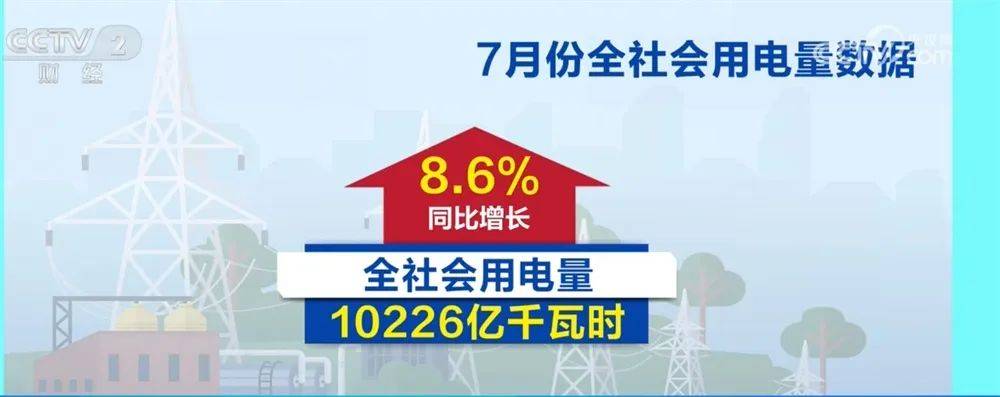
GDP能掺水,发电量不会撒谎!七月中国用电超过1万亿度,人类首次!
Sou Hu Cai Jing· 2025-08-25 10:12
Group 1 - China's electricity consumption reached 1 trillion kilowatt-hours in July 2025, marking a historic milestone for both the country and the world [1] - The increase in electricity usage reflects the real vitality of the economy, with July's first industry electricity consumption growing by 20.2%, driven by modern agricultural technologies [3] - The second industry, particularly high-tech manufacturing and electric vehicle production, accounted for 5,936 billion kilowatt-hours, showing significant industrial upgrades [3] Group 2 - The third industry saw a 10.7% increase in electricity consumption, fueled by the popularity of consumer venues and the demand from digital infrastructure like 5G and cloud computing [5] - Residential electricity consumption surged by 18% in July, with some provinces exceeding 30%, indicating improved living standards and increased use of air conditioning and smart home devices [7][8] Group 3 - Renewable energy sources contributed nearly one-quarter of electricity generation in July, highlighting China's progress towards a greener energy structure [11] - In 2018, renewable energy accounted for 44.4% of electricity in five southern provinces, surpassing the global average, and now the national figure reflects a strong commitment to carbon neutrality [11] Group 4 - In 2022, China's electricity generation exceeded the combined total of the US and Europe, showcasing its significant role in the global economy [12][13] - China contributed 6.9% to the global electricity demand growth of 2.2% in 2023, indicating its economic vitality is a driving force for global growth [15] Group 5 - Future projections suggest that China's annual electricity consumption will exceed 13 trillion kilowatt-hours by 2030, with a focus on quality growth rather than mere volume [17] - The shift towards high-efficiency industries like advanced manufacturing and digital economy will enhance GDP generation per kilowatt-hour, indicating a sustainable development model [17][18]

7月工业生产保持较快增长 新质生产力成关键支撑
Zhong Guo Chan Ye Jing Ji Xin Xi Wang· 2025-08-25 00:11
Core Insights - Industrial production in July maintained rapid growth, with the equipment manufacturing sector acting as a stabilizing force, leading to a year-on-year increase of 5.7% in industrial added value [1] - The development of new productive forces is a key driver for high-quality industrial growth, supported by significant advancements in technology and innovation [1] Group 1: Technological Innovation - Continuous increase in R&D investment has led to breakthroughs in key technology areas, with high-tech manufacturing value added growing by 9.3% year-on-year, outpacing overall industrial growth [1] - The rapid development of new productive forces is enhancing the support for the economy and pushing industrial production towards higher-end manufacturing [1] Group 2: Green Development - Significant achievements in green development are evident, with July production of new energy vehicles increasing by 17.1% and lithium-ion battery production rising by 29.4% [2] - The production of green materials such as carbon fiber and bio-based chemical fibers grew by 43.8% and 19.8%, respectively, indicating a strong commitment to green technology and production [2] Group 3: Digital Transformation - The value added of the digital product manufacturing sector increased by 8.4% year-on-year, with smart device manufacturing and electronic components achieving double-digit growth [3] - The integration of information technology with industrial production is enhancing efficiency, product quality, and management levels, laying a solid foundation for sustainable industrial development [3] Group 4: Policy Support - A series of proactive macro policies have significantly impacted industrial production, with notable growth in shipbuilding and related equipment manufacturing (29.7%) and electric motor manufacturing (15.9%) [3] - The precise support from policies has created favorable conditions for technological innovation and market expansion, encouraging enterprises to develop new productive forces [3][4]
广西产业发展向新向优趋势明显
Guang Xi Ri Bao· 2025-08-24 02:13
Group 1 - The industrial economy in Guangxi has shown a stable and improving trend from January to July, with a notable increase in industrial innovation and the development of new productive forces represented by equipment manufacturing and artificial intelligence [1] - The industrial added value of large-scale enterprises in Guangxi increased by 7.8% year-on-year, ranking 10th nationwide, with corporate profits growing rapidly, achieving a total profit increase of 21.9% from January to June, ranking 3rd in the country [1] - High-tech manufacturing has seen significant growth, with the added value of high-tech manufacturing increasing by 28.6% year-on-year, and equipment manufacturing by 21.7%, both exceeding the national average growth rates [1] Group 2 - The integration of "artificial intelligence + manufacturing" is accelerating, with 55 new intelligent products added in July, and 21 projects signed with a total investment of 11.8 billion yuan during the 2025 China Industry Transfer Development Docking Event [2] - In terms of hardware, the production of service robots increased by 27.5% year-on-year, and intelligent connected vehicles by 17% [2] - The software and information technology service industry in Guangxi achieved a revenue growth of 24.1% year-on-year from January to June, surpassing the national average growth rate by 8.8 percentage points [2]
1至7月份,大连市经济运行总体平稳,规上工业增加值同比增长12.8%
Zheng Quan Shi Bao Wang· 2025-08-22 03:24
Economic Performance - From January to July, Dalian's industrial production showed steady growth with a year-on-year increase of 12.8% in industrial added value, which is an improvement of 0.3 percentage points compared to the first half of the year [1] - High-tech manufacturing added value increased by 17.4%, maintaining a double-digit growth trend [1] - State-owned enterprises saw a 20.9% increase in added value, while private enterprises grew by 4.6% [1] Sector Analysis - The mining industry experienced a 19.8% increase in added value, while manufacturing grew by 13.3% [1] - Key industries such as petrochemicals and equipment manufacturing saw growth rates of 5.7% and 17.2%, respectively, with the railway and shipbuilding sector growing by 54.6% [1] - Notable product output increases included generator sets (100.6%), chemical raw materials (48.3%), and automobiles (47.6%) [1] Service Sector - Dalian's service industry remained stable, with transportation turnover increasing by 1.6% for road, 6.3% for water, and 5.1% for air [2] - Postal and telecommunications services saw significant growth, with postal business volume increasing by 18.8% and telecommunications by 11.9% [2] - The retail market showed strong performance, with retail sales from key units reaching 50.68 billion yuan, a year-on-year increase of 10.9% [2] Investment Trends - Fixed asset investment in Dalian faced downward pressure, with an overall decline of 5.2%, although manufacturing investment rose by 15.1% [3] - Infrastructure investment grew by 4.0%, particularly in water production and supply, which surged by 274.4% [3] - The number of industrial technology transformation projects increased by 5.8%, with completed investment rising by 30.3% [3]
大连:1至7月份规上工业增加值同比增长12.8%
Xin Lang Cai Jing· 2025-08-22 02:21
Core Insights - The industrial added value of Dalian City increased by 12.8% year-on-year from January to July, showing a 0.3 percentage point improvement compared to the first half of the year [1] Group 1: Industrial Growth - The high-tech manufacturing sector's added value grew by 17.4% year-on-year, continuing its double-digit growth trend [1]
前7个月安徽全省经济运行总体平稳
Sou Hu Cai Jing· 2025-08-22 01:12
Economic Overview - The overall economic operation in Anhui Province is stable in the first seven months of the year, with industrial production growing rapidly and a good development trend in equipment manufacturing and high-tech manufacturing [1] - The total retail sales of consumer goods reached 1,393.21 billion yuan, a year-on-year increase of 5.2% [1] Industrial Production - The industrial added value of enterprises above designated size increased by 8.5% year-on-year [1] - The equipment manufacturing industry saw an added value growth of 16.9%, with the computer, communication, and other electronic equipment manufacturing sector growing by 31.1% [1] - High-tech manufacturing increased by 25.3% [1] - Specific product outputs included industrial robots up by 46.4%, notebook computers up by 22.7%, and lithium-ion batteries up by 15.4% [1] Consumer Market - Retail sales in categories such as cultural and office supplies grew by 53.7%, communication equipment by 52.2%, and household appliances and audio-visual equipment by 21.2% [1] - Other categories showed growth as well, including food and oil by 12.0%, daily necessities by 11.3%, and furniture by 10.5% [1] Investment Trends - Fixed asset investment decreased by 3.7% in the first seven months [1] - Infrastructure investment grew by 5.8%, with railway transportation investment up by 14.4% and road transportation investment up by 8.1% [1] - Real estate development investment saw a significant decline of 13.3% [1] Financial Sector - By the end of July, the balance of RMB deposits in financial institutions reached 96,387.9 billion yuan, a year-on-year increase of 10.5% [2] - The balance of RMB loans was 91,648.7 billion yuan, growing by 9.1% [2] Price Trends - The consumer price index rose by 0.3% year-on-year [2] - Price changes included a decrease in food, tobacco, and alcohol prices by 0.7%, while clothing prices increased by 1.5% [2] - Other categories showed varied price changes, with transportation and communication prices down by 2.7% and medical care prices up by 3.0% [2]
政策带动效应继续显现 工业发展质量持续提升
Zhong Guo Chan Ye Jing Ji Xin Xi Wang· 2025-08-22 00:02
Core Insights - The industrial production in China showed a steady growth in July, with a year-on-year increase of 5.7% in industrial added value for large-scale enterprises, indicating a robust industrial economy [1][2][3] Group 1: Industrial Growth - In the first seven months of the year, the industrial added value for large-scale enterprises grew by 6.3%, surpassing the same period last year by 0.4 percentage points [2] - In July, the manufacturing sector's added value increased by 6.2%, outpacing the overall industrial growth by 0.5 percentage points [2] - Among 41 industrial categories, 35 reported a year-on-year increase in added value, and 335 out of 623 major industrial products saw production growth [2] Group 2: Equipment Manufacturing - The added value of large-scale equipment manufacturing rose by 8.4% in July, exceeding the overall industrial growth by 2.7 percentage points, marking 24 consecutive months of higher growth than the overall industrial sector [2] - Key sectors within equipment manufacturing, such as electronics, electrical machinery, and automobiles, each grew by 10.2%, 10.2%, and 8.5% respectively, contributing a total of 36.4% to the overall industrial growth [2] Group 3: High-Tech Manufacturing - The added value of high-tech manufacturing increased by 9.3% in July, with significant growth in sectors like integrated circuit manufacturing and biopharmaceuticals [4] - The railway, shipbuilding, and aerospace industries experienced a 13.7% increase in added value, driven by major national projects [4] Group 4: Green Development - The production of new energy vehicles, lithium-ion batteries, and solar cells saw impressive growth rates of 17.1%, 29.4%, and 16.0% respectively [4] - Green equipment production, including solid waste treatment devices and wind turbine generators, also grew rapidly, with increases of 57.2% and 19.3% respectively [4] Group 5: Policy Impact - The implementation of equipment renewal policies led to significant growth in industries such as boiler manufacturing and electric motor production, with increases of 20.0% and 15.9% respectively [5] - The production of related products, including packaging equipment and electric forklifts, saw substantial growth rates of 32.3% and 30.0% [5][6] Group 6: Consumer Demand and Investment - The government's subsidy policies for vehicle replacement have driven a 17.1% increase in new energy vehicle production, along with a 48.2% rise in related lithium-ion battery production [6] - The National Development and Reform Commission announced the allocation of 188 billion yuan in long-term special bonds to support various sectors, facilitating over 1 trillion yuan in total investment [6]