Autos

Search documents
吉利帝豪:有一半客户是冲着它来的,车好卖提成只有两三百
车fans· 2026-03-20 00:30
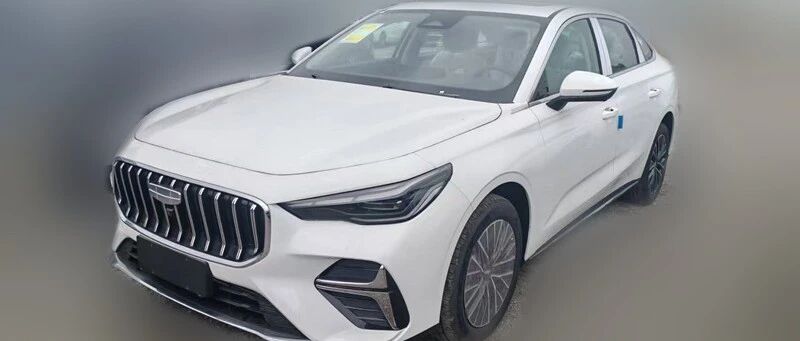
Core Viewpoint - The automotive market dynamics have shifted, with consumers now opting for joint venture vehicles for their affordability rather than domestic brands, which were previously chosen for the same reason [1][13]. Sales Performance - In a local market, two dealerships reported an average of 20 customer visits daily, with half specifically interested in the Emgrand model. Last month, a total of 138 vehicles were sold, with 51 units being Emgrand, indicating strong demand [2]. - The current inventory includes 31 units of Emgrand, with the 1.5T premium version making up 80% of the stock. The most popular colors are black and white, each accounting for 30-40% of sales [3]. Customer Demographics - The customer demographic for the Emgrand shows a gender ratio of approximately 6:4, with the primary age group between 20 and 50 years. Notably, younger female buyers often receive financial support from their families, while male buyers tend to be older and more price-sensitive [4][5]. Competitive Landscape - The main competitors identified include Changan's fourth-generation Eado, Nissan's Sylphy, and Volkswagen's Bora. However, 30-40% of customers also compare the Emgrand with other joint venture models like the Lavida and Jetta [7]. - The Emgrand often outperforms competitors due to its superior configuration and larger space, appealing to consumers looking for value [8]. Pricing and Promotions - The Emgrand's pricing strategy has seen increasing discounts, from ¥9,000 in December to ¥13,000 recently, reflecting a competitive approach to attract buyers [15]. - The most popular configuration is the 1.5T premium version, which includes advanced features and is priced reasonably, making it the best value option [16]. Customer Feedback and Issues - Customers have reported issues with the 360-degree panoramic camera, which occasionally lags. However, the Emgrand is praised for retaining physical buttons, making it user-friendly for older individuals [19]. - Maintenance costs for the 1.5T model are approximately ¥600 annually, while the 1.5L model is cheaper at around ¥300, but requires more frequent servicing [21]. Trade-in Policies - The trade-in policy offers a cash rebate of ¥3,000 for non-GEELY vehicles and ¥4,000 for GEELY vehicles. Notably, trading in an old Emgrand for a new one provides an additional ¥3,000, totaling ¥7,000 in rebates [22]. - Certain professions, such as firefighters and teachers, may qualify for an additional ¥2,000 subsidy, which sales representatives may not always mention [23].


X @Elon Musk
Elon Musk· 2026-03-20 00:18
RT Roland Pircher (@piloly)BEV sales in Spain. Tesla is in first place. 🇪🇸 https://t.co/TgA5IsdYV2 ...

Tesla Finally Has Its First Semi-Truck and It's Already a Hit With Truckers
WSJ· 2026-03-20 00:00
Core Insights - Innovations such as a centered driving position, fast charging capabilities, and a 500-mile range are attracting drivers to new vehicle models [1] Group 1 - The centered driving position is a notable design feature that enhances driver comfort and control [1] - Fast charging technology is becoming a critical factor in consumer decision-making, allowing for quicker refueling times [1] - A 500-mile range on a single charge is a significant advancement that addresses range anxiety among potential electric vehicle buyers [1]
Why Rivian Stock Rallied Today
Yahoo Finance· 2026-03-19 23:55
Core Insights - Rivian Automotive's shares increased following a significant partnership with Uber Technologies to enhance autonomous driving initiatives [1][2] Group 1: Partnership Details - Rivian and Uber will collaborate on advancing autonomous driving, with Uber planning to purchase up to 50,000 fully autonomous R2 robotaxis from Rivian [3] - Initial deliveries of the robotaxis are expected to begin in 2028 in Miami and San Francisco, with plans to expand to 25 cities by 2031 [3] - Uber will invest up to $1.25 billion in Rivian through 2031, starting with an initial investment of $300 million, contingent on Rivian achieving certain technological milestones [3] Group 2: Competitive Landscape - The partnership is expected to enhance Rivian's competitiveness against major players like Tesla and Waymo, although Rivian currently has a significant cash disadvantage compared to these rivals [5] - Rivian ended 2025 with $6 billion in cash and investments, while Tesla had $44 billion and Waymo raised $16 billion in February [5] Group 3: Leadership Perspectives - Uber's CEO expressed strong belief in Rivian's integrated approach to vehicle design, computing platform, and software, emphasizing the importance of maintaining control over manufacturing and supply [4] - Rivian's CEO highlighted excitement about the partnership, stating it will accelerate their path to level 4 autonomy, aiming to create a safe and convenient autonomous platform [6]


中金• 全球研究 | 跨国公司成长启示录上篇(二):美欧日跨国公司观察
中金点睛· 2026-03-19 23:55
Core Insights - The article summarizes the successful experiences of multinational corporations (MNCs) from the US, Europe, and Japan, providing insights for Chinese companies in their globalization efforts. It highlights the common motivations for going global, such as overcoming growth ceilings, avoiding trade barriers, and optimizing cost structures, while also noting the distinct paths taken by different economies based on their unique resources and institutional frameworks [3]. Group 1: United States - US companies focus on high value-added sectors and technological leadership, driven by the need to counter domestic antitrust regulations and optimize production factors. The emphasis on supply chain security has become increasingly important in overseas investment decisions [3][4]. - The US has established a strong technological moat in high value-added fields, particularly in the tech industry, characterized by leading advantages, global tech discourse control, and a shift towards digital economy-driven globalization [3][4][18]. - As of 2022, US MNCs had nearly 40,000 foreign affiliates, generating over $27 trillion in revenue and $3 trillion in net profit, with significant contributions from Europe and the Asia-Pacific region [10][12]. Group 2: Europe - European companies expand overseas primarily due to limited domestic resources and high production costs, necessitating global resource integration to maintain competitiveness [4][42]. - The technological foundation of European firms is characterized by comprehensive capabilities that span from basic research to industrial application, creating significant barriers across the value chain [4][44]. - As of 2023, EU MNCs had over 200,000 foreign affiliates, generating nearly €20 trillion in revenue, with a significant portion coming from intra-European markets [45][49]. Group 3: Japan - Japanese companies transitioned from a "trade nation" to an "investment nation," driven by internal market saturation and external pressures such as trade friction and currency appreciation, prompting a shift towards overseas production [5][65]. - The localization of production has been crucial for Japanese firms, particularly in the automotive sector, achieving an 80% localization rate in overseas production [5][66]. - Japan's unique globalization path emphasizes capital and knowledge-intensive industries, with a focus on lean manufacturing and integrated support from trading companies [5][66].






Uber Is Cozying Up With Rivian. Does This Make Either Stock a Buy?
Yahoo Finance· 2026-03-19 23:31
Core Viewpoint - Rivian Automotive's stock surged approximately 10% in premarket trading due to a significant investment from Uber Technologies, which aims to support Rivian's autonomous vehicle fleet development [1][2]. Group 1: Partnership Details - Uber plans to invest up to $1.25 billion in Rivian by 2031, starting with an initial commitment of $300 million, contingent on Rivian meeting specific autonomous performance milestones [2]. - The partnership includes an initial order for 10,000 fully autonomous Rivian R2 robotaxis, with an option for Uber to negotiate the purchase of an additional 40,000 vehicles starting in 2030 [3]. Group 2: Strategic Implications - The collaboration provides Rivian with a substantial distribution network for its self-driving technology, enhancing its path to achieving level 4 autonomy [4]. - Rivian's third-generation autonomy platform, which utilizes in-house chip technology and a multi-modal sensor system, is expected to be accelerated through this partnership [4]. Group 3: Financial Impact - The investment from Uber offers Rivian a financial buffer as it transitions to its next-generation R2 vehicles, slightly improving the investment thesis for Rivian stock [5].
吉利汽车(0175.HK)2025年年报点评:2026E产品结构改善 全域AI赋能+全球化提速
Ge Long Hui· 2026-03-19 23:21
Core Viewpoint - In 2025, Geely's total revenue is expected to increase by 25.1% year-on-year to CNY 345.23 billion, with a gross margin remaining stable at 16.6% and a net profit attributable to shareholders rising by 0.2% to CNY 16.85 billion, while core net profit is projected to grow by 36% to CNY 14.41 billion [1] Group 1 - Geely's total sales are projected to increase by 39.0% year-on-year to 3.025 million units in 2025, with new energy vehicle (NEV) sales expected to rise by 90% to 1.688 million units, accounting for 55.8% of total sales, an increase of 15 percentage points [2] - The sales forecast for 2026 indicates a steady growth target of 3.45 million units, representing a 14% year-on-year increase, driven by the expansion of luxury products under the Zeekr brand and new models from Lynk & Co and Galaxy [2] Group 2 - Zeekr's privatization was successfully completed by December 2025, with all revenue and profits being fully integrated into Geely, and Zeekr achieving profitability in Q4 2025 with a gross margin of approximately 23% [3] - Geely's global expansion is accelerating, with a target of 640,000 units in export sales for 2026, focusing on key overseas markets and increasing the number of overseas channels to over 2,200 [3] - The company is enhancing its AI capabilities, with plans for the mass production of the H9 model and the scaling of Robotaxi operations, aiming to create a comprehensive intelligent mobility ecosystem [3] Group 3 - The investment rating is maintained at "Buy," with a slight downward adjustment in net profit forecasts for 2026 and 2027, and a new forecast for 2028, alongside a target price adjustment to HK$25.70, reflecting a 13x PE for 2026 [4] - The positive outlook is supported by improvements in product structure and significant growth in export sales [4]
吉利汽车(00175.HK):2025业绩稳健收官 新能源表现亮眼
Ge Long Hui· 2026-03-19 23:21
Core Viewpoint - The company reported a strong performance in 2025, with revenue growth driven by multiple brands and a significant increase in electric vehicle sales, indicating robust future growth potential [1][2]. Performance Review - In 2025, the company's total revenue increased by 44% year-on-year to 345.2 billion yuan, while net profit attributable to shareholders rose by 1% to 16.85 billion yuan. The fourth quarter saw revenue of 105.8 billion yuan, up 46% year-on-year, and net profit of 3.74 billion yuan, reflecting a 5% increase year-on-year [1]. - The total vehicle sales for the year reached 3.0246 million units, a 39% increase, with electric vehicle sales surging by 90% to 1.6878 million units, accounting for 56% of total sales [1]. Development Trends - The revenue growth was primarily driven by strong sales across multiple brands, with notable increases in sales for Geely Galaxy (+150%), Lynk & Co (+23%), and Zeekr (+1%) [1]. - The company is making steady progress in global expansion, with total export sales increasing by 1% to 420,000 units, and a higher growth rate in electric vehicle exports across various regions [1]. Profitability and Forecast - The core net profit, excluding one-time gains from asset sales in 2024, is expected to rise by 36% year-on-year to 14.41 billion yuan in 2025. The gross margin improved by 0.71 percentage points to 16.6%, benefiting from economies of scale and the introduction of high-end products [2]. - The company is focusing on smart technology integration, launching new driving assistance systems and enhancing overall value chain efficiency through its "One Geely" strategy [2]. Profit Forecast and Valuation - Due to increased R&D investments, the net profit forecast for 2026 has been reduced by 5.9% to 20.2 billion yuan, while the 2027 profit forecast remains largely unchanged. The current stock price corresponds to 8.7 times and 6.9 times P/E for 2026 and 2027, respectively, with a target price adjustment of 6.2% down to 24.40 HKD, indicating a potential upside of 34.4% [2].
欧美股市集体下挫,美股存储概念走强,希捷科技涨超6%,中概股阿特斯太阳能跌近27%,黄金白银跳水
21世纪经济报道· 2026-03-19 23:16
记者丨 张嘉钰 吴斌 编辑丨刘雪莹 周四(3月19日),欧美股市集体收跌,德国、法国、英国股市均跌超2%。黄金、大型科技股 普跌。 美股三大指数连两日收低,但跌幅较盘中明显收窄。截至收盘,道指跌0.44%;标普500跌 0.27%;纳指跌0.28%,均收于去年11月以来新低。 盘中,纳指一度跌近1.4%,最低时报21851.05点,为去年9月以来的最低水平;道指、标普也 一度跌超1%。 | 美洲市场 L3 | | | | --- | --- | --- | | 道琼斯 | 纳斯达克 | 标普500 | | 46021.43 | 22090.69 | 6606.49 | | -203.72 -0.44% | -61.73 -0.28% -18.21 -0.27% | | | 欧非中东 L | | | | 英国富时100 | 法国CAC40 | 德国DAX | | 10063.50 | 7807.87 | 22839.56 | | -241.79 -2.35% | -162.01 -2.03% -662.69 -2.82% | | | 意大利MIB | 俄罗斯MOEX 欧洲STOXX5 | | | 43701.3 ...

东风集团股份被剔除新一期空池名单
Zhi Tong Cai Jing· 2026-03-19 23:14
Group 1 - The Hong Kong Stock Exchange has removed Dongfeng Motor Group Co., Ltd. (00489) from the list of designated securities for short selling, effective from March 19 [2]