日产轩逸

Search documents
吉利帝豪:有一半客户是冲着它来的,车好卖提成只有两三百
车fans· 2026-03-20 00:30
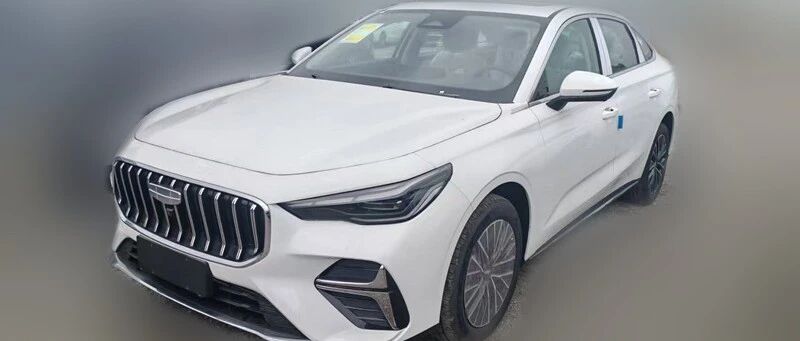
Core Viewpoint - The automotive market dynamics have shifted, with consumers now opting for joint venture vehicles for their affordability rather than domestic brands, which were previously chosen for the same reason [1][13]. Sales Performance - In a local market, two dealerships reported an average of 20 customer visits daily, with half specifically interested in the Emgrand model. Last month, a total of 138 vehicles were sold, with 51 units being Emgrand, indicating strong demand [2]. - The current inventory includes 31 units of Emgrand, with the 1.5T premium version making up 80% of the stock. The most popular colors are black and white, each accounting for 30-40% of sales [3]. Customer Demographics - The customer demographic for the Emgrand shows a gender ratio of approximately 6:4, with the primary age group between 20 and 50 years. Notably, younger female buyers often receive financial support from their families, while male buyers tend to be older and more price-sensitive [4][5]. Competitive Landscape - The main competitors identified include Changan's fourth-generation Eado, Nissan's Sylphy, and Volkswagen's Bora. However, 30-40% of customers also compare the Emgrand with other joint venture models like the Lavida and Jetta [7]. - The Emgrand often outperforms competitors due to its superior configuration and larger space, appealing to consumers looking for value [8]. Pricing and Promotions - The Emgrand's pricing strategy has seen increasing discounts, from ¥9,000 in December to ¥13,000 recently, reflecting a competitive approach to attract buyers [15]. - The most popular configuration is the 1.5T premium version, which includes advanced features and is priced reasonably, making it the best value option [16]. Customer Feedback and Issues - Customers have reported issues with the 360-degree panoramic camera, which occasionally lags. However, the Emgrand is praised for retaining physical buttons, making it user-friendly for older individuals [19]. - Maintenance costs for the 1.5T model are approximately ¥600 annually, while the 1.5L model is cheaper at around ¥300, but requires more frequent servicing [21]. Trade-in Policies - The trade-in policy offers a cash rebate of ¥3,000 for non-GEELY vehicles and ¥4,000 for GEELY vehicles. Notably, trading in an old Emgrand for a new one provides an additional ¥3,000, totaling ¥7,000 in rebates [22]. - Certain professions, such as firefighters and teachers, may qualify for an additional ¥2,000 subsidy, which sales representatives may not always mention [23].


中东局势扰动对中国汽车影响几何?
HTSC· 2026-03-11 02:45
Investment Rating - The report maintains an "Overweight" rating for the automotive industry [6] Core Insights - The overseas market has become a core path for growth for Chinese automotive companies, with short-term geopolitical disturbances like the US-Israel-Iran conflict potentially suppressing overall sales performance. The estimated impact on exports to the Middle East in 2026 is approximately 300,000 vehicles, leading to a downward adjustment of the 2026 passenger car export forecast to 6.5 million vehicles, reflecting a 10% year-on-year growth rate [2][10] - The rising oil price is expected to exert short-term pressure on domestic demand for traditional fuel vehicles, with projections indicating a decline in annual sales of 170,000 to 680,000 vehicles depending on oil price scenarios of $80 and $100 per barrel [3][19] - The energy efficiency advantage of new energy vehicles (NEVs) is expected to catalyze a substitution effect, with projections indicating that high oil prices could lead to a shift of 100,000 to 360,000 vehicle demand towards the NEV market [4][26] Summary by Sections Export Impact - In 2025, China's automotive exports to the Middle East reached 1.4 million vehicles, with the UAE and Saudi Arabia contributing over 60% of this total. The actual impact of geopolitical disturbances is estimated to be around 300,000 vehicles, leading to a revised export forecast of 6.5 million vehicles for 2026, which corresponds to a 10% year-on-year growth rate [2][10][26] Domestic Market Dynamics - The report forecasts that if oil prices stabilize at $80 and $100 per barrel, domestic fuel vehicle sales will decline by 170,000 and 680,000 vehicles respectively. In contrast, NEVs are expected to capture an additional demand of 0, 100,000, and 360,000 vehicles under these scenarios, leading to a total domestic passenger vehicle retail sales target of 22.1 million to 21.8 million vehicles for 2026, reflecting a year-on-year decline of 6% to 8% [5][19][26] Cost Analysis and TCO - Historical analysis indicates that for every 1% decrease in NEV prices, sales increase by approximately 1% to 1.3%. With rising oil prices, the total cost of ownership (TCO) for NEVs is expected to improve, leading to increased sales. Specifically, if oil prices rise to $80 and $100 per barrel, the effective price reduction for NEVs could lead to sales increases of 1.3% and 4.5% respectively [4][25][26]
【联合发布】一周新车快讯(2026年2月14日-2月27日)
乘联分会· 2026-02-27 08:36
Core Viewpoint - The article provides an overview of new vehicle models set to be launched in February 2026, detailing specifications, pricing, and market segments for various manufacturers including GAC Toyota, GAC Motor, and Dongfeng Nissan [2][3][6][11][19][27][35][43]. Group 1: GAC Toyota - GAC Toyota is launching the Toyota Whelanda on February 24, 2026, categorized as an A SUV with a minor engineering change (MCE1) [6]. - The MSRP for the Whelanda ranges from 169,800 to 179,800 CNY, featuring a 2.0L engine with a CVT transmission [5][6]. - Dimensions include a length of 4,600 mm, width of 1,855 mm, height of 1,680 mm, and a wheelbase of 2,690 mm, with a power output of 126 kW and torque of 206 N·m [6]. Group 2: GAC Motor - GAC Motor is set to release the GAC Trumpchi M8 Dual Engine on February 24, 2026, classified as a C MPV with a minor engineering change (MCE1) [14]. - The MSRP for the M8 Dual Engine ranges from 219,800 to 239,800 CNY, equipped with a 2.0L hybrid engine and a 2DHT transmission [13][14]. - The vehicle's dimensions are 5,212 mm in length, 1,893 mm in width, and 1,823 mm in height, with a wheelbase of 3,070 mm and an engine power of 140 kW and torque of 330 N·m [14]. Group 3: Dongfeng Nissan - Dongfeng Nissan will launch the Nissan Sylphy on February 24, 2026, categorized as an A NB with a general platform change (GP) [22]. - The MSRP for the Sylphy ranges from 104,900 to 119,900 CNY, featuring a 1.6L engine with a CVT transmission [21][22]. - The vehicle measures 4,656 mm in length, 1,825 mm in width, and 1,448 mm in height, with a wheelbase of 2,712 mm and a power output of 99 kW and torque of 159 N·m [22]. Group 4: Additional Models from Dongfeng Nissan - The Nissan Teana is also set for release on February 24, 2026, classified as a B NB with a new model (NM) [30]. - The MSRP for the Teana is 182,900 CNY, equipped with a 2.0T engine and CVT transmission [29][30]. - Dimensions include a length of 4,920 mm, width of 1,850 mm, height of 1,447 mm, and a wheelbase of 2,825 mm, with a power output of 179 kW and torque of 371 N·m [30]. Group 5: Dongfeng Nissan N Series - The Nissan N6 will launch on February 24, 2026, categorized as a B NB with a new model (NM) [38]. - The MSRP for the N6 is 116,900 CNY, featuring a 1.5L plug-in hybrid engine with a 1DHT transmission [37][38]. - The vehicle's dimensions are 4,831 mm in length, 1,885 mm in width, and 1,491 mm in height, with a wheelbase of 2,815 mm, engine power of 75 kW, and electric motor torque of 320 N·m [38]. - The Nissan N7 is also set for release on February 24, 2026, classified as a C NB with a minor engineering change (MCE1) [46]. - The MSRP for the N7 ranges from 119,900 to 149,900 CNY, featuring a pure electric engine with EVT transmission [45][46]. - Dimensions include a length of 4,930 mm, width of 1,895 mm, height of 1,487 mm, and a wheelbase of 2,915 mm, with a power output of 160 kW and torque of 305 N·m [46].


2026中国电影票房暂列全球第一;马斯克称其一生纳税将超5000亿美元;Xbox传奇菲尔 · 斯宾塞退休;小米17系列进军全球市场...
Sou Hu Cai Jing· 2026-02-22 01:10
Group 1 - The Chinese film market has surpassed North America in cumulative box office for 2026, reaching over $970 million (approximately 6.7 billion RMB), marking it as the world's leading single market for box office revenue [2] - Elon Musk stated that his lifetime tax payments could exceed $500 billion, with venture capitalist Marc Andreessen suggesting the actual figure might approach $5 trillion when considering corporate and employee taxes [3] - Phil Spencer, a key figure in Microsoft's gaming division for 12 years, has announced his retirement, with Asha Sharma, the president of CoreAI, set to take over [4] Group 2 - Xiaomi is set to launch its 17 series globally on February 28 in Barcelona, with the 17 Ultra Leica version expected to be named "Leica Leitzphone powered by Xiaomi," featuring the Snapdragon 8 Elite Gen 5 processor [5] - Huawei's Band 11 has been listed on its Philippine website, available in standard and Pro versions starting at 2,399 pesos, featuring a 1.62-inch AMOLED screen and 14-day battery life, with a release date of March 2 [6] - The Chinese automotive industry has seen a significant transformation, with overseas sales of Chinese-made and self-owned brand vehicles exceeding 9 million units in 2025, indicating a shift from "product export" to "industry export" [12]





啥样的车,更受市场欢迎?
Ren Min Ri Bao Hai Wai Ban· 2026-02-10 22:52
Core Insights - The upcoming Spring Festival is driving consumer interest in the automotive market, with various incentives such as trade-in subsidies and shopping bonuses contributing to increased sales activity [2] Group 1: Market Trends and Sales Data - In 2025, the cumulative sales of new energy vehicles priced between 100,000 to 200,000 yuan are projected to reach 6.941 million units, representing the largest market share [4] - The price range of 80,000 to 100,000 yuan is expected to see a sales growth of 78.4%, making it the fastest-growing segment [4] - Sales of new energy passenger vehicles under 150,000 yuan are anticipated to grow significantly, with units sold in the 80,000 and below, 80,000 to 100,000, and 100,000 to 150,000 yuan segments reaching 1.533 million, 1.494 million, and 3.549 million respectively, reflecting year-on-year growth of 51.8%, 78.4%, and 59.5% [5] Group 2: Consumer Demand and Preferences - The 100,000 to 150,000 yuan price range is popular due to its alignment with family purchasing needs and practical value, making it a high-cost performance segment [5] - The increase in sales for the 80,000 to 100,000 yuan segment is closely linked to government policies, including a fixed subsidy for scrapping old vehicles, which encourages consumers to purchase new energy vehicles [6] - The 100,000 to 150,000 yuan segment is expected to remain the mainstay for new energy vehicle sales, while the 150,000 to 200,000 yuan segment is projected to experience rapid growth due to consumer upgrades [7] Group 3: Fuel Vehicle Market Dynamics - In 2025, traditional fuel vehicle sales are expected to reach 13.427 million units, a decline of 4% year-on-year, with the 100,000 to 150,000 yuan price range being the most concentrated segment [8] - The competitive advantage of fuel vehicles lies in their refueling convenience and stability, while new energy vehicles offer lower operating costs and advanced technology features [8] - The market for fuel vehicles is dominated by well-established joint venture brands, with models like the Nissan Sylphy and Volkswagen Lavida leading in sales [9] Group 4: Shifts in Market Structure - By 2025, domestic brand passenger vehicle sales are projected to reach 20.936 million units, a 16.5% increase, resulting in a market share of 69.5% [11] - The shift in market dynamics is attributed to domestic brands gaining a competitive edge in the transition to new energy vehicles, with several new entrants achieving significant sales milestones [11] - Domestic brands are increasingly capturing market pricing power by offering high-quality products at lower prices compared to traditional international brands, leading to a shift from price competition to value competition [12]
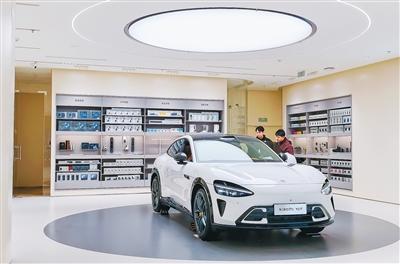
奥迪只要10万了
36氪· 2026-02-09 10:45
Core Viewpoint - The article discusses the significant price drop of the Audi A3, questioning whether it can still be considered a luxury car when its price has fallen to the level of more affordable models [4][46]. Group 1: Price and Sales Trends - The Audi A3, which previously had a starting price of around 19 million yuan, is now available for as low as 11.5 million yuan, with some dealers offering it for as low as 9.9 million yuan [13][15]. - Sales of the Audi A3 have drastically declined, with only 54,700 units sold in 2024, marking a five-year low, and a 22% increase in sales expected in 2025 due to aggressive pricing strategies [13][21]. - The overall luxury car market in China is experiencing a downturn, with a 9.6% decline in sales for luxury brands in 2025, and Audi's total sales in China fell by 5% to 617,500 units [21][22]. Group 2: Competitive Landscape - The price drop of the Audi A3 has led to increased competition with models like the Volkswagen Golf, which shares the same platform and engine but is priced lower [24][31]. - Other competitors in the same price range, such as the BYD Qin PLUS and Nissan Sylphy, offer better space and practicality, making them more appealing to family-oriented consumers [31][32]. - The Audi A3's lack of advanced technology and higher maintenance costs compared to competitors are significant drawbacks that affect its market position [31][32]. Group 3: Consumer Sentiment - Consumers like the A3 for its aesthetic appeal and driving experience, but many do not view it as a luxury vehicle anymore, focusing instead on practicality and personal preference [46][47]. - The emotional value associated with owning an Audi is still present, but the perception of luxury has diminished as the price has dropped significantly [30][46].
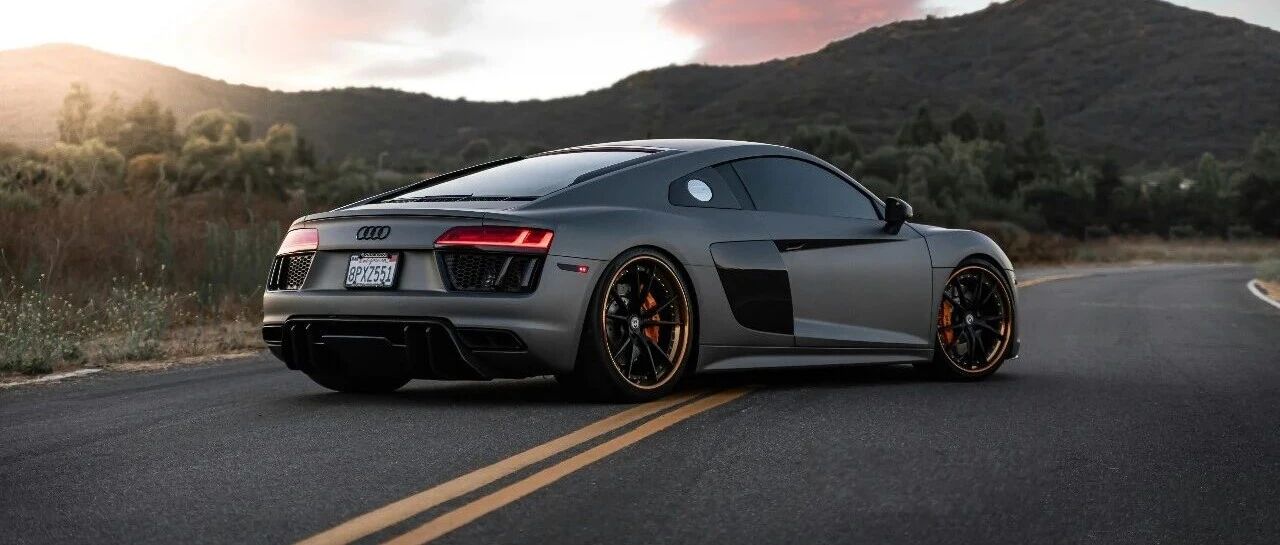
10万级里没好车?先看这十辆车再说!
Xin Lang Cai Jing· 2026-02-09 10:13
Core Viewpoint - The article discusses the various options available in the popular 100,000 yuan car segment, highlighting the strengths of different models from traditional manufacturers, new energy companies, and joint ventures, and aims to guide consumers in selecting the right vehicle for the upcoming New Year [1]. Group 1: BYD Dolphin - The BYD Dolphin is a popular electric sedan priced between 99,800 yuan and 129,800 yuan, known for its design, range, and in-car technology, making it a well-validated option in the 100,000 yuan segment [2][32]. - It features a "marine aesthetic" design with a distinctive front, stylish wheels, and tail lights, enhancing its visual appeal [33]. - The vehicle has a CLTC comprehensive range of 420 km and a low energy consumption of 10.9 kWh per 100 km, making it cost-effective for daily use [6][35]. Group 2: BYD Yuan UP - The BYD Yuan UP is a small SUV priced between 74,800 yuan and 119,800 yuan, equipped with a blade battery and efficient electric drive system, with a new model expected in March 2026 [7][37]. - It has a compact design with a 2,620 mm wheelbase, making it suitable for urban commuting and easy parking, and offers a range of 401 km with fast charging capabilities [8][38]. Group 3: Geely Electric Car - Geely's electric vehicle is priced between 68,800 yuan and 98,800 yuan, featuring a comprehensive set of specifications including a large front trunk and advanced smart cockpit system [9][38]. - The car has a wheelbase of 2,650 mm, providing spacious interior room, and offers a CLTC range of 410 km with fast charging support [11][13]. Group 4: Aion i60 Range Extender - The Aion i60 is priced between 109,800 yuan and 135,800 yuan, noted for its performance, spaciousness, and strong smart features [20][47]. - It has a wheelbase of 2,775 mm, providing ample rear legroom and a large trunk space, with a range of 650 km and compatibility with 99% of global charging stations [21][48]. Group 5: Haval H6 - The Haval H6 is a well-established fuel SUV priced between 98,900 yuan and 143,900 yuan, recognized for its spacious interior and comfort features [29][56]. - It is equipped with a 1.5T engine, delivering a maximum power of 135 kW and torque of 275 N·m, suitable for both family use and light off-road driving [31][58].

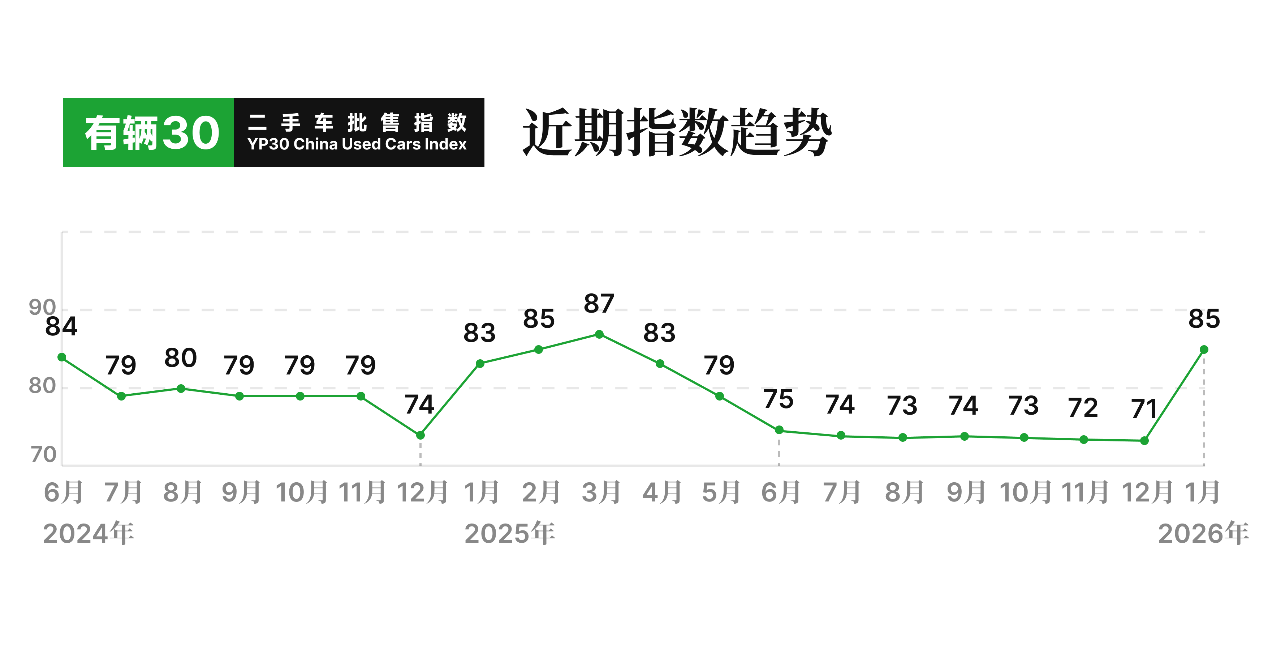
有辆30指数2026年首月大涨近20%,折射春节前二手车需求强劲
Zhong Guo Qi Che Bao Wang· 2026-02-06 05:51
Core Insights - The "Youliang 30 Used Car Wholesale Index" recorded a significant increase of 19.7% month-on-month in January 2026, reaching 85 points, driven by strong demand in the automotive consumption market before the Spring Festival, marking the largest monthly increase since its inception [1] - The index now includes a complete list of 30 benchmark models, enhancing its transparency and market reference value, providing a clearer and more credible quantitative framework for observing the dynamics of the Chinese used car market [1][2] Index Composition - The 30 benchmark models represent high liquidity and typical market indicators across various segments, covering brands from China, the US, Germany, and Japan, aimed at reflecting the overall trends in the Chinese used car market [2] - Notable models include Chinese brands like Great Wall Haval H6 and BYD Song, German brands like Volkswagen Golf and BMW 3 Series, Japanese brands like Honda CR-V and Toyota RAV4, and American brands like Tesla Model Y and Buick GL8 [2] Market Trends - The index data for January 2026 reveals a profound structural adjustment beneath the overall market prosperity, with mid-to-large vehicles experiencing a price increase of 27.1% year-on-year, significantly higher than the average market increase of 11.1% for compact cars [4] - Chinese brands led the market with a year-on-year price increase of 36.9%, reflecting advancements in technology, product strength, and market recognition, while German brands maintained a robust 34.6% increase [7] - In contrast, Korean and French brands faced declines of 9.0% and 13.8% respectively, indicating challenges in market share and brand influence [7] Vehicle Type Dynamics - The market has seen a notable shift in demand, with MPV prices soaring by 35.7%, becoming the fastest-growing category, while traditional SUV prices saw a modest increase of 3.2% and sedans increased by 18.6% [10] Circulation and Transactions - The liquidity of used car sources in China continues to rise, with total used car transactions in 2026 surpassing 20 million units, reaching 20.108 million, a year-on-year increase of 2.52%, and an increasing proportion of interprovincial transactions [13] - The "Youliang 30 Index" provides innovative analysis on interprovincial circulation, with Sichuan province entering the top 5 in interprovincial procurement in January 2026 [13] Index Value and Macro Significance - The "Youliang 30 Index" serves as a quantifiable and traceable "data dashboard" for industry governance and market fluctuation assessment, helping relevant departments gauge the true structure of the current consumption market and consumer confidence levels [22] - The index's monthly data series creates a dynamic price map, allowing for scientific measurement and analysis of the impact of policies like "trade-in" on the circulation segment [22] - The transparency and standardization of the "Youliang 30 Index" respond to national requirements for market data element commercialization and the establishment of a high-standard market system, facilitating the transition of the used car industry from a traditional "experience-driven" model to a "data-driven" modernized development phase [22]
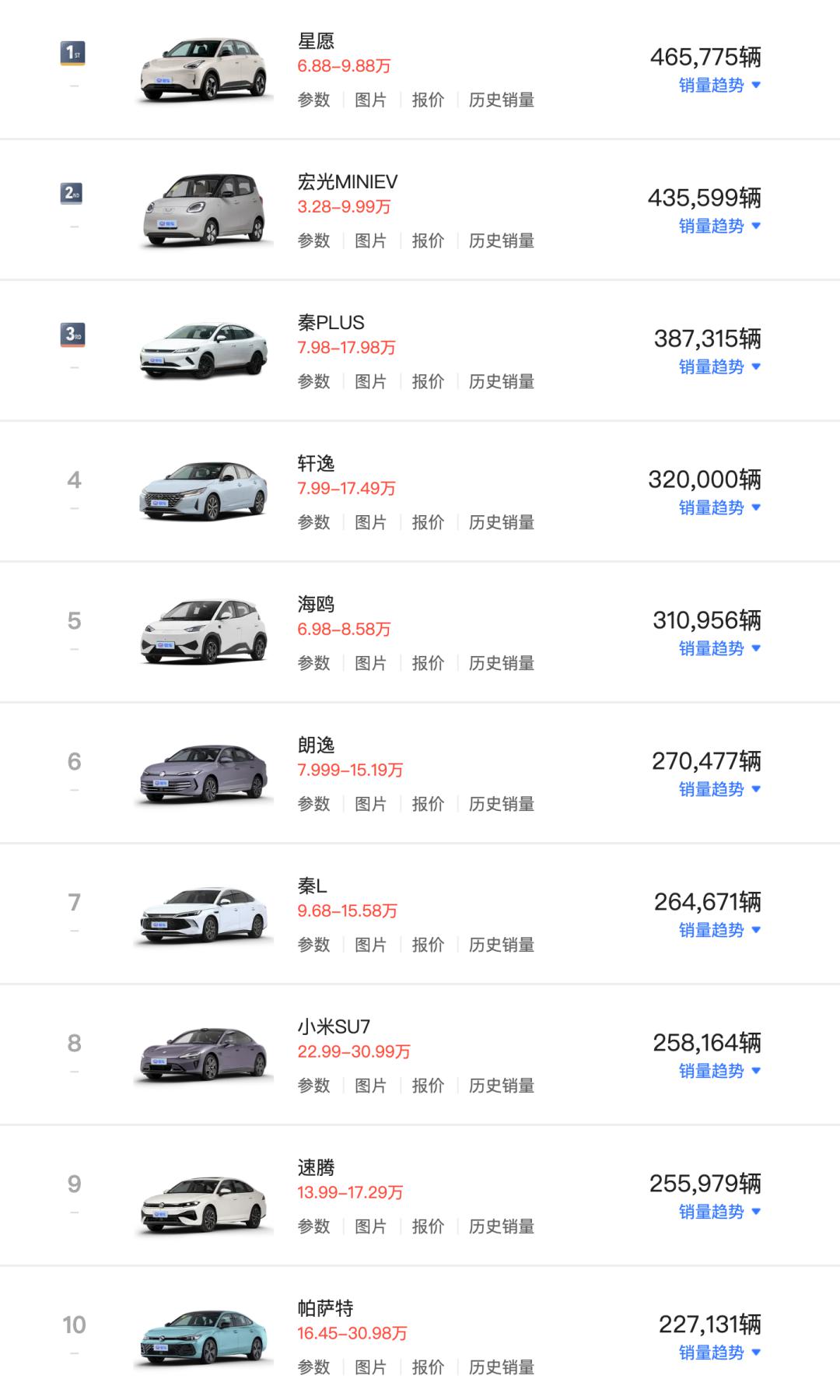
2025年度车型榜单出炉:新能源渗透率飙升 自主品牌登顶全细分市场
Qi Lu Wan Bao· 2026-01-20 05:08
Core Insights - The 2025 Chinese automotive market is characterized by the continued penetration of new energy vehicles (NEVs), strong performance of domestic brands, and a reshaping of market dynamics across various segments [1][14]. Passenger Car Market - Domestic brand NEVs dominate the passenger car sales rankings, with Geely's Star Wish leading at 465,775 units sold, supported by its competitive pricing and features targeting young families [2][5]. - BYD's models, including the Qin PLUS and Dolphin, also performed well, with the Qin PLUS achieving significant sales due to its low fuel consumption and spacious design [2][5]. - The top ten passenger cars include six NEVs priced under 100,000 yuan, indicating a strong market presence for affordable electric vehicles [5]. SUV Market - The Tesla Model Y leads the SUV segment with 425,337 units sold, despite facing competitive pressure from domestic brands [6][10]. - Domestic brands like Geely and BYD have shown strong performance, with Geely's Xingyue L and Boyue L achieving notable sales growth [9][10]. - The SUV market remains diverse, with a mix of six fuel vehicles and four NEVs in the top ten, highlighting the growing influence of electric models [10]. MPV Market - The MPV segment is witnessing a shift towards NEVs, with the BYD D9 leading sales at 92,988 units, despite a slight decline [11][13]. - Toyota's Sienna and other models have also performed well, indicating a competitive landscape where both domestic and joint venture brands are adapting to market demands [11][13]. - The top ten MPVs include six NEVs, showcasing the increasing acceptance of electric and hybrid models in the market [13]. Overall Market Trends - The 2025 Chinese automotive market is undergoing significant structural adjustments, with domestic brands leveraging their technological advantages and competitive pricing to challenge the long-standing dominance of joint venture brands [14]. - The penetration rate of NEVs is on the rise across all segments, with electrification and intelligence becoming irreversible trends in the industry [14].

中国燃油车,在海外杀疯了!
商业洞察· 2025-12-14 09:22
Core Viewpoint - The article discusses the significant transformation of Chinese fuel vehicles from being ridiculed to becoming competitive in international markets, highlighting their successful export growth and market penetration in regions where electric vehicles face challenges [5][31]. Group 1: Export Growth of Chinese Fuel Vehicles - Since 2020, for every four cars exported from China, three have been fuel vehicles [8]. - In 2021, China exported 2.015 million cars, with 1.705 million being fuel vehicles, accounting for 84.6% of total exports [9]. - In 2022, the total car export volume reached 3.111 million, with fuel vehicles increasing to 2.342 million, representing 78.2% [10]. - In 2023, the export volume of traditional fuel vehicles was 3.707 million, making up 75.4% of total exports [11]. - Projections for 2024 indicate that fuel vehicle exports will reach 4.574 million, maintaining a share of 78.1% [12]. Group 2: Market Performance and Competitive Advantage - Chinese fuel vehicles have gained significant market share in regions like Eastern Europe, Latin America, and Africa, with Chinese manufacturers capturing nearly 16% of the South African market in the first half of the year, up from 10% the previous year [14]. - In Chile, Chinese fuel vehicles account for nearly one-third of the market, while traditional brands like Chevrolet and Nissan have seen sales declines of 34% to 45% [15]. - The competitive edge of Chinese fuel vehicles lies in their cost-effectiveness and superior configurations compared to traditional brands, allowing consumers to purchase higher-spec models for similar prices [21][22]. Group 3: Strategic Adaptations and Local Production - Chinese automakers are establishing production bases in key markets such as Thailand, Brazil, and Russia to reduce costs and enhance local supply chains [26]. - This strategy not only helps in avoiding tariffs and logistics costs but also allows for better market integration and responsiveness to local demands [26]. - Some joint venture brands are leveraging Chinese manufacturing advantages to create globally competitive vehicles, with exports constituting nearly 70% of their total sales [29]. Group 4: Future Outlook - The narrative of Chinese fuel vehicles represents a quiet yet robust response to the global shift towards electric vehicles, focusing on markets where practical needs outweigh technological aspirations [31]. - Despite challenges in brand recognition and scale compared to established players like Toyota and Volkswagen, Chinese manufacturers are poised to leverage their complete industrial chain and strategic initiatives to enhance global competitiveness [32].