医药制造

Search documents
港股收盘 | 恒指收跌0.29% 有色股多数走强 宣布拟被私有化、恒生银行大涨25%
Zhi Tong Cai Jing· 2025-10-09 08:50
Market Overview - After the National Day holiday, A-shares resumed trading, and southbound funds returned, with Hong Kong's three major indices showing mixed results. The Hang Seng Index fell by 0.29% to 26,752.59 points, with a total turnover of HKD 38.68 billion [1] - CITIC Securities believes that the Hong Kong market benefits from a complete domestic AI industry chain and the increasing number of quality A-share companies listing in Hong Kong. The firm expects the long bull market that began in early 2024 to continue despite short-term geopolitical and trade uncertainties [1] Blue Chip Performance - HSBC Holdings led blue-chip stocks, rising by 25.88% to HKD 149.8, contributing 36.11 points to the Hang Seng Index. HSBC announced plans to privatize Hang Seng Bank at a price of HKD 155 per share, a 30% premium over the previous closing price [2] - Other notable blue-chip movements included Lenovo Group up 7.26%, Zijin Mining up 5.43%, while China Biologic Products fell by 7.49% and SMIC dropped by 6.7% [2] Sector Highlights - Large technology stocks showed mixed results, with Kuaishou rising over 3% and Alibaba falling over 2%. Precious metals saw significant gains during the holiday, with gold, silver, copper, and aluminum prices rising sharply [3][4] - The AI sector experienced varied performance, with Lenovo and Bilibili seeing gains, while Alibaba faced a decline. The recent acceleration in AI investments and applications is expected to strengthen the narrative around the sector [4][5] Notable Stocks - Shanghai Electric surged by 17.4% after achieving a key breakthrough in nuclear fusion technology, positioning itself as a leader in this field [7] - Goldwind Technology rose by 8.43%, benefiting from its role in promoting green energy transitions [8] - Jinli Permanent Magnet reached a new high, increasing by 8.67%, following announcements of export controls on rare earth-related items by the Ministry of Commerce [9] - HSBC Holdings faced pressure, dropping by 5.97%, amid its announcement regarding the privatization of Hang Seng Bank [10]


德州全域联动推动医药及康养产业高质量发展
Da Zhong Ri Bao· 2025-10-09 02:15
Core Insights - Dezhou aims to develop a significant industrial hub in the pharmaceutical and health care sectors, focusing on four key areas: pharmaceutical manufacturing, medical devices, medical services, and health care services [1][4] - By 2024, the industry chain has gathered 108 enterprises and institutions, generating revenue of 18.026 billion yuan [1] - The city is implementing a comprehensive development plan for the health industry from 2024 to 2027, emphasizing collaboration and integration across various sectors [1][4] Pharmaceutical Manufacturing - Dezhou has over 200 pharmaceutical and medical device manufacturing companies, with 28 of them being large-scale enterprises [2] - The city has established a strong industrial matrix, with two major industry clusters recognized as provincial key clusters [2][3] - Notable products include fish oil and cefminox sodium, which hold the top global market share, and several other products that dominate the national market [3] Research and Development - Carson Cell is actively engaged in research on tumor immunotherapy technologies, specifically TCR-T cell therapy for breast, liver, and lung cancers [1][2] - The company is constructing the Carson Life Science Industrial Park to enhance its technological capabilities and facilitate the entire chain from research to application [2] Health Services - Dezhou has established a high-quality medical service system, allowing residents to access advanced medical services locally [3] - The city has formed partnerships resulting in over 150 collaborative projects, including the establishment of a "Beijing Famous Traditional Chinese Medicine Workstation" [3] Integration of Industries - The integration of pharmaceutical manufacturing, medical services, and health care with cultural tourism is a key highlight of Dezhou's strategy [4] - The city has developed 85 integrated medical and health care institutions, providing 17,000 beds and home care services through 1,005 medical institutions [4][5] - Dezhou's health care and cultural tourism integration has led to the establishment of numerous large-scale projects, enhancing the value of both sectors [5]
恒生银行涨近15%
Di Yi Cai Jing Zi Xun· 2025-10-09 01:52
Core Insights - The Hang Seng Index opened up by 0.12%, while the Hang Seng Tech Index increased by 0.41% [1] - Pharmaceutical stocks are gaining momentum, with Innovent Biologics rising nearly 3% after reaching a licensing agreement worth over $2 billion with Zenas [1] - Technology stocks remain active, with NIO increasing by nearly 2% [1] - Precious metals and related industries saw a slight pullback, with Chifeng Jilong Gold Mining dropping over 3% [1] - Hang Seng Bank experienced a significant jump of 15% following HSBC's proposal to privatize the bank, with a transaction value of approximately HKD 290.7 billion [1][2] Market Performance - The Hang Seng Index stands at 26,862.03, reflecting an increase of 32.57 points or 0.12% [2] - The Hang Seng Tech Index is at 6,540.81, showing an increase of 26.62 points or 0.41% [2]


德州|德州全域联动推动医药及康养产业高质量发展
Da Zhong Ri Bao· 2025-10-09 01:28
Core Insights - The article discusses the high-quality development of the pharmaceutical and healthcare industry in Dezhou, aiming to create a nationally influential industrial hub [2][4]. Industry Overview - Dezhou is focusing on four key areas: pharmaceutical manufacturing, medical devices, medical services, and healthcare services, utilizing a collaborative work mechanism to drive rapid development [2]. - By 2024, the industry chain has gathered 108 enterprises and institutions, achieving a revenue of 18.026 billion yuan [2]. Strategic Initiatives - The city plans to implement the "Dezhou Medical and Health Industry Development Plan (2024-2027)" to enhance the industry layout and promote higher quality development [2]. - The strategy includes a focus on five key areas: medicine, pharmaceuticals, healthcare, integration, and innovation [2]. Company Developments - Shandong Carson Cell Therapy Engineering Technology Co., Ltd. is conducting research on tumor immunotherapy technologies, specifically targeting breast, liver, and lung cancers [2][3]. - Carson Cell is also building the Carson Life Science Industrial Park, which is over 80% complete, aiming to integrate technology research, results transformation, and industrial application [3]. Market Position - Dezhou has over 200 pharmaceutical and medical device manufacturing companies, with 28 of them being large-scale enterprises [3]. - The city’s fish oil and cefminox sodium products hold the top global market share, while eight other products maintain the leading position in the national market [4]. Healthcare Services - Dezhou has established a high-quality medical service system, allowing residents to access advanced healthcare services locally [4]. - The city has formed over 150 cooperative achievements in healthcare, including the establishment of "Beijing Famous Traditional Chinese Medicine Workstations" [4]. Integration and Innovation - The integration of pharmaceutical manufacturing, medical services, and healthcare with cultural tourism is a significant highlight of Dezhou's strategy [5]. - The city has built 85 integrated healthcare institutions with a total of 17,000 beds, and 1,005 medical institutions offer home care services [5].
港股收盘 | 恒指收跌0.48% 黄金股继续高歌猛进 新股长风药业收涨161%
Zhi Tong Cai Jing· 2025-10-09 00:28
Market Overview - The Hong Kong stock market experienced a decline, with the Hang Seng Index dropping 0.48% to close at 26,829.46 points, while the total trading volume reached 173.8 billion HKD [1] - The market is expected to enter a "low season" due to the impact of the National Day and Mid-Autumn Festival holidays, compounded by uncertainties surrounding the U.S. government's short-term financing plan [1] Blue-Chip Stocks Performance - Geely Automobile (00175) saw a notable increase of 3.36%, closing at 19.67 HKD, contributing 6.07 points to the Hang Seng Index. The company announced a share buyback plan worth up to 2.3 billion HKD, indicating management's belief that the stock is undervalued [2] - Other blue-chip stocks included Hengan International (01044) up 3.46%, NetEase-S (09999) up 2.92%, while Semiconductor Manufacturing International Corporation (00981) and CNOOC (00883) saw declines of 1.7% and 1.39%, respectively [2] Sector Performance Gold Stocks - Gold stocks performed strongly, with several companies reaching new highs. Chifeng Jilong Gold Mining (06693) rose 13.26%, China Silver Group (00815) increased by 12.5%, and Shandong Gold (01787) was up 7.61% [3] - Spot gold prices surpassed 4,000 USD per ounce, marking a year-to-date increase of nearly 1,400 USD per ounce, or over 52% [3] Cryptocurrency Stocks - Cryptocurrency-related stocks faced declines, with Boyaa Interactive (00434) down 8.48% and Okcoin Chain (01499) down 7.69%. The drop in Bitcoin futures contributed to the negative sentiment in this sector [4] Cloud Computing Stocks - Cloud computing stocks were negatively impacted by disappointing profit margins reported by Oracle's cloud business, with Mingyuan Cloud (00909) down 4.92% and Alibaba-W (09988) down 1.61% [4][5] Notable Stock Movements - Changfeng Pharmaceutical (02652) debuted with a significant increase of 161.02%, closing at 38.5 HKD, following a successful IPO [7] - Xinjiang Xin Mining (03833) continued its upward trend, closing up 16.88% at 3.6 HKD, driven by plans to issue A-shares [7] Industry Developments - The U.S. government is actively working to rebuild its rare earth industry, with discussions to invest in Critical Metals, which could provide direct ownership of Greenland's largest rare earth project [8] - Jiangxi Copper (00358) reached a new high, closing up 6.02% at 35.2 HKD, amid expectations of a copper supply shortage due to the Grasberg mine's shutdown [9]
南京生物医药谷50余项产品技术国内外首创
Nan Jing Ri Bao· 2025-10-09 00:22
Core Insights - Nanjing Biomedicine Valley has introduced over 50 innovative products and technologies that are first in the world or country, highlighting its role as a key player in the biomedicine industry [1] - The region is focusing on precision medicine and niche areas such as brain science and gene therapy, aiming to establish a comprehensive innovation ecosystem [2][3] - Two new class 1 drugs have been approved this year, marking a significant achievement for the Nanjing Biomedicine Valley [3][4] Industry Overview - The global biomedicine industry is accelerating towards precision diagnosis and treatment, with Nanjing Biomedicine Valley positioning itself in niche markets [2] - The region has established a full industrial chain in gene and cell therapy, including gene testing, diagnostics, and CAR-T cell therapy [3] - The Nanjing Biomedicine Valley has attracted over 1,300 companies, with 7 companies successfully listed and 6 class 1 drugs approved [5] Innovation and Development - The Nanjing Biomedicine Valley is enhancing its innovation capabilities by collaborating with universities and establishing technology transfer centers [6] - A total of 84 billion yuan fund support plan has been launched to facilitate the transformation of scientific achievements from universities [6] - The region is focusing on building a robust innovation ecosystem that integrates innovation chains, industry chains, capital chains, and talent chains [7] Recent Achievements - The approval of two class 1 drugs, Enze Shou and Ji Ke Shu, represents a milestone for the biomedicine valley, with the former being the first targeted drug for platinum-resistant ovarian cancer in China [3][4] - The establishment of the Jiangsu Brain Intelligence Technology Innovation Center aims to make breakthroughs in brain science over the next five years [2] - The Nanjing Biomedicine Valley has successfully facilitated the listing of companies and the approval of innovative drugs, showcasing its supportive environment for biomedicine enterprises [5][6]
白云山7.49亿战投南京医药寻协同 净利阶段性调整布局华东谋突围
Chang Jiang Shang Bao· 2025-10-08 23:31
白云山为何要入股南京医药?除了通过受让股权成为南京医药第二大股东外,白云山还与南京医药签署 了战略投资协议,双方积极制定市场拓展与渠道共享方案,整合优化供应链资源和物流配送网络,建立 稳定、高效的供应链体系等,实现协同发展。 入股地处江苏的南京医药,白云山将加码布局华东市场。 受近年来政策及市场变化等多种因素影响,白云山的经营业绩也出现了小幅调整。入股南京医药,白云 山谋求突围。 战投南京医药(600713.SH),广药集团旗下的白云山(600332.SH)将间接成为南京医药的第二大股 东。 近期,白云山及南京医药均公告,2025年9月26日,白云山附属企业广州广药二期基金股权投资合伙企 业(有限合伙)(简称"广药二期基金")与相关方签署协议,拟受让南京医药11.04%的股权,交易价款 约7.49亿元。 长江商报消息 ●长江商报记者 沈右荣 分析人士认为,无论是医药制造还是医药流通环节,市场竞争加剧,"野蛮生长"时代已经过去,通过股 权纽带,寻求协同发展或将是突围之道。 携7.49亿入股南京医药 通过受让股权,白云山成了南京医药间接第二大股东。 2025年9月28日,白云山发布公告,公司附属企业广药二期基金与 ...

2025年1-8月全国医药制造业出口货值为1536.8亿元,累计增长11.6%
Chan Ye Xin Xi Wang· 2025-10-05 01:59
Core Insights - The pharmaceutical manufacturing industry in China is experiencing significant growth, with a notable increase in export value projected for 2025 [1][2]. Industry Overview - The export value of China's pharmaceutical manufacturing industry reached 19.42 billion yuan in August 2025, marking a year-on-year growth of 16.2% [1]. - Cumulatively, from January to August 2025, the total export value amounted to 153.68 billion yuan, reflecting a year-on-year increase of 11.6% [1]. Related Companies - Key listed companies in the pharmaceutical sector include: - China National Pharmaceutical Modern (国药现代, 600420) - Kunming Pharmaceutical Group (昆药集团, 600422) - Pien Tze Huang (片仔癀, 600436) - Qianjin Pharmaceutical (千金药业, 600479) - Tianjin Pharmaceutical (津药药业, 600488) - China National Pharmaceutical (国药股份, 600511) - Lianhuan Pharmaceutical (联环药业, 600513) - HeFu China (合富中国, 603122) - Kanghui Pharmaceutical (康惠制药, 603139) - Shapuaisi (莎普爱思, 603168) - Aoxiang Pharmaceutical (奥翔药业, 603229) - Dazhenlin (大参林, 603233) [1].

港股收盘(10.02) | 恒指收涨1.61%突破两万七 中芯、华虹再创新高 科网、黄金股等亮眼
智通财经网· 2025-10-02 09:04
Market Overview - The Hong Kong stock market opened positively in October, with major indices showing strong performance, including the Hang Seng Index rising 1.61% to 27,287.12 points, and the Hang Seng Technology Index increasing by 3.36% to 6,682.86 points, marking near four-year highs [1] - The market is supported by the resumption of US-China negotiations and expectations of overseas interest rate cuts, which have alleviated liquidity pressures in Hong Kong and led to increased southbound capital inflows [1] Blue-Chip Stocks Performance - Semiconductor company SMIC (00981) reached a new high, closing up 12.7% at HKD 89.65, contributing 71.26 points to the Hang Seng Index. Goldman Sachs remains optimistic about SMIC's long-term order expansion due to market share growth among downstream clients and the increasing semiconductor content in electronic devices [2] - Other notable blue-chip performances include Xinyi Solar (00968) up 9.88%, Kuaishou-W (01024) up 8.57%, while China Resources Mixc Lifestyle (01209) and Chow Tai Fook (01929) saw declines of 2.9% and 2.44% respectively [2] Sector Highlights Technology Sector - Major technology stocks performed well, with Kuaishou rising over 8%, Baidu up over 4%, and Alibaba increasing by over 3%. Chip stocks also surged, with SMIC and Huahong Semiconductor reaching new highs [3] Gold Stocks - Gold stocks experienced a significant rally, with China Silver Group (00815) up 30.19%, and Tongguan Gold (00340) up 15.13%. The international gold price reached new records, with spot gold nearing USD 3,900 per ounce, driven by expectations of a Federal Reserve rate cut [5] Pharmaceutical Sector - Pharmaceutical stocks showed strong performance, with Clover Biopharmaceuticals-B (02197) up 21.15% and Genscript Biotech-B (01672) up 14.44%. The sector is buoyed by anticipated catalysts from upcoming industry conferences and ongoing progress in licensing deals for innovative drugs [6] Automotive Sector - The automotive sector saw broad gains, with NIO-SW (09866) up 6.62% and Li Auto (09875) reporting a 36.8% year-on-year decline in deliveries, marking a continuous drop for four months [7] Notable Stock Movements - Xipin (02583) surged 71.13% to HKD 181.4, primarily involved in the design and manufacturing of gold watches [8] - Kuaishou-W (01024) continued its upward trend, driven by its AI model's performance in global benchmarks [9] - Shenzhou International (02313) rose 7.87% following positive earnings from its core client Nike, which reported revenue of USD 11.7 billion, exceeding market expectations [10] - Contemporary Amperex Technology Co. (03750) reached a new high, closing up 5.95% as it maintains a leading global market share in battery production [11] - New Ming China (02699) experienced a drastic decline of 84.2%, attributed to significant stock transfers and market activity [12][13]

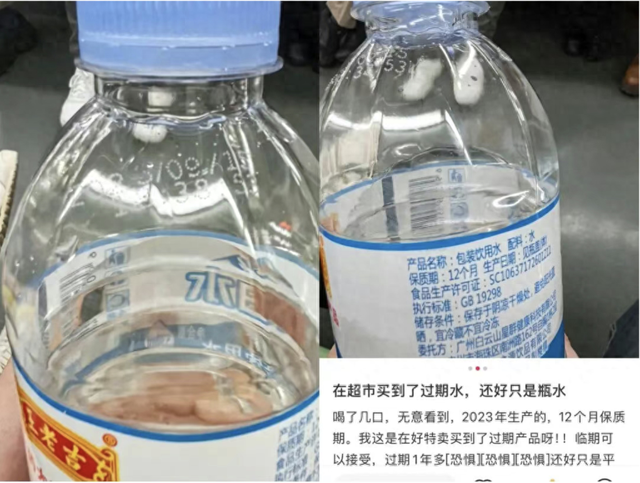
出售的饮用水过期一年?好特卖称系日期打印问题
Xin Lang Cai Jing· 2025-10-02 06:03
Core Viewpoint - A consumer reported purchasing expired bottled water from a discount store, raising concerns about product quality and safety [1][3] Company Summary - The discount store, 好特卖, was established in 2019 and is a chain specializing in discounted snacks [4] - The parent company, 上海芯果科技有限公司, has undergone five rounds of financing since 2019, with the latest being a Series B round in 2021 [4] - According to the China Chain Store & Franchise Association, 好特卖's sales are projected to grow by 33.4% year-on-year to 4.85 billion yuan in 2024, with a 15.3% increase in store count to 940 [4] Incident Summary - A consumer claimed to have bought a bottle of water that was over a year expired, with the product allegedly produced on September 15, 2023, and a shelf life of 12 months [1] - The store's customer service initially stated that the product was actually produced on September 15, 2025, and attributed the confusion to a printing error [3] - The water's manufacturer, 广州白云山星群健康科技有限公司, disputed the store's claim, stating they had not produced any bottled water in September 2023 and suggested the product might be counterfeit [3]