
生猪养殖

Search documents
三榜题名!京基智农现代农业实践获2025广东500强及深圳社会贡献100强
Quan Jing Wang· 2025-10-31 08:05
Core Insights - Jingji Zhino has been recognized as one of the top 500 enterprises in Guangdong and Shenzhen for 2025, reflecting its strong comprehensive strength and social contributions [1][2] - The company won the Annual Dividend Return Award at the 27th Golden Bull Award Ceremony, highlighting its commitment to high-quality development and investor rights [1][2] Group 1: Business Performance - In 2024, the revenue from pig farming accounted for 65.45% of the company's total revenue, which increased to 80.67% in the first half of 2025, indicating a successful strategic transition to modern agriculture [2] - The company employs an advanced "building farming + 6750 self-breeding and self-raising integration" model and a four-week batch production system, supported by eight intelligent farming systems [2] - The establishment of a fully traceable quality control system through industrialized, standardized, and intelligent production methods has positioned the company as a key player in ensuring food safety in the Guangdong-Hong Kong-Macao Greater Bay Area [2] Group 2: Innovation and Sustainability - The company has partnered with South China Agricultural University to establish a technology research institute, focusing on continuous innovation and research implementation [2] - The pineapple residue fermentation feed project in Zhanjiang Xuwen converts agricultural by-products into high-quality feed, creating a "fruit residue-feed-pig" circular system, generating over 20 million in annual economic benefits [2] Group 3: Social Responsibility and Rural Revitalization - The company promotes a "company + farmer" breeding model, establishing over 12 service departments in the Guangxi and Guangdong regions, providing comprehensive support to partner farmers [3] - It has engaged in various public welfare initiatives, including funding education and building community facilities, which have improved rural living conditions and earned widespread social acclaim [3] - The company aims to deepen the integration of technology and agriculture, enhancing the entire industry chain and contributing to rural revitalization and agricultural modernization [3]


天农食品递表港交所 为中国规模最大的清远鸡提供商
Zhi Tong Cai Jing· 2025-10-31 06:49
Core Viewpoint - Tianong Food Group Co., Ltd. has submitted an application for listing on the Hong Kong Stock Exchange, with CMB International as its sole sponsor. The company is recognized as the largest provider of Qingyuan chicken in China based on output volume during the reporting period [1][4]. Company Overview - Since its establishment in 2003, Tianong Food has evolved from a regional poultry farming enterprise to one of China's leading high-quality meat and meat product providers. The company has built a vertically integrated operational system around its core products, including Qingyuan chicken and pork [4]. - The business model encompasses the entire value chain, including breeding, ecological farming, feed production, slaughtering, food processing, and brand marketing [4]. Market Position - According to a report by Frost & Sullivan, Tianong Food is projected to hold approximately 59.3% of the Qingyuan chicken market share in China by 2024, surpassing all other providers combined. The company ranks second among all yellow feathered chicken providers in Guangdong Province [4]. - In the pork business, Tianong Food ranks eighth among pig farming enterprises in Southwest China based on revenue as of December 31, 2024, and second in terms of gross profit per head among large-scale pig farming enterprises in China [4]. Product Portfolio - Tianong Food offers a comprehensive product range, including Qingyuan chicken, other native chicken varieties, pork products, and fresh products, catering to changing consumer preferences. The company has established a diversified product portfolio under its own brands, "Tianong" and "Fengzhonghuang" [5]. - The brand matrix includes products with different breeding cycles, feeding methods, and flavor characteristics, such as "Tianong 138 Qingyuan Chicken" and "Tianong 168 Qingyuan Chicken" [5]. Financial Performance - For the six months ending June 30, 2022, 2023, 2024, and 2025, Tianong Food reported revenues of approximately RMB 39.52 billion, RMB 35.96 billion, RMB 47.76 billion, and RMB 22.21 billion, respectively. The corresponding net profits/losses were approximately RMB 3.41 billion, -RMB 6.69 billion, RMB 8.90 billion, and RMB 1.27 billion [6].
神农集团的前世今生:2025年Q3营收39.23亿行业第八,净利润4.62亿行业第四,成本领先优势凸显
Xin Lang Zheng Quan· 2025-10-31 06:20
Core Viewpoint - Shennong Group is a leading domestic pig farming enterprise in China, established in 1999 and listed on the Shanghai Stock Exchange in 2021, with a comprehensive industry chain advantage in feed production, pig farming, slaughtering, and pork sales [1] Financial Performance - In Q3 2025, Shennong Group achieved a revenue of 3.923 billion yuan, ranking 8th among 12 companies in the industry, significantly lower than the top competitor Muyuan Foods at 111.79 billion yuan and New Hope at 80.504 billion yuan [2] - The net profit for the same period was 462 million yuan, placing the company 4th in the industry, again trailing behind Muyuan Foods at 15.112 billion yuan and Wen's Foodstuffs at 5.417 billion yuan [2] Financial Ratios - As of Q3 2025, Shennong Group's debt-to-asset ratio was 27.07%, lower than the previous year's 27.72% and significantly below the industry average of 57.82%, indicating strong solvency [3] - The gross profit margin for the same period was 20.69%, an increase from 19.63% year-on-year and above the industry average of 14.00%, reflecting robust profitability [3] Executive Compensation - The chairman and general manager, He Zuxun, received a salary of 1.141 million yuan in 2024, a slight increase of 6,900 yuan from 2023 [4] Shareholder Information - As of September 30, 2025, the number of A-share shareholders decreased by 2.37% to 20,200, while the average number of shares held per shareholder increased by 2.43% to 25,900 [5] - The top ten circulating shareholders included notable entities such as Yinhua Agricultural Industry Stock Initiation A and Hong Kong Central Clearing Limited, with varying changes in shareholdings [5] Production and Cost Analysis - In Q3 2025, Shennong Group sold 2.1096 million pigs, generating sales revenue of 3.48 billion yuan, with a breeding cost of 12.5 yuan per kilogram, maintaining a leading position in the industry [5] - The average cost of raising pigs in Q3 2025 was estimated at 12.4 yuan per kilogram, showcasing a clear cost advantage [6]


养殖ETF(159865)盘中涨超1.2%,行业供需调整与政策引导引关注
Mei Ri Jing Ji Xin Wen· 2025-10-31 06:01
Core Viewpoint - The swine breeding industry is experiencing increased supply and demand for fat pigs, leading to a rise in pig prices, although breeding continues to incur losses [1] Industry Summary - Continuous supply expansion in the swine breeding industry is noted, with an increase in demand for fat pigs driving the entry of new breeders [1] - Policy guidance combined with supply pressure release may accelerate capacity reduction, as evidenced by a 0.33% month-on-month decrease in the number of breeding sows in September [1] ETF and Index Summary - The breeding ETF (159865) tracks the China Securities Livestock Index (930707), which selects listed companies involved in livestock feed, breeding, animal vaccines, and veterinary drugs to reflect the overall performance of the livestock industry [1] - The China Securities Livestock Index covers the entire industry chain of livestock, providing a comprehensive view of market trends and development status in the sector [1]
新希望: 饲料业务对前三季度利润贡献较大 海外还将扩产
Xin Hua Cai Jing· 2025-10-31 05:14
Core Insights - New Hope's Q3 2025 financial report shows a revenue of 28.879 billion yuan, a year-on-year increase of 4.51%, but a net profit of 5.1255 million yuan, a significant decline of 99.63% [2] - For the first three quarters, New Hope achieved a revenue of 80.504 billion yuan, up 4.27% year-on-year, with a net profit of 760 million yuan, marking a substantial increase of 395.89% [2] - The profit growth in the first three quarters is attributed to improved breeding costs, reduced losses in the pig industry, and increased profits from the feed business [2] Revenue and Profit Analysis - In Q3, New Hope's revenue was 28.879 billion yuan, while the net profit dropped to 5.1255 million yuan due to falling pig prices [3] - The average sales price of pigs for New Hope fell below 13 yuan per kilogram in September, contributing to a 23.82% decline in sales revenue from live pigs, totaling 1.746 billion yuan [3] Feed Business Performance - The feed business significantly contributed to profit growth in the first three quarters, with overseas sales exceeding 3 million tons, a year-on-year increase of 18% [2] - The average profit for overseas feed was over 180 yuan per ton, with poultry feed averaging close to 140 yuan per ton and pig feed exceeding 300 yuan per ton, outperforming the domestic market [2] - New Hope plans to add 3 to 4 million tons of overseas production capacity in the next 3 to 5 years [2] Industry Context - The decline in net profit in Q3 is linked to a broader trend of falling pig prices, which have been low since mid-August [3] - The industry is facing challenges with ongoing losses and policy measures aimed at reducing sow numbers and controlling weight, which may accelerate capacity reduction in the pig industry [3] - Companies are focusing on cost control and efficiency improvements to navigate the current market cycle [3]

成本优势持续支撑业绩 牧原股份发力海外市场打开增量空间
Zheng Quan Shi Bao Wang· 2025-10-31 04:52
Core Viewpoint - The domestic pig market is entering a downward trend in 2025, with prices hitting a low point, yet the company Mu Yuan Co., Ltd. reported continued revenue and net profit growth in its Q3 2025 financial results, alongside a successful turnaround in its slaughtering business and an early achievement of its debt reduction target of 10 billion yuan [1][2]. Financial Performance - For the first three quarters of 2025, Mu Yuan achieved operating revenue of 111.79 billion yuan, a year-on-year increase of 15.52%, and a net profit attributable to shareholders of 14.779 billion yuan, up 41.01% [2]. - In Q3 alone, the company reported operating revenue of 35.327 billion yuan and a net profit of 4.249 billion yuan [2]. - The company has improved its cost control, with over 80% of its production lines operating at a cost below 12 yuan/kg, and 25% below 11 yuan/kg, with the best lines achieving costs as low as 10.5 yuan/kg [2]. Production Efficiency - The improvement in production metrics is attributed to enhanced pig health standards and optimized personnel management, leading to a weaning-to-marketing survival rate of 93% and an overall survival rate of 87% [3]. - The company aims to further enhance operational efficiency and reduce costs through refined management practices [3]. Slaughtering Business - The slaughtering and meat processing segment has shown significant improvement, achieving profitability in Q3 due to increased capacity utilization and enhanced customer service [4]. - The company expects to exceed a slaughter volume of 28 million pigs for the year, with plans to initiate trial operations at a new processing center in Kunshan in November 2025 [4][5]. Debt Management - Mu Yuan's total liabilities have decreased by 9.796 billion yuan since the beginning of 2025, with an asset-liability ratio of 55.50%, down 3.18 percentage points [6]. - The company has successfully completed a half-year dividend distribution of 5.004 billion yuan, further reducing its actual liabilities by over 10 billion yuan [7]. Strategic Development - The company is transitioning from a phase of rapid expansion to one focused on high-quality development, with a decrease in domestic capital expenditures anticipated [8]. - Mu Yuan is actively pursuing international market opportunities, including a planned listing on the Hong Kong Stock Exchange and strategic partnerships with global firms [8][9]. - Recent collaborations include a strategic agreement with Charoen Pokphand Group and a partnership with BAF Vietnam Agricultural Joint Stock Company to develop high-tech farming projects in Vietnam [9].

罗牛山涨2.09%,成交额2.13亿元,主力资金净流出1886.70万元
Xin Lang Cai Jing· 2025-10-31 03:48
Core Viewpoint - The stock of Luoniushan has shown a significant increase in recent trading days, with a year-to-date rise of 10.09%, indicating potential investor interest despite recent declines in revenue and profit [1][2]. Company Overview - Luoniushan Co., Ltd. is located in Haikou City, Hainan Province, and was established on December 19, 1987, with its stock listed on June 11, 1997. The company primarily engages in pig farming and slaughtering, cold chain logistics, real estate, and educational services [1]. - The revenue composition of Luoniushan is as follows: 64.60% from animal husbandry, 13.46% from food processing, 7.73% from education, 7.16% from real estate, 4.05% from warehousing and logistics, and 2.99% from other sources [1]. Financial Performance - For the period from January to September 2025, Luoniushan reported a revenue of 1.629 billion yuan, a year-on-year decrease of 34.67%, and a net profit attributable to shareholders of 2.7993 million yuan, down 99.18% year-on-year [2]. - The company has distributed a total of 200 million yuan in dividends since its A-share listing, with 69.09 million yuan distributed over the past three years [3]. Shareholder Structure - As of October 20, 2025, the number of shareholders for Luoniushan was 87,400, a decrease of 2.89% from the previous period, with an average of 13,168 circulating shares per shareholder, an increase of 2.97% [2]. - The top ten circulating shareholders include notable entities such as the Guotai Zhongzheng Livestock Breeding ETF, which increased its holdings by 7.4 million shares, and Hong Kong Central Clearing Limited, which increased its holdings by 3.03 million shares [3].

天康生物:三季度生猪养殖综合成本为12.78元/kg
Zheng Quan Shi Bao Wang· 2025-10-31 02:32
Core Viewpoint - TianKang Biological reported a decrease in comprehensive breeding costs for pigs in Q3, primarily due to lower feed, medicine, and piglet costs compared to H1 [1] Summary by Categories Financial Performance - The comprehensive cost of pig breeding in Q3 was 12.78 yuan/kg, down from 13 yuan/kg in H1, reflecting a reduction of 0.22 yuan/kg [1] Cost Analysis - The decrease in costs is attributed to reductions in feed, medicine, and piglet expenses [1] - Corn prices have stabilized, indicating limited room for further reductions in feed costs in Q4, although there may be opportunities for cost savings in other areas and through improved production efficiency [1]

巨星农牧的前世今生:2025年Q3营收56.39亿行业第六,净利润1.13亿行业第七,扩张野心待显
Xin Lang Cai Jing· 2025-10-31 02:27
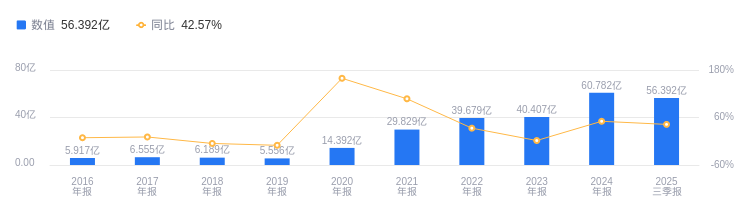
Core Viewpoint - Juxing Agriculture and Animal Husbandry, established in December 2013 and listed in December 2017, is a leading integrated enterprise in breeding, feed production, and leather business in China, with a full industry chain advantage and advanced breeding technology [1] Business Performance - In Q3 2025, Juxing's revenue was 5.639 billion, ranking 6th among 12 companies in the industry, significantly lower than the top company Muyuan Foods at 111.79 billion and second-ranked New Hope at 80.504 billion, but slightly above the industry median of 5.515 billion and below the average of 25.654 billion [2] - The main business revenue composition includes 3.432 billion from pig farming (92.32%), 179 million from feed (4.80%), 101 million from leather products (2.72%), and 5.9249 million from other sources (0.16%) [2] - The net profit for the period was 113 million, ranking 7th in the industry, far below Muyuan Foods' 15.112 billion and Wen's 5.417 billion, and also below the industry median of 186 million and average of 1.879 billion [2] Financial Ratios - As of Q3 2025, Juxing's debt-to-asset ratio was 66.62%, up from 60.81% year-on-year and above the industry average of 57.82%, indicating increased debt pressure [3] - The gross profit margin for Q3 2025 was 10.44%, down from 17.84% year-on-year and below the industry average of 14.00%, reflecting a decline in profitability [3] Executive Compensation - The chairman, Duan Lifeng, received a salary of 1.476 million in 2024, an increase of 399,500 from 2023 [4] - The general manager, Tang Chunxiang, received a salary of 1.4028 million in 2024, an increase of 953,000 from 2023 [4] Shareholder Information - As of September 30, 2025, the number of A-share shareholders increased by 23.11% to 44,700, with an average holding of 11,400 circulating A-shares, down by 18.77% [5] - Among the top ten circulating shareholders, the Guotai CSI Livestock Breeding ETF ranked sixth with 5.6501 million shares, an increase of 2.0204 million shares from the previous period [5] Production and Future Outlook - Juxing's pig output increased steadily to 2.9342 million heads in Q1-Q3 2025, a year-on-year increase of 69%, although pig prices fell, leading to losses in Q3 [6] - The company is expected to achieve revenues of 7.541 billion, 7.917 billion, and 8.733 billion from 2025 to 2027, with net profits of 120 million, 448 million, and 839 million respectively [6]

牧原股份:生猪养殖完全成本呈现逐月下降趋势
Xin Lang Cai Jing· 2025-10-31 02:08
牧原股份(002714)在三季报交流会上表示,年初至今,虽然饲料价格有小幅上涨,但由于公司生产成绩 的持续改善与管理水平的不断提升,生猪养殖完全成本仍呈现逐月下降的趋势,9月已降至11.6元/kg, 较1月下降1.5元/kg,成本下降均来源于生产成绩改善与期间费用摊销下降。 ...