
文化旅游

Search documents
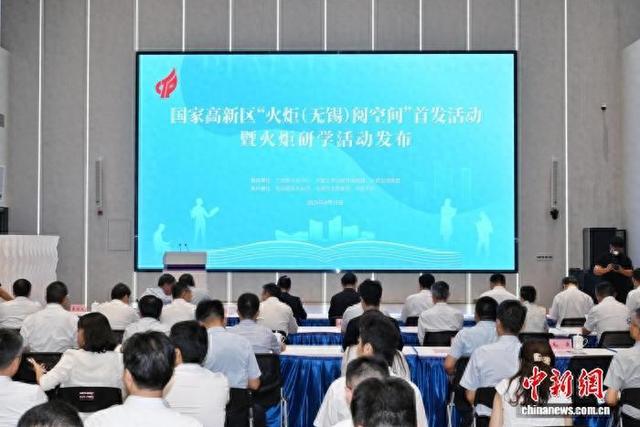
首个国家高新区“火炬阅空间”落户江苏无锡
Zhong Guo Xin Wen Wang· 2025-08-12 06:09
"我们要将'火炬阅空间'打造成为赓续火炬精神、传播火炬品牌、交流火炬思想的精神阵地,成为所有 在高新区工作生活的'火炬人'之家。"首发活动现场,工信部火炬中心相关负责人表示,希望无锡高新 区进一步弘扬火炬创新文化,传播高新区发展历史精神,助力区内企业讲好创新故事,让更多的青年人 才特别是青少年,了解火炬、认同火炬、融入火炬大家庭,厚植火炬情怀。 值得一提的是,由江南大学人工智能与计算机学院、北京信通传媒及无锡市文化旅游发展集团联合打造 的"工信AI学堂 少年火炬行"首次研学营,课程设计遵循"认知启蒙—技能夯实—AI融合—创意拓展"路 径,将通过"AI猜拳大师""历史人物开口"等趣味实验,让青少年在互动中理解人工智能原理。 无锡市文化旅游发展集团相关负责人称,研学路线涵盖"神威·太湖之光"超级计算机等科技地标及鼋头 渚、惠山古镇等文化景点,旨在让青少年感受"科技扎根文化、创新源于情怀"的深刻内涵。(完) 中新网无锡8月12日电 (孙权 唐娟)11日下午,国家高新区"火炬(无锡)阅空间"首发活动在江苏无锡举 行。活动当天,"火炬(无锡)阅空间"、工信学堂授权服务中心揭牌,"工信AI学堂 少年火炬行"首次研学 营启 ...

暑期经济观察丨特色赛事释放城乡魅力 文体旅融合激发消费热情
Xin Hua Wang· 2025-08-12 06:03
今年暑假期间,全国多地开展极具特色的体育赛事,游客们不仅能在赛事现场感受运动的激情与活力,还通过丰富的文旅活动,深入感受当 地文化魅力。这种"赛事+"模式有效延长赛事经济链条,实现体育产业与文旅相关产业的共赢。 2025江苏省城市足球联赛第六轮比赛,常州队球迷为球队加油助威。新华社发(刘臻睿摄) ■在浙江,"浙BA"(浙江省城市篮球联赛)各区赛程持续推进。赛场外,浙江各地抓住赛事热度,推出了特色集市、凭球票享文旅优惠等活 动,借势推广当地文化,拉动旅游经济发展。 7月19日,浙江省城市篮球联赛(浙"BA")绍兴市预选赛决赛现场。新华社发(郭斌 摄) ■在云南罗平,2025云南省乡村摩托嘉年华罗平站比赛,吸引来自全国各地的600余名摩托车运动爱好者相聚于此。116公里的赛道串联起罗 平县内多个景点和特色地貌区域,让车手在比赛中既能感受体育竞技的魅力,又能领略美丽的田园风光。 7月20日,内蒙古自治区第十一届少数民族传统体育运动会在内蒙古赤峰市开幕。赛事期间,各项活动的累计观演人数突破10万人次。新华社 发(康文魁摄) 7月19日,龙舟队伍在镇远县㵲阳河上比赛。新华社发(龙建睿摄) ■8月初,"苏超"(江苏省城市 ...

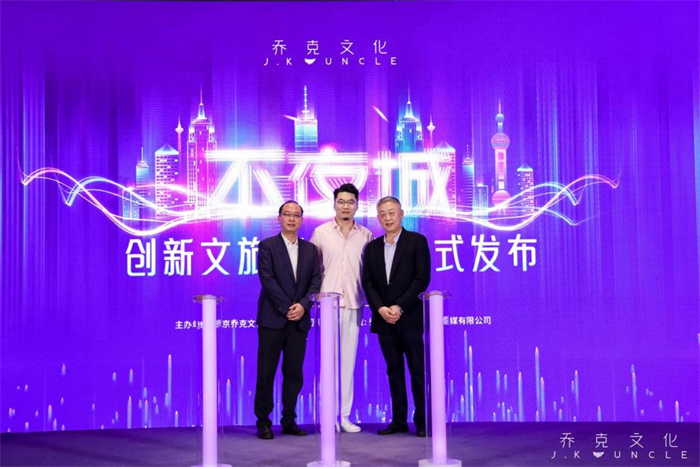
乔克文化:破解“留量”密码 抢占新型文旅高地
Xin Hua Wang· 2025-08-12 06:03
Core Viewpoint - The launch of the "Night City" IP is expected to inject new vitality into the cultural and tourism market, reflecting the industry's prosperous development as evidenced by a 15.3% year-on-year increase in domestic travel during the first three quarters of 2024, with 4.237 billion trips made [1][10]. Group 1: Project Overview - The "Night City" project aims to create an innovative cultural tourism IP that integrates film and tourism, with the first exhibition located in Lishui, Zhejiang [1][6]. - The project is designed to cater specifically to female consumers under 30, reflecting the rise of the "she economy" and focusing on their preferences in design and experience [3][5]. Group 2: Consumer Experience - The project emphasizes immersive experiences, aiming to break traditional tourism models by offering personalized experiences rather than one-size-fits-all visits [4][5]. - The design includes movable walls and unique social spaces to enhance visitor interaction and engagement, aiming to transform transient visits into lasting experiences [4][8]. Group 3: Market Strategy - The "Night City" will be divided into themed areas reflecting different historical styles, such as Song and Republic of China, based on consumer preference surveys [5][6]. - The project seeks to leverage the film industry to create a rich, multi-faceted cultural tourism destination, combining elements like entertainment, dining, and social activities [7][10]. Group 4: Economic Impact - The project is expected to create numerous job opportunities and collaborate with educational institutions to establish a film study base, enhancing practical learning experiences for students [10][12]. - The development of the "Night City" is aligned with national policies promoting nighttime cultural and tourism consumption, positioning it as a key driver for regional economic growth [10][12].
若尔盖越野赛落幕 体育+文旅激活高原经济
Xin Hua Wang· 2025-08-12 01:10
最终,女子25公里组陶海云以2:13:23夺冠,男子25公里组南拉扎西凭1:36:05刷新赛会纪录, 女子42公里组何金凤用3:43:10锁定胜局,男子42公里组更让亚巴以2:59:30的成绩成为首位跑进3 小时的选手。 赛事同期,赛事组委会更推出"越野+观光"深度体验方案,将赛道与黄河九曲第一湾、花湖湿地等 核心景点串联,选手完赛后可凭号码簿享受景点门票优惠。组委会负责人表示:"我们希望通过越野赛 让更多人知道若尔盖不仅有美景,更有专业的赛事服务与包容的文旅生态,让选手从'参赛者'变成'回头 客',让赛事流量转化为长效文旅资源。" 原标题:若尔盖越野赛落幕 体育+文旅激活高原经济 8月10日,2025若尔盖国家公园天边小路越野赛在3500米海拔的草原湿地上落幕,近2000名选手与 工作人员用脚步丈量高原风光。 赛事设置42公里、25公里、6公里三个组别,覆盖不同人群需求。专业选手在42公里赛道挑战高原 越野与极限耐力,大众选手在25公里路线感受草原辽阔,亲子家庭则在6公里体验组享受越野乐趣。 ...
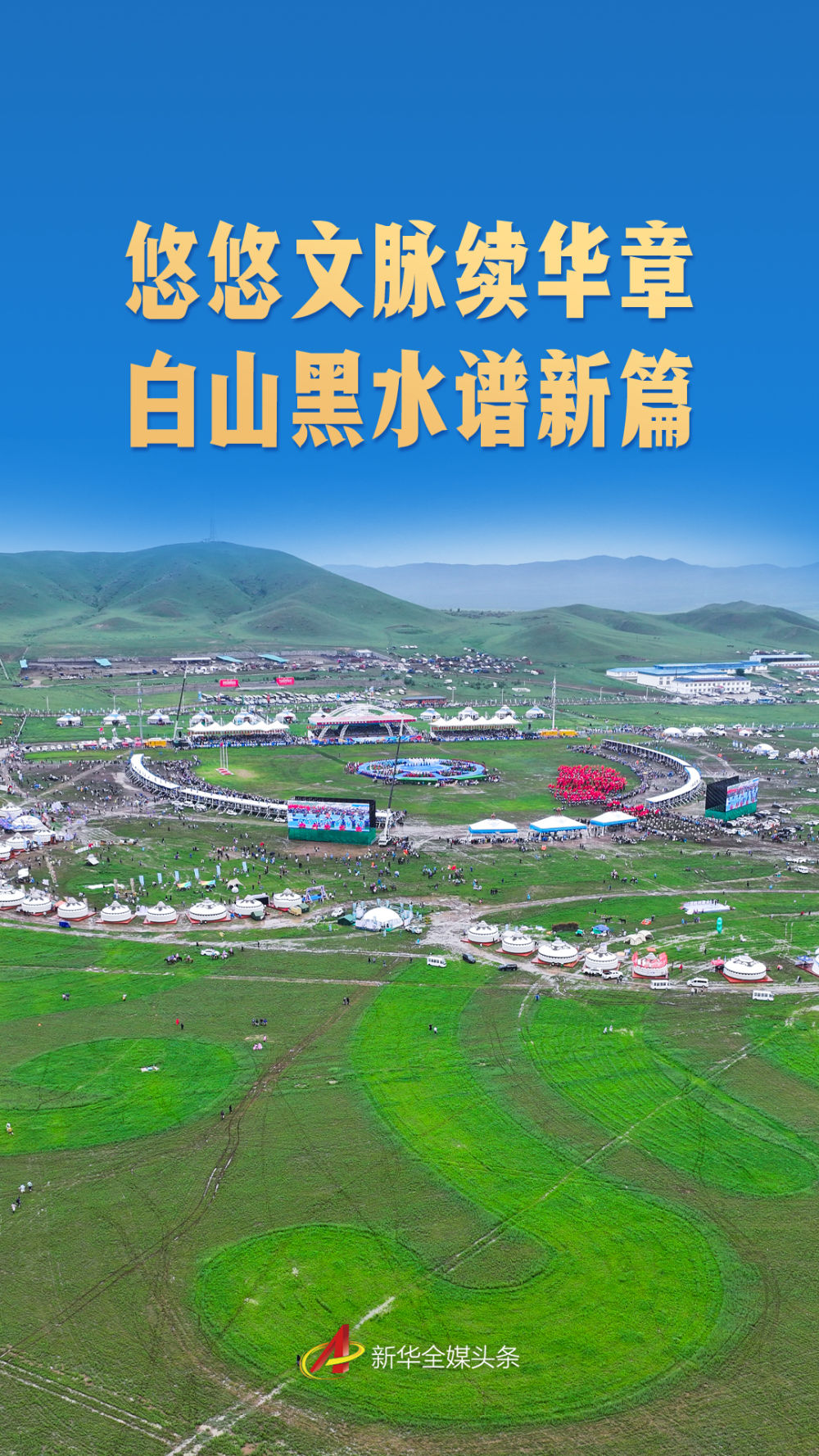
新时代中国调研行之文化中华|悠悠文脉续华章 白山黑水谱新篇
Xin Hua She· 2025-08-11 13:55
Group 1 - The Northeast region of China is experiencing a cultural renaissance, driven by Xi Jinping's cultural thought, which is fostering a strong spirit for the comprehensive revitalization of the area [4][5][25] - The region's rich history, including the Red Mountain culture and the Anti-Japanese War, is being highlighted through various cultural and historical initiatives [4][19] - Archaeological discoveries, such as the Yuantao Mountain site, are shedding light on the late Red Mountain culture and its significance in understanding the origins of Chinese ceremonial civilization [7][19] Group 2 - The Shenyang Palace Museum is undergoing restoration projects to preserve its historical architecture, with a focus on maintaining the original state of cultural relics [9][19] - Harbin's Central Avenue and the Baroque historical cultural district are revitalizing old buildings while enhancing the quality of life for residents through infrastructure improvements [12][14] - The Long Spring Water Culture Ecological Park in Changchun integrates historical memory into modern life, showcasing the city's industrial heritage [16][19] Group 3 - The Jilin Yang Jingyu Cadre Academy is utilizing immersive teaching methods to instill revolutionary spirit among participants, emphasizing the importance of historical memory [17] - The Liaoshen Campaign Memorial Hall has established a digital database for martyrs of the Northeast Liberation War, enhancing public engagement with historical remembrance [19] - The Iman Kan cultural heritage is being revitalized through modern interpretations, appealing to younger generations and ensuring the continuation of ethnic traditions [21][24] Group 4 - The tourism sector in the Northeast is thriving, with unique attractions like the Arctic Village in Mohe drawing significant visitor numbers, contributing to local economies [27][29] - The "Nadam Festival" in Inner Mongolia is evolving into a summer-long celebration, attracting tourists and enhancing cultural experiences [30][32] - The revitalization of historical districts, such as Dalian's East Gate Street, is creating new consumer hotspots while preserving cultural heritage [35][37]
“抓强、壮干、提弱” 四川夯实县域新底座
Sou Hu Cai Jing· 2025-08-11 01:16
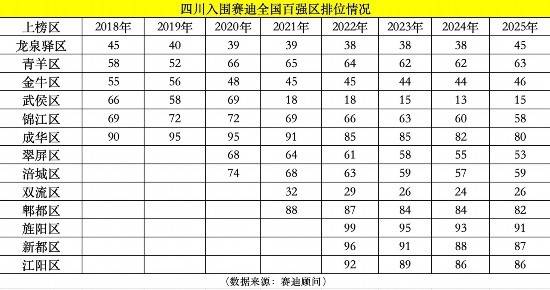
Core Insights - The recent rankings of the top counties and districts in Sichuan show that the province has 20 counties (cities, districts) listed, maintaining its position as the third highest in the country and the first in the western region for three consecutive years [1][4] - The top counties and districts significantly contribute to the local economy, accounting for over 42% of the province's total economic output despite representing less than 11% of the total counties [1][4] - Sichuan's strategy for enhancing county-level economic development includes a roadmap focusing on strengthening strong areas, expanding capabilities, and improving weaker regions [1][16] Rankings and Performance - In the 2025 rankings, Sichuan has 13 districts and 7 counties listed among the national top counties and districts, with no change in the number from the previous year [2] - Over the years, Sichuan has shown improvement in its rankings, with the number of top districts increasing from 6 in 2018 to 13 currently, and top counties rising from 2 in 2021 to 7 [2][4] - Notable progress includes Chengdu's Jinjiang District moving from 72nd to 58th over five years, and Jianyang County achieving a ranking of 79th, marking it as the "first county" in Sichuan [2][4] Economic Structure and Growth - The coverage of top counties and districts in Sichuan has expanded to 8 cities (prefectures), indicating a broader regional economic development [4] - Despite being in the top tier nationally, Sichuan still lags behind provinces like Jiangsu and Zhejiang in terms of the number of top counties and the scale of economic output, with no counties exceeding the "trillion" GDP threshold [4] - The GDP of the top districts in Sichuan for 2024 shows significant figures, with Wuhou District at 418.83 billion and Shuangliu District at 222.60 billion, reflecting growth rates of 6.2% and 5.9% respectively [5] Industrial Development and Future Prospects - Emerging industries and the transfer of industries to the central and western regions present opportunities for growth, particularly for counties like Jianyang and Xichang, which are close to reaching the "trillion" GDP mark [7] - Deyang's Jingyang District has already achieved "trillion district" status and aims to enhance its industrial base through digital transformation and service sector growth [7] - The overall economic structure in Sichuan is shifting, with a notable increase in the number of counties with GDPs between 500 million and 1 billion, indicating a healthier economic balance [8] Support for Underdeveloped Areas - Sichuan is focusing on supporting underdeveloped counties, particularly in regions like Ganzi and Aba, with significant investments and initiatives aimed at improving economic conditions [12][14] - The province's strategy includes targeted support in key areas to address disparities and enhance overall economic performance [12][14] - The restructuring of the economic framework in underdeveloped areas has led to a shift where the secondary industry now contributes more than the primary industry for the first time [14]
第23届南海(阳江)开渔季启动在即,农文旅盛宴抢“鲜”看→
Nan Fang Nong Cun Bao· 2025-08-09 00:03
第23届南海(阳 江)开渔季启动 在即,农文旅盛 宴抢"鲜"看→_ 南方+_南方plus 8月8日,广东省 新闻办举行第二 十三届南海(阳 江)开渔季新闻 发布会。 记者在会上获 悉,第二十三届 南海(阳江)开 渔季活动将于8 月15日至17日在 阳江市海陵岛拉 开帷幕。届时, 3400余艘阳江渔 船将有序驶向丰 饶的南海渔场, 是历届开渔季出 动渔船最多的一 次。 千帆竞发,阳江 向海"逐鲜" 此外,祭海活 动、渔家婚嫁习 俗、沙滩音乐 节、世界模特大 赛、夜光风筝嘉 年华、西海岸滨 海摄影大赛、大 角湾烟花秀等13 项配套文化活动 将同步举办,在 沉浸式呈现传统 民俗之外,也为 开渔季注入时尚 活力。 一年一度的开渔 活动,既是我省 沿海各地"千帆 竞发"的"发令 枪",也是展示 渔业文化、推动 农文旅融合的重 要平台。自首届 开渔活动起,阳 江市委、市政府 就确定了"以活 动促产业、以产 业兴旅游"的模 式,经过多年的 实践探索,活动 已成为广东省内 引爆旅游热点、 撬动关联消费和 塑造文旅品牌 的"顶流" 。 发布会上,阳江 市人民政府副市 长关天表表示, 今年开渔活动亮 点可以用"南海 千帆竞发、疍 ...

ST岭南: 岭南生态文旅股份有限公司向不特定对象发行可转换公司债券2025年度第二十六次临时受托管理事务报告
Zheng Quan Zhi Xing· 2025-08-08 11:14
Core Viewpoint - The company, Lingnan Ecological Culture and Tourism Co., Ltd., is facing significant financial difficulties, including the inability to repay its convertible bonds on time, which may lead to further legal and operational challenges [2][3][4]. Financial Performance - In 2024, the company's operating revenue was 861.84 million yuan, a decline of 59.55% compared to 2023 [3]. - The net profit attributable to shareholders for 2024 was -984.33 million yuan, indicating a reduction in the scale of losses compared to 2023 [3]. - For the first quarter of 2025, the net profit attributable to shareholders was -66.40 million yuan, a decrease of 26.36% compared to the same period in 2024 [3]. Debt and Credit Risks - The credit rating of the "Lingnan Convertible Bond" has been downgraded to C, indicating a high risk of default [2]. - The company is experiencing liquidity pressure due to delayed project payments and high asset-liability ratios, which may further weaken its financing capabilities [2][4]. Legal and Regulatory Issues - As of December 31, 2024, the company had 251 pending lawsuits with a total amount involved of 2.95 billion yuan, which is 13.02% of the latest audited net assets [7]. - The company is facing increased litigation risks due to payment delays to suppliers, which may further complicate its financial situation [6][7]. Asset Pledge and Collateral Risks - The company has pledged assets to secure the "Lingnan Convertible Bond," but the realizable value of these assets is uncertain due to the nature of the receivables and the need for cooperation from various parties [5][6]. - There is a risk that if the company files for bankruptcy within a year of the pledge, the collateral may be revoked [5]. Stock Market Risks - The company's stock is at risk of being delisted if the closing price remains below 1 yuan for 20 consecutive trading days, as per Shenzhen Stock Exchange regulations [6]. Management and Oversight - GF Securities has been appointed as the trustee for the "Lingnan Convertible Bond" and is monitoring the situation closely to protect the interests of bondholders [10].

5月份社会消费品零售总额同比增长6.4% 消费市场向好态势更加稳固
Jing Ji Ri Bao· 2025-08-08 07:59
Group 1: Retail Performance - In the first five months of this year, the total retail sales of consumer goods reached 20.32 trillion yuan, with a year-on-year growth of 5% [1] - In May, the retail sales of consumer goods totaled 4.13 trillion yuan, showing a year-on-year increase of 6.4%, which is the highest monthly growth rate since last year [1] - The retail sales of goods increased by 6.5% year-on-year in May, with significant contributions from furniture, home appliances, and communication equipment categories, which grew by 25.6%, 53%, and 33% respectively [1][2] Group 2: Holiday Consumption - The "May Day" and Dragon Boat Festival holidays significantly boosted cultural and tourism consumption, with domestic travel reaching 314 million trips during the "May Day" holiday, a 6.4% increase year-on-year [2] - During the Dragon Boat Festival, domestic travel reached 119 million trips, with total spending of 427.3 billion yuan, reflecting a year-on-year growth of 5.9% [2] - The retail sales of sports and entertainment products saw a year-on-year growth of 28.3% in May, continuing a double-digit growth trend since the beginning of the year [2] Group 3: E-commerce and Online Retail - Online retail sales increased by 8.5% year-on-year in the first five months, with physical goods online retail sales growing by 6.3%, accounting for 24.5% of total retail sales [3] - The optimization of the departure tax refund policy has led to a significant increase in inbound consumption, with the number of tax refund transactions growing by 116% in the first month of implementation [3] - The number of departure tax refund stores has increased to 5,196, which is 1.4 times the number expected by the end of 2024 [3] Group 4: Consumer Experience and Innovation - Physical retail enterprises are continuously innovating diverse consumption scenarios to enhance consumer experience, with retail sales from physical stores growing by 4.5% year-on-year in the first five months [4] - Membership warehouse stores saw retail sales growth exceeding 30%, while convenience stores, specialty stores, and supermarkets grew by 8.5%, 6.3%, and 5.7% respectively [4] - The positive consumption trend in May is attributed to the continuous upgrade of consumption structure and the effective implementation of policies such as the replacement of old products [4]
金融支持提振扩大消费指导意见出台
Zhong Guo Zheng Quan Bao· 2025-08-08 07:20
Core Viewpoint - The People's Bank of China and other regulatory bodies have issued guidelines to enhance financial support for consumption, aiming to stabilize economic growth and consumer expectations [1][2]. Group 1: Key Areas of Focus - The guidelines emphasize the importance of boosting consumption as a key driver for domestic demand and economic growth, especially as external demand weakens [2]. - Six main areas are identified for enhancing consumption: increasing consumer capacity, expanding financial supply for consumption, unlocking consumer potential, improving supply efficiency, optimizing the consumption environment, and providing policy support [2][3]. Group 2: Financial Support for Consumption - The focus is on three main consumption sectors: goods consumption, service consumption, and new consumption types, with specific measures to support each area [2][3]. - For goods consumption, the guidelines propose innovative consumer credit products and support for trade enterprises to enhance domestic sales [2]. - In service consumption, increased financing support is directed towards sectors like retail, hospitality, and elder care, with an emphasis on innovative financing models [3]. Group 3: Expanding Financial Supply - The guidelines encourage the establishment of a multi-layered consumer finance service system, enhancing credit support through various financing channels such as bonds and equity [4]. - Financial institutions are urged to innovate and optimize credit products while increasing support for qualified enterprises in sectors like culture, tourism, and education [4]. Group 4: Enhancing Consumer Capacity - The guidelines highlight the need to improve residents' income levels as a critical factor in stimulating consumption, with measures to support entrepreneurship and wealth management [5][6]. - Infrastructure improvements in logistics and supply chains are also emphasized to enhance the efficiency of consumption supply [6]. Group 5: Optimizing the Consumption Environment - The guidelines propose enhancing consumer payment services, building a robust credit system, and protecting consumer rights to create a more favorable consumption environment [6]. - The People's Bank of China will work with relevant departments to implement these policies and monitor their effectiveness [6].